
Table of Contents
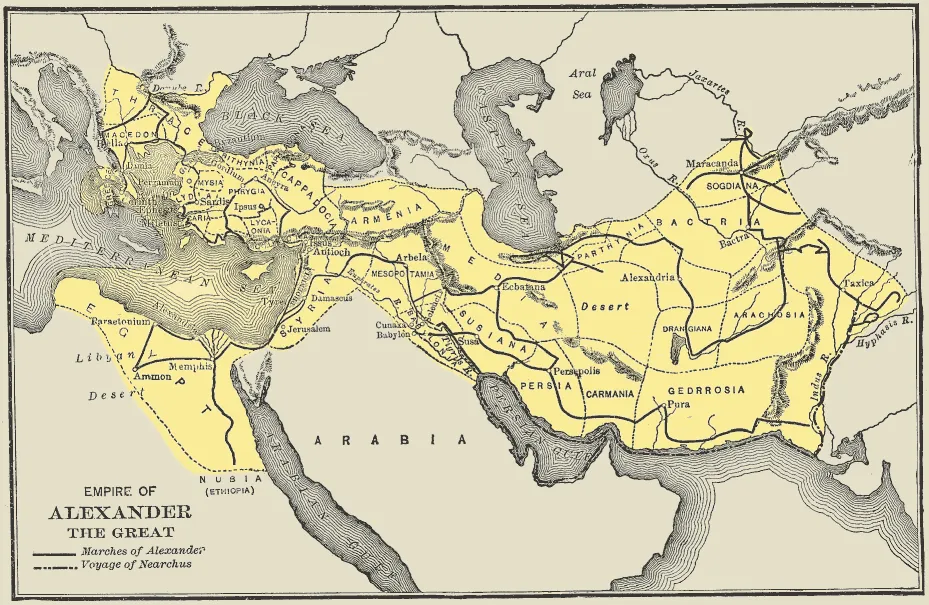
Alexander III of Macedon was born into a kingdom that had learned how to win. He inherited a drilled army, a reformed state, and a father’s ambition, then drove them past the edges of what Greeks imagined as their world. He lived fast under the eyes of poets, imitated Achilles with practical adjustments, and left behind cities, coinage, and stories that outlasted the empires he broke. His life reads as a sequence of decisive marches, yet every stride depended on grain, money, horses, and the politics of men who did not share his language. The best way to understand him is to follow the routes he cut and the institutions he used to keep them open.
A kingdom remade before a conqueror
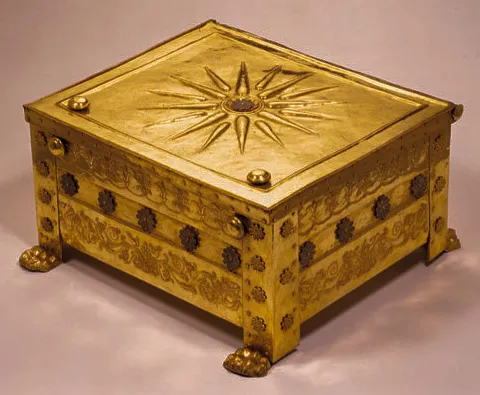
When Alexander was born at Pella in 356 BCE, Macedon was already changing. His father, Philip II, had taken a fragile border kingdom and turned it into the strongest power in the Balkans. He did it with reforms that sound technical until one sees their effects on a battlefield.
Philip created a new infantry core around the sarissa, a pike roughly 4 to 6 meters long. He organized these foot soldiers into a close order formation, the Macedonian phalanx, whose dense hedges of pike tips locked enemies out. He paired the phalanx with the Companion cavalry, heavy horsemen trained to charge in a wedge under a royal banner. He added siege engines and engineers to an army that, unlike many Greek forces, could break walls rather than just surround them. He drilled officers and men through long campaigns in Thrace, Illyria, and northern Greece, where the lessons of mountaineering and supply would later serve his son.
Philip also remade Macedon’s politics. He placed reliable nobles, the hetairoi or Companions, in positions that gave him leverage and visibility. He used hostages, marriages, and grants of land to bind the elite. He minted coin from new mines at places like Mount Pangaion, paid troops regularly, and hired craftsmen who could cast bolts, build towers, and repair traction engines on the road. He convened the Corinthian League after his victory at Chaeronea in 338 BCE, binding most Greek city-states into a federation with a common peace and a common war: an invasion of the Persian Empire. The plan would survive the man.
Family, omens, and a name that mattered
Alexander’s mother, Olympias, came from Epirus, a rugged region west of Macedon. Ancient writers surrounded her with ritual and rumor: snakes in sacred dances, fiery dreams, and a fierce pride in Molossian kingship that traced descent to Neoptolemus, the son of Achilles. The stories say as much about how later Greeks told royal biography as they do about Olympias in the 350s. What matters is that she was high-born, politically skilled, and devoted to her son’s advancement.
Alexander’s birth year, 356 BCE, is secure. Some sources put his birth on 20 July according to a Macedonian calendar, while others line it up with late July in modern terms. The name Alexander, “defender of men,” had weight in Macedon’s royal house. His father had a brother named Alexander. He would give the name to more than one city and to a generation of imitators.
A first battlefield and a decisive school
As a boy Alexander watched his father’s wars from the rear and then from the line. He is placed by ancient sources at the Battle of Chaeronea in 338 BCE on the left wing near the Companion cavalry, where Philip feinted a retreat to disrupt the Theban line. Whether Alexander personally broke the Sacred Band, as later writers claimed, is contested. The outcome is not. The Theban elite died on the field. Athens sued for peace. Philip lived to dictate terms. The young prince learned how speed, feint, and a flexible reserve could break cities that trusted in walls and old stories about hoplite valor.
Between campaigns he studied at Mieza under Aristotle. The class was a royal investment. The philosopher did not teach him clever words to win trials. He taught him to read Homer carefully, to study geography as a guide for war and rule, and to see science as a library of tools. Aristotle’s habit of collecting, counting, and ordering objects and animals may seem far from cavalry charges. In practice, it trained a prince to inventory resources and to map a country in his head before he crossed it. Alexander learned rhetoric, music, and myths as well. He also learned cautionary stories about kings who flew too high without securing the ground under them.
The horse and the self he showed to others
The tale of Alexander taming Bucephalas reads like a parable because it is one. A horse balked at its own shadow. The boy turned the animal toward the sun, soothed it, and mounted. Philip supposedly wept and told his son that Macedon was too small for him. Whether the scene is embroidered or not, Alexander did own a great stallion named Bucephalas, likely a dark horse with a white blaze, whose name means ox-head. He rode him for years and named a city after him in India. The story condenses real habits: a willingness to try what others thought impossible, attention to surfaces and light, and a performance that began at home before it convinced the world.
The knife at Aegae and a rushed coronation
Philip had arranged a grand wedding at Aegae in 336 BCE, the old capital. He married Cleopatra, niece of a powerful noble, even though Olympias still lived. The political move aimed to secure ties among Macedonian families. It carried risks. Cleopatra could bear a “pure” Macedonian heir who would displace Alexander in the line of succession. During the festival, a royal bodyguard named Pausanias stabbed Philip to death as he entered the theater. The killer was chased down and killed. The court and the city exploded in rumor. Some blamed Persian bribes. Others muttered about quarrels inside the royal household. No single theory is certain. The only firm facts are that a charismatic king lay dead and that the succession would test the new state.
Alexander moved fast. He secured the loyalty of the army at once and the support of key nobles with offices and promises. He ordered the execution of probable rivals, including Caranus, a young relative, and Attalus, uncle of Cleopatra. He kept the machinery Philip had built intact. He pressed the Greek cities to confirm their oaths to the Corinthian League. When Thebes revolted in 335 BCE, he marched south through the pass at Thermopylae with a speed that shocked the city-states. He offered terms. Thebes refused. He stormed the city, killed many, and sold survivors into slavery. He spared the house of the poet Pindar by design, an act that recycled a Greek habit of protecting a symbolic home in a ruined city. The signal was harsh and clear. There would be no second revolt in his rear.
Crossing into Asia and a visit to Troy
The invasion of Persia began in spring 334 BCE. Alexander had roughly 32,000 infantry and 5,000 cavalry, a concentration of veteran Macedonians and allied Greek contingents. He left Antipater as regent in Macedon with troops to guard against Illyrians and restless Greeks. He crossed the Hellespont with a fleet supported by Athens and islanders who had reasons to prefer Macedon to Persia. He sacrificed at Ilium, the site Greeks equated with Homer’s Troy, and traded armor in Athena’s temple. He ran a race to honor Achilles and visited a supposed tomb. These acts were not vanity. They anchored a Macedonian monarch in a shared Greek story of crossing to Asia as a test of heroic identity.
He also made a calculated promise to Ionian Greeks along the coast. He would liberate them from Persian-appointed tyrants and restore civic councils. The pledge cost little and brought harbors, shipwrights, and cash.
Granicus and what a river crossing can do
The first battle against Persian satraps came at the Granicus River in May 334 BCE. The riverbanks were steep. Persian cavalry lined the far side and Greek mercenary infantry stood behind them. Some advisers urged a dawn crossing. Alexander went in the late afternoon, perhaps to exploit light and the shape of the banks, perhaps to force a fight before the satraps could ask for reinforcements. He led the Companion cavalry obliquely across the current, pinned enemy horse with feints on the left, and smashed through with the right where the bank allowed ascent. He fought personally, survived a near fatal blow, and turned the crossing into a rout.
The aftermath mattered more than the count of bodies. Sardis surrendered with its treasury and the keys to inland roads. Ephesus and Miletus opened to negotiations. Halicarnassus resisted longer under Memnon of Rhodes, a skilled Greek commander in Persian service, but fell that autumn after hard fighting and the use of siege engines in tight streets. Alexander disbanded his allied Greek troops to save money and to limit political obligations. Macedon, not a league, would drive the next strides.
Through Asia Minor and a narrow field at Issus
Winter in Phrygia brought administrative work masked as myth. Alexander visited Gordium, seat of the old Phrygian kings, and cut or pulled the famous knot that prophecy said bound the man who would rule Asia. The act, however performed, fit his mode. He solved problems by changing their shape. He appointed satraps, often leaving locals in place with Macedonian garrisons nearby. He minted coin on Anatolian standards to pay troops and contractors who were used to Persian weights. He moved with an eye to roads and fodder. Horses needed barley. Men needed bread and salt. A king carried both or moved along routes that supplied them.
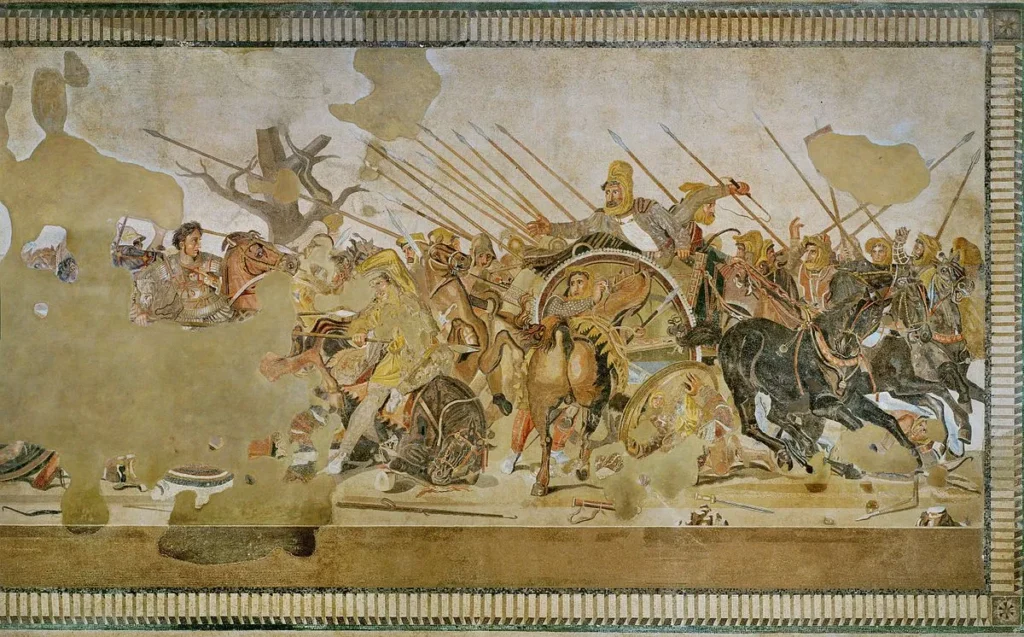
In 333 BCE he marched south along the coast, then east, while Darius III gathered a larger army inland. The two forces missed each other in the hills, then swung back to face one another near the Pinarus River at Issus, a narrow coastal plain where numbers could not envelop flanks. The river slowed the Macedonian phalanx. Alexander took the right with Companion cavalry against the Persian left, where Greek mercenary infantry and noble cavalry stood thick. He drove a wedge into that corner while his center absorbed punishment. Darius watched from a chariot. When the Macedonian right began to break through, the Persian king chose to withdraw. A king’s flight need not be shameful in itself. It unhinged the line because a Persian army’s cohesion depended on a hierarchy of nobles clustered around the Great King.
Issus opened Syria and the Levant. It gave Alexander Darius’s baggage and his family, including the queen mother, wife, and daughters. He treated them with careful respect. He sent word to the queen mother in Greek that she had another son in him. The gesture matters in part because it shows a Macedonian king addressing Persian royalty on terms that mingled courtesy with power.
Tyre and Gaza: walls, water, and work
The coastal cities were keys. Without them, fleets could raid his rear and carry Persian money anywhere. Most opened their gates. Tyre refused. The island city sat about 800 meters off the shore behind high walls and a shallow reef. Alexander chose to build a causeway out from the mainland. The project demanded stone, timber, bolts, and bridges. Tyrian divers sabotaged piles and burned towers. Alexander hauled in more engines, recruited sailors from newly won ports, and fought for control of the water around the mole while he raised its surface by stages. When a breach opened, he launched a final assault from sea and causeway. The city fell in 332 BCE after a siege of about seven months. Ancient sources report mass killing and enslavement, along with the execution of the city’s rebel leaders. The violence at Tyre set a reputation that discouraged other walled towns.
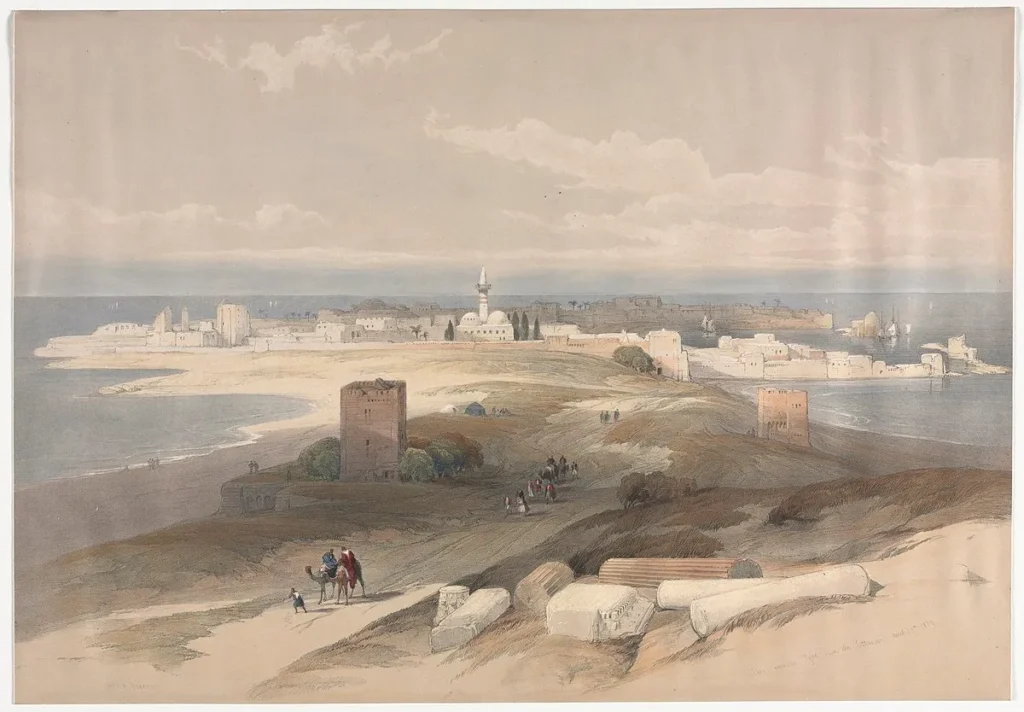
South along the coast, Gaza resisted from its tell, a mound with walls significant enough to make a direct assault costly. Alexander built ramps, rolled up towers, and battered the defenses. When the city fell after a siege of months and a final escalade, he punished prominent resisters. The brutality at Tyre and Gaza is not easy to square with later gestures of magnanimity. Siege law in the ancient world allowed terrible endings after prolonged resistance. Alexander also understood spectacle and deterrence. He wanted ports to surrender before he arrived.
Egypt: welcome, a city plan, and an oracle in an oasis
In late 332 BCE Alexander entered Egypt. Persian rule there had been resented. He presented himself as liberator and donor. At Memphis he sacrificed to local gods and planned a city on the Mediterranean coast at a site between the sea and Lake Mareotis that offered harbors, fresh water, and a hinge point for trade between the Nile and the Levant. Surveyors marked the outline with barley flour when chalk ran short. The city took his name. Its grid, harbors, and later lighthouse would become the clearest monument to his habit of fixing conquest with stone and markets.
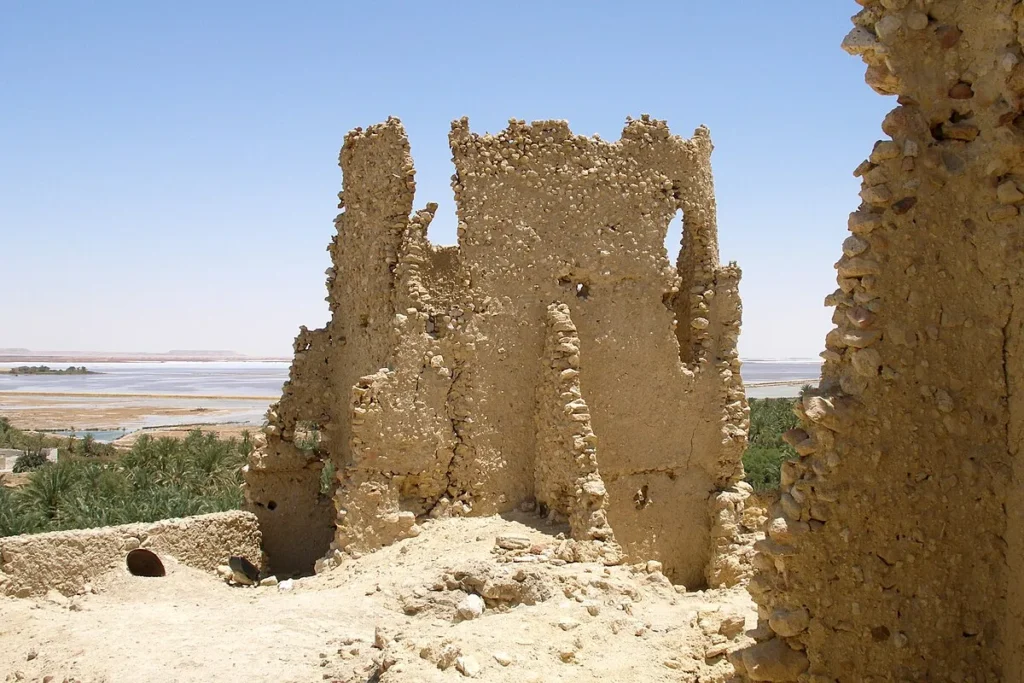
He traveled into the Western Desert to the Siwa Oasis to consult the oracle of Amun. The god at Siwa was linked to Zeus by Greek habit. Accounts of the visit differ. Some say the priest greeted him as son of the god. Others say the oracle answered questions only Alexander and his staff would have heard. The expedition is a fact. The outcome was probably an ambiguous message that a conqueror could interpret as divine favor. The title “son of Amun” had a history in Egyptian royal ideology. Alexander used local words because they worked in local ears.
Back to war with a promise of decision
From Egypt, Alexander turned northeast in 331 BCE. He reentered Syria, then crossed the Euphrates at Thapsacus where Persian forces had failed to block the ford. Darius drew his army up near Gaugamela on a plain he had cleared and leveled to favor scythed chariots and massed formations. He had more men, more cavalry, and time to pick the ground. Alexander had a more cohesive army, practiced combined arms, and a habit of finding gaps where numbers could not follow.
Gaugamela: cavalry, dust, and a broken center
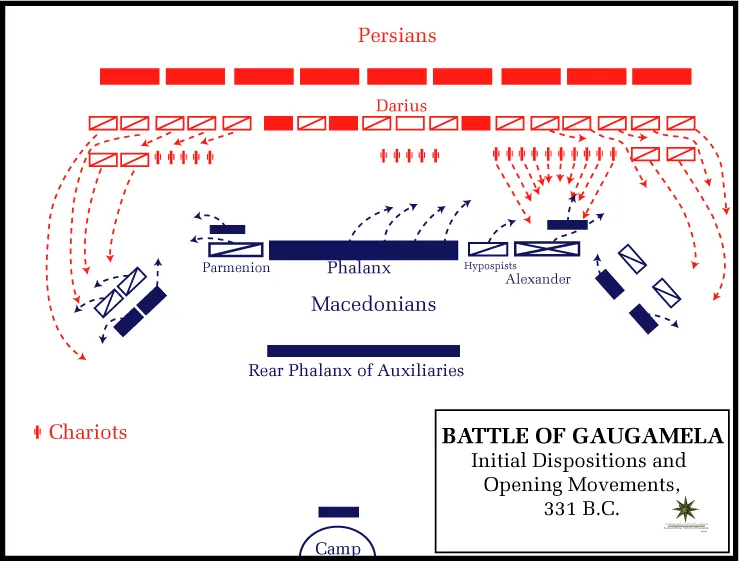
The Macedonian line at Gaugamela angled to the right as it advanced. Darius extended his left to outflank. Alexander pulled the Persian wing away from the main body, then seized a gap that opened in front of the Persian center. He led the Companion wedge through it toward Darius. The phalanx held under pressure. Scythed chariots failed against trained light troops who parted to let them pass and cut down their drivers. When Alexander drove home, Darius turned to flight. The retreat became a rout on sections of the field. The Macedonian left under Parmenion had trouble with Persian cavalry and suffered heavier fighting. Alexander rode back to steady that sector rather than chase too far after the king. The choice saved men and kept the army together for the next steps.
Gaugamela gave Alexander Babylon and Susa without further fighting. Babylon welcomed him with processions and gifts. Susa opened its treasury. Ancient figures speak of tens of thousands of talents of silver stored in Mesopotamian vaults. Even if the numbers are inflated, the scale is clear. Alexander now controlled coin and bullion enough to pay armies, build cities, and buy the cooperation of elites across two continents.
Persepolis and how victors present their choices
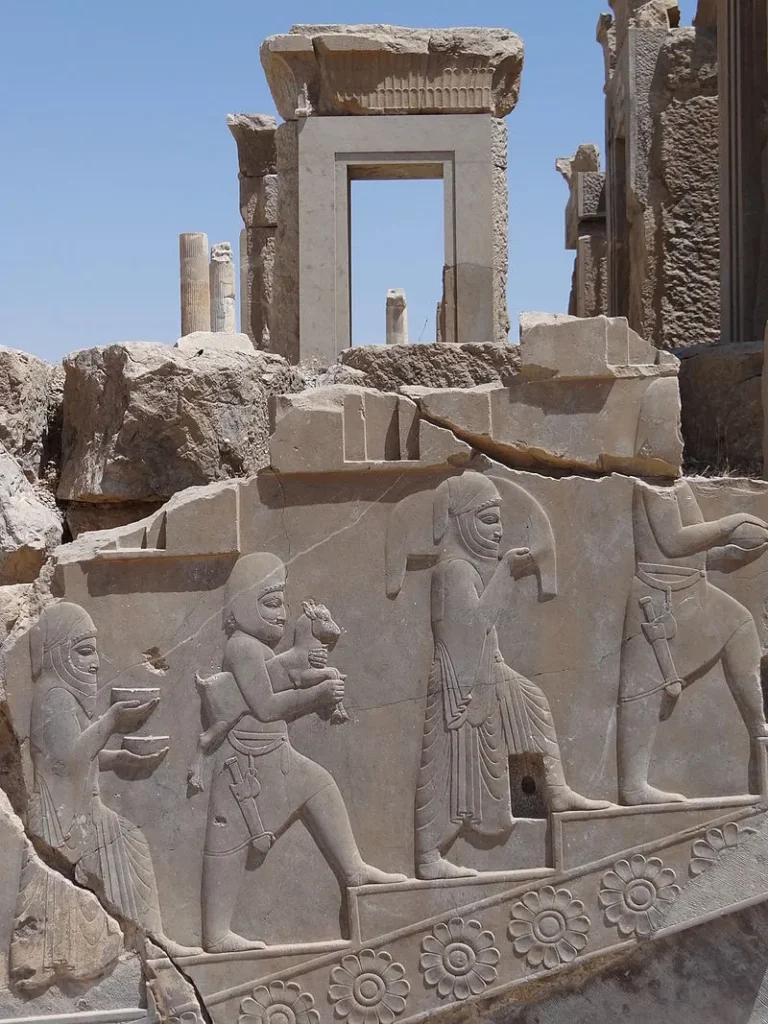
From Susa, Alexander marched into Persis, the heartland of the Achaemenid dynasty. The route across the Zagros at the Persian Gates was steep and narrow. Local defenders under Ariobarzanes ambushed his column in winter. Alexander did not insist on frontal honor. He used guides to lead a force around to the heights, turned the defenders, and opened the gate for the main army. Persepolis lay ahead, a terrace of palaces whose stairways display rows of tribute bearers carved in fine relief. The city fell. Macedonian soldiers sacked it. Months later, Alexander ordered the burning of the palace of Xerxes, a symbolic act blamed by some sources on a drunken impulse at a banquet and by others on cold calculation. The reasons remain debated. If it was theater, the audience was Greek, who remembered Persian invasions. If it was impulse, it was an uncharacteristic one that he regretted on sober reflection. Either way, the fire answered an old insult with a new one that could not be undone.
A king without a captured king
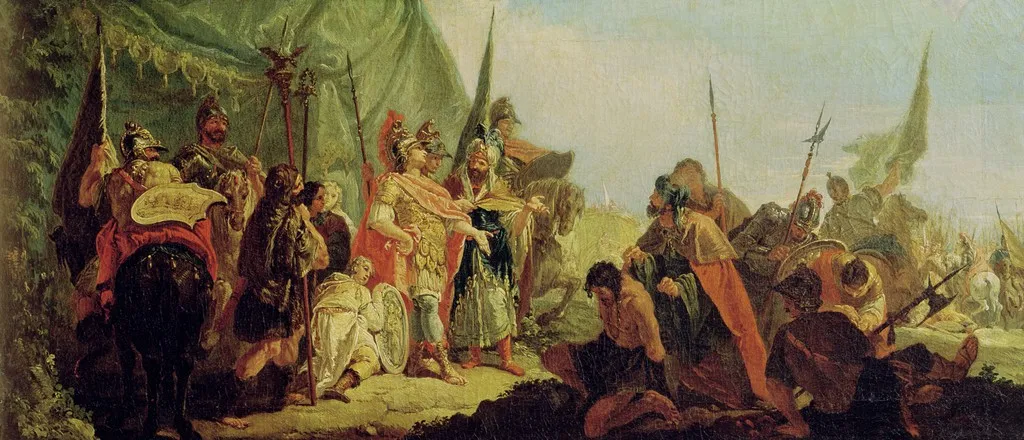
Darius III fled northeast toward Media and Hyrcania. Alexander pursued along royal roads that station systems had supplied for generations, then on into Iran’s northeastern satrapies. In midsummer 330 BCE, near modern Qazvin, nobles led by Bessus, satrap of Bactria, seized Darius and later killed him as they retreated. Alexander found the body and sent it to Persepolis for royal burial with honors, a message to Persians that he would respect the customs of kings. He presented himself as Darius’s avenger. He took the high Persian titles, King of Kings and Great King, and began to use Persian royal dress in contexts where it mattered. He did not replace Macedonian habits. He layered customs, audiences, and languages.
The change disturbed some of his men. The army had marched east as a Greek and Macedonian expedition to punish an old enemy and to collect glory. It had become something else. Alexander needed to hold Bactria and Sogdiana, regions that had never been easy for the Achaemenids. He needed local cooperation, new garrisons, and roads kept open by men with their own goals. He appointed mixed staffs, Persian and Macedonian. He married local elites to his officers. He kept coin moving. He used winter to build storehouses. He also used murder and pardons to bind or break men as needed.
Philotas and Parmenion: trust, trials, and fear
In 330 BCE Alexander exposed a plot against his life in which the name of Philotas, son of his veteran general Parmenion, surfaced. How far Philotas was implicated is unclear. Alexander convened a Macedonian assembly, accused Philotas of failing to report talk of conspiracy, and pressed for a verdict. The assembly condemned him. He was executed. Parmenion, who commanded in Ecbatana, did not face a trial. He was killed by officers sent ahead with orders, a preemptive strike against a man who could have turned troops if he took his son’s death as a cause for revolt. The episode chills the narrative. Alexander had killed men in battle. Now he killed a loyal old general and a peer. The army learned that its king would move first when threatened.
Central Asian wars that bent the army
Bessus retreated across the Oxus into Sogdiana and claimed the title Artaxerxes. Alexander crossed deserts and rivers that taxed horses more than spears. He founded towns to hold crossings and routes, including Alexandria Eschate, the Furthest, in the Ferghana region. He fought Saka or Scythian horsemen who shot and vanished into grassland. He beat them with river control and decoys, then rode hard to finish ambushes. He hunted Spitamenes, a local war leader whose raids threatened lines of communication, for months. The man was beheaded by his own allies when the pressure rose and his position failed. Alexander’s men built ladders up cliffs with tent pegs at places like the Sogdian Rock. Whether the climbs were as dramatic as later narratives describe, the effect was real. They showed captains of walled crags that height could be reached and bargains should be struck.
The army changed in these years. It absorbed Persian and Central Asian soldiers into mixed units. It learned to use local scouts. It married local women, sometimes by policy, sometimes by choice. It learned to live in forts under strange stars and to plant barley in soil that grew clover instead of olives.
Cleitus, Callisthenes, and the politics of a gesture
In 328 BCE at Maracanda, modern Samarkand, Alexander quarrelled at a banquet with Cleitus the Black, a Companion cavalry officer who had saved his life years before at the Granicus. Words passed. Cleitus mocked royal pretensions and Persian dress. Alexander, in a fury and not sober, killed him with a spear. He grieved after, shut himself in, and refused food until friends coaxed him to accept that a king could not die because his temper had cost a life. The story is more than character. It marks a boundary met in public. The old comrade who spoke like a Macedonian noble met the new monarch who had to be obeyed as a Persian king.
Around the same time, the court historian Callisthenes, a relative of Aristotle, fell from favor. He had opposed the practice of proskynesis, a Persian gesture of deep bowing before the king that Greeks reserved for the gods. Alexander tried to adapt the protocol by pairing Macedonian kisses with Persian bows. The compromise satisfied no one. Macedonians mocked the bow. Persians saw irreverence. Callisthenes was later arrested and died in custody after a conspiracy of royal pages that he was alleged to have encouraged or at least failed to discourage. The episodes show how tactics on battlefields were easier to adjust than the choreography of honor in a mixed court.
Roxane and a politics of marriage
In 327 BCE Alexander married Roxane, a Bactrian noblewoman, in a ceremony that Macedonians understood and Persians would accept as royal. The marriage tied him to a local clan and gave him a partner who would later bear a son, Alexander IV. He kept other wives later as policy deepened at Susa, yet the image of the young couple cutting bread or sharing a ritual cup endured because it showed conquest turning into family.
Toward the Indus and the edge of maps
After years in the northeast, Alexander turned southeast, over the Hindu Kush again, into the Indus system. He aimed to secure the roads and river valleys that linked Central Asia to the Indian plain. He sought elephants and gold because they signaled rule as well as wealth. He wanted to learn what lay beyond the line of Greek maps. He also wanted to keep the army moving with a promise of something new beyond the next ridge. Stopping was risky for men who were now far from home and who had learned to count years by campaigns.
He took Aornos, a high stronghold whose very name advertises steepness and birds that could not fly from its summit, by finding a path to a flank and by using engineers to level ground for engines. He made alliance with Taxila, a city whose ruler, Omphis or Ambhi in Indian sources, gave him supplies and elephants to offset a common enemy across the river. It was the summer of 326 BCE. Rains swelled the rivers. Porus, a powerful ruler east of the Hydaspes, waited to fight.
Alexander needed a crossing that would place men on firm ground instead of in front of chariots on soaked clay. He used feints for weeks, paraded troops along the river, then led a night march upstream to a set of islands where cover and current hid his movement. Scouts saw him anyway. He landed with a forward force and caught Porus before he could concentrate. The field would be one of his hardest tests. Horses balked at soil and arrows. Elephants could break formations if they pushed into the phalanx. The battle would end with a captured king placed back on his throne as a friend. How that happened belongs to the next stretch of the story.
Hydaspes: elephants, rain, and an enemy who became an ally
At dawn on the far bank of the Hydaspes River in 326 BCE, Alexander chose a crossing point that let him isolate a portion of Porus’s army without giving away the element of surprise. He marched upstream under cover of night, with selected infantry, cavalry, hypaspists, and light troops. Monsoon rains hid noise and masked the churn of oars. The crossing was in stages: several islands and channels rather than a single leap. Scouts saw him in the gray light anyway. The advantage became the timing rather than secrecy.
Porus deployed with war elephants spaced along his line, a tactic that could ruin cavalry and blunt the phalanx if the beasts crashed through before Macedonian pike set firm. Alexander took the right. He opened with light infantry to pester the elephants and the skirmishers around them. When the Indian cavalry moved to engage, he used his own horse in a series of sharp charges. The Companion wedge drove at a slant, opening gaps and then falling back before the elephants could pin them, a pattern of attack and refusal that disordered Porus’s left. Meanwhile, the Macedonian center pushed over muddy ground where sarissa points mattered more than pace. The elephants pressed in, tusks armored with blades, howdahs filled with javelin throwers and archers. Macedonian light troops pierced the animals with missiles at the eyes and under the tails, turned panicked beasts into damage in Porus’s own ranks, and held the line while cavalry circled flanks.
As the formation bent, Porus fought on a tall elephant, visible to both sides, a rallying focus who refused to break. When he was finally wounded and surrounded, he did not prostrate himself. He asked to be treated as a king. Alexander, who liked to dramatize virtue when it served a strategic purpose, placed him back on his throne and enlarged his domain. He gained a loyal ally who could police the region east of the Hydaspes. He also gained many elephants, a new arm in his future order of battle.
Bucephalas and the city that took his name
Bucephalas died not long after the Hydaspes. Ancient writers debate whether it was battle wounds or age that finished him. Alexander founded a city on the river to honor the horse. He named it Bucephala. The gesture helps set the scale of his campaign. City foundations marked routes and tied memories to river crossings and grain depots, not just to victories.
The Mallian campaign and an arrow that almost changed history
After Hydaspes, Alexander moved south along the Hydaspes and Acesines, toward the confluence with the Hydraotes and the Indus. He aimed to break resistance among the Mallians and Oxydrakae, peoples whose cities could threaten any river column moving toward the sea. The campaign’s tempo was brutal. He split his forces to move on multiple objectives, trusting his infantry to fix towns while his cavalry and light troops cut lines of retreat.
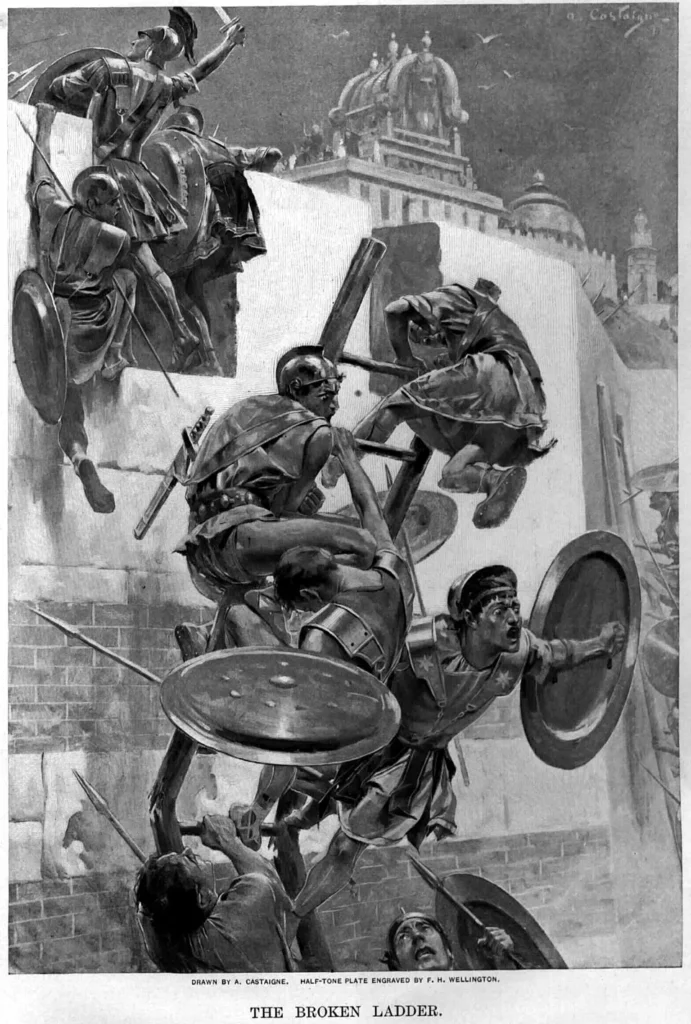
At one Mallian town, identified with Multan by many modern historians though the evidence is not perfect, Alexander pushed a ladder against the wall with a few companions before the main assault had formed. The ladder broke under weight. He leaped inside anyway, stood alone for heartbeats on a wall walk, then dropped into the courtyard to keep attackers at distance with his shield. A second later an arrow struck him above the chest, near the lung. He fell. His men fought like men who believed the world was hanging from a splintered shaft. They broke in, killed the defenders, and carried their king to safety. Blood filled his breastplate. The wound was deep. A surgeon cut and pulled the arrowhead. Infection threatened. He saved his life, then orchestrated a recovery that included showing himself to his soldiers before they could believe rumor. The display mattered as much as the stitching.
The Hyphasis mutiny and twelve altars at the edge of Greece
Alexander wanted to go farther east, beyond the Hyphasis River, which Greek writers equated with the Beas. His scouts brought reports of rulers with thousands of elephants and fields that ran to a horizon none of them knew. The army had been marching for eight years. Men counted time not by consular lists but by winters in Bactria, summers in Sogdiana, and flood seasons along foreign rivers. They thought of their farms and sons who had grown without them. Coenus, a respected officer, gave voice to the mood. He urged the king to turn back, to make victory secure rather than push for new markets and new altars at the cost of the army’s patience.
Alexander argued, he promised, he tried to shame them with the names of heroes. He finally yielded. The scene is one of those turning points that define what power looks like when men follow rather than obey. He built twelve stone altars on the bank, monuments to his gods and to the limit of his eastward stride, then turned the column to the south. He would go home by water and by sea.
Down the Indus: ships, sieges, and a slow current to the ocean
The army cut timber for ships on the Hydaspes and assembled a fleet under the command of Nearchus, a Cretan admiral who understood tides and men. The flotilla carried a portion of the troops. Others marched along the banks to break resistance and supply the oarsmen. The journey took months. Alexander stopped at Patala in the Indus delta to build a garrison and to split the fleet into two routes. He sent one down the western channel to check shoals, another down the eastern. He marked harbors with cairns and signals. He learned to read monsoon winds in the mouths of rivers.
Indus cities negotiated, resisted, or hid. When a town forced a siege, the engineers walked the old pattern: ditches, rams, towers hauled forward by teams of men and oxen, palisades against sorties, and shovels that ate at the base of walls. Alexander also used local rewards. He confirmed chiefs who cooperated. He replaced those who did not with men connected to rival lineages. He created an administration that looked Macedonian in its offices and Persian in its habits.
The Indus taught Macedonians about crocodiles, tides, and the ocean’s feel. It taught Alexander about scale. Rivers offered an inland sea to a people from northern Greece. Ports looked like future markets. Boats looked like tax receipts once war ended.
Built out of a love for history, kept free from distractions.
Spoken Past is an independent project shaped by curiosity, care, and long hours of research. Reader support helps keep it maintained, carefully researched, and open to everyone.
The march through Gedrosia: sand, error, and endurance
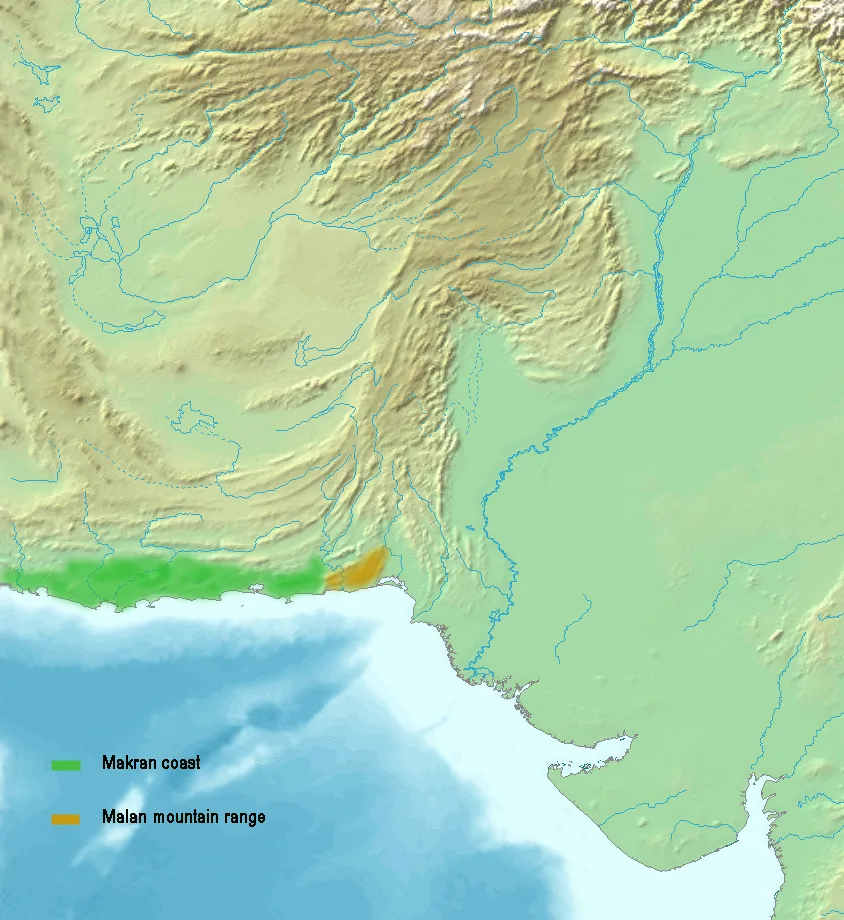
Alexander did not return to Persia by the caravan routes used by merchants and satraps. He chose the coastline of Gedrosia, a desert that modern maps call the Makran. Ancient writers say he wanted to outdo the Persian king Cyrus by crossing a region that had defeated others. He also needed to coordinate with Nearchus’s fleet and to reenter the empire by reknitting coastal towns into a chain he controlled. The choice cost lives.
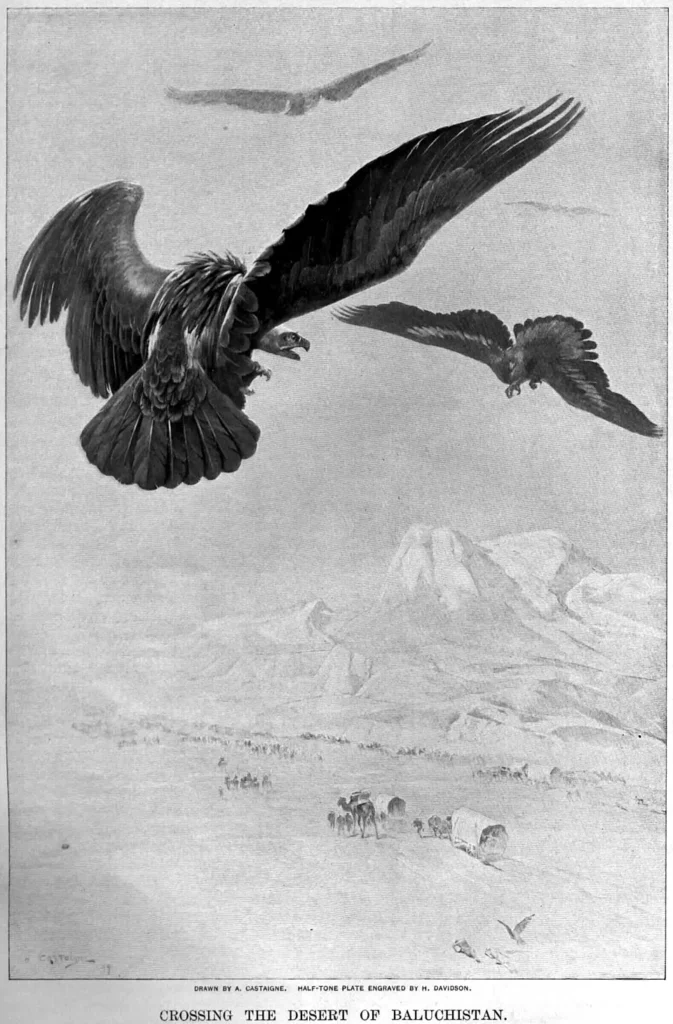
The army rationed water line by line. Scouts dug wells, found brackish pockets, and led columns by night to avoid heat. Baggage animals died in drifts. Women and camp followers suffered worst. Alexander shared water when a helmet was brought to him full, then poured it on the sand as a sign that he would not drink when the column could not. The Susians and Persians in his ranks, long adapted to heat, helped more than any speech. Nearchus, whose own voyage will matter in a moment, found the army near starvation at the coast in Carmania. The reunion was not a triumph. It was a relief, a calculation that had barely worked.
The voyage of Nearchus and the map of a new world
While the king marched, Nearchus took the fleet of galleys and transports down the Indus and along the Persian Gulf. He waited out monsoons behind spits of sand, watched for hostile shore camps, and named bays after experiences painful enough to deserve memory. He kept a log, the Indikê, now surviving only in fragments and later paraphrases, which recorded tides, landmarks, and peoples on the coast. He sent word ahead where supply points could be arranged. He learned the rhythm of the Gulf’s winds and currents that would later carry trade between Mesopotamia and India. The voyage turned a line on a map into a thread that would carry cinnamon, cane sugar, and cotton west for generations.
Susa and a policy of fusion that did not fully fuse
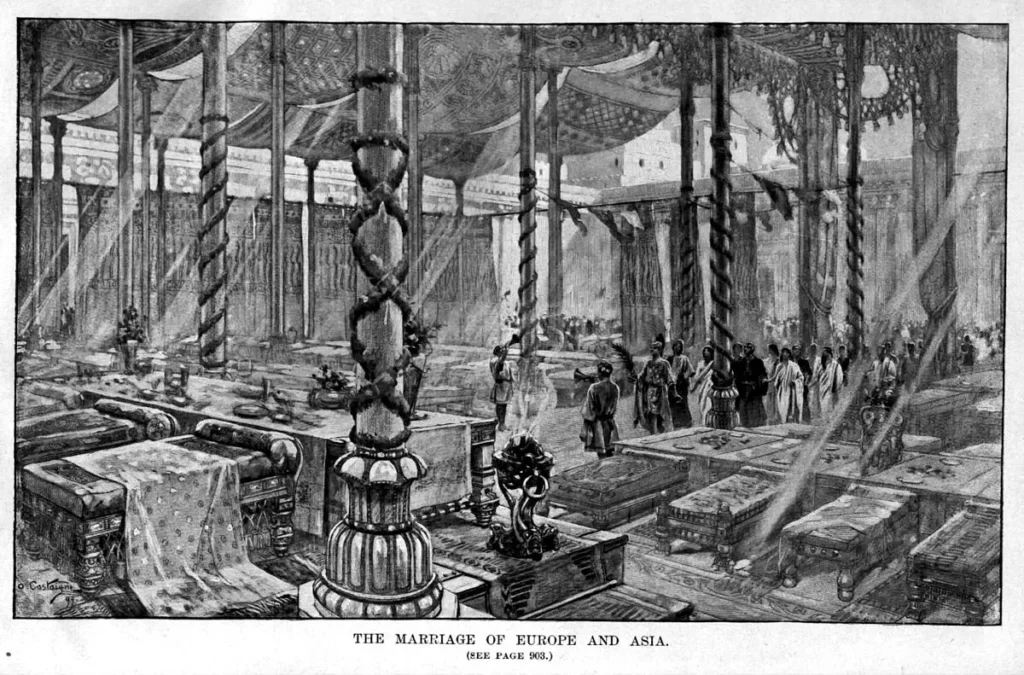
In spring 324 BCE at Susa, the old Elamite and Persian capital, Alexander staged a mass wedding. He married Stateira, a daughter of Darius III, and Parysatis, a daughter of Artaxerxes III. Eighty or so officers took Persian brides from noble houses in a single ceremony. Thousands of rank-and-file soldiers married local women or received dowries and gifts if already married. The king fed the city for days. He burned incense in Persian style and wore a robe that blended Macedonian and Iranian elements. He called the Persian nobles by their titles, not by Greek equivalents. He even recruited Persian youths into the army, the Epigonoi, who were trained in Macedonian drill and given the tools of phalanx warfare. He thought the policy a cure: loyalty built through marriages, stipends, and the honor of fighting close to the king.
Many Macedonians did not see themselves in the program. They saw their king asking them to become something that their fathers would not have recognized. They saw their privileges diluted by new names at table and in councils.
Opis: rage, dismissal, and reconciliation
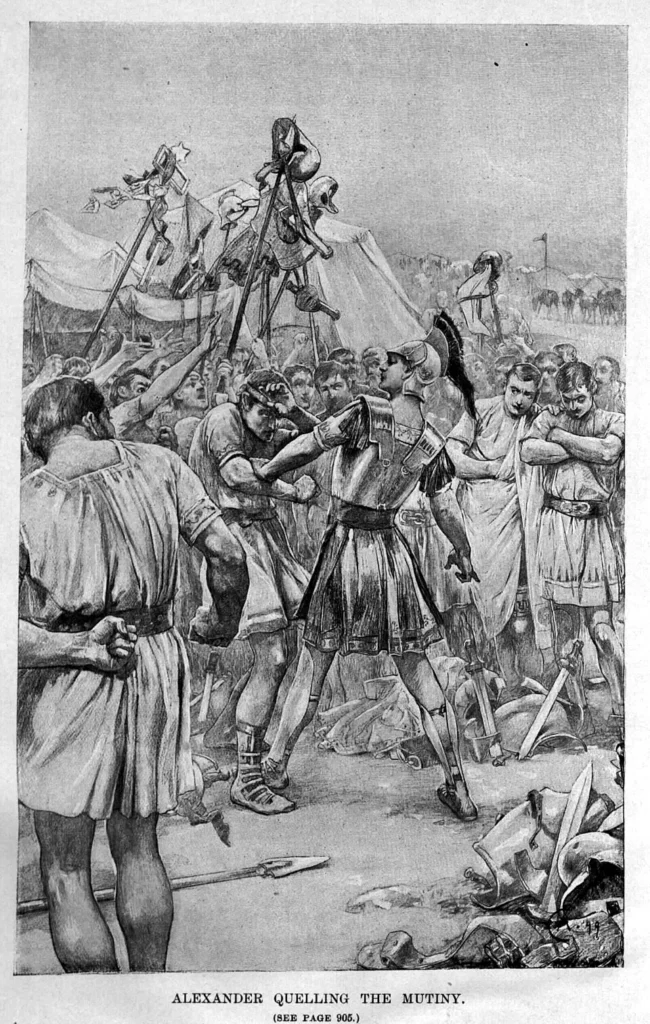
At Opis on the Tigris in 324 BCE, after ordering the discharge of veterans too old or wounded to continue, Alexander met a roar of protest. Soldiers accused him of preferring barbarians, an old Greek word for those who did not speak Greek, and of tossing aside men who had carried him since the Hellespont crossing. Alexander responded with a performance that only he could manage. He dismissed the entire army, told them to go home, and said he would continue with Persians who loved their king. Then he isolated the leaders of the protest, arrested or executed the ringleaders, and waited. The veterans begged to be taken back. He held a reconciliation ceremony in which Macedonians and Persians dined together. He adopted Persian nobles into the royal family with the kiss that marked such ties. The scene did not erase resentment. It did reset the army enough for the last year to proceed.
Hephaestion’s death and the limits of self-control
In autumn 324 BCE at Ecbatana, Hephaestion fell ill. He was the closest friend Alexander had, an officer who had commanded cavalry and who shared his tent, jokes, and plans since boyhood. The cause of death cannot be known. Ancient writers mention fever and possibly a mistake in diet or treatment. Alexander’s response shows a man who used ritual to control grief. He cut his hair, like Achilles for Patroclus in Homer. He banned music. He ordered a massive pyre built at Babylon for the dead friend and planned honors that edged toward deification. He sent envoys to inquire at Siwa whether a sacrifice offered to Hephaestion as a hero would be acceptable. He did not normally let private life show. This time he let the city see a friend that power could not protect.
Back to Babylon: a capital, a harbor, and a set of plans that died on the page
Alexander made Babylon his seat for the last months. The city’s position on the Euphrates and close links to the Tigris made it a hinge for routes to Syria, the Gulf, and Iran. He planned a harbor enlargement, dredging and cutting to improve access for heavy transports. He set architects to work on a great funeral monument for Hephaestion. He received embassies from Libya and Italy and possibly from Carthage, although not all claims of embassies are credible. He assembled ships and engineers for an Arabian expedition that would map and bind the western shore of the Persian Gulf and the coast of Arabia itself. He made a list of future projects: roads across the Libyan desert, a circumnavigation of Arabia, canals near Babylon to control floods.
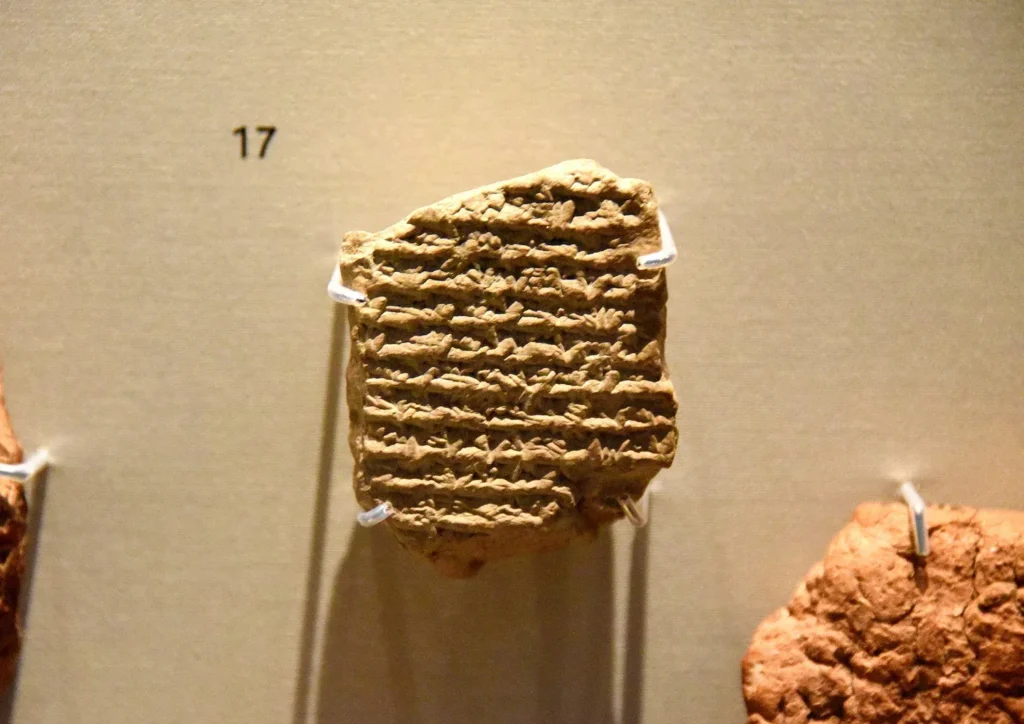
In early June 323 BCE he fell ill after a banquet and a sacrifice. He had been drenched in rain during a ritual. Fevers came often in Mesopotamian summers. He developed pain and weakness. The ancient narratives diverge in detail. Some imply a relapse after apparent improvement, others set a steady decline. Poison is unlikely given the time course and the number of cups a king drank that others could taste. Malaria, typhoid, and other infectious causes fit the environment and the report of rising fever. He lost his voice. He could no longer meet troops in person. He ordered the doors to his bedchamber opened so soldiers could file past to see him alive. He is said to have handed his signet ring to Perdiccas, a senior officer, or to have answered the question of succession with a phrase that puzzled listeners: to the strongest, or to a word that meant to Craterus which sounded like to Krateroi and could be misheard in a room of worried men. On 11 June 323 BCE, aged thirty-two, Alexander died.
Without Alexander: the succession crisis and the first partitions
The empire he made had never been a single country. It was a collection of provinces, satrapies, garrisons, kings, cities, roads, and treasuries that obeyed because he moved fast and broke punishments into precise pieces. After his death, the court at Babylon tried to hold the shape. The army’s political assembly, a Macedonian habit preserved even now, compromised. They proclaimed as king Philip III Arrhidaeus, Alexander’s half brother with limited capacity for rule. They proclaimed as king also Alexander IV, the child Roxane carried, not yet born. Perdiccas became regent for the kings and lieutenant for the empire. The satrapies were assigned to commanders at the Partition of Babylon: Ptolemy took Egypt, Seleucus received command of the Companions of the king that soon translated into satrapal power, Antigonus kept Phrygia, and others took Syria, Media, and Bactria.
The compromises lasted months and then broke. Ptolemy seized Alexander’s body for burial in Egypt, knowing that controlling a hero’s tomb means controlling attention. Perdiccas marched against him, failed to cross the Nile, and died, killed by his own officers. Antipater, the old regent in Macedon, became regent for the kings. After Antipater died, his appointed successor Polyperchon fought with Cassander, Antipater’s son, for control of Macedon. In Asia, Antigonus Monophthalmus gathered armies to make himself arbiter of the east. Seleucus fled Egypt, then returned with a handful of men to take Babylon, founding the line that would dominate Mesopotamia for centuries as the Seleucids.
Roxane bore a son, Alexander IV. She and the boy were initially protected by men who claimed to fight in their name. The protection did not last. Philip III was killed in 317 BCE. The child king and his mother were murdered around 310 by Cassander. Those dates end the Argead line. The empire Alexander made became the Hellenistic kingdoms: Seleucid in the east, Ptolemaic in Egypt, Antigonid in Macedon, and several others in Asia Minor. Greek became a language for trade from the Nile delta to Ai-Khanoum. Cities founded by the king and his officers anchored a web of markets that let ideas and coin move faster than before.
How the army changed the world it walked through
The Macedonian army Alexander inherited and reshaped relied on combinations: a pike wall coordinated with flexible hypaspists and a heavy cavalry wedge that moved where the enemy line exposed a seam. He added artillery to the field. Torsion engines that Greeks once used only at siege lines began appearing in battle to throw bolts into dense infantry before contact. He used sappers to undermine walls, and he used towers on rollers to command height over parapets. At Tyre and Gaza he learned to fight on sea water and on sand with equal stubbornness. In Bactria and Sogdiana he learned to hunt raiders with decoys and second lines. In India he learned to defeat elephants without panicking horses.
He changed the army’s makeup as he fought. Persian nobles who had carried the empire’s horse now rode in units that took Macedonian orders. The Epigonoi drilled with sarissas and shields and learned to pivot on a file leader’s voice. Subject people entered the ranks not merely as auxiliaries but as phalangites. The army became the empire’s classroom for a hybrid elite.
Money, grain, and how conquest became administration
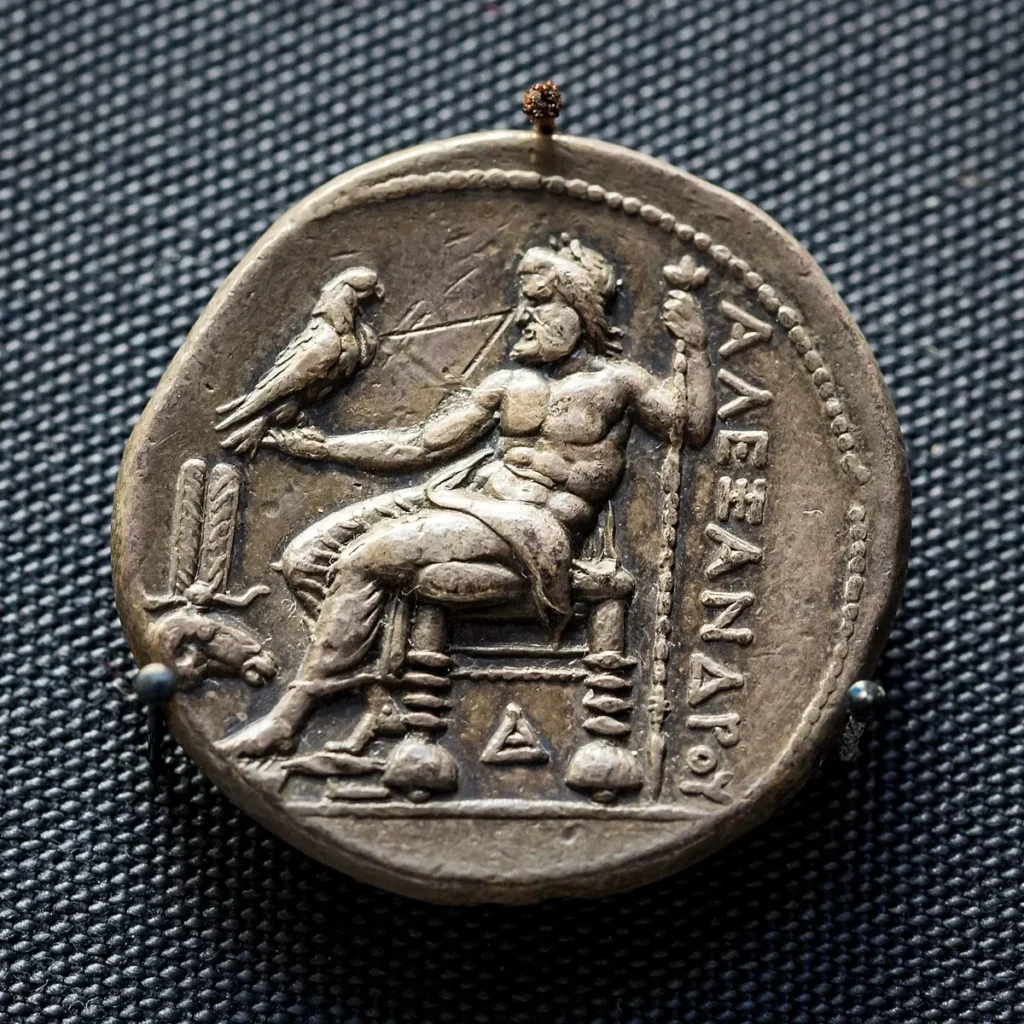
Susa’s treasury and the vaults at Persepolis yielded bullion at a scale that stunned Greeks used to small polis budgets. Alexander minted silver on Attic standards and maintained local coin elsewhere when it greased commerce. He paid troops on time more than any previous conqueror could. He reorganized taxation in satrapies by using Persian records, then put Macedonian comptrollers alongside local staff. Grain purchases at every stage support the maps we read. A march across northern Iran demanded depots. A siege demanded rope for engines and carpenters to fix axles. A voyage down the Indus demanded shipwrights and jackstaffs as much as pilots. Administration came from lists, and Alexander loved lists.
Cities and names that fixed an empire
Alexander founded or renamed many cities. Not all were major metropolises. Several were fortified camps made permanent at river crossings or in grain districts. Alexandria in Egypt became the lighthouse of Hellenistic scholarship and trade, with the Pharos as a signal to ships and the Museum and Library as a signal to elite minds. Other Alexandrias in Arachosia, in Aria, and at the edge of the Jaxartes served different purposes, from holding a frontier to farming a plain. They took grids and stoas with them. They took Greek-speaking garrisons that married locals and created the bilingual generations that would staff royal offices for two centuries.
Religion and honors: how far a king could go
Alexander sacrificed to Greek gods at every step. He appropriated local cults when they served. At Memphis he honored Apis. At Babylon he honored Bel. At Siwa he accepted Amun’s words as confirmation that his kingship was not only a constitutional fact but also a divine favor. He allowed himself to be called son of a god in Egypt, a normal component of pharaonic ideology. In Greek cities he let priests of his cult be appointed only late, after success had made the question less edgy. These layers show a man who read audiences well and who saw no contradiction in appearing as different kinds of king in different capitals.
He also asked men to bow in ways they found hard. Proskynesis for Persians was normal before the Great King. For Greeks and Macedonians it was worship offered to a god. Alexander’s attempt to blend kisses and bows failed because certain gestures carry meanings that policy cannot dissolve. He learned, and he kept the practices where they worked.
Sources, numbers, and uncertainty
No contemporary Greek history of the whole campaign survives. We read Alexander through later writers who used lost memoirs and court documents. Arrian of Nicomedia wrote in the second century CE and favored Ptolemy and Aristobulus, men who had served the king. Plutarch wrote biographical essays that sought character rather than campaign logs. Diodorus compiled earlier historians into a universal history. Curtius Rufus in Latin wrote a dramatic narrative that explores motives more than he checks figures. Babylonian astronomical diaries provide a rare contemporary check on some events, including the entry into Babylon in 331 and the death in 323. In India, Sanskrit and Prakrit sources of later date reflect traditions that need careful comparison with Greek accounts. When numbers sound improbable, they often are. When a scene is too tidy to be true, it may still be a good guide to what the actors wanted the world to think.
Myths that profit from repetition, corrected
Alexander did not cry because there were no more worlds to conquer. He wept because the march would end before he had completed all of the list he kept in his head and on his tables. He was not a modern egalitarian. He believed in hierarchy and knew how to use its stages for effect. He was not a careless destroyer of Persopolis for no reason at all, nor a pure avenger of Greek temples with a perfect memory. He was a political actor who used fire to speak to Greeks, then regretted a speech that cost him allies he wanted in Iran. He did not invent a single blended race of Greeks and Asians. He made a political elite that could send tax receipts in Greek and Aramaic in the same month.
What lasted and what did not
His empire did not last as a single state. His routes did. Caravan paths and sea lanes that his columns cleared became arteries for Hellenistic trade. His coins became the standard for decades. His cities fixed markets to harbors and roads that had lacked urban anchors. Greek became a language of banks, courts, and astronomy from Alexandria to Ai-Khanoum. The Seleucid, Ptolemaic, and Antigonid kingdoms fought one another, then accepted rules that look like Alexander’s: mixed staffs, standardized measures, and royal justice that traveled in a chariot with clerks behind it. Rome later took much from those systems. The empire that Rome conquered in the east was already an Alexander-shaped world.
He died at thirty-two with a project list still fresh. What we can measure is not only territory. It is the change in habit. After him, a general could expect to judge cities by their grain capacity and their harbor bars. After him, a satrap’s letter could arrive in a different language and still be legible to a clerk. After him, the idea of a world connected by roads, forts, and funds felt less like a poet’s boast and more like a schedule that could be kept if enough men dug trenches at the right time.
FAQ
When was Alexander the Great born, and when did he die?
He was born in 356 BCE at Pella in Macedon, most likely in late July, and he died on 11 June 323 BCE in Babylon at about thirty-two years of age.
How large was the army that crossed into Asia in 334 BCE?
Roughly 32,000 infantry and 5,000 cavalry, a veteran Macedonian core supported by allied Greeks, engineers, and siege specialists.
Did Alexander ever lose a pitched battle?
No. He won the major set pieces at the Granicus, Issus, Gaugamela, and the Hydaspes. He suffered hard moments in sieges and in Central Asian guerrilla war, and he was nearly killed at the Mallian assault, yet he avoided a decisive field defeat.
Why did he burn the palace at Persepolis?
Ancient sources disagree. Explanations range from a calculated act to avenge earlier Persian invasions to a drunken decision during a banquet. He later showed regret, which suggests mixed motives rather than a single clear policy.
Why did the army refuse to march beyond the Hyphasis (Beas) River?
After eight years of campaigning, men faced monsoon rains, swollen rivers, and reports of powerful states farther east with large numbers of elephants. Exhaustion, supply concerns, and the desire to return to families outweighed the appeal of new conquests.
What was his policy toward Persian elites and customs?
He kept Achaemenid administrative structures, appointed Persian nobles alongside Macedonians, married into the royal house, staged mass weddings at Susa, trained Persian youths as phalangites, and adopted elements of court ceremony. The fusion worked in offices and coinage more than in social habit, which provoked resentment among some Macedonians.
What happened at the Hydaspes, and why did Porus remain in power?
Alexander crossed the river in stages during monsoon conditions, used combined arms to neutralize elephants, and broke Porus’s line. He restored Porus as a loyal client king because it secured the region east of the Hydaspes without the cost of a prolonged occupation.
What likely caused Alexander’s death?
A febrile illness that fits malaria or typhoid better than poison. The timeline over several days and the environment in Babylon support disease as the most credible explanation.
Who succeeded Alexander after 323 BCE?
There was no single heir in practice. The army proclaimed Philip III Arrhidaeus and the unborn Alexander IV as kings under regency. Power fell to senior commanders who divided satrapies in the Partition of Babylon. Their wars created the Hellenistic kingdoms: Ptolemaic Egypt, Seleucid Asia, and Antigonid Macedon.
How many cities did he found, and which mattered most?
Ancient lists credit more than twenty foundations or refoundations bearing his name. Several were fortified depots at river crossings. Alexandria in Egypt became the most important, with its harbor, Pharos lighthouse, and intellectual institutions anchoring Mediterranean trade and scholarship for centuries.