
Aristotle’s lost works numbered more than 150 compositions according to ancient catalogues. These writings vanished almost entirely from the historical record, leaving behind only scattered fragments preserved in quotations by later authors. The philosophical dialogues that made Aristotle famous during his lifetime have disappeared, while his technical lecture notes survived to become the texts we study today.
Diogenes Laertius compiled a catalogue listing approximately 145 separate titles attributed to Aristotle. The list includes dialogues, collections of research materials, philosophical treatises, and letters. Most of these works existed in antiquity but had vanished by the early medieval period.
Diogenes Laertius Catalogue
The ancient biographer Diogenes Laertius preserved the most complete inventory of Aristotelian writings that survives from antiquity. His catalogue records titles such as On Justice in four books, On Poets in three books, and On Philosophy in three books. Many entries list works in multiple volumes, suggesting substantial compositions rather than brief essays.
The catalogue divides roughly into philosophical dialogues, research collections, and technical treatises. Dialogues included works like the Gryllus, the Eudemus, and the Protrepticus. Research collections covered topics from political constitutions to records of dramatic performances at Athens. Technical treatises addressed logic, rhetoric, physics, and ethics.
Diogenes Laertius claims the total came to 445,270 lines of text. This enormous body of work dwarfs the surviving Aristotelian corpus. The numbers suggest that what we possess today represents perhaps one-fifth of Aristotle’s total literary output.
The Exoteric and Esoteric Division
Ancient sources distinguished between Aristotle’s exoteric and esoteric writings. The exoteric works were published dialogues written in polished literary style for a general educated audience. The esoteric works were lecture notes and research materials intended for use within Aristotle’s school, the Lyceum.
Cicero praised the “golden flow” of Aristotle’s dialogues, comparing them favorably to Plato’s works. These published writings made Aristotle’s reputation in the Hellenistic period. Ancient readers knew Aristotle primarily through his dialogues, not through the technical treatises that survive today.
The esoteric works remained largely unknown outside the Peripatetic school for centuries. These texts consisted of lecture notes that Aristotle used when teaching advanced students. They contained condensed arguments, technical terminology, and references that assumed familiarity with ongoing discussions in the school.
The Published Dialogues
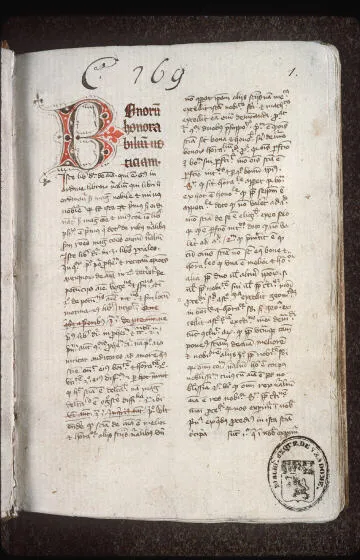
Aristotle wrote philosophical dialogues modeled on those of Plato but developing his own distinctive approach. The Eudemus or On the Soul argued for the immortality of the soul using arguments different from those Plato employed. The work took the form of a consolation dialogue commemorating Eudemus of Cyprus, a student who died young.
The Protrepticus or Exhortation to Philosophy encouraged readers to devote themselves to the philosophical life. Composed around 350 BC, the dialogue addressed Themison, ruler of Cyprus. Substantial fragments survive in quotations by later philosophers, allowing partial reconstruction of the work’s arguments.
The On Philosophy presented Aristotle’s mature views on metaphysics, theology, and the nature of philosophical inquiry. Written in three books, the dialogue criticized Plato’s Theory of Forms while developing Aristotle’s own doctrines about the unmoved mover and the eternity of the world. Ancient sources credited this work with introducing significant innovations in philosophical theology.
Historical and Political Writings
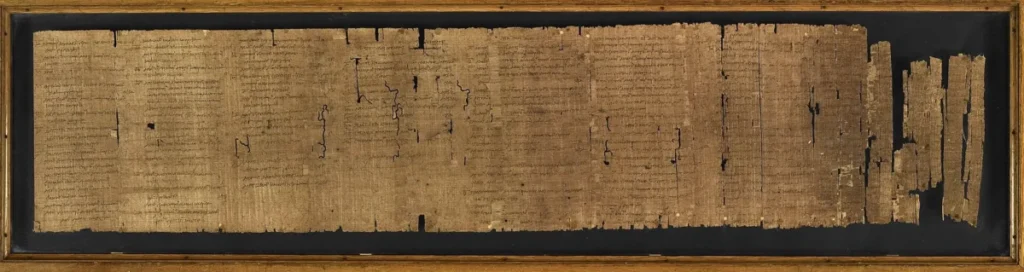
Aristotle conducted extensive research into the history and constitutions of Greek city-states. His collection of 158 constitutions compiled the governmental structures and political histories of states throughout the Greek world. Only one of these survives, the Constitution of Athens, rediscovered on papyrus in Egypt in 1891.
The constitutions project represented collaborative research involving Aristotle’s students in the Lyceum. Teams gathered documents, interviewed witnesses, and compiled histories of constitutional changes in each city. The resulting collection became a reference work for political philosophy and comparative government.
Political writings also included works on kingship, statesmanship, and colonization. The Alexander or On Colonies addressed questions about founding new cities. The On Kingship examined the nature of monarchical rule. These practical political works reflected Aristotle’s connections to the Macedonian court and his involvement in Alexander’s imperial project.
Scientific Research Collections
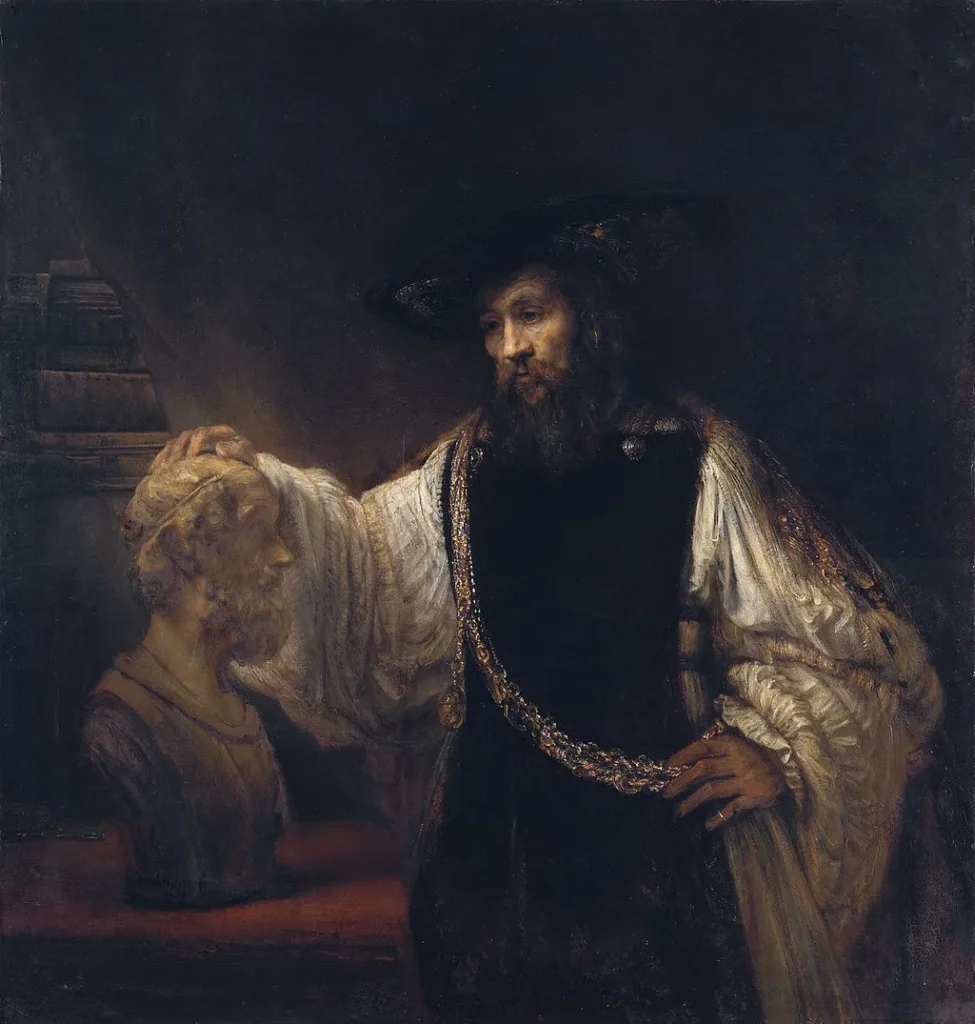
Aristotle compiled vast collections of empirical observations in natural history, medicine, and mathematics. The Problems gathered observations and questions about natural phenomena, organized by topic. Works on dissections recorded anatomical research conducted at the Lyceum.
Historical research extended beyond politics to cultural history. The Victors at Olympia chronicled athletic champions at the Olympic Games. The Dramatic Records documented theatrical performances and prize-winners at Athenian festivals. The Proverbs collected popular sayings.
These research collections served as reference materials for Aristotle’s philosophical works. His biological treatises drew on the dissection records. His ethical and political writings referenced the constitutional histories. The collections represented a new approach to philosophy grounded in systematic empirical research.
Letters and Occasional Writings
Ancient catalogues listed numerous letters attributed to Aristotle. Nine books of letters to Antipater, four books to Alexander, and single letters to various correspondents appeared in the lists. Most of these were probably authentic correspondence, though some may have been literary forgeries.
The letters would have contained invaluable biographical information about Aristotle’s relationships with Macedonian rulers and political figures. They might have clarified his role as Alexander’s tutor and his connections to Macedonian imperial policy. Unfortunately, nearly all the letters have disappeared.
Occasional writings included poems composed for specific events. Verses honoring the god Apollo and elegiac poems appeared in the catalogue. These occasional pieces demonstrated Aristotle’s versatility as a writer beyond philosophical prose.
How the Works Were Lost
The disappearance of Aristotle’s published writings while his lecture notes survived presents a historical puzzle. According to ancient tradition, Theophrastus inherited Aristotle’s library when he became head of the Lyceum in 322 BC. Theophrastus bequeathed the library to Neleus of Scepsis, who removed it to Asia Minor.
Neleus’s heirs stored the manuscripts in a cellar where dampness and insects damaged them severely. Around 100 BC, the damaged manuscripts were sold to Apellicon of Teos, a wealthy book collector. Apellicon attempted to restore the damaged texts, but his editorial work introduced numerous errors.
When Rome conquered Athens in 86 BC, Sulla seized Apellicon’s library and transported it to Rome. There the grammarian Andronicus of Rhodes organized and edited the texts around 60 BC, producing the first systematic edition of Aristotle’s works. This edition contained primarily the esoteric writings, while most of the published dialogues had already been lost.
Built out of a love for history, kept free from distractions.
Spoken Past is an independent project shaped by curiosity, care, and long hours of research. Reader support helps keep it maintained, carefully researched, and open to everyone.
The Survival of Fragments
Fragments of Aristotle’s lost works survive embedded in quotations by later Greek and Roman authors. Cicero preserved passages from the dialogues, particularly from the On Philosophy and Protrepticus. Plutarch quoted extensively from the ethical and political writings. Simplicius and other late ancient commentators cited lost works when explaining Aristotle’s surviving treatises.
Modern scholars have collected these scattered quotations and attempted to reconstruct the lost works. The fragments allow tentative conclusions about the content and arguments of the missing dialogues. However, the reconstructions remain necessarily incomplete and uncertain.
Some fragments survive on papyrus discovered in Egypt. The most important papyrus find was the Constitution of Athens, the sole survivor from Aristotle’s collection of 158 constitutions. Other papyrus fragments preserve portions of lost works, though usually only small pieces of text.
The Philosophical Impact
The loss of Aristotle’s dialogues fundamentally changed how later ages understood his philosophy. Ancient readers knew Aristotle primarily as an elegant literary stylist whose dialogues rivaled Plato’s. Medieval and modern readers encountered only the technical treatises with their difficult, compressed style.
The dialogues apparently presented Aristotle’s early views, when he remained closer to Platonic doctrines. Werner Jaeger argued in the twentieth century that Aristotle’s lost works revealed his intellectual development from Platonism toward his mature systematic philosophy. This developmental interpretation depends heavily on reconstructing the lost dialogues from fragments.
The disappearance of the dialogues also meant losing Aristotle’s most accessible presentations of philosophy for general readers. The surviving treatises assume advanced philosophical training and familiarity with technical concepts. The lost dialogues would have shown how Aristotle presented philosophy to educated non-specialists.
Hermippus and Ancient Biography
Hermippus of Smyrna wrote a biography of Aristotle around 200 BC that drew on Aristotle’s lost works for biographical information. Hermippus had access to Aristotle’s letters and dialogues, which contained autobiographical passages and references to contemporary events.
Later biographers relied on Hermippus for details about Aristotle’s life. Diogenes Laertius cited Hermippus repeatedly when describing Aristotle’s career, his relationship with Plato, and his connections to Macedonian rulers. Much of what ancient biographies reported about Aristotle ultimately derived from the lost works through Hermippus’s mediation.
The loss of Hermippus’s biography compounded the loss of Aristotle’s writings. Modern scholars must reconstruct both Hermippus’s account and the Aristotelian works he cited. This double reconstruction introduces substantial uncertainty into biographical claims about Aristotle.
Modern Scholarship
Scholars have attempted to reconstruct Aristotle’s lost works since the Renaissance. Valentin Rose produced the first systematic collection of fragments in the nineteenth century. His edition gathered quotations from ancient sources and attempted to assign them to specific lost works.
Werner Jaeger’s developmental interpretation of Aristotle in the 1920s renewed interest in the lost writings. Jaeger argued that studying the fragments revealed how Aristotle’s thought evolved from early Platonism to mature systematic philosophy. His approach dominated Aristotelian scholarship for decades.
Recent scholars have challenged aspects of Jaeger’s reconstruction while continuing to study the fragments. Questions remain about which quotations genuinely derive from Aristotle and which lost work each fragment belongs to. The fragmentary nature of the evidence makes definitive conclusions impossible.
The Catalogue Tradition
Multiple ancient catalogues of Aristotle’s works circulated in antiquity besides the list in Diogenes Laertius. Hesychius of Miletus compiled a catalogue that partially overlaps with Diogenes Laertius but includes some different titles. Arabic biographers preserved catalogues deriving from different Greek sources.
Comparing the various catalogues reveals discrepancies in titles, book divisions, and attributions. Some works appear under different names in different lists. The number of books assigned to a given work varies between catalogues. These variations suggest the catalogues drew on different manuscript traditions.
Ptolemy-el-Garib compiled a biographical and bibliographical account of Aristotle that influenced later Arabic tradition. His catalogue differed significantly from Greek sources, raising questions about which works he actually knew and which titles he copied from earlier lists.
What Was Lost
The magnitude of the loss becomes clear when comparing the ancient catalogues with surviving works. Major philosophical dialogues have vanished entirely. Vast research collections that represented years of collaborative work disappeared. Letters that would illuminate Aristotle’s biography and historical context are gone.
The 158 constitutions project alone represented an enormous investment of scholarly labor. Only the Constitution of Athens survives, giving a glimpse of what the other 157 works contained. The loss of this collection deprived later political philosophy of its most comprehensive survey of Greek governmental systems.
Scientific writings on topics from astronomy to zoology disappeared. Works on music, mathematics, and medicine vanished. The catalogue in Diogenes Laertius reveals how much broader Aristotle’s interests extended beyond the subjects represented in surviving treatises.
The Irony of Transmission
The survival of Aristotle’s lecture notes while his published works disappeared represents a profound irony. The writings Aristotle intended for posterity vanished. The working documents he used for teaching within the Lyceum became the basis for his philosophical reputation.
This accident of transmission fundamentally shaped how later ages understood Aristotelian philosophy. Medieval scholars built their interpretation on the technical treatises without access to the literary dialogues. Modern readers encounter a compressed, difficult style that may not represent how Aristotle chose to present his ideas to the educated public.
Aristotle’s lost works suggest a thinker quite different from the systematic philosopher of the surviving corpus. The fragments hint at a more literary, more accessible writer who engaged general audiences on fundamental questions about human life and philosophical wisdom. That Aristotle, the one his contemporaries knew, has been largely lost to us.