
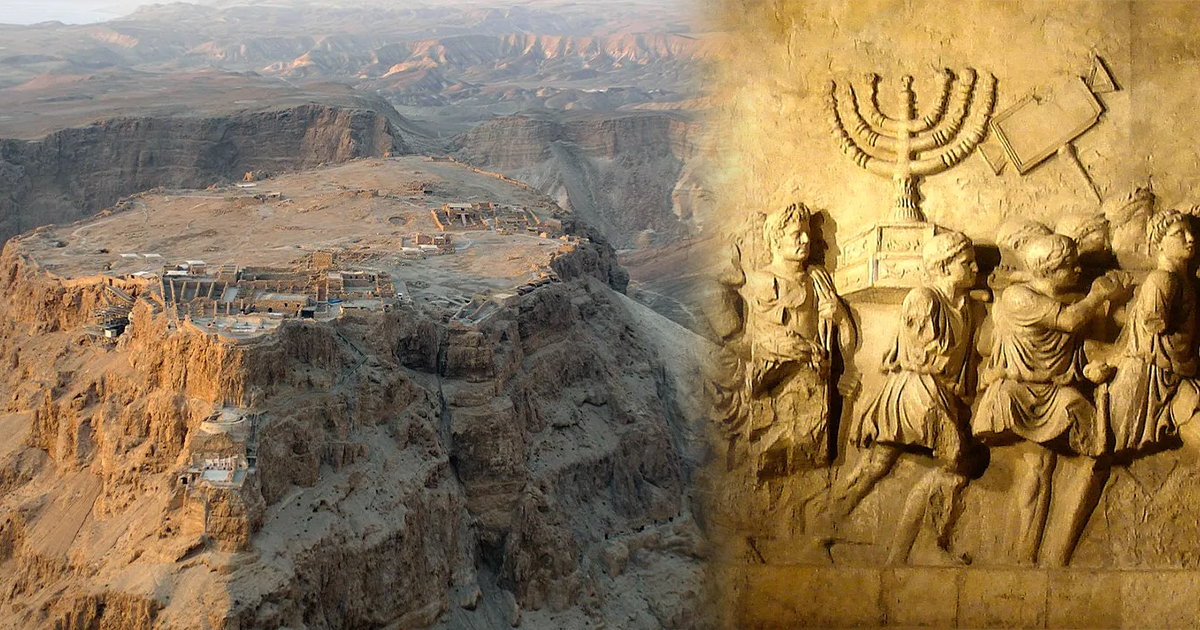
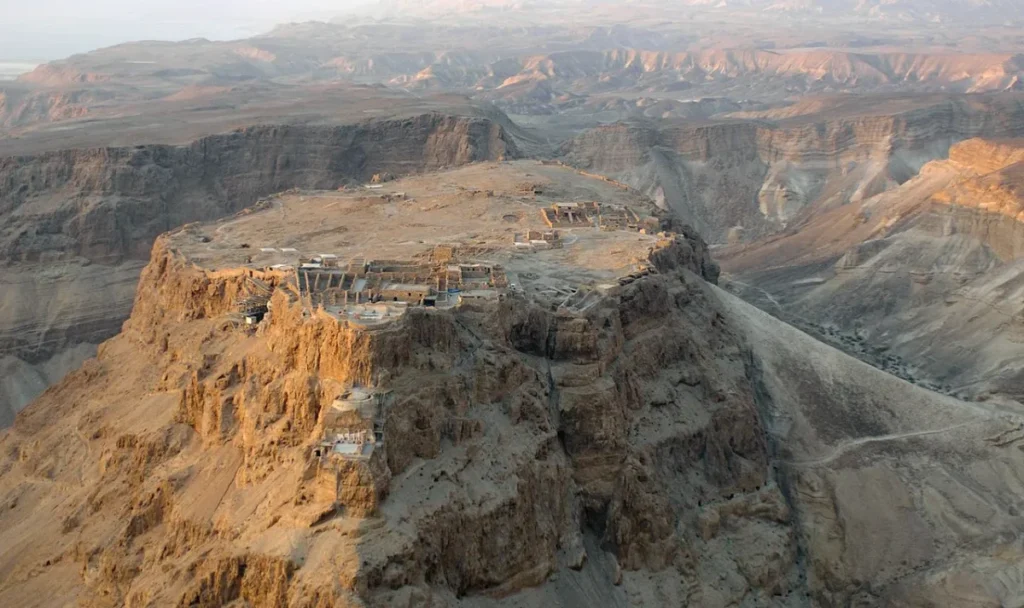
The fortress of Masada towers 1,300 feet above the Dead Sea. In 73 CE, Roman legions surrounded this isolated desert plateau where Jewish rebels had taken refuge. According to the ancient historian Josephus, when soldiers finally breached the walls, they found 960 corpses. The Sicarii rebels had allegedly killed their families and themselves rather than surrender.
This story became one of history’s most famous last stands. Modern Israel adopted it as a symbol of resistance. Archaeologists excavated the site in the 1960s expecting to confirm the dramatic tale. Instead, they uncovered evidence that contradicts key elements of Josephus’s account. The siege of Masada certainly happened, but the mass suicide story contains significant problems.
The First Jewish-Roman War devastated Judaea between 66 and 73 CE. Jerusalem fell in 70 CE after brutal fighting. The Second Temple was destroyed. Most Jewish rebels surrendered or died. Yet one group held out at Masada for three more years. Governor Flavius Silva finally marched on the fortress with the Tenth Legion to end the last pocket of resistance.
Who Were the Sicarii Defenders?
The Sicarii took their name from the curved daggers called sicae that they carried hidden under their cloaks. They were religious extremists who believed armed resistance would trigger divine intervention. Their methods included assassinating fellow Jews they viewed as Roman collaborators. During the revolt’s early days in Jerusalem, they killed the high priest Ananias and other prominent figures.
Their leader Menahem tried to seize control of the rebellion in 66 CE. He directed the siege of the royal palace in Jerusalem where Roman soldiers had taken refuge. After the palace fell, rival Jewish factions turned on Menahem and murdered him. His nephew Eleazar ben Yair escaped with followers to Masada, which the Sicarii had captured earlier that year.
From their desert stronghold, the Sicarii sat out the war’s crucial battles. They never assisted Jerusalem during its desperate siege by Titus. Instead, they raided nearby Jewish settlements for supplies. Their most brutal attack occurred at Ein Gedi, where they massacred over 700 women and children. The Sicarii viewed other Jews outside their sect as wicked and deserving death.
This sectarian worldview explains their inaction while Jerusalem burned. They believed God would destroy both the Romans and “wicked” Jews when divine judgment came. They waited for heavenly armies rather than joining earthly battles. By the time Silva arrived at Masada in 73 CE, they had become isolated fanatics whose resistance embarrassed Roman authority.
The Roman Siege Works Still Stand Today
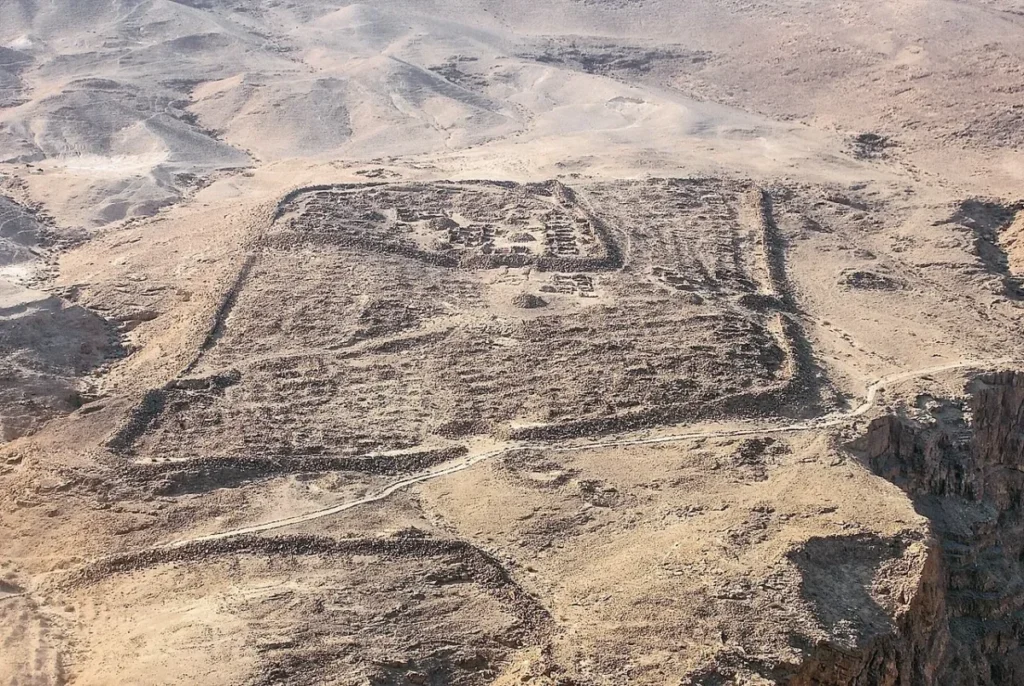
Silva’s approach demonstrated Roman military efficiency at its peak. His troops first built a stone circumvallation wall completely surrounding Masada’s base. This 3.5-mile barrier prevented anyone from escaping. Eight siege camps positioned around the fortress housed the Tenth Legion and auxiliary forces. These camps followed standard Roman military design with clear internal organization.
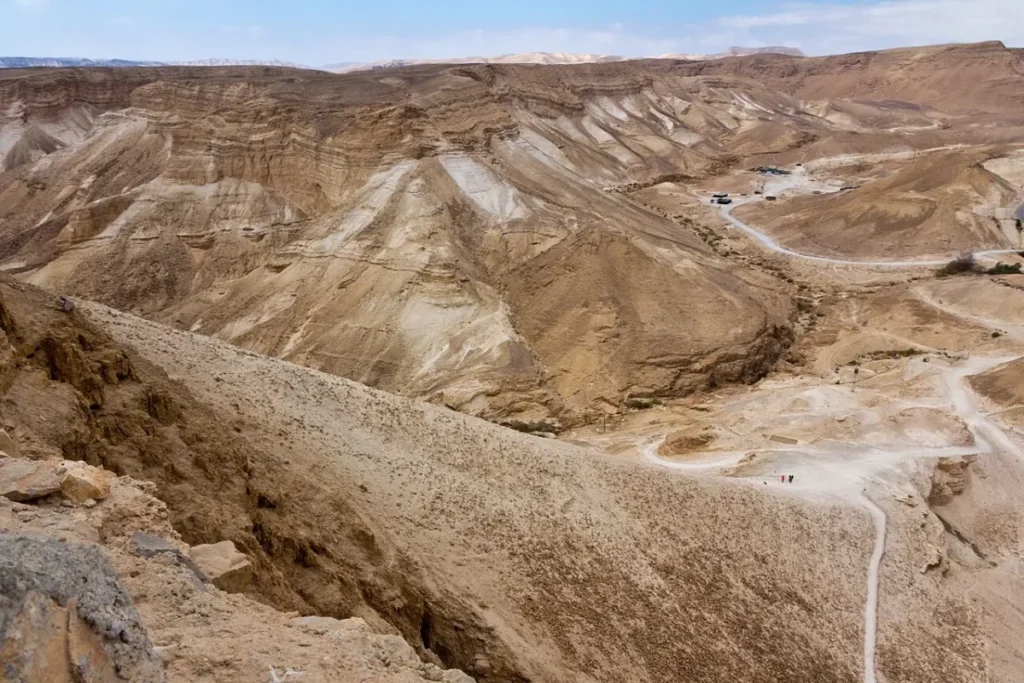
The most impressive achievement was the assault ramp on Masada’s western side. Roman engineers identified a natural bedrock spur jutting from the cliff. They used this as their foundation and built upward with thousands of tons of earth and stones. Jewish prisoners of war likely provided the brutal forced labor for this construction.
The finished ramp reached 375 feet in height. At its summit, legionaries constructed a stone platform supporting a siege tower and battering ram. The tower rose even higher, allowing soldiers to shoot down into the fortress with ballistae and catapults. The ram could now reach Masada’s western wall with devastating force.
Archaeologist Yigael Yadin excavated Masada from 1963 to 1965. His team found these Roman siege works remarkably preserved in the dry desert environment. The circumvallation wall still circles the mountain. The camps remain clearly visible. The ramp climbs dramatically up the cliff face. These physical remains prove the siege occurred largely as Josephus described its military aspects.
Josephus Claims Two Speeches and Organized Suicide
Flavius Josephus provides our only detailed account of Masada’s fall. He completed his work The Jewish War around 81 CE, writing in Rome years after the events. According to Josephus, Romans breached the outer wall with their battering ram. The desperate Sicarii quickly built an inner wall using wood and earth to absorb the ram’s impact.
Roman soldiers set this inner wall on fire on the evening of April 15th. Then Josephus describes something puzzling. Commander Silva withdrew his forces and postponed the final assault until morning. He maintained only a watch to prevent escapes. This pause makes little tactical sense when victory was within immediate reach.
During that final night, Josephus claims, Eleazar ben Yair assembled his followers and delivered two lengthy speeches. The first argued that death would preserve their freedom while slavery to Rome meant worse than death. When some hesitated, Eleazar delivered a second speech about the immortality of the soul. He invoked the Greek philosopher Plato and cited Indian philosophers as examples.
These speeches present immediate credibility problems. Would a Jewish rebel commander really lecture desperate followers about Platonic philosophy? The speeches reveal Josephus’s Greek education rather than authentic Sicarii rhetoric. Ancient historians regularly composed speeches they believed appropriate for situations. Readers understood these were literary inventions, not transcripts.
Convinced by the speeches according to Josephus, the defenders enacted a careful plan. Each man killed his wife and children first. Then they drew lots to select ten executioners who killed all remaining men. Finally one man chosen by lot killed the other nine before committing suicide himself. This lottery system meant technically only one person committed suicide.
The next morning, Romans entered expecting fierce battle. Instead they found 960 corpses in the northern palace. Seven people survived by hiding in underground cisterns during the massacre. Two women and five children emerged to tell Romans what happened. The soldiers were supposedly amazed at the steadfastness of the dead.
The Basic Epistemological Problem
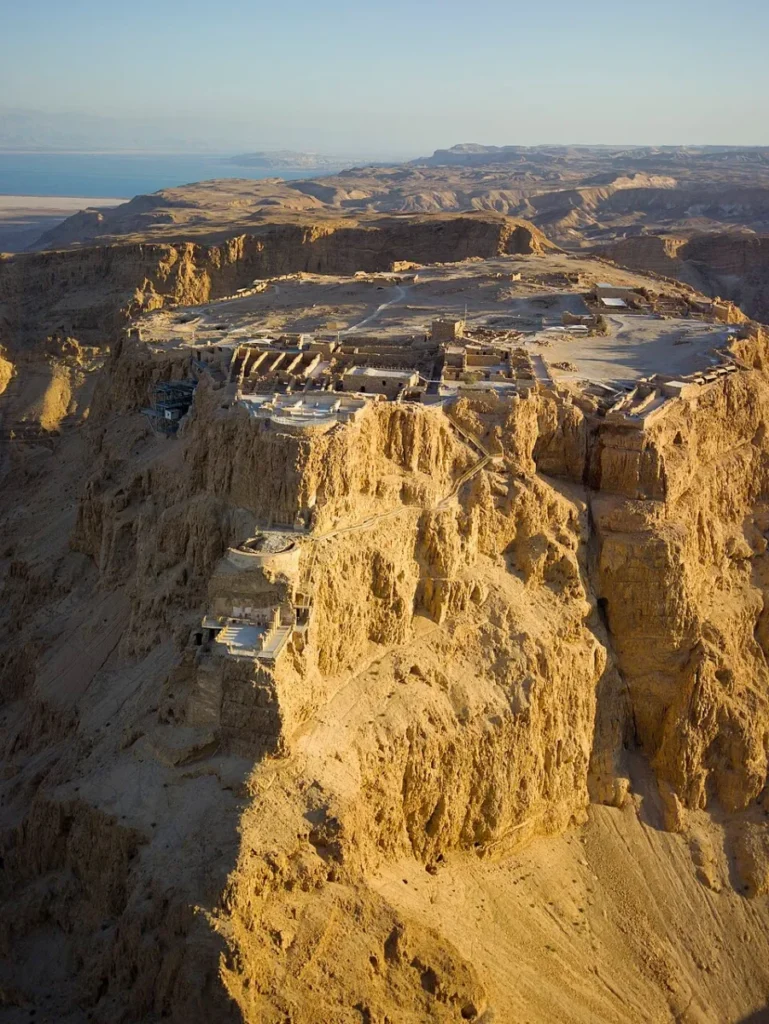
Josephus could not have known these details. All participants died. The seven survivors hiding in cisterns were not present for the speeches. Josephus himself states only the “manliest” comrades attended the assemblies. The hidden survivors could not have witnessed the killings as they occurred across the fortress.
Even if survivors heard some things, they could not have known about the lottery system specifics. They could not have known the exact body count. They could not have known the last man set fire to the palace specifically. These details represent Josephus’s educated guesses or inventions.
Josephus likely had access to Roman military reports. Silva served as consul in Rome in 81 CE when Josephus was writing. The men may have spoken directly. Silva could describe the siege’s military aspects. However, the private speeches and internal deliberations of the Sicarii remained unknown to Roman observers.
Ancient historians composed speeches for dramatic and moral purposes. Greek and Roman readers accepted this convention. The speeches allowed historians to explore motivations and provide instruction. They made narratives engaging. Josephus was crafting appropriate rhetoric, not recording actual words.
Archaeology Reveals Multiple Contradictions
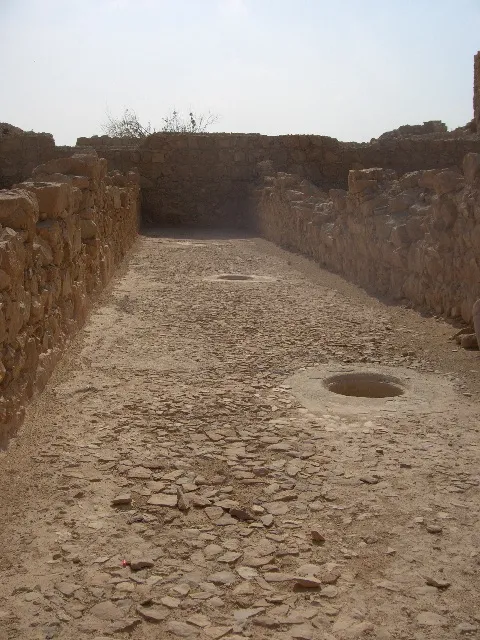
Josephus claims the Sicarii gathered all possessions into one large pile before burning them. This creates a dramatic image of unified, purposeful destruction. Archaeological excavation revealed completely different evidence. Fires burned in multiple scattered locations throughout the fortress complex.
The casemate wall showed burning in various rooms. Several storerooms containing goods were set ablaze. The western palace burned extensively. Other buildings across the plateau also showed fire damage. This scattered pattern suggests chaos rather than coordination. Different groups acted independently, not according to a unified plan.
Scholar Shaye Cohen analyzed these contradictions in his influential 1982 study “Masada: Literary Tradition, Archaeological Remains, and the Credibility of Josephus.” If the suicide had been as organized as Josephus describes, we would expect one centralized burn location. Instead, the evidence points to spontaneous desperate actions by different people in different areas.
The food supplies present another clear contradiction. Josephus claims Eleazar ordered followers to destroy everything except foodstuffs. They deliberately left food intact to prove they were not starved into submission. Archaeological evidence shows many storerooms with provisions were actually burned. Only rooms containing century-old Herodian stores remained intact.
The simplest explanation is that defenders destroyed their own relatively fresh supplies along with other possessions. Romans later discovered Herod’s ancient stores that nobody had used. These provisions would have been barely edible after 100 years of storage. Josephus or his source misinterpreted this as intentional preservation.
Cohen also identified a physical impossibility. The northern palace could not have held an assembly of nearly 1,000 people. The palace consists of three terraces built down the cliff face. While architecturally impressive, these terraces are too small for such a gathering. Yet Josephus implies all murders occurred there.
Josephus states the last man set fire to the palace specifically. Archaeological evidence shows fires across the entire site, not just the palace. This geographic detail reveals Josephus either misunderstood Masada’s layout or shaped his narrative without concern for spatial realities.
Built out of a love for history, kept free from distractions.
Spoken Past is an independent project shaped by curiosity, care, and long hours of research. Reader support helps keep it maintained, carefully researched, and open to everyone.
The Skeletons Tell a Different Story
Yadin discovered three skeletons in the northern palace’s lower terrace. These included a man, woman, and child. This could potentially support a family murder-suicide pattern. However, three individuals hardly prove 960 people died as Josephus claimed. The absence of the other 957 bodies requires explanation.
Twenty-five more skeletal remains were found in a cave on Masada’s southern cliff face. These remains fundamentally contradict the mass suicide story. If Romans found 960 corpses in the palace, why would they move 25 bodies? Why carry them across the plateau and down the treacherous cliff to deposit them in a difficult cave?
This makes no sense as a disposal method. Legionaries would simply throw corpses over the nearest cliff edge. The more plausible explanation is these 25 people tried hiding from Romans in the cave. They were either discovered and killed there or committed suicide when found. Their presence shows not all defenders participated in coordinated mass suicide.
Some people tried to escape or hide. This indicates panic and chaos rather than unanimous resolve and calm deliberation. The cave skeletons are material evidence contradicting the literary narrative.
The cemetery excavations raised questions about population composition. Out of 43 graves excavated, only three adult female skeletons from the Second Temple period were identified. No children’s remains from that era were found. This small sample suggests women and children may not have been numerous at Masada.
If the fortress housed 960 people including many families, we would expect more evidence of women and children. The predominance of male burials suggests Masada was primarily a military garrison. This undermines Josephus’s narrative of men systematically killing wives and children.
The Pottery Lots and What They Actually Prove
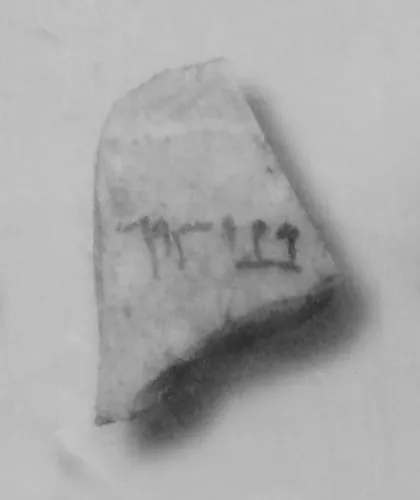
Yadin discovered eleven pottery sherds inscribed with names. These ostraca seemed to vindicate Josephus’s lottery system. However, the numbers do not align with his description. Josephus describes two lottery stages. First, defenders drew lots to select ten executioners from 960 people. This would require hundreds of lots. Then those ten drew lots to select one final executioner. This requires exactly ten lots.
Eleven sherds matches neither scenario. If these are from the first drawing, where are the other hundreds? If from the second drawing, why eleven instead of ten? The ostraca may have served some role in final events. Perhaps small groups used lots when making desperate decisions. But these eleven sherds cannot verify Josephus’s specific lottery description.
Archaeological evidence requires careful interpretation. Researchers naturally want to connect physical remains with known narratives. This desire can lead to seeing confirmations where evidence is actually ambiguous. The pottery lots demonstrate this problem. They superficially seem to support Josephus but actually raise more questions.
How Ancient Historians Used Collective Suicide Stories
To understand Josephus’s embellishments, we must recognize ancient historiographical conventions. Dramatic effect and moral instruction were valued alongside factual accuracy. Invention and embellishment were expected, not condemned as dishonesty.
Cohen’s research identified sixteen parallel accounts in Greek and Roman literature where besieged populations allegedly chose mass death over surrender. These stories follow recognizable patterns revealing literary conventions. One pattern has men placing women and children under guard, fighting to death, while guards kill families and themselves. Another pattern has men kill families, gather possessions, set everything ablaze, and throw themselves into flames.
Josephus’s Masada narrative combines elements from both patterns. It also borrows from his earlier Jotapata account where he allegedly participated in a suicide pact with a lottery. The lottery motif appears in both stories. This literary borrowing suggests Josephus shaped his Masada account using familiar narrative structures.
Moreover, archaeology has proven several ancient collective suicide accounts were exaggerated or false. Herodotus claimed sixth-century Xanthus was destroyed when citizens committed mass suicide avoiding Persian conquest. Archaeology showed the city was not destroyed or abandoned during this period.
Diodorus wrote that entire Sidon and all inhabitants perished in mass suicide during the 340s BCE. Historical records prove many Sidonians were captured and taken to Babylon and Susa. The city remained powerful less than 30 years later.
Roman historian Livy described multiple collective suicides during Spanish wars. However, comparing Livy with earlier historian Polybius describing the same events reveals systematic embellishment. Polybius reported Hannibal found booty and captives at Saguntum. Livy transformed this into mass suicide. Polybius stated Numantines surrendered and many were taken prisoner. Livy claimed they killed families and themselves.
Collective suicide had become a stock narrative motif that Livy applied regardless of actual events. Josephus worked within this same literary tradition when crafting his Masada account.
Josephus’s Political Motivations
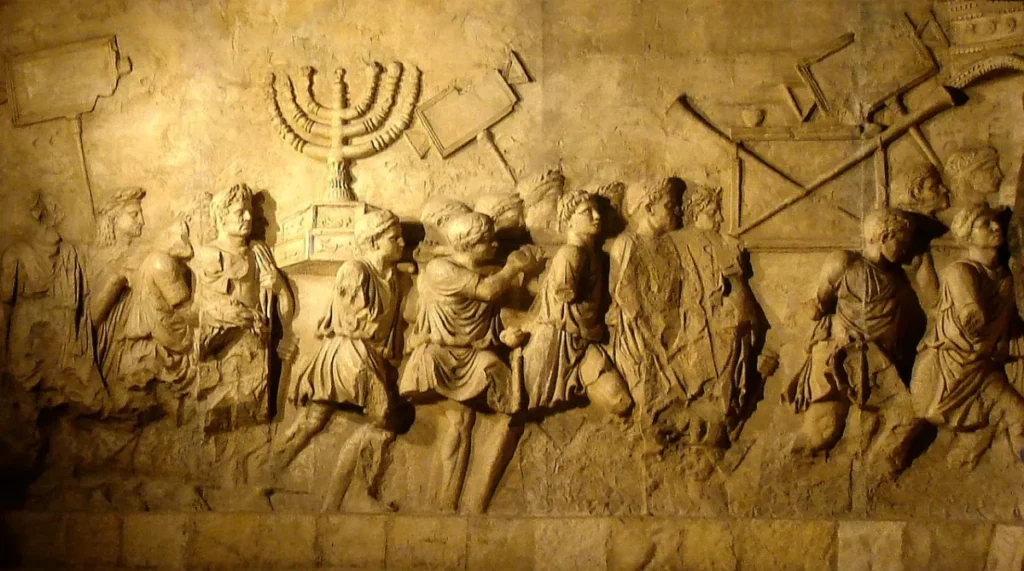
Beyond literary convention, Josephus had specific political purposes. The speeches he composed for Eleazar serve his own agenda. In the first speech, Eleazar takes full responsibility for the revolt. He admits Sicarii policies were wrong. He confesses they sinned against God. He declares their suffering represents deserved divine punishment.
This confession directly serves Josephus’s message throughout The Jewish War. Armed resistance against Rome leads only to disaster. Those who promoted rebellion bear guilt for catastrophe. Josephus wanted Jewish readers to understand the Sicarii’s path meant not just political defeat but divine abandonment.
Most strikingly, Josephus has Eleazar claim God condemned not just Sicarii but the whole Jewish people to destruction. This goes beyond admitting the Sicarii’s errors. It suggests God rejected his chosen people entirely. By placing this blasphemous sentiment in Eleazar’s mouth, Josephus discredited rebel ideology effectively.
The second speech reveals even more clearly that Josephus, not Eleazar, is speaking. This oration is a Greek philosophical treatise on soul immortality. It references Plato explicitly. It appeals to Indian philosophers as moral exemplars. For a Jewish rebel commander addressing desperate followers, this Hellenistic philosophical discourse strains credibility completely.
The speeches also create narrative parallel with Josephus’s Jotapata account. There he described himself delivering a speech against suicide. That speech argued suicide violated Jewish law and represented cowardice. At Masada, Eleazar’s speeches argue the opposite. Josephus created paired speeches presenting opposing arguments, a rhetorical structure familiar from Greek historical writing.
What Likely Actually Happened
Setting aside literary embellishments, what can we reconstruct? The Roman assault proceeded as described through breaching and burning the inner wall. But Silva would not have withdrawn with victory within reach. This pause exists only to create narrative space for speeches and organized suicide.
Silva almost certainly ordered legionaries through the breach immediately. What followed was chaotic violence rather than organized martyrdom. As Romans poured in, different defenders made different desperate choices in different locations.
Some defenders killed families and themselves rather than face capture, rape, enslavement, or execution. Suicide avoiding such outcomes was common in ancient warfare. This element of Josephus’s account remains plausible.
Others spontaneously set fires in different buildings. They destroyed supplies and structures to deny them to Romans. This explains the archaeological pattern of multiple scattered fire locations. It matches chaotic destruction better than organized communal burning.
Some defenders fought Romans to death in various locations. This would be the most common response among trained fighters. They resisted until overwhelmed and killed.
Others attempted hiding or escaping, like the 25 people whose remains ended up in the southern cave. They hoped to survive by concealing themselves. These hopes proved futile, but the attempt demonstrates not everyone embraced death willingly.
The mixture of burned and unburned storerooms, distribution of remains in multiple locations, and evidence of people hiding all point toward this scenario. We see desperate uncoordinated resistance rather than calm unanimous execution of a collective suicide pact.
Cohen suggests Romans took few or no prisoners. The Sicarii had killed Roman soldiers during Jerusalem’s revolt. They had massacred Jewish civilians at Ein Gedi. They held out three years after the war ended. No Roman commander would trust such rebels as slaves. Massacre of survivors fit standard Roman practice after suppressing rebellions.
After fighting ended, Romans likely threw bodies over cliff edges. This explains why archaeology found no organized burial pattern or collection of 960 corpses in one location. The siege of Masada certainly occurred. Romans successfully stormed the fortress after building impressive siege works. At least some Jewish defenders chose death over surrender. These core facts are established.
However, Eleazar’s philosophical speeches, unanimous agreement to mass suicide, elaborate lottery system, and orderly execution of 960 people all in one location represent Josephus’s literary construction. The archaeological evidence reveals a more complex and chaotic ending. Multiple fires in scattered locations suggest panic and confusion. Hidden skeletons indicate some tried escaping. These complications make the story more historically accurate while remaining significant as an episode in the tragic First Jewish-Roman War.