
Picture this: September 23, 1543. A Chinese junk smashes onto the rocky shores of Tanegashima, a sleepy island south of Kyushu. Among the debris and the terrified crew members, two Portuguese traders clutch strange metal tubes. Within fifty years, Japan would become the world’s most prolific firearms producer, churning out more guns than any European nation. Japanese armies would field hundreds of thousands of arquebuses. Feudal lords would revolutionize warfare with massive gun battalions. And then, something extraordinary happened. Japan ban firearms policies emerged that would nearly erase guns from the archipelago for over 250 years.
This wasn’t gradual decline or technological stagnation. This was deliberate choice. The story of how Tanegashima firearms Japan mastered became the weapons Japan abandoned reveals one of history’s most calculated political gambles: trading military superiority for social peace. And for two and a half centuries, that gamble paid off.
The Day Europe Crashed Into Japan
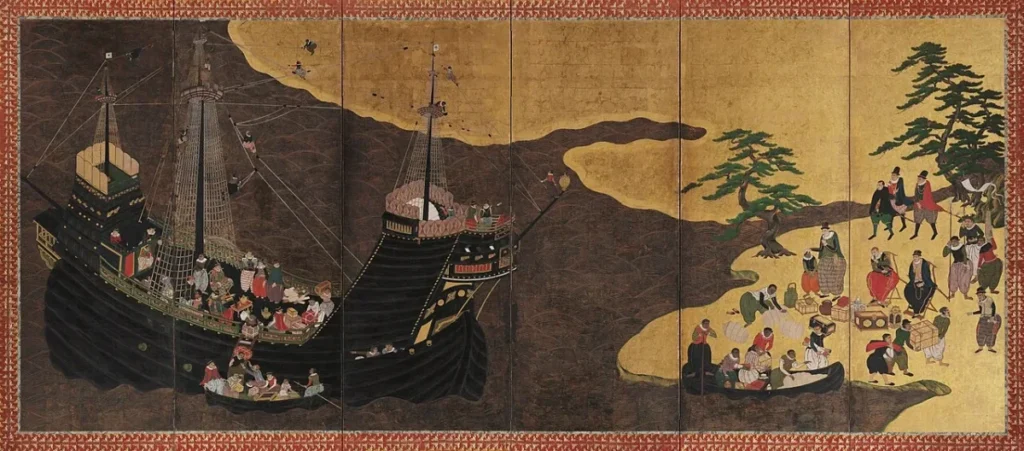
The Portuguese merchants who stumbled onto Tanegashima in 1543 had no idea they were about to change Japanese history forever. Their ship, battered by typhoon-season storms, limped into a cove called Maenohama at the southern tip of the island. Local peasants, having never seen Europeans before, stared in bewilderment at these strange men with their peculiar clothes, different facial features, and (according to one account) disconcertingly long noses.
The village chief, a man named Nishimura Oribenojō who happened to know Chinese characters, was summoned to the beach. Since neither he nor the Chinese captain, Gohō, could speak each other’s languages, they did what educated men in East Asia had done for centuries when words failed them: they wrote in the sand with sticks. Nishimura scratched out his questions in Chinese characters. Who were these foreigners? Where did they come from? Gohō wrote back: They were “Southern barbarians” and merchants who, rather uncivilized by Chinese standards, ate with their hands and didn’t use cups when drinking.
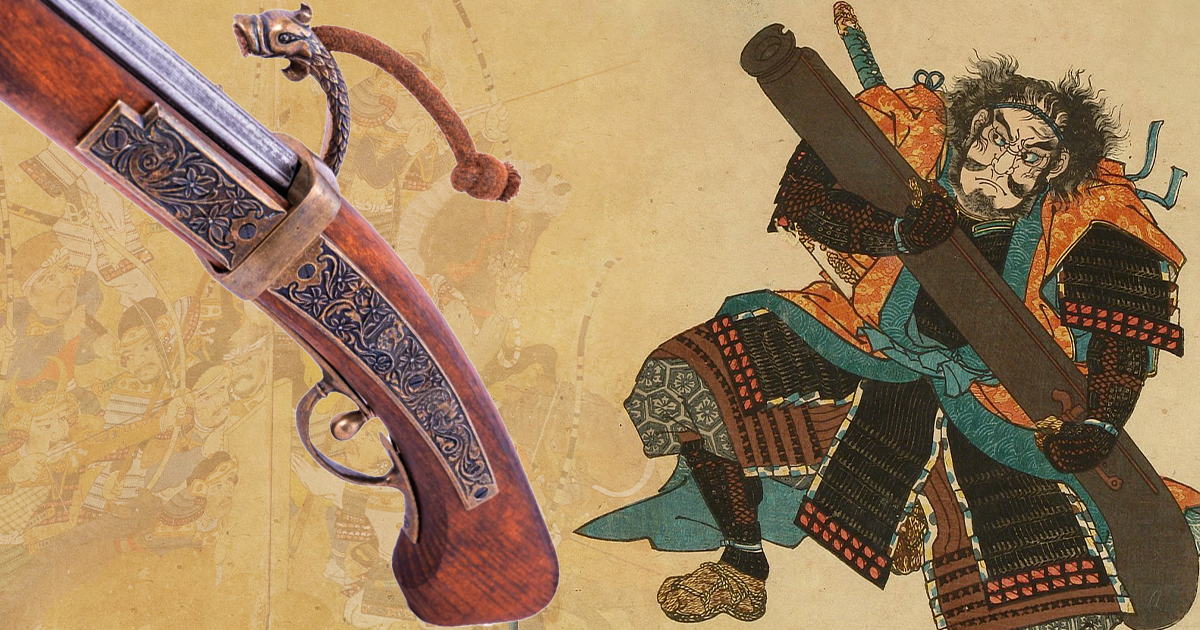
But the real story was what those Portuguese were carrying. Two matchlock arquebuses. Two metal tubes that could kill at distances impossible for Japanese weapons. Two devices that would, within a generation, make obsolete centuries of martial tradition.
The local lord, fourteen-year-old Tanegashima Tokitaka, heard about the strange arrivals and ordered the damaged ship towed fifty-two kilometers up the coast to his residence at Akōgi. This wasn’t just curiosity about exotic foreigners (though there was plenty of that). Japan in 1543 was burning. The Sengoku period, the Age of Warring States, had turned the entire archipelago into a free-for-all of regional lords battling for survival and supremacy. The old shogunate had collapsed. Power was up for grabs. Any weapon that could tip the balance meant the difference between your family’s survival or annihilation.
When Tokitaka met the Portuguese the next day, he noticed the mysterious objects they carried. Through double interpretation (Portuguese to Chinese to Japanese, or possibly through a Ryukyuan woman named Tamagusuku who served as translator), he asked what they were. One of the Portuguese, identified in Japanese sources as Murashukusha or Kirishita da Mōta (likely Francisco Zeimoto and Antonio da Mota), took him outside for a demonstration.
What happened next changed everything.
The Portuguese pointed the arquebus at a duck swimming offshore. The match cord descended into the priming pan. Thunder exploded across the harbor. The duck disintegrated in a spray of feathers and blood.
Tokitaka, transfixed, bought both weapons on the spot for what the records describe as “enormous sums.” These weren’t just interesting foreign curiosities. This was the future of [Japanese warfare]. And young Tokitaka knew it.
The Fastest Military Revolution in History
Here’s what makes Japan’s firearms adoption so remarkable: the speed. We’re not talking about gradual integration over generations. We’re talking about wholesale transformation in decades.
Lord Tokitaka immediately ordered his swordsmith, a man named Yaita Kinbee Kiyosada, to reproduce the Portuguese weapons. This presented a massive technical challenge. Japanese swordsmiths were the finest blade-makers in the world, but firearms were entirely different technology. The critical problem? Creating the screw-threaded breech plug that sealed the rear of the barrel. Japanese craftsmen had never worked with screw threading before. Without this crucial component, the gun would explode when fired, which was, obviously, problematic.
According to tradition (and this is where history meets legend), Yaita was so desperate to learn the secrets of firearms manufacturing that he offered the Portuguese merchant Murashukusha his sixteen-year-old daughter, Wakasa, in marriage. Whether this romantic story is true remains debated among historians. The earliest sources, written closer to the events, don’t mention Wakasa at all. Later accounts, written over a century after the fact, tell her tale in full: how she married the foreigner, sailed away to a distant land, wrote heartbreaking poetry about her longing for home, and eventually returned the following year with a Portuguese blacksmith who taught her father the missing techniques.
True or embellished, this much is certain: by 1544, when another ship arrived (possibly carrying Wakasa and her husband, if the legend holds), it brought a Portuguese blacksmith who solved the screw-threading problem. Yaita mastered the complete technique. Within a year, Tanegashima workshops were producing functional copies of the Portuguese arquebuses.
The news spread like wildfire. A merchant from Sakai named Tachibanaya Matasaburō, who happened to be visiting Tanegashima, learned both how to use the musket and how to mix gunpowder. He brought a copy back to Sakai, near modern Osaka, which quickly became Japan’s premier gun-manufacturing city. Another copy reached the Negoro Temple in Kii province. The powerful Ōtomo clan in Bungo acquired firearms and invited Portuguese to demonstrate their use. Production centers sprouted across the archipelago.
By the 1560s, major warlords were fielding arquebus units in the hundreds. By the 1570s, thousands. The transformation happened faster in Japan than anywhere else in the world because the circumstances demanded it. When your survival depends on military advantage, you don’t gradually test new technology. You adopt it immediately or die.
Nagashino: The Battle That Proved Everything Had Changed
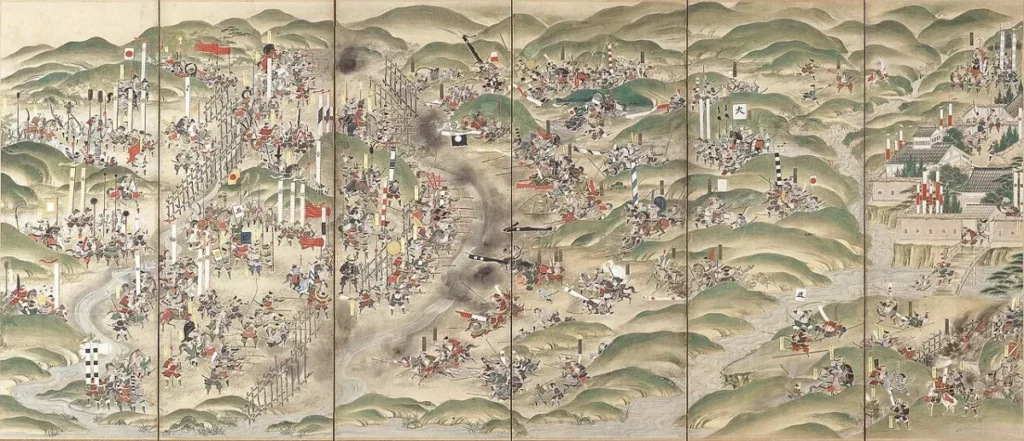
If you want to understand why firearms terrified the traditional Japanese military elite, you need to understand the Battle of Nagashino in 1575. This engagement became the symbol of how completely guns had revolutionized warfare.
Oda Nobunaga was the most innovative military commander of his era, the man who recognized that firearms weren’t just auxiliary weapons but game-changers. When the legendary Takeda cavalry (the finest mounted warriors in Japan, trained for generations in devastating charge tactics) bore down on his position, Nobunaga positioned approximately 3,000 arquebusiers behind wooden palisades.
The traditional account describes rotating volleys that maintained continuous fire, though modern historians debate whether this famous “three-rank rotation” actually occurred as described. What’s undisputed is the outcome: the Takeda cavalry charges shattered against sustained gunfire. One of Japan’s most powerful military clans suffered catastrophic losses. The survivors fled in disarray.
Nagashino proved a brutal mathematical equation: a peasant conscript with minimal training and an arquebus could kill a mounted samurai who had spent his entire life perfecting martial skills. This was the gun’s terrible democratic power. Skill, training, lineage, honor, none of it mattered when lead balls were flying. The implications terrified everyone who benefited from the old system.
Daimyo across Japan understood immediately. The demand for firearms exploded. By the 1580s, historians estimate Japanese armies may have fielded between 250,000 and 500,000 guns. Japan possessed more firearms than any European nation. Sakai alone had hundreds of gunsmiths producing weapons for competing lords. Other centers emerged at Kunitomo, Negoro, and elsewhere. Japanese craftsmen made significant improvements to the Portuguese designs: more reliable ignition systems, waterproof covers for Japan’s frequent rains, superior fit and finish that sometimes exceeded European quality.
The Sengoku period became the age of the gun. Fortification design evolved to account for firearms, with castle walls featuring gun ports and overlapping fields of fire. Specialized arquebus units developed distinctive training and deployment strategies. The logistics of warfare transformed: armies now needed to transport not just weapons but powder, lead, and match cord.
If you were a Japanese military commander in 1590, you would have laughed at the suggestion that within a century, firearms would nearly disappear from your country. The gun seemed permanent, unstoppable, the obvious future of warfare.
But history had other plans.
When Japan Ban Firearms Policies Began: The Tokugawa Strategy
The chaos resolved through blood. Three successive warlords unified Japan: Oda Nobunaga (who championed firearms), Toyotomi Hideyoshi (who inherited Nobunaga’s gun-heavy armies), and Tokugawa Ieyasu (who completed the unification). Each had different relationships with firearms, but all understood that once you’ve won the game, the rules need to change.
Hideyoshi initiated the first systematic weapons control. His 1588 “Sword Hunt” edict officially aimed to collect metal for constructing a giant Buddha statue. The real purpose? Disarming the peasant population. The decree targeted swords, spears, and firearms held by non-samurai classes. The justification was that farmers should focus on agriculture, not warfare. The actual calculation was political: armed peasants could resist authority or support rival lords. By restricting weapons to the samurai class, Hideyoshi reinforced social boundaries and reduced the potential for rebellion.
But the Sword Hunt wasn’t yet a complete ban on firearms. Samurai retained their arsenals. Daimyo still maintained thousands of guns. Hideyoshi himself deployed massive firearms contingents during his attempted invasions of Korea in the 1590s. The transition from “weapons as tools of warfare” to “weapons as threats to social order” required the political settlement that came with Tokugawa Ieyasu.
Ieyasu secured his position as shogun after the Battle of Sekigahara in 1600, effectively ending the civil wars. Firearms played significant roles at Sekigahara, with both sides deploying thousands of arquebusiers. But victory created an entirely new landscape. Once Ieyasu had defeated his rivals and established unquestioned authority, the shogunate’s priorities shifted dramatically: from winning the next battle to preventing the next war from starting.
The System That Made Gun Control Possible
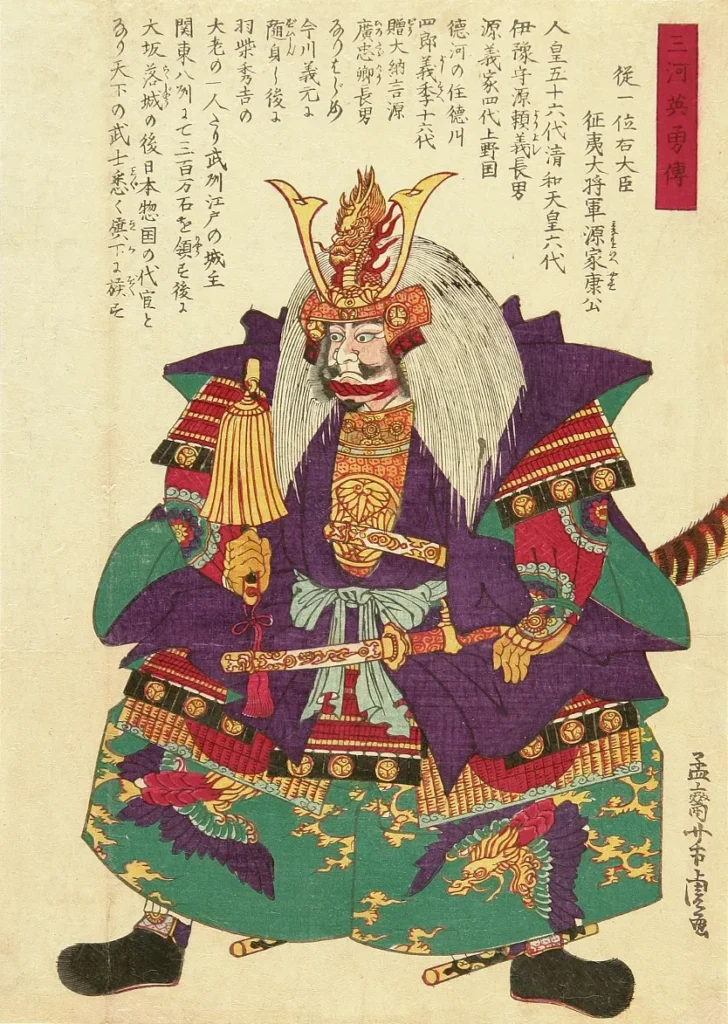
The Tokugawa shogunate developed one of history’s most comprehensive control systems. Understanding the Tokugawa firearms ban requires understanding this broader architecture of power.
The cornerstone was sankin-kotai, alternate attendance. This policy required every daimyo to maintain residences in Edo (modern Tokyo) and spend alternating years at the shogun’s court. Their families remained permanently in Edo as hostages. The processions to and from the capital consumed vast resources that might otherwise fund military preparations. This transformed daimyo from independent warlords into constrained vassals whose loyalty could be monitored and whose military capacity could be controlled.
Within this system, firearms became particularly dangerous. Unlike swords (which served as status symbols and required lifetime training), guns were purely functional military tools that peasants could master in weeks. Firearms thus threatened the social hierarchy the Tokugawa system aimed to preserve. If weapons existed that erased the military advantage of years of samurai training, what justified the samurai’s privileged position?
The sword embodied tradition, discipline, social status. The gun represented dangerous egalitarianism.
The shogunate implemented firearms restrictions through multiple mechanisms. Direct prohibitions limited who could manufacture, sell, and possess guns. Licenses created bureaucratic controls over the entire industry. The government concentrated production in a small number of closely monitored workshops, primarily in Edo and cities directly controlled by the shogunate. The number of licensed gunsmiths declined dramatically over the 17th century, from hundreds to dozens.
Equally important were indirect controls. The shogunate restricted access to raw materials. Copper (used for gun barrels) came under government monopoly. Saltpeter (essential for gunpowder) was difficult to produce domestically and became subject to import controls after the shogunate’s isolation policies. Lead fell under regulatory oversight. By controlling the supply chain rather than just finished weapons, the shogunate made unauthorized firearms production extremely difficult.
But here’s the crucial point: these policies succeeded because the shogunate had achieved its primary objective: ending warfare. Once the Tokugawa established uncontested control and daimyo accepted the new political order, the military justification for maintaining large firearms arsenals evaporated. Peace made guns obsolete for their original purpose.
The transition happened gradually. The generation that remembered the Sengoku wars gave way to samurai who had never experienced combat. Daimyo became content with their positions in a stable hierarchy. Without wars to fight, why maintain expensive arsenals?
Built out of a love for history, kept free from distractions.
Spoken Past is an independent project shaped by curiosity, care, and long hours of research. Reader support helps keep it maintained, carefully researched, and open to everyone.
The Cultural Revolution: Making Guns Shameful
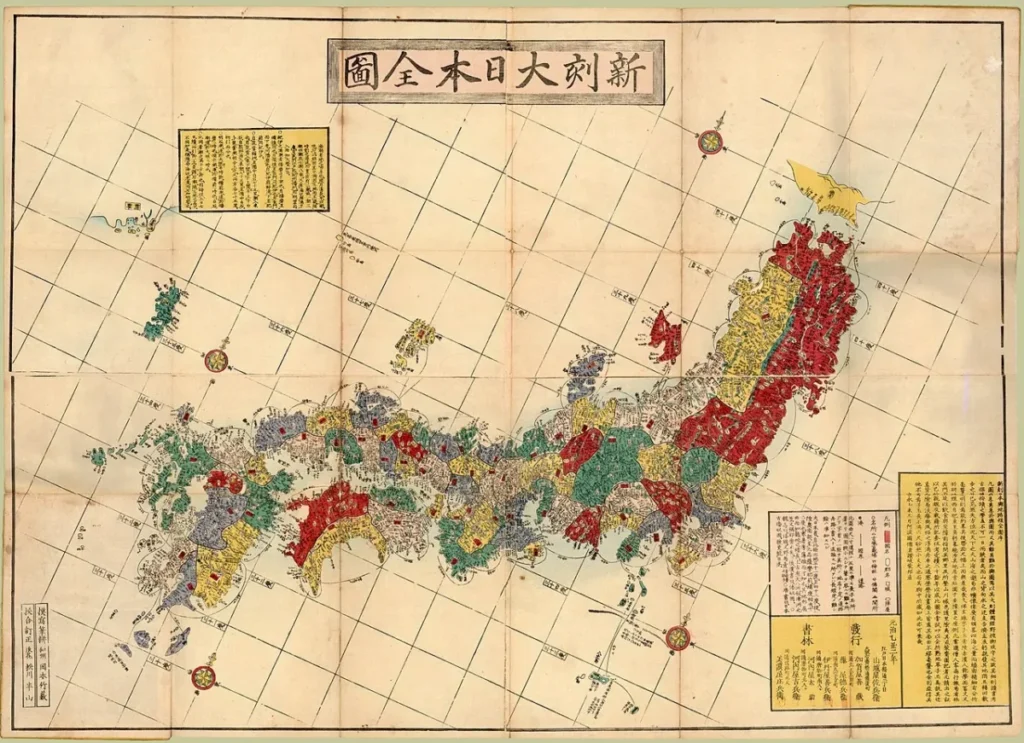
The Edo period gun ban extended beyond regulation into culture itself. The shogunate deliberately elevated sword culture while marginalizing firearms. This cultural transformation reinforced political restrictions and created a society where guns became not just illegal for most people but culturally devalued.
The samurai class embraced the sword as “the soul of the warrior,” a concept that intensified during the Tokugawa peace. Without real wars to fight, samurai needed alternative ways to demonstrate their identity and justify their privileges. Swordsmanship schools proliferated, teaching elaborate techniques with limited practical combat application but enormous value as status markers. The paired swords (katana and wakizashi) became visible symbols of samurai rank, with strict regulations governing who could wear them.
This emphasis served the shogunate’s interests perfectly. Swordsmanship required individual skill developed over years, creating vertical relationships between masters and students that reinforced hierarchical thinking. Sword schools were easy to monitor and posed little threat to political authority. A swordsman, no matter how skilled, couldn’t challenge organized state power the way armed groups with firearms might.
The contrast between samurai sword vs gun became embedded in Japanese values. The sword represented honor, discipline, tradition, proper social order. The gun increasingly represented none of these things. Period accounts described firearms as crude, dishonorable weapons unworthy of true warriors. This negative characterization served political purposes, discouraging interest in weapons that threatened stability.
By the 18th century, visiting Europeans noted this remarkable transformation. Japan, once among the world’s leading firearms manufacturers, now treated guns as curious foreign artifacts. The Portuguese trader João Rodrigues, who lived in Japan during the early Tokugawa period, described the deliberate suppression of gun culture. Dutch traders stationed at Nagasaki (Japan’s only significant contact with the outside world after isolation policies took effect) remarked on the scarcity of firearms in Japanese society.
How Complete Was the Transformation?
The thoroughness of why Japan abandoned guns becomes evident when examining how completely firearms disappeared. By 1700, guns had become rare enough that many Japanese had never seen one fired. This transformation happened within two or three generations, a remarkably short time to eliminate ubiquitous technology.
The shogunate’s regulation extended everywhere. Manufacturing was concentrated and licensed. Sales were recorded and controlled. Possession required authorization. Use was restricted to specific contexts like hunting in designated areas or ceremonial displays. Authorities maintained detailed records of who owned what weapons. Daimyo arsenals were subject to inspection. This bureaucratic thoroughness, characteristic of Tokugawa governance generally, made evasion difficult and dangerous.
Social enforcement complemented formal regulations. The mutual responsibility system, where groups of households were collectively accountable for each member’s behavior, meant hiding weapons risked severe punishment not just for the violator but for neighbors and family. This created powerful social pressures for compliance. Informing on violations became civic duty. Comprehensive surveillance made unauthorized firearms possession extremely risky.
The cultural shift reinforced these controls. As firearms became associated with criminality rather than military virtue, possessing guns carried social stigma. The valorization of traditional weapons, particularly swords, created alternative status markers that satisfied the samurai class’s need for distinction.
This social engineering succeeded perhaps too well. When external threats reemerged in the 19th century with Western imperial expansion, Japan had largely lost its firearms manufacturing capabilities. The infrastructure had been dismantled, skilled craftsmen had died without passing on knowledge, and cultural interest had evaporated.
The Price of Peace
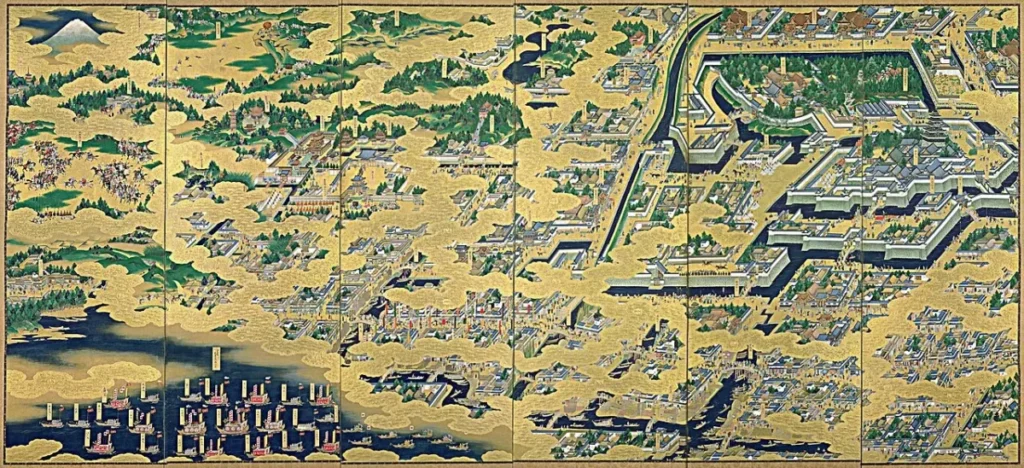
The Edo period brought over two centuries of internal peace, the longest such period in Japanese history. This Pax Tokugawa delivered enormous benefits. Population grew. Agriculture developed. Cities flourished. Cultural arts reached extraordinary heights. Stable conditions allowed merchant classes to prosper, literacy to spread, complex economic networks to develop. Resources could be invested productively rather than destructively.
Yet peace had costs. Military technology froze while other nations continued innovating. The rigid social hierarchy prevented social mobility and constrained individual potential. Isolation policies that helped maintain domestic tranquility also cut Japan off from global intellectual and technological developments.
The firearms restrictions exemplified both benefits and costs. On one hand, successful suppression of private firearms ownership probably prevented numerous conflicts and deaths. Small-scale violence between daimyo domains, samurai feuds, and peasant uprisings were all made less likely by effective weapons control. Political stability enabled the cultural flowering of the Edo period.
On the other hand, technological regression left Japan vulnerable. When Commodore Matthew Perry’s American fleet arrived in 1853 demanding trade relations, backed by modern naval artillery, Japanese observers recognized immediately how far behind they’d fallen militarily. The shogunate’s inability to expel the foreign threat or resist Western demands exposed the inadequacy of sword-wielding samurai against industrial-age warfare.
This crisis precipitated the Meiji Restoration of 1868, which overthrew the Tokugawa shogunate and launched Japan’s rapid modernization.
The Dramatic Reversal
The Meiji government reversed virtually every Tokugawa policy that had contributed to technological stagnation. Isolation ended, replaced by aggressive engagement with Western nations and importation of foreign expertise. The samurai class was legally abolished, eliminating the social hierarchy that firearms restrictions had protected. Conscript armies replaced hereditary warriors, and these conscripts were armed with modern rifles, not swords.
Within a generation, Japan transformed from a militarily backward nation to a regional power capable of defeating China and Russia in conventional warfare. The speed of this transformation suggests that underlying capabilities for modernization hadn’t been entirely lost during the Edo period. Japanese craftsmen proved capable of quickly learning to produce modern firearms and other weapons. Educational infrastructure allowed rapid training of military officers and technical specialists. Administrative competence developed during centuries of Tokugawa governance could be redirected toward industrialization and military buildup.
Yet the trauma of transition shouldn’t be minimized. Western powers’ arrival destroyed the social order millions had lived under for generations. Samurai lost their privileges and often their livelihoods. Traditional industries collapsed facing foreign competition. The rush to modernize created social tensions and dislocations.
The decision to abandon firearms in the 17th century, rational within its context, created vulnerabilities that became painful liabilities when geopolitical conditions changed.
What This History Really Teaches Us
The story of Japanese firearm regulation isn’t a simple tale of cultural conservatism rejecting foreign technology. It’s a complex case study in how political power, social structure, and technological choices interact across time.
The Tokugawa shogunate didn’t abandon firearms out of traditionalism or backwardness. The decision reflected hard-headed political logic about maintaining power and stability. Firearms threatened social hierarchy and created risks of rebellion or civil war. Once the shogunate eliminated external threats through isolation and internal threats through political controls, guns became liabilities rather than assets.
The success of these policies depended on specific historical conditions unlikely to recur: effective centralized authority, geographical isolation, elimination of external military threats, and rigid social structure. The same factors that made firearms restrictions possible also created vulnerabilities that became apparent when international circumstances changed.
Modern Japan’s strict gun control laws echo, in some ways, the Tokugawa policies, though in a completely different political context. Contemporary Japanese regulations make civilian firearms ownership extremely difficult, with handguns almost entirely prohibited and long guns requiring extensive licensing. Japan has among the lowest rates of gun violence in the developed world. Some analysts see continuity between Edo period weapons prohibition and modern gun control, suggesting deep cultural attitudes about firearms. Others argue this overstates the case, noting that Tokugawa policies served specific political purposes while modern regulations address different concerns in a democratic society.
The Japanese firearms regulation history ultimately demonstrates something more nuanced than either technological inevitability or simple cultural preference. It shows how societies make choices about technology based on their political needs and social values, and how those choices have consequences that ripple across centuries. The two and a half centuries when guns nearly vanished from Japan marked a unique period in world history, when a society that had become expert in weapons technology chose political stability over military innovation.
For over two hundred years, that choice appeared vindicated by unprecedented peace and cultural flourishing. The Tokugawa shogunate valued domestic tranquility over military prowess, and they got what they wanted: the longest period of stability in Japanese history. The fact that this eventually left Japan vulnerable to foreign pressure doesn’t necessarily mean the choice was wrong, merely that historical circumstances inevitably change in ways no one can predict.
The Tanegashima firearms Japan mastered in the 1540s represented the cutting edge of military technology. The comprehensive ban that emerged over the following century represented a calculated political gamble. And the dramatic reversal forced by Perry’s black ships in 1853 reminds us that no technological choice is ever truly permanent. History moves forward, whether we’re ready or not.
References
Lidin, Olof G. Tanegashima: The Arrival of Europe in Japan. NIAS Monograph Series No. 90. Copenhagen: NIAS Press, 2002.