A compact corps of 300 hoplites—150 male couples—stood at the hard points of Theban warfare in the fourth century BCE. Known as the Sacred Band of Thebes, they were organized for steadiness under shock, for trust at contact range, and for the kind of mutual obligation that keeps a line from giving way. Ancient writers say they were paired lovers. Modern readers argue about what that meant in practice. What is not in doubt is their battlefield record and the way their memory settled into stone at Chaeronea.
What the “Band” was—and was not
The Sacred Band was a permanent, state-supported unit of citizen hoplites, not an honor guard that marched for show or a short-term oath brotherhood that dissolved after a campaign. Ancient sources credit the commander Gorgidas with organizing the corps around 378 BCE, with Pelopidas later as a central figure. Size held steady at about 300 men, grouped as 150 pairs.
Ancient Thebes expected citizen men to be fully trained with the spear and shield and to stand their turn in the phalanx. The Sacred Band concentrated talent, fitness, and discipline. Their pairing was not a secret rite; it was a social technology. If your shield covers your partner, and his covers you, and each would rather die than shame the other, your place in line is firmer. That is how Greek writers explain the military value of eros in Theban practice.
A caution belongs here: later centuries try to fit the Band into tidy boxes—either a modern love story or a scandal. The fourth-century Boeotian world did not divide cleanly along those modern lines. What matters for a history of war is that their pairing mapped trust to the exact distance at which a spear-point trembles and a shield-rim bites.
Sources and what they let us say with confidence
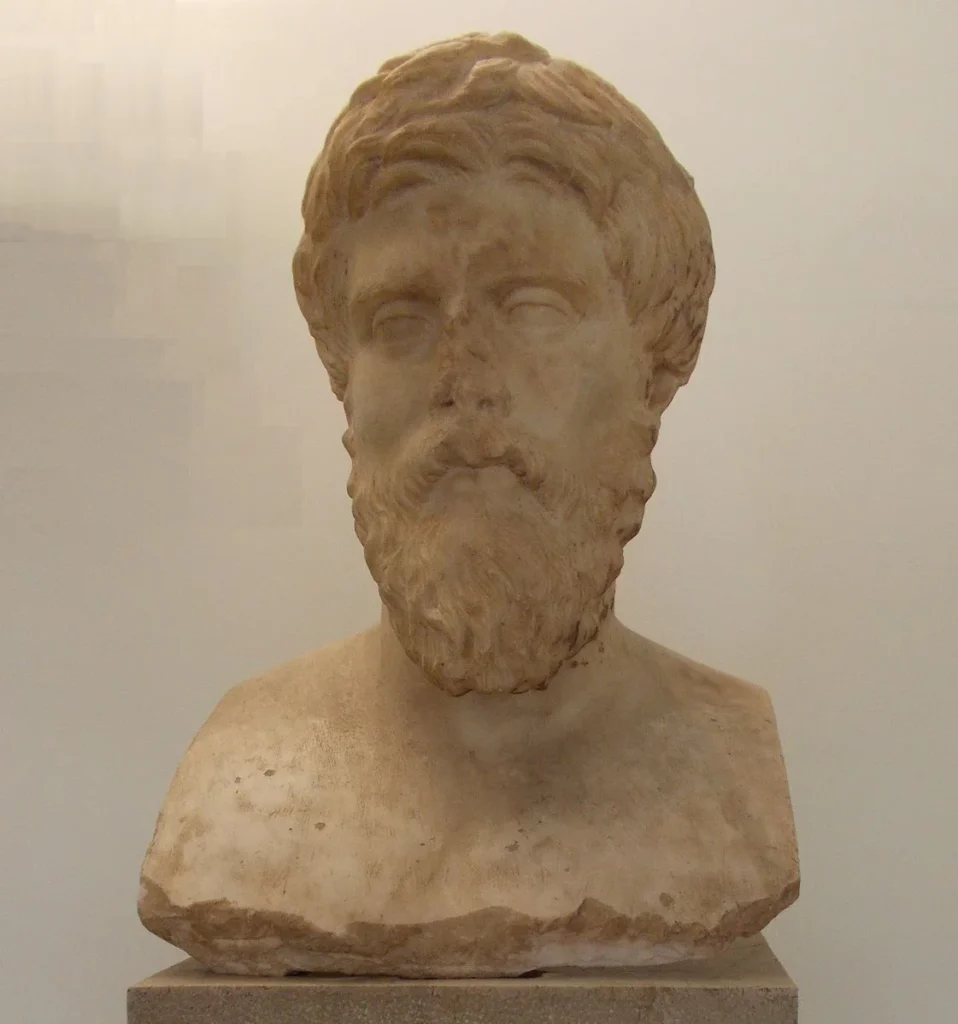
Plutarch, a native of Chaeronea writing in the Roman period, gives the Sacred Band its most detailed narrative—especially in the Life of Pelopidas. He had access to local memory, monuments, and older histories now lost. He writes long after the events, but he preserves kernels that match the archaeology of graves and the political conditions of fourth-century Thebes. Other authors—Polyaenus in his stratagems, Diodorus Siculus in his universal history—add touches, with the Poetic tradition of epigrams offering hints about grief and honor.
What the texts agree on:
-
a picked infantry unit of about 300
-
organized in pairs often described as lovers
-
central to Theban campaigns against Sparta
-
present at their decisive victory at Leuctra in 371 BCE
-
shattered at Chaeronea in 338 BCE, when Philip II and Alexander broke Theban power
What the archaeology adds:
-
a burial at Chaeronea with roughly 250 skeletons arranged in rows in a polyandrion (mass grave) near a monumental lion
-
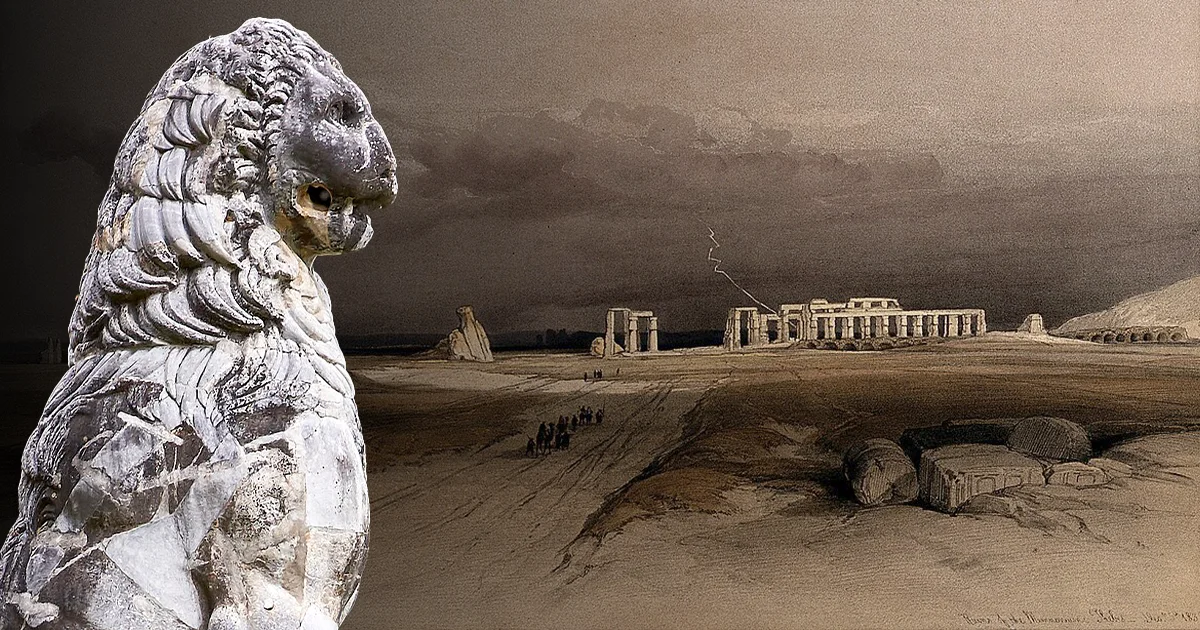
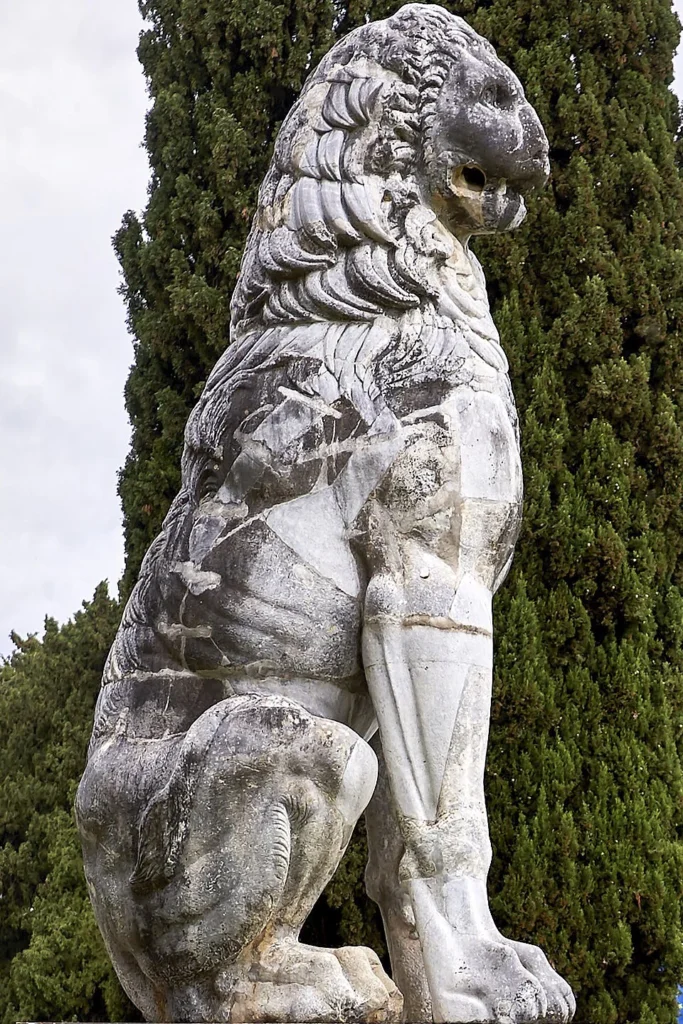
a commemorative stone lion raised nearby and later restored
-
a local landscape that fits the described battles
The sum is not a neat film script. It is enough to reconstruct a unit’s function and a city’s wager: bind courage to love and put it in the place where a battle turns.
How to build steadiness: training, kit, and the discipline of pairs
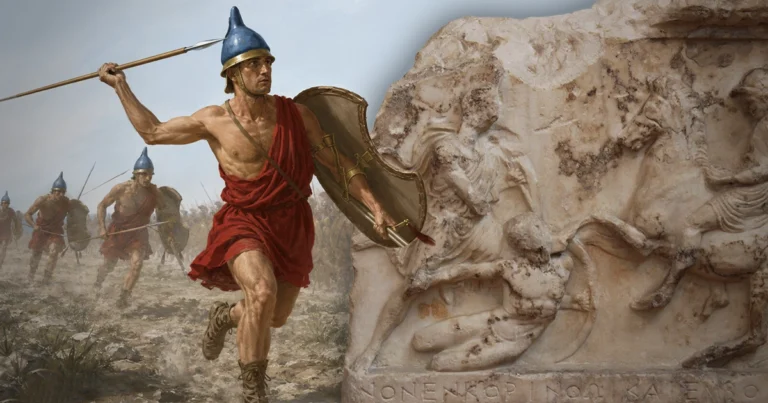
Hoplite fighting is about cohesion. A Theban shield (aspis) covers the bearer and the man to his left; the spear (doru) works overhand or underhand depending on preference and context; the line keeps a rhythm set by officers and veterans. The Sacred Band did nothing physically alien to other Boeotian hoplites. The difference was weight of practice. As a standing corps, they could drill more hours per year, refine unit maneuvers, and bring a consistent standard to the places where morale usually fails—under flank pressure, in the kill-zone where files collide, and when the line has to pivot without opening a gap.
Pair discipline added a second layer. In most Greek cities, the phalanx assembled by tribes or demes put neighbors side by side. Thebes turned that civic glue into a tighter bond. A pair that trained, ate, and campaigned together learns the small cues that make a line elastic rather than brittle: when to yield an inch without breaking, how to absorb a push without lurching, when to step forward with the next file.
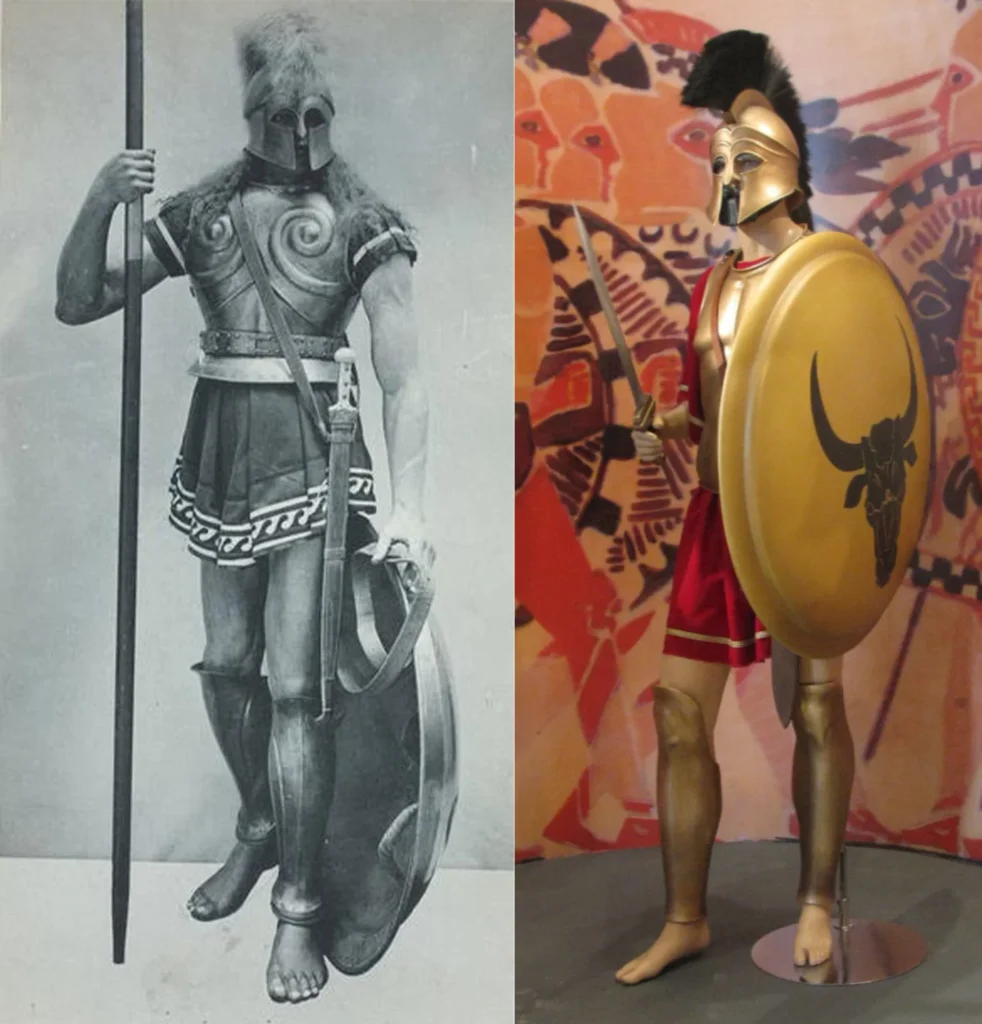
Equipment was standard high-classic and early fourth century: crest helmets—bascinets and later variants—bronze or composite cuirasses, greaves, a round shield, spear, and short sword. The Theban club of Heracles appears on coins and sometimes is imagined on shields; whether the Sacred Band uniformly bore a specific device is not attested, but Boeotian identity bled into gear, slogans, and trophies.
A tactical environment that made them decisive
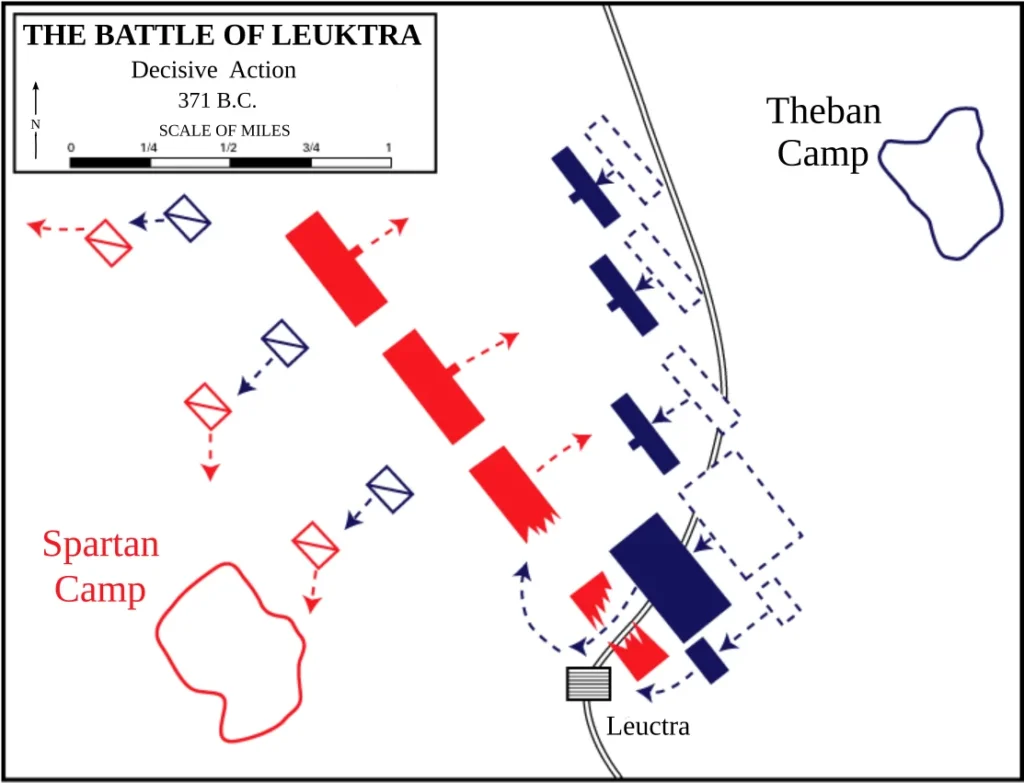
The Sacred Band did not win battles alone. They anchored systems designed by Theban leaders who saw how to crack Spartan habits. At Leuctra, Epaminondas stacked the Theban left wing at extraordinary depth—sources suggest fifty ranks—and pushed that heavy left at Sparta’s right, where Spartan citizens clustered. Meanwhile, the rest of the Theban line held back slightly to avoid early contact. The Sacred Band stood in the point of the spear: the place where depth, weight, and morale needed to hold in the first smashing minutes. Once Spartan order wavered, the depth on the left rolled the line like a door on a hinge.
The earlier clash at Tegyra, where Pelopidas and a small Theban force beat Spartan detachments at close quarters, likely saw the Band’s compact mass put to similar work: a punch at the moment of confusion, turning skill into panic in a confined space.
None of this is mystical. It is a practical marriage of unit excellence with geometry, landscape, and enemy habit. That is why a story about lovers belongs in a manual of war.
The politics that made a corps like this possible
To invent and sustain a permanent elite unit, Thebes needed cash, will, and a sense of itself as Boeotia’s center. The expulsion of the Spartan garrison from the Cadmeia in 379/8 BCE gave the city both a cause and a burst of energy. The Boeotian League’s revival, alliances with Athens when interests aligned, and the genius of two leaders—Epaminondas and Pelopidas—made it viable to keep three hundred men on continuous service and to use them as the steel in a larger Boeotian army.
The social world that allowed their intimate pairing to be state doctrine rather than a private choice is Theban, not pan-Hellenic. Spartan writers sneered at Theban customs. Athenians alternated between fascination and mockery. Thebes did not care. Results on the field are hard to argue with. If a policy yields victory against Sparta, the Greek world takes note.
Built out of a love for history, kept free from distractions.
Spoken Past is an independent project shaped by curiosity, care, and long hours of research. Reader support helps keep it maintained, carefully researched, and open to everyone.
From Leuctra’s shock to Chaeronea’s end
At Leuctra in 371 BCE, the Sacred Band are named and praised. The victory broke Sparta’s aura. Messenia was liberated; the Peloponnesian balance changed. Thebes enjoyed a decade where its hands lay heavy on Greek politics.
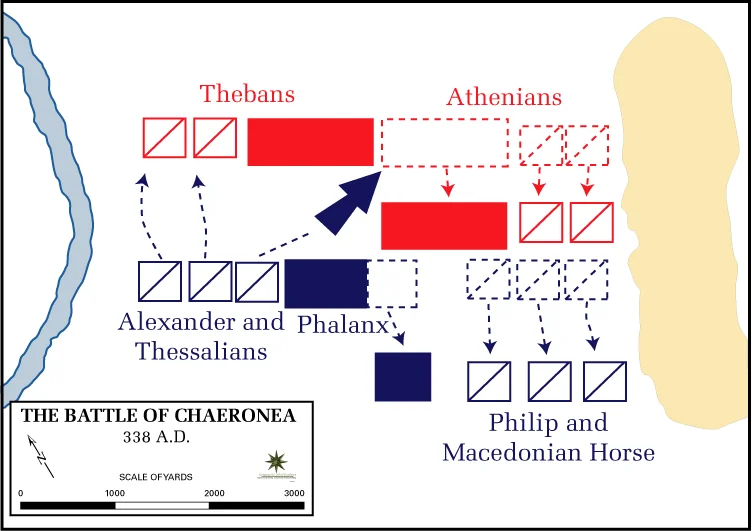
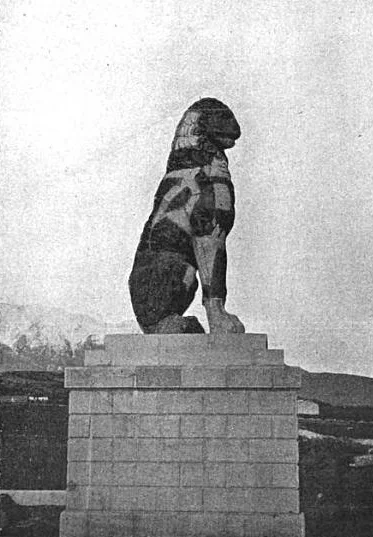
Chaeronea in 338 BCE ends that phase. Philip II of Macedon, with his son Alexander commanding a wing, met Thebes and Athens in Boeotia and smashed the allied line. Ancient writers tell a brief, grim story: the Sacred Band stood fighting to the last; they were killed where they stood; Philip, viewing their bodies, is said to have wept. Whether the words put in the Macedonian king’s mouth are theater, the tomb and the lion are not theater. Near the battlefield, excavators in the nineteenth century found an orderly mass grave with more than two hundred skeletons laid in rows. A monumental lion was erected in honor of the dead.
Archaeology gives us steady facts that argue for the tradition’s truth even as it corrects its drama. About 254 skeletons were recorded in the polyandrion, a number that suggests the near destruction of a 300-man corps but leaves room for the fog of war—detachments elsewhere, missing bodies, or the imperfect survival of graves. The lion was restored in the early twentieth century from surviving fragments. Its massive calm is a different kind of evidence than a sentence in Plutarch, but it tells the same story: Thebes meant to remember these men in stone and to mark the place where the lovers’ corps was broken.
How pair-bonding can work under arms
Ancient writers argue explicitly for the military value of pairs bound by affection. The claim is simple: shame and love stiffen the will. A man who fears to disgrace a partner holds instead of sliding, steps up instead of stepping back. The human brain at contact range is not a cool calculator; it is a furnace of fear, pain, and training. If training and love reinforce each other, you get behavior that survives the first seconds of shock.
The hoplite system also rewards small-unit trust. Most of the killing happens after one line loses order. The trick is not a single brave deed but steady files that don’t open seams. The Sacred Band were trained to keep the seam shut, which buys time for the rest of the army’s plan to work—whether that plan is an oblique advance, a sudden cavalry strike, or a flank held slightly back until the moment to push.
This way of tying intimacy to arms repels some modern readers and inspires others. Good history keeps its eye on what it can measure: the Band’s consistent presence at decisive points, their reputation among enemies, and the structural reasons why their design works in a hoplite system.
Material traces: graves, monuments, and the city that raised them
The Sacred Band left few personal artifacts we can securely label as “theirs.” What we do have is strong context.
-
The polyandrion at Chaeronea with skeletons arranged in ranks, consistent with a collected burial after battle.
-
The Lion of Chaeronea—fragments recovered and reassembled—sitting over the ground where those bodies lay.
-
The city of Thebes itself, where the Cadmeia’s ruins and the region’s museums keep a memory of the fourth-century power that briefly out-muscled Sparta.
These are quiet things. A lion on a plinth. A burial mound with bones. A scarred hill at Thebes where power once lived. They are the proper weight for a story about discipline and courage, where the romantic image of lovers in arms hides a plainer truth: three hundred trained citizens stood where battle was hardest, and many did not come home.
Reading Plutarch without letting him do all the thinking
Plutarch writes beautifully. He also writes with moral interests that belong to his age. When he describes the Sacred Band, he teaches a lesson about character and uses the corps to say something about virtue under pressure. That does not empty his story of truth. It invites us to check his claims against terrain, tactics, and stone. On those points, the Band hold up well.
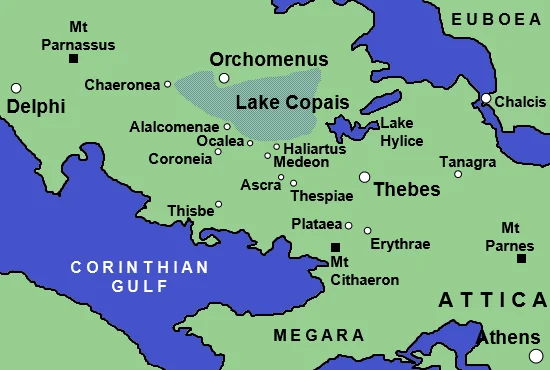
A good way to read him now is to let the physical world keep time. Start with the distances on a Boeotian map; the tight valley of Leuctra; the open approaches to Chaeronea; the strategic pressures Thebes faced from Sparta, Thessaly, and Macedon. Then put the Band back into those spaces as a tool among other tools. They anchor heavy lefts, stiffen lines, and absorb shocks. Their pairing explains a mental edge. Their fate at Chaeronea explains a change in Greek history far better than a simple list of dates: Macedon conquered not a paper league but a sector of Greek arms that had innovated and won.
What the Sacred Band still changes about how we talk about Greek warfare
The old classroom story liked to speak as if Sparta stood for military excellence and everyone else tried to keep up. The fourth century upends that picture. Thebes innovated in tactics and in social organization. The Sacred Band is the emblem of that change. It is the moment when a Greek city formalized what other cities half-glimpsed: that loyalty can be designed and trained, not just hoped for; that a state can choose who stands at the hinge of battle and how they bind themselves to each other.
The rest is grief and stone. You can stand by the lion at Chaeronea and feel what a policy costs when it meets a new kind of army under a Macedonian sun.