
In 1199, one of the most feared warriors in Christendom lay dying from a wound to the shoulder. Richard I of England, the legendary Lionheart who had battled Saladin across the Holy Land, had been felled not by a knight’s lance or a Saracen’s blade, but by a single bolt fired from the walls of a minor French castle. The weapon that killed him was considered so devastating, so terrifying, that the Pope himself had tried to ban it sixty years earlier. This was the medieval crossbow, and its story is one of technological revolution, social upheaval, and the fundamental transformation of how wars were fought.
The crossbow did not merely change medieval warfare. It threatened to upend the entire social order of feudal Europe. For centuries, the mounted knight had dominated the battlefield, his years of training and expensive equipment making him virtually invincible against common soldiers. But the crossbow changed that calculus entirely. A peasant with a few weeks of training could now bring down a nobleman worth a king’s ransom. This simple mechanical device represented nothing less than a revolution in military technology, and its impact resonated through centuries of European history.
The Origins and Early Development of the Crossbow
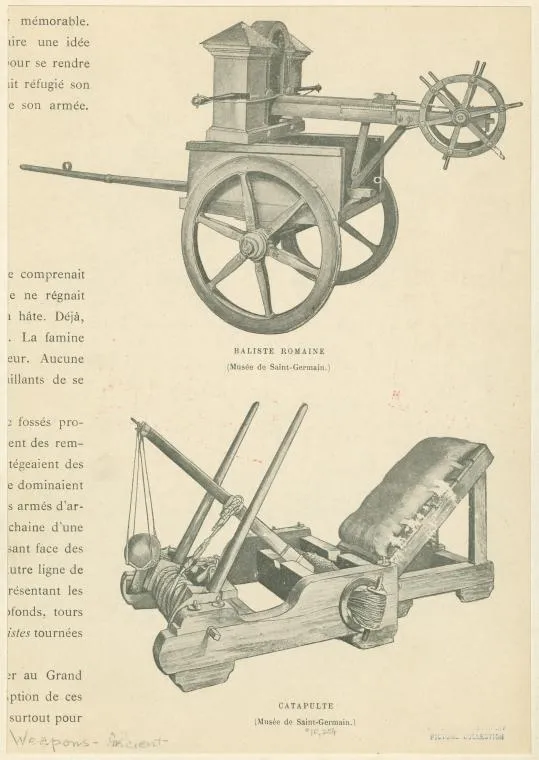
The crossbow was likely introduced to England as a military and sporting arm by the Norman invaders in 1066. However, its origins stretch back much further. Ancient Chinese armies employed crossbow mechanisms centuries before the weapon appeared in European warfare. The Romans used a massive version called the balista as siege artillery, and some historians believe this great engine suggested the design for the handheld weapon that would later terrorize medieval battlefields.
Early in the twelfth century, the construction of the crossbow underwent significant improvements. The bow portion, not yet formed of steel, was made from composite materials including yew wood, horn, and animal sinew glued together with fish glue. This composite construction created a weapon that stored more potential energy per square inch of surface area than simple wooden bows, providing more power with a smaller overall size. The technique for making these composite bows entered Europe in the wake of the First Crusade, likely brought back by soldiers who had witnessed Muslim crossbow technology in the Holy Land.
The advantages of composite bows over their wooden counterparts were substantial. They maintained their form and energy-storing capability for longer periods than equivalent wooden bows. However, composite bows had one significant disadvantage: they were susceptible to damage from damp climates, a problem of particular importance in northern Europe where rain was common and battlefields were often muddy.
The Papal Ban: A Weapon Too Terrible for Christians
The wounds caused by the crossbow in warfare were considered so barbarous that its use, except against infidels, was interdicted by the Second Lateran Council in 1139 under penalty of anathema. The council declared the crossbow a weapon hateful to God and unfit for Christians. Pope Innocent III confirmed this prohibition at the close of the same century. Conrad III of Germany, who reigned from 1138 to 1152, also forbade the crossbow in his army and kingdom.
The specific language of Canon 29 from the Second Lateran Council reveals the fear this weapon inspired among the medieval elite. The Church condemned crossbows, bows, and slings when used against Christians and Catholics, calling them a murderous art. The ban had a notable exception: these weapons could still be used against Muslims and heretics during crusades. This loophole tells us something important about the nature of the prohibition. It was not truly about the morality of the weapon itself, but about protecting the Christian nobility from a technology that threatened their privileged position in society.
Despite these solemn decrees, the ban proved completely unenforceable. The employment of crossbowmen became common again in English and Continental armies during the reign of Richard I from 1189 to 1199. The military advantages of the crossbow were simply too great to ignore. Kings and commanders chose victory over papal approval, and the crossbow continued its deadly work across European battlefields.
The Death of Richard the Lionheart: Divine Judgment or Military Reality
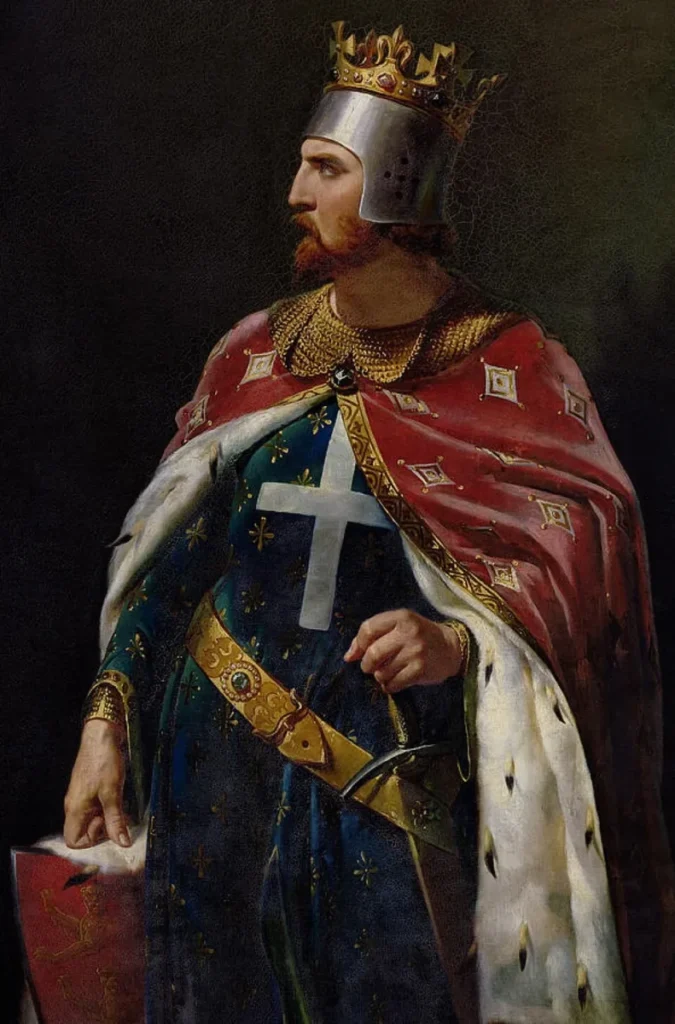
Richard I was himself an expert with the crossbow. At the siege of Ascalon during the Third Crusade, though prostrated with fever, he is said to have been carried from his tent on a mattress so that he might enjoy the pleasure of shooting bolts at the defenders of the town. In this case, as the enemy consisted of Turks and infidels, his use of the crossbow would have been sanctioned by the Church of Rome.
The irony of Richard’s death was not lost on his contemporaries. At the siege of the Castle of Chaluz near Limoges in France in 1199, a crossbow bolt struck the king in the shoulder. The wound became infected and gangrenous, and the great warrior died shortly after. Many believed this to be a judgment from Heaven inflicted upon him for his disobedience and impiety in permitting crossbowmen to enter his service against fellow Christians.
According to some accounts, Richard forgave the crossbowman who shot him, a man named Pierre Basile or Bertran de Gourdon depending on the source. However, the mercenary captain Mercadier reportedly had the man flayed alive and hanged after Richard’s death, despite the royal pardon. The incident became a cautionary tale about the deadly power of the crossbow and the danger it posed to even the mightiest warriors.
How the Medieval Crossbow Actually Worked
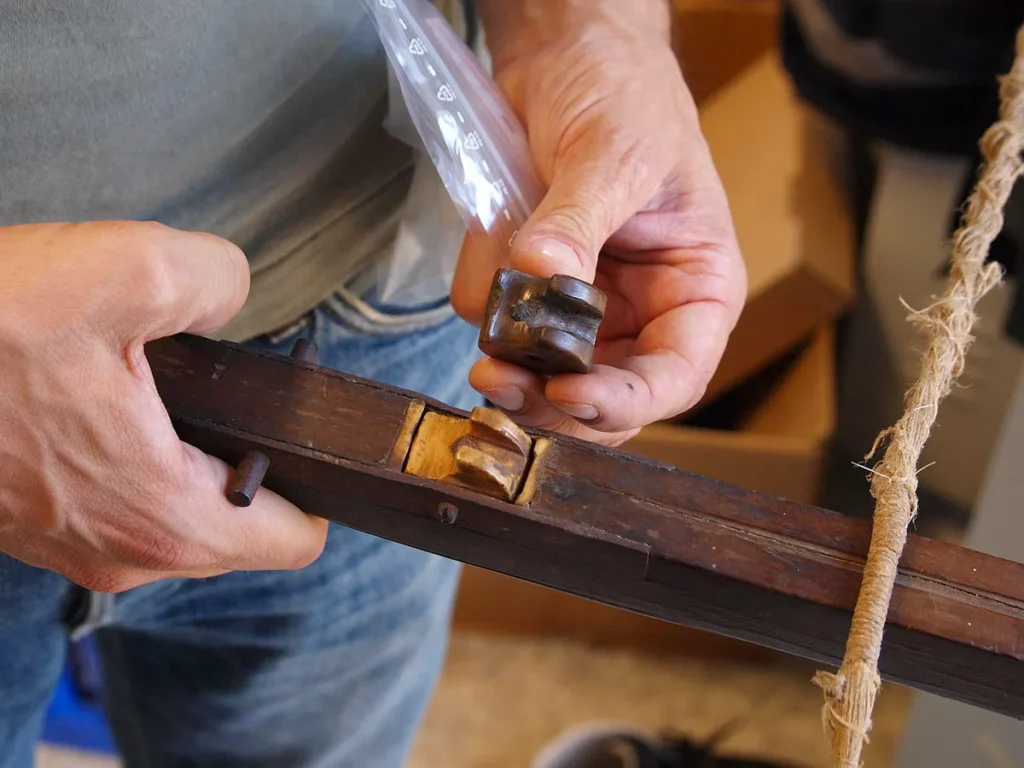
Understanding why the crossbow was so revolutionary requires understanding its mechanical principles. Unlike the longbow, which required years of training to master and enormous physical strength to draw, the crossbow used mechanical advantage to store energy. A crossbowman could draw the string using various devices, lock it in place on a rotating nut mechanism, and then take careful aim before releasing his shot. The trigger mechanism allowed for steady aiming without the strain of holding a drawn bow.
Medieval crossbows came in several types, classified by the method used to span (draw) the bow. The simplest were the balistae ad unum pedem, or one-foot crossbows. These weapons were equipped with a stirrup ring on the front of the stock. When the crossbowman wished to draw the string, he placed his foot into the stirrup and bent over, hooking the cord to his belt using a special hook called a crocus. He then stood up, using the strength of his leg and back muscles to draw the string into position until it locked onto the nut.
More powerful were the balistae ad duos pedes, or two-foot crossbows. These weapons came equipped with a larger stirrup that could accommodate both of the archer’s feet, allowing him to use even more muscle power to span the weapon. These crossbows required significant physical strength but could deliver devastating power at range.
The most powerful handheld crossbows were the balistae ad turnum, which used mechanical spanning devices. The turnus was a winch mechanism that made it possible for crossbowmen to span more powerful weapons than could be manipulated using muscle power and a stirrup alone. Evidence from English royal records shows these mechanically spanned crossbows were in use by 1213, decades before similar technology appeared elsewhere in Western Europe.
Crossbow Construction: Wood, Composite, and Steel
Medieval crossbows were constructed from three primary materials: solid wood, composite materials, and eventually steel. Contrary to earlier scholarly assumptions that composite bows completely replaced wooden ones, surviving government documents from thirteenth-century England indicate that both types remained in active use. Royal records from the reigns of King John and Henry III show orders for both wooden crossbows (balistae de fusto or balistae ligneae) and composite crossbows (balistae de cornu) being shipped to castles throughout the realm.
The production of composite bows required specialized materials and craftsmen. A crossbow maker named Gerald was employed by King John at Windsor Castle as early as 1204 to build composite weapons. Royal writs instructed constables to provide Gerald with the glue, sinews, and horn he required for his work. The government made enormous purchases of fish glue, particularly a type called huse, which was used to bind together the wood and horn strips that formed a composite bow. In March 1225, Henry III ordered the sheriff of London to provide fifty pounds, an enormous sum, to Guillotus, a crossbow maker at the Tower of London, for the purchase of this specialized glue.
By the fifteenth century, steel bows had become the standard for the most powerful military crossbows. These thick steel bows could store tremendous energy and maintain their form indefinitely without tiring. The steel bows from Mondragon in Spain, made from the same quality of steel as the famous Toledo sword blades, and those from Pyrmont in Germany were celebrated throughout Europe for their excellence of strength and temper. These weapons required windlasses or cranequins to span, but they delivered killing power that no armor could reliably stop.
The Crossbow Bolt: A Weapon of Penetration
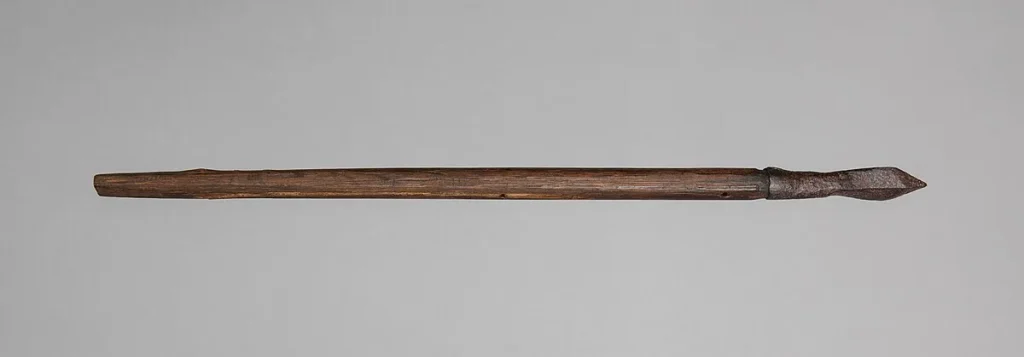
The projectile fired by the medieval crossbow was called a bolt or quarrel. Unlike the long, fletched arrows of the longbow, crossbow bolts were typically short and heavy, usually around twelve inches in length. Their construction prioritized penetration over flight distance. The bolt’s weight and the crossbow’s mechanical power combined to create a projectile capable of piercing all but the strongest armor.
Government records reveal the staggering quantities of bolts produced for medieval armies. The royal government purchased and produced millions of crossbow quarrels, stored in castle magazines throughout England. A single order from March 1267 required the bailiffs of London to produce fifty thousand quarrels, with forty-five thousand intended for one-foot crossbows and five thousand for the more powerful two-foot weapons. The production of quarrels was so important that entire towns specialized in their manufacture.
Different crossbow types required different bolts. The powerful two-foot and mechanically spanned crossbows fired heavier quarrels than the simpler one-foot weapons. Royal orders often specified the exact type of bolts needed, ensuring that garrison commanders had the proper ammunition for their weapons. This attention to logistics demonstrates how seriously medieval governments took their crossbow forces.
The Genoese Crossbowmen: Medieval Europe’s Elite Mercenaries
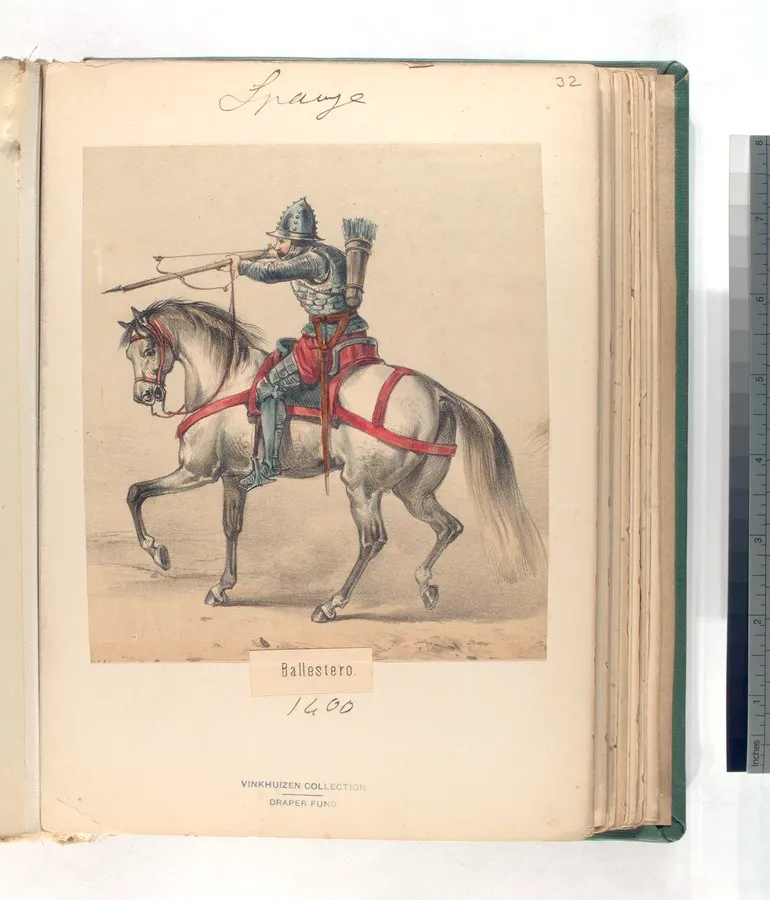
No discussion of medieval crossbow warfare is complete without the Genoese crossbowmen. The Genoese were always famed for their skill in the construction and management of crossbows, and they were hired for service by sea and land by nations across the Continent. They reportedly used these weapons with success as early as 1099 at the siege of Jerusalem during the First Crusade.
The scale of Genoese crossbow deployment was remarkable. In the naval engagement near Sluys in Holland in 1340, where Edward III defeated the French fleet, the latter had as many as 20,000 Genoese crossbowmen on their ships. This massive force of mercenary specialists shows how central crossbow tactics had become to medieval naval warfare. Ships carrying crossbowmen could sweep enemy decks with bolts before closing for boarding actions.
The largest numbers of crossbowmen ever seen in order of battle on land were probably the 15,000 Genoese who, according to the chronicler Froissart, formed the front rank of the French army at Crecy in 1346. These professional soldiers carried not only their crossbows but also large shields called pavises, which they could plant in the ground to provide cover while spanning their weapons. When properly deployed, a formation of Genoese crossbowmen presented a formidable obstacle to any attacking force.
Built out of a love for history, kept free from distractions.
Spoken Past is an independent project shaped by curiosity, care, and long hours of research. Reader support helps keep it maintained, carefully researched, and open to everyone.
The Disaster at Crecy: When Crossbows Failed
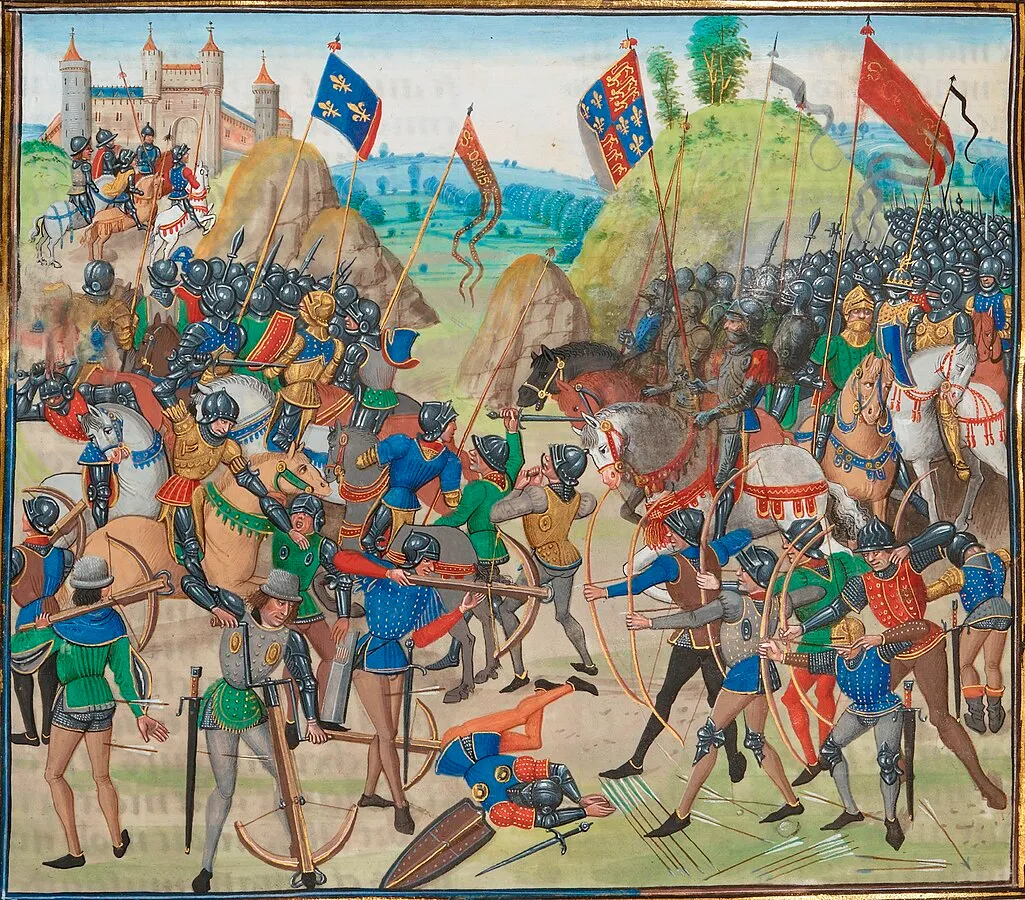
The Battle of Crecy on August 26, 1346, stands as one of the most significant engagements of the Hundred Years’ War and a turning point in the rivalry between crossbow and longbow. According to numerous historians drawing on medieval sources, the Genoese crossbowmen were unable to shoot with effect because the strings of their weapons had been slackened by a great storm of rain that struck just before the battle.
The incident reveals an important vulnerability of the crossbow technology of the period. The bows of the Genoese crossbowmen at Crecy were of composite construction, made of wood, horn, and sinew bound together with fish glue. Composite bows were susceptible to the degrading effects of damp climate. When heavy rain fell followed by bright sun, as happened before Crecy, this combination of water and heat would certainly relax the strings to some degree, making them too loose for effective service until they could be removed, shortened by twisting, and replaced. This required time and care that the French commanders did not allow.
Adding to the disaster, the Genoese had left their large defensive shields, the pavises, in the baggage train. Without these shields, they were exposed to the withering fire of the English longbowmen, who had kept their bowstrings dry under their caps during the storm and could shoot far more rapidly than crossbowmen could reload. When the Genoese began to retreat under the deadly arrow storm, the French knights rode them down, reportedly calling them cowards. The Battle of Crecy demonstrated that while the crossbow was a fearsome weapon, it required proper tactical deployment and logistical support to be effective.
Crossbow vs. Longbow: The Great Debate
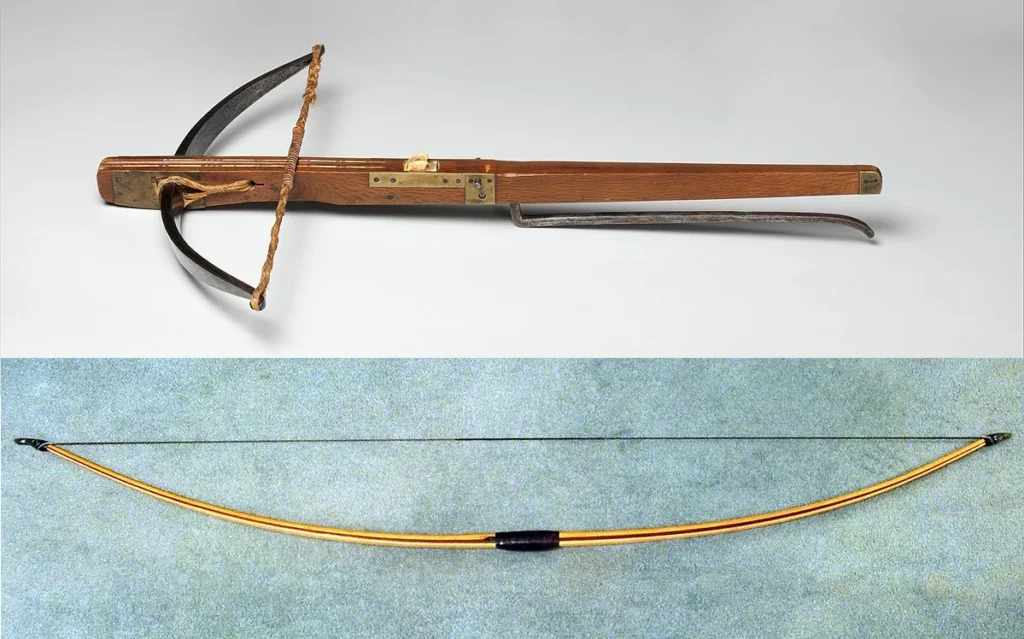
The rivalry between crossbow and longbow shaped military doctrine across medieval Europe, with different nations making very different choices. In the fourteenth and fifteenth centuries, the longbow was the cherished weapon of the English, while the crossbow held a similar position in France, Germany, Italy, and Spain. Each weapon had distinct advantages that suited different tactical situations and military traditions.
The longbow’s greatest advantage was its rate of fire. An experienced English archer could loose ten to twelve arrows per minute, while a crossbowman could manage only two bolts in the same time. This rapid fire could devastate advancing formations before they could close to effective range. The longbow also had a greater effective range in skilled hands and was less affected by wet weather since its string could be easily removed and kept dry.
However, the longbow demanded years of training to master. English law required yeomen to practice at the butts every Sunday, building the strength and skill needed to draw the heavy war bow to its full extent. The physical demands were so great that the skeletons of longbowmen show distinctive deformations of the arm and shoulder bones. The crossbow, by contrast, could be taught in weeks. Its mechanical spanning devices did the heavy work, and its trigger mechanism allowed for steady aiming without the strain of holding a drawn bow.
The crossbow also delivered superior penetrating power. The heavy steel bows of fifteenth-century crossbows could drive a bolt through armor that would stop an arrow. At close range, the crossbow was the more deadly weapon. It could also be carried ready to shoot, held in tension indefinitely while the crossbowman waited for the perfect moment to loose. A longbowman could not hold his bow drawn for more than a few seconds without fatigue degrading his aim.
The Royal Crossbow Industry of England
The English royal government developed a sophisticated system for producing, storing, and distributing crossbows to military forces. The regular production of crossbows under royal control in England began early in 1204, as King John recruited crossbow makers from the Continent to provide a sufficient supply of weapons to supplement imports from abroad, particularly from Genoa.
Among these craftsmen were specialists with expertise unavailable in England. At least two Muslim converts to Christianity were recruited as crossbow makers. Peter, called the Saracen, first appears in royal records on April 30, 1204. His exceptionally high status among the king’s crossbow makers is indicated by his daily wage rate of nine pence, more than twice the pay of contemporary master craftsmen in other fields. Peter and his wife were also given generous gifts of clothing by the king, amounting to thirty shillings in some cases. Another easterner named Benedict, with the surname the Moor, joined him in October 1204. These specialists may have brought advanced mechanical spanning technology with them from the East, explaining why mechanically spanned crossbows appeared in England decades before they became common elsewhere in Western Europe.
The Tower of London served as the primary royal arsenal for crossbow storage and production. Master crossbow makers like Guillotus and Conrad worked there producing composite weapons, employing teams of assistants. The government maintained at least six varieties of handheld crossbows in magazines and garrisoned fortifications: wooden and composite versions of one-foot, two-foot, and mechanically spanned weapons. This variety suggests that these weapons had a wide range of purposes and that crossbowmen were specialists trained with specific weapon types.
Castle Defense and Siege Warfare
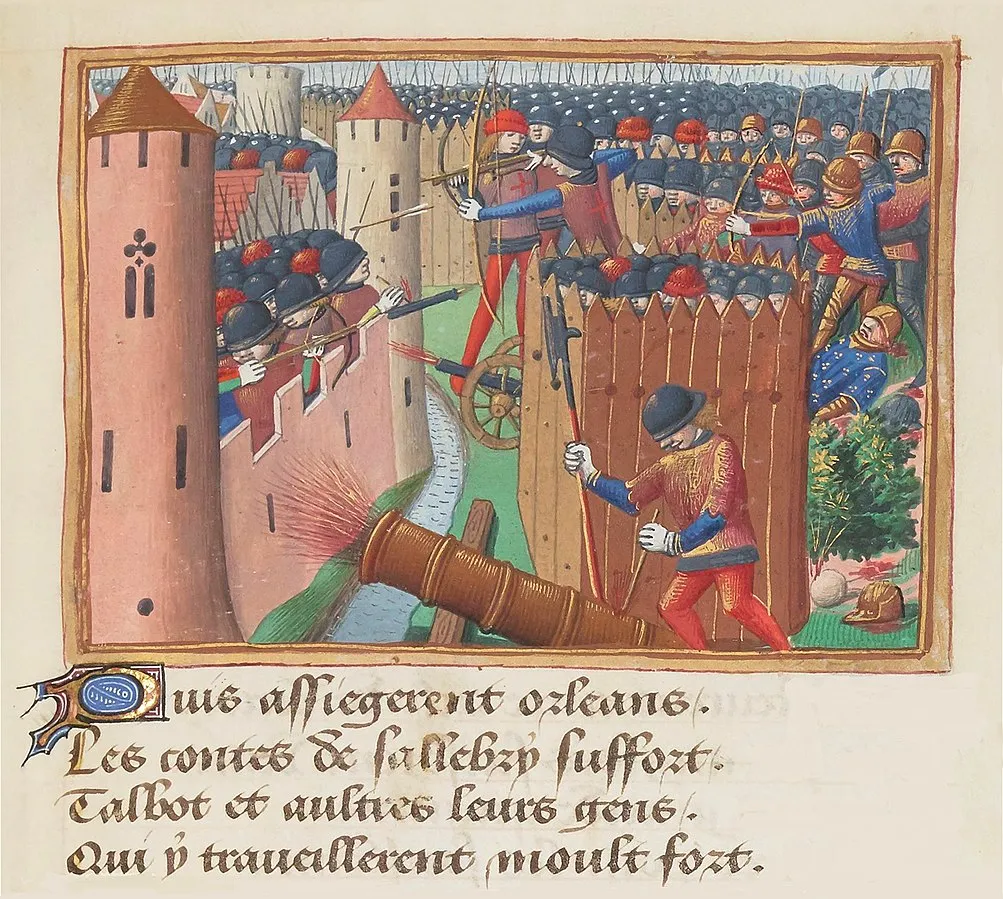
The crossbow found its natural home in siege warfare, both for attackers and defenders. Castle walls featured narrow vertical slits called arbalestinas, specifically designed to allow crossbowmen to shoot at attackers while remaining protected behind thick stone walls. These murder holes allowed defenders to cover approaches to gates and vulnerable points with deadly crossfire.
For siege defense, the crossbow offered decisive advantages over the longbow. Defenders could keep their weapons spanned and ready to shoot, waiting for attackers to expose themselves. The crossbow could be aimed and fired from behind cover, requiring only enough space to present the weapon through a loophole. A longbow, with its full draw, needed much more room to operate effectively and could not be kept drawn while waiting for a target.
The formidable siege crossbow, weighing about eighteen pounds, was specifically designed for fortress warfare. Too heavy for field use, it could be supported on a parapet or pivoted on a small tripod. These massive weapons could propel bolts with enough force to penetrate armor at extreme ranges. One surviving example with a steel bow measuring over three feet long required 1,200 pounds of force, more than half a ton, to draw its string the seven inches needed to engage the lock. Despite this immense strength, its portable fifteenth-century windlass allowed the string to be stretched by the fingers of one hand, demonstrating the mechanical ingenuity of medieval weapon designers.
The Sporting Crossbow and Hunting
Beyond warfare, the crossbow became an essential tool for medieval hunting. The crossbow could be used by hunters as they crouched behind trees or rocks, or amid dense cover, in places where the string of a longbow could not be fully drawn for want of space. The hunter could carry his crossbow ready bent, and then discharge it from any position, even when lying on the ground, while the archer with a longbow could not shoot effectively from a stooping or recumbent attitude.
The crossbow was also noiseless as well as powerful and accurate, and for this reason it survived as a common weapon of the chase for over a century and a half after the serious introduction of the hand-gun, from roughly 1470 to 1630. Early firearms were loud and slow to reload, with ignition systems too primitive to hit birds on the wing. The crossbow remained the superior choice for approaching game that would be startled by the noise of gunfire.
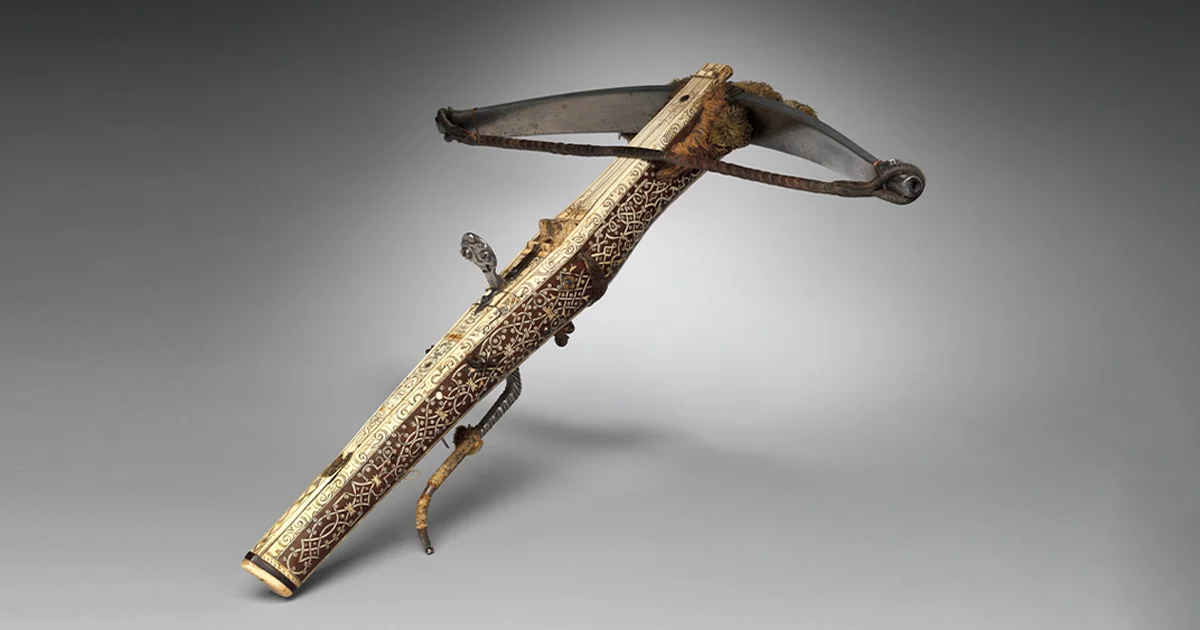
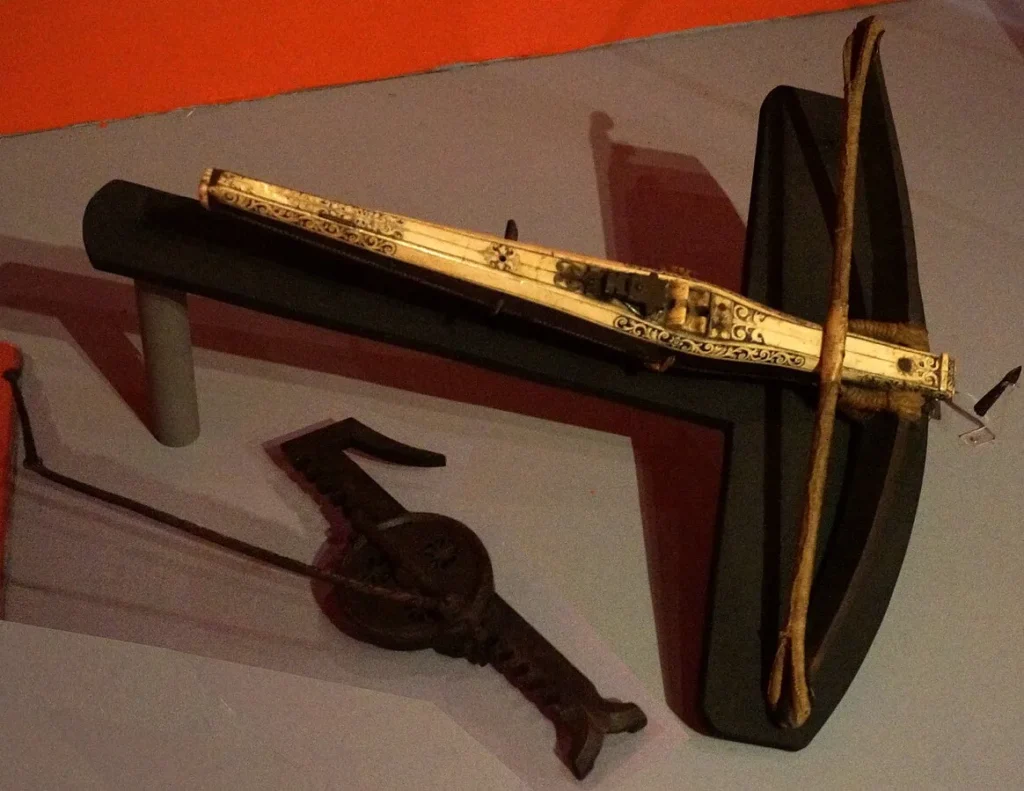
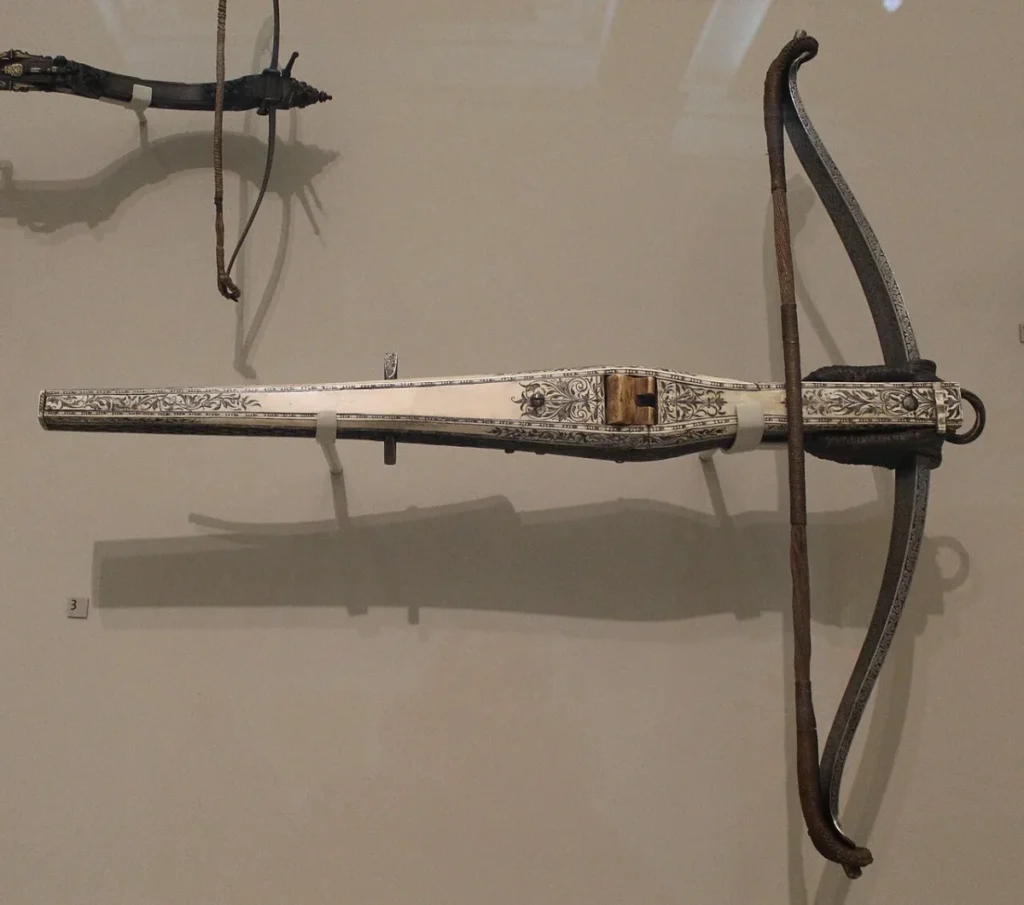
The time and money lavished on the ornamentation of high-class sporting crossbows, especially those of late sixteenth-century Continental manufacture, were considerable. The best workers in metal, ivory, and mother of pearl were employed in their decoration. Stocks were covered with artistic representations of animals, birds, and hunting scenes, surrounded by scroll-work, all finely chased and inlaid in silver, ivory, and pearl. The polished metal fittings and even the hardened surfaces of the steel bow were sometimes deeply inlaid with delicate tracery in gold. Different workmen constructed distinct parts of a good sporting crossbow, with specialists for the stock, the windlass or cranequin, the lock, the string, and most importantly, the steel bow.
The Social Revolution of Ranged Weapons
Perhaps the most profound impact of the crossbow was not military but social. The weapon threatened the very foundations of feudal society by giving common soldiers the ability to kill trained warriors from a distance. A knight represented decades of training and an enormous investment in horses, armor, and weapons. His dominance on the battlefield was the foundation of his social position. The crossbow changed this equation forever.
This helps explain the papal ban and the fury it inspired among the nobility. The crossbow was not merely a more efficient weapon; it was a democratizing technology that eroded the military basis of aristocratic privilege. A peasant conscript with minimal training could now bring down a mounted knight worth hundreds of times his own value. The Church’s condemnation of the crossbow as hateful to God served the interests of those who benefited from the existing social order.
The crossbow was merely the first of a series of military technologies that would progressively undermine the mounted warrior’s supremacy. The English longbow, the pike formations of Swiss infantry, and eventually gunpowder weapons all contributed to the transformation of warfare from an aristocratic preserve to a matter of disciplined infantry and mechanical firepower. The crossbow pointed the way toward modern warfare, where victory would be determined by organization, logistics, and technology rather than individual prowess and birth.
The Legacy of the Medieval Crossbow
For about two and a half centuries, from roughly 1200 to 1460, the crossbow remained the favorite weapon across Continental Europe. Even after gunpowder weapons began to dominate battlefields, crossbows continued in specialized roles where their unique advantages mattered. Their silence made them valuable for hunting and for situations where stealth was important. Their reliability in wet weather, once steel bows replaced composite ones, made them useful in conditions that rendered early firearms unreliable.
The crossbow also left its mark on law and custom. Several estates in England were held by the feudal service of delivering a crossbow when the king passed through them. Guilds of crossbowmen in cities like Brussels, Bruges, and Dresden maintained traditions of competitive shooting that continued for centuries. These civic organizations, often dedicated to patron saints like St. George, preserved crossbow skills and camaraderie long after the weapon had disappeared from serious military use.
Today, beautifully constructed medieval crossbows survive in armouries and museums across Europe, weapons originally made with as much skill and nicety as a costly modern gun. While there are but one or two old English longbows in existence, numbers of these mechanical marvels survive to remind us of a time when the crossbow dominated warfare and changed the course of history. The weapon that killed Richard the Lionheart, that the Pope tried to ban, that gave peasants the power to slay knights, remains one of the most significant military technologies ever developed.