
Persephone goddess held dominion over two realms that Greeks kept carefully separate: the flowering earth above and the kingdom of the dead below. She was the daughter of Zeus, king of the gods, and Demeter, the grain goddess who fed mortals.
Her name meant destroyer or slayer in Greek, a title that reflected her power over life’s ending as much as its beginning. Every spring, when crops pushed through soil, communities celebrated her return from the underworld; every autumn, when fields went barren, they mourned her descent back into darkness.
The myth explaining her divided existence became the foundation of the Eleusinian Mysteries, the most influential religious rites in the Greek world. These initiations promised participants a better fate after death and drew worshippers from across the Mediterranean for nearly two thousand years, from the Mycenaean period around 1400 BC until the sanctuary’s closure in the late fourth century AD.
The Abduction by Hades
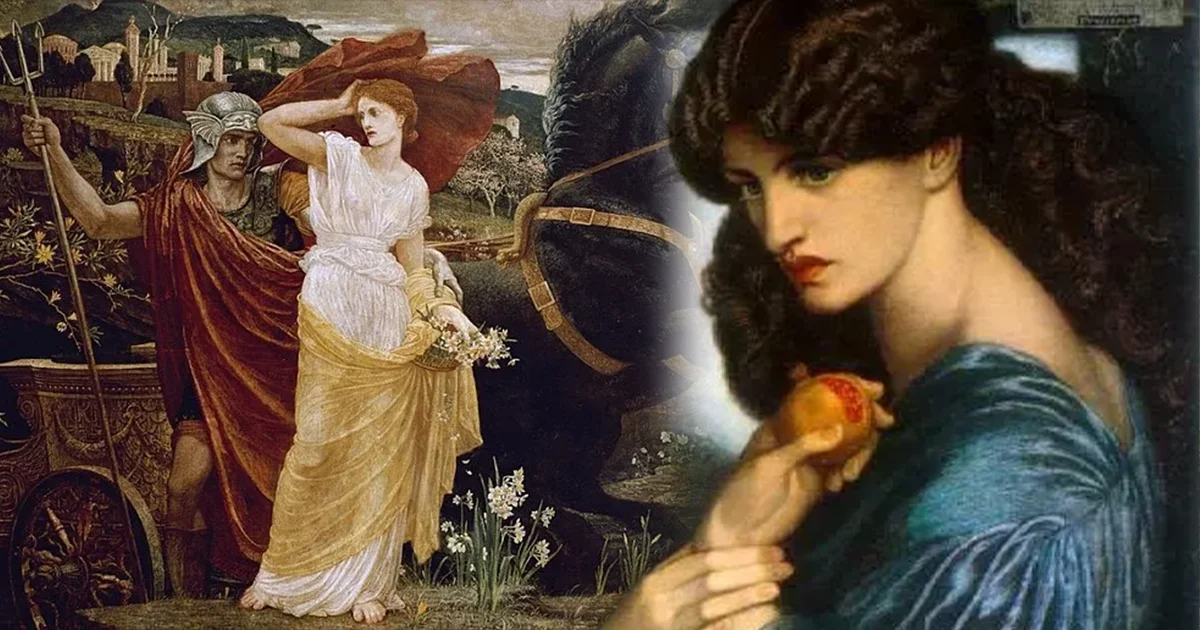
Hades seized Persephone while she gathered flowers in a meadow, an event arranged by Zeus without Demeter’s knowledge. The Homeric Hymn to Demeter, composed around the seventh century BC, describes how Gaia grew a narcissus as bait, and when Persephone reached for it, the earth split open. Hades drove his chariot through the gap and carried her to his realm.
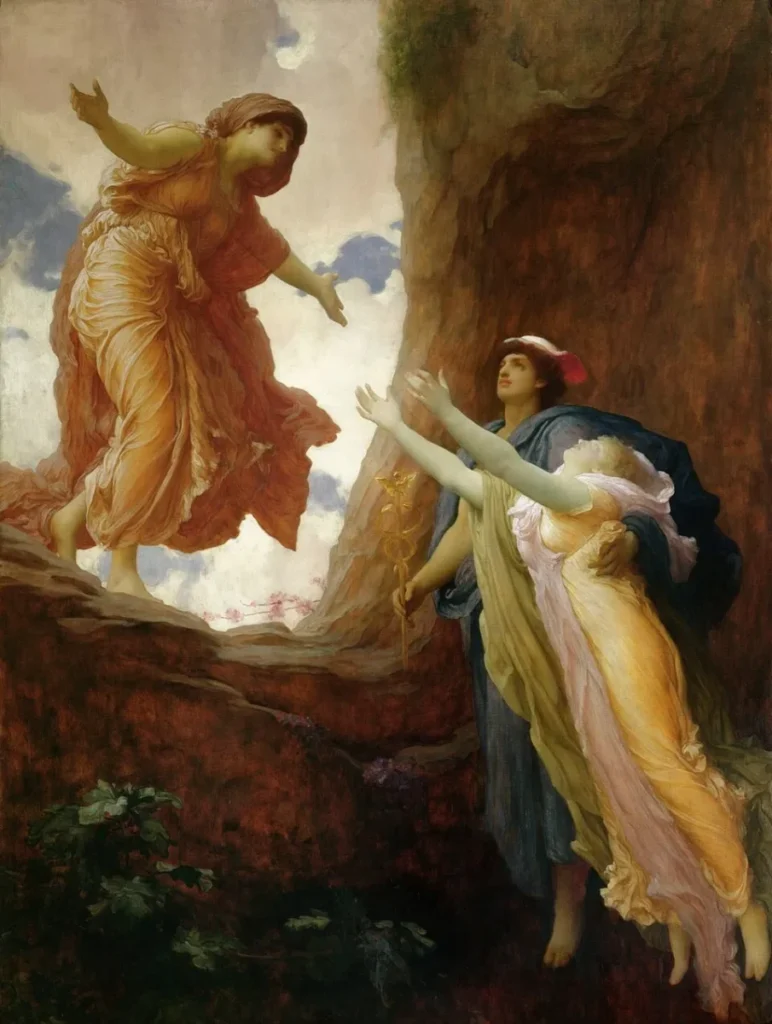
Demeter searched the world for nine days, and when she learned the truth, she withheld fertility from the earth, causing crops to fail and mortals to starve. Zeus ordered Hades to release Persephone, but Hades gave her pomegranate seeds before she left.
Because she ate six seeds, she was bound to spend six months of each year in the underworld and six months above ground with her mother. The pomegranate carried deep symbolic weight in Greek ritual life, associated with marriage, fertility, and death, making it the perfect symbol for Persephone goddess’s permanent tie to both realms.
Worship at Eleusis
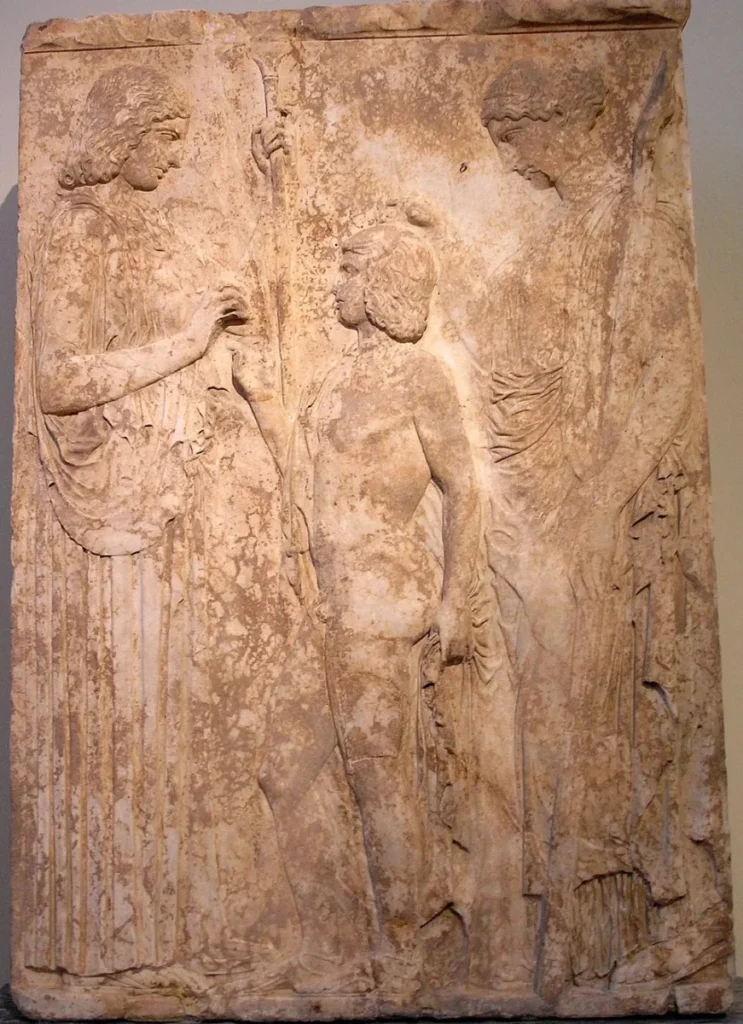
The sanctuary at Eleusis, located eighteen kilometers northwest of Athens, housed the most important cult site dedicated to Demeter and Persephone. Archaeological evidence shows continuous ritual activity from the Mycenaean period through the Roman Empire. The central building, the Telesterion, could hold thousands of initiates.
Built and rebuilt multiple times, the final version from the fifth century BC measured roughly 54 meters on each side and featured a roof supported by interior columns. Inside this hall, initiates experienced the climax of the Mysteries, a revelation that participants were sworn never to disclose.
Every year in the month of Boedromion, roughly September, thousands walked the Sacred Way from Athens to Eleusis in a procession that took an entire day. Participants carried torches, sang hymns, and crossed the Kephisos River before entering the sanctuary precinct.
The rites were open to all Greek speakers, regardless of gender or social status, a rare inclusivity that distinguished the Eleusinian cult from many other religious institutions.
Kore and Other Names
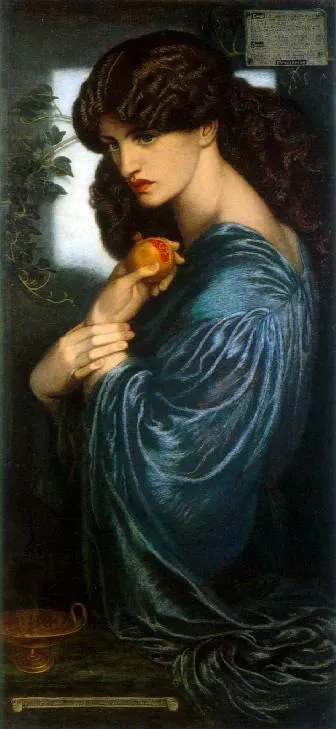
Greeks addressed Persephone by many names, often avoiding her true name out of fear or reverence. They called her Kore, meaning maiden, a title emphasizing her youth and her identity before marriage to Hades.
Other epithets included Despoina, the mistress, and Hagne, the pure one. In some regions, worshippers referred to Demeter and Persephone together as “the Two Goddesses,” reflecting their inseparable ritual and theological connection.
As queen of the underworld, Persephone ruled alongside Hades and judged the souls of the dead. Later Greek poets and playwrights depicted her as stern but not cruel, maintaining order in a realm where justice operated differently than on earth. As a vegetation deity, she embodied the annual return of crops and the promise of renewal.
The Homeric Hymn Source
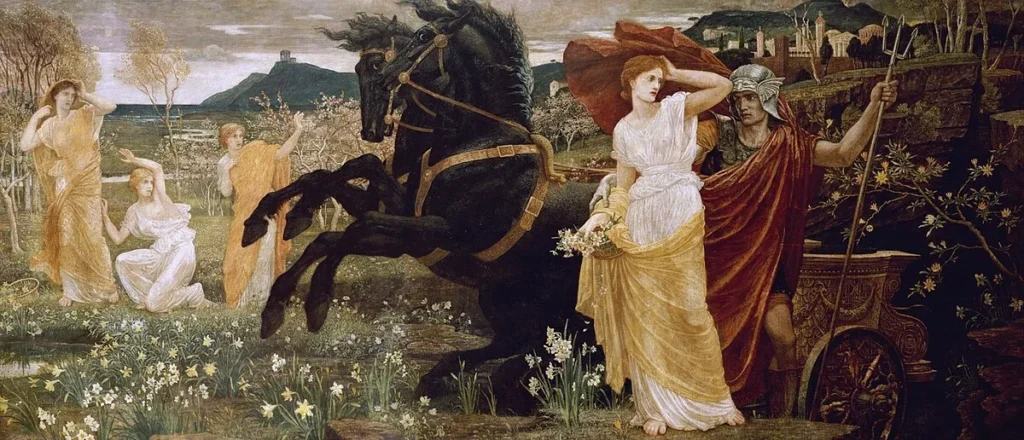
The longest and most detailed ancient source for Persephone goddess’s story is the Homeric Hymn to Demeter, a 495-line poem composed in the Archaic period. Scholars date it between 650 and 550 BC based on linguistic features and references to Eleusinian cult practices.
The hymn opens with Persephone picking flowers, names the companions who witnessed the abduction, and describes Demeter’s grief in vivid detail. When Demeter withholds grain, mortals face extinction, forcing Zeus to intervene.
The poem also explains the origin of the Mysteries. After Persephone’s return, Demeter taught the Eleusinian kings secret rites and showed them how to perform sacrifices that would ensure her continued blessing. This hymn was not just literature but served as a sacred text that priests at Eleusis likely recited during initiations.
Built out of a love for history, kept free from distractions.
Spoken Past is an independent project shaped by curiosity, care, and long hours of research. Reader support helps keep it maintained, carefully researched, and open to everyone.
Depicting Persephone in Art
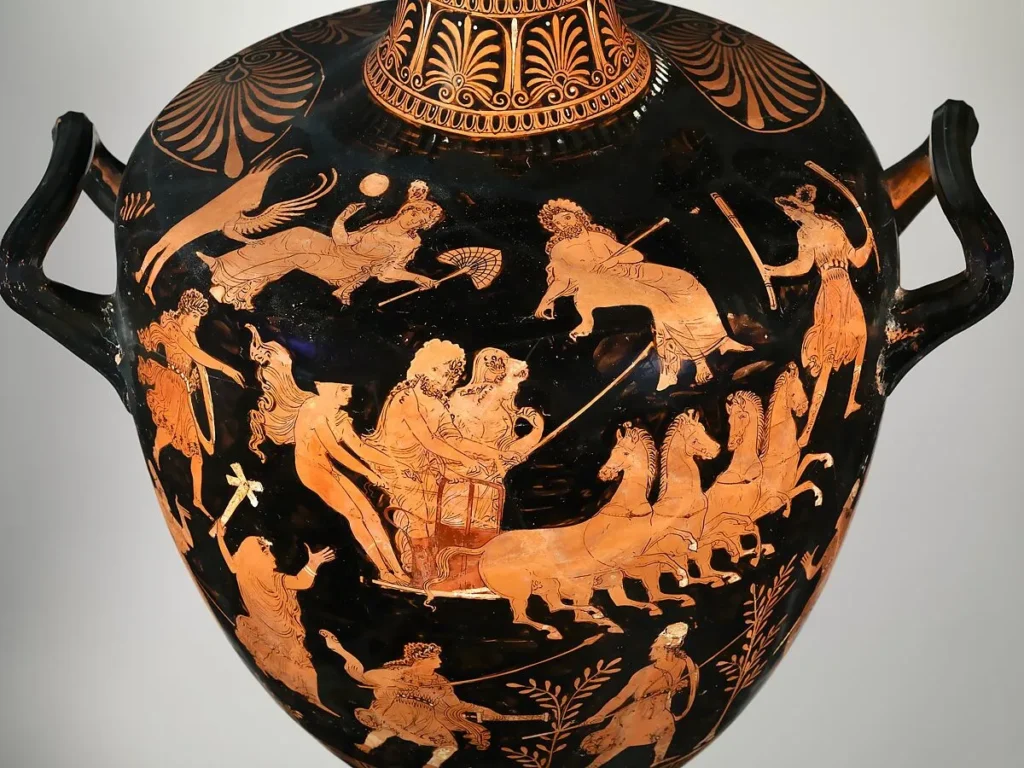
Greek artists depicted Persephone in multiple forms depending on context. In vase painting from the fifth and fourth centuries BC, she appears as a robed young woman holding a torch, a scepter, or a sheaf of wheat. Scenes of her abduction were especially popular on red-figure vases.
These vessels show Hades driving a four-horse chariot, Persephone struggling or resigned, and Demeter searching with torches. In representations associated with the Mysteries, artists showed Persephone goddess with a distinctive four-tipped torch used in Eleusinian rituals.
Statues and relief sculptures from sanctuaries often depicted the Two Goddesses side by side, both crowned and holding attributes of fertility and rulership. Excavations at Eleusis, Cyrene, and southern Italian Greek colonies have uncovered dozens of such reliefs, many dedicated by individuals grateful for safe passage through initiation.
Pomegranates appear frequently in her iconography. A bronze pomegranate found on the Acropolis and now held in the National Archaeological Museum in Athens demonstrates the fruit’s sacred status.
Sanctuaries Across the Mediterranean
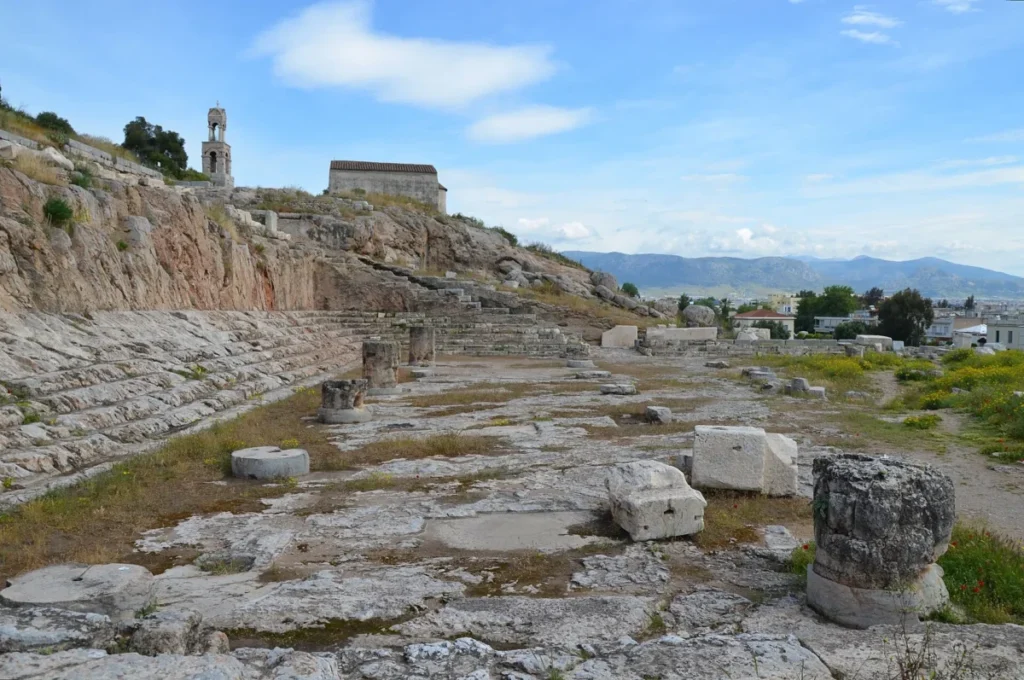
While Eleusis remained the primary cult center, Greeks honored Persephone goddess at sanctuaries across the Mediterranean. At Locri Epizephyrii in southern Italy, a major temple complex dedicated to her operated from the seventh century BC onward.
Excavations there revealed thousands of votive offerings, including terracotta figurines, bronze mirrors, and tablets inscribed with prayers. Locrian worshippers emphasized her role as a marriage goddess and protector of women, a local interpretation that coexisted with the more widespread underworld and vegetation associations.
In Sicily, particularly at Akragas and Enna, communities claimed that Hades abducted Persephone on their land. A sanctuary near Agrigento, known as the Sanctuary of the Chthonic Deities, featured multiple temples on terraced levels. One temple, identified through inscribed pottery fragments, was dedicated specifically to Persephone, while another honored Demeter.
Spring and the Seasonal Cycle
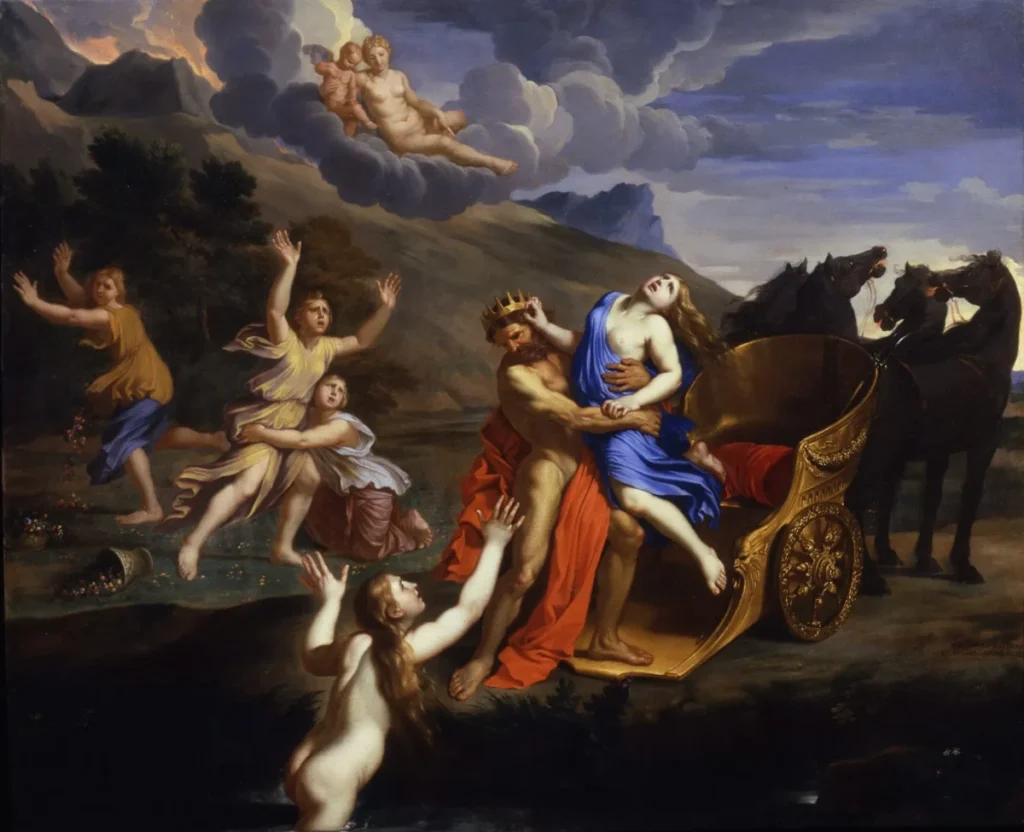
Ancient Greeks explained the origin of the four seasons through the myth of Persephone goddess and her annual journey between worlds. Spring and summer occurred during the months she stayed with Demeter, who made flowers bloom and crops grow bountiful.
During the other months when Persephone lived in the underworld with Hades, Demeter expressed her sadness by letting the earth go barren and covering it with snow, resulting in autumn and winter. This cyclical understanding of agricultural time governed farming practices across Greece.
Plutarch identified Persephone with the spring season itself, while Cicero called her the seed of the fruits of the fields. Farmers prayed to her and Demeter at planting time and offered first fruits at harvest, linking agricultural success directly to divine favor.
Roman Proserpina
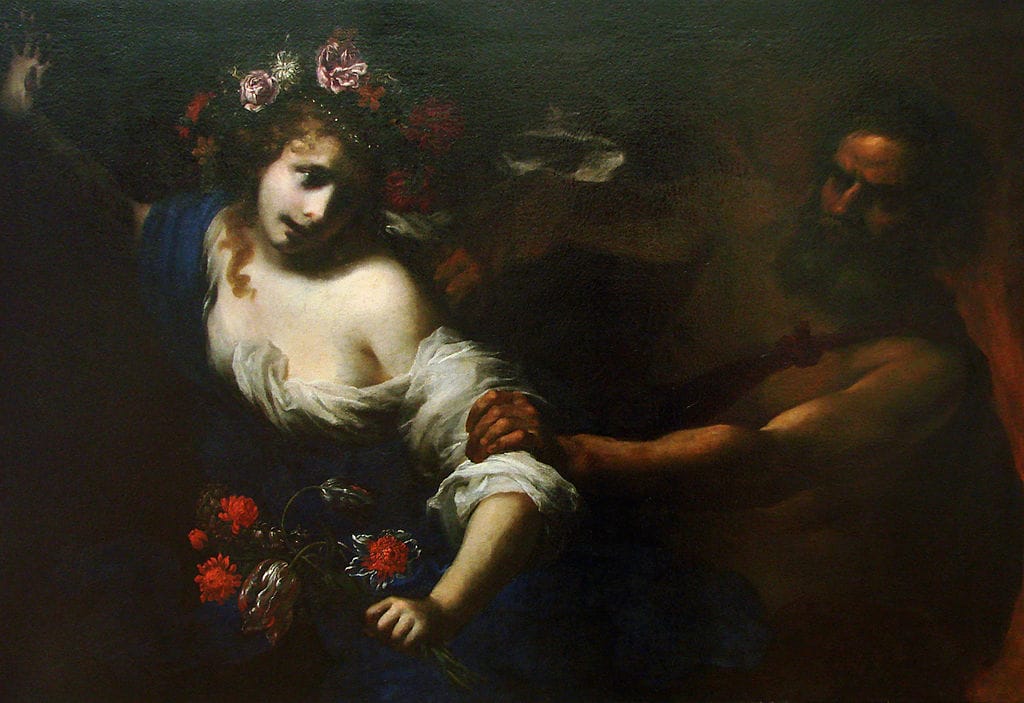
Romans identified Persephone with their native goddess Libera and more commonly called her Proserpina. The myth retained its basic structure, though Latin poets like Ovid in the Metamorphoses added details and shifts in emphasis.
Roman art continued Greek iconographic traditions but often portrayed Proserpina with a more regal, maturely Roman aesthetic. Sculptures from the imperial period show her as a dignified queen holding the cornucopia, emphasizing abundance and imperial prosperity rather than grief or loss.
The cult of Ceres and Proserpina, the Roman equivalents of Demeter and Persephone, remained active in Rome and across the empire. Initiations similar to the Eleusinian Mysteries were performed, though sources suggest these Roman versions lacked the emotional intensity and transformative power that Greek participants described.