
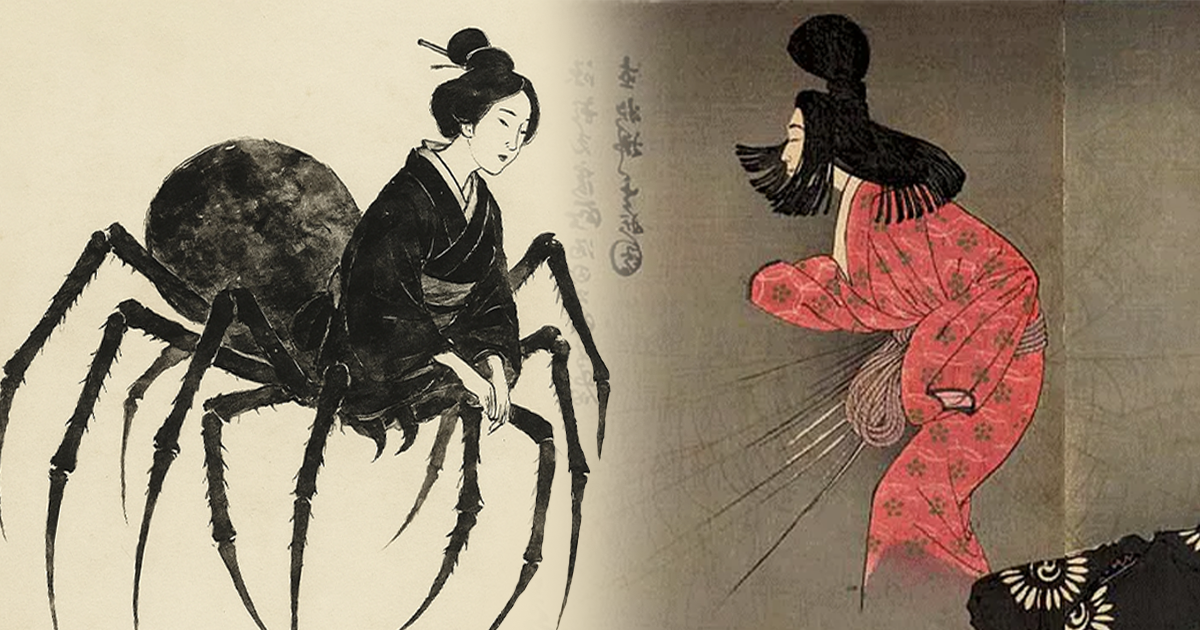
In the shadowy corners of Japanese folklore, few creatures inspire as much dread as the Jorōgumo. This spider yokai embodies one of the most unsettling transformations in supernatural tradition: a spider woman who appears as a beautiful maiden to lure unsuspecting men to their deaths. According to legend, when a golden orb-weaver spider species reaches 400 years of age, it gains the power to shapeshift into human form and develop a malicious appetite for human prey. The name itself reveals the creature’s dual nature: “joro” refers to a courtesan or entangling woman, while “gumo” means spider.
The Jorōgumo legend emerged during a period when Japan was systematically cataloging its supernatural world. By the time Toriyama Sekien published his groundbreaking yokai encyclopedias in the late 18th century, creatures like the spider woman had moved from oral folklore into visual culture, forever changing how Japanese society understood and depicted its monsters. This transformation from invisible threat to cataloged entity reflects a broader shift in how preternatural beings functioned in Japanese imagination, moving from amorphous fears whispered around village fires to documented creatures with specific characteristics and behaviors.
The Shape-Shifting Nature of Japanese Spider Yokai
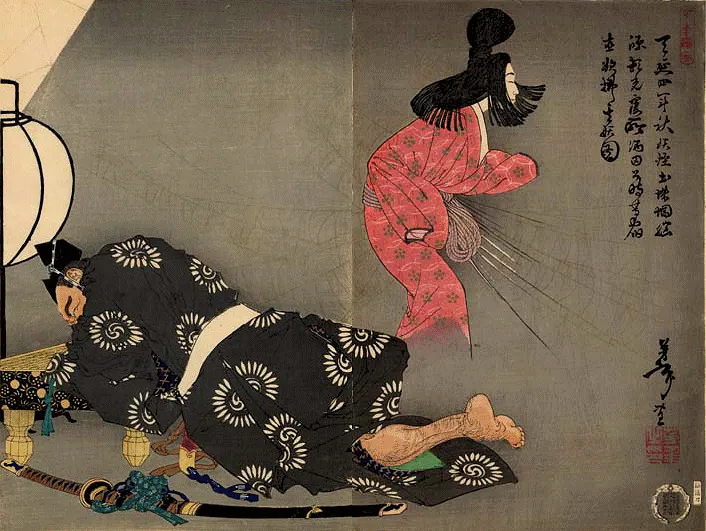
The yokai of Japanese tradition possess what scholars call a “database” quality, existing as discrete entities that can be cataloged, visualized, and understood through encyclopedic modes. This characteristic sets them apart from Western monsters that often require narrative context to exist. The Jorōgumo exemplifies this phenomenon perfectly. She exists as a recognizable entity with specific attributes: the ability to transform, an association with waterfalls and bridges, and a particular hunting method involving silk threads.
Transformation lies at the heart of the Jorōgumo’s power. In Japanese folklore, shapeshifting in Japanese folklore represents more than mere physical change. It embodies the uncertain boundary between the natural and supernatural worlds, between the trustworthy and the treacherous. When a golden orb-weaver spider accumulates four centuries of life, it crosses this boundary permanently. The creature gains not only human form but human cunning, using beauty and charm as weapons more deadly than any venom.
The biological foundation for this legend rests on actual spiders found throughout Japan. The Nephila clavata, known in Japanese as joro gumo (the same characters used for the yokai), spins enormous golden webs that shimmer in sunlight. Female specimens grow quite large, with bodies reaching 20 to 30 millimeters in length and leg spans that can stretch across a human hand. Their webs, some of the strongest natural fibers in existence, can trap small birds. These impressive characteristics, observed by generations of Japanese people, provided fertile ground for supernatural embellishment.
How Jorōgumo Hunts Her Victims
The hunting strategy attributed to the spider yokai reveals much about Edo period anxieties surrounding travel and isolated places. According to traditional accounts, Jorōgumo establishes her territory near waterfalls, bridges, or along mountain paths where travelers must pass. She typically appears as a woman in her prime, often carrying a child or playing a musical instrument like the biwa. The details vary by region, but the essential pattern remains consistent: the beautiful stranger, the isolated location, the inevitable trap.
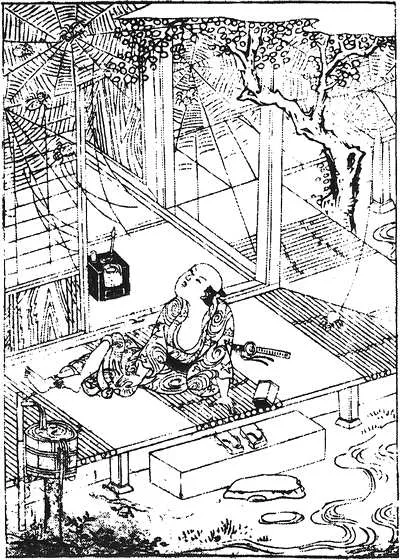
When a man approaches, drawn by her beauty or apparent distress, the Jorōgumo engages him in conversation. She might ask for help crossing the stream, request assistance with a burden, or simply invite him to rest and share sake. Once the victim is sufficiently close and off guard, she reveals her true nature. Some accounts describe her binding the man with threads that appear from her mouth or fingertips. Others tell of her dragging victims into caves or underwater grottos where she cocoons them for later consumption. The most elaborate versions describe entire lairs decorated with the silk-wrapped corpses of previous victims, hanging like grotesque trophies.
The spider woman’s silk threads serve multiple functions in these tales. They act as both weapon and snare, invisible until too late. In some regional variants, the Jorōgumo can control her threads from great distances, manipulating them like a puppeteer. This ability transforms her web from a passive trap into an active weapon, allowing her to hunt rather than merely wait for prey. The threads in folklore mirror the actual hunting behavior of golden orb-weavers, which construct auxiliary strands around their main webs to ensnare flying insects.
Perhaps the most disturbing element of the Jorōgumo legend involves her patience. Unlike yokai that attack on sight, the spider woman takes time to seduce and deceive. She converses, laughs, and acts entirely human until the moment of betrayal. This calculated approach speaks to deeper cultural anxieties about trust, appearance, and the masks people wear. The beautiful stranger might be exactly what she appears, or she might be something ancient and hungry wearing borrowed flesh.
Built out of a love for history, kept free from distractions.
Spoken Past is an independent project shaped by curiosity, care, and long hours of research. Reader support helps keep it maintained, carefully researched, and open to everyone.
The Origins of Jorōgumo Legend in Japanese Folklore
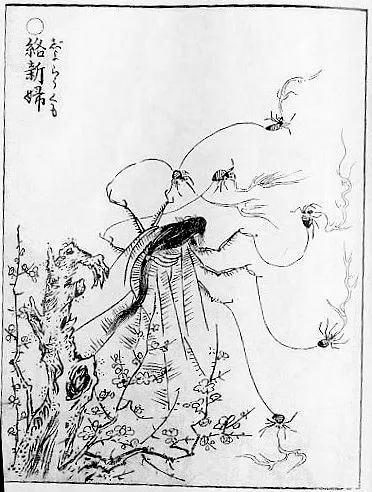
The systematic visualization of yokai began in earnest during the Edo period (1603-1868), when Japan experienced an explosion of urban commercial culture. Toriyama Sekien’s yokai encyclopedias, published between 1776 and 1784, revolutionized how Japanese people conceptualized supernatural beings. Before Sekien, yokai existed primarily in oral narratives and scattered paintings, largely invisible and mysterious. Sekien’s illustrated catalogs, mass-produced through woodblock printing and distributed via book-lending shops, made yokai constantly visible and accessible to urban middle-class readers.
This shift from oral to visual culture fundamentally changed the nature of yokai. As scholar Michael Dylan Foster argues, Sekien extracted yokai from narrative contexts and transformed them into iconographic entities that existed independently of stories. The encyclopedic mode allowed readers to browse yokai like entries in a catalog, comparing their characteristics and learning their names without necessarily encountering the cautionary tales that originally gave them meaning. The Jorōgumo appears in these catalogs as a discrete entity: a spider that becomes a woman, associated with specific locations and behaviors.
The timing of these publications coincided with increased travel along Japan’s highway system. The Tokugawa shogunate maintained an elaborate network of roads connecting Edo to provincial domains, and along these routes travelers encountered bridges, mountain passes, and isolated way stations. These liminal spaces, neither city nor settled countryside, provided perfect settings for supernatural encounters. The Jorōgumo legend thrived in this context, warning travelers about the dangers of accepting help from strangers or straying from established paths.
Specific locations became associated with Jorōgumo sightings. The most famous involves Joren Falls on the Izu Peninsula, where according to legend a particularly powerful spider woman maintained her hunting ground for decades. The waterfall, dropping nearly 80 feet into a basin surrounded by steep rocks, provided an ideal setting for the tale. Travelers approaching the falls might encounter a beautiful woman playing music near the water’s edge, only to discover too late that they had wandered into the spider’s web. These location-specific legends transformed real geographical features into sites of supernatural danger, adding layers of meaning to the physical landscape.
Yokai in Cultural Context and Popular Memory
The proliferation of yokai imagery in Japanese culture represents what scholars term “media mix,” a distinctly Japanese approach to transmedia adaptation. Unlike Western traditions that emphasize maintaining consistent narratives across platforms, Japanese media mix prioritizes characters that can migrate across different media and narrative worlds. This character-centric approach allows yokai like the Jorōgumo to appear in manga, anime, video games, and merchandise while adapting to different storytelling contexts.
The iconic nature of yokai designs facilitates this migration. Simplified, cartoony drawing styles, as opposed to photorealistic depictions, allow characters to remain recognizable even when adapted across different media platforms. An audience can identify a Jorōgumo whether she appears in a traditional woodblock print, a modern manga panel, or as a video game character. This visual flexibility has allowed yokai to maintain cultural relevance across centuries, adapting to new technologies while retaining core recognizable elements.
However, this migration from narrative-based folklore to character-based media consumption has created tensions. The contemporary yokai boom in Japan, while generating enormous commercial success, has largely divorced these creatures from their original functions as vehicles for cultural wisdom and social critique. Traditional yokai stories conveyed communal knowledge, warned of genuine dangers, and reinforced social values. A tale about the Jorōgumo wasn’t merely entertainment but a genuine warning about the hazards of isolated travel and the dangers of trusting appearances.
Modern manga artist Mizuki Shigeru (1922-2015) represents an important bridge between these traditions. His extensive yokai manga works, particularly the GeGeGe no Kitaro series, reintroduced narrative depth to yokai that had been reduced to mere visual icons. Mizuki’s yokai retained their capacity to unsettle, to challenge anthropocentric worldviews, and to critique modern society’s excesses. His work drew heavily on Toriyama Sekien’s yokai encyclopedias from the Edo period, often directly copying or closely adapting specific yokai designs while embedding them in stories that addressed postwar Japanese anxieties.
The transformation of yokai from folklore to popular culture reveals broader patterns in how traditional beliefs adapt to modern contexts. The Jorōgumo continues to appear in contemporary media, but often stripped of her most unsettling characteristics. She becomes a video game antagonist to defeat, an anime character with a tragic backstory, or a cute mascot rendered harmless through simplified design. These adaptations serve commercial purposes, making yokai accessible and marketable to contemporary audiences. Yet they also represent what cultural critics call “database consumption,” where audiences engage with appealing surface details while remaining largely uninterested in deeper meanings or original contexts.
The Spider Woman’s Enduring Presence
The physical manifestation of yokai characters has expanded beyond traditional media into Japan’s actual geography through contents tourism. Local governments and communities have embraced yokai imagery as tools for economic revitalization, creating statues, museums, and tourist attractions centered on supernatural beings. The town of Sakaiminato, Tottori Prefecture, where Mizuki Shigeru spent his childhood, features Mizuki Shigeru Road with over one hundred bronze yokai statues lining the streets, including representations of spider yokai.
These developments reflect complex relationships between locality, tradition, and commercial culture. While contents tourism can revitalize struggling rural economies, it transforms actual places into simulated spaces designed to satisfy tourist expectations formed through media consumption. Visitors arrive seeking confirmation of images they’ve already encountered in anime or manga, showing little interest in local history or actual folklore traditions. The result creates what scholar Mary Louise Pratt calls a “contact zone,” where uneven power relationships place media companies and urban consumers in dominant positions over local communities.
The Jorōgumo’s journey from oral folklore to Edo period encyclopedia to contemporary media commodity illustrates broader transformations in how cultures preserve and transmit traditional knowledge. The spider woman once served as genuine warning, reminding travelers that beautiful appearances might conceal deadly intentions and that isolated places harbor genuine dangers. In an era before reliable lighting, communication, or medical care, such warnings carried practical weight. A traveler who remembered the Jorōgumo legend might exercise greater caution when encountering strangers in isolated locations, potentially avoiding robbery, assault, or other hazards.
Contemporary audiences encounter the spider yokai in vastly different contexts. The practical dangers she symbolized have largely vanished in modern Japan, where well-lit highways, mobile phones, and efficient emergency services have tamed the wilderness. Yet the Jorōgumo persists, adapted to new media and new audiences. Her image appears on merchandise, in video games, and across social media. Local festivals feature Jorōgumo-themed events. Artists continue creating new interpretations of the ancient spider woman.
This persistence suggests that yokai fulfill needs beyond their original practical functions. The Jorōgumo represents enduring human concerns about deception, the tension between appearance and reality, and the unsettling possibility that beauty might mask predation. These anxieties remain relevant even as their specific manifestations change. The spider woman no longer lurks by isolated waterfalls, but the question she embodies persists: how do we know when trust is warranted and when it leads to destruction?
The scholarly study of yokai has expanded significantly in recent decades, with researchers examining these creatures as windows into Japanese cultural history, folk belief, and the processes by which traditional knowledge adapts to changing social conditions. English-language scholarship on yokai, while still limited compared to Japanese-language research, has grown to include monographs examining historical materials, literary traditions, and contemporary popular culture manifestations. This academic attention reflects broader recognition that supernatural folklore offers valuable insights into how societies conceptualize danger, otherness, and the boundaries of human experience.
The Jorōgumo stands as a particularly rich example for such study. Her legend incorporates biological observation of actual spiders, cultural anxieties about travel and isolation, moral warnings about deception, and aesthetic traditions of visualizing the supernatural. She has survived centuries of social change, adapting from oral tale to woodblock print to digital media while retaining core elements that make her recognizable across time. The spider woman continues to weave her web through Japanese culture, patient and persistent, waiting for new generations to encounter her ancient hunger dressed in borrowed flesh.
References
Foster, M. D. (2012). Yōkai culture in transition: From folklore to popular culture. Asian Ethnology, 71(2), 288-290. https://asianethnology.org/article/270/download
Suzuki, S. C. J. (2019). Yōkai monsters at large: Transmedia practice and locations in Mizuki Shigeru’s yōkai art. International Journal of Communication, 13, 2199-2215. https://ijoc.org/index.php/ijoc/article/download/10012/2652/38138