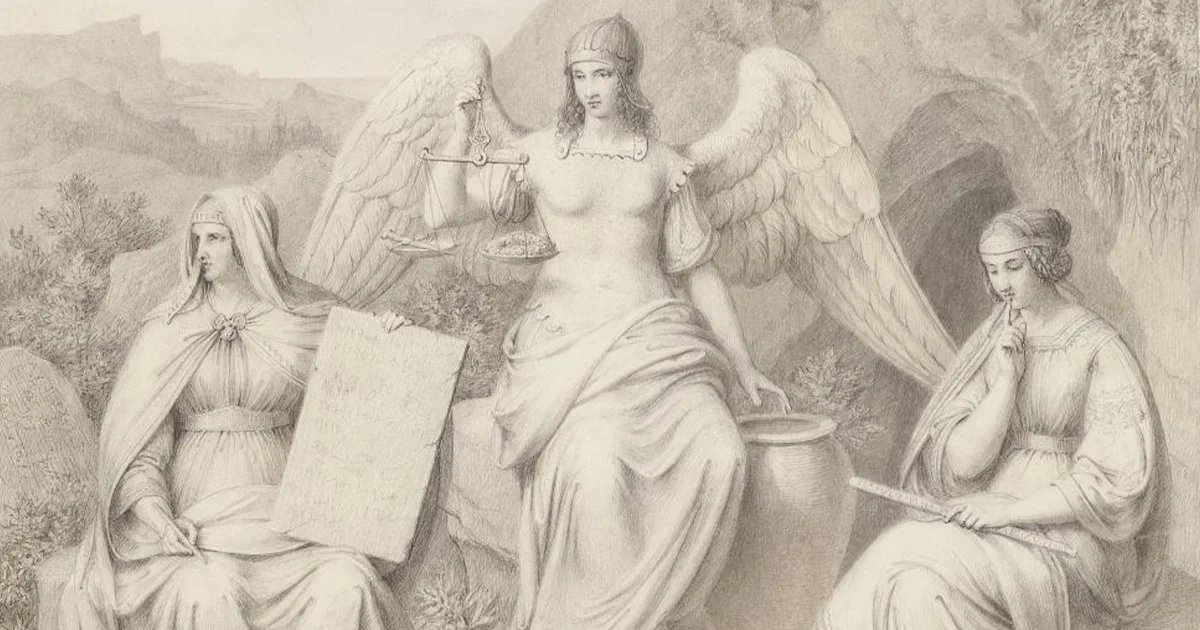
Beneath the roots of Yggdrasil, the great ash tree that holds the nine worlds together, three mysterious women sit beside a well. They carve runes into wood. They draw water to nourish the tree. And they determine the fate of every living being in the cosmos, from the lowest mortal to Odin himself.
The Norns in Norse mythology were not simply fortune tellers or wise women. They were the ultimate power in the Viking universe, beings so fundamental to existence that even the gods could not escape their decrees. When a Norn carved your fate into the World Tree, that fate became as immutable as the past itself.
For the Vikings who sailed across frigid northern seas and raided the monasteries of Europe, the Norns represented something profound about how they understood existence. Fate was not punishment. It was not reward. It was simply what would be, and the measure of a person lay in how courageously they faced it.
The Three Norns: Urd, Verdandi, and Skuld
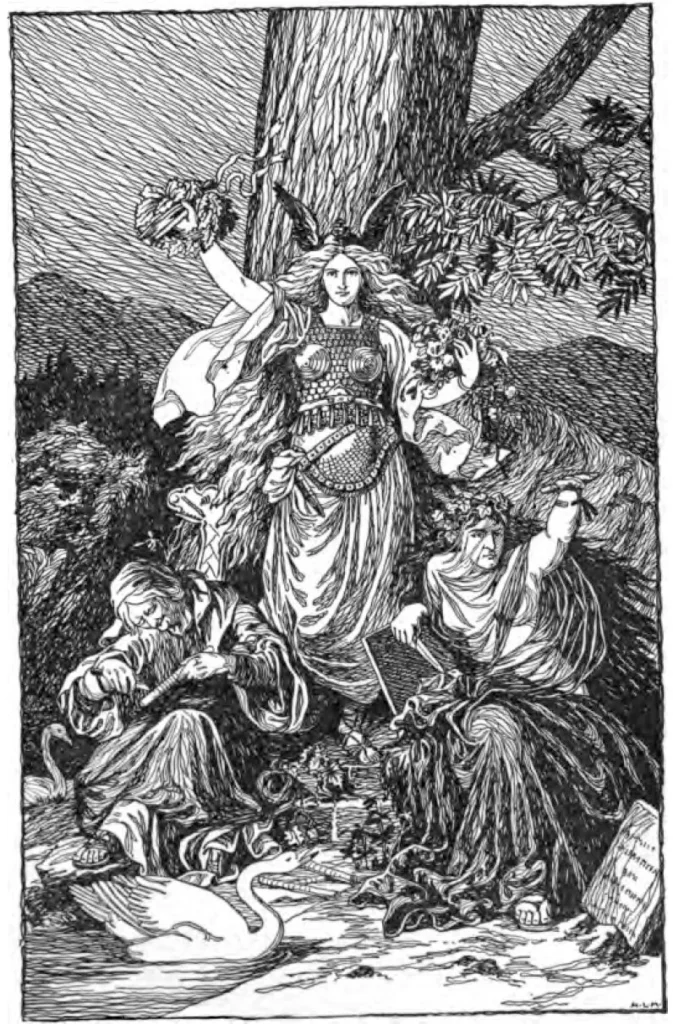
The Völuspá, one of the oldest and most important poems in Norse literature, introduces the three chief Norns with striking imagery. A seeress describes how these beings emerged from the depths:
“Thence come the maidens mighty in wisdom, Three from the dwelling down ‘neath the tree; Urth is one named, Verthandi the next, On the wood they scored, and Skuld the third. Laws they made there, and life allotted To the sons of men, and set their fates.”
These three figures, whose names carry deep meaning in Old Norse, form the core of Viking beliefs about destiny.
Urd (Old Norse: Urðr) is the eldest and most powerful of the three sisters. Her name derives from the Old Norse verb verða, meaning “to become,” specifically in its past tense form. She represents “that which has become” or “that which has happened.” In practical terms, Urd embodies the past and all the consequences of actions already taken. The Well of Urd (Urðarbrunnr), where the Norns dwell, takes its name from her.
Verdandi (Old Norse: Verðandi) takes her name from the present participle of that same verb. She represents “that which is becoming” or “that which is happening.” She is the Norn of the present moment, the eternal now in which all actions occur and all fates unfold.
Skuld (Old Norse: Skuld) has a name derived from a different root entirely, the verb skulu, meaning “shall” or “must.” Her name implies obligation, debt, and necessity. She represents “that which must come to pass” or “that which is owed.” Interestingly, Skuld also appears in some sources as a Valkyrie, one of Odin’s battle maidens who choose the slain. This dual role hints at the deep connection between fate and death in Norse thought.
What the Norns Actually Did
The popular image of the Norns as weavers of fate, spinning threads of destiny on some cosmic loom, is actually a simplification. While textile metaphors do appear in Norse literature in connection with fate, the primary sources present a more complex picture.
According to both the Poetic Edda and Snorri Sturluson’s Prose Edda, the Norns performed several crucial functions:
Carving Runes of Fate
The Völuspá tells us that the Norns “scored” or carved on wood. This refers to the practice of carving runes, the magical alphabet of the Germanic peoples. In Norse belief, runes were not merely letters but powerful symbols that could shape reality itself. When the Norns carved runes into Yggdrasil or onto wooden staves, they were literally inscribing fate into the fabric of existence.
Tending the World Tree
Snorri Sturluson, writing in 13th century Iceland, provides crucial details about the Norns’ daily activities. In his Gylfaginning, he describes how the Norns draw water from the Well of Urd and pour it over Yggdrasil along with the white clay that surrounds the well. This keeps the great ash tree alive and healthy, preventing its branches from rotting.
This task might seem humble compared to determining the fates of gods and mortals, but it reveals something important about Norse cosmology. The World Tree is the structure that holds all of existence together. By maintaining Yggdrasil, the Norns are literally maintaining reality itself.
Decreeing Fate at Birth
When a child was born, the Norns would come to determine its life span and destiny. Snorri tells us:
“There stands a fair hall under the ash by the well, and out of that hall come three maidens who are called thus: Urd, Verdandi, Skuld. These maidens shape men’s lives. We call them Norns.”
This birth visitation was a solemn moment in Viking belief. The Norns would examine the child and decree what sort of life it would have, how long it would live, and what manner of death it would face. These decrees were considered binding and irreversible.
The Well of Urd: Gateway to Fate
The Well of Urd (Urðarbrunnr) sits at the base of Yggdrasil, beneath one of the tree’s three great roots. This is not merely a pool of water but a sacred space where past, present, and future converge. The well represents the accumulated weight of all that has happened, all the deeds and choices that have shaped the present moment.
In Norse thought, the past does not simply disappear. It flows down into Urd’s well like water seeping into the ground, and from there it rises again to shape the present and future. This is why the well’s waters have such power: they contain the essence of everything that has ever been.
The Norns use this water to sustain Yggdrasil, which means the World Tree is literally nourished by the past. Every leaf on its branches, every creature that dwells within it, exists because of what has come before. This creates a profound philosophical statement about the nature of existence: we are all sustained by history, shaped by consequences, bound to what has been.
Two sacred swans swim in the Well of Urd, and from these swans came all the swans in the world. This detail, mentioned by Snorri, suggests that even the natural world flows from this primordial source.
More Than Three: The Many Norns
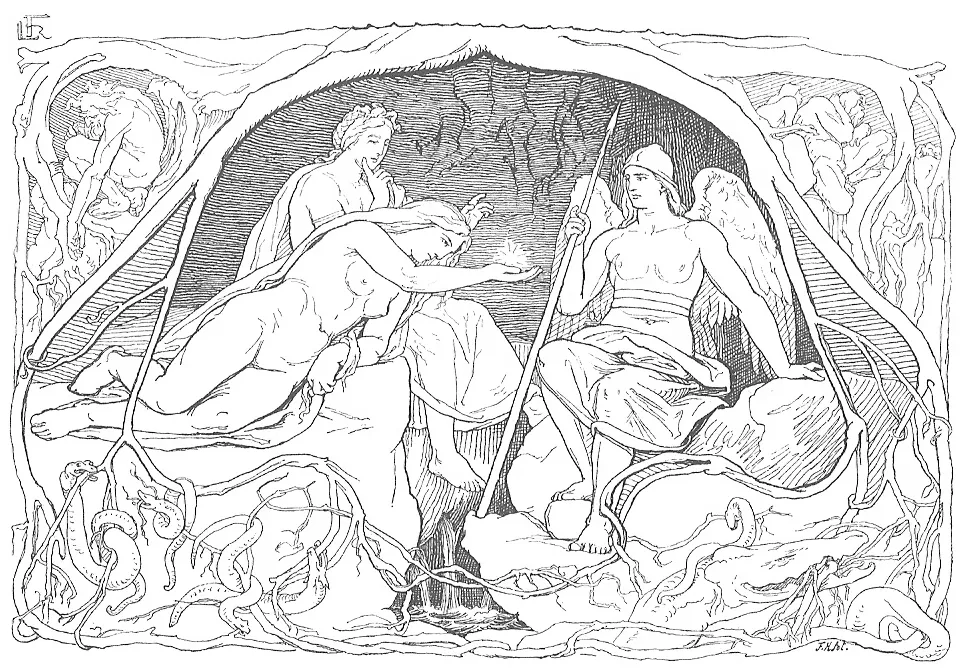
While Urd, Verdandi, and Skuld are the three great Norns who determine the fate of the cosmos, they are not alone. Norse sources speak of many other norns who perform similar functions on a smaller scale.
Snorri explains:
“There are still more norns, those who come to each person who is born, to determine the length of their life; and these are of the race of gods, but the second are of the race of elves, and the third of the race of dwarves.”
This reveals a complex hierarchy of fate beings. The three great Norns at the Well of Urd handle the broadest strokes of cosmic destiny, while countless lesser norns, drawn from various supernatural races, attend to individual lives.
The Fáfnismál, another poem from the Poetic Edda, confirms this multiplicity:
“Most sundered in birth I say the Norns are; They claim no common kin. Some are of the Æsir, Some are of the elves, Some are daughters of Dvalin.”
Dvalin is a dwarf, so this passage tells us that norns could come from the three great races of supernatural beings: gods (Æsir), elves, and dwarves. This widespread distribution of fate-determining power suggests that destiny was woven throughout the entire cosmos, not controlled from a single point.
Good Norns and Bad Norns
Not all norns were created equal. Snorri makes clear that some norns were benevolent while others brought misfortune:
“Good norns and of good ancestry shape good lives, but those men who suffer misfortune, that is caused by evil norns.”
This concept helped Vikings explain the seemingly random distribution of good and bad fortune in the world. Why does one child grow up to be a wealthy jarl while another dies in poverty? Because different norns attended their births. It was not a matter of divine punishment or reward but simply the nature of the particular fate being who happened to arrive.
This belief had practical implications. Certain rituals and offerings might attract favorable norns to a birth, while bad luck or ritual pollution might draw malevolent ones. The moment of birth was therefore surrounded by careful observances designed to give the child the best possible start.
The Norns and the Gods
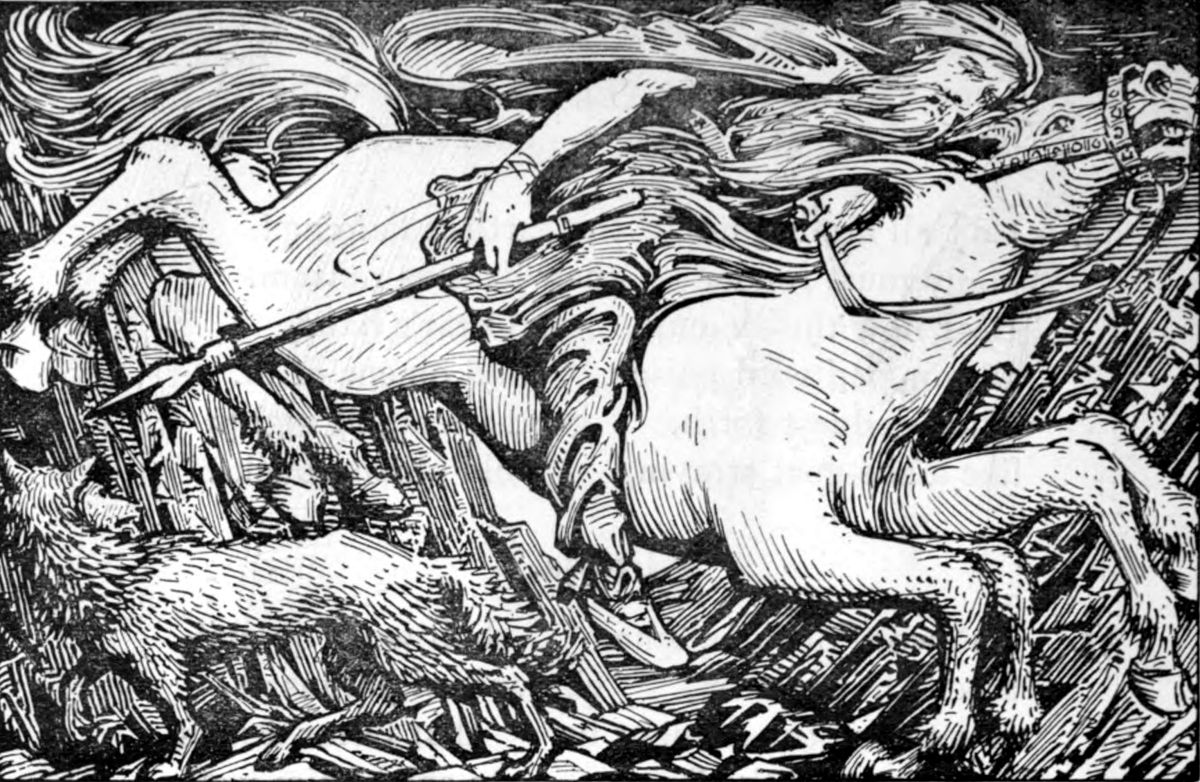
One of the most striking aspects of Norse mythology is that even the gods are subject to fate. Odin, Thor, and all the Æsir will die at Ragnarök, the twilight of the gods, and they know this. They have known it since the Norns decreed it.
This sets Norse mythology apart from many other traditions. In Greek myth, Zeus reigns supreme and can (usually) do as he pleases. In Norse myth, Odin is constantly searching for wisdom precisely because he knows his doom is coming and hopes to find some way to mitigate it. He cannot. The Norns have spoken.
The gods’ submission to fate appears throughout Norse literature. When Balder, the beloved son of Odin and Frigg, is killed by a mistletoe dart, the gods know it is the beginning of the end. They try to retrieve him from Hel, but fate will not allow it. The chain of events leading to Ragnarök has begun, and no power in the nine worlds can stop it.
This creates a sense of tragic grandeur in Norse mythology. The gods are not petty tyrants amusing themselves with mortal affairs. They are noble beings facing the same inescapable fate as everyone else, and they face it with courage.
Built out of a love for history, kept free from distractions.
Spoken Past is an independent project shaped by curiosity, care, and long hours of research. Reader support helps keep it maintained, carefully researched, and open to everyone.
Fate, Wyrd, and the Web of Destiny
The Norse concept of fate has a counterpart in the Anglo-Saxon term wyrd, which comes from the same linguistic root as Urd’s name. Wyrd is not quite the same as our modern notion of “fate” in the sense of a predetermined future. It is something more subtle and more powerful.
Wyrd is often described as a web of interconnected actions and consequences. Every deed you perform, every choice you make, adds a new thread to this web. These threads connect you to other people, to past events, to future possibilities. The Norns do not simply decide what will happen to you; they weave your thread into the existing web, connecting your fate to everything that has come before.
This is why the past is so important in Norse thought. You cannot understand someone’s fate without knowing their ancestry, their family’s deeds, their personal history. All of these threads come together in the present moment, shaping what can and cannot happen.
The concept has a parallel in the Norse term ørlög, which literally means “primal layers” or “fundamental laws.” This refers to the basic structure of fate that was laid down at the beginning of time and continues to shape all that happens. Individual fates fit within this larger framework, like streams flowing into a great river.
The Norns vs. the Greek Fates
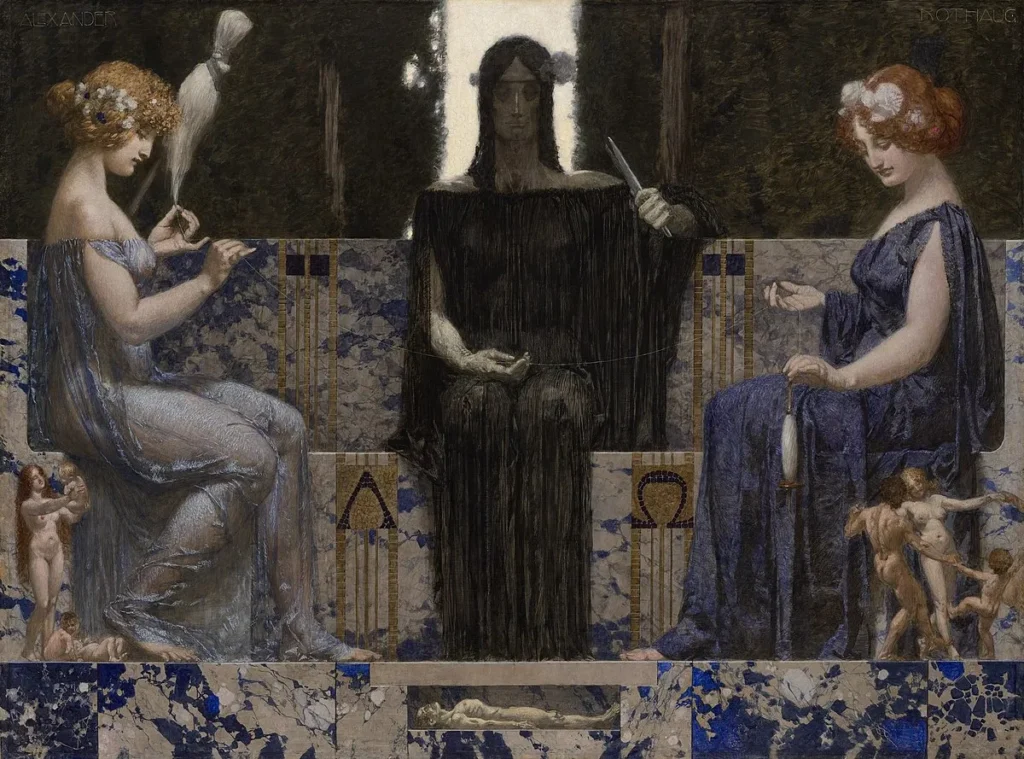
Readers familiar with Greek mythology might see obvious parallels between the Norns and the Moirai (or Fates): Clotho, Lachesis, and Atropos. Both are groups of three female beings who determine destiny. Both include figures associated with spinning or textile work. The similarities have led some scholars to propose a common Indo-European origin for both concepts.
However, important differences exist. The Greek Fates are more clearly depicted as spinners who measure out the thread of life and cut it at death. The Norns’ connection to textile work is less explicit in the primary sources. While some later interpretations show them weaving, the actual poems and sagas more often depict them carving runes.
The philosophical implications also differ. In Greek thought, even Zeus sometimes struggles against fate, and there is tension between divine will and destiny. In Norse thought, there is no such tension. Fate is simply what is, and even the king of the gods accepts it without complaint. This acceptance is itself considered noble.
The Norns also seem to have a more active, ongoing role than the Moirai. They do not simply spin your thread at birth and cut it at death. They maintain the World Tree, they draw water from the sacred well, they carve runes that shape reality. They are constantly at work, not just on individual lives but on the cosmos itself.
The Power of the Spoken Word
An intriguing aspect of the Norns’ power involves the concept of fate as speech. In Norse culture, the spoken word carried enormous weight. Oaths were sacred. Curses were feared. Poetry had magical power.
The Norns do not just see the future; they speak it into existence. When a norn decrees what will happen, her words have the force of law. This connects to the broader Norse concept of seiðr, a form of magic closely associated with women and with the manipulation of fate.
Some scholars have suggested that the Norns are related to the völur, the human seeresses who practiced seiðr and could pronounce prophetic judgments. The Völuspá itself is presented as the utterance of such a seeress. Perhaps the Norns represent the cosmic archetype of which human prophetesses were earthly reflections.
The Norns in Viking Daily Life
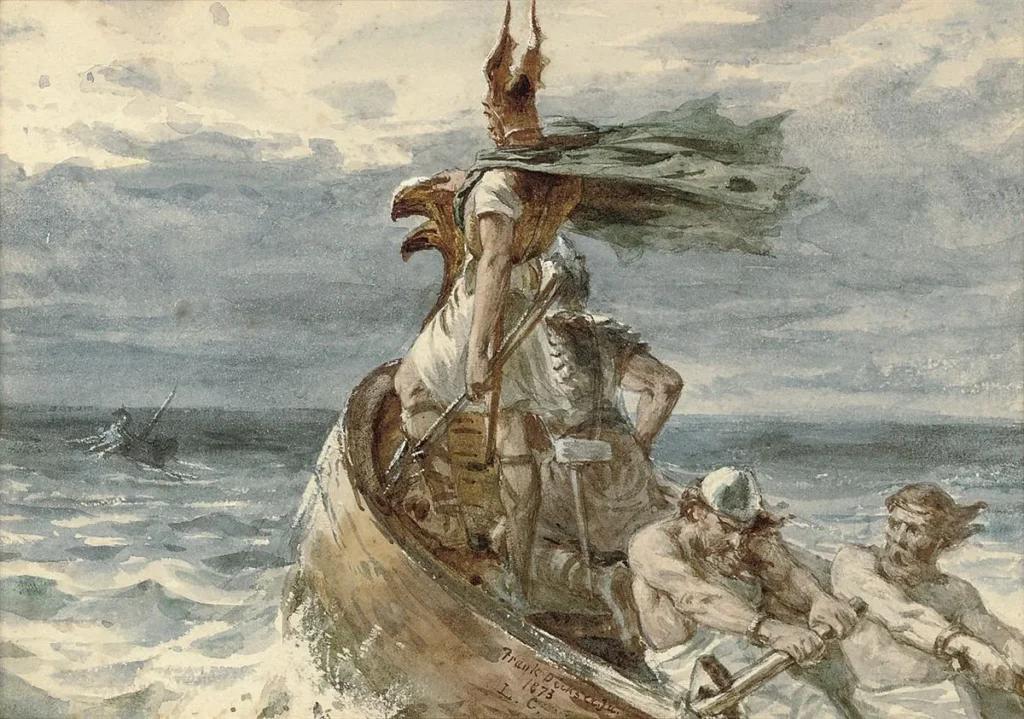
Frank Bernard Dicksee 1873. Source: Wikimedia Commons
For actual Vikings, the Norns were not merely characters in stories. They were forces that shaped everyday existence. Archaeological evidence and literary sources suggest that Scandinavians made offerings to the Norns, sought their favor, and tried to learn their decrees through divination.
Runic inscriptions from the Viking Age sometimes invoke the Norns. One inscription from the Borgund stave church in Norway, dating from after the Christianization of Scandinavia, reads: “The norns did both good and evil, great toil…” This suggests that belief in the Norns persisted even after the official conversion to Christianity.
Birth was a particularly charged moment. Attendants would try to ensure that favorable norns would come to the newborn. Certain rituals had to be performed correctly. The child would be named and accepted into the family, with the hope that these actions would help establish a good fate.
Dreams were also considered important. The Norns might appear in dreams to warn of future events or to reveal hidden truths. Warriors going into battle might receive dream visions that told them whether they would live or die. These visions were treated as reliable information, not mere fantasy.
Why the Norns Still Matter
The Norns offer a window into how the Viking mind understood existence. They represent a worldview where the past is never truly gone, where consequences flow inevitably from actions, where courage matters more than escape.
This is not a fatalistic philosophy in the passive sense. Vikings did not sit around waiting for fate to happen to them. They were among the most active, adventurous people in history. But they faced their adventures knowing that the outcome was already determined. What mattered was not whether you won or lost but how you conducted yourself in the struggle.
The Norns also remind us that the Vikings saw reality as fundamentally interconnected. You are not an isolated individual making choices in a vacuum. You are a thread in a vast web, connected to ancestors and descendants, to friends and enemies, to the gods and the land itself. Your fate is woven together with the fate of everything else.
This interconnected view of existence has resonance in our modern world, where we increasingly understand how individual actions ripple out to affect the whole planet. The Norns, sitting at the root of the World Tree and tending the web of fate, understood this long before we had concepts like ecology or systems thinking.
The Eternal Now at Urd’s Well
Picture, for a moment, what it might be like to visit the Well of Urd. The great ash tree rises above you, its branches holding the nine worlds. The water in the well is ancient and clear, containing the essence of everything that has ever happened. The air is still.
Three women sit beside the well. One looks backward, into the depths of the past. One looks at you directly, seeing the present moment with perfect clarity. One gazes into the distance, toward what must be.
They are carving. The runes they inscribe will shape your world and everything in it. You cannot read what they write. You cannot change it. You can only face it as it comes.
This is the gift the Norns offer: not comfort, not control, but clarity. Your fate is not random. It flows from everything that came before and connects to everything that will follow. You are part of something vast and meaningful, even if you cannot see the whole pattern.
The Vikings who first told stories of the Norns understood something that we sometimes forget. We are not the authors of our own stories. We are characters in a story much larger than ourselves, written by forces beyond our comprehension. The best we can do is play our part well, face whatever comes with courage, and trust that our thread, however short or long, is woven into the great tapestry of existence.
At Urd’s Well, the water still flows. The tree still grows. And the Norns are still carving, shaping fates that will unfold long after we are gone.