
Long before Odin existed, long before the first god took shape or the first human drew breath, there was fire. Muspelheim is one of the two primordial realms in Norse mythology that existed before creation itself, a world of pure, endless flame sitting at the southern edge of the great void. It did not appear because something created it. It simply always was. Understanding this realm means understanding one of the most fundamental ideas in Norse cosmology: that some forces in the universe are older than the gods and will outlast them entirely.
What Exactly Is Muspelheim?
Muspelheim, written in Old Norse as Múspellsheimr, translates roughly to “home of Muspell.” The word Muspell itself is harder to pin down. Scholars believe it likely derives from an old Germanic compound meaning “world-destroyer” or “wreck of the world,” and the same root appears in Old Saxon and Old High German texts predating the Viking Age, which tells us this concept of a fiery, world-ending force was not unique to Norse culture but ran through the entire Germanic world.
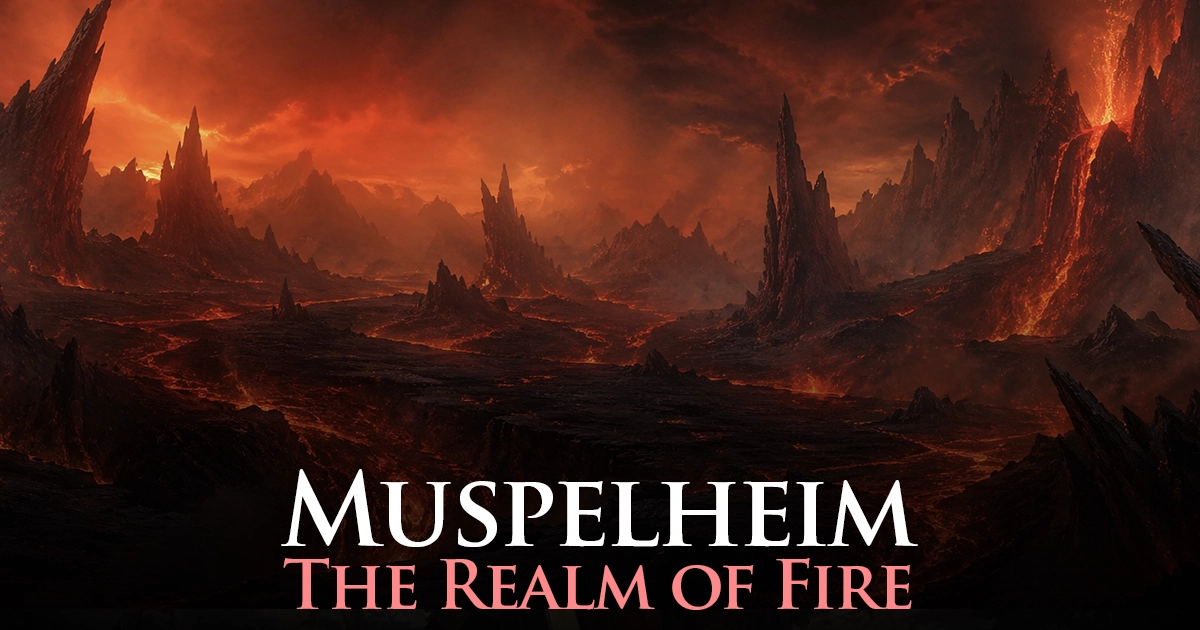
The realm is described consistently across the sources as a place of intense, roaring heat and blinding light. Nothing can survive there unless it belongs there. No god, no human, no frost giant can enter Muspelheim and live. It sits at the southern boundary of the cosmos, forming the opposite pole to Niflheim, the frozen realm of ice and mist in the far north. Between these two extremes lay Ginnungagap, the great void, and it was across that void that fire and ice first met.
The name “Muspelheim” as a specific named place appears only in the Prose Edda, written by the Icelandic scholar Snorri Sturluson around 1220 CE. The older Poetic Edda, which preserves Norse poems likely composed between the 9th and 11th centuries, refers instead to Múspell and the sons of Muspell without naming the realm directly. This is worth knowing because it means some of the detailed description we have of Muspelheim as a place comes from Snorri, who was writing two to three centuries after Iceland converted to Christianity and was consciously trying to preserve and organize older mythological material.
How Muspelheim Created the World
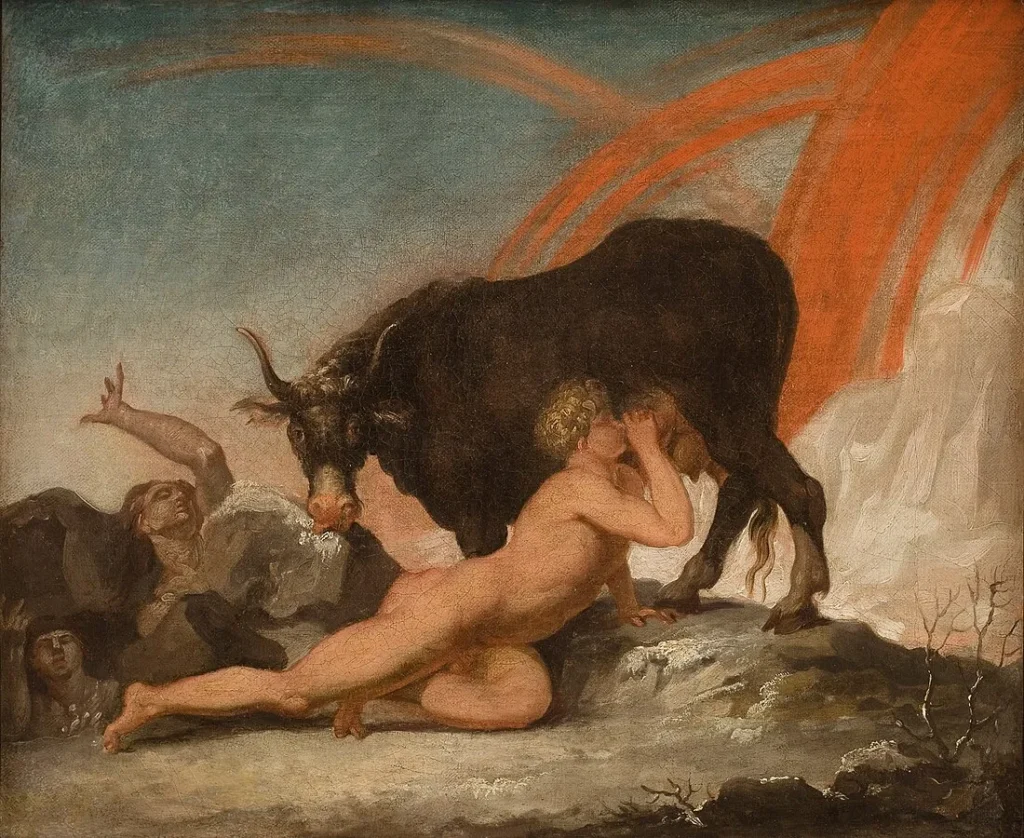
The Norse creation myth begins with two realms and nothing else. To the north, Niflheim sent rivers of frozen, poisoned water called the Élivágar pouring southward into Ginnungagap. To the south, Muspelheim sent heat and sparks roaring northward into that same void. When these two opposing forces collided in the middle of Ginnungagap, the ice began to melt. The warmth from the south worked on the frost from the north slowly, over vast stretches of time, and from those melting drops of ice came the first living being.
The Birth of Ymir
That first being was Ymir, the original frost giant. He was not created by any god or divine will. He simply condensed out of the interaction between fire and ice, like moisture forming on cold stone. Ymir is described in the Prose Edda as nourished by the milk of a primordial cow named Auðumbla, who herself emerged from the same melting ice. While Ymir slept, the first gods were born, eventually leading to Odin and his brothers Vili and Ve.
Those three brothers eventually killed Ymir. They used his body as raw material to build the world: his flesh became the earth, his blood became the seas and lakes, his bones became mountains, his hair became trees, and his skull was lifted up to form the dome of the sky. His brain was scattered to become clouds.
The Sparks That Became Stars
Here is where Muspelheim plays its second creative role. After building the earth from Ymir’s body, Odin and his brothers took glowing embers and sparks from Muspelheim and fixed them in the sky to create the sun, the moon, and the stars. Light itself, in Norse cosmology, is fire borrowed from the primordial south. The gods did not invent light. They redistributed what Muspelheim already possessed. This is a subtle but important point about how the Norse understood divine power: the gods shaped and organized the world, but the raw materials they worked with were older than they were.
Who Lives in Muspelheim
The realm is home to fire giants, called the eldjötnar in Old Norse, meaning “fire jötnar” or fire-beings. The word jötunn (plural jötnar) is often translated as “giant,” but in Norse mythology it really means something closer to a primordial, powerful being that exists in opposition to the gods. The fire jötnar of Muspelheim are not humanoid figures throwing boulders. They are beings of pure destructive heat, ancient and indifferent to anything the gods have built.
Surtr, Guardian of the Flame
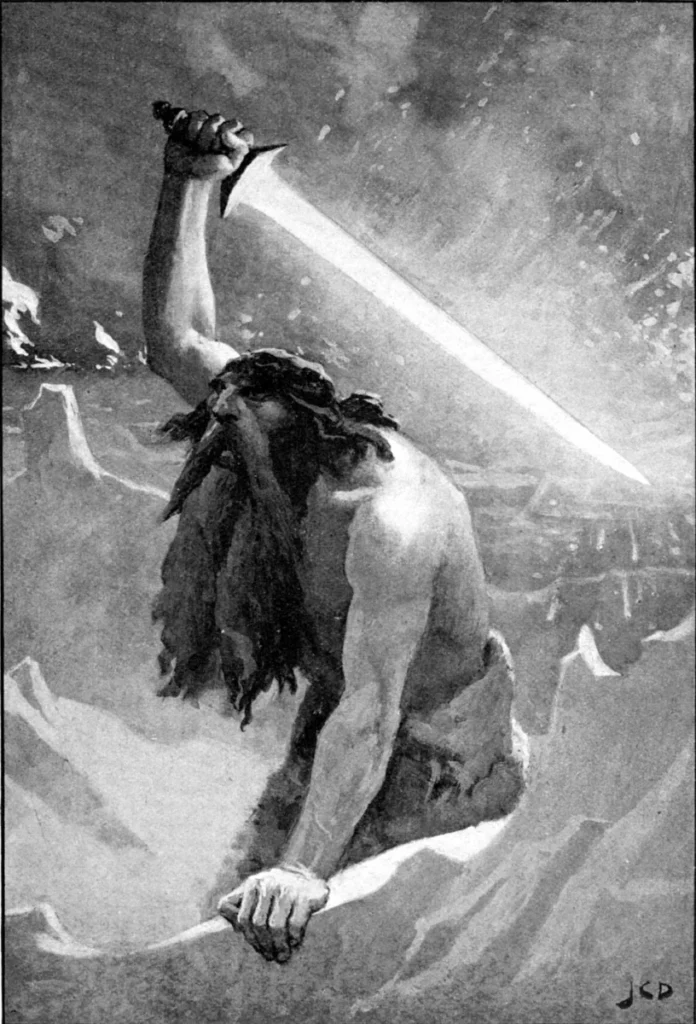
The most important inhabitant of Muspelheim by far is Surtr. His name means “the black one” or “the swarthy one” in Old Norse, a reference to his scorched, coal-dark appearance. Surtr stands at the borders of Muspelheim with a flaming sword described in the sources as brighter than the sun itself. He does not wander. He does not involve himself in the politics of Asgard or the conflicts between gods and frost giants. He simply waits.
Surtr is one of the oldest named beings in Norse mythology. The Völuspá, the great prophetic poem of the Poetic Edda, mentions him in connection with both the beginning and end of the world, making him one of very few figures who bookend the entire Norse cosmic timeline. He existed before the gods were born and is fated to destroy what they built.
The relationship between Surtr and Muspelheim is never described as rulership in the way Odin rules Asgard or Hel rules the realm of the dead. Surtr does not govern Muspelheim so much as he embodies it. He is fire waiting to be released.
The Nine Worlds and Where Muspelheim Sits
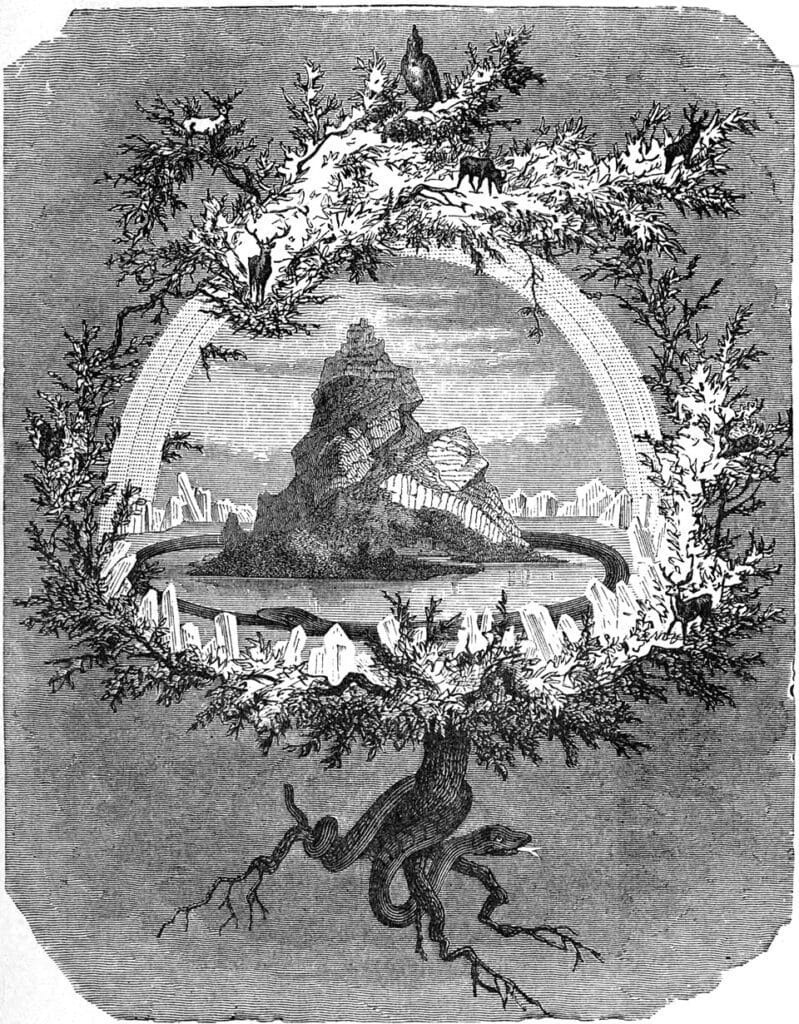
Norse cosmology organizes the universe into nine worlds, all connected by the great world tree Yggdrasil. Most of these realms are bound up with the tree in some way, their roots reaching toward it or their branches sheltering under it. Muspelheim is notably absent from this connected structure. It stands outside the organized cosmological framework that Yggdrasil holds together, more ancient than the system itself.
The nine worlds are Asgard (home of the Aesir gods, including Odin and Thor), Vanaheim (home of the Vanir gods, a separate group associated with fertility and nature), Alfheim (home of the light elves), Midgard (the world of humans, connected to Asgard by the rainbow bridge Bifröst), Jotunheim (home of the frost giants), Svartalfheim (home of the dwarves), Niflheim (the primordial realm of ice), Helheim (realm of the dead), and Muspelheim. Of these nine, only Niflheim and Muspelheim predate the creation of the world. Everything else was built after.
Muspelheim’s position at the far south is consistent across all the sources. Norse cosmology oriented the world with cold and darkness in the north and heat and fire in the south, mirroring the actual geography of Scandinavia, where Norway and Iceland genuinely get colder as you travel north and where the people had real experience of volcanic heat in Iceland specifically. Many scholars, including those writing for the Viking Society for Northern Research, have noted that Iceland’s volcanic landscape, with its lava fields, geysers, and active volcanoes, would have made the concept of a fire realm feel vivid and immediate rather than purely abstract.
Built out of a love for history, kept free from distractions.
Spoken Past is an independent project shaped by curiosity, care, and long hours of research. Reader support helps keep it maintained, carefully researched, and open to everyone.
Muspelheim’s Role in Ragnarök
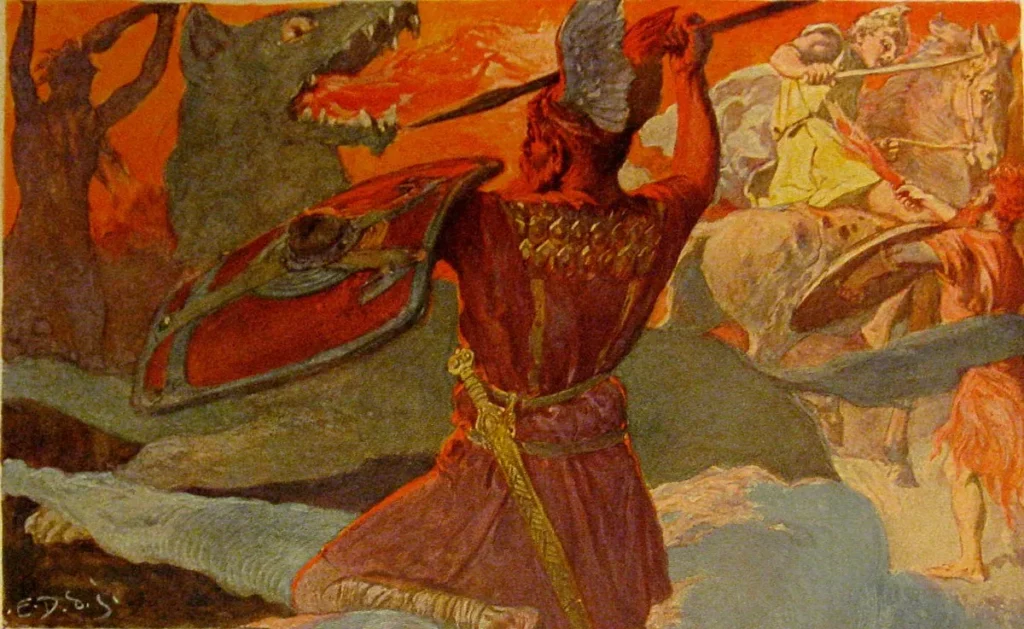
Everything Muspelheim represents in Norse cosmology builds toward one event: Ragnarök, the destruction of the gods and the end of the current world. The fire realm does not participate in the day-to-day conflicts of Norse mythology. It does not send raiding parties against Asgard or negotiate with Odin. It simply waits, unchanged, for the moment when fate turns.
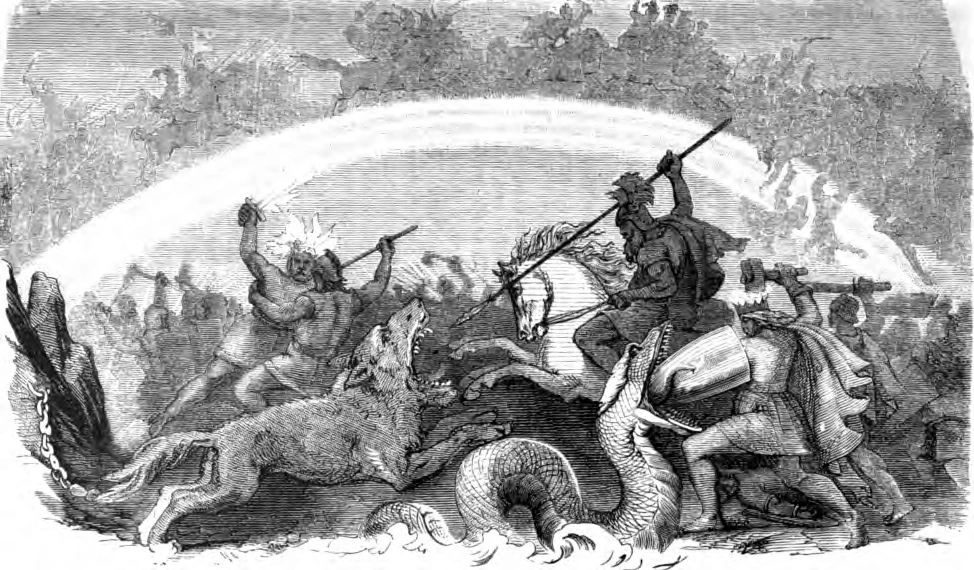
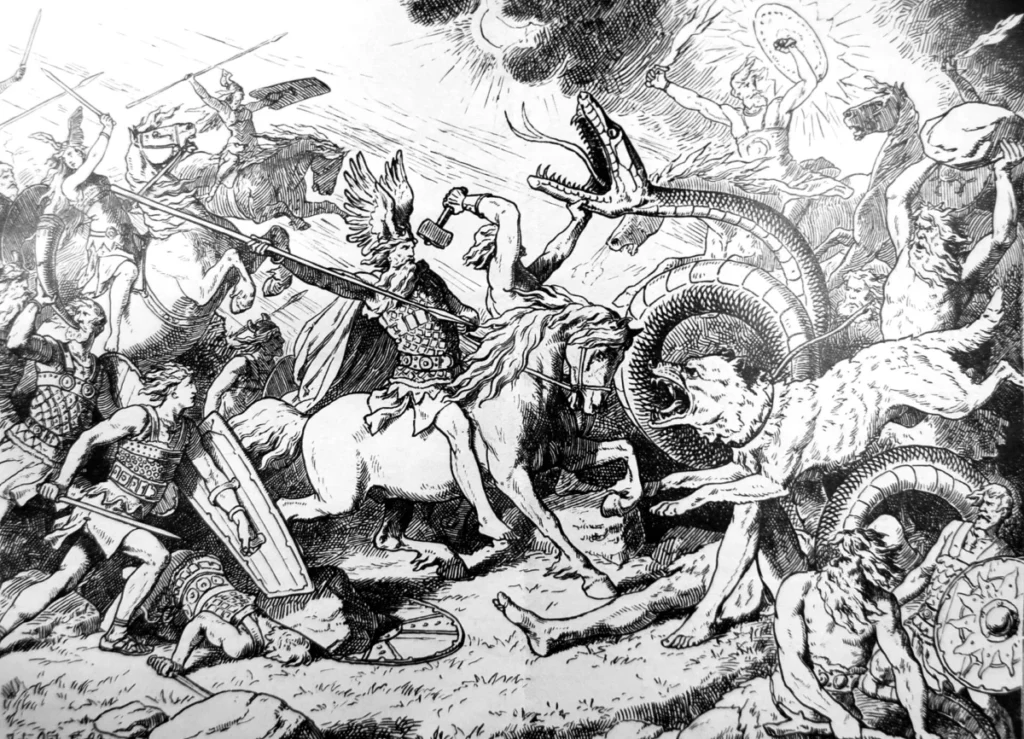
The Völuspá lays out the sequence of Ragnarök in detail. After a series of catastrophic signs, including three years of unending winter called Fimbulwinter, the great wolf Fenrir breaks free from his chains, the Midgard Serpent rises from the ocean depths, and the ship Naglfar sets sail carrying an army of the dead. At this point, the sons of Muspell ride out. They cross the rainbow bridge Bifröst, and the bridge shatters under the weight and heat of their advance. They ride to a vast plain called Vígríðr to take their place in the final battle.
The Final Fire
The battles of Ragnarök are fixed and predetermined. Every major combat has a known outcome. Thor kills the Midgard Serpent and then dies from its venom after taking nine steps. Odin is swallowed by Fenrir and avenged by his son Víðarr. Tyr and the hound Garm kill each other. Heimdall and Loki kill each other.
Freyr’s death is particularly connected to Muspelheim in a way the poem Lokasenna makes painfully clear. Freyr, the Vanir god of fertility and prosperity, had given away his magic sword, the one that could fight on its own, as a gift to win the love of the giantess Gerðr. When Surtr comes, Freyr has no weapon capable of matching him. John McKinnell’s analysis of Lokasenna in his Saga-Book article shows how Loki’s taunt about this lost sword is not casual mockery but a direct reminder that Freyr’s desire has already sealed the fate of the gods. Freyr fights Surtr with an antler and loses.
After the battles end, Surtr does what he was always fated to do. He throws fire over the entire world. The earth burns. The sea rises to swallow what the flames do not reach. Everything the gods built from Ymir’s body, every mountain and forest and ocean, is consumed. This is not a battle won or lost. It is the completion of a process that began at the very first moment when fire from Muspelheim touched ice from Niflheim in Ginnungagap.
The World That Comes After
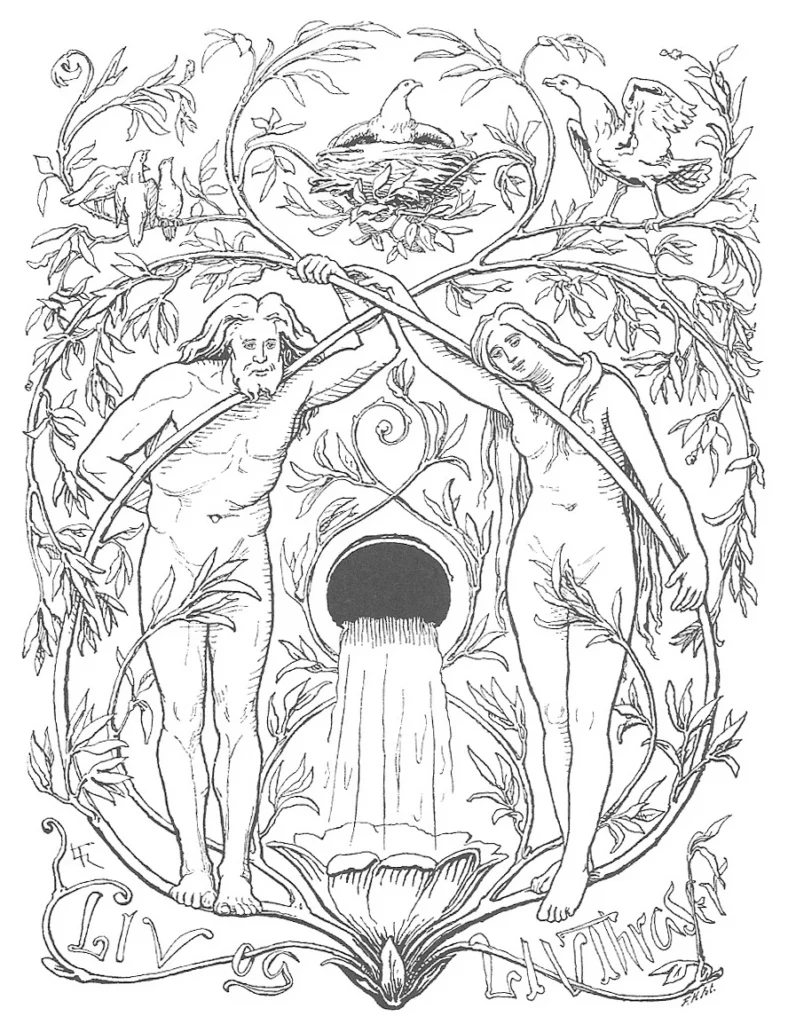
Ragnarök is not purely an ending in Norse cosmology. After the fire burns out and the sea recedes, a new earth rises. It is described in Völuspá as unsown fields already growing grain, waterfalls running clean, and eagles hunting over mountain streams. The surviving gods, including Odin’s sons Víðarr and Váli and Thor’s sons Móði and Magni, meet again. Two humans named Líf and Lífþrasir emerge from hiding in the world tree, having survived the fire and flood by sheltering within Yggdrasil itself, and they go on to repopulate the world.
Muspelheim’s fire is therefore not simply destruction. In consuming the old world, it makes the new one possible. This cyclical understanding of destruction and renewal is one of the defining characteristics of Norse cosmological thinking and sets it apart from purely linear apocalyptic traditions.
The Etymology of Muspell Across Germanic Languages
One of the most interesting things about Muspelheim is how much older the concept is than the surviving Norse texts. The word muspell or close variants of it appears in three separate Germanic languages from the early medieval period, which means the idea of a great fiery world-ending force was circulating in Germanic culture at least as far back as the 8th and 9th centuries CE.
The Old High German poem Muspilli, written around 870 CE and preserved in a manuscript held at the Bayerische Staatsbibliothek in Munich, uses the term in a Christian context to describe the apocalyptic fire at the end of days. The poem is explicitly Christian in framework, describing the Last Judgment, but the word it uses for that final fire is the pre-Christian Germanic muspilli. This tells scholars that the concept was old enough and familiar enough that a Christian poet writing for a Christian audience still reached for the old pagan term when describing divine fire.
The Old Saxon poem Heliand, composed in the first half of the 9th century CE and surviving in manuscripts now held at the British Library and in Munich, similarly uses mudspelli to describe a destructive force associated with the end of the world. The Heliand is a retelling of the Gospels in Old Saxon alliterative verse, entirely Christian in purpose, yet it borrows this Germanic apocalyptic term to convey the magnitude of what is coming.
The fact that both Christian poets in southern and central Germany, writing in Old High German and Old Saxon, used variants of this word in the 9th century, while Norse poets in Iceland were using Múspell in the same general period, shows that the concept cut across the entire Germanic linguistic and cultural world. Whatever Muspelheim originally meant in pre-Christian Germanic religion, it was significant enough that the word survived Christianization in multiple languages simultaneously.
How Muspelheim Compares to Fire in Other Mythologies
Fire plays a cosmological role in a remarkable number of ancient mythologies, and comparing these traditions helps clarify what is distinctive about the Norse conception. In Zoroastrianism, the ancient Persian religion that influenced much of the ancient world, fire is sacred and associated with truth and divine order. Zoroastrian temples maintained eternal flames as focal points of worship, and fire in their cosmology is a purifying rather than destructive force. The Norse Muspelheim shares the purifying-through-destruction aspect but strips away the sacredness. Fire in Muspelheim is not worshipped. It is reckoned with.
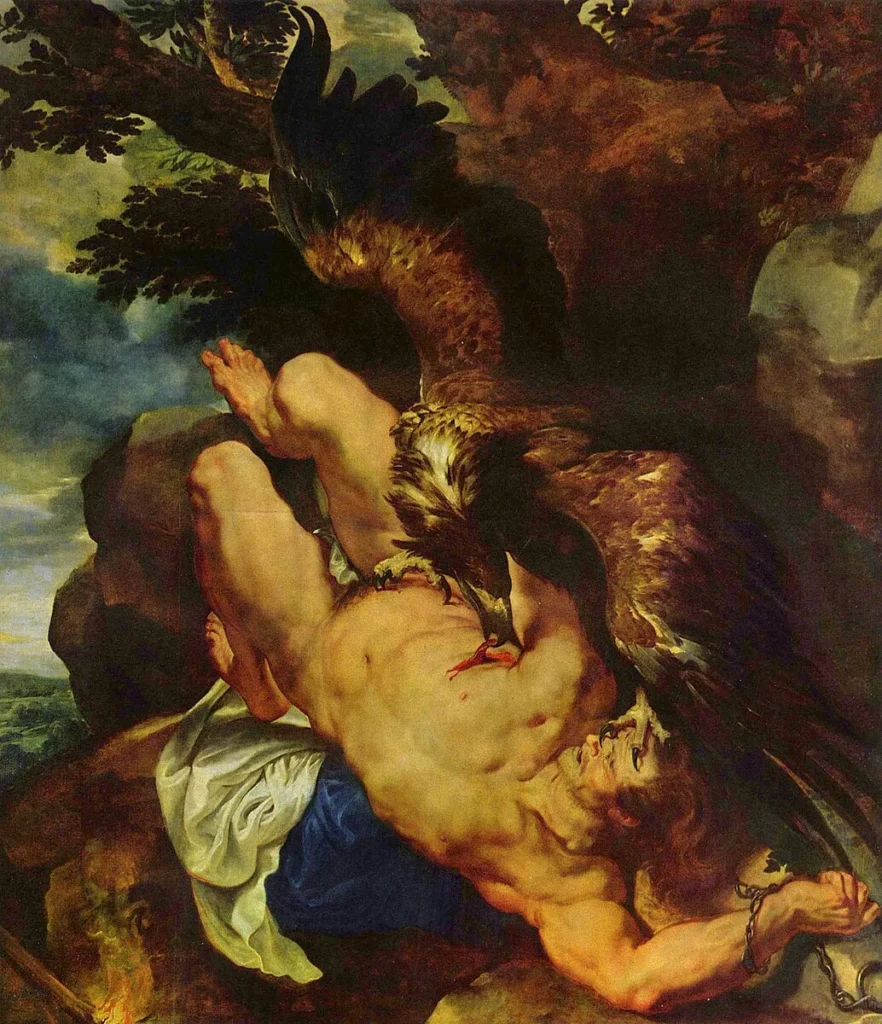
Greek mythology offers Prometheus stealing fire from the gods and giving it to humanity, framing fire as a divine possession that humans should not have had access to. In Norse mythology, fire is not stolen or gifted. It simply is, predating the gods themselves. The Norse did not need a story about how humans got fire because fire was never the gods’ to give in the first place.
In Hinduism, the god Agni serves as both the divine fire and the messenger between humans and gods, carrying sacrificial offerings upward through smoke and flame. Agni is worshipped and propitiated. Surtr, Muspelheim’s fire-being, is not worshipped in any surviving source. He is feared, acknowledged, and treated as an inevitable force, much the way the Norse treated fate itself.
What makes Muspelheim genuinely unusual in comparative mythology is its combination of creative and destructive function within a single realm. The same fire that generated the heat which melted Niflheim’s ice and produced the conditions for life is also the fire that will end all life at Ragnarök. Norse cosmology uses Muspelheim to say something specific about the nature of existence: the force that makes life possible is the same force that will eventually consume it, and there is nothing the gods or anyone else can do about that.
Why Muspelheim Matters in Norse Mythology
Muspelheim is easy to overlook in favor of the more narratively active parts of Norse mythology. Odin’s quests for wisdom, Thor’s battles with giants, Loki’s schemes and betrayals all make for more eventful reading than a realm that mostly just burns and waits. But stripping Muspelheim out of the Norse cosmological system collapses the entire structure.
Without Muspelheim, there is no creation. The interaction between its fire and Niflheim’s ice is not background detail. It is the mechanism that generates Ymir, who generates the world. Without Muspelheim’s sparks, there is no sun, no moon, no starlight. Without Surtr’s eventual march, Ragnarök loses its final act and the new world that follows from it has no cause.
The realm also functions as a constant reminder in Norse mythology that the gods are not omnipotent. They built the world. They maintain its order. They fight its enemies. But they cannot control Muspelheim, cannot enter it, cannot negotiate with it, and cannot prevent what it is fated to do. For a culture that placed enormous value on courage in the face of unavoidable death, this may be precisely the point. The Norse gods know they will lose. They fight anyway. Muspelheim is the reason they know, and the reason fighting matters regardless.