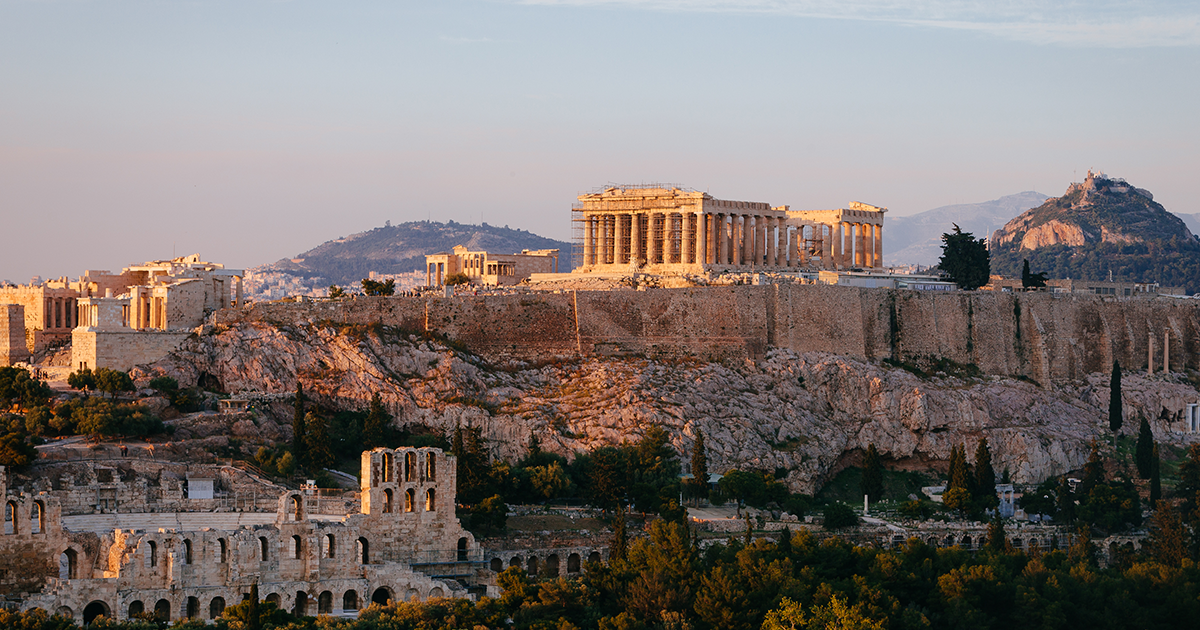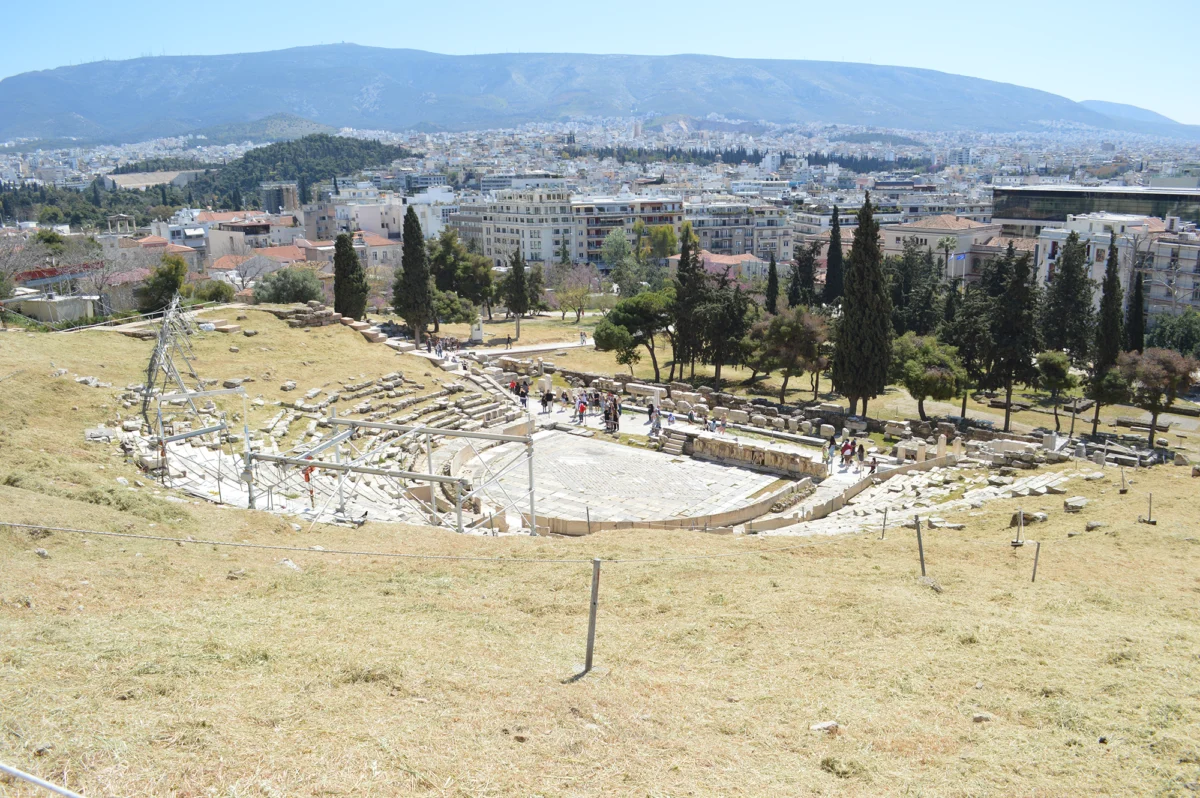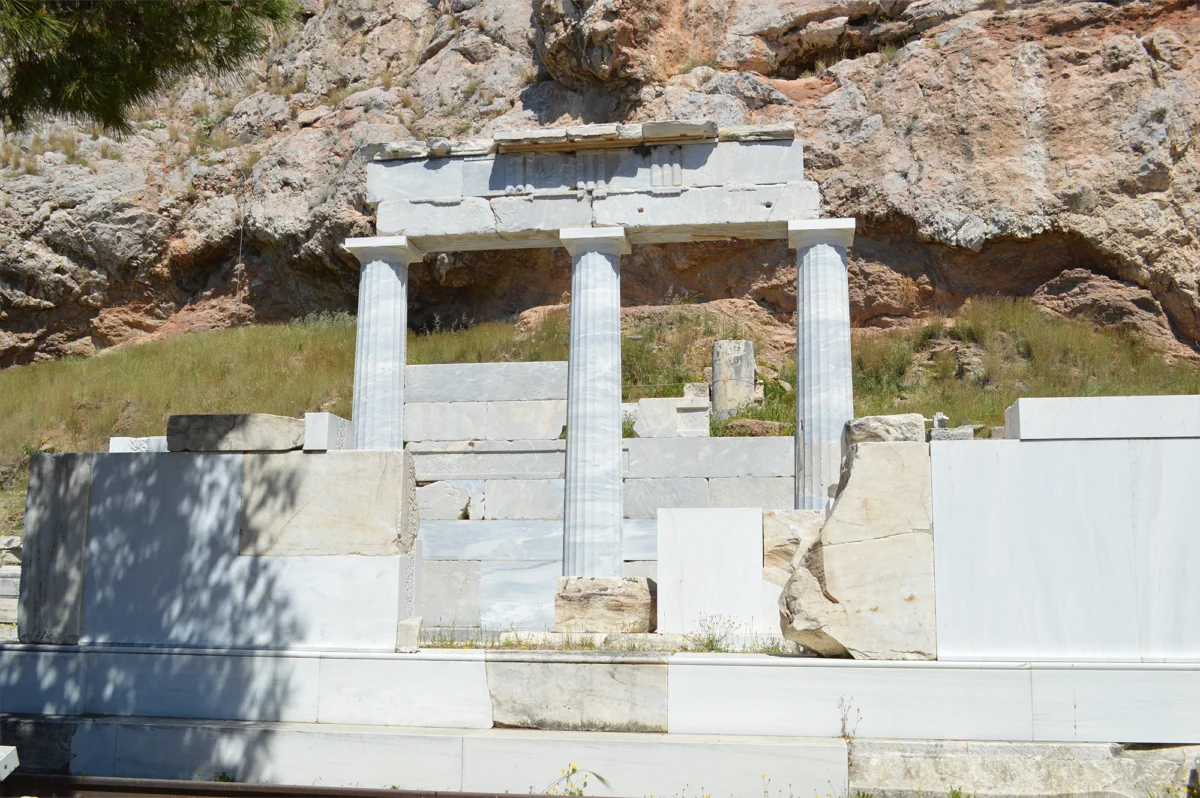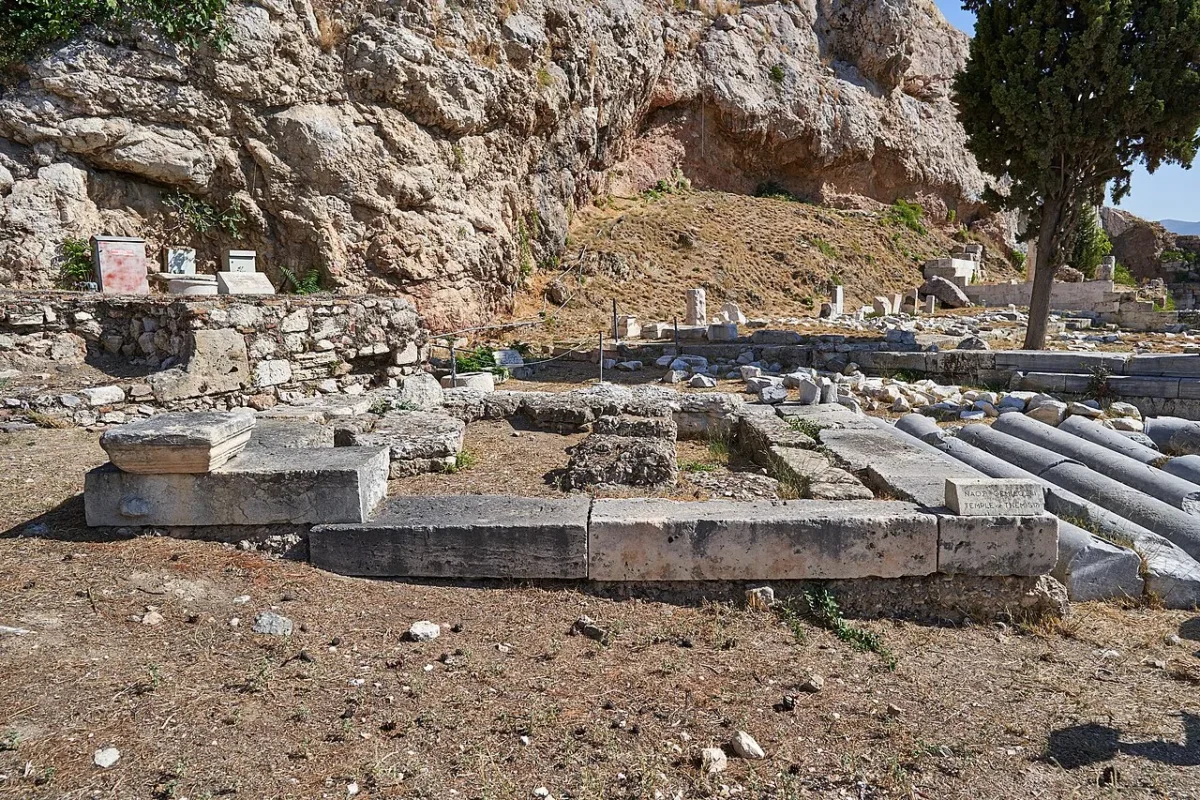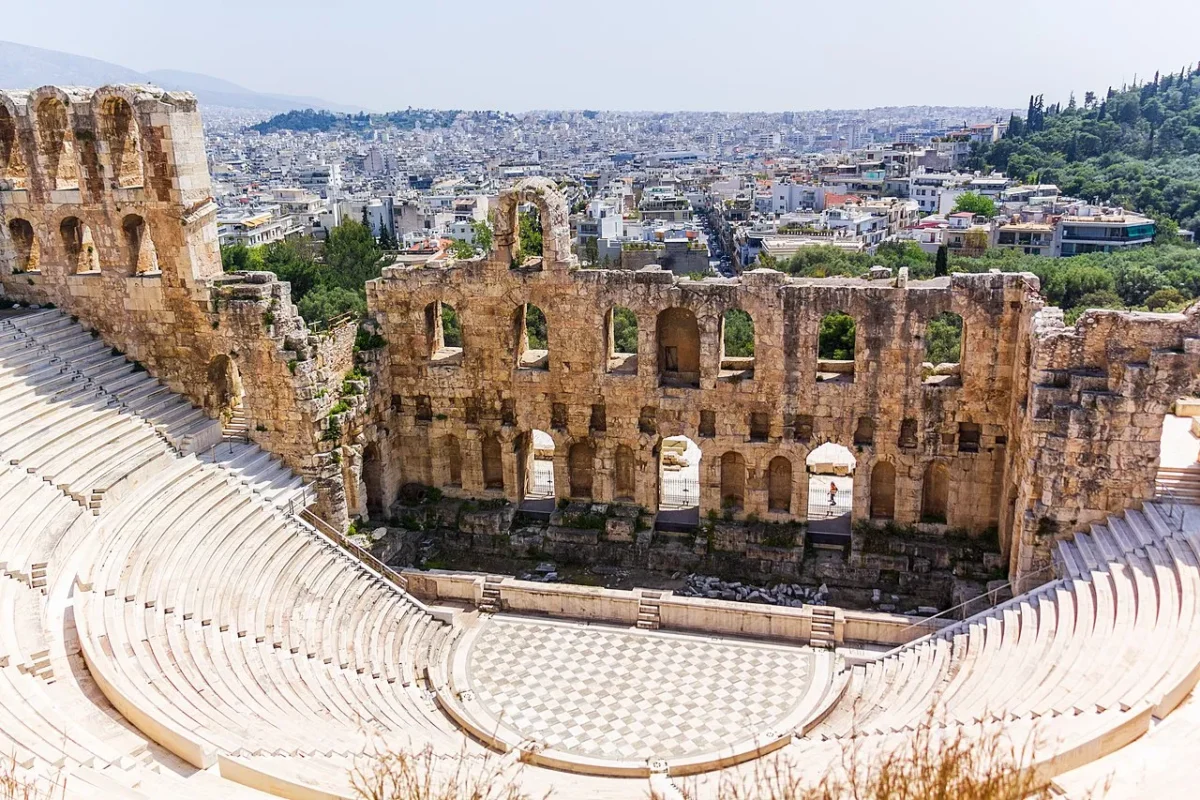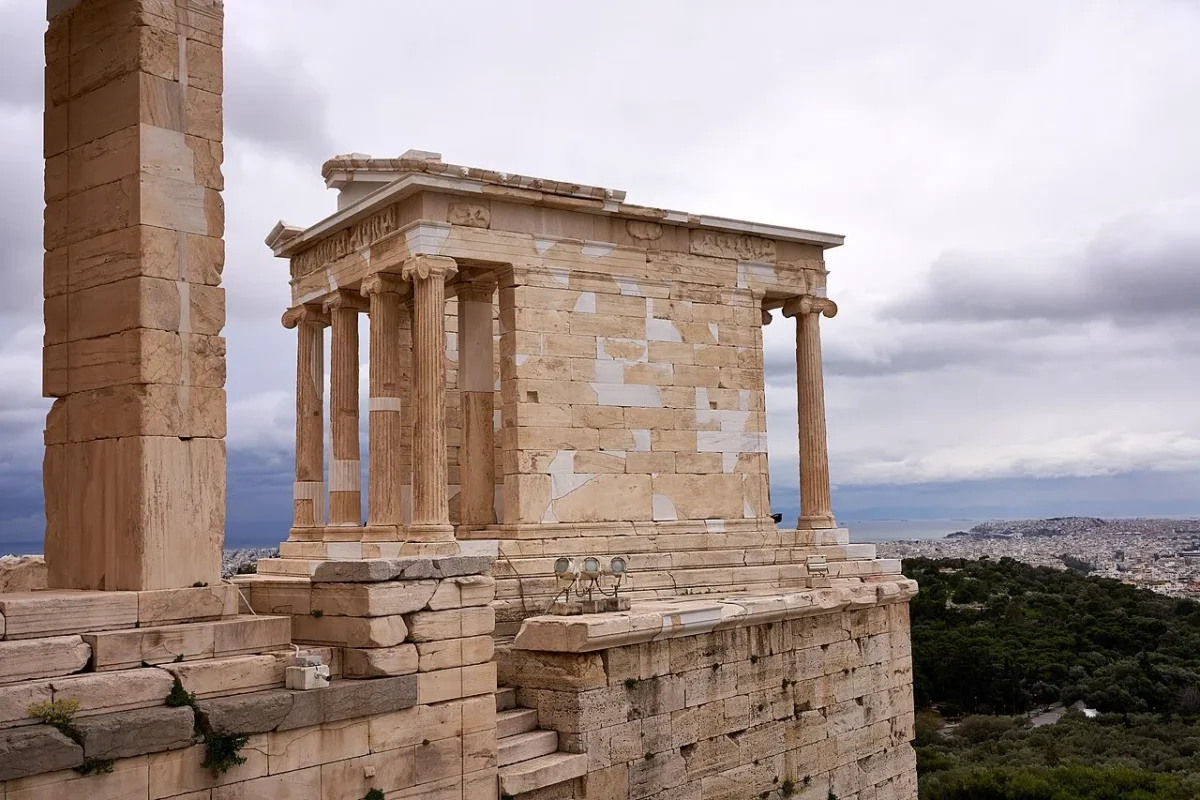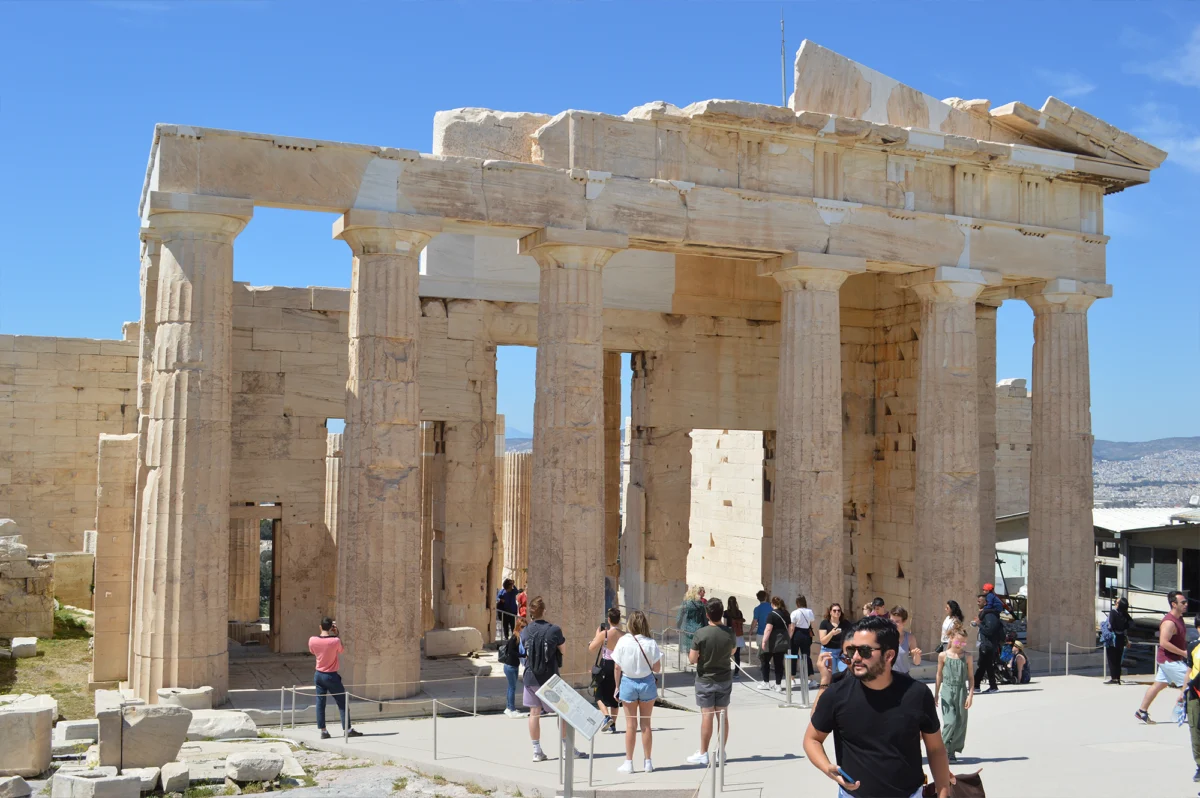
The story of the Acropolis stretches back thousands of years before the Parthenon ever graced its summit, through periods of glory and devastation, transformation and resurrection. This sacred rock has witnessed the entire arc of Western civilization, from Stone Age villages to the birthplace of democracy, from Christian basilicas to Ottoman mosques, and finally to its modern status as humanity’s shared heritage. Understanding this layered history transforms visiting the Acropolis from seeing ancient ruins into experiencing a place where every stone tells multiple stories spanning 7,000 years.
The Prehistoric Acropolis: Neolithic Through Bronze Age (6th Millennium BC to 1200 BC)
Long before Athens existed as a city, humans recognized the Acropolis’s strategic value. Archaeological evidence from pottery fragments discovered in shallow wells on the northwest slope near the Klepsydra spring proves that people inhabited this limestone outcrop as early as the Neolithic period, around 4000 to 3000 BC. These early settlers were drawn to the hill’s natural defensive position: a flat topped rock plateau rising 150 meters above the surrounding plain, with steep slopes on all sides and abundant springs providing fresh water. The site offered everything a prehistoric community needed: protection, water, and commanding views of the fertile Cephisian Plain stretching to the sea.
During the Bronze Age, around 1700 to 1600 BC, the mighty Mycenaean civilization transformed the Acropolis into a fortified palace complex. These were the Greeks of Homer’s epics, the warriors who would later fight at Troy. The Mycenaean kings built their palace on the northern part of the summit, approximately where the Erechtheion now stands, and surrounded the entire hilltop with massive Cyclopean walls, constructed from huge limestone blocks weighing several tons each, fitted together without mortar. These walls stretched 760 meters around the perimeter, stood up to 10 meters high and 6 meters thick, and featured a gate on the south side with defensive towers. You can still see remnants of this Bronze Age fortification wall behind the Temple of Athena Nike today, testifying to engineering skills that awed later Greeks who believed only the mythical Cyclopes could have moved such stones.
The Mycenaeans also dug an ingenious underground water system. Around 1250 BC, they excavated a hidden stairway that descended 35 meters through a natural fissure in the rock to reach a well, ensuring the fortress had water during sieges. This secret water supply could sustain the defenders indefinitely. The Mycenaean Acropolis served as both royal residence and religious sanctuary. Archaeological evidence suggests they worshipped a female deity associated with fertility and nature here, possibly an early form of Athena. Unlike most other Mycenaean centers like Mycenae and Pylos, which were destroyed around 1200 BC during the catastrophic Bronze Age Collapse, the Acropolis seems to have survived relatively intact, perhaps saved by its formidable walls, geographical position away from invasion routes, or sheer good fortune. This continuity meant Athens never experienced a complete break with its Bronze Age past, allowing traditions and cult practices to survive into the classical period.
The Dark Age and Archaic Period: Transformation to Sacred Sanctuary (1200 BC to 480 BC)
After the Bronze Age Collapse, Greece entered a period historians call the Dark Age, marked by population decline, loss of writing, and economic stagnation. But Athens weathered these troubled centuries better than most places. During the Geometric period (900 to 700 BC), the Acropolis began its transformation from royal fortress to religious sanctuary. Around 1000 BC, the old Mycenaean fertility goddess evolved into Athena, patron deity of Athens, worshipped in dual aspects: Athena Polias (protector of the city) and Athena Parthenos (the virgin warrior). A small temple was built near the center of the Acropolis to house an ancient olivewood statue of Athena Polias, believed to have fallen from heaven as a divine gift.
The 6th century BC brought dramatic changes as Athens grew wealthy and powerful. Under the rule of the tyrant Peisistratos and his sons (560 to 510 BC), the Acropolis underwent its first monumental building program. Around 580 BC, they constructed the Hecatompedon (Hundred Footer), an early limestone temple to Athena with brightly painted sculptures of lions attacking bulls and snaky tailed monsters decorating its pediments. These sculptures, now displayed in the Acropolis Museum, reveal a vibrant world where temples blazed with color: reds, blues, greens, and golds. Around 530 BC, they built an even grander temple, the Old Temple of Athena Polias, with marble pediment sculptures showing gods battling giants. Five smaller treasury buildings dotted the hilltop, filled with valuable offerings.
The most significant change was symbolic. The Acropolis ceased being primarily a defensive citadel and became a sanctuary. Around 550 BC, they replaced the old winding defensive path with a broad ceremonial ramp leading to a monumental gateway, designed for processions rather than defense. This transformation reflected a new reality: Athens had built defensive walls around the lower city, so the Acropolis no longer needed to serve as a refuge during attacks. Instead, it became the sacred heart of Athenian religion and identity, the dwelling place of their goddess and the focus of their greatest festival, the Panathenaia, reorganized by Peisistratos in 566 BC as a magnificent four yearly celebration with athletic contests, musical competitions, and processions rivaling the Olympics.
The Persian Destruction: Catastrophe and Oath (480 BC)
In 490 BC, Athens helped defeat the first Persian invasion at the Battle of Marathon. Flush with victory and confidence, Athenians began building a magnificent new marble temple to Athena Parthenos, dismantling the old Hecatompedon and reusing its materials. They called this unfinished temple the Older Parthenon or Pre Parthenon. But they never completed it. In 480 BC, King Xerxes of Persia launched a massive second invasion. After Spartan King Leonidas and his 300 warriors made their legendary stand at Thermopylae, Persian forces swept into central Greece. Following the strategy of Themistocles, Athenians evacuated their entire city, sending women, children, and elderly to safety in Troezen while the men joined the fleet.
Persian troops occupied deserted Athens and climbed the Acropolis. A small group of defenders had barricaded themselves inside, but the Persians overwhelmed them, slaughtered everyone, looted the sanctuaries, and set fire to every building. The temples, treasuries, sculptures, and wooden statues burned. The unfinished Parthenon collapsed. Centuries of accumulated offerings melted or shattered. The destruction was total, deliberate, and meant to crush Athenian spirit. But weeks later, the Greek fleet destroyed the Persian navy at the Battle of Salamis. The following year, Greek forces decisively defeated the Persians at Plataea, ending the invasion forever.
Returning Athenians found their city and sacred Acropolis in ruins, smoking and desecrated. According to later tradition, the Greek allies swore the Oath of Plataea, vowing to leave the burned temples as ruins, permanent memorials to Persian barbarity. Whether this oath was historical or invented later remains debated, but Athenians did leave the Acropolis in ruins for over 30 years. They gathered the shattered sculptures, damaged votive offerings, and broken architectural elements and buried them reverently in pits around the hilltop, where they remained undisturbed for 2,300 years until archaeologists discovered this rich “Persian debris” in the 1880s. Meanwhile, Themistocles and later Cimon built new defensive walls using whatever materials came to hand, including drums from destroyed columns, statue bases, and architectural fragments from the ruined temples, all incorporated into the masonry where you can still see them today in the north wall.
The Golden Age: Pericles Rebuilds the Acropolis (460 BC to 404 BC)
After defeating Persia, Athens organized former allies into the Delian League, ostensibly for mutual defense but actually creating an Athenian empire. Tribute poured into Athens from hundreds of subject cities. By 454 BC, Athenians moved the League treasury from Delos to their own Acropolis, giving them direct control over enormous wealth. This set the stage for the most ambitious building program in Greek history. Around 449 BC, Pericles, Athens’s most influential leader, proposed using League funds to rebuild the Acropolis on an unprecedented scale. His opponents accused him of stealing allied money to beautify Athens, but Pericles argued that Athens protected the allies and deserved the monuments. His vision prevailed.
The building program employed thousands: quarrymen extracting 100,000 tons of brilliant white Pentelic marble from Mount Pentelicus 16 kilometers away, teamsters transporting blocks weighing up to 10 tons using wagons and oxen, stonecutters shaping marble with iron tools, sculptors carving metopes and friezes, painters coloring architectural elements, bronzeworkers creating doors and clamps, carpenters building scaffolding, and laborers of all kinds. Citizens, metics (resident foreigners), and even slaves worked side by side, all earning the same daily wage of one drachma. The project transformed Athens economically while broadcasting its power and cultural supremacy to all Greece.
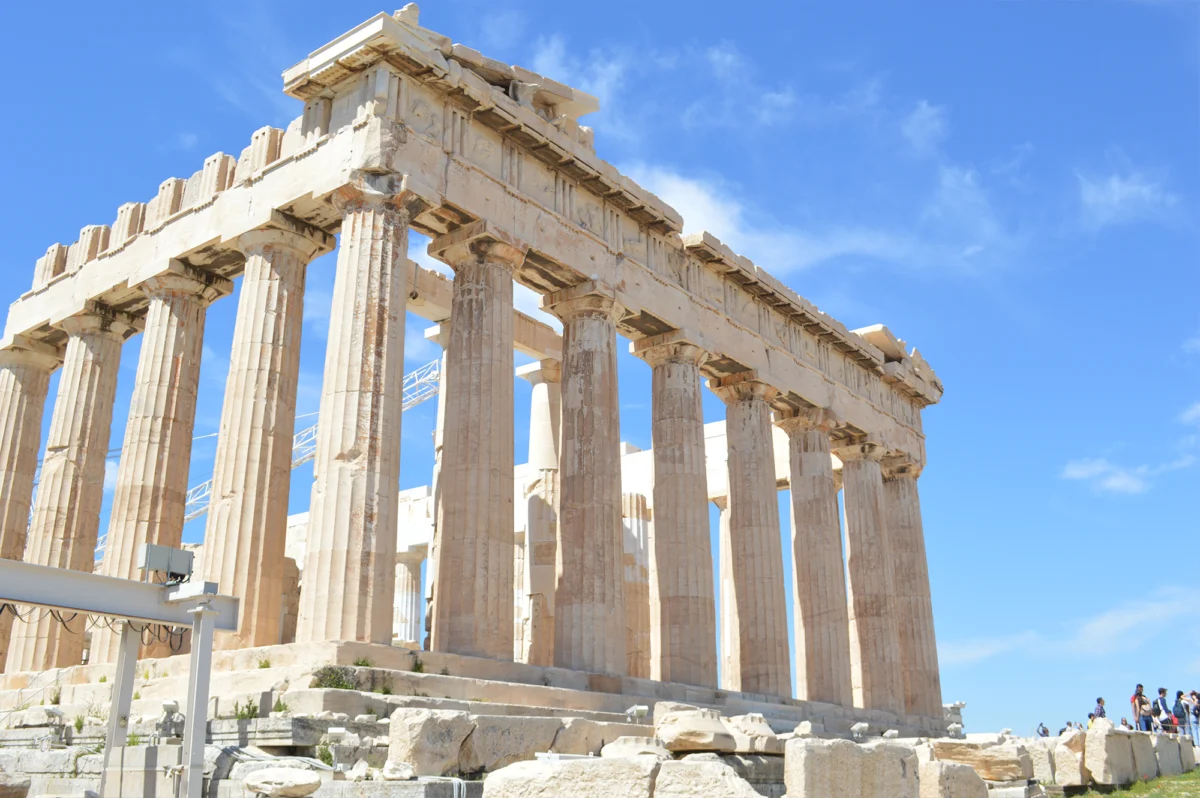
Construction of the Parthenon began in 447 BC under architects Iktinos and Kallikrates, with the sculptor Phidias supervising the entire project. The temple was completed in just nine years, inaugurated in 438 BC, though sculptural decoration continued until 432 BC. This wasn’t simply rebuilding the old temple. The Parthenon represented something revolutionary: the culmination of centuries of architectural evolution, executed with mathematical precision and subtle optical refinements that created the illusion of perfect form. The building featured no straight lines anywhere. Every column leaned slightly inward. The floor curved upward. Column diameters varied. These calculated distortions counteracted optical illusions that would make truly straight lines appear curved or sagging. The result looked absolutely perfect to the human eye.
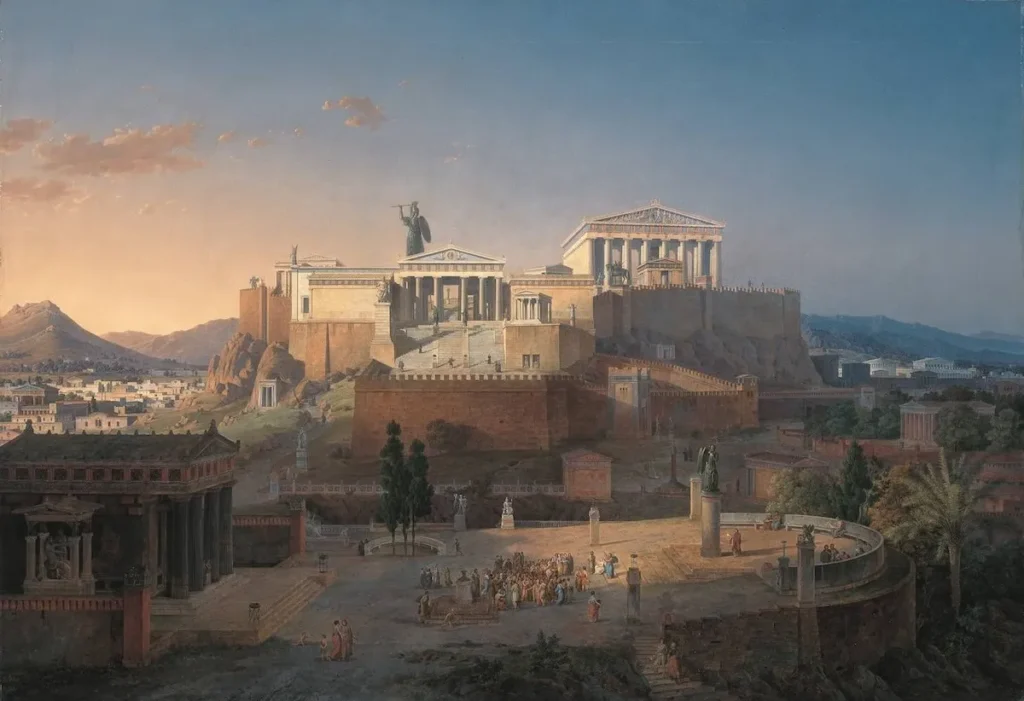
Inside stood Phidias’s masterpiece: a 12 meter tall chryselephantine statue of Athena Parthenos, constructed from over 1,100 kilograms of gold plates over a wooden core, with ivory for her skin. She held a six foot statue of Nike (victory) in her right hand and a spear and shield in her left. The gold alone was worth 40 talents, roughly equivalent to the cost of building and manning 40 warships for a year. The statue wasn’t just art. It was Athens’s emergency reserve, designed so the gold plates could be removed and melted down if the city faced financial crisis. Between 437 and 432 BC, architect Mnesikles built the Propylaea, the monumental gateway. Around 427 to 424 BC, the Temple of Athena Nike celebrated military victories. From 421 to 406 BC, the Erechtheion housed Athens’s most ancient and sacred cults.
But even as these monuments rose, Athens stumbled into the catastrophic Peloponnesian War with Sparta (431 to 404 BC). The Propylaea was never finished because war consumed all resources. Plague killed perhaps a third of Athens’s population, including Pericles himself in 429 BC. The Erechtheion’s construction was repeatedly interrupted by military disasters. When Athens finally surrendered to Sparta in 404 BC, its empire collapsed, its fleet was destroyed, and its Golden Age ended. Yet the monuments remained, completed in the darkest hours, standing as testament to what Athens had been and still aspired to be. The Acropolis of Pericles represented not what Athens was during its construction, but what Athenians believed themselves capable of achieving. These buildings embodied democracy, rationality, harmony, and the human capacity for creating beauty even facing death and defeat.
Hellenistic, Roman, and Late Antique Periods: Gradual Decline (404 BC to 6th Century AD)
After the Peloponnesian War, Athens never regained its political power, but its cultural prestige endured. During the Hellenistic period (323 to 31 BC), wealthy foreign kings like Attalos II and Eumenes II of Pergamon built stoas and monuments on the Acropolis and surrounding areas, currying favor with the city that educated their sons. The Romans, who conquered Greece in 146 BC, generally respected the Acropolis’s sanctity. Emperor Augustus in 27 BC built a small circular temple to Roma and Augustus about 23 meters east of the Parthenon, the last significant ancient construction on the summit. Emperor Hadrian, a devoted philhellene who reigned 117 to 138 AD, visited Athens multiple times, sponsored building projects, and helped restore damaged monuments. The Acropolis remained Athens’s most prestigious sanctuary throughout the Roman period, attracting pilgrims, tourists, and scholars from across the Mediterranean. The 2nd century AD traveler Pausanias described the monuments in detail, providing invaluable documentation of statues and paintings now lost.
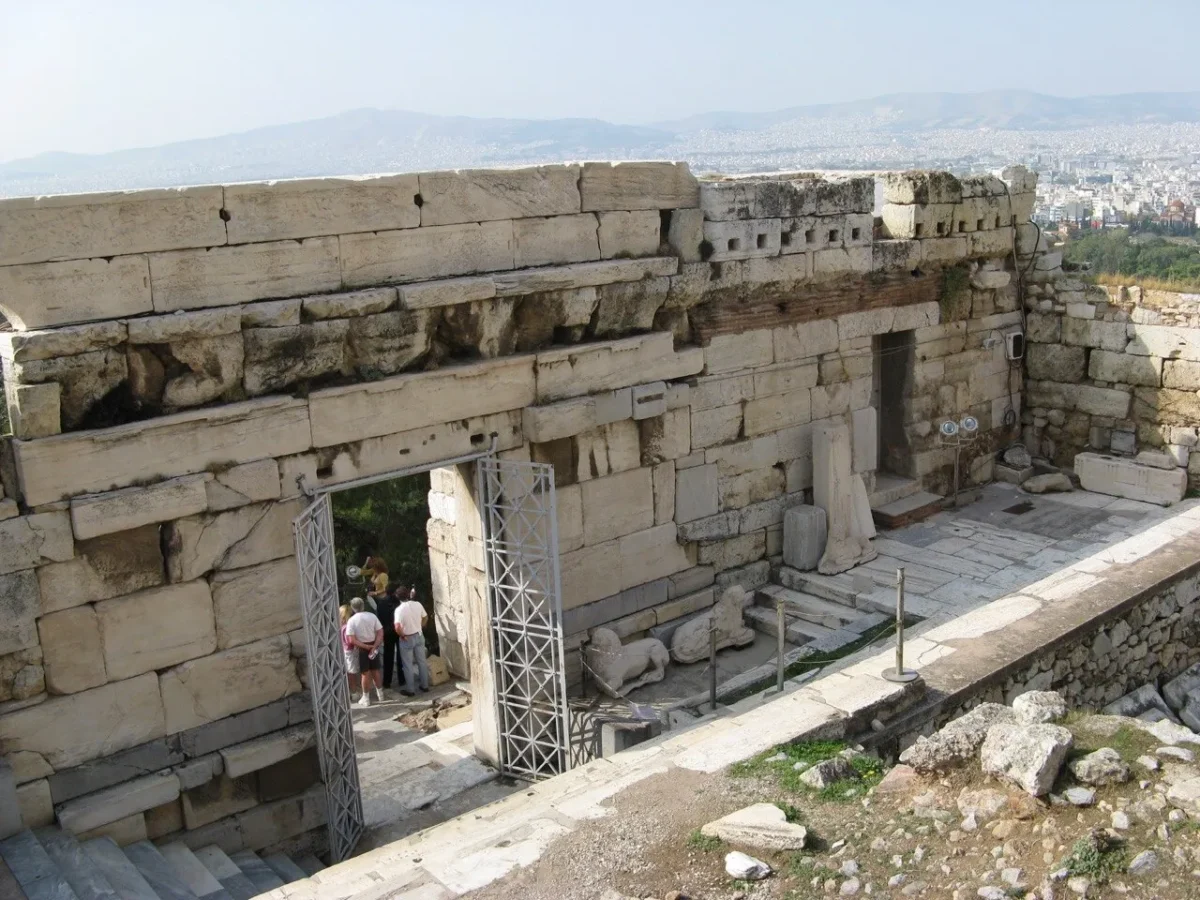
But decline was inevitable. In 267 AD, the Germanic Heruli tribe invaded Greece, sacked Athens, and burned much of the lower city. Though the fortified Acropolis survived relatively intact, the attack traumatized the city. Athens built the Post Herulian Wall using stones scavenged from destroyed buildings, including the Choragic Monument of Nikias, to create a much smaller fortified area. The Beulé Gate, built shortly after this invasion, transformed the Acropolis entrance into a militarized strongpoint. Around the same period, a major fire severely damaged the Parthenon’s interior and roof, though repairs were made in the 4th century.
The real transformation came with Christianity. Emperor Constantine legalized Christianity in 313 AD, and by the end of the 4th century, Emperor Theodosius I had banned pagan worship entirely. The Acropolis’s temples fell silent. Sacrifices ceased. Priests were expelled. The sacred flame went out. For about a century, the Acropolis stood abandoned, its magnificent temples empty shells, their gods rejected as demons. But the buildings were too valuable and beautiful to simply destroy. Instead, they were repurposed.
Byzantine Period: The Christian Acropolis (6th Century to 1204 AD)
Sometime in the late 5th or early 6th century AD, probably during the reign of Emperor Justinian (527 to 565), the Parthenon underwent dramatic transformation into a Christian church dedicated to Hagia Sophia (Holy Wisdom) and later rededicated as Panagia Athiniotissa (Virgin Mary of Athens). The conversion required substantial modifications. The eastern end was walled off and fitted with an apse for the altar. The main entrance was moved to the west. An iconostasis (screen separating the nave from the sanctuary) was installed. The interior was plastered and painted with Christian frescoes and icons. Yet remarkably, the exterior remained largely unchanged. The pediment sculptures stayed in place, though Christians viewed them with suspicion as representations of pagan demons.
The Parthenon church became spectacularly successful, rising to become the fourth most important Christian pilgrimage site in the Byzantine Empire after Constantinople, Ephesus, and Thessaloniki. Pilgrims traveled from across the Orthodox world to pray in this consecrated space where Athena once reigned. The church was called the Great Church of Athens, deliberately echoing the title of Hagia Sophia in Constantinople. Emperor Basil II the Bulgar Slayer celebrated his victory over Bulgarian forces here in person around 1018 AD. The Erechtheion became the Church of the Savior or the Virgin Mary. The Temple of Athena Nike became a chapel. The Propylaea served as the bishop’s residence. The Acropolis remained the sacred center of Athens, just with a different god.
For over 700 years, the Acropolis was a Byzantine Christian sanctuary. This period actually lasted longer than the Acropolis’s pagan period and ironically preserved the buildings better than might otherwise have occurred. Because the temples were actively used churches, they were maintained, repaired, and protected. Roofs were replaced. Walls were reinforced. The structures survived earthquakes in 551, 688, and various other dates that might have left them as ruins had they stood abandoned.
Frankish and Latin Rule: Catholic Cathedral (1204 to 1458)
The Fourth Crusade in 1204 resulted not in liberating the Holy Land but in Crusaders sacking Constantinople and carving up the Byzantine Empire. Athens fell to Frankish knights who established the Duchy of Athens. The Acropolis became the Franks’ administrative center, transforming into a medieval castle complex. The Parthenon was converted from Orthodox to Catholic, becoming the cathedral church of Notre Dame d’Athènes (Our Lady of Athens). A tall bell tower was built in the southwest corner, creating a distinctive medieval addition to the ancient temple. Latin bishops held mass inside while the Byzantine congregation was forced to worship elsewhere. The Propylaea became the ducal palace of the De la Roche family, rulers of the Duchy of Athens.
The Erechtheion served as the bishop’s residence. A massive defensive tower called the Frankopyrgos (Frankish Tower) was erected on the south wing of the Propylaea, dominating the entrance. Medieval stone fortifications strengthened the walls. For 254 years, French speaking knights and their retainers occupied this Greek sanctuary, maintaining it according to Catholic rites. When the Catalan Company, Spanish mercenaries, seized Athens in 1311, they continued the Latin arrangement. In 1388, the Florentine Acciaiuoli family took control and ruled until Ottoman conquest.
Despite being Catholic overlords in an Orthodox land, the Franks and their successors maintained the monuments reasonably well. The buildings remained functional, inhabited, and protected. Medieval tombs were dug beneath the Parthenon’s floor for important nobles and bishops. Vaulted chambers were added. The transformation was less about destruction than adaptation. The ancient stones continued to serve, just with different masters and different prayers.
Ottoman Period: Mosque and Fortress (1458 to 1833)
In June 1458, Ottoman Sultan Mehmed II the Conqueror, fresh from capturing Constantinople five years earlier, took Athens. Unlike many conquests, the city apparently surrendered peacefully, sparing it from sack. The Acropolis transitioned to Ottoman military and religious control. The Parthenon, which had been a pagan temple for 900 years and a Christian church for 950 years, now became a mosque for its third incarnation. The Ottomans removed Christian furnishings and whitewashed the frescoes and icons. They converted the apse into a mihrab (prayer niche) pointing toward Mecca. The Frankish bell tower became a minaret. They renamed it the Mosque of the Conquest. Five times daily, the Muslim call to prayer echoed where hymns to Athena and Christ had sounded.
The Acropolis became the Turkish garrison’s fortress headquarters. The Propylaea served as the garrison commander’s residence and administrative offices. The Erechtheion’s purpose remains disputed, described in some sources as the Turkish governor’s harem, though this claim lacks solid Ottoman documentation and may be Greek nationalist propaganda. What’s certain is that it served as a residence. The Temple of Athena Nike was demolished in 1686 and its marble incorporated into defensive bastions. The Ottomans added various wooden structures, houses, a mosque building inside the Propylaea, and administrative offices across the summit.
For nearly 370 years, the Acropolis endured Ottoman rule. During peaceful periods, the monuments stood relatively well maintained. Muslims worshipped in the Parthenon mosque. The garrison guarded the fortress. Travelers visiting Athens marveled at these ancient structures still standing after 2,000 years. But war brought disaster. In 1687, the Ottoman Empire and Venice’s Republic fought the Morean War over control of Greece. Venetian forces commanded by General Francesco Morosini besieged Athens. The Turks fortified the Acropolis and, fatally, stored their gunpowder magazine inside the Parthenon, assuming the Venetians would never bombard such a famous ancient monument.
They were wrong. On September 26, 1687, Venetian artillery fired mortar shells at the Acropolis. One shell crashed through the Parthenon’s roof and exploded the gunpowder magazine in a catastrophic detonation that killed about 300 people sheltering inside, blew out the entire central portion of the building, destroyed the roof, shattered columns, and sent massive marble blocks flying. The ancient temple that had survived 2,100 years relatively intact was reduced to spectacular ruins in seconds. Morosini then attempted to remove the western pediment sculptures as trophies, but his workers dropped them, smashing priceless masterpieces. The Venetians held Athens briefly before Ottomans recaptured it. The Parthenon was never rebuilt. For the next 140 years, it stood as a magnificent ruin, open to the sky, with shattered columns and a collapsed center.
Greek Independence and Early Restoration: Creating a National Symbol (1833 to 1975)
The Greek War of Independence (1821 to 1832) brought more destruction. Greeks besieged the Turkish held Acropolis twice in 1821 to 1822, then Ottomans besieged Greek forces in 1826 to 1827. Artillery damaged buildings. Defenders melted lead from ancient roof clamps and plumbing to make bullets. They burned wooden elements for cooking fuel. When Greece finally won independence in 1832, the new nation claimed the Acropolis as its paramount symbol, the physical embodiment of ancient Greek glory and the justification for modern Greece’s existence. The year 1833 brought a momentous decision that would shape the Acropolis forever. Greek authorities, advised by European archaeologists, decided to restore the Acropolis to its 5th century BC Golden Age appearance by demolishing every later addition.
Over the next decades, they systematically destroyed 1,400 years of history. The Parthenon mosque was demolished in 1843. The Frankish Tower fell in 1875. All Ottoman houses, barracks, and structures were razed. Byzantine churches except the tiny Church of the Holy Apostles in the Agora were removed. Medieval fortifications came down. The goal was purification, erasing every trace of conquest to reveal the pure classical past. This process, while understandable given nationalist sentiments, destroyed invaluable archaeological evidence of the Acropolis’s medieval history. We’ll never fully understand how Byzantine Christians adapted these temples or how Ottoman Muslims used them because that evidence was deliberately obliterated.
The first major restoration efforts began in the 1830s under architects like Leo von Klenze and later Nikolaos Balanos. Balanos’s work from 1898 to 1933 accomplished remarkable reconstruction, re erecting columns, reassembling architectural elements, and stabilizing ruins. But his methods, though well intentioned, caused serious long term damage. He used iron clamps and dowels to connect marble blocks. Within decades, these iron elements rusted, expanded, and cracked the ancient marble. He incorrectly reassembled blocks, placing them in wrong positions. He mixed architectural elements from different periods. He used cement that proved incompatible with marble. His restorations, praised at the time, created problems that would require correction decades later.
Nevertheless, the Acropolis became modern Greece’s most powerful symbol. It appeared on currency, stamps, propaganda, and tourist materials. During World War II, Nazi forces occupied Athens and flew the swastika flag from the Acropolis. In one of the war’s most famous acts of resistance, on May 30, 1941, two Greek students, Manolis Glezos and Apostolos Santas, climbed the Acropolis under cover of darkness and tore down the Nazi flag, raising Greek morale across the occupied country. The Acropolis embodied Greek identity, resistance, and continuity.
Modern Restoration: Science Meets Heritage (1975 to Present)
By the 1970s, the Acropolis faced catastrophic threats. Air pollution from Athens’s cars and industries was creating acid rain that dissolved marble surfaces faster than natural weathering over 2,500 years. Balanos’s rusted iron reinforcements were shattering blocks from within. Tourism was accelerating deterioration as 3 million annual visitors wore down marble, touched surfaces, and caused vibrations. Without intervention, the monuments faced destruction within decades.
In 1975, Greece established the Committee for the Conservation of the Acropolis Monuments, launching the most sophisticated ancient monument restoration project in history. The approach was revolutionary: completely dismantle structures, document every block, repair or replace damaged elements using titanium instead of iron, correctly reassemble using computer analysis and ancient construction techniques, and create anastylosis (reconstruction using original materials wherever possible). Work began on multiple monuments simultaneously.
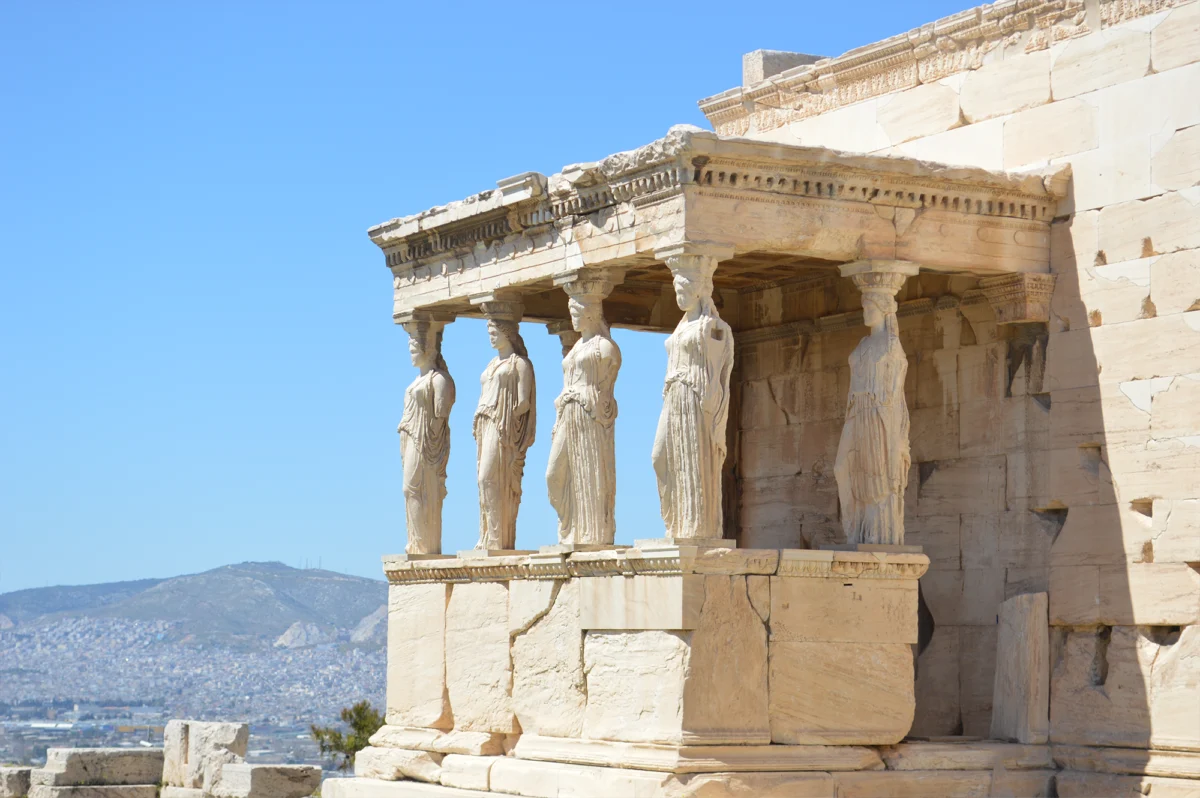
The Erechtheion was completely dismantled between 1979 and 1987, every block cleaned and conserved, damaged parts replaced with new Pentelic marble cut from the original ancient quarries, and the structure reassembled. The famous Caryatids were removed to the climate controlled Acropolis Museum in 1979, replaced by exact concrete replicas outdoors. The Temple of Athena Nike was completely dismantled in 1998, and painstakingly reconstructed from 2003 to 2010. The Parthenon’s restoration began in 1984 and continues today. Workers have corrected Balanos’s errors, replaced all rusted iron with titanium rods that won’t corrode, restored the north colonnade (2001 to 2009), the western facade, and worked methodically through each section.
New Pentelic marble, cut from the same quarries used 2,500 years ago, replaces damaged ancient blocks. Modern technology aids traditional craftsmanship. Three dimensional laser scanning documents every surface. Computer models test structural integrity before moving stones. Traditional marble working techniques guide stone cutting. Titanium has proven revolutionary: unlike iron, it doesn’t rust, expand, or crack marble, while still providing necessary structural support. Each intervention is reversible, allowing future generations to remove modern additions without damaging original material, following international conservation principles.
The work proceeds slowly by necessity. Master marble workers shape replacement blocks by hand. Archaeologists study every fragment. Structural engineers calculate load distributions. Conservators clean surfaces atom by atom using lasers. Everything is documented photographically and digitally. The goal isn’t to rebuild the Acropolis as it looked in 432 BC, which is impossible since so much is lost forever. Instead, the aim is to stabilize what survives, consolidate structures to withstand earthquakes and time, replace only what’s necessary with clearly identifiable modern materials, and ensure these monuments endure another 2,500 years.
In October 2025, scaffolding was briefly removed from the Parthenon’s western facade for the first time in 20 years, offering visitors unprecedented views. The scaffolding returned weeks later for final work but is scheduled for permanent removal in summer 2026, marking a major milestone. Yet restoration never truly ends. The Acropolis Restoration Service (YSMA) continues year round maintenance, monitoring, and conservation. The UNESCO World Heritage Site, inscribed in 1987, receives international cooperation and funding. Modern Athens has implemented strict pollution controls, banning cars from surrounding areas and requiring catalytic converters citywide, dramatically slowing acid rain damage.
Today, the Acropolis stands as both ancient wonder and modern achievement. The monuments you see represent three simultaneous realities: the artistic and architectural genius of 5th century BC Athens, the survival through 2,500 years of war, earthquakes, conversion, explosion, and decay, and the dedication of modern conservators working to preserve humanity’s shared heritage. Walking the sacred rock today means touching all these layers of history simultaneously, from Neolithic pottery shards to titanium reinforcement, from Phidias’s sculptural vision to laser scanner precision, from Pericles’s ambition to contemporary scientific conservation. The Acropolis endures not frozen in time but living through time, constantly restored, forever ancient, perpetually renewed, standing witness to human civilization’s longest continuous conversation between past and present.
The story continues. Climate change brings new challenges: more intense storms, temperature extremes, and pollution. Tourism pressure increases yearly. But the commitment to preservation remains absolute. The Acropolis belongs not just to Greece or Europe but to all humanity as one of our species’ greatest achievements. As long as civilization endures, these marble columns will stand on their rocky hill above Athens, reminding us what human beings can accomplish when we strive for excellence, beauty, and immortality in stone.