Table of Contents
Heracles and the Twelve Labors
Place among Greek heroes
Heracles stands in Greek myth as a working hero who solves real dangers across Greek lands. He is born to a mortal mother but carries Zeus’s strength, so Greeks treat him as a man who can do what others cannot. Cities ask him to clear roads, kill beasts, and lift sieges when local forces fail. Poets and storytellers keep his name in view because his actions change daily life for farmers, traders, and travelers. He becomes the person rulers call when order breaks, and he answers those calls with direct action. His path starts in Thebes, ties him to Argos through family, and then sends him to the edges of the Greek world. The outcome is a reputation built on visible help, and the next step is to explain who recorded his story and how.
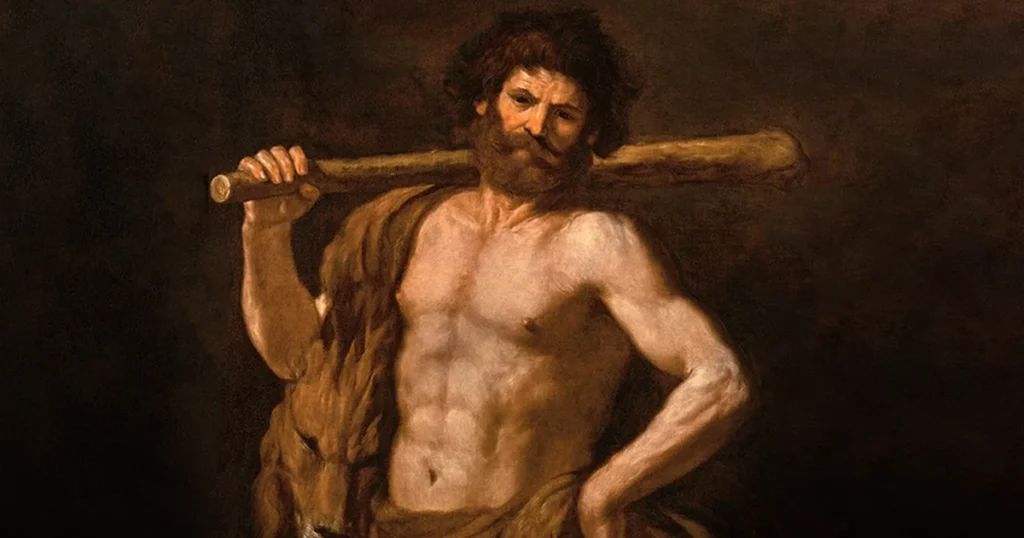
Writers and artists in Greece place Heracles among the foremost heroes because his deeds look useful and public. Epic poets praise his endurance, tragedians test his choices, and local historians tie him to shrines and roads. Sculptors and painters fix his image with the club and lion skin so anyone can recognize him in stone or paint. Priests and magistrates mark his visits by games, dedications, or simple markers beside springs and passes. These records make him more than a killer of monsters because they show repairs to daily life after each deed. The spread of this record across genres and towns explains why he stands at the center of Greek heroic talk. The outcome is a hero known through many sources, and the next step is to name those sources clearly.
Sources that tell his story
Greek epic gives the earliest frame for Heracles, with poets tying his birth, labors, and travels into a single line of action. Lyric poets add praise for specific feats and for the endurance that keeps him moving after loss. Athenian tragedy examines choices around family, guilt, and service under orders set by a weaker king. Later myth handbooks and prose summaries collect versions, name places, and fix a common order for readers. Vase painters, sculptors, and later wall painters select key scenes that teach viewers the sequence of famous acts. These media differ in detail, but they agree on the path from Thebes to Argos, on to distant edges, and back to courts for judgment. The outcome is a stable public sequence with minor local changes, and the next step is to settle how to name him in English.
Names and pronunciation
Greek speakers call the hero Herakles, which sounds like HEH-rah-klees with stress near the first vowel. Latin writers use Hercules, and that form spreads through Roman art and later European languages. Modern English uses both names, but scholars prefer Heracles when they mean the Greek versions of the stories and places. Museum labels and paintings can use either form, so readers should expect to see both in captions and catalogues. In this article, Heracles is used when the Greek context matters, and Hercules appears in quoted titles or Roman items. This choice helps readers track which culture or source a scene comes from without confusion. The outcome is a clear naming rule, and the next step is to set his family and birth in Thebes.
Family and birth in Thebes
Parents and lineage
Alcmene in Thebes bears Heracles after Zeus visits her in the shape and timing of her husband Amphitryon. Amphitryon raises the child in his house, so the boy grows up as a Theban prince with duties to that city. Because Alcmene’s family line reaches back to Perseus, the child also carries Argive ties that matter for later support. Sources note a “double night” of conception, which Greeks used to explain the child’s unusual share of strength and fortune. Iphicles, a full mortal son, is born at the same time, and the two boys are raised together in the same rooms. The family’s mixed lines explain why both Thebes and Argos claim parts of his life and why both regions appear in early deeds. The outcome is a hero tied by birth to two centers, and the next step is to report the signs that marked his arrival.
Alcmene’s kinship to Perseus gives Heracles links to Argive kings who will later judge him and set tasks. Amphitryon’s status in Thebes makes the boy visible to local rulers who need help when border wars flare. These ties matter because they place Heracles inside real networks of command, payment, and honor. They also explain why summons can reach him from both sides of the Gulf when trouble starts. As he grows, neighbors notice his size and stamina, and Amphitryon begins formal training that fits a prince. The dual ties shape where he can serve and who can call on him. The outcome is a map of likely patrons, and the next step is to show the signs and omens told about his birth.
Birth stories and signs
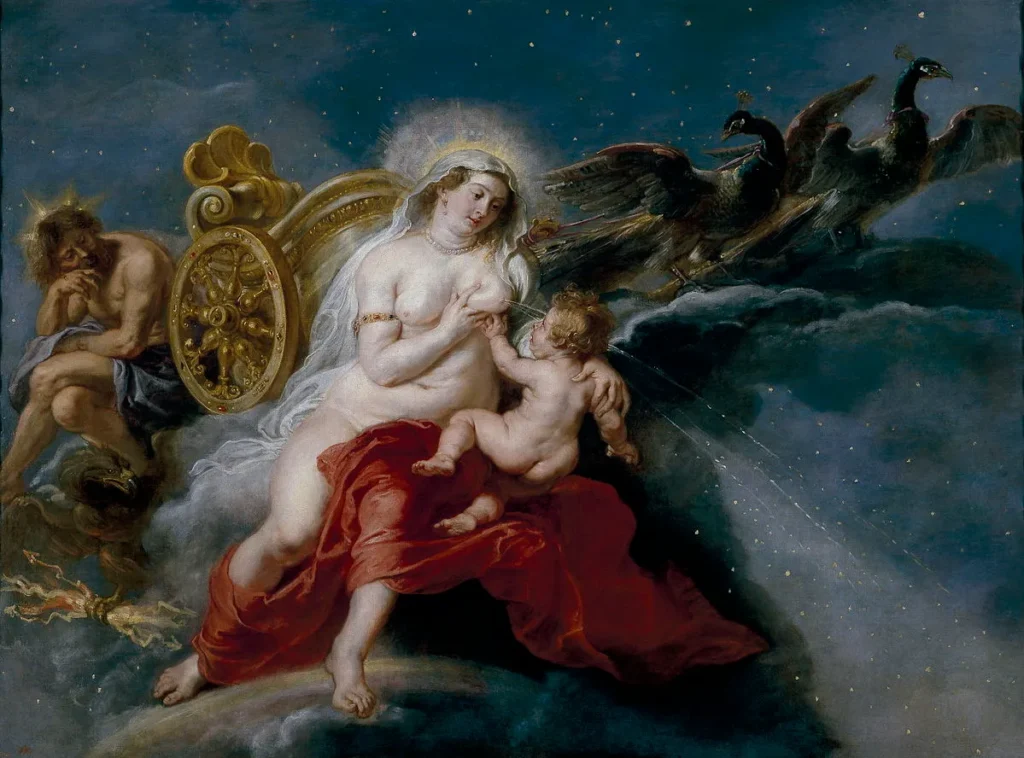
Greek storytellers explain early hostility and favor by linking the timing of Heracles’ birth to a plan of Zeus and a counter by Hera. One set of sources says Zeus swore that a child of his line born that day would rule, and Hera delayed Alcmene’s labor while hastening another birth so Eurystheus would gain the throne. This trick sets a later conflict in motion because it places a weaker cousin over a stronger hero by calendar rather than merit. Another set of tales explains a sky sign by saying the infant tried to nurse at Hera’s breast, and milk sprayed to form the Milky Way. These stories show why Hera would keep opposing the child and why Zeus’s favor does not erase hardship. Neighbors in Thebes hear such tales and watch the cradle for proof of unusual strength. The outcome is a city primed for signs, and the next step is the prophecies that describe his path.
Some sources add that omens at birth named him as a helper who would lighten burdens and clear roads. Priests and seers warn that such strength must be guided by law and restraint or it could harm allies. Families respond by guarding the nursery and by asking trusted elders to advise Alcmene on ritual protection. These steps show how households treated divine attention as both a gift and a risk. They also explain why later crises drive the family to formal oracles rather than private guesses. With these signs recorded, Thebes expects early proof of strength. The outcome is a watchful household, and the next step is to state what early prophecies claimed he would face.
Early prophecies about his life
Seers in Thebes tell Amphitryon and Alcmene that the boy will fight beasts, travel far, and bring back guarded things for the good of many. They add that he will carry a wooden club and a lion skin, which later helps witnesses identify him at a distance. The warnings also say that danger will come from inside the house if anger or delusion strikes him in a moment of weakness. Priests advise the family to couple strength with ritual training so he can act under rules and not by impulse alone. These words guide choices about tutors, hunting, and early service to the city so the boy learns to hear commands. The prophecies do not hide trouble, but they set a path to manage it before it breaks out. The outcome is a plan to train strength under order, and the next step is to explain why Hera will try to derail that plan.
Prophets remind the family that the boy’s trials will come under the eyes of gods who watch vows and blood. They say that guilt can be washed by service if a proper authority sets the terms and the work is done in public. This rule will matter when a later crime forces him to ask Apollo what must be done to repair the harm. The early guidance therefore links strength, guilt, and work long before the famous tasks begin. The family takes note and keeps the boy under close instruction. These details explain later obedience to orders that come from a weaker king. The outcome is acceptance of future service under command, and the next step is the cause of Hera’s steady hostility.
Hera and the lifelong enmity
Reasons for Hera’s hostility
Hera resents Zeus’s betrayal of marriage and the birth of a powerful son to a mortal woman in Thebes. She cannot cancel the birth once it happens, so she works to bend the child’s life into hardship and delay. First she arranges the timing of Eurystheus’s birth to place him above Heracles in rank, which later allows orders to run downward from the Argive court. Next she looks for moments when she can send attacks or confusion that do not break divine law but still hurt a mortal house. This policy makes sense of sudden monsters, hard commands, and tricks that meet the letter of rules while wounding the hero’s standing. Hera’s goal is to deny free glory by saying all deeds come from punishment rather than choice. The outcome is a plan to harass by rules and disasters, and the next step is the first open attack in the nursery.
Hera’s opposition shapes the pattern of later stories because it explains why tasks grow harder when success nears. Kings and heralds can hide behind custom and distance, while divine pressure comes through dreams, beasts, or weather. Heracles answers these attacks by bringing results that help cities and travelers, which builds his public credit even under hostile eyes. This back and forth becomes the driving force of his legend as he turns obstacles into proofs of order. People who watch see a contest between resentment and service. Each victory draws a new test that fits Hera’s aim without breaking formal rules. The outcome is a long struggle fought through human courts and wild places, and the next step is the cradle scene with the snakes.
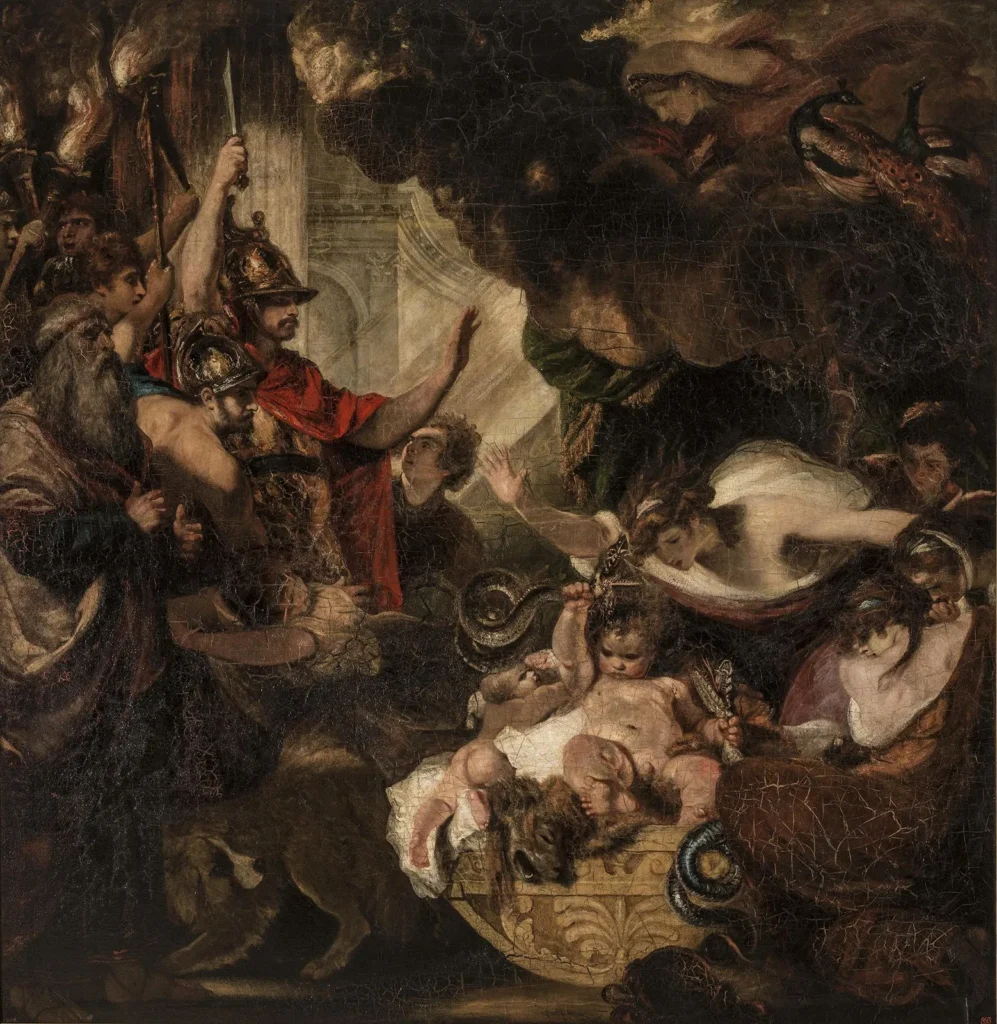
The snakes in the cradle
Hera sends two snakes at night into the room where Heracles and Iphicles sleep in Thebes. The infants wake, and Iphicles cries while Heracles reaches out and grips both serpents behind the head. Amphitryon and Alcmene rush in with servants and see the boy holding the limp bodies with small hands. The family reads the scene as clear proof that the child’s strength is real and not rumor. Neighbors hear the news by morning, and word spreads through the city that a danger meant for harm has turned into a sign. Storytellers keep the details of the nursery, the cries, and the grip, which helps artists fix the scene in paint and stone. The outcome is public recognition of unusual power, and the next step is to guard and train the boy so that power does not injure friends.
Some versions say seers confirm that Hera sent the snakes, which makes the attack a formal start to open enmity. This claim matters because it sets a motive beyond chance and gives the family reason to seek ritual protection. Amphitryon strengthens watch over the nursery and sets rules for who may enter and when. Tutors begin early lessons that teach control of hands, voice, and temper so sudden force does not strike the wrong target. The household also performs offerings that ask for guidance to match strength with lawful use. These measures show a family taking both divine threat and human risk seriously. The outcome is a deliberate plan for fosterage and training, and the next step is to place the child with people who can teach him safely.
Protection and fosterage traditions
Amphitryon arranges tutors in Thebes to teach Heracles music, letters, and ritual so he can live under rules as well as in the field. Some accounts send the boy for a time to the centaur Cheiron in the countryside, because Greeks treated Cheiron as a model teacher for heroes. Whether in town or with Cheiron, the aim is the same, which is to give the child safe channels for strength and a clear sense of oath and offering. The family chooses instructors who can correct a quick temper without breaking it, since blunt force without judgment can harm allies. Training includes the use of spear, bow, and shield, but also how to stand in a council and take orders. These paired lessons explain why later commands from a weaker king can still be followed without shame. The outcome is a youth trained for service, and the next step is to name the skills he learned and how he learned them.
Fosterage protects the boy from sudden attacks by keeping his movements known to a small circle and by placing him with trusted elders. It also gives him time away from court noise so lessons can take hold without distraction. Thebes gains by this plan because it returns a young man who can fight and speak. The tutors report progress to Amphitryon, who adapts the program after each season of work. The mix of city and countryside skills builds a base for later hunts, marches, and councils. This base carries him into early deeds near home before marriage ties fix him closer to Thebes. The outcome is readiness for first actions, and the next step is to list the teachers and the specific skills they gave him.
Training youth and first deeds
Teachers and skills he learned
Heracles studies music and letters in Thebes so he can steady his temper and understand sacred songs and public orders. He practices the lyre to smooth a quick spirit and learns to read decrees so he can follow civic law. He trains in wrestling and pankration so holds and grips come under control rather than rage. He learns spear and bow from veterans who stress distance, timing, and restraint around allies. He drives a chariot on practice grounds so he can move quickly to summons from nearby towns. He runs long distances with full gear so he can fight after a march rather than only fresh from bed. The outcome is a balanced set of skills, and the next step is a hard lesson that changes how he is taught.
One story says a teacher named Linos scolds Heracles for a mistake, and the boy strikes him and kills him in anger. The court tries the case and acquits Heracles because the blow follows a beating, but Amphitryon changes the training plan. He removes him from crowded lessons and shifts to field work that keeps hands busy and mind focused. This shift favors hunting, endurance marches, and drills that burn off heat before speech. The new plan reduces risk to bystanders while building habits that protect friends in a fight. These steps produce a young man who can take orders and hold back when needed. The outcome is a disciplined youth ready for service, and the next step is to note his first useful acts before marriage.
Early feats before marriage
Heracles joins Theban hunts that target wolves, boars, and bandits who trouble farms and roads near the city. He learns to track by sign, to watch wind, and to hold lines of men together as they move through scrub and ravines. He helps escort merchants through passes where ambushes were common and learns to place scouts where paths narrow. He sees that bad weather can undo strong men, so he begins to plan around rain, heat, and river levels. He answers calls from nearby villages when raiders test defenses and leaves simple markers to show safe routes. These small actions build trust because loss drops after his teams pass through. The outcome is a local record of help, and the next step is to fix the tools and gear that define his image.
Heracles also learns when to yield space to a king, elder, or priest so civil order stays intact during crises. He watches how councils decide when to send men and how to divide credit after a success. He learns to give short reports that list facts and outcomes rather than boasting. These habits keep tempers cool when strong hands and weak egos share a room. Neighbors start sending word to Thebes asking for his help rather than acting alone. This flow of requests prepares the way for larger tasks that will come through formal orders. The outcome is a clear reputation for reliable aid, and the next step is to state the weapons and signs that people associate with him.
Weapons and lion skin
Heracles selects a heavy wooden club cut from a strong tree near Thebes and shapes it to fit his grip. He carries a bow and a quiver of arrows so he can strike at distance before closing with the club. He learns that a short blade is for finishing only when a beast or man is down and cannot rise. After killing a lion whose hide resists iron, he takes the skin and wears it as a hood and cloak for armor. The mane frames his head and the paws tie across his chest, which makes the outline easy to know even from far away. The skin’s thickness protects his shoulders and back when claws or teeth glance off. The outcome is a fixed field kit that people can recognize, and the next step is to place him under a Theban king before the marriage that follows.
The club and skin become signs in art that let viewers identify the hero without words. Painters and sculptors use them to mark scenes from different times in his life while keeping him easy to spot. On the road, these items work as tools that keep him alive when metal fails or splits. The bow and poison later add to his reach, but the club stays the main symbol of close work. Witnesses at courts know him by the skin before he speaks a word. These signs keep reports short because one look tells who did the deed. The outcome is a public image tied to practical gear, and the next step is his service under King Creon.
Marriage to Megara and life in Thebes
Service under King Creon
Heracles serves King Creon of Thebes after helping beat back a hostile neighbor who threatened the city’s fields. Creon rewards him with honor and asks him to remain near the court as a protector. Thebes gains a shield who can move quickly to border alarms and can return as soon as the trouble ends. Heracles stays under the king’s authority rather than seizing rule, which makes citizens trust his force. Patrols clear roads, and farmers sow and harvest without sudden flight. The city’s markets fill again as caravans stop avoiding the region. The outcome is a period of safety under Creon’s rule, and the next step is the marriage into the royal house.
Creon uses Heracles for tasks that keep peace rather than for personal gain. He sends him to end raids, to escort envoys, and to enforce fair terms after a fight. These jobs keep Thebes stable and show nearby towns that order can hold without harsh rule. Heracles learns to match speed with restraint so victory does not turn into fresh grievance. This balance makes the city appear strong and fair, which draws trade. With stability in place, Creon considers a match that will bind the hero to the city. The outcome is a plan for a royal marriage, and the next step is the birth of children and the shape of the household.
Children and household
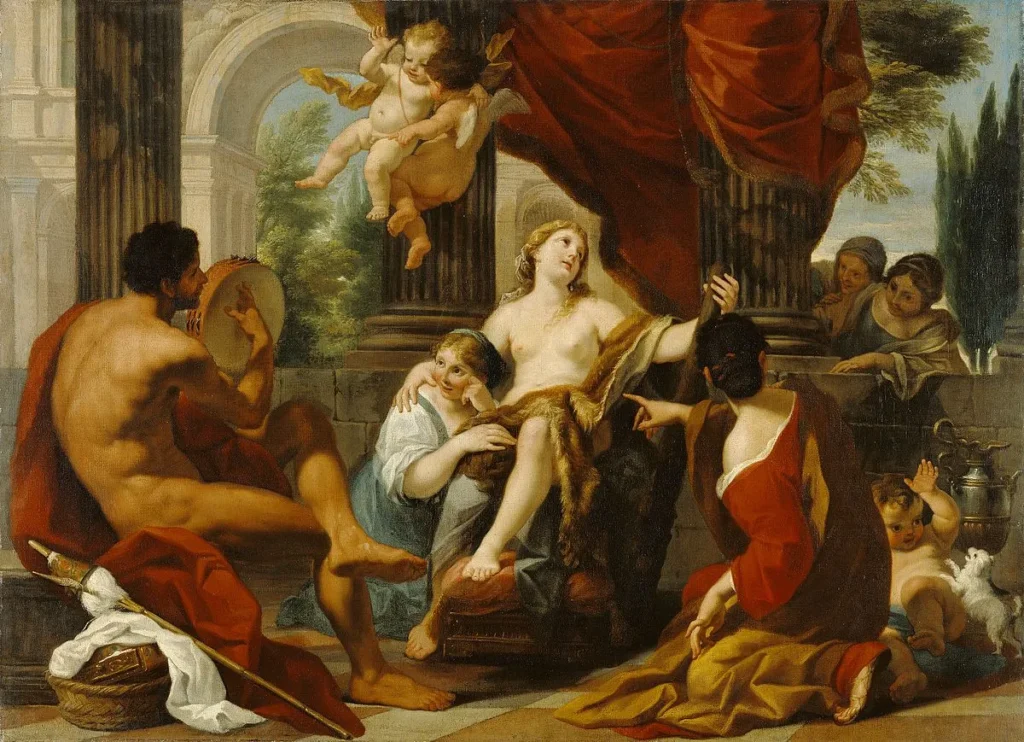
Creon gives his daughter Megara to Heracles in marriage, and the couple sets up a home in Thebes near the court. Sons are born, and the house gains nurses, tutors, and servants who keep daily life orderly. Heracles divides time between patrols and family duties so his force looks safe to neighbors. Megara manages stores and staff so the house meets ritual and civic expectations. The family attends public rites, which shows citizens that the strong man bows to law and custom. Gifts from grateful towns come to the house and are recorded for the city’s honor, not just for private use. The outcome is a settled household in full view of Thebes, and the next step is to explain how the city viewed his standing.
The marriage ties Thebes and the hero by kinship rather than by convenience. Heracles gains in-law allies and a broader set of duties, which makes him cautious about private feuds. The city sees the family as a sign that strength can live under rules without turning on neighbors. Children soften fears that a fighter lives only for blood, since people watch him as a father in public. This steady picture builds trust that will later break under a sudden disaster. The house’s visible happiness is what makes the coming event so severe in people’s memory. The outcome is a high point in civic trust, and the next step is his standing among Thebans before the crisis.
Standing among Thebans
Thebans honor Heracles because he has rescued them from threats and has not tried to take the throne. Messengers from other towns ask for help, and Creon sends the hero when the request fits Theban policy. The city records these missions so credit falls on Thebes as well as on the man who does the work. Neighbors send grain, wine, or bronze as thanks, which the court accounts as public gifts. People speak of him with trust because he appears when danger comes and leaves when order returns. This pattern builds an image of a helper rather than a tyrant. The outcome is strong public confidence, and the next step is the fit of madness that destroys that trust.
Heracles’ name travels beyond Thebes because envoys carry reports of his actions to other courts. This spread of news makes his later fall more shocking and more widely known. Priests and elders who once praised him will have to judge him, which adds weight to what follows. The family’s place in the royal house means the city’s honor is tied to his behavior at home. All of these threads gather in the day of the fit, when personal disaster turns into a civic crisis. The city that trusted him must now answer blood with law. The outcome is a fragile balance ready to break, and the next step is the cause and course of the madness.
Madness and blood guilt
The fit of madness and its cause
Hera seeks to break Heracles in Thebes by turning his strength inward during a moment of private life. She calls on Lyssa, the spirit of madness, to seize the hero so he cannot tell friend from foe. Lyssa strikes within the house, and Heracles kills Megara and his sons while thinking he fights enemies. The fit ends as suddenly as it began, and he sees the dead in his own rooms. Neighbors hear cries and arrive to find the house in grief and ruin. The city falls silent as news spreads from the palace to the markets. The outcome is the worst kind of guilt in Greek law, and the next step is to weigh that guilt and decide what can be done.
Witnesses gather, and elders of Thebes must decide how to treat a man who saved the city but has killed his family. People blame Hera for the cause, but Greek custom holds the killer responsible for pollution that affects the whole community. Friends try to comfort the survivor, yet they know no comfort can cover a public stain. Heracles understands that he cannot stay in the city without purifying the crime in front of all. He must seek a higher judgment that sets a path to wash the blood guilt with long service. This need to act under rules sets the course for the rest of his life. The outcome is a resolve to seek guidance, and the next step is to measure the weight of the killings under law.
The killings and their weight
Heracles leaves Thebes and travels to the sanctuary of Apollo at Delphi to ask how to cleanse the blood guilt. He does not try private rites because priests tell him that only a clear command from the god can fit the scale of the crime. The Pythia, Apollo’s priestess, receives him under the temple rules and answers with the god’s voice. The command states that he must serve for a fixed number of years under a king who holds authority over him. The tasks will be set by that king and must be carried out in public view so all can see the cost and the repair. The order also forbids payment so the work is clearly punishment and service, not a trade. The outcome is a binding plan for atonement, and the next step is to name the king he must serve.
Purification in this form has a clear logic for Greeks who fear ritual pollution. It takes the killer out of his city so shared rites can proceed without danger, and it makes the guilty man carry a burden that helps many. Witnesses can watch each step and judge whether the worker obeys commands without cheating. Apollo’s word also protects the process from random change by enemies or friends who might try to bend the rules. Heracles accepts the shame of service because it is the only path that can return him to clean standing. He prepares to present himself to the named king and to submit to orders that will test both strength and restraint. The outcome is readiness to serve, and the next step is the consultation’s direct assignment to Eurystheus.
Oracle at Delphi and service to Eurystheus
Consultation of Apollo’s oracle
Heracles reaches Delphi and follows the rites for entry, which include purification, offerings, and silence before the Pythia. The attendants place him in order behind other petitioners, and he waits for his turn to ask how to repair his crime. When he enters, the Pythia sits upon the tripod and gives Apollo’s guidance in formal words. The answer directs him to submit to a set term of service and to complete tasks assigned by a specific king. The reply states that these acts will cleanse the blood guilt if they are obeyed without pay and performed openly. The temple officials confirm the form of the answer and record the case for their rolls. The outcome is a clear directive from Apollo, and the next step is to carry that directive to the named ruler.
The oracle brings legal and religious weight because Greek cities accept Delphi’s judgments in hard cases. By obeying, Heracles shows that he places divine law above personal desire and local favor. This act protects Thebes from further stain and gives other cities confidence in hosting him during the tasks. The obedience also sets a public example that strength alone cannot excuse a killer from process. With the god’s word fixed, Heracles must now travel to the court that will command him. He prepares to enter service under a man who owes his throne to the birth trick Hera arranged. The outcome is a move from inquiry to submission, and the next step is the command to serve Eurystheus.
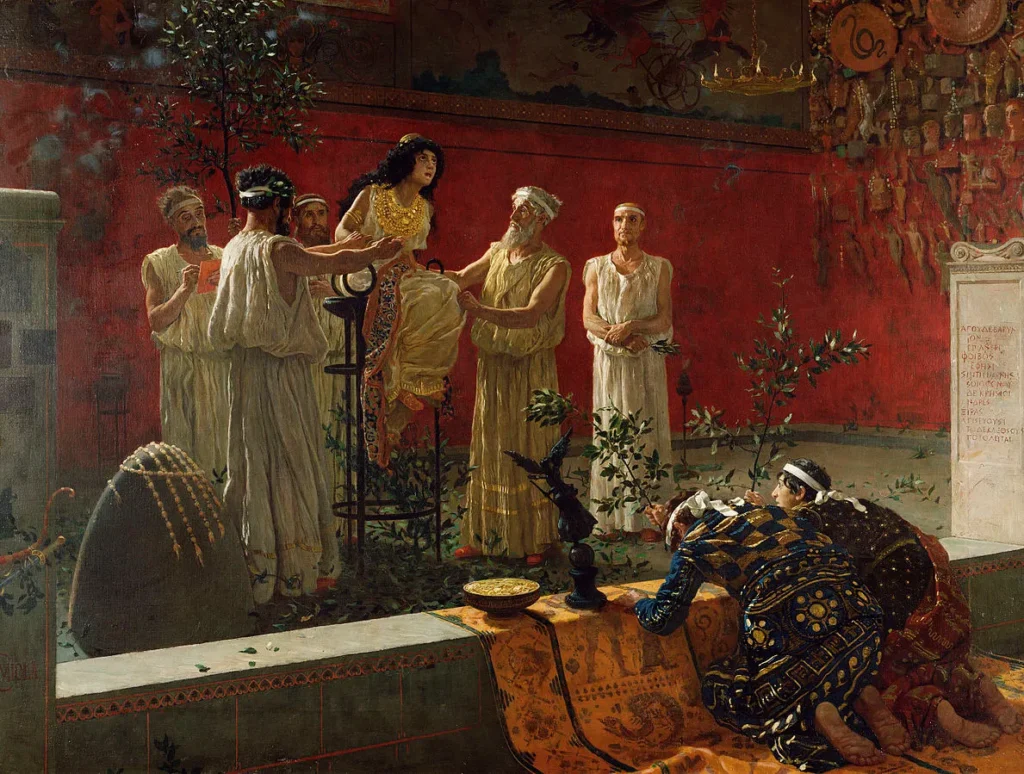
Command to serve Eurystheus
Apollo’s oracle orders Heracles to serve King Eurystheus of Tiryns and Mycenae for a fixed number of years. Heralds and attendants at Delphi can name the king and the places so there is no doubt about the court to approach. Heracles accepts the command and travels to the Argolid, where Eurystheus holds power by Hera’s earlier timing of births. He enters the court, declares his guilt, and offers service under the god’s order so that his crime may be washed. Eurystheus agrees to receive him as a servant under terms that forbid wages and require public proof. The court sets a system in which heralds will record orders and verify results. The outcome is a formal service relationship, and the next step is to explain why Hera wanted Eurystheus placed above him.
This submission carries humiliation because the stronger man must obey a weaker ruler who fears him. That structure is part of the penalty, and it serves the public need to see pride bent under law. The court makes clear that the king will choose the tasks and decide what counts for the tally. The rules will be announced through heralds to keep procedure visible and stable. Heracles agrees to these conditions because they come from Apollo’s word and because only public service can answer public stain. With the agreement in place, the work can begin at once. The outcome is a start to the long atonement, and the next step is Hera’s continuing role in this arrangement.
Hera’s role in placing Eurystheus over him
Hera fixed Eurystheus’s precedence by speeding his birth and delaying Heracles’ birth so the throne fell to the weaker cousin. This earlier act now shapes the atonement because it forces the hero to take orders from a man who owes his rank to Hera’s trick. Hera keeps watch over this process and looks for ways to cut credit from the hero while keeping him bound to service. She backs Eurystheus with fear and suspicion so the king will add rules or dismiss results when possible. Painters and poets highlight this tension by showing the king’s panic at proofs and his eagerness to reduce the count. Hera’s aim is to explain every success as mere obedience and to deny any claim to free honor. The outcome is constant pressure from court and goddess, and the next step is the rules that govern the tally.
Hera does not break Apollo’s order because that would overturn divine law, but she exploits its edge cases. She pushes for narrow readings of help, pay, and proof so that tasks can be struck from the record. She also protects Eurystheus by fear and accident so the king can stay far from danger while judging work he never risks. This pattern keeps the hero under command and makes each feat a trial of patience as well as of strength. People who watch see the conflict move from fields to courts and back again. The rules become the arena where honor can be shaved or restored. The outcome is a labor system ripe for disputes, and the next step is how the count will be managed.
Terms of the labors and help allowed
Counting the labors and disqualified tasks
Eurystheus and his heralds decide that Heracles’ service will be measured by a numbered list of tasks. The list grows to twelve in common telling, but not every early feat is accepted at first. The king later disqualifies the cleaning of the Augean Stables because Heracles made a private bargain for pay before the work. He also disqualifies the Hydra fight because Iolaus used fire to help stop the heads from growing. These rulings keep the pressure high and force the hero to complete more work to reach the accepted total. The number twelve fits a complete set in Greek thought and sticks in later summaries. The outcome is a working count with disputes, and the next step is to state the rules on pay and assistance.
The court’s decisions matter because they set precedent for what counts and what does not. Heralds record the reasons so future tasks will be planned to avoid the same traps. Heracles learns to ask for terms in advance where possible and to keep within strict lines even under attack. This practice moves the tale from simple fighting to a mix of law and action. The audience learns why some famous deeds did not enter the official tally even though they helped people. These details explain the final shape of the twelve. The outcome is a framework for judgment, and the next step is the rule set that defines help and wages.
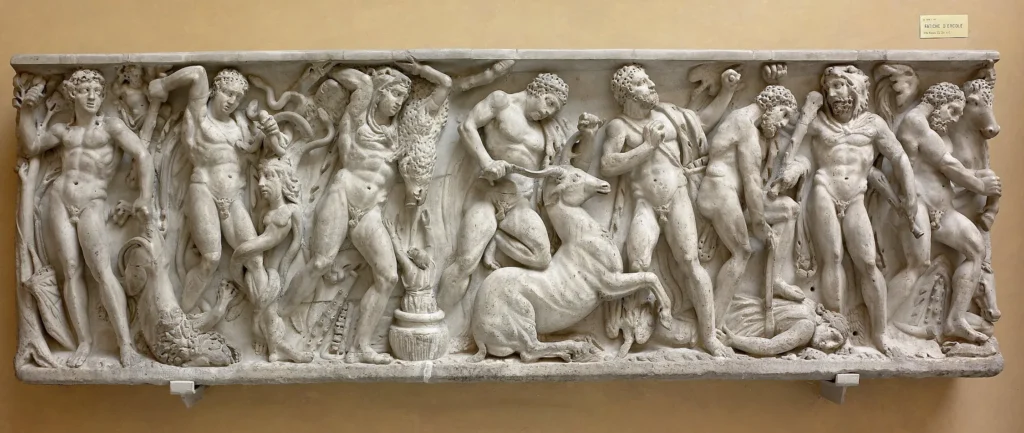
Rules about pay and assistance
Eurystheus sets rules that Heracles may not accept wages for tasks done under the atonement because payment would turn punishment into trade. The king also limits the kind of help allowed by forbidding substitutes who could do the work in his place. When the hero returns from a deed, heralds test whether the rules were kept along with whether the danger ended. The court sometimes announces clarifications after a task, which allows the king to strike items that used help beyond what he intended. These limits are harsh, but they keep the process public and remove motives that would confuse the aim of cleansing guilt. Heracles adapts by choosing tools and allies that support him without crossing forbidden lines. The outcome is a careful approach to planning, and the next step is to show how heralds keep the record.
These rules will later remove the Augean Stables and the Hydra from the count, which lengthens the service. They also make each new task a legal as well as a physical test. Heracles uses this pressure to show judgment under command by asking for terms at the start when he can. The court’s habit of narrowing rules after the fact keeps tension high and feeds later stories about petty treatment. Even so, the hero keeps to the course because only obedience can end the pollution. With rules in place, the system can record orders and results in sequence. The outcome is a strict standard for every deed, and the next step is the heralds’ role in authority.
Heralds and the authority of Eurystheus
Eurystheus uses heralds to deliver orders to Heracles and to collect proofs when a task is done. This practice keeps the king away from danger while still making his authority visible at each stage. Heralds read instructions in public, witness the action or its results, and then return to report in the court. The process includes listing the place, the threat, the method, and the proof so the tally can be checked later. If the proof is a body, a hide, or a live beast, the heralds watch the display and certify what they saw. The system prevents private deals and keeps the atonement under civic procedure rather than rumor. The outcome is an official record of service, and the next step is the first labor on the road to Nemea.
Heracles accepts this oversight because it connects Apollo’s order to human law and because it protects him from false charges when enemies grumble. The public chain of command, execution, and report also teaches other cities what to expect when they ask for help. Eurystheus gains safety and control, while Heracles gains a clear path to complete the sentence. The heralds’ written and spoken records later guide artists who want to put scenes in the right order. This shared memory fixes details that would otherwise drift. With officers in place and orders ready, the first labor begins. The outcome is a system ready to judge, and the next step is the approach to the Nemean Lion.
First labor: Nemean Lion
The road to Nemea
Heracles departs from Tiryns under the first order and travels to the hills near Nemea where a lion has emptied roads and fields. Farmers report that spears and arrows fail because the beast’s hide will not let iron bite. The hero scouts the land to learn the caves, the wind, and the animal’s habits by watching tracks and kills. He finds that the lair has two mouths and that the lion uses both to evade pursuers. He decides to block one opening with stones and brush so the beast must face him in a tight space. He prepares the ground so he can reach the animal without giving it room to leap aside. The outcome is a simple plan based on the terrain, and the next step is the fight in the cave.
Heracles waits until the lion returns at dusk and moves quietly to close the exit with heavy rocks. He checks the wind so his scent does not reach the mouth he leaves open. He lays aside the bow because arrows will not pierce the skin and grips the club for the first blow. When the lion charges, he strikes to stun and then closes to hold where claws cannot reach well. The cave walls keep the beast from circling, which turns raw power into a wrestling match. The plan removes the advantage of the open slope and gives the man the only space where he can win. The outcome is contact with the beast on his terms, and the next step is to kill and skin it with what the cave and body allow.
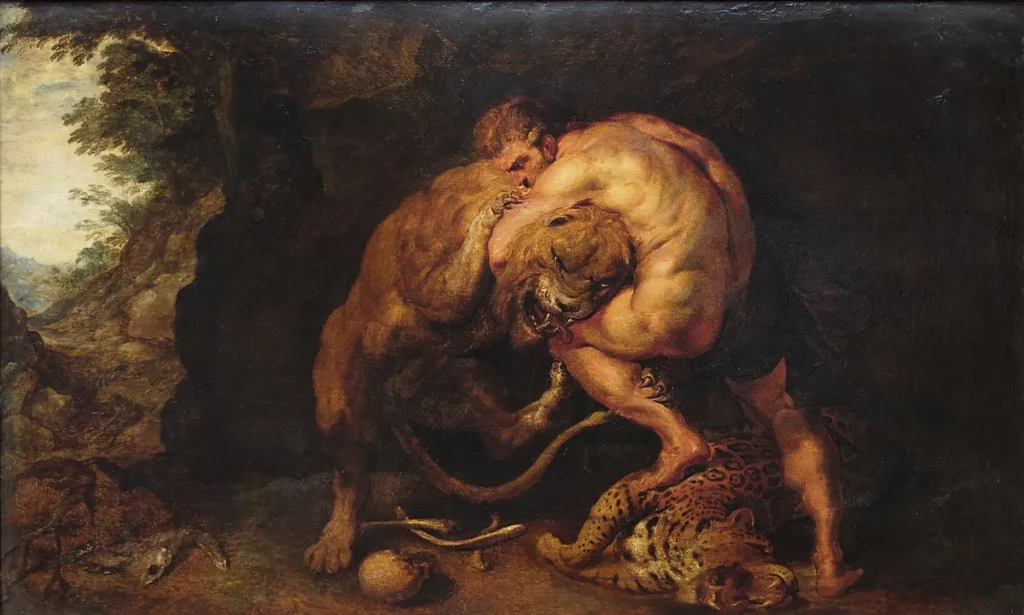
Strangling the lion and skinning it
Heracles drops his bow and wraps his arms around the lion’s neck and chest inside the narrowed cave. He clamps his grip and drives his weight forward so the animal cannot rake his legs or break free. The lion’s blows weaken as air fails, and Heracles keeps pressure until the body slackens on the stone. After the kill, he tries to cut the hide with iron but finds the edge slides without a mark. He studies the paws and uses the lion’s own claws to slice the skin where joints and folds make softer lines. He works the hide off in one piece so he can wear it as armor that fits his frame. The outcome is a usable cloak and hood, and the next step is to carry the proof back to Tiryns for the tally.
He cleans the cave mouth, gathers the head and hide, and prepares for the return march. The weight of the skin is heavy but not too much for his back and shoulders. He keeps the head intact so the face of the beast can serve as a clear sign in court. The bow and club go back on his shoulder once the cutting is done. People who see him on the road give him room because the outline of the head and paws leaves no doubt. These choices ensure that the court cannot dismiss the report as rumor. The outcome is a visible trophy, and the next step is the presentation before Eurystheus.
Trophy and return to Tiryns
Heracles walks into the Argive plain with the lion’s head and hide over his shoulders and reaches Tiryns with the proof. Heralds call the court to the forecourt so many can see the result at once. Eurystheus looks at the trophy and fears the force that could bring it, which sets the pattern for later scenes. The king orders that future displays take place outside the gates so he can keep distance from live or dead beasts. Painters later add a large storage jar because some versions say the king used one to hide from sudden proofs. The heralds record the first tally and announce that the labor is complete under the rules. The outcome is one mark on the list, and the next step is the second labor at Lerna.
The court’s reaction fixes two things that will repeat many times. First, Heracles will deliver clear proofs that cannot be doubted by sight. Second, the king will respond with fear and more rules that limit how results are shown. This pattern keeps credit public while showing the power gap between the worker and the judge. The record also gives later cities a model for how a labor ends in formal terms. With the first success certified, the king can issue the next order without delay. The next order sends the hero to the marsh near Lerna. The outcome is a closed first case, and the next step is to face the Hydra.
Second labor: Lernaean Hydra
The marsh at Lerna and the heads
Heracles travels to the marsh near Lerna where the Hydra lives among reeds and pools that make footing dangerous. The beast has many heads and a body full of poison that burns wounds and fouls the air. Cutting one head makes two grow back, which turns normal fighting into a losing plan. The ground near the lair pulls at the feet and traps men who do not know the firm spots. Heracles studies the marsh and marks solid mounds where he can stand and swing without sinking. He keeps the lion skin on his arms and shoulders to blunt bites while he tests the ground. The outcome is a map of safe footing and a plan to change the fight, and the next step is to bring help within the rules.
Heracles brings Iolaus, a trusted kinsman, to drive the chariot and to carry fire so the fight can change when the heads grow back. He chooses this kind of aid because it supports his own hands rather than replacing his role. The pair approaches at dawn when the air is still and the light is clear enough to see the necks. The hero strikes a head to open a stump, and Iolaus presses a burning brand on the cut to seal it. The cauterizing stops the doubling and keeps the number of heads from rising. With each sealed neck, the odds even and then turn. The outcome is a working method, and the next step is to finish the beast and deal with the poison.
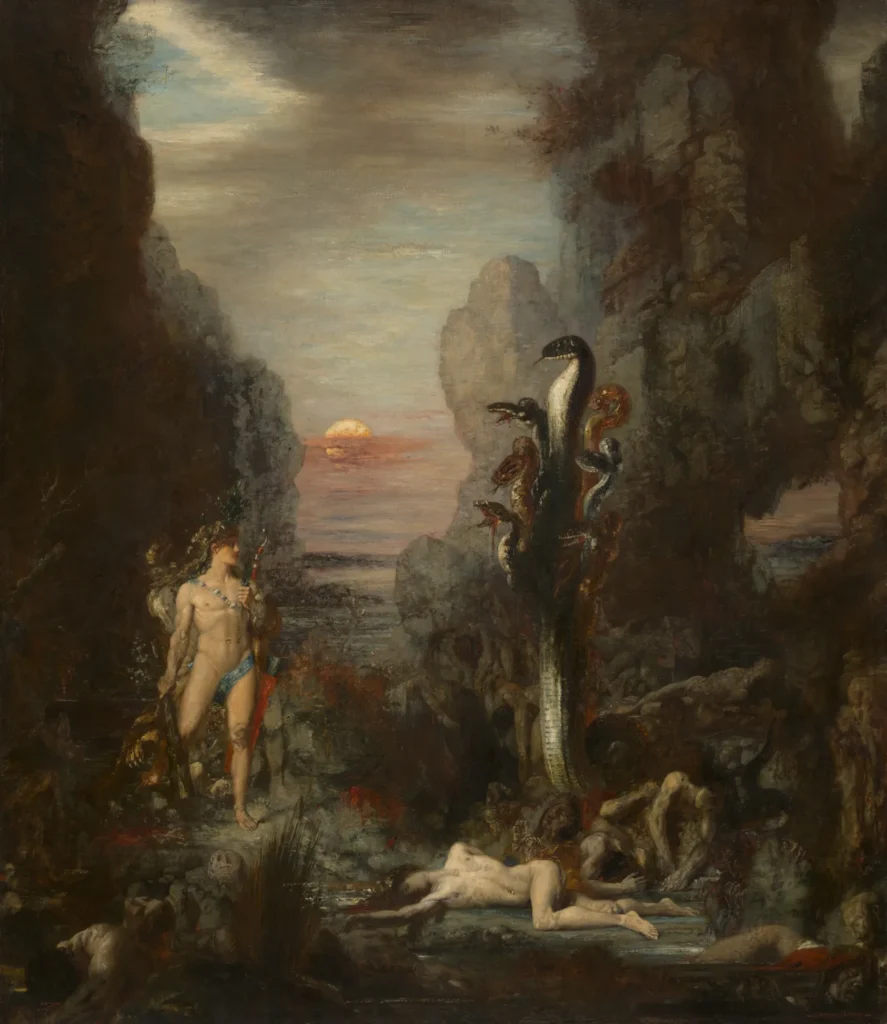
Iolaus and the cauterizing
Heracles calls to Iolaus to stand ready with the fire while he hacks at the next neck in the marsh. Each time a head falls, Iolaus steps in and burns the fresh stump so no new heads can sprout. The rhythm holds because they move only on firm ground that Heracles marked before the fight. The Hydra thrashes, and mud and water splash, but the pair keep their timing despite the shock. The lion skin protects Heracles’ arms from glancing bites that would slow the work. The outer ring of necks falls, and only the central head remains. The outcome is control of the field, and the next step is to end the fight and secure proof.
Heracles sees that the central head will not die from simple blows. He cuts it off and buries it under a heavy rock at the marsh edge so it cannot cause more harm. He opens the body and dips arrowheads in the blood to carry poison for later fights that need quick ends. The marsh grows quiet, and the birds return to the reeds after the thrashing stops. Iolaus brings the chariot close on a firm tongue of land so they can load what proof they need. The pair leaves the bog with tools and a plan for the report. They ride back toward the court with the story and the poison secured. The outcome is a finished fight in the field, and the next step is the king’s judgment on the count.
The crab the poison and disqualification
Hera sends a giant crab during the fight at Lerna to bite Heracles’ foot, and he crushes it under his heel while holding his ground. This detail appears in many images to show Hera’s active malice during the labor. After the kill, Heracles treats the Hydra’s blood as a weapon by dipping his arrows in it for future need. He and Iolaus secure the marsh and leave behind the buried head marked by a stone. They return to Tiryns with the report of method and outcome so the heralds can certify the result. Eurystheus listens and then announces that the labor will not count because Iolaus supplied help beyond what the king now allows. The outcome is a strike from the tally, and the next step is to accept the loss and move to the next order.
The disqualification hurts because it denies credit for a hard and useful deed. Heralds record the reason so future tasks will avoid the same ground. Heracles learns to ask about allowed help before starting so the rules cannot move after he finishes. The Hydra’s poison remains a gain that will change later fights even if the tally does not grow. The court’s ruling serves Hera’s aim to lengthen the atonement and to keep honor thin. With the decision made, the king gives the next task at once. The outcome is a longer road to twelve, and the next step is the chase of the sacred hind.
Third labor: Ceryneian Hind
The sacred deer and Artemis
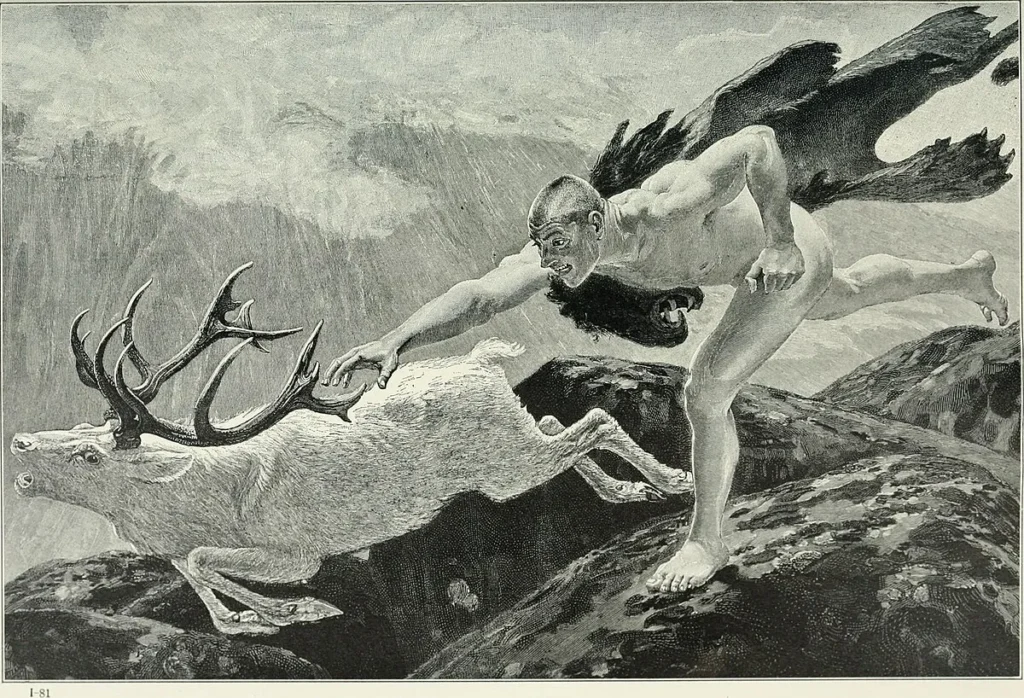
Heracles receives an order to capture alive the Ceryneian Hind, a swift deer sacred to Artemis with golden antlers and a gleaming hide. He must not harm the animal because it belongs to the goddess, which turns the job into a test of restraint and patience. He studies prints, grazed bark, and droppings to learn the range and drinking places. He moves through hills and forests without dogs or loud companions so he does not disturb shrines or break the rule of care. He uses soft cord and a light net prepared for a gentle hold rather than chains or iron. He keeps to known paths so people who witness the chase can see he works under a clear rule. The outcome is the start of a careful pursuit, and the next step is the long chase across Greece.
The hind runs fast and far, and Heracles follows over months through Arcadia, Achaea, and beyond. He rests at night to avoid forcing a break in the animal’s legs on rough ground, which would offend Artemis. He learns the deer’s rhythm and begins to predict where it will cross streams and narrow passes. At a shallow ford he drives it gently into water where footing slows without injury. He casts the net and draws it tight while speaking to calm the animal so it does not thrash and harm itself. He binds the legs with soft cord and prepares for a slow return. The outcome is a live capture without harm, and the next step is the meeting with Artemis and the formal release.
The long chase through Greece
Heracles traces the hind’s path through ridges and valleys while marking springs and shelters along the route. He asks villagers about recent sightings and pays respect at local shrines connected to Artemis. He times his pace so he can close in at dawn when the deer comes down to water. He avoids steep descents that could snap a leg and ruin the task, even when that path would be faster. He uses silence and steady breath to keep the animal from panic in tight places. Over months, the chase becomes a lesson in measure rather than force. The outcome is knowledge of the hind’s habits, and the next step is the planned capture at a ford.
At the ford, Heracles uses the current to slow the deer without shock and throws a light net across the narrow channel. He ties soft cords around the legs and muzzle so the animal will not cut itself on rope. He checks the limbs and eyes for injury and waits until the breathing steadies. He leads the hind out of the water and lets it rest on soft ground before moving again. He turns toward Tiryns by roads that allow frequent pauses and shade. Travelers see the living proof and carry the news ahead. The outcome is a controlled start to the return, and the next step is the encounter with the goddess and the tally.
Return and release
Artemis appears on the road and asks why Heracles has seized her sacred hind, and he answers that Apollo’s oracle placed him under orders to bring it for the tally. He shows the care he used to avoid harm and promises to release the animal as soon as the heralds mark the count. The goddess accepts the pledge when she sees the cords and the calm state of the deer. She allows him to proceed to the court if he swears to free the hind without delay after proof. Heracles leads the animal to Tiryns where heralds witness the living prize and record the labor as complete. He then loosens the bonds and lets the deer run free from the forecourt. The outcome is credit without offense to Artemis, and the next step is the winter hunt for the Erymanthian Boar.
The release shows that restraint can serve the law as well as strength. It also puts towns on notice that some tasks will avoid blood because sacred rules stand above speed. Eurystheus learns that proof can come without a corpse and that conditions matter in how deeds are judged. The public sees that Heracles can work under divine limits and still bring results. This lesson prepares the ground for later tasks that require live delivery. With the deer gone and the tally marked, the court issues the next order. The outcome is a clean close to a delicate job, and the next step is the boar on Mount Erymanthos.
Fourth labor: Erymanthian Boar
Centaurs and the mountain hunt
Heracles travels to Mount Erymanthos to capture a giant boar alive as the next labor. During the approach, he visits the centaur Pholus or another host, and a dispute over opening a communal jar of wine draws other centaurs to the cave. A fight breaks out when centaurs arrive armed, and missiles fly in the narrow spaces among rocks and pines. Heracles uses the bow and the club to break the charge and drives the attackers back across the slopes. Some versions say a friendly centaur is wounded by a stray arrow, which adds grief and quickens the end of the gathering. After this clash, Heracles returns to the main task rather than chasing the centaurs further. The outcome is a cleared field, and the next step is to plan the boar’s capture in winter conditions.
The mountain’s snows offer a way to slow the boar without hurting it. Heracles studies tracks and learns where drifts form deep pockets under a crust that will hold a man but not a heavy animal in motion. He watches the wind and uses ridges to approach without scent trailing ahead. He waits for a storm to drive the boar from cover into a ravine where the snow lies deepest. He plans to bind the legs and muzzle once the animal falls through the crust. The tools are ropes and a strong pole for leverage, not blades. The outcome is a method that matches the order to take the beast alive, and the next step is the capture itself.
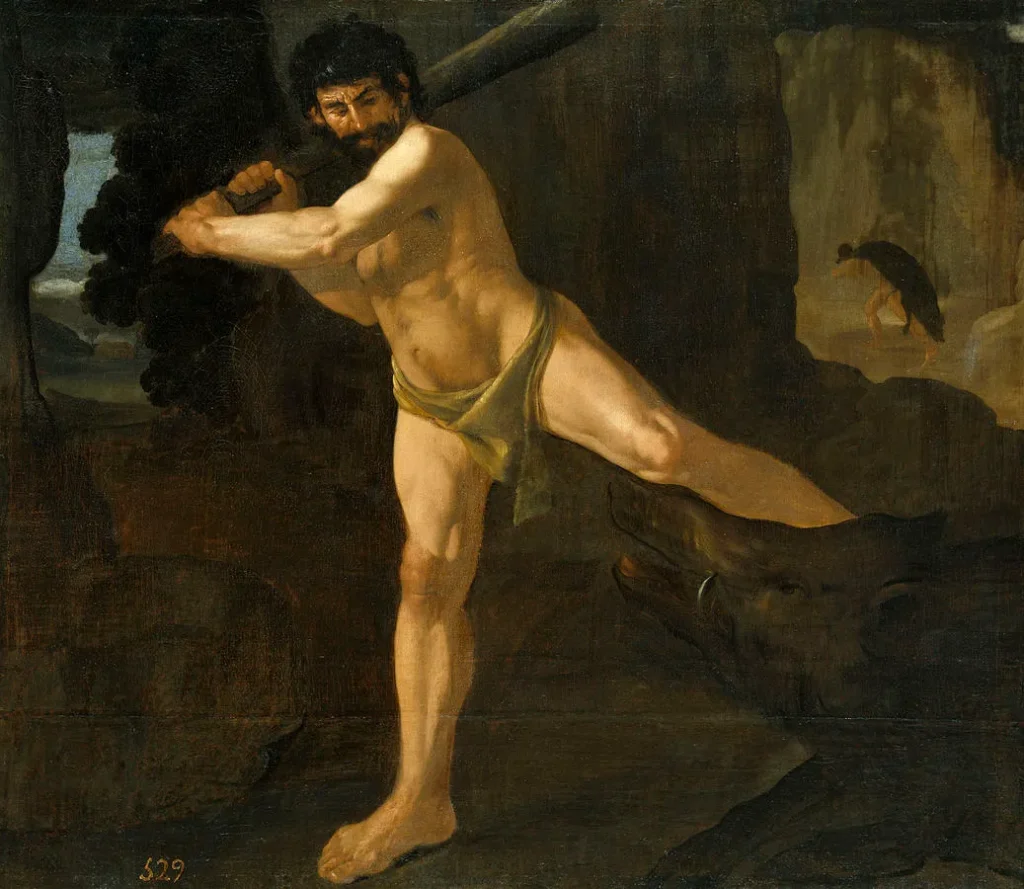
Capturing the boar alive
Heracles stalks the boar during a heavy snow when the wind covers sound and scent on Mount Erymanthos. The animal bolts from cover into a drifted ravine, and the crust gives way beneath its weight. Heracles leaps down while the boar flounders and throws a loop over the forelegs. He binds the hind legs in turn and pulls the limbs together with a pole to keep the hooves from tearing free. He fits a muzzle to stop the tusks and waits while the animal tires against the ropes. He checks that airflow is clear so the boar lives for delivery to the court. The outcome is a live capture, and the next step is the return to Tiryns for proof.
He lifts and secures the boar on a sled or pole carry with help from locals who watch the hunt. The path down the mountain is slow, and men clear ice from ledges so the load does not slip. Travelers see the bound animal and spread the story ahead of the party. Heracles keeps the ropes wet so they do not cut the skin and so he can loosen them quickly at the court. He reaches the plain and heads for the city where heralds wait to mark the tally. The boar’s size draws a crowd at the gate. The outcome is a visible success, and the next step is the king’s reaction recorded by artists.
Eurystheus hides in the jar
Heracles arrives at Tiryns and drops the bound boar in front of the forecourt where heralds and courtiers can see it. The animal thrashes and squeals, and the sound frightens many who have never stood near such a beast. Eurystheus sees the size and panic takes him, so he hides himself in a large jar while peering over the rim. The court laughs at the sight, and the scene fixes the pattern of a fearful judge ruling a stronger servant. Heralds mark the labor complete and order the boar taken away so the king can come out. Painters later turn this scene into a favorite image because it shows courage alongside official fear. The outcome is a counted labor and a deepening of the court’s rules for displays, and the next step is the task at the Augean Stables.
The reaction leads the king to require that some proofs be shown outside the walls or at a distance. This habit keeps him safe and limits risk to the court, but it also lengthens the work of presenting results. Heracles accepts the rule because he needs the tally and because open space suits large trophies. The crowd learns to watch proofs on fields near the city rather than inside the gates. This move changes how later tasks are staged and recorded. With the count updated, Eurystheus sends the next order at once. The outcome is a new display custom, and the next step is the bargain with Augeas.
Enjoying Spoken Past?
I created Spoken Past to share my love of history. I research, write and develop everything myself, and I want my articles and basic guides to remain free for everyone.
If you enjoy my work, please consider supporting Spoken Past with a small donation.
Fifth labor: Augean Stables
The bargain with Augeas
Heracles receives an order to clean the Augean Stables in a single day, which looks like a task meant to humiliate rather than to test courage. Augeas, king of Elis, keeps huge herds whose dung has piled up for years and now fouls the air and streams. Heracles visits the site and measures walls, channels, and nearby riverbeds before promising anything. He makes a private bargain with Augeas for a share of cattle as pay if he succeeds, which later matters for the count. He sees that men and carts cannot move enough waste in one day to satisfy the order. He plans to divert nearby rivers through the stable yard to wash the filth out at once. The outcome is an engineering plan and a risky contract, and the next step is to cut the channels and run the water.
Heracles breaks openings in the stable walls and digs channels from the rivers Alpheios and Peneios or another local stream depending on the version. He chooses a time when the flow is strong and the day is long so the rush can finish before night. He braces the cuts with timber so the walls do not collapse on workers or animals. When he opens the last barrier, water pours through the yard and scours the floor clean. He guides the outflow back into a channel that carries the waste far from fields and houses. By evening the stables stand clean for the first time in memory. The outcome is a completed job in one day, and the next step is to face the wage dispute and the tally.
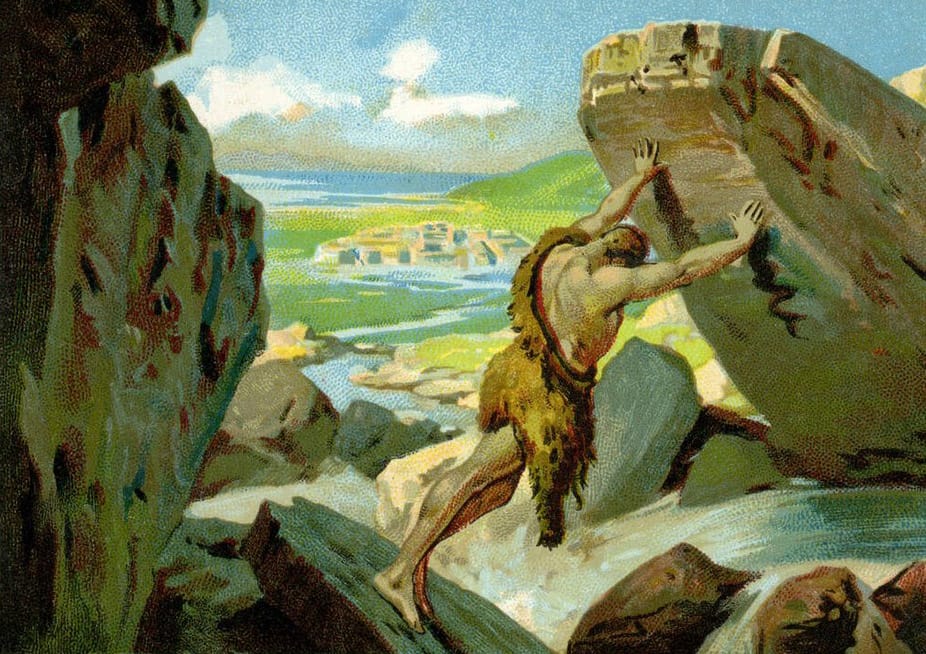
Diverting the rivers
Heracles supervises teams that cut channels from the river to the stable yard with shovels, picks, and levers. He marks a slope that will carry water in fast enough to move dung but not so fast that it tears down the walls. He stations men to watch for blockages and to push debris along with poles as the current rises. He times the breach so the highest flow hits during the heart of the day when light lets workers see hazards. The water rips through the yard, lifts years of filth, and sends it downstream into a prepared ditch. When the floor shows clean earth and stone, he closes the cuts and repairs the banks. The outcome is a clean site and restored channels, and the next step is to collect the agreed pay and report to Tiryns.
He shows Augeas the result and asks for the promised share of cattle, but the king refuses and claims the work was part of Heracles’ sentence. Witnesses say the bargain was real, and the case goes before local judges. The dispute sours the relationship and gives Eurystheus grounds to strike the deed from the list later. Heracles leaves Elis with anger at the broken word but with the proof that the work was done. He still needs the tally to reach twelve and must accept the court’s power over the count. The road back to Tiryns lies open once the arguments end. The outcome is a result without credit, and the next step is the formal ruling on the count.
Wage dispute and why it did not count
Augeas takes Heracles to court in Elis when the hero demands the promised cattle, and witnesses confirm that the king agreed to pay before the work began. The judges side with Heracles on the promise, but the dispute makes the bargain public in a way that later harms the tally. When Heracles reports to Eurystheus, the king announces that the labor will not count because wages were sought for a task done under atonement. The heralds record the reason and adjust the running count to exclude the stable job. This ruling serves the pattern of narrowing credit where possible without denying the public benefit. Heracles accepts the loss because only obedience brings him closer to cleansing the guilt. The outcome is a longer list still to complete, and the next step is the problem at the Stymphalian lake.
The disqualification teaches Heracles to avoid private bargains before tasks and to keep all terms within the court’s rules. It also shows onlookers how malice can travel through law without open injustice. Thebes and other cities still benefit from the clean stables because the rivers and fields recover. The court’s tally, however, moves by rules rather than by gratitude. With this case closed, Eurystheus issues the next order to clear deadly birds from a lake in Arcadia. Heracles prepares tools that fit marsh fighting rather than open plain. The outcome is a new lesson in rule keeping, and the next step is the arc of the Stymphalian Birds.
Sixth labor: Stymphalian Birds
Arcadian lake and man eating birds
Heracles reaches a lake in Arcadia where flocks of man eating birds roost in trees along a marshy shore. The birds have sharp beaks and metal-hard feathers that cut flesh when they dive. The ground around the lake will not hold men or dogs, which keeps hunters from approaching. The problem is not one beast but a swarm that frightens herders and travelers away from pasture and path. Heracles surveys the trees and reeds to find where sound will carry and where open sky will force the birds to rise. He decides to use noise to flush the flock rather than to slog into the bog with nets. The outcome is a plan built on sound, and the next step is to use bronze clappers to clear the air.
He obtains bronze krotala, which are clappers that make a harsh metallic rattle when struck. He climbs to a firm knoll near the roost and beats the clappers until the noise shocks the flock into flight. As the birds rise, he shoots some with arrows where the sky gives him clear lines and drives the rest away from the lake in a mass. The action breaks the flock’s hold on the shore because the birds lose the safety of the trees and the shelter of the reed beds. Herders test the meadows again once the quiet returns and find grazing safe. The lake’s edges open to people, and the paths around it fill. The outcome is a cleared shore, and the next step is to report to the court and move toward Crete.
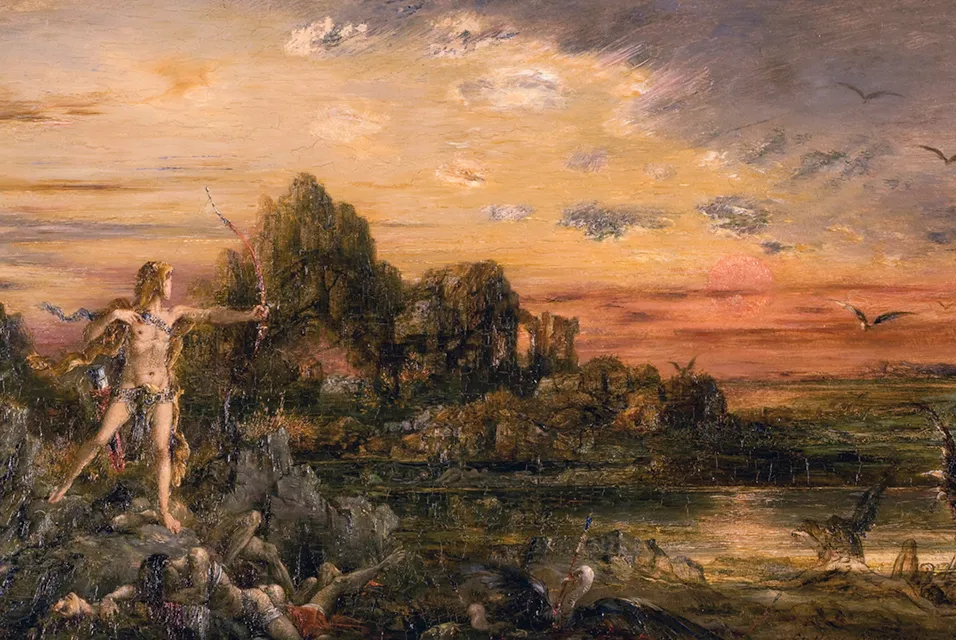
The bronze krotala and the flight
Heracles chooses a dry rise above the marsh and signals helpers to stay back while he works the clappers. He strikes the bronze pieces in fast bursts and long rolls until the sound keeps the flock from settling. The birds take to the air in tight groups and then spread as the noise continues to pound. He shoots into the flock where distance and angle make hits likely and stops when the mass moves off the lake. He keeps the noise long enough to shift the birds beyond their normal range so they do not return at dusk. He stops only when the shore is clear and the trees fall silent except for common calls. The outcome is a broken roost, and the next step is to confirm local safety and leave for Tiryns.
Villagers bring flocks back within days and report fewer attacks on shepherds and travelers. Heracles walks the shore with elders to show that mud has settled and that the edge can hold men again. He leaves no shrine here, but the place remembers a change that helps daily life. The heralds mark the labor complete when he reports the method and the result. The pattern of proof and tally continues to hold under rules that the king controls. With Arcadia quiet, the next command will send him over water. The outcome is a recorded success, and the next step is the journey to Crete that begins the bull story.
Aftermath in Arcadia
Heracles walks the shore of the Arcadian lake with village elders and confirms that the Stymphalian Birds have left the roost. Herders bring flocks back to the meadows and test the grazing while young men check paths that were unsafe during the attacks. Caravans try the ring road again, and boatmen edge through reeds that are no longer filled with cutting feathers. Women and children return to wash clothes at the inlet, which shows the change in daily life better than a pile of corpses would. Craftsmen repair fence lines where panic once opened gaps, and priests restore small wayside altars without fear of sudden dives. No shrine to Heracles rises here, but people repeat his name when they describe how the noise sent the birds away. The outcome is a safe lake with open paths, and the next step is Heracles’ report at Tiryns that closes the count for this labor.
Heracles presents the method and result to Eurystheus through the heralds at Tiryns and answers questions about tools, witnesses, and time. The king accepts the proof because the flock is gone and the shore is in use again, even though the tally has been strict in other cases. Scribes note that no payment was taken and no banned help was used, which keeps the record clear. Messengers carry the news to nearby towns so they can plan grazing and travel without delay. Arcadia settles into ordinary work, and the court turns to what comes next in the list. Eurystheus issues the new directive that sends the hero over water. The outcome is a marked success on the roll, and the next step is the voyage to Crete to deal with the bull.
Seventh labor: Cretan Bull
Heracles sails from the Argive coast to Crete after Eurystheus commands him to bring the island’s dangerous bull alive. He lands at Knossos and asks King Minos for leave to remove the animal that ravages fields and frightens farmers. Minos grants permission because the bull has brought ruin since it rose from the sea at Poseidon’s call and was not sacrificed as promised. Heracles inspects trampled fields, torn fences, and scattered herds so he can plan a direct pursuit. Farmers point to fresh tracks that cut across vineyards and olive groves on the north side of the island. The hero gathers rope and a muzzle because the task requires capture rather than a kill. The outcome is royal consent and a simple plan, and the next step is to meet the bull on open ground.
Heracles follows the trail toward the plains near Knossos where the bull returns to graze and drink. Sailors keep the ship ready at the harbor so a quick departure is possible once the animal is secured. Minos sends guides who know the safest lanes between fields so the chase does not endanger houses. Herdsmen clear bystanders from the path and close gates as the pair approaches the range. The scent and prints show a large, seasoned animal that gored men who tried to pen it. The plan is to close from the side, seize the horns, and twist the neck down without breaking bones. The outcome is a prepared pursuit, and the next step is the first encounter and the grapple.
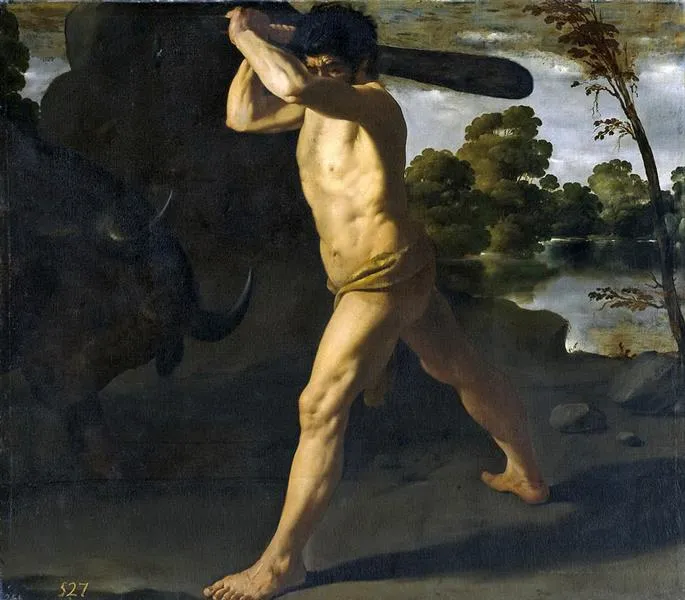
Arrival in Crete and Minos
Heracles presents himself at Knossos and states in the court of King Minos that he is under orders to remove the bull alive. Minos answers that the bull is a curse because he kept it instead of sacrificing it to Poseidon, and he gives full permission to take it away. Court officials provide the latest reports of damage, including ruined terraces and broken pens across the central plains. Guides show Heracles the water sources where the bull drinks at dawn and dusk. Farmers describe how they flee to high ground in daylight and bar doors at night when they hear hooves. The hero studies the tracks and fixes a route that keeps the animal in the open. The outcome is an agreement with the king and a map of the hunt, and the next step is to bring the bull to bay where the ground is firm.
Heracles walks the fields with a small team and checks wind and cover so the bull cannot scent him too early. He notes which stone walls can funnel a charge and which ditches might break a leg if the bull is driven too fast. He chooses a stretch of flat earth near a low wall where he can take the horns without being pinned. Minos’s men keep villagers back so no one is hurt if the beast turns. Runners carry word to the harbor to clear deck space for a living load. The hero loops a length of rope and keeps a muzzle ready for the moment of control. The outcome is a fixed ground for the attempt, and the next step is the grapple and binding.
Subduing and leading the bull
Heracles meets the bull on open ground near Knossos and steps forward low with his weight set for a side shift. The bull charges, drops its head, and aims to gore, and the hero moves aside, clamps both horns, and twists the neck down. The animal crashes to its knees and thrashes while Heracles holds the horns and drives his shoulder into the withers. The fight lasts until the muscles tire and the head stays pressed to the earth. He slips a rope over the forelegs and draws them in so the hooves cannot strike his knees. He binds the muzzle so the beast cannot bite or bellow the herd into panic. The outcome is a live capture on the field, and the next step is the slow march to the ship.
Heracles leads the bull along the shore with handlers keeping distance and villagers clearing a lane. Sailors spread sand and wet planks on the deck so hooves will not slip in the salt air. Ropes secure the animal at four corners, and water is set within reach to keep it calm. The sea stays steady for the crossing, and the crew keeps noise low to avoid fresh panic. The ship reaches the Argolid, and the party drives the animal off the gangway toward the road. Tiryns lies a short march inland where the court will mark the proof. The outcome is a safe delivery to mainland Greece, and the next step is the presentation to Eurystheus.
Release near Marathon
Eurystheus orders that the Cretan Bull not be kept near Tiryns and commands that it be released rather than stabled. Officials lead the animal away under guard and turn it loose in Attica near Marathon where open ground can hold a large beast. The bull roams the plain and frightens local farmers until later Theseus kills it, which removes the threat for that region. Heracles accepts the king’s decision because the tally requires only delivery, not a permanent pen. Heralds record the labor as complete with a living proof brought from Crete to the Argolid. Courtiers note that the hero kept the rules by capturing and not killing. The outcome is a counted labor with the bull set free, and the next step is to prepare for the long road to Thrace.
The release spreads the story of a man who led Poseidon’s bull by hand across the sea. Priests remark on the god’s link to the animal and the mercy shown in not killing it on Crete. Farmers talk about the value of removing danger without destroying what does not need to die. Rulers note that strong hands can obey limits when orders require restraint. The image of a tamer, not only a slayer, fits the rule set that governs the atonement. Messengers carry the new command that points toward Diomedes and his horses. The outcome is a clean close in the Argolid, and the next step is the march to the Mares of Diomedes.
Eighth labor: Mares of Diomedes
Heracles turns north toward Thrace under Eurystheus’s order to seize the man eating mares of King Diomedes. The route hugs the coast near the Black Sea where wind and rain slow travel and hostile scouts track strangers. Reports say the horses wear iron bits and are fed human flesh to make them savage. Grooms keep them chained near the king’s camp, and strangers vanish when they ask for lodging. The hero brings a small party because speed and surprise matter more than a large force. He carries ropes for binding and weapons for men rather than for horses, since the goal is control and removal. The outcome is a hard journey to a hostile shore, and the next step is to test the king’s temper and the camp’s guard.
Heracles camps within sight of the sea and studies the slope from the stables to the beach. He watches the guard change and learns when the gate stands thin for a short time. He marks a clear path to the shore so a herd can run without breaking legs. He assigns each companion a point on the line to keep the horses moving forward. He checks the chains and sees where a single blow will free each link without a long struggle. The plan is to move at night, shout to sow alarm, and use herd instinct to drive the mass downhill. The outcome is a timed raid, and the next step is the break from the pen.
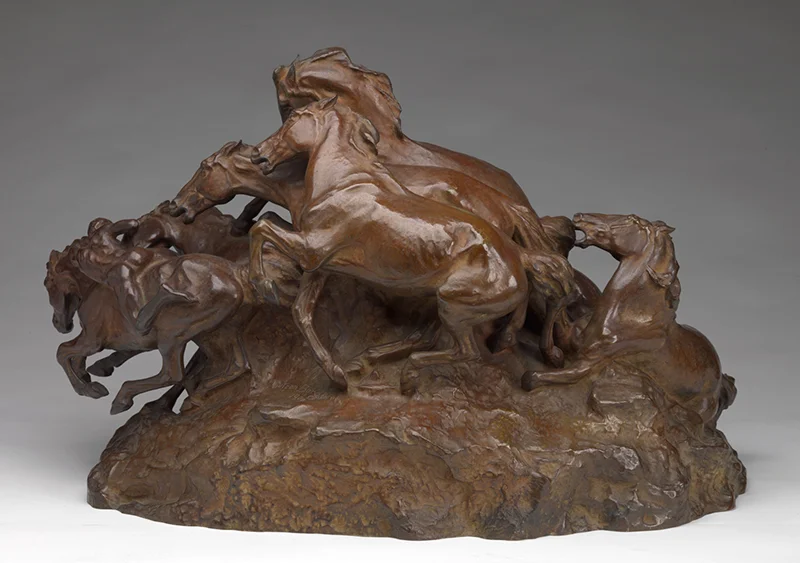
Thracian king and man eating mares
Diomedes rules the Bistones in Thrace and uses fear to hold power over his people and over strangers. He keeps the mares near his camp and feeds captives to them as a show of cruelty. Heracles arrives with a handful of companions and studies the stable, the number of guards, and the ground that leads to the water. He notes where chains fasten and which posts can be pulled or cut fast. He also watches the firelight pattern and counts how long each patrol leaves the gate light. He waits for full dark and a guard shift that leaves the pen most exposed. The outcome is a clear map of the risk, and the next step is the opening blow.
Heracles and his men cut the chains at once and swing the gates while shouting toward the shoreline to make the horses surge. Grooms wake and cry out as the herd bolts in a tight mass toward the beach. The hero runs with the front pair and uses the club to steer their shoulders left or right without striking the head. The rest of the herd follows the press and noise, which keeps them together on the slope. Flames rise behind them as campfires flare in panic, but the men hold to the line and do not stop. They reach the shore where the ship waits with a ramp and lines. The outcome is a herd at the water, and the next step is to face the king’s counterattack.
Abduction and fight with Diomedes
Diomedes rallies riders and runs to cut off the path to the ship when he hears the stable has been opened. Heracles hands the leading reins to a trusted companion and steps forward to block the king’s charge. The first clash is close and fast because the shore gives little room for horses to wheel. Heracles seizes Diomedes, throws him down, and breaks the rush by taking the leader out of the saddle. The king’s men falter when they see their master fall and begin to pull back in confusion. The hero signals his companions to keep the herd moving toward the ramp while he holds the beach. The outcome is a broken counterattack, and the next step is to load the horses and get to sea.
Heracles drags the stunned king aside so the horses will not trample him and forms a quick line to guard the loading. Men hold halters while others push from behind so hooves find the planks. The mares scream at the smell of blood, and the sound echoes off the water, but the handlers do not let go. The last line of riders breaks when the herd begins to fill the deck. Ropes fix the horses in place and keep them from biting one another. The ship pushes off before a second wave of fighters can reach the shore. The outcome is a clean escape with the herd aboard, and the next step is the sea voyage and the taming.
Taming and delivery
Heracles forces a steady routine at sea so the mares lose the edge that constant violence gave them. He keeps them moving in short circles on deck and gives measured feed and water at fixed times. He uses cloth over the eyes for the worst animals so noise and movement do not trigger lunges at handlers. The crew cleans the deck often so the smell of fear and blood will not keep the herd on edge. Day by day the horses accept the bit and stop trying to break the lines. By the time the coast of the Argolid rises ahead, the mares stand and breathe without panic. The outcome is a herd safe enough to land, and the next step is the delivery to the court.
Heracles leads the mares to Tiryns and presents them to Eurystheus in the forecourt with heralds watching. The king stays back and nods when he sees the iron bits and the marks of control. Scribes enter the labor in the tally and add a note that the animals arrived alive and under hand. Courtiers talk about the point of the deed, which was to end a cruel practice rather than to kill the herd. The story spreads as a warning that rulers who feed terror to their beasts will face a cleaner order. The ship is cleared and the lines are coiled for the next command. The outcome is a counted success, and the next step is the voyage to the Amazons for the belt of Hippolyta.
Ninth labor: Belt of Hippolyta
Heracles sails to the Black Sea coast to demand the war belt of Hippolyta from the Amazons’ lands. Eurystheus orders this prize because the belt marks the queen’s rank and will prove obedience as well as strength. The Amazons live in guarded settlements and patrol the shore with riders who shoot from horseback. Heracles brings gifts and interpreters so words can work before weapons. He studies harbor ground, beach approaches, and lines of tents so a parley can occur in daylight with space to withdraw. He keeps his party small to show he comes to talk first and to avoid provoking the camp. The outcome is a plan to negotiate in the open, and the next step is to request a meeting with the queen.
Heracles sends messengers and receives a time to approach the camp near the harbor palisade. He lines up gifts of fine cloth, metalwork, and a written statement of the order from Eurystheus. He explains to his companions that the aim is to gain consent and avoid a raid that would cost lives on both sides. Scouts watch the dunes, and sailors keep the ship ready in case the meeting fails. The party walks in with empty hands visible and with the gifts carried behind. Heralds announce him to Hippolyta so the discussion can begin without confusion. The outcome is a face to face parley, and the next step is the negotiation with the queen.
Meeting the Amazons
Heracles meets Hippolyta near the harbor palisade and states that Apollo’s oracle placed him under orders to bring her war belt to Tiryns. Hippolyta hears the reason, examines the gifts, and asks direct questions about the labors and the rule against pay. Heracles answers clearly that he seeks no wages and that the belt serves as proof of obedience, not plunder. Amazon leaders gather around their queen and weigh whether a peaceful grant avoids a larger fight. Some riders argue for a test of strength, while others prefer to show judgment before strangers. Hippolyta asks for time to consult her council and sets a second meeting for the next day. The outcome is a pause for council debate, and the next step is to hold a second parley with terms on the table.
Heracles returns at the set hour and finds Hippolyta ready to agree if honor and safety are preserved. She proposes to present the belt in the open with witnesses if no Amazon is seized and if the Greeks depart at once. Heracles accepts these terms because they meet the letter of his command and spare his men. Scribes note the points so no one can claim trickery later. Gifts change hands, and food is shared to mark the near agreement. Both sides prepare the square where the belt will be shown and transferred. The outcome is near consent under clear conditions, and the next step is to withstand interference that arises before the handover.
Deception and battle
Hera spreads a rumor through the camp that Heracles plans to abduct Hippolyta during the belt ceremony. Amazon sentries hear the false warning and call riders to arms, which turns a quiet square into a line of shields. Heracles sees spears lower and pulls his companions into a tight knot so no one is cut down by mistake. Arrows hiss from saddles, and the parley ground becomes a field of close fighting along the beach. The hero uses the club to break shields at the boss and strikes at horses’ flanks to unseat riders without killing more than he must. He moves constantly so the circle does not close around his men. The outcome is a battle forced by rumor, and the next step is to regain order and finish the task.
Heracles calls out that he will accept the belt and depart if the queen still wills it, and his words carry between pauses in the clash. Hippolyta rides into the press to stop the fight and commands her warriors to fall back from the square. The field quiets as wounded are gathered, and dust settles around trampled sand. Heracles holds position while his companions lift fallen men and return arrows to quivers. The queen faces the hero at spear length and signals that the agreement can still stand. Both sides accept that deceit, not treachery, caused the bloodshed. The outcome is a path back to terms, and the next step is the transfer of the belt and the withdrawal.
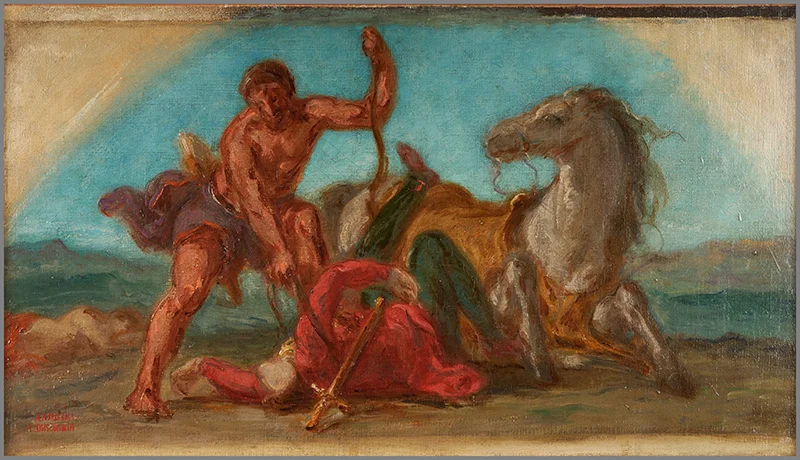
Gift of the belt and contested versions
Heracles receives the war belt from Hippolyta in the presence of councilors and heralds on the shore. Some sources say the queen fell in the earlier fight, while others say she lived to give the belt to stop further blood; this account follows the version where she lives and decides. Heracles thanks her, signals his companions to back away, and orders an immediate return to the ship. Amazon riders reform their lines and watch the party leave without pursuit. Sailors cast off as soon as all are aboard, and the ship heads south in a steady wind. The shore grows quiet behind them as the camp tends the wounded and restores order. The outcome is a clean handover under witness, and the next step is to present the belt at Tiryns.
Heracles lands in the Argolid and carries the belt to Eurystheus in the forecourt with heralds present. The king stands at a distance, hears the account of rumor and restraint, and accepts the proof as within the rules. Scribes record the labor as complete and note that talk, not theft, secured the prize. Traders later report that contact with the Amazons opens small exchanges along the route because the departure kept to terms. The court learns that speech backed by readiness can serve as well as blows when rules control the aim. With the belt tallied, the next order points west toward the red cattle. The outcome is credit without further conflict, and the next step is the march to the edge of Ocean.
Tenth labor: Cattle of Geryon
Heracles prepares to travel to the far west to seize the red cattle of Geryon from pastures near the Ocean. Eurystheus demands this herd to prove that the hero can reach the world’s edge and return with a living wealth. Few pilots know the route, so Heracles gathers guides, stores water, and marks repair tools for carts and gear. He plans for heat on plains, snow on passes, and long gaps between springs. Along the way he records safe coves and caves for shade so the return can follow known shelters. He raises boundary markers at a narrow land where cliffs face the sea, which later sailors call the Pillars of Heracles. The outcome is a prepared expedition, and the next step is the approach to the island pasture under guard.
Heracles reaches the western shore at dusk and watches the herd that grazes under armed watch. The wind blows from the west, nights are cold, and the sun drops into a bright band of water that marks the edge. He studies the guard’s rounds and the herd’s drinking pattern to find a weak hour. He sets a pre dawn strike so confusion, not slaughter, scatters the men and leaves the herd in his hands. He chooses the bow for the lord of the place and the club for men who stand in his way. The plan aims to break the head and drive the herd on a line toward sunrise. The outcome is a clear raid design, and the next step is the contact with dog, herdsman, and master.
Journey to the edge of Ocean
Heracles crosses hot plains slowly so carts and men do not fail before the hardest ground. He rests at midday to save the herd animals he will later need to move, and he marks springs with stones for the return. He climbs high passes and notes safe shelves for sleeping above flood lines. He records sea coves where boats can beach and where fresh water meets brackish pools. He plants a marker where the land narrows, and later people name them his pillars because they guide sailors home. He keeps a simple log of days without overloading his men with writing in the dark. The outcome is a mapped line to the west, and the next step is to scout the pasture and count the guards.
Heracles camps near the ocean strand and watches the herd’s habits for two nights to be sure of the pattern. He sees where the watch changes and where the dog ranges when it smells a stranger. He eats sparingly so he can move light before dawn and save strength for the return. He chooses a rise with open lines for arrows and fixes a path to the pen’s gate. He sets a signal for companions to move on the fence when the dog falls. He waits for the lightest gray before the first birds call. The outcome is a ready position before the strike, and the next step is to kill the guard dog and silence the herdsman.
Geryon Eurytion and Orthus
Heracles closes on the pen and kills Orthus, the two headed guard dog, with a single heavy blow as it charges from the gate. Eurytion, the herdsman, runs to stop the drive and fights with a staff and knife, but the hero overcomes him after a brief struggle. The noise brings Geryon, who has a strange form and carries weapons fit for a ruler of the place. Heracles chooses the bow because the distance favors a quick end before the club can reach. He shoots and strikes Geryon so the master falls and the men who remain scatter. The hero does not kill those who flee but turns to gather the herd while the shock holds. The outcome is a broken guard, and the next step is to form the cattle and begin the drive east.
Heracles opens the pen and pushes the cattle into a column with steady pressure and whistle calls. He keeps count of heads and marks the strongest bulls to hold the edges where cliffs or rivers press. He takes water at known springs and forces pauses when heat would break the herd. Thieves test the line at dusk, and he answers fast to keep fear from spreading among the drivers. He pays locals for fodder so the herd will not strip a village and turn goodwill into anger. Each day he moves at a pace that lets hooves harden without splitting. The outcome is a herd in motion, and the next step is the long return to Greece.
Herding the cattle back to Greece
Heracles drives the cattle across rivers by finding fords where the bottom holds and by moving small groups so the current does not break the line. He keeps bulls at the front when the bed is firm and cows first when calm leads the rest to step. He turns aside from canyons that echo too sharply because sudden sound can roll a herd into panic. He posts men on ridges to watch for raiders and uses the poisoned arrows when thieves press too close at evening. He takes narrow passes at dawn when wind is light and scent does not announce the herd from far away. He counts at night by tens to make sure no head is lost to cliffs or marsh. The outcome is a full herd at the border of Greece, and the next step is the handover to Eurystheus.
Heracles brings the cattle to Tiryns, and Eurystheus orders a sacrifice and then dedicates the herd to Hera to avoid keeping such a prize near the court. Scribes record the labor as complete and note that the drive covered great distance without breaking the count. Courtiers see the king’s fear under formality, but the rules are met and the tally grows. Heracles stands by as the rite is performed and says little because the aim is service, not gain. The men who helped are paid from stores rather than from the herd so the no wages rule stays clean. With the cattle gone, the next command points to the far garden in the west. The outcome is a finished labor, and the next step is the search for the Apples of the Hesperides.
Eleventh labor: Apples of the Hesperides
Heracles leaves Greece to find a hidden grove at the edge of the world where golden apples grow under guard. Eurystheus orders these apples to test whether wit and allies can do what force alone cannot. A sleepless dragon coils around the tree, and maidens called the Hesperides tend the place at dusk. Maps do not show the way, so the hero must gather bearings from sailors and hunters. He collects signs to follow, such as stars, river mouths, and scents the wind carries at evening. He keeps his gear light because long questions and sudden chances favor speed. The outcome is a plan that depends on guides, and the next step is to question those who know the sea.
Heracles seeks men who live by water and asks for word of a shape shifting elder who knows hidden paths. Sailors tell him of Nereus, who changes form when seized and will answer when held. Heracles finds the old one on a rocky shore and grips him through shifts of fish, fire, and beast until speech returns. Nereus gives him a route of signs to follow and a warning that patience and fairness will matter more than blows at the grove. The hero thanks him and marks the clues so he does not lose them in fatigue. He then moves along strange rivers and coasts where no city walls stand. The outcome is a set of bearings from the sea’s elder, and the next step is the inland path and the tests on the road.
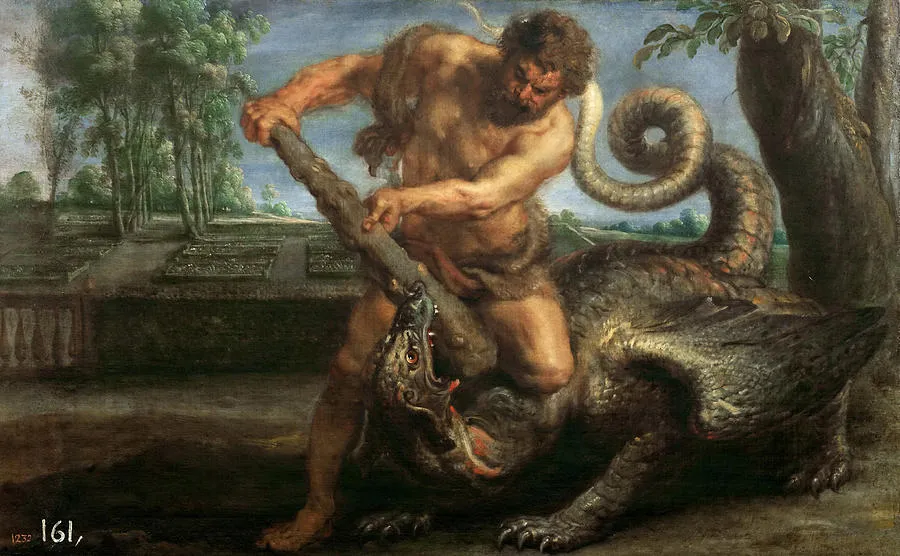
Finding the Hesperides and Nereus
Heracles holds Nereus on a rocky beach and demands directions to the grove that men cannot find by roads. Nereus changes shape to break free, but the hero keeps his arms locked until the old one yields. The sea elder lists stars to follow, rivers to taste for sweetness, and a wind that carries a floral scent at dusk. Heracles repeats the signs aloud and lets go only when he can recite them in order without error. He starts at night by the stars because the first line depends on a sky mark. He enters river mouths in daylight to test for fresh water and to ask shepherds about scents at evening. The outcome is a reliable route, and the next step is to walk the last miles by smell and quiet.
Heracles turns inland when the air grows sweet and the ground springs underfoot as Nereus described. He slows his steps and watches for tracks that are not human, including a heavy drag near tree trunks. He sees no walls but hears quiet voices at dusk that could be the Hesperides singing. He waits without calling so he does not startle guards who may shoot first at a stranger. He checks wind and keeps down slope of the voices so his scent will not reach the dragon. He readies words before weapons because the place is sacred and full of omens. The outcome is a careful approach to the grove, and the next step is the last trials before the tree.
Antaeus and other road deeds
Heracles meets the giant Antaeus in a stretch of sand where travelers pass between dunes and scrub. The giant forces strangers to wrestle and grows stronger each time he touches the earth. Heracles grips him and feels the surge when Antaeus’ feet find sand again. He lifts the giant off the ground, holds him in the air, and squeezes until the body slackens. The fight ends when strength cannot return through the earth, and the path opens for others. This bout teaches that thought must guide hands or raw power will fail. The outcome is a clear road past the dunes, and the next step is to keep using judgment where brute force tempts rash moves.
Heracles also finds Prometheus bound to a rock where a bird tears at him each day. He kills the bird with a single arrow, breaks the chain, and gives the Titan room to breathe. Prometheus speaks in thanks and points the hero to fresh signs that confirm Nereus’s directions. He warns that haste will ruin the last step because the sky’s weight moves only by agreement. Heracles listens and moves on without delay, carrying both lessons toward the grove. The road becomes a set of tests that prepare him for a bargain rather than a brawl. The outcome is guidance that favors mind with muscle, and the next step is the meeting with Atlas.
Atlas the burden and the apples
Heracles reaches the grove and asks Atlas to help because the apples lie within a watch that the Titan can evade. Atlas agrees if Heracles will hold the sky while he enters and gathers the fruit. The hero braces under the weight and locks his legs while the Titan walks away under the leaves. Time drags because the load shifts and never rests, and Heracles must breathe in short, even pulls. Atlas returns with the apples and then says he will carry them himself to Eurystheus, leaving the hero to stand under the sky. Heracles asks Atlas to take the weight for a moment so he can pad his shoulders against the strain. When Atlas lifts again, Heracles steps clear with the apples and ends the bargain. The outcome is the fruit in hand by a quick trick, and the next step is the journey back to Tiryns.
Heracles ties the apples in a secure sack and leaves the grove by the route Nereus gave. He moves faster without the sky and checks the signs as he crosses back over strange rivers and ridges. He keeps the sack close in crowded paths and avoids towns where talk could draw thieves. He reaches the Argolid and walks into the court with the fruit visible to all. Eurystheus sees the apples and marks the labor complete under witness. The court later returns the apples to the gods or to the grove depending on the version, but the tally holds. The outcome is a completed labor that honors wit and endurance, and the next step is the descent to Hades for the last trial.
Twelfth labor: Cerberus from the underworld
Heracles stands at a cave mouth that leads to Hades and prepares to bring Cerberus up alive under a rule that forbids iron weapons. Eurystheus orders this last task to prove that the hero can pass where no living man goes and return under guard. Priests instruct Heracles on rites that allow entry and exit without harm to the living community. He brings offerings for gods above and below and finds a guide who knows landmarks in the dark. He keeps his hands empty except for a rope because blades are not allowed against the hound. He steels himself to pass the dead without shouting or touching. The outcome is a lawful entry plan, and the next step is to perform rites and ask for leave.
Heracles follows the lower road through a cleft that locals say leads to the realm beneath. He moves past shadows that beg for help, and he bows without stopping because he cannot aid them under the terms. The air grows cold and still, and halls appear under a black roof at the center. The hero asks Hades and Persephone for leave to take the dog if he can do it by strength alone. The rulers grant permission on that condition because iron may not touch the beast. Heracles thanks them and walks toward the sound of chains and growls. The outcome is a clear grant under strict rules, and the next step is the grapple with Cerberus.
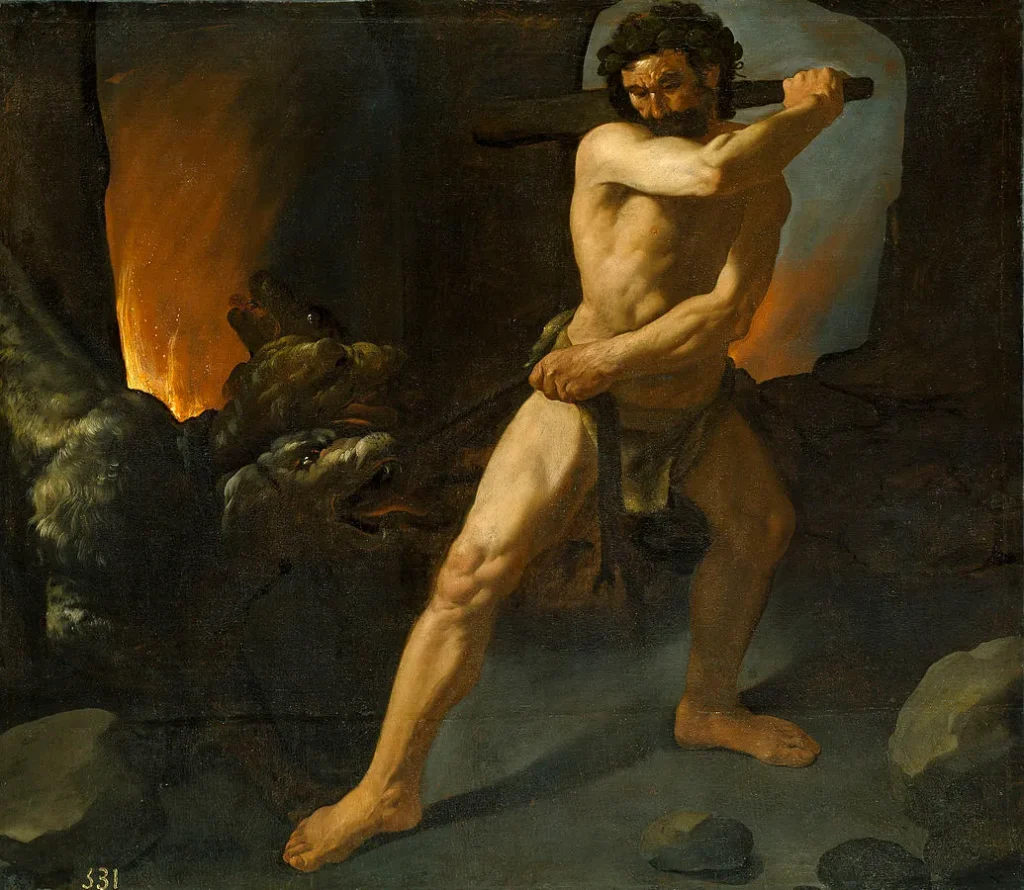
Rites and entry to Hades
Heracles offers sacrifice at the cave entrance with a local priest who knows the forms that please both gods above and below. He pours libations, burns grain, and promises to return the hound once the court sees it in daylight. He washes his hands in running water and stays silent for a set count before stepping into the dark. A guide walks with him as far as signs allow and then points to marks that the living can see even in dim light. Heracles repeats the marks to himself so fear does not make him forget. He keeps a steady pace and avoids cries that stir the dead to crowd the path. The outcome is a clean passage to the inner place, and the next step is to petition the rulers for leave.
Heracles reaches the palace of Hades and speaks his request while standing with eyes lowered and hands open. He states the rule that no iron will touch the dog and swears to return the animal once the tally is marked. Hades listens and grants the request on those terms while Persephone stands beside him. Attendants warn Heracles that the dog’s three heads strike at once and that the tail also wounds. The hero thanks them and wraps his rope for a chest hold rather than a neck noose. He turns and walks toward the kennel where Cerberus rattles chains in the gloom. The outcome is permission to act under oath, and the next step is the test without weapons.
Wrestling Cerberus without weapons
Heracles faces Cerberus in a dim hall and waits for the charge that will pull the chains free. The hound rushes with three mouths open, and the hero steps in and clamps his arms around the necks and chest in one lock. The dog thrashes and snaps at his forearms, and the tail lashes with a sting that tears skin. Heracles tightens the hold and forces the body to the ground by sheer pressure and balance. He slips the rope around the chest and forelegs so motion cannot break his grip. The fight lasts until breath slows and the heads cease to jerk at his face. The outcome is control of the hound, and the next step is the climb back to the daylight with the living proof.
Heracles hauls Cerberus toward the cave mouth and keeps the heads apart with the rope and his knee when sunlight stings the eyes. Men on the surface flee at the sight, and the hero calls for space so the animal does not crush anyone in panic. He keeps the dog clear of crowds and brings it to a field where heralds can witness safely. The rope burns his hands and arms, but he does not let go until the proof is made. Courtiers watch from a distance because the sight breaks nerve even among the brave. The hound gulps air and claws earth while the hero waits for the tally. The outcome is a living Cerberus above ground, and the next step is the display before Eurystheus and the return below.
Display before Eurystheus and return
Heracles stands with Cerberus in the forefield outside Tiryns where heralds of Eurystheus can see the hound in full light. The king peers from a safe place and gestures for the tally without coming near the chain. Scribes mark the labor as complete and read the rule that no iron touched the dog, which the witnesses affirm. Heracles nods and turns the animal back toward the cave as promised in the oath. He leads the hound below, loosens the rope in the dark, and steps back as it returns to its place. He climbs alone to the surface and breathes night air that feels like release after heat and pain. The outcome is a final proof accepted by the court, and the next step is the life that follows the sentence.
Heracles receives no crown or feast at the end because the aim was cleansing, not reward. Companions still treat him with respect because he obeyed orders that most men could not bear. Priests declare that the stain is washed because the rule of Apollo was kept from first order to last proof. Eurystheus retreats from the field with relief that the long test is over. Scribes close the list of labors and store it with other records of the court. The people speak of the deeds in plain terms that name places, dangers, and outcomes. The outcome is a closed atonement, and the next step is his work on the road beyond the labors.
Deeds after the labors
Heracles continues to travel after the labors and answers calls from cities and farms that lack defenders. He breaks sieges when tyrants starve towns and then leaves once the gates open and food moves again. He punishes rulers who prey on neighbors by striking fast and forcing terms that restore trade. He repairs temples that war left roofless so rites can resume and fear can fall. He cuts steps into passes and clears rock from roads so carts do not topple and men do not fall. He marks springs and ferries so travelers can plan safe routes. The outcome is a spread of local improvements, and the next step is to describe how he deals with unjust kings and lawless bands.
Heracles decides which fights to take by asking who gains and who pays, and he avoids wars that only shift harm from one town to another. He chooses high ground at dawn when he must strike and uses the bow to break a charge before the club finishes the work. He gives back control to local councils after a victory because long rule is not his aim. He keeps his party small and loyal so food and pay do not burden the poor who host him. He leaves markers behind so others can follow safe paths without waiting for him. People start to name fords, stones, and clearings after him because the places become useful again. The outcome is a reputation for practical help, and the next step is to list conflicts with rulers and their outcomes.
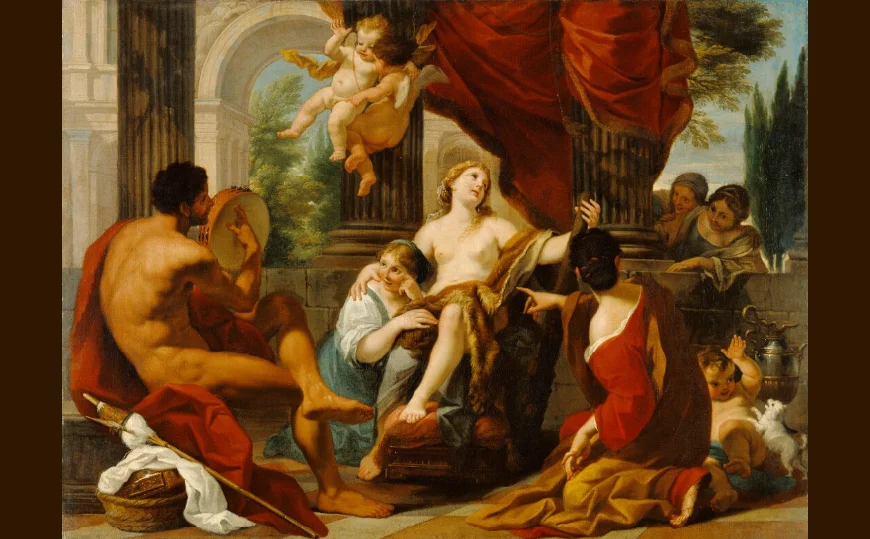
Conflicts with kings and cities
Heracles confronts kings who raid neighbors and refuse fair terms when warned by envoys. He strikes quickly to break their power with the least harm to farmers and herders. He climbs to ridges before daylight and uses arrows to thin guards before closing with the club. He accepts surrender when it saves lives and insists on returning stolen goods to the people they came from. He refuses to take thrones because he does not want to replace one fear with another. Cities reopen markets and roads once the attackers lose nerve and withdraw. The outcome is restored local order, and the next step is to show how he leaves lasting aids along his routes.
Some rulers accept a warning and change policy because they see the cost of stubborn pride. Others ignore it and fall within months when their men desert or their walls crack under hunger. Rumor of the hero’s approach breaks smaller bands so they scatter before he arrives. Traders can move again because tolls fall and ambushes fade along the main lines. The pattern repeats in valleys and on coasts where news travels faster than carts. The record ties his name to releases from fear rather than to long occupation. The outcome is a string of short campaigns, and the next step is the founding touches that remain after he passes.
Founding tales and way stations
Heracles leaves practical markers along his roads so others can travel safely after he moves on. He clears springs, stones them in, and sets low walls so animals cannot foul the water. He fixes ferries with ropes and landing planks so carts do not slide and oxen do not drown. He cuts steps into narrow passes and piles loose rock into stable shoulders where cliffs threaten wheels. He sets simple pillars as guides where paths split so strangers can choose the safer lane. He asks locals to keep these places in repair by sharing the work and the benefit. The outcome is a network of way stations, and the next step is how memory and worship grow from these aids.
Villagers sometimes place a small altar by these works to mark the change and to teach children who made the road safe. Travelers leave oil, bread, or a coin to thank the helper who is not present to hear the words. Guides point to the pillar and retell the acts so maps fill with names that recall the work. These spots make trade faster and reduce the risk that one broken axle will starve a settlement. Shrines grow beside some sites when success repeats and fear lifts for good. The dotted line of markers turns into a route that merchants can trust. The outcome is durable improvement tied to a name, and the next step is the circle of companions and kin who help him keep moving.
Companions and sons
Heracles gathers a core of companions who prove steady under orders and brave without showing off. He assigns tasks that fit each man’s skill, such as scouting, cart repair, archery, or talks with elders. He pays shares fairly after a job so loyalty rests on justice as well as on fame. He teaches by showing grip, stance, and timing rather than by long speeches. He expects silence at night, clean gear at dawn, and truth in reports after a march. These habits build a small unit that can move fast and leave little trouble behind. The outcome is a reliable band, and the next step is to show how family lines spread his name after him.
Heracles fathers sons in several regions, and local councils often grant them land or small commands because of his record. These sons guard passes, keep ferries honest, and settle disputes before fights break out. Their names enter city lists as founders or early protectors where they hold power. Blood ties make a loose chain across valleys and islands so news and aid move more quickly. The network holds after the father passes because the works and the habits remain. People treat the name as a pledge that strength will serve public order. The outcome is a scattered family of helpers, and the next step is the marriage that draws him into the story of Deianira and Nessus.
Deianira Nessus and the fatal gift
Heracles settles for a time in Calydon and marries Deianira, who is known for judgment and steady speech. The marriage eases the constant travel and brings order to camp and stores. The couple moves through borderlands where rivers, tolls, and petty rulers still test any party on the road. Heracles keeps promises where he can and avoids ties that would trap the house in long feuds. Deianira manages people and goods so there is food, salt, and clothing for winter routes. Each river crossing still carries risk because flood and theft can ruin any plan. The outcome is a strong household on the move, and the next step is the event at the river Euenos.
Heracles keeps the family together on journeys, but swollen streams force choices that delay or divide a caravan. Local guides help when banks wash out and when ferries lack ropes. The party waits for levels to drop more than once so carts can cross without loss. These pauses add strain to plans that depend on quick trade and safe passage. Deianira remains calm under delay and watches for those who might exploit a halt. The road holds until a centaur offers help that turns into harm. The outcome is a setup for the encounter with Nessus, and the next step is the crossing that changes the couple’s life.
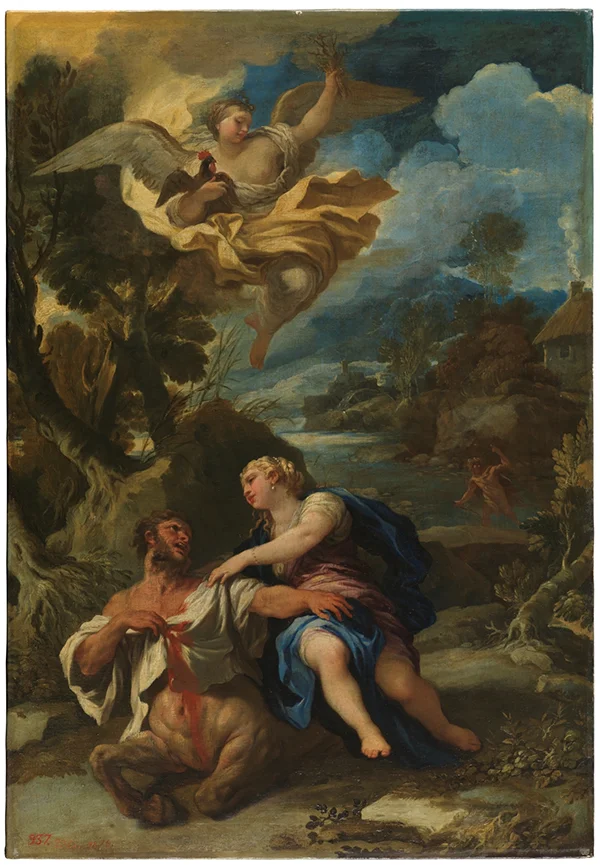
Marriage to Deianira
Heracles marries Deianira in Calydon to join two strong houses and to anchor his life after years of service. The wedding brings allies who can feed and shelter his party when work calls him near their lands. Deianira speaks plainly even when truth cuts, and Heracles values her counsel because hard tasks taught him to listen. The pair balances force with prudence by dividing roles between field and store. Messengers come and go with requests for help, and the couple weighs each one by cost and gain. The camp runs with order because Deianira manages grain, oil, and cloth while Heracles handles guards and routes. The outcome is a working partnership, and the next step is the dangerous river crossing that tests their luck.
The marriage adds obligations that Heracles tries to meet without trapping the house in endless war. He refuses vows that would draw his family into blood cycles he cannot control. Deianira keeps records of what is given and what is owed so no one can claim a debt that was never promised. The pair’s discipline keeps the caravan safe in rough country where a stray word can spark trouble. Friends see a kinder man who still acts fast when danger appears. Enemies see fewer chances to provoke him into mistakes. The outcome is stability that invites envy, and the next step is the meeting with Nessus at the ford.
The river crossing and the centaur
Heracles reaches the river Euenos with Deianira when floods make the current too strong for a simple wade. The centaur Nessus stands by the bank and offers to carry Deianira across for a fee because the ford runs deep. Heracles agrees to swim beside them to keep sight of his wife from bank to bank. Halfway over, Nessus turns the favor into an assault and tries to take Deianira by force. Heracles reacts at once by drawing a Hydra poisoned arrow and shooting the centaur from the far bank. The shaft strikes, and Nessus staggers to shore and collapses as the river moves on. The outcome is a rescue by a deadly shot, and the next step is the deceit that plants the seed of disaster.
Nessus uses his last breath to tell Deianira that his blood will work as a charm to keep Heracles’ love. He tells her to save it in a cloth and to use it if fear or jealousy rises in later years. Deianira believes the words because fear and love often run close in a dangerous life. She keeps the cloth hidden among her things and says nothing as the party moves on. Heracles does not know of the gift and sees only that the threat is past. The road seems safe for a time while the poison waits in silence. The outcome is a hidden trap inside a trusted house, and the next step is the day the cloth is used.
The poisoned shirt and the agony
Heracles prepares a sacrifice on a later day, and Deianira hears rumors of a rival that stir fear for her marriage. She takes the cloth stained with Nessus’s blood and soaks a clean shirt, believing it will preserve her husband’s love. She gives the shirt to a messenger with a quiet request to present it before the rite as a token from a wife. Heracles puts on the garment near the altar, and the warmth of the fire draws the Hydra’s poison to life in the fibers. The pain explodes across his skin and into his flesh as the venom burns deeper with heat. He tries to tear the cloth away, but it sticks and rips skin as it comes. The outcome is a wound that no remedy can heal, and the next step is the last climb he will make.
Heracles calls for open air and space because water and oil will not cool the burning that crawls under his skin. Men nearby try to help, but no grip can pull the shirt free without tearing more flesh. He understands the source when the smell and the burn match the Hydra’s blood he once used on arrows. He sends for a litter and points to a mountain he can see beyond the plain. He asks to be carried there because he will not lie rotting in a town he helped defend. The company gathers wood in silence while he speaks few words. The outcome is a decision to end the pain on Mount Oeta, and the next step is the building of the pyre.
Death on Oeta and the end of the mortal life
Heracles chooses Mount Oeta as the place to end his mortal pain because height and wind make a clean fire possible. Friends carry him to a ledge and stack timber while he lies still and gives short orders. He speaks calm thanks to those who came and asks them to stand back when flame takes hold. He refuses weeping because the point is to end poison, not to beg for more hours of hurt. He lays on the wood and waits for someone brave enough to light the pile. Men hesitate because the act feels like killing even when begged by the dying man. The outcome is a pyre built and a pause of fear, and the next step is the arrival of Philoctetes with the bow.
The wind rises as the sun lowers, and the ledge looks out over roads and fields he once cleared. Companions argue softly about duty and pity while smoke from trial fires shows the wood is dry. The hero does not cry out, and the waiting tests courage more than battle ever did. The mountain holds its silence until one friend steps forward with resolve. This moment joins loyalty to need and turns grief into action. All know that the deed cannot be undone and that the last proof will follow. The outcome is a vigil on a high place, and the next step is the lighting of the pyre.
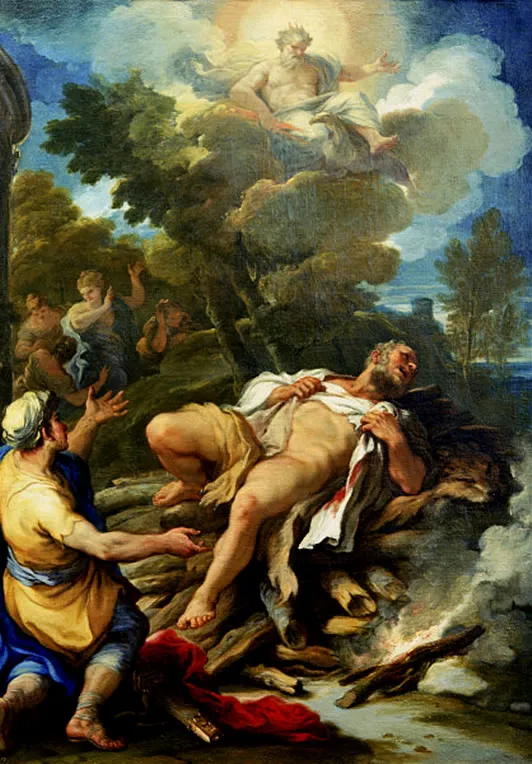
The pyre and Philoctetes
Philoctetes takes Heracles’ bow and lights the pyre on Mount Oeta when others cannot make their hands obey. He acts from pity and respect and accepts the blame that some might speak later. Heracles thanks him for courage when many froze and gives him the bow and arrows as a gift for future need. The flames rise, the wind carries sparks, and the pain that tore his body breaks and fades. Men stand back while heat forces them from the ledge and while smoke hides the face they knew. The fire settles as night comes on, and the crack of the last timbers marks the end. The outcome is an end to suffering and a transfer of a weapon, and the next step is the surprise that no body remains on the ash.
Companions guard the place until only embers glow and then step forward to lift what they expect to find. No body lies on the ash, and the empty bed of coals stuns the men who watched the flame. Word runs down the mountain to towns where people gather at shrines to speak his name. Priests say that signs foretold such an end, and elders repeat phrases they heard long ago. Children hear the story that a man can pass from pain to honor without a corpse left behind. The mountain becomes a place of memory and games in later years. The outcome is a mystery at the pyre, and the next step is to weigh old oracles against what was seen.
Oracles fulfilled by his death
Witnesses recall words spoken long before that said the hero would end his mortal life on a high place by fire. They remember that a friend would gain a weapon of great fate and that the end would lift a stain that poison had laid on him. The scene on Oeta matches the sayings closely enough that doubt falls away. Priests gather fragments of oracles and set them beside accounts from the ledge. The fit of line to event makes believers of men who once mocked seers. Songs begin to change their last verses to reflect what the mountain showed. The outcome is a public sense that fate has finished its work, and the next step is to honor the hero with rites.
Poets spread the story that a life of service closed without a body and that the pattern matches signs the gods gave in older days. Calendars mark a new day for games and offerings below the mountain. Elders speak of fairness and strength together as the reason the end rose above ordinary death. Men who watched teach boys to tell the story without boasting or fear. Women ask for steadiness in raising children who will serve their towns. The line now turns from mortal toil to honor among the gods. The outcome is acceptance of a turning point, and the next step is the civic honors that follow.
Honors given after the burning
Cities around Oeta set small altars and carve scenes from the labors on stone panels. Magistrates declare games on a plain below the slope where runners and wrestlers compete each year. Prizes include simple cups and wreaths that recall the work rather than wealth. Priests keep fires and teach the story to boys so memory stays firm and useful. Travelers who saw the pyre speak at these rites and describe the man’s voice, stride, and steady eyes. Children hear and fix the images in their minds for later telling. The outcome is a clean public cult of memory, and the next step is the claim that the hero now lives with the gods.
Visitors add their own small marks to stones around the field so later families will know who stood there. Farmers add a day of thanks when harvest comes in safely because roads stayed open under his name. Armored men renew vows to hold city walls when sieges come because courage can be learned. The mood is not heavy with grief because the death ended pain and opened honor. Judges use the story to show that strength should serve law and neighbors. The rites grow without lavish expense because the point is steadiness, not display. The outcome is a durable civic memory, and the next step is the tale of his reception on Olympus.
Apotheosis and worship
Heracles rises from mortal pain into honor among the gods after the fire on Oeta leaves no body. Poets say a clear wind opened a path through clouds, and priests accept that sign as welcome rather than theft. The new life begins not by effort but by consent from those who rule above. The tale moves from roads and courts to feasts and councils where immortals sit. Worshipers on earth keep asking for help, but they now treat him as more than a strong man. The change does not erase the deeds; it seals them with a different rank. The outcome is a shift from hero to godlike honor, and the next step is the formal acceptance on Olympus.
Communities build simple shrines at first and later larger temples where carved stone tells the labors in order. Merchants and sailors add him to lists of powers they ask when storms rise. Wrestlers and soldiers call on him for balance and steady hands when contests begin. Farmers link him to rain at the right time and to strong backs in harvest. The new worship grows out of the old road markers and games rather than replacing them. The line of service continues in a different form. The outcome is active worship across Greece, and the next step is the story of his seat among the immortals.
Acceptance on Olympus
Heracles takes a seat at the feast on Olympus and faces gods who judge strength and fairness as the reasons for welcome. Zeus speaks as father, and the others accept that mortal pains and tests have refined the newcomer. The gathered gods acknowledge the labors, the atonement, and the last scene on Oeta as marks of fitness. The seat confirms that service to people on earth can lead to honor above. The hero does not forget those who called to him from roads and fields when he was a man. He now listens when prayers rise from shrines that bear his name. The outcome is a granted place in the upper court, and the next step is to describe how help arrives from above.
Help now arrives as weather that breaks at the right moment for sailors and as walls that hold in a siege for towns. Wrestlers feel hands and balance return in a bout when they call his name before the grip. Farmers see rain fall in due measure, and builders feel courage to hang from heights over new passes. Priests teach that these aids come because strength once lived under law and now answers lawful need. Worshipers thank by keeping promises and by helping neighbors as he did. The signs keep his presence close though his hands no longer strike beasts. The outcome is a living pattern of aid, and the next step is the marriage that seals peace with Hera.
Marriage to Hebe and reconciliation with Hera
Hebe brings a cup to Heracles on Olympus, and the gods agree to a marriage that fixes his place in the divine house. The union signals youth restored and strength made calm in service rather than in strife. Hera accepts the match and ends the old quarrel that began with jealousy and trials on earth. She recognizes him as son by fate and justice rather than by broken vows alone. Zeus grants the bond, and the hall sees peace where rivalry once stood. The smile that follows eases fear among those who worried about strife above. The outcome is reconciliation in the upper halls, and the next step is the spread of quiet confidence below.
The wedding draws gods and chosen guests, and songs praise steadiness joined to courage after long tests. Heracles puts the club aside as a sign that blows are no longer his first answer. He takes up a role that protects cities through signs and fair weather rather than through killing. Hera’s shift from enemy to ally closes old wounds that stories kept fresh for years. Priests on earth tell the change to show that bitterness can end when justice is met. The peace above steadies life below by removing fear of fresh anger. The outcome is harmony in the divine family, and the next step is the growth of hero cults and places of worship.
Hero cults and places of worship
Communities across Greece build hero shrines for Heracles where roads cross, springs flow, and markets gather. Some places keep simple altars of stone where oil and bread mark thanks after safe travel. Other towns raise temples with carved scenes of the labors on metopes so children can learn the order. Priests tend fires, and boys hear the rules that strength must serve law and neighbors. Athletes swear oaths before games and ask for steady hands, clean lungs, and courage to match skill. Merchants leave gifts after voyages that end in safe harbors. The outcome is a broad network of worship tied to daily work, and the next step is the local forms that suit each trade.
Fishermen pour wine on the beach before launch and ask for a wind that fills nets without tearing lines. Builders set a small stone with his sign in new walls so crews remember whose strength held passes open. Mothers ask for strong children and safe returns when fathers march for the city. Veterans pray for steady hands and calm minds when bad dreams wake them after war. Each place shapes the rites to match its needs, but all keep the point that power should aid the common good. The name of Heracles remains a living pledge in towns that use roads, water, and walls he once helped secure. The outcome is lasting devotion that teaches service, and the next step is to keep telling the story with clear causes and results.
Frequently Asked Questions
Is there a difference between Heracles and Hercules?
Yes. Heracles is the Greek name and fits Greek places, gods, and customs. Hercules is the Roman name and appears in Latin texts and Roman art. The two names point to the same hero, but Roman authors sometimes change details to fit Roman values. Modern English uses both names in books and museums. When you read, match the name to the culture of the source you are using.
Was Heracles a god?
He begins as a mortal hero in Greek stories. After his death on Mount Oeta, many accounts say he is received among the gods and honored on Olympus. Greeks then worship him both as a hero at local shrines and as a god in some places. This mixed status is common in Greek religion. It shows how public honor can rise from human deeds to divine rank.
How do you pronounce Heracles and Hercules?
Heracles is said HEH-rah-kleez, with the stress near the first vowel. Hercules is said HER-kyoo-leez, which follows the Latin spelling. You will hear both in English. Scholars often use Heracles when discussing Greek sources. Museums may switch between the two depending on the artwork’s culture.
Is Heracles a real historical person?
Ancient Greeks treated him as a figure from the distant heroic age, not as a citizen you could date in a city record. His acts explain place names, shrines, and customs across Greece and beyond. Poets and artists used him to teach values like courage, endurance, and public service. Historians read these stories to learn how Greeks thought about order and justice. There is no firm evidence that he was a single historical individual.
What symbols identify Heracles in art?
Look for the lion skin worn as a hood and cloak, a heavy wooden club, and sometimes a bow with a quiver. These items mark him even when scenes vary. Artists add other signs like a steering rudder, a bull, or the three-headed dog to show specific deeds. In Roman works, the same symbols usually appear with the name Hercules. These markers let viewers read the scene without text.
Why do some sources say twelve labors but argue about the list?
Ancient writers did not all agree on counting rules. Some excluded tasks because the hero took pay. Others excluded tasks because someone helped more than allowed. Later authors settled on twelve as a full set that matches ideas of completeness. This is why outlines can differ while the number stays the same.
How did Roman writers change the Greek hero when they used the name Hercules?
Roman authors kept the famous feats but tied them to Roman places, virtues, and rulers. They praised discipline, civic duty, and victory that brought order to the state. Temples and triumphs used Hercules as a model of strength that serves law. The changes reflect Roman goals while keeping the core figure.
What virtues did Greeks see in Heracles?
They praised endurance under long trials, obedience to lawful command, and aid to communities in need. They valued practical skill, not just force. Stories show him clearing roads, fixing passes, and honoring agreements in public view. These acts teach how strength should protect households and cities. The hero stands as a worker for order, not a mere fighter.
Did Greeks worship Heracles, and how was that different from telling stories about him?
Yes. Storytelling entertains and teaches, but worship is public ritual with rules. People built altars, kept fires, and held games in his honor. Sailors, athletes, and soldiers asked for steady hands, fair weather, and courage. Shrines often stood by roads, springs, and markets where his help felt close to daily life.
What festivals or athletic ties did he have?
Cities held local games that honored him with running, wrestling, and strength contests. Athletes swore oaths to compete fairly and sought his aid for balance and breath. Winners took simple prizes like wreaths and cups. These events kept his memory tied to training and civic order. They also taught boys the link between effort and fair rules.
Why is he linked with the Pillars near the Strait of Gibraltar?
Greek and later Roman writers placed markers at the narrow land in the far west where the sea meets the ocean. They called them the Pillars of Heracles or Hercules to mark the edge of the known world. The link turns a hard journey into a lasting guide for sailors. It shows how myth explained geography and travel. The name stayed on maps for centuries.
Are there links between Heracles and constellations?
Yes. Some traditions connect him to the Nemean Lion and other sky figures by telling how deeds became stars. The Milky Way is sometimes explained by a story involving Hera’s milk and the infant hero. These tales fit Greek habits of reading the night sky as a record of notable acts. They help sailors and farmers fix seasons and routes. They also give moral meaning to regular lights above.
What should I read first if I want primary sources?
Start with selections in English translation from Homeric Hymns, Pindar’s odes, and Euripides’ plays for Greek views. Add Apollodorus’ Library for a compact summary of myths. For Roman views, read Ovid and Seneca for vivid episodes and tone. Museum catalogs help match texts to artworks you can see. Choose editions with notes so place names and customs are clear.
How is Heracles connected to other heroes like Theseus?
Stories often cross paths to show shared values and regional ties. Theseus represents Athens and order in Attica. Heracles ranges wider and brings order to many places. Linking them lets writers compare local pride with broader help. It also explains how different cities claimed parts of a common heroic map. The overlap strengthens each city’s identity without erasing the other.
Further reading
- Apollodorus, Library 2.4–2.7 (Perseus): primary source for the Labors with Greek/English text and built-in tools.
- Theoi Project: Herakles: gathers passages from many ancient authors, plus images, so you can compare versions fast.