

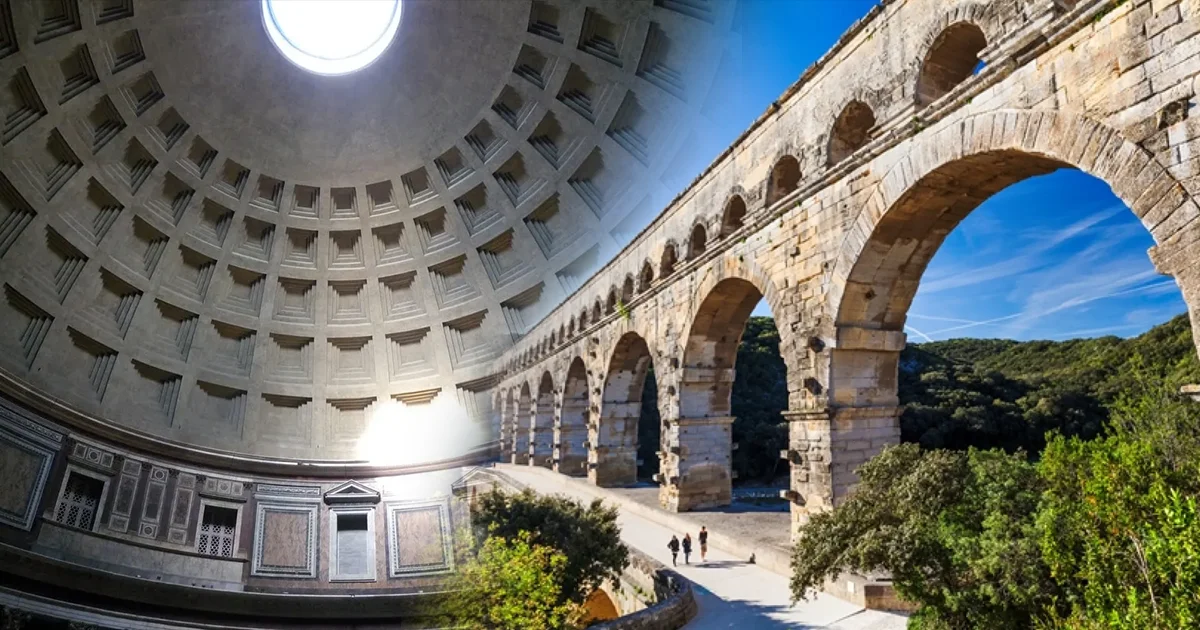
Roman engineers transformed the ancient world through technological breakthroughs that modern society still relies upon today. These innovations addressed practical problems with elegant solutions, combining mathematical precision with architectural ambition. From waterproof concrete to underground heating systems, Roman innovations demonstrate an engineering sophistication that would remain unmatched for over a millennium.
1. Concrete That Lasted Millennia
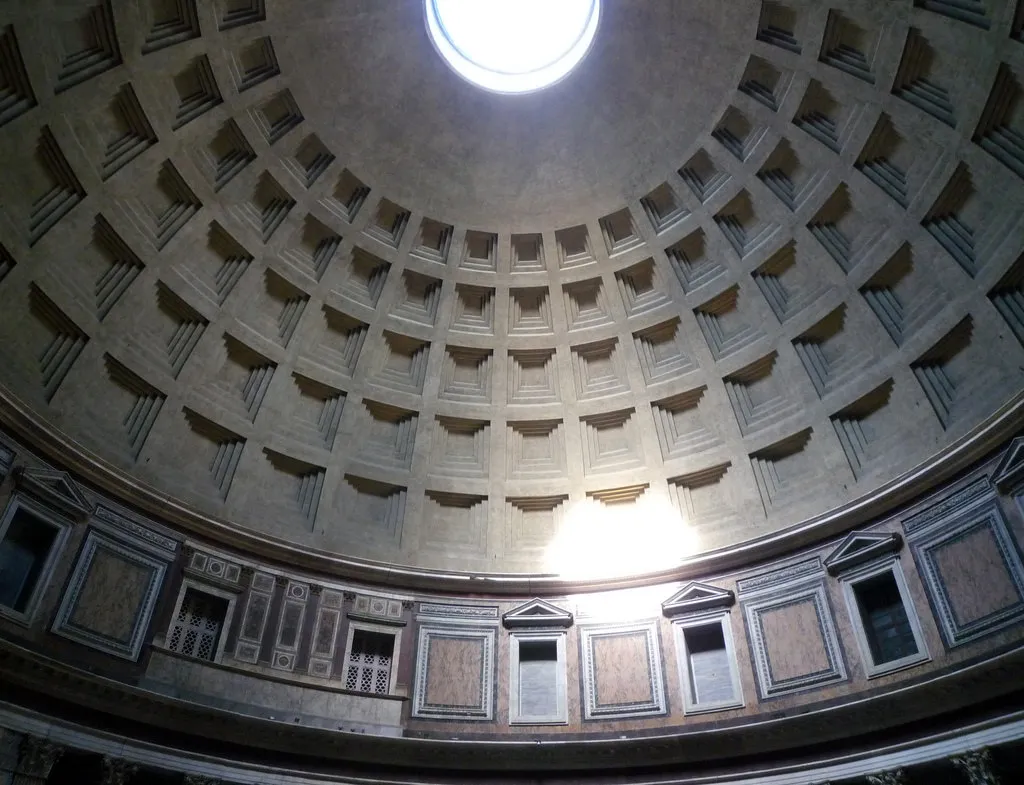
Roman concrete revolutionized construction through a unique mixture of volcanic ash, lime, and aggregate materials. Unlike modern concrete that deteriorates underwater, Roman concrete actually strengthened when exposed to seawater. The Romans called their concrete opus caementicium, and it enabled structures of unprecedented scale and complexity.
Engineers mixed volcanic pozzolana from the Bay of Naples with quicklime and rock fragments to create this remarkable material. The Pantheon’s massive dome, completed under Hadrian in 126 AD, remains the world’s largest unreinforced concrete dome at 43 meters in diameter. Recent research revealed that lime clasts within Roman concrete possessed self-healing properties, allowing cracks to reseal over centuries.
The hot-mixing technique Romans employed created reactive calcium compounds that filled fissures as they formed. This innovation explains why structures like aqueducts and harbor installations survived two thousand years of weathering. Roman concrete contained larger aggregate pieces than modern versions, requiring it to be laid rather than poured, yet this composition proved far more durable.
2. Aqueducts Delivering Fresh Water
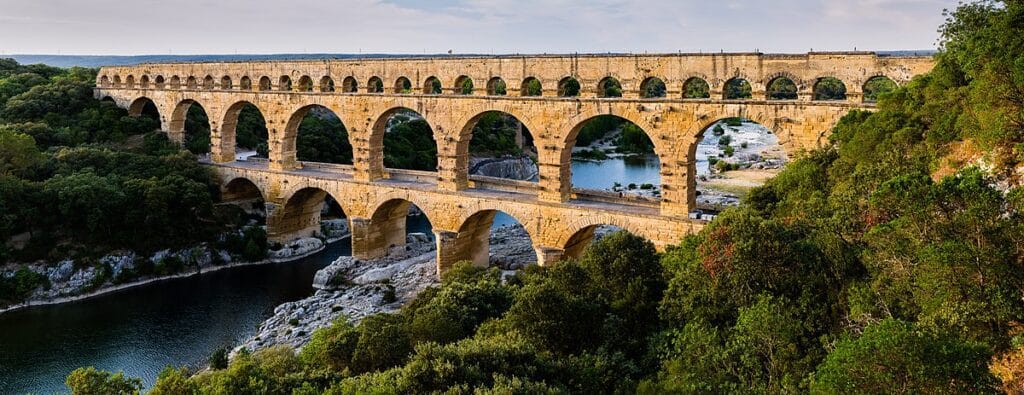
Roman aqueducts transported millions of liters of fresh water daily across vast distances using only gravity. The Pont du Gard in southern France stands 49 meters tall, carrying water across the Gardon River valley with a gradient of merely 2.5 centimeters per kilometer. This precision required sophisticated surveying instruments including the groma and chorobates.
Engineers designed aqueducts to maintain constant slopes over kilometers of varied terrain. The eleven aqueducts supplying Rome delivered over 1 million cubic meters of water daily by the 3rd century AD. Underground channels protected water from contamination and evaporation, while inverted siphons used lead pipes to cross valleys by maintaining pressure.
Waterproof opus signinum concrete lined aqueduct channels, preventing leakage through porous stone. Romans also developed castellum divisorium distribution tanks that regulated water flow to fountains, baths, and private homes. The Aqua Appia, Rome’s first aqueduct built in 312 BC, established the template for hundreds of similar structures throughout the empire.
Built out of a love for history, kept free from distractions.
Spoken Past is an independent project shaped by curiosity, care, and long hours of research. Reader support helps keep it maintained, carefully researched, and open to everyone.
3. Roads Built for Eternity
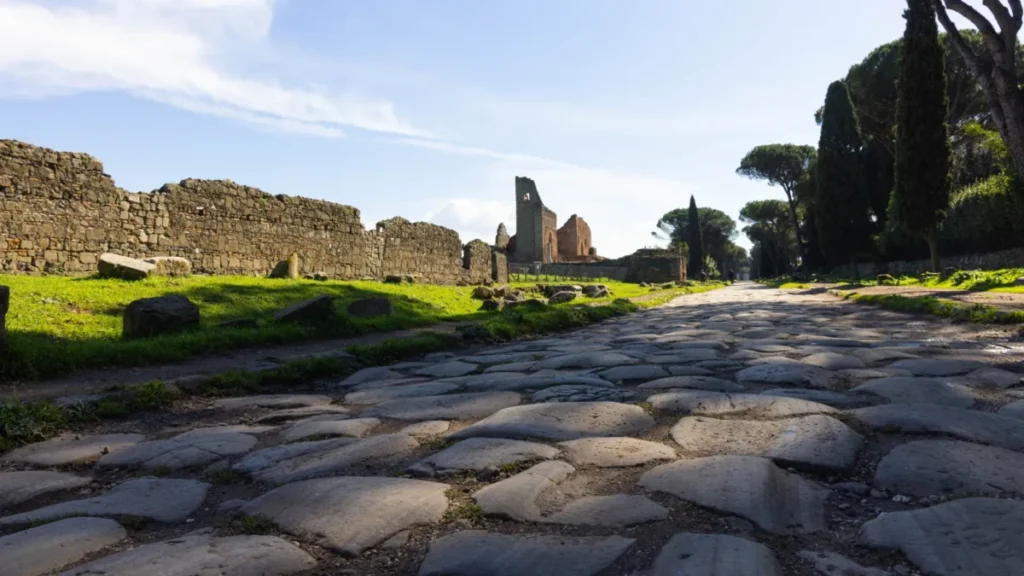
The Via Appia, constructed beginning in 312 BC, exemplified Roman road-building expertise that created 80,000 kilometers of paved highways. Romans built roads in four distinct layers: large foundation stones set in mortar, compacted concrete with rubble, fine concrete mixed with pottery fragments, and tightly fitted basalt surface blocks. This layered construction distributed weight efficiently and resisted erosion for centuries.
Surveying teams used specialized instruments to ensure roads followed straight paths between cities, cutting through hills and filling valleys. The historian Procopius noted that Appian Way stones fit so precisely they appeared to have grown together naturally rather than being placed by hand. Roads featured a gentle camber in the center for drainage, with ditches and retaining walls preventing water accumulation.
Roman roads served military, commercial, and administrative functions simultaneously. Stone milestones placed every Roman mile (1,480 meters) marked distances and commemorated emperors who maintained the roads. The Via Appia stretched 500 kilometers from Rome to Brundisium, facilitating rapid troop movement and trade.
4. Arches Supporting Massive Structures
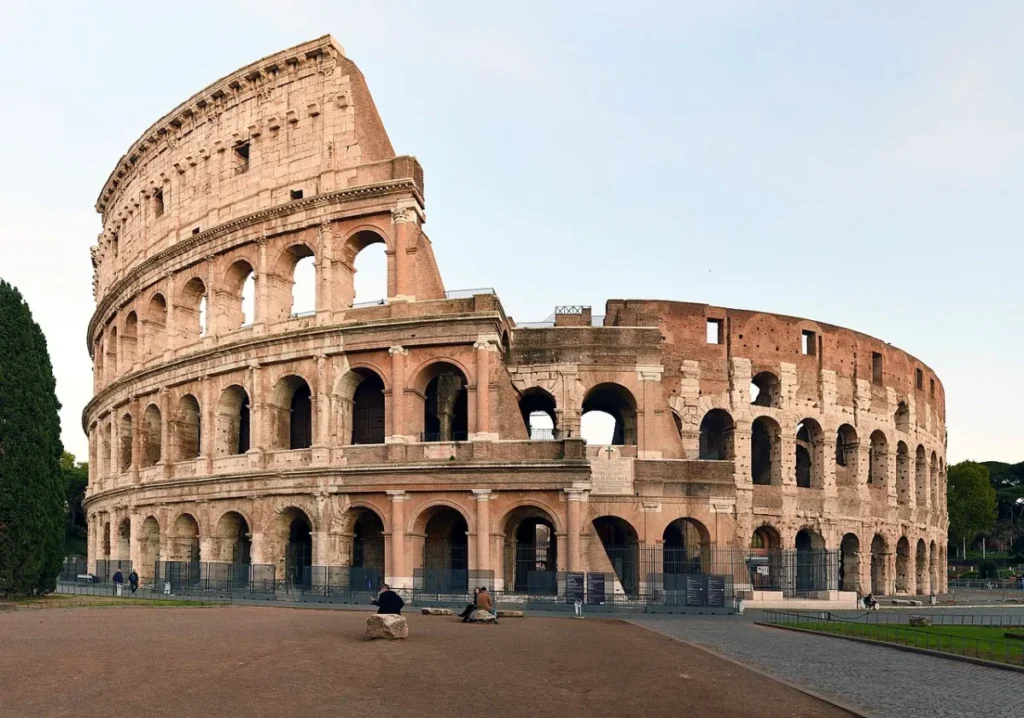
The arch revolutionized Roman architecture by distributing weight efficiently through a curved structure, enabling spans impossible with traditional post-and-lintel construction. The keystone at an arch’s crown locked the entire structure together, creating stability even in massive monuments. This innovation allowed Romans to build bridges, aqueducts, and amphitheaters of unprecedented scale.
The Colosseum employed 80 ground-level arches in its exterior facade, each framed by decorative columns. Built between 70 and 80 AD from travertine limestone and concrete, the amphitheater rose 48 meters through four levels of arches. Roman engineers calculated precise curves and spacing to support the enormous weight of seating for 50,000 spectators.
Barrel vaults extended arch principles to create tunnel-like ceilings, while groin vaults intersected two barrel vaults at right angles. These structural innovations freed interior spaces from supporting columns, creating the vast open rooms characteristic of Roman public buildings. The Arch of Constantine, standing 21 meters tall, demonstrated mastery of the three-bay arch design with detached columns.
5. Underground Heating Systems
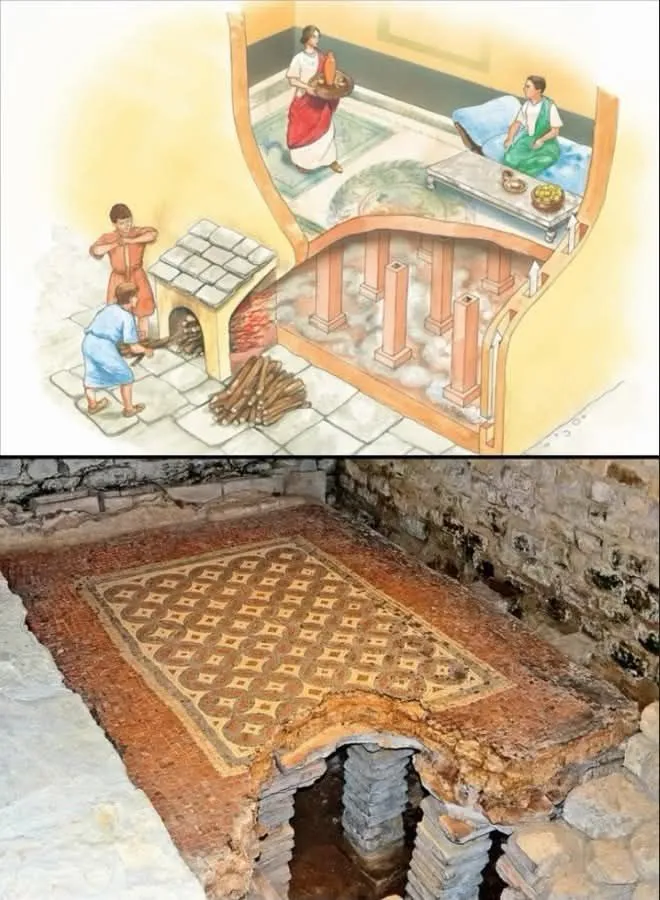
The hypocaust system represented Rome’s most sophisticated climate control technology, circulating hot air beneath floors and through hollow walls. Wood-fired furnaces called praefurnia generated heat that flowed through a network of spaces created by small brick pillars called pilae. This innovation kept Roman baths and luxury villas comfortably warm even during winter.
Engineers designed hypocausts with remarkable precision, placing furnaces nearest the caldarium (hot room) while allowing heat to dissipate gradually toward cooler spaces. Hollow terracotta tubes embedded in walls channeled hot gases upward, heating entire rooms efficiently. The Baths of Caracalla, completed in 216 AD, employed massive hypocaust installations to maintain temperatures across its 11-hectare complex.
Bronze boilers heated water for pools while the hypocaust warmed air, creating the humid, steamy environment Romans expected in their bathing facilities. Archaeological evidence from sites like the villa of Faragola reveals intentional wood selection for fuel, optimizing heat production and burning duration. This system’s efficiency remained unmatched until modern central heating emerged nearly 1,500 years later.