

A marble slab in the British Museum preserves the voice of a dead Roman dog. The animal was called Margarita, “Pearl,” and her epitaph, carved in the 1st or 2nd century CE, speaks as if the dog herself were remembering her life. She says she came from Gaul, ran boldly through woods, hunted rough hills, and slept softly in the laps of her master and mistress. For anyone asking whether ancient Roman pets were real household companions or just useful animals, Margarita is difficult evidence to ignore.
The Romans did keep pets. Dogs, birds, and monkeys appear in poetry, satire, funerary inscriptions, household art, and elite display. Some were working animals with affectionate names. Some were status objects. Some were playmates for children. Some were mourned in ways that look surprisingly intimate. Yet the Roman pet world was not a modern pet world with Latin labels. It was shaped by class, household religion, hunting, trade, dining culture, spectacle, and the legal power humans held over animals.
Cats complicate the story most. The familiar image of a cat wandering through every Roman house is probably too simple. Recent ancient DNA research suggests that domestic cats did not become widespread in Europe until roughly the Roman imperial period, arriving from North Africa through Mediterranean networks rather than with Europe’s first farmers. That makes Roman pet keeping both familiar and strange.
The Roman Dog Was Companion, Hunter, Guard, and Mourner
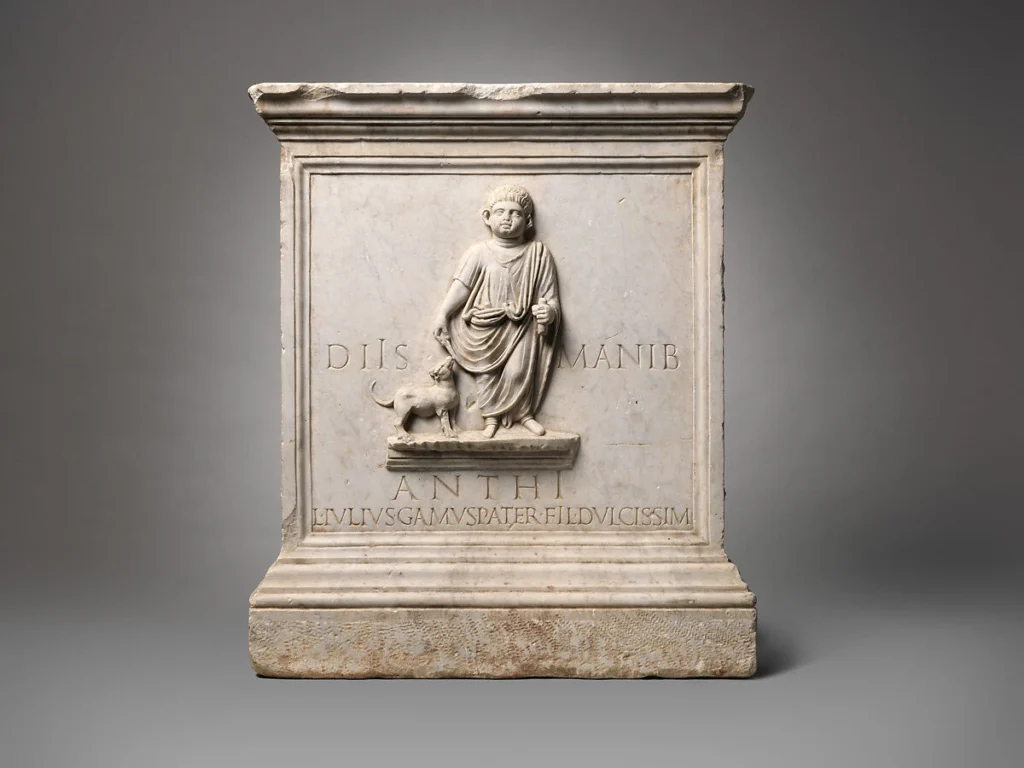
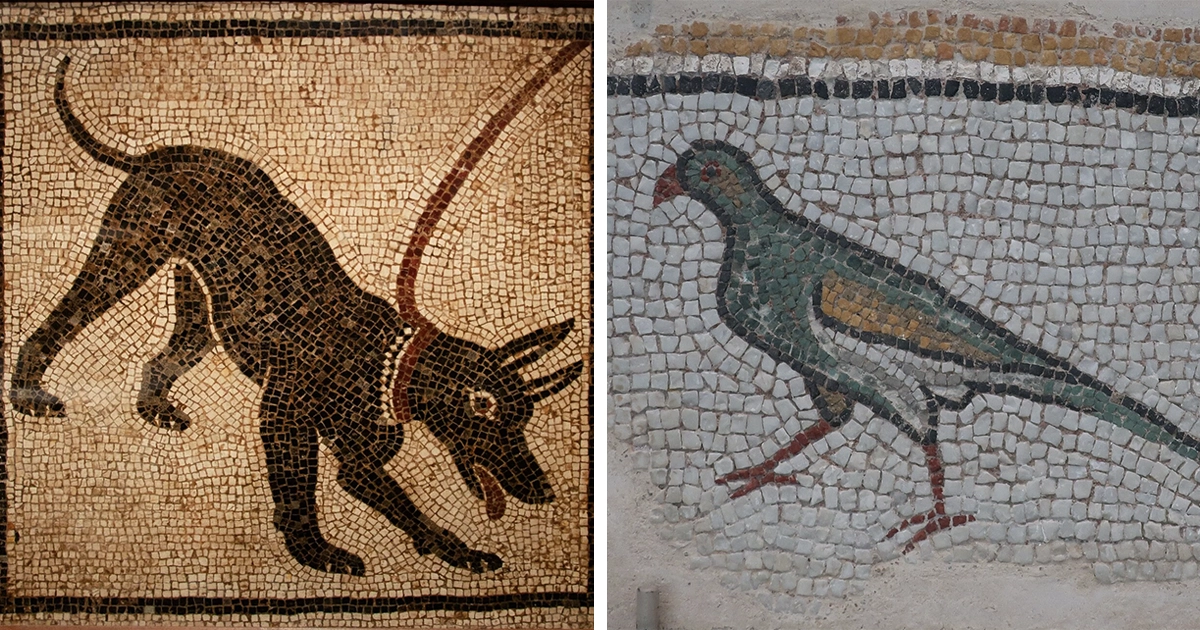
Dogs are the clearest answer to the question “Did Romans have pets?” They guarded homes, hunted game, followed owners, entertained children, and sometimes received epitaphs. The evidence is unusually broad. Literary texts mention beloved lapdogs and watchdogs. Reliefs show dogs beside adults and children. Funerary monuments record affection that went beyond utility.
The British Museum’s epitaph plaque for Margarita is one of the strongest objects. The museum dates it to the 1st or 2nd century CE and describes it as a marble verse inscription for a dog called Margarita, written from the dead dog’s perspective. It also notes that quite a few Roman dog tombstones survive, though Margarita’s is unusually elaborate. The inscription matters because it combines several roles at once. Margarita was a hunting dog from Gaul, a region whose dogs were prized. But she was also a household intimate who rested in her owners’ lap and bed.
That combination is central. Roman dogs were not only pets in the narrow modern sense. A dog could be useful, prestigious, and loved. Hunting dogs belonged to a culture of elite leisure and rural identity. Guard dogs belonged to the practical life of houses, farms, and workshops. Lapdogs belonged to intimate domestic space, especially in literary stereotypes about women, children, and luxury.
Martial, the sharp Roman epigrammatist of the late 1st century CE, gives the most famous literary pet dog. In Epigrams 1.109, he writes about Issa, the little dog of Publius. The poem compares Issa to Catullus’ sparrow, imagines her almost speaking, and says Publius had her portrait painted so that death would not take her away entirely. The tone is affectionate, but Martial is never simple. The poem may also be playing with elite taste, literary self-consciousness, and the absurdity of treating a lapdog as a refined girl. Even so, satire needs recognizable behavior. Issa works because readers could understand pet affection.
Petronius gives a rougher, comic version in the Satyricon. At Trimalchio’s dinner party, the freedman host orders in Scylax, “guardian of the house,” an enormous chained dog. In the same episode, an overfed puppy is wrapped and fussed over at the banquet. The scene is grotesque because Trimalchio’s household turns status, food, and animals into theater. But it also shows how dogs could cross boundaries between guard function, dining room display, and emotional performance. The Petronius passage is not a calm ethnographic account. It is satire. Still, satire tells us what could be recognized and exaggerated.
Dog epitaphs are especially important because they move beyond literary jokes. They show owners spending money, stone, and cultural labor on animal death. The epitaph for Margarita uses learned poetic language. That does not prove every Roman household grieved dogs in the same way. It proves that at least some literate, wealthy, or socially ambitious owners could frame an animal’s death through the same commemorative habits used for humans.
The limit is clear. Our evidence favors households that had the money to commission stones, the leisure to keep nonessential animals, and the literacy to enter the record. The silent majority of Roman dogs worked, scavenged, guarded, hunted, or lived around human settlements without leaving inscriptions. Ancient Roman pets are easiest to see when the owner could afford to make affection visible.
Birds Filled Roman Houses With Sound, Color, and Status
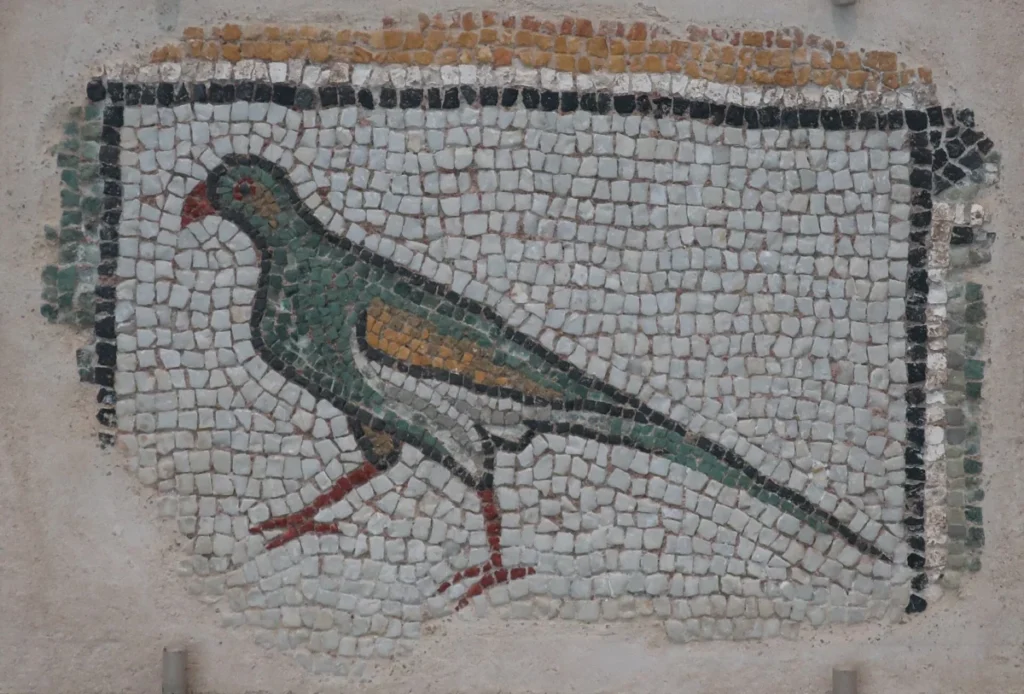
Birds were among the most common Roman household pets, and they entered domestic life for several reasons. They sang, talked, entertained children, decorated rooms, and signaled leisure. Some were ordinary domestic birds. Others were imported luxuries. The category “pet bird” could include sparrows, doves, pigeons, quails, geese, ravens, crows, and parrots, depending on context.
Francis D. Lazenby’s public-domain article “Greek and Roman Household Pets”, first published in The Classical Journal in 1949, remains useful because it gathers a large range of literary and artistic examples. It must be handled cautiously because it is an older synthesis, but its evidence list is valuable. Lazenby notes how often domestic birds appear in household and funerary imagery, especially in scenes involving women and children. He also points to the importance of geese, ducks, pigeons, quails, and other birds in Greek and Roman visual culture.
Birds had a different place from dogs. A dog could defend, hunt, or accompany. A bird could be displayed, trained, heard, carried, fed by hand, or kept in a cage. It could sit in the overlap between pet, ornament, toy, omen, and delicacy. This overlap matters because Roman categories were not ours. A dove in a woman’s hand on a tomb relief might suggest affection, gentleness, domestic femininity, or symbolic meaning. A goose could be food, guardian, sacred animal, or child’s companion. The evidence rarely lets us separate those meanings completely.
Talking birds formed a special luxury category. Pliny the Elder, writing in the 1st century CE, treats parrots, ravens, and other vocal birds as marvels of imitation. In Natural History 10, he says parrots imitate human speech and describes a famous raven that greeted members of the imperial family. When the raven was killed, Pliny says the public reaction was intense and the bird received a ceremonial funeral. The episode is partly a moralizing anecdote about Roman values, but it shows how a trained bird could become a public personality.
The imperial setting is significant. A bird that greeted Tiberius, Germanicus, or Drusus was not just a charming household animal. It participated in the performance of loyalty. A talking raven or parrot could make politics audible. It could repeat names, slogans, greetings, and formulas. In a society where public speech mattered enormously, an animal that imitated speech became more than a curiosity.
Smaller birds also had intimate associations. Catullus’ poem on Lesbia’s sparrow, though late Republican and not straightforward autobiography, helped create a literary model for the cherished pet bird. Martial’s poem on Issa deliberately invokes Catullus’ sparrow, placing the Roman lapdog within a literary tradition of erotic, playful, and domestic animal affection. The bird becomes a language for human relationships.
There is also a darker edge. Birds could be pampered, but they could also be caged, fought, eaten, sacrificed, or used in divination. Cockfighting and quail fighting belonged to competitive entertainment. Sacred chickens belonged to Roman military and religious decision-making. Geese had legendary status because of the story that they warned Rome during the Gallic attack on the Capitoline Hill. Pet keeping existed inside a wider animal culture that was practical, violent, symbolic, and religious all at once.
So Roman birds were not merely decorative. They reveal a society that valued trained behavior, sound, rarity, and symbolism. A parrot from India, a raven trained to speak imperial names, or a dove held in a funerary scene each tells us something different about Roman household life.
Monkeys Were Exotic Pets With a Comic Edge
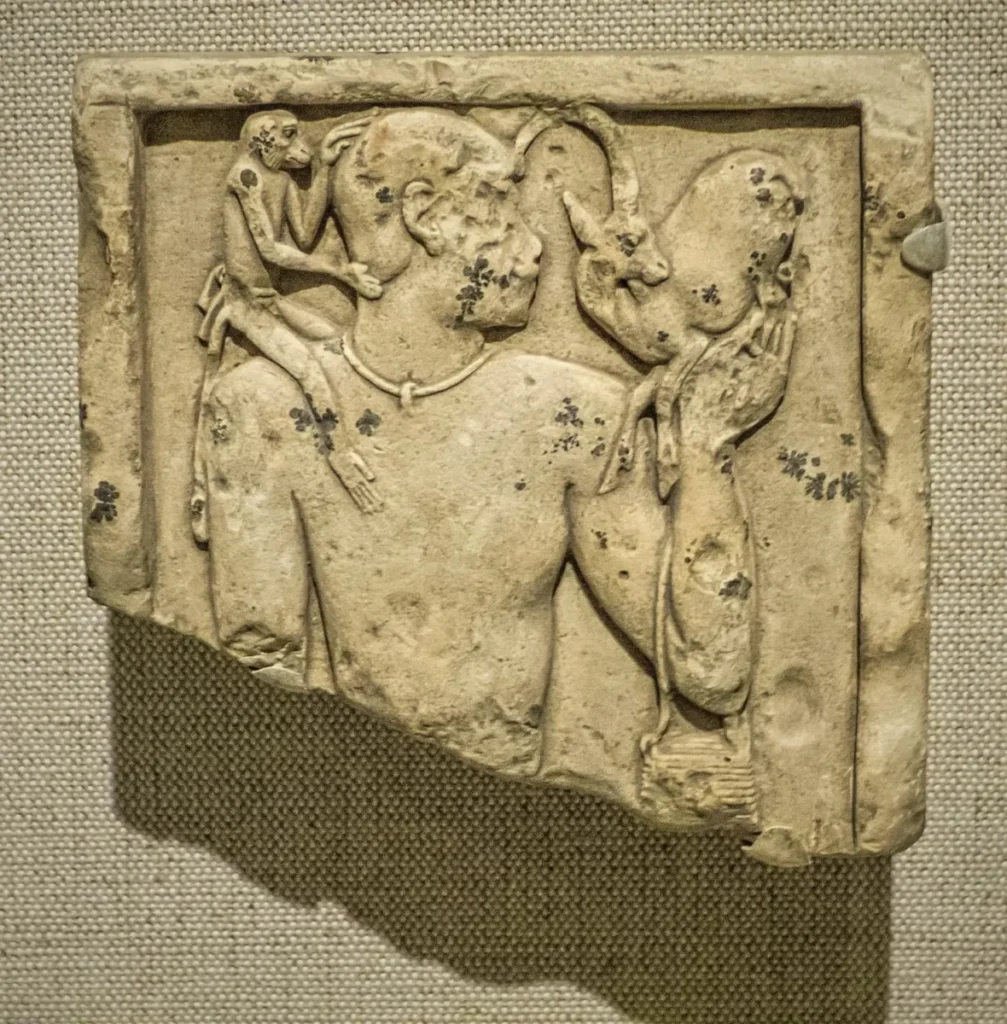
Monkeys and apes were kept in the Roman world, but they occupied a more unstable social position than dogs or birds. They were amusing, expensive, foreign, and often morally suspect in the eyes of writers. They appear as children’s playmates, elite novelties, comic performers, and objects of ridicule.
The animals described in ancient sources were usually not “monkeys” in the loose modern sense only. They may have included Barbary macaques from North Africa, other African monkeys, and animals brought through trade routes from farther south or east. Romans did not classify them according to modern zoological taxonomy. They classified them by appearance, behavior, origin, and usefulness as curiosities.
Lazenby’s survey emphasizes that pet apes and monkeys appear in a range of ancient literary references. He cites evidence from Greek comedy, Roman satire, Martial, Cicero, Apuleius, and visual art. In these sources, monkeys are often funny because they imitate humans badly. That is exactly what made them appealing. Their bodies were close enough to human behavior to amuse, but strange enough to mock.
This comic edge is important. A lapdog could be praised for loyalty and tenderness. A talking bird could be admired for skill. A monkey often became a mirror of foolish luxury. Ancient writers used pet monkeys to criticize people who wasted wealth, neglected children, pursued exotic amusements, or mistook novelty for refinement. The animal itself may have been cherished, but the literary frame is often hostile to the owner.
Roman monkeys were also tied to empire. They did not belong naturally to Italy. Their presence in Roman households depended on capture, transport, and trade. North Africa was one likely source for some of these animals, especially Barbary macaques. Others could have moved through eastern Mediterranean networks. A monkey in Rome was therefore a living sign of distance. It said something about the owner’s access to goods, people, and animals beyond Italy.
They also appeared in performance. Apuleius, in his Metamorphoses, describes theatrical and festival settings where animals are dressed or trained for comic effect. Lazenby notes ancient references to monkeys playing instruments, riding animals, or appearing in performance scenes. Such evidence does not always prove private pet ownership, but it proves human handling, training, and display.
For children, monkeys could be companions or toys. Some funerary reliefs show children with multiple animals, including dogs, birds, and monkeys. Roman depictions of children with pets on tombs suggest tenderness, but also idealization. A child with a pet could symbolize innocence, domestic affection, and the life that death cut short.
The uncertainty lies in scale. Were monkeys common in Roman homes? Probably not in the way dogs were common. They were more likely to appear in wealthy or urban contexts, in elite play, satire, display, and performance. But their presence matters because it widens the definition of Roman pets. The Roman household could contain animals that were not useful in any ordinary domestic sense. Some animals were kept because they were strange, entertaining, expensive, or socially legible.
Monkeys also remind us that ancient Roman pets were part of unequal systems. Exotic animals arrived through networks of conquest, trade, tribute, and capture. Behind the comic monkey on a leash was a chain of human control over landscapes, merchants, handlers, and animals far from Rome.
Built out of a love for history, kept free from distractions.
Spoken Past is an independent project shaped by curiosity, care, and long hours of research. Reader support helps keep it maintained, carefully researched, and open to everyone.
Cats Were Not the First Roman House Pets
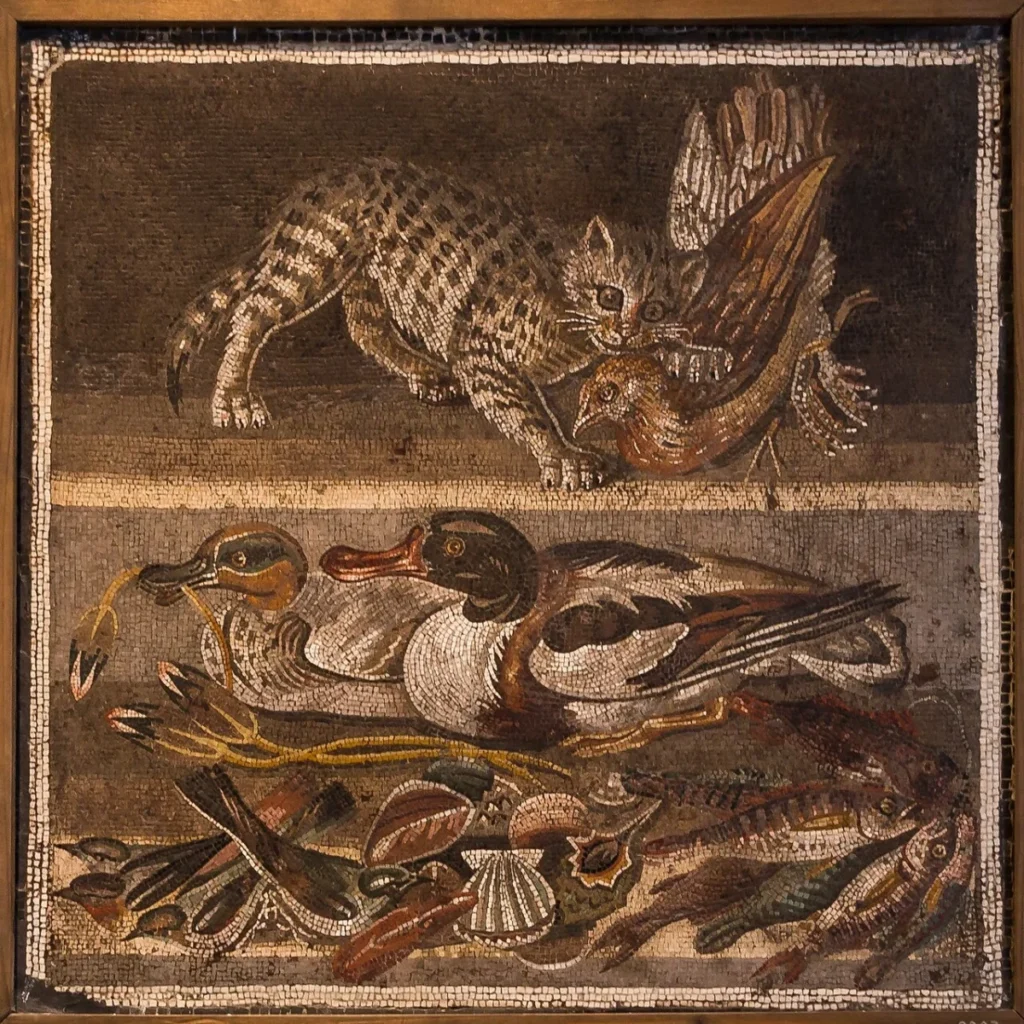
Cats are the surprise. Modern readers often assume cats must have been everywhere in Rome because grain, ships, kitchens, and mice were everywhere. That assumption is plausible, but the evidence is not as strong as it looks. Roman cats existed, but they seem to have arrived late and unevenly compared with dogs and birds.
Older accounts often imagined cats moving into Europe with Neolithic farmers, following grain stores and rodent populations from the Near East thousands of years before Rome. That model made intuitive sense. Farming attracts rodents. Wildcats hunt rodents. Humans tolerate useful hunters. Over time, cats become domestic. But recent genetic work has made that story less secure for Europe.
The uploaded De Martino et al. study, available as a 2025 bioRxiv preprint, analyzed ancient and modern cat genomes to test how domestic cats moved into Europe. Its abstract states that domestic cats descend from the African wildcat Felis lybica lybica and that uncertainty remained over whether domestic cats originated in the Levant, Egypt, or elsewhere in their natural range. The study reports that domestic cats did not spread to Europe with Neolithic farmers, but were introduced over the last 2,000 years, most likely from North Africa.
The Royal Belgian Institute of Natural Sciences summarizes the same result in its article “The domestic cat only arrived in Europe 2,000 years ago via North Africa”. The institute explains that earlier mitochondrial DNA evidence had suggested a Neolithic spread, but the newer study used nuclear genetic material to trace cat relationships more precisely. According to that summary, European domestic cats did not derive from cats that traveled with the first farmers, but from later North African populations brought to Europe within the past 2,000 years.
The study’s chronology is especially relevant to Rome. It found that the earliest sample in its dataset with Felis lybica or domestic-cat nuclear ancestry was from Genoni in Sardinia, directly radiocarbon dated to the 2nd century BCE. But that animal appears connected to Sardinian wildcat ancestry, not necessarily the same lineage as modern domestic cats. The study then reports that other European and Anatolian cats clustering with Felis lybica or domestic cats date from the 1st century CE onward. It specifically identifies an early domestic-cat ancestry sample from Mautern in Austria, dated 50 BCE to 80 CE, and notes Roman imperial military sites along the Danube as part of the dispersal pattern.
That is why “late arrival” should be taken seriously. Cats may have been present in parts of the Mediterranean earlier, especially in relation to Egypt and North Africa. But the familiar domestic cat lineage seems to have become visible in Europe around the Roman imperial period, not deep in the Neolithic. The cat enters the Roman pet story after dogs, birds, and many other household animals were already well established.
This does not mean no Roman ever kept a cat. It means that the ordinary image of Roman cats prowling every atrium should be qualified. Some Roman cats likely served as rodent hunters on ships, in granaries, and around food storage. Some may have become household animals. Some may have carried religious or exotic associations because of Egypt and the cult of Bastet. But the evidence for widespread domestic cat keeping in early Roman Italy is thinner than popular imagination suggests.
The genetic evidence also helps explain why cat bones are difficult. The study notes that cat domestication and dispersal have been hard to reconstruct because felid remains are scarce in archaeological contexts and because wild and domestic forms overlap in size and morphology. In other words, a cat bone is not always self-explanatory. Without genetic testing, it can be difficult to know whether a specimen belonged to a European wildcat, an African wildcat, a domestic cat, or a hybrid.
Reuters reported the study’s wider implication in 2025, noting that it placed a major phase of European domestic-cat dispersal around the Roman era while also cautioning that the original location and process of domestication remain unresolved. That caution matters. The study strengthens the North African and Roman-period dispersal model, but it does not prove a single Egyptian cradle for every domestic cat, nor does it make Rome the inventor of cat keeping.
The best answer is narrower and stronger: Roman-era trade, shipping, military movement, and North African connections probably helped domestic cats spread into Europe.
Roman Pet Keeping Was Shaped by Class, Trade, and Evidence Bias
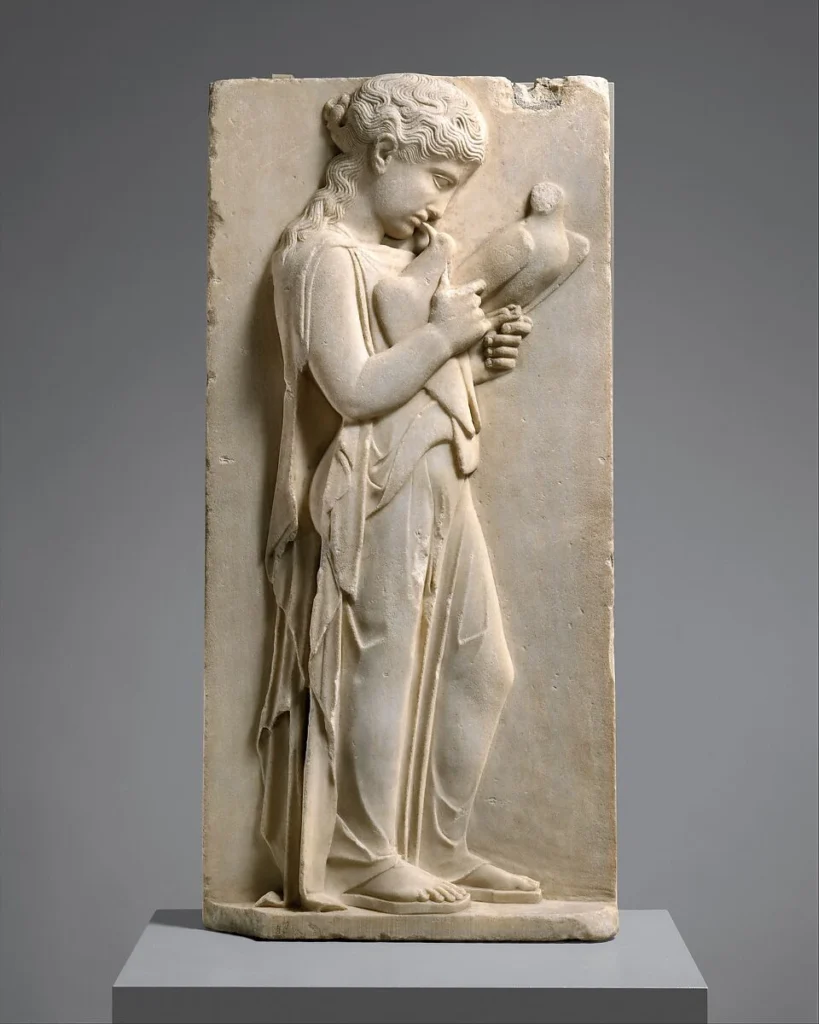
Ancient Roman pets were not distributed evenly across society. The animals easiest to document are the ones connected to literate, urban, wealthy, or archaeologically visible households. That creates a problem. The surviving record tells us most about the people who wrote poems, commissioned inscriptions, owned decorated houses, and had objects preserved in museums.
Elite Romans had more opportunities to keep animals for pleasure. They could afford lapdogs, imported birds, trained monkeys, animal handlers, cages, food, and space. They could commission portraits or epitaphs. They could turn a pet into a sign of refinement, grief, status, or absurd luxury.
Poorer Romans also lived with animals, but their relationships are harder to see. A shopkeeper’s dog, a child’s bird, or a cat tolerated near a storage area may leave little trace. In apartment blocks, workshops, taverns, and rented rooms, animals could be useful without being commemorated. Rome was crowded, noisy, and dirty. Animals moved through streets, courtyards, kitchens, markets, temples, stables, and rubbish heaps. Not every human-animal relationship was sentimental, and not every pet had a name that survived.
The category “pet” itself needs care. Romans had terms such as deliciae, meaning darlings or delights, that could be applied to favored animals, children, or human dependents. A pet could be loved, but it could also be owned within a household system built on legal hierarchy and human control. Affection did not erase domination. A bird in a cage, a monkey on a leash, or a lapdog bred for elite amusement belonged to a culture in which control and tenderness often coexisted.
This is why the same animal can look different from one source to another. Martial’s Issa looks cherished. Petronius’ Scylax looks comic and theatrical. Margarita looks mourned. Pliny’s raven looks public and political. A monkey in satire looks like a symptom of bad taste. A cat in a genetic study looks like a moving population rather than an individual companion.
There is also a geographic issue. “Rome” can mean the city of Rome, Roman Italy, the western provinces, the eastern Mediterranean, military frontiers, or the entire empire. Pet keeping in a villa near Pompeii, a military settlement on the Danube, a town in Roman Britain, and a North African port did not have to look identical. The empire connected these places through roads, ships, armies, merchants, slaves, and administrators. It did not make every household the same.
Cats show this geographic complexity better than any other animal. The domestic cat’s spread was probably linked to North Africa, Sardinia, Carthaginian and Roman networks, Egyptian grain routes, and imperial military movement. The De Martino et al. study argues for at least two North African introductions. One involved wildcats brought to Sardinia around the second half of the 1st millennium BCE. Another began from the Roman imperial era onward and helped form the genetic pool of modern European domestic cats.
The mechanism makes historical sense, but it should not be overstated. Ships carrying grain and provisions would benefit from rodent hunters. Military sites and frontier settlements created repeated movement of people, goods, and animals. Egyptian and North African religious associations may have elevated cats’ symbolic value. But the evidence does not let us say that every Roman cat was a beloved pet, or that cats spread only because sailors wanted mousers.
Good history keeps several possibilities open. Cats may have moved as useful animals, religiously charged animals, curiosities, accidental passengers, or companions. Different cats could have entered different human settings for different reasons.
What Roman Pets Reveal About the Household
A direct answer is this: Romans kept pets including dogs, birds, monkeys, and eventually cats. Dogs and birds are the best-attested Roman household pets. Monkeys were exotic status animals and comic companions. Domestic cats became more visible in Europe around the Roman imperial period, likely arriving through North African and Mediterranean trade networks rather than with Neolithic farmers.
The deeper answer is that ancient Roman pets reveal the household as a porous space. Roman homes were not sealed private bubbles. They were connected to streets, slaves, clients, markets, gods, tombs, and empire. Animals moved through those connections.
A dog might guard the threshold, hunt in the countryside, sleep in a bed, and receive a tombstone. A bird might sit in a cage, imitate imperial names, appear in a child’s funerary relief, or symbolize domestic gentleness. A monkey might entertain a child, embarrass an owner, or advertise access to distant lands. A cat might begin as a useful North African hunter in maritime networks before becoming an ordinary European companion.
The affection was real, but it was not the whole story. Roman pet keeping was also about performance. Owners performed refinement by keeping rare animals. Poets performed wit by comparing pets to lovers or children. Families performed grief through epitaphs. Hosts performed wealth by bringing animals into banquets. States and cities performed power by moving exotic animals across the Mediterranean.
The evidence also warns against easy nostalgia. A Roman dog epitaph can feel emotionally close. Margarita’s stone makes the ancient household briefly recognizable. But Roman animal life also included hunting, sacrifice, arena slaughter, forced performance, captivity, and casual cruelty. The same society that mourned pets staged animal hunts in amphitheaters. The same elite culture that admired a lapdog could laugh at a monkey in chains.
That contradiction is not a footnote. It is the Roman animal world. Pets were loved inside a culture that did not treat animals as moral equals. Their value depended on use, rarity, symbolism, training, beauty, and the feelings of owners.
Cats entered that world later than many assume. By the time domestic cats began spreading through Roman-era Europe, Romans already had a long tradition of living with favored animals. The cat did not create the Roman pet household. It joined one that was already crowded with barking dogs, chattering birds, leashed monkeys, sacred geese, trained ravens, and the occasional marble epitaph for a dog whose owners wanted her to keep speaking after death.