
By the mid-sixth century, Byzantine Silk was a luxury that arrived at court already priced by distance, danger, and diplomacy. The empire could buy silk, wear silk, gift silk, and fight over silk, yet it did not control the one step that mattered most: the living insects that made it possible. The best-known answer is a tightly written episode in the sources, two holy travelers, a skeptical emperor, and a cargo so small it could vanish in the palm of a hand.
The famous version sounds clean: monks bring silkworms, Byzantium starts making silk. The evidence is both richer and more complicated. The early accounts focus on eggs, warmth, mulberry leaves, and the long delay between a promise and proof.
Silk, Persia, and imperial pressure
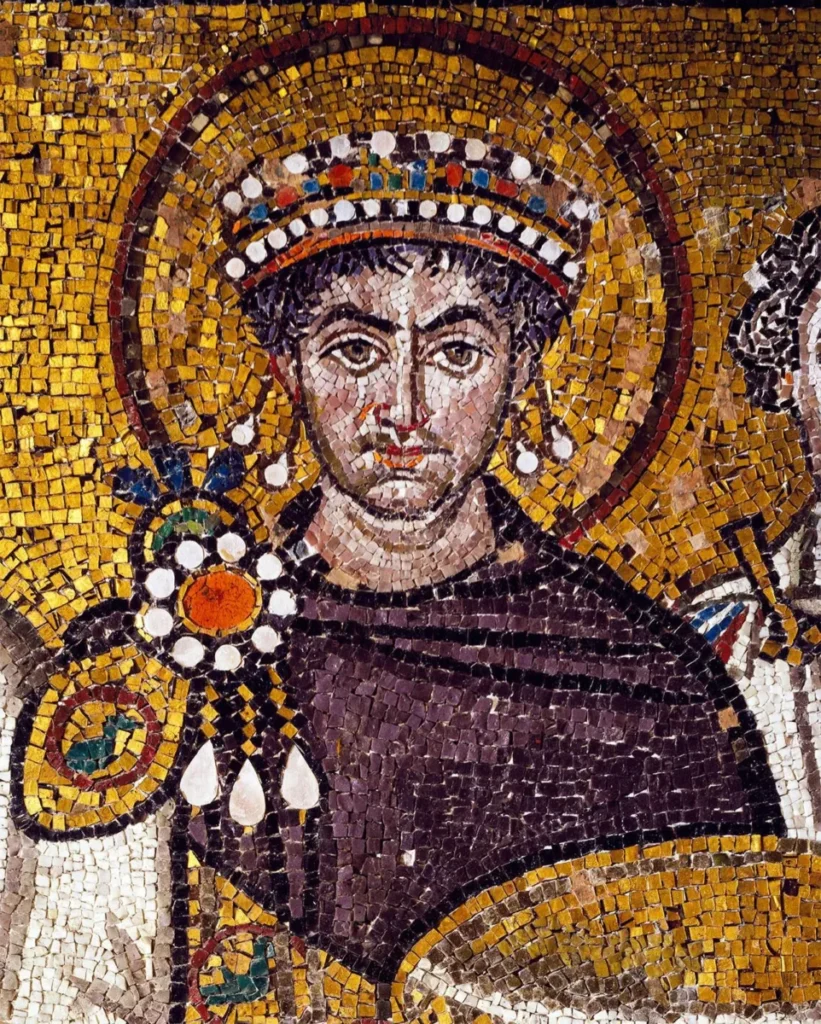
The story begins with money and war, not romance. The sources frame Justinian’s interest in silk as a state problem because Persia profited as an intermediary in the silk trade, and that income mattered in a period of repeated conflict. If the emperor could cut Persia out, he could weaken a rival and steady a vital luxury supply.
Trade routes shaped the problem. The same evidence discusses how commerce could be steered toward specific exchange points by treaty and regulation, and how punishments targeted smuggling when rulers tried to protect revenue. In that world, silk was not just cloth, it was leverage.
The monks in the emperor’s audience hall
The earliest detailed narrative places two monks at the center of the plot. They arrive from “India,” having lived a long time in a country called Serinda, and they learn that Justinian wants Romans to stop buying silk from Persians. They approach the emperor with an offer: they can arrange silk production inside Roman territory.
The emperor does not accept a miracle story. He interrogates them closely, and the monks answer with biology and logistics: worms produce silk by nature, but living worms cannot be transported alive over that distance. Their solution is eggs, countless eggs, because eggs can travel when worms cannot.
Even the tone of the narrative matters. It reads like a promise made in a room full of suspicion, where the emperor wants results and the monks want reward. The deal is conditional: the emperor pledges payment, but only after the claim is tested.
Eggs in dung and eggs in a hollow stem
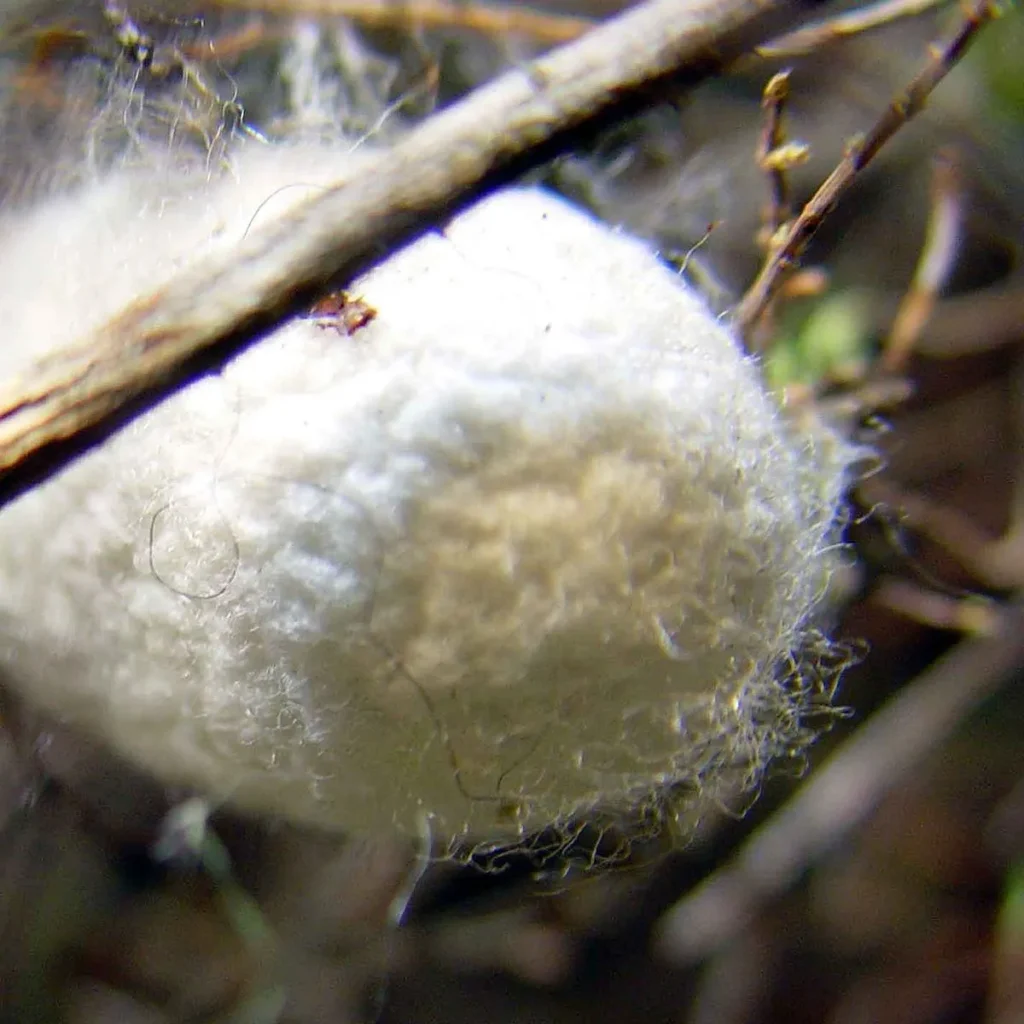
The monks’ method is blunt and specific. They say people cover the eggs with dung and provide enough warmth for long enough that the eggs hatch. That detail anchors the story in a practice of incubation, not in a vague claim of “bringing silk.”
After the eggs hatch, the worms need mulberry leaves. The narrative states that the monks feed the worms mulberry leaves in Constantinople. On this point, the account insists on a concrete requirement that ties the whole operation to agriculture as much as to trade.
A second tradition preserves a shorter, different version. In that account, a Persian man comes to Constantinople during Justinian’s reign and demonstrates the “genesis” of silkworms previously unknown to the Romans. He carries the eggs in the hollow stem of a plant, keeps them alive until he reaches the capital, and then in early spring places them on mulberry leaves.
These two versions disagree about the actors, monks from India versus a Persian courier. They agree on what matters most for credibility: eggs are the transferable stage, mulberry leaves are the feed, and Constantinople is the proving ground. In other words, the record does not preserve one neat witness statement, it preserves a shared technical core with competing narrative wrappers.
To keep the differences clear without drowning the reader, here is what the two accounts line up behind, and where they split.
- Both accounts present eggs as the crucial cargo, because eggs can survive a journey that living worms cannot. This is the practical hinge that makes “smuggling silkworms” plausible at all.
- Both accounts make mulberry leaves central to success. That feature points toward a mulberry-feeding silkworm, not just any silk-producing insect.
- One account emphasizes dung-warming for incubation and a negotiated promise to the emperor. The other emphasizes concealment in a hollow plant stem and the seasonal timing of spring feeding.
Built out of a love for history, kept free from distractions.
Spoken Past is an independent project shaped by curiosity, care, and long hours of research. Reader support helps keep it maintained, carefully researched, and open to everyone.
What kind of silk did they actually make?
Many retellings rush from eggs to an imperial silk industry, as if the first hatch automatically produced the finest thread. The sources push the reader to slow down and ask what the first cycle would have yielded. The key clue is the line in the Persian version: after feeding, the insects “grew wings.”
That phrase implies the moths emerged. If moths emerge, the cocoons are pierced. Pierced cocoons do not give the long continuous filaments needed for straightforward reeling, so they tend to be used as silk floss and then spun.
This matters because it changes what “silk production” can mean in the sixth century. A society can make silk textiles from spun silk, yet that does not automatically replace imported reeled silk, especially if elite consumers demand a particular sheen and fineness. The sources also emphasize that the evidence does not support a simple one-off event that instantly establishes stable sericulture in Byzantium.
Serinda, Seres, and the problem of place names
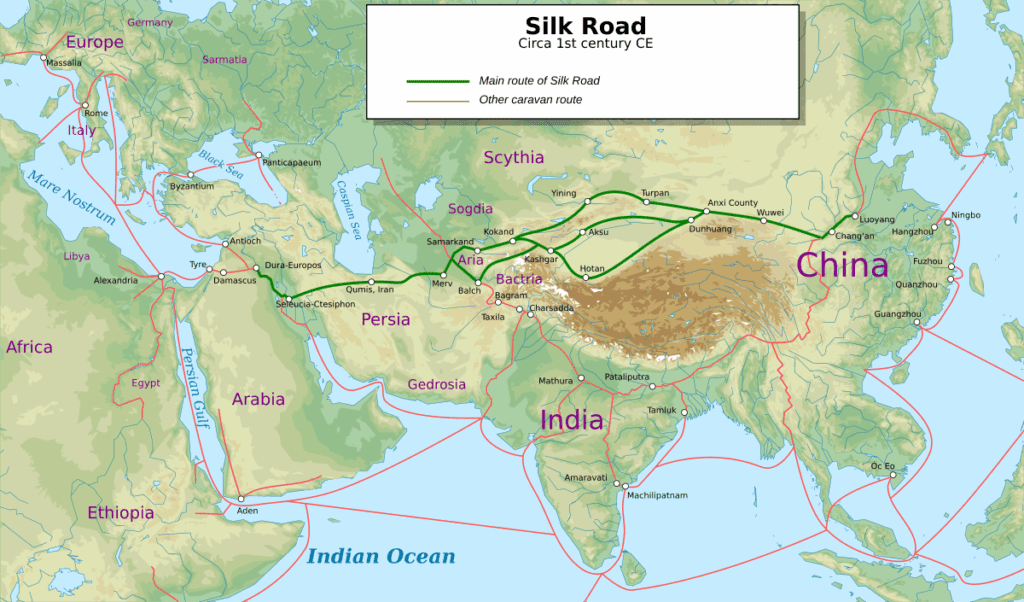
Once the story leaves Constantinople, the geography becomes slippery. “Serinda” can be used as a label connected to silk and to China, yet the record also notes that different terms circulated for “China,” and that naming did not always map neatly onto a single location. That ambiguity is not a modern invention, it is built into how late antique writers used geographic language.
One argument in the evidence leans toward intermediaries. It points out that merchants from Sogdiana, not necessarily China itself, expected Turkic power to help them sell raw silk to Iran, and that diplomacy with Turks could be part of bypassing Persian brokerage. From that angle, the eggs could have come from a Central Asian staging point rather than from the Chinese heartland.
A second approach, more technical, does not start from names at all. It starts from practices: if the imported sericulture resembles one region’s known habits more than another’s, that resemblance becomes evidence about the likely route. This is where the story becomes less like a children’s tale and more like historical detective work done with frustratingly thin clues.
Why Khotan fits the technical clues
The record used in the scholarship places heavy weight on a specific contrast. In sixth-century Chinese descriptions of sericulture summarized in the evidence, people commonly kill chrysalises to preserve intact cocoons for reeling, and the heating methods emphasized differ from dung-warming. That pattern does not match the “grew wings” clue and the implied use of pierced cocoons.
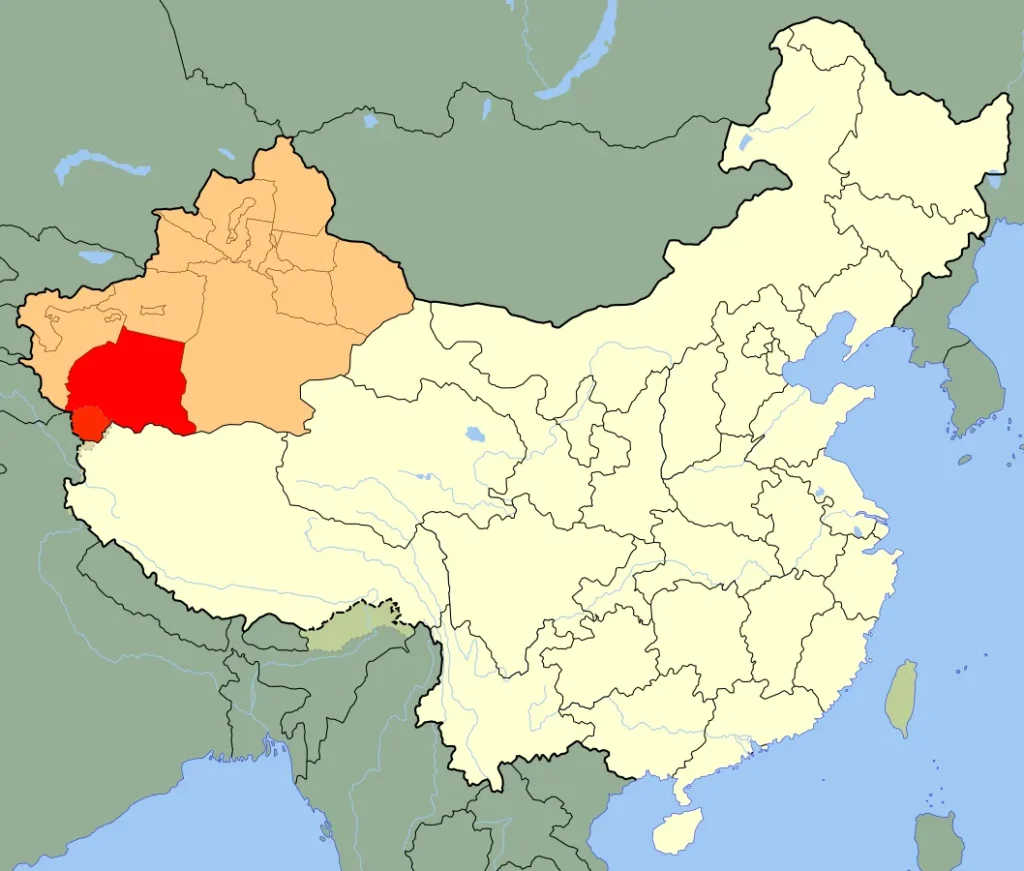
In the Tarim Basin, especially Khotan, the evidence presented describes a different tradition. Multiple sources summarized there describe rules or moral expectations that forbid killing silkworms, requiring that cocoons be processed only after the moths emerge. The same body of evidence points to spun silk and silk floss as characteristic outputs, which aligns with what pierced cocoons naturally produce.
This is not offered as absolute certainty. The record itself admits that proposals for the immediate origin of the imported sericulture have long been debated and not widely accepted as conclusive. Still, the technical fit is striking: mulberry-feeding worms, non-killing processing, and a product stream centered on floss and spinning.
Byzantine Silk before 1000 AD?
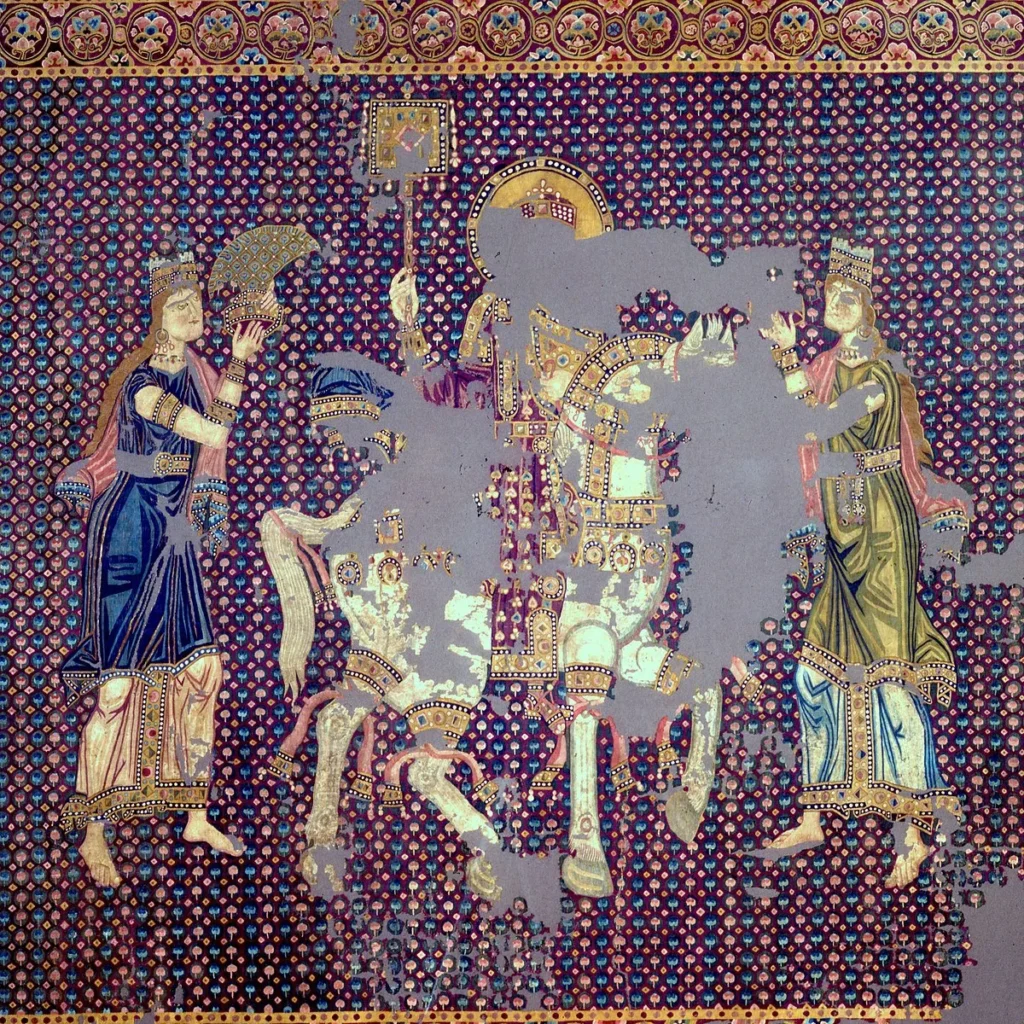
The boldest claim attached to the monks is that they “established” silk production in Roman territory. The larger body of evidence forces a more cautious reading. It states plainly that there is no solid evidence for Byzantine sericulture before the eleventh century, and that the empire still relied heavily on imported raw silk until at least the tenth century.
Those two points do not erase the heist story. They change its scale. The transfer can be real and still fail to become a stable, visible industry in the surviving record for centuries, because sericulture is fragile, seasonal, and dependent on local adaptation that sources do not always record.
The trade background in the evidence also supports this slower reality. Even after the sixth-century episode, Byzantium remained interested in imported silk from the Far East, and diplomacy continued to circle around how to manage, control, or bypass intermediaries. The heist, then, is best understood as an attempt to open a door, not as a guarantee that the empire walked through it at once.
By the end of what can be said safely before 1000 AD, the story returns to its central promise. The sources allow a firm statement that the early narrative imagined a successful transfer of eggs to Constantinople and a first rearing on mulberry leaves. They also force an equally firm restraint: Byzantine Silk did not become clearly traceable as a stable domestic sericulture system in the surviving evidence before the eleventh century, and imported raw silk still mattered through at least the tenth.