Beneath the ancient cobblestones of Rome’s Forum lies one of history’s most remarkable engineering achievements. The Cloaca Maxima, Rome’s great sewer, has been channeling water through the heart of the Eternal City for more than 2,600 years. What makes this even more extraordinary? It still works today.
While modern cities struggle to maintain infrastructure built just decades ago, this ancient drainage system continues to serve Rome, standing as a testament to the ingenuity and ambition of the city’s early engineers. But the Cloaca Maxima is far more than just an ancient pipe. It represents a pivotal moment in Roman history when ambitious leaders transformed a marshy, flood-prone valley into the beating heart of what would become history’s greatest empire.
What Is the Cloaca Maxima?
The Cloaca Maxima (Latin for “Greatest Drain”) is an ancient sewer system that originally ran through the center of Rome’s Forum Romanum. Built in the late sixth century BCE, it transformed the low-lying, waterlogged valley between the Capitoline and Palatine hills into usable public space.
The system began as a monumental open-air canal, over one meter wide with walls constructed from massive blocks of cappellaccio tuff, each roughly 1.25 meters square and 0.3 meters deep. These enormous stone blocks were quarried from Rome’s own hills and assembled using the same construction techniques employed for the foundations of temples like the Capitoline Jupiter and the Regia.
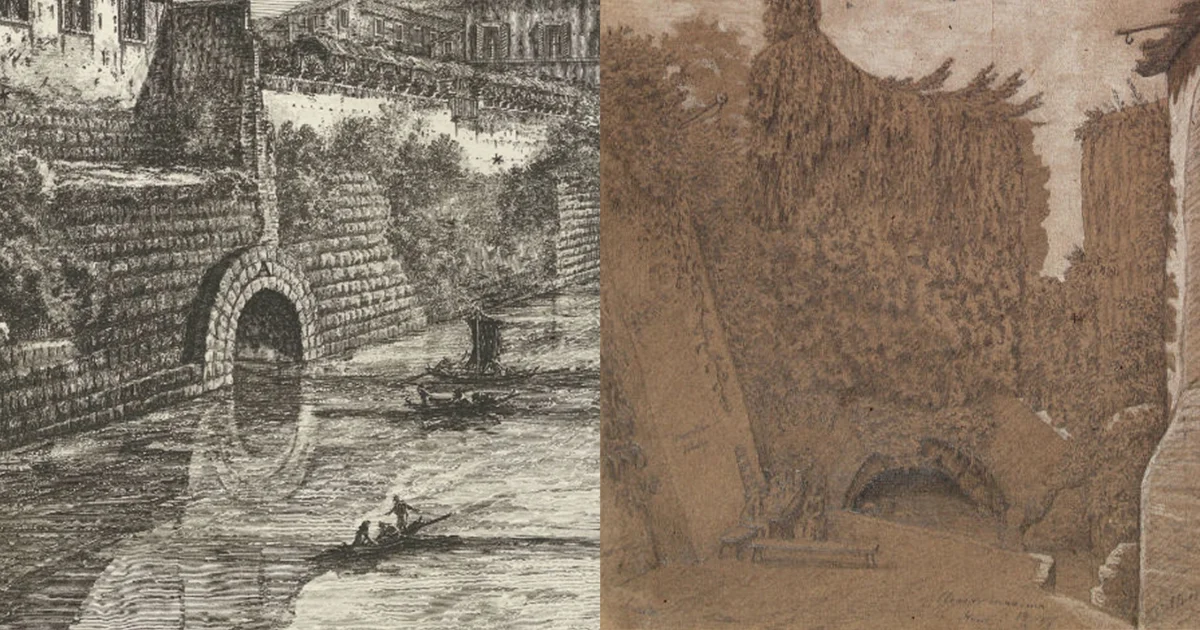
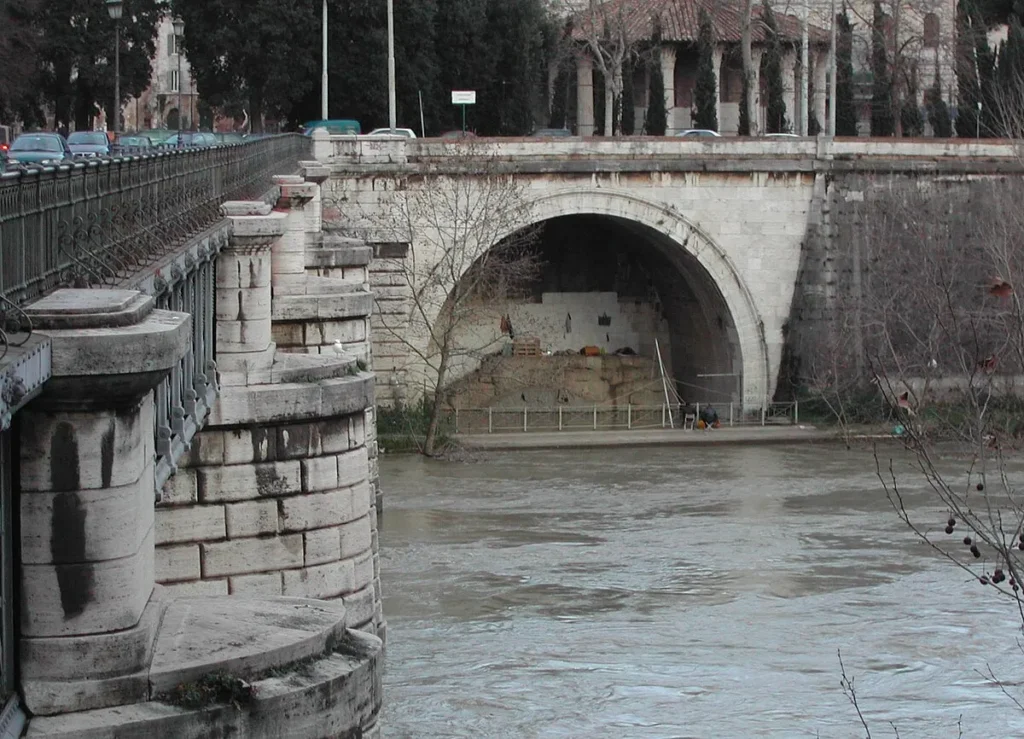
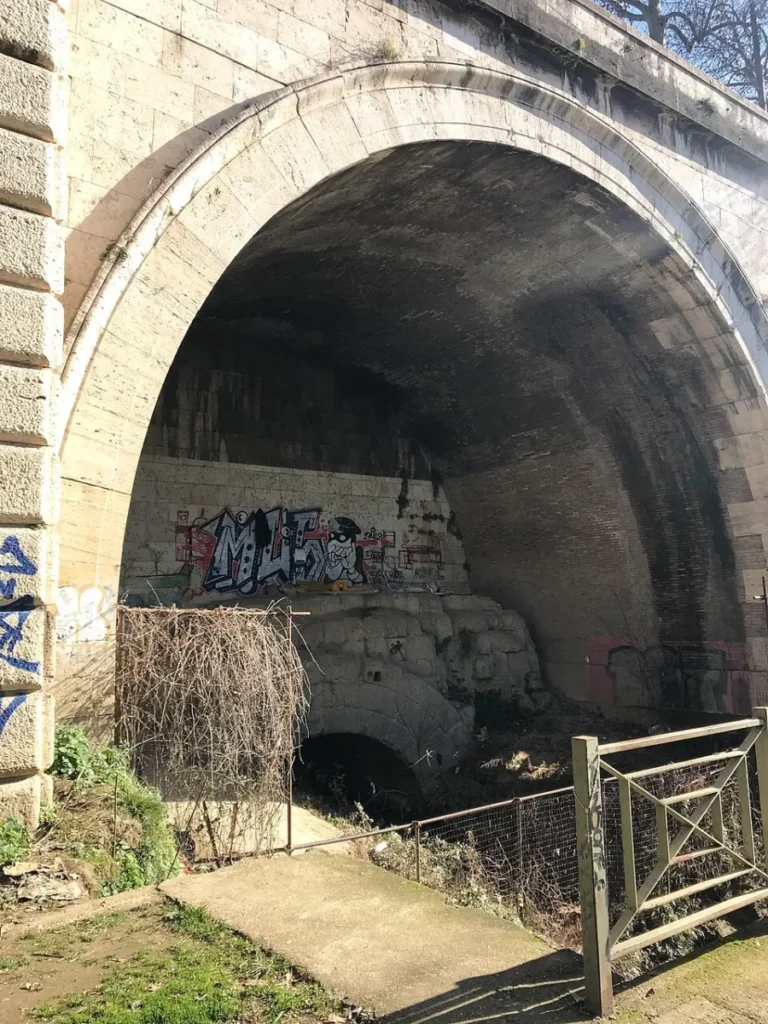
Today, after centuries of modifications, repairs, and extensions, the Cloaca Maxima comprises a complex network of drainage channels that snake beneath Rome’s ancient center. The main channel stretches from the Forum through the Velabrum valley and eventually empties into the Tiber River. The mouth of this ancient drain, standing at about 4.7 meters above sea level, remains visible today as a massive arched opening on the riverbank.
The Engineering Marvel That Changed Rome Forever
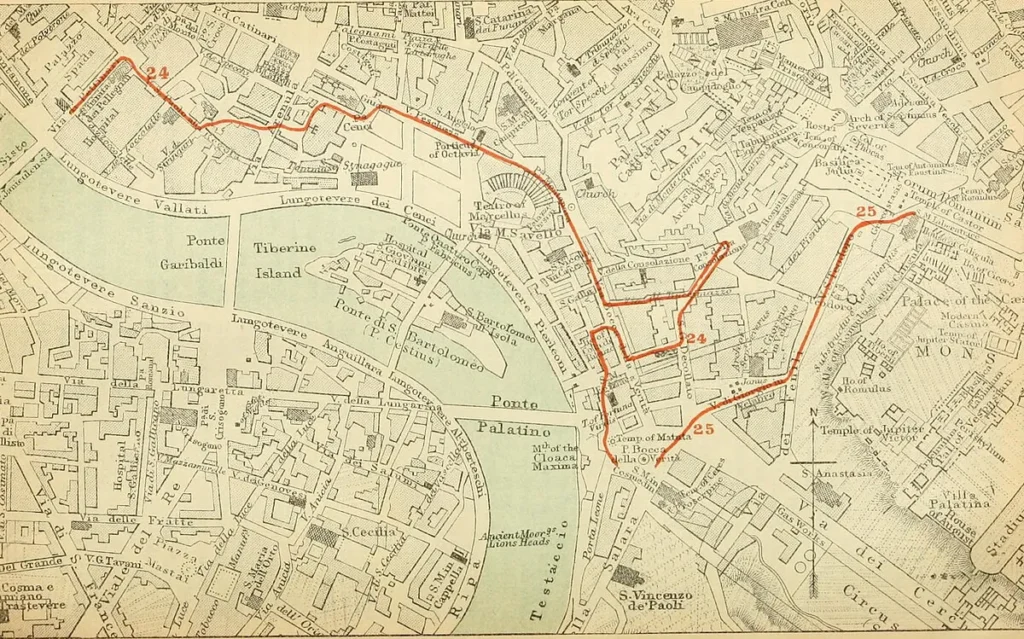
To truly appreciate the Cloaca Maxima, we need to understand the environmental challenge it solved. Ancient Rome sat in a basin surrounded by hills, with its lowest point standing at less than 6 meters above sea level. This geography created a serious problem.
Three sources of water constantly threatened the valley. Rainwater cascaded down from the surrounding Capitoline, Palatine, Esquiline, and Quirinal hills. Natural springs bubbled up from thick gravel beds at the base of these hills. Most dramatically, the Tiber River regularly flooded, sending water surging through the low-lying Velabrum valley and into the Forum basin itself.
Environmental studies have revealed that the central part of the Forum basin originally stood at elevations as low as 7 meters above sea level. During flood season, which occurred at least once yearly in ancient times, the Tiber could rise 6 meters or more above its normal level. This meant that floodwaters reaching 10 to 13 meters in elevation would completely inundate the lower basin, leaving any structures in standing water up to 2 meters deep.
The natural sediments recovered from cores taken in this area tell a compelling story. They contain inclusions of peat and organic materials, clear evidence that wet, marshy conditions once made this area essentially uninhabitable. For simple huts built of wattle and daub, this environment would have been precarious at best and potentially disastrous at worst.
A Massive Public Works Project
The creation of the Forum and its drainage system required something far more ambitious than simply digging a ditch. Recent archaeological and environmental research has revolutionized our understanding of what actually happened in the center of ancient Rome.
Rather than a gradual accumulation of occupation debris from hut dwellers living in the valley, the evidence points to a deliberate, massive landfill project. Over a period of years, perhaps even decades, workers deposited as much as 10,000 to 20,000 cubic meters of fill material into the center of the basin. This monumental undertaking raised the ground level by approximately 2 meters, bringing the surface up to about 9 meters above sea level.
The layers of this fill, visible in deep archaeological soundings, show distinct stratification. Different colors and textures in successive layers suggest that material came from various sources around the city. Many of these sediments contain fragments of volcanic tuff and pieces of gravel, likely procured from the slopes of the surrounding hills. Some of this material may have been a byproduct of quarrying cappellaccio for building blocks, creating a practical synergy between stone extraction and the need for fill sediments.
Archaeological excavations by Giacomo Boni at the turn of the 20th century and later by Einar Gjerstad in 1949 revealed a stratigraphic sequence of six distinct layers (Strata 23 through 28 in Gjerstad’s numbering) at the base of the deepest soundings. These layers, long interpreted as “hut levels” representing gradual habitation, now appear to be intentional fills deposited as part of a coordinated reclamation project.
The domestic refuse found within these layers, fragments of pottery, cooking stands, animal bones, and bits of daub with reed impressions, make perfect sense as material discarded into the basin during the filling operation. Even the small fragments of daub don’t necessarily indicate huts once stood in this spot. They could easily have been redeposited from elsewhere or mixed into the fill sediments.
The Monument That Made It Possible
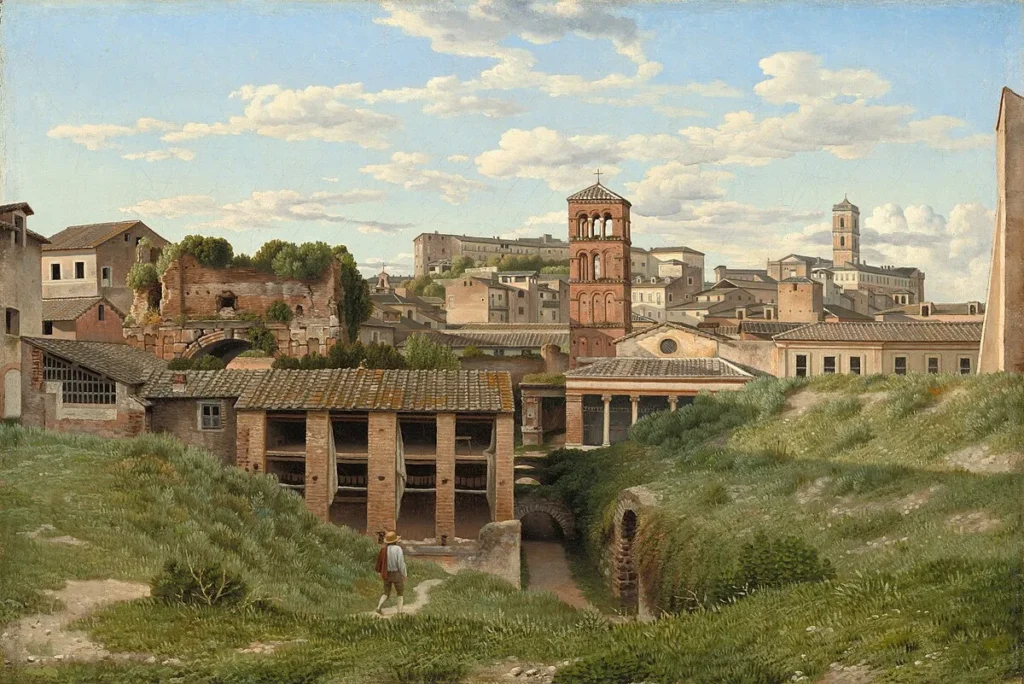
Once the ground level had been raised, the first gravel pavement of the Forum was laid down on top of this massive landfill. This surface, known archaeologically as Stratum 22 A, consisted of a thick, densely packed bed of pebbles approximately 15 centimeters deep. The top of this layer stood at roughly 9 meters above sea level, finally placing the Forum surface above the reach of all but the most catastrophic Tiber floods.
But the landfill alone couldn’t solve Rome’s water problem. The Cloaca Maxima provided the essential drainage infrastructure that made the transformation complete. The open-air canal, with its massive stone walls rising 1.25 meters above its floor, channeled the natural springs and rainwater runoff safely through the newly leveled Forum space.
Wooden beams, inserted into squared niches cut into opposing blocks at the top of the canal walls, served a dual purpose. They braced the stone facing to prevent the walls from falling inward, and they provided bridges that allowed people to cross from one side of the Forum to the other. Similar engineering solutions appear in other Roman canalized water systems, like the canal at Swarenacker, Germany, where wooden planks still hold up stone sides, and the Euripus in the Campus Martius, where stone bridges cut into walls may have served as braces.
This wasn’t a covered sewer in its original form. The playwright Plautus, writing in the late third century BCE, called it a “canalem” (canal), suggesting it remained open to the sky for centuries after its construction. Only later, after the start of the second century BCE, were vaults added to cover the channel. Today, the system displays a patchwork of Roman building techniques spanning more than 700 years of repairs, extensions, and modifications.
How the Cloaca Maxima Evolved Over Centuries
The story of the Cloaca Maxima isn’t frozen in the sixth century BCE. Like the city it served, the drainage system evolved constantly to meet changing needs.
During the Republic, Romans extended the main channel and added numerous smaller drains feeding into it. They constructed new tracks to circumvent buildings rather than tunneling beneath them, creating the twisting route we see today. In the area of the Imperial and Roman Fora, canals and vaults display archaic, mid-republican, Augustan, and Domitianic masonries, each representing different eras of construction and repair.
One major restructuring occurred under Emperor Augustus, likely overseen by his trusted adviser Agrippa. An Augustan track, built with opus reticulatum and Anio Tufo, ran along the eastern edge of the Forum Transitorium, passed underneath the Basilica Aemilia, and connected to the archaic channel in the Forum Romanum. Later, when Domitian built the Forum Transitorium, he had this Augustan track sealed off and installed a new channel. Its walls of Peperino stone, later capped with opus latericium in bipedales and a cement vault, began at the corner of the Temple of Minerva, crossed the Forum Transitorium, and met a mid-republican track on the northwest side of the Basilica Aemilia.
Romans only rarely built major structures directly over the cloacae due to concerns about collapse. When the Basilica Aemilia (or its forerunner) was constructed over an area that contained an earlier section of the Cloaca, builders redirected the canal around the northwest side of the building for structural safety.
By the time Frontinus assumed the post of curator aquarum in 97 CE, the Cloaca Maxima’s concrete and masonry tunnels channeled Rome’s refuse beneath the Fora, around the hills, and through extensive drainage networks in the valleys of the Circus Maximus, Campus Martius, and Trastevere. The system he oversaw was a work “for which the new magnificence of these days has scarcely been able to produce a match,” as Livy would write.
Archaeological Evidence and Modern Discoveries
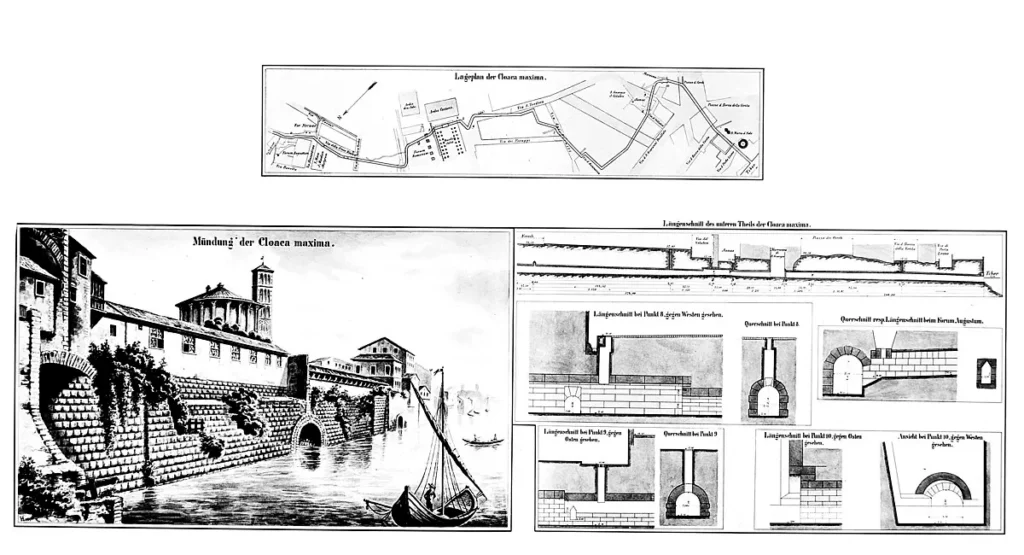
Our knowledge of the Cloaca Maxima comes from multiple excavation campaigns, each contributing pieces to the puzzle. Giacomo Boni, working at the turn of the 20th century, was the first archaeologist to undertake systematic deep soundings in Rome. His excavation in the center of the Forum, near what was then identified as the Equus Domitiani (though this identification is now questioned), was technically among his most difficult projects.
Working at a depth of more than 6 meters, well below the modern water table, Boni and his team excavated at least 9 cubic meters of deposit through the lowest strata. His assistant Bonelli drew a detailed 30-layer section, and Boni commissioned an extensive photographic record of surfaces exposed during excavation. At the base of the sounding, at an elevation of about 6.3 meters above sea level, Boni found three human skeletons without grave goods, laid to rest before the great transformation of the Forum began.
Einar Gjerstad reopened excavations on the southwest side of the monument in autumn 1949. His work was more limited in scope. He cleaned about 30 centimeters inside of Boni’s sectional wall to collect pottery sherds from each stratum for chronological comparison. In the lower part of the sounding, Gjerstad ran into the same water table issues that had challenged Boni, reducing his section width to about 85 centimeters below Stratum 22.
The two stratigraphic sequences agree closely. Both show the first gravel pavement with an average thickness of about 15 centimeters and a top elevation of approximately 9 meters above sea level. Both show the base of the lowest stratum with cultural remains occurring at about 6.9 meters elevation. This means the ground level rose more than 2 meters between the natural surface and the first paved Forum.
Recent environmental studies, using deep cores in combination with excavations at several sites across the Forum basin, have made it possible to reconstruct the original relief in detail. A transect running from the future site of the Tabularium to the Sepulcretum reveals the ancient topography. The natural land surface sloped down from roughly 30 meters above sea level on the Capitoline side to about 10.5 meters near the Temple of Saturn. It then maintained roughly the same height along much of the transect before falling off again toward the so-called Equus Domitiani in the center, where it reached its lowest point at less than 7 meters above sea level.
This means there was an elevated shoulder area extending almost to the future site of the Temple of Saturn, with another shoulder on the opposite side of the basin near the Regia and Temple of Vesta. These shoulders, standing at 9 to 11 meters above sea level, were formed by thick gravel beds at the base of both the Capitoline and Palatine hills. When the center of the basin stood at 7 meters or less in elevation, these gravel beds outcropped locally along the lower sides of the basin, creating favorable conditions for the seepage of groundwater and the occurrence of natural springs like the famous Lacus Iuturnae.
What the Ancient Sources Tell Us
The literary tradition preserves important memories of the Cloaca Maxima’s creation, even if transmitted through sources writing more than 500 years after the events they describe. Both Livy and Dionysius of Halicarnassus attribute the beginning of major drainage projects to Tarquinius Priscus, the fifth king of Rome, who according to Dionysius began his reign in 614 BCE.
Livy writes that Priscus “began digging the Cloaca” in order to drain the city about the Forum. Dionysius adds detail about public works projects undertaken to drain lower parts of the city. Both authors maintain that the work was only completed later, in the time of Tarquinius Superbus, the last king, when he “finished the drainage canals.”
The scale of the project clearly impressed ancient writers. Livy, Pliny, and Cassius Hemina describe scenes of construction so grueling that laborers attempted escape and even committed suicide. According to these accounts, so many people began revolting that Tarquinius Superbus instituted crucifixion at the site to deter further mutiny. Pliny’s account may preserve a memory of the grinding conditions of corvée labor that obtained on the project.
While we should treat these accounts with appropriate caution, given that their authors had political motives and wrote centuries after the fact, the basic outline matches what archaeology reveals. The sources speak of marshy conditions in the central part of the Forum basin. They describe major drainage and filling projects. They associate the work with the Tarquin kings of the late sixth century BCE. All of this aligns remarkably well with the physical evidence.
Dionysius even mentions, in two separate passages, that the Forum had been filled in, though he attributes this to the much earlier time of Romulus. This may be an example of what scholars call the “drainage” of content from the Tarquins to earlier times on the part of the anti-Etruscan Dionysius, who preferred to minimize Etruscan contributions to Rome’s greatness.
The Chronology Question
Dating the first gravel pavement of the Forum has been one of the most contentious issues in Roman archaeology. Gjerstad steadfastly maintained a date of 575 BCE for Stratum 22 A from one volume of his Early Rome series to the next. He saw the paving of the Forum at about 575 BCE as the material correlate of the formation of the Archaic city, the epoch-making event in Rome’s development.
Other scholars have proposed significantly earlier dates. Giovanni Colonna argued that the fill just below the first pavement (Stratum 22 B) contains apparently no fragments of ceramic tiles and should therefore date to Period IVA, before tiles came into use. Since Period IVB begins at latest in the last quarter of the seventh century BCE, Colonna dated the first pavement to around 650 BCE or even the middle of the seventh century.
The truth probably lies somewhere between these extremes. The datable pottery sherds recovered from the strata in question are limited in number. Gjerstad’s Stratum 28, the lowest layer, yielded only 65 sherds. Stratum 22 B, with the most material, had just 121 sherds. Given these small sample sizes and the selective recovery methods employed, chronological precision remains elusive.
Moreover, if the lower strata represent fills rather than gradual occupation debris, we should expect the occasional occurrence of earlier sherds mixed into the sediments dumped in the basin. Such sherds would appear anomalously early compared to the bulk of the material, which would date to the time of the project itself. There is indeed some indication that this pattern exists in the recovered pottery.
What we can say with confidence is that the great transformation of the Forum basin occurred sometime in the late seventh or early sixth century BCE, during the period when Rome was ruled by its last three kings. More precise dating awaits new excavations with modern recovery techniques and larger sample sizes.
Built out of a love for history, kept free from distractions.
Spoken Past is an independent project shaped by curiosity, care, and long hours of research. Reader support helps keep it maintained, carefully researched, and open to everyone.
Why This Matters for Understanding Early Rome
The story of the Cloaca Maxima and the Forum project forces us to reconsider fundamental assumptions about the development of ancient Rome. For decades, scholars debated whether Rome emerged through gradual development (Stadtwerdung) or through a decisive act of foundation (Stadtgründung). The evidence from the Forum basin suggests the answer is more nuanced than either extreme position.
The massive scale of the Forum project, requiring perhaps 10,000 to 20,000 cubic meters of fill, implies a level of political organization and community mobilization far beyond what a collection of simple villages could accomplish. Someone had the authority to plan this transformation, to organize the labor required, and to see it through over multiple years.
This wasn’t just a practical project. It involved what we might today call a complete environmental remediation. A low, wet place that Tiber floods regularly inundated, a place that may have had the symbolic value of belonging to the realm of the dead, was transformed into the solid center of civic life. The religious implications of such a transformation, the need to realign symbolic values and ritual practices associated with the place, would have been just as significant as the physical work.
The synergy between this project and other contemporary developments in Rome reinforces the picture of coordinated urban planning. At roughly the same time, Romans were building the massive Temple of Jupiter Optimus Maximus on the Capitoline Hill, which required filling and leveling an area of some 3,000 square meters. The temple’s foundation used the same cappellaccio blocks, cut to roughly the same size and mounted using the same construction techniques as the Cloaca Maxima.
Excavations by Frank Brown at the Regia revealed that this building, possibly the seat of the kings, was reconstructed several times during this period. One reconstruction featured a monumental foundation of cappellaccio blocks comparable to those used in the Capitoline Temple. Temples near the Forum Boarium and on the Aventine Hill, built under King Servius Tullius according to tradition, displayed extensive sculptural decoration.
Recent excavations by Andrea Carandini have revealed another contemporary project of impressive scale: a large ditch that once ran along the foot of the north slope of the Palatine Hill, in places 3 meters deep and 10 meters wide, was completely filled in during the second half of the sixth century BCE. The whole landscape of this area was restructured.
All of this activity points to the same conclusion. In the late seventh and early sixth centuries BCE, Rome underwent a dramatic transformation. The city wasn’t gradually evolving or slowly coalescing from scattered hilltop settlements. Someone was purposefully reshaping the urban landscape, creating monumental public spaces and buildings, implementing major infrastructure projects, and turning Rome into a true city.
The Human Capacity to Transform the Environment
One of the most striking aspects of the Forum project is what it reveals about the human capacity to transform the environment. By the late seventh century BCE, when faced with an environmental problem, Romans didn’t simply adapt to difficult conditions or abandon an unfavorable location. They transformed the landscape itself, turning waste land into prime real estate, creating a cityscape out of a landscape.
This theme, the purposeful transformation of the environment, is essentially new to the study of early Rome. Previous scholarship often assumed that human settlements adapted to environmental conditions but rarely considered the possibility that early Romans might actively reshape their surroundings on such a scale.
The procurement of fill material may itself represent an example of solving multiple problems simultaneously. The extensive use of cappellaccio for building blocks in early Rome required quarrying this pebble tuff from thick beds in both the Capitoline and Palatine hills. Extracting usable stone would have generated considerable quantities of unwanted sediment, the softer layers occurring just above and below the cappellaccio bed. One way to dispose of these sediments would have been to dump them in the basin as fill. We may be seeing a case of synergy between local stone exploitation and the ready availability of fill sediments for the Forum project.
The wooden beams inserted into niches at the top of the canal walls represent another elegant solution to multiple challenges. They braced the stone facing to prevent collapse while providing bridges for crossing the canal. The Romans who designed the Cloaca Maxima were thinking holistically about how people would use the space, not just about moving water from point A to point B.
How It Compares to Other Ancient Engineering
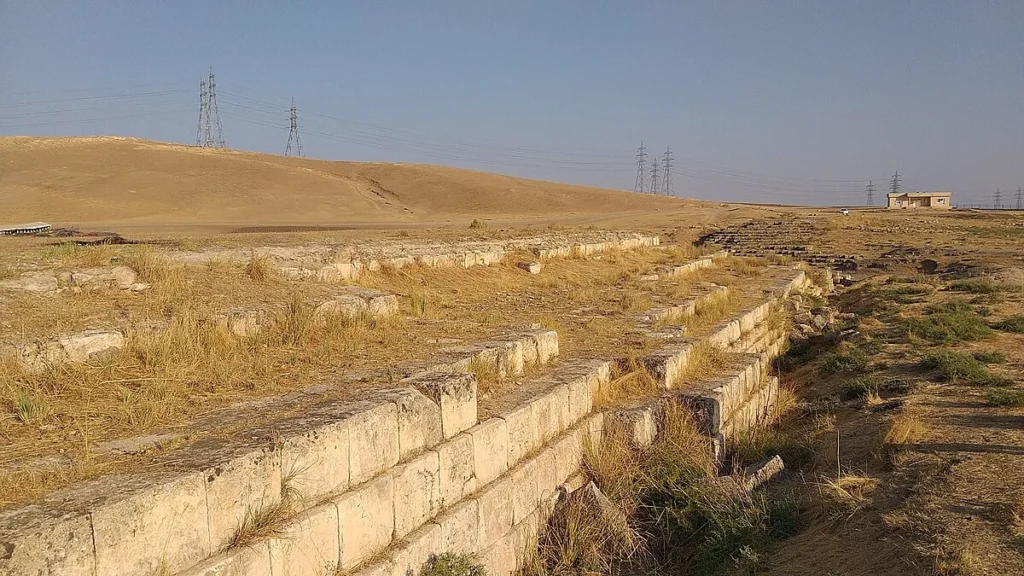
The Cloaca Maxima deserves comparison with other remarkable hydraulic projects of the ancient world. In 690 BCE, Sennacherib, king of Assyria, constructed a fifty-mile-long aqueduct to bring water from the Gomel River to his new palace in Nineveh. Like the Cloaca, Sennacherib’s aqueduct was walled in monumental stone blocks. He also built a six-mile-long walled canal along the banks of the Euphrates and a complex system of subterranean aqueducts throughout his palace.
Sennacherib could have built simpler systems if his only goal was moving water. Assyrians had previously dug canals directly into the ground and covered them with blocks, leaving them unadorned. But realizing the life-preserving significance of the water he brought to Nineveh, Sennacherib chose to monumentalize the entire length of his canal. He inserted stone markers throughout its masonry declaring: “I [Sennacherib] caused a canal to be dug to the meadows of Nineveh. Over deep-cut ravines I spanned a bridge of white stone blocks. Those waters I caused to pass over upon it.”
The parallel with the Cloaca Maxima is instructive. In both cases, rulers chose monumentalization when simpler solutions would have sufficed from a purely functional standpoint. The massive stone blocks, the careful construction, the enduring materials, all served a purpose beyond mere drainage. These structures proclaimed the power of those who built them, their capability to overcome nature, their authority to mobilize labor and resources on a grand scale.
The difference, of course, is that Sennacherib’s aqueduct is now a ruin, while the Cloaca Maxima still functions after 2,600 years.
Why It Still Works Today
The longevity of the Cloaca Maxima is almost as impressive as its original construction. Several factors explain its remarkable durability.
First, the choice of materials was superb. Cappellaccio tuff, while relatively soft and easy to work when freshly quarried, hardens with exposure to air and moisture. The massive size of the blocks, each weighing hundreds of kilograms, created a structure that was extraordinarily stable. The Romans weren’t building with small stones that could shift and settle. They were assembling giant components that, once positioned, would remain in place for millennia.
Second, the design allowed for adaptation. Because Romans typically didn’t build major structures directly over the cloacae, engineers in later periods could make repairs, add extensions, and modify routes without threatening the foundations of important buildings. When they needed to circumvent a new structure, they simply built a new duct around it. This flexibility meant the system could evolve with the city.
Third, the Romans and their successors maintained the system. The patchwork of different masonry styles visible today reflects continuous attention over the centuries. When a section broke or became severely outdated, engineers repaired or replaced just that portion. This incremental approach to maintenance, while creating an irregular appearance, ensured the system’s continued function.
Finally, the generous size of the main channels meant they could handle substantial water flow without becoming overwhelmed. Even today, the mouth of the Cloaca Maxima on the Tiber is an impressive arched opening, more than large enough for a person to walk through.
What You Can See Today
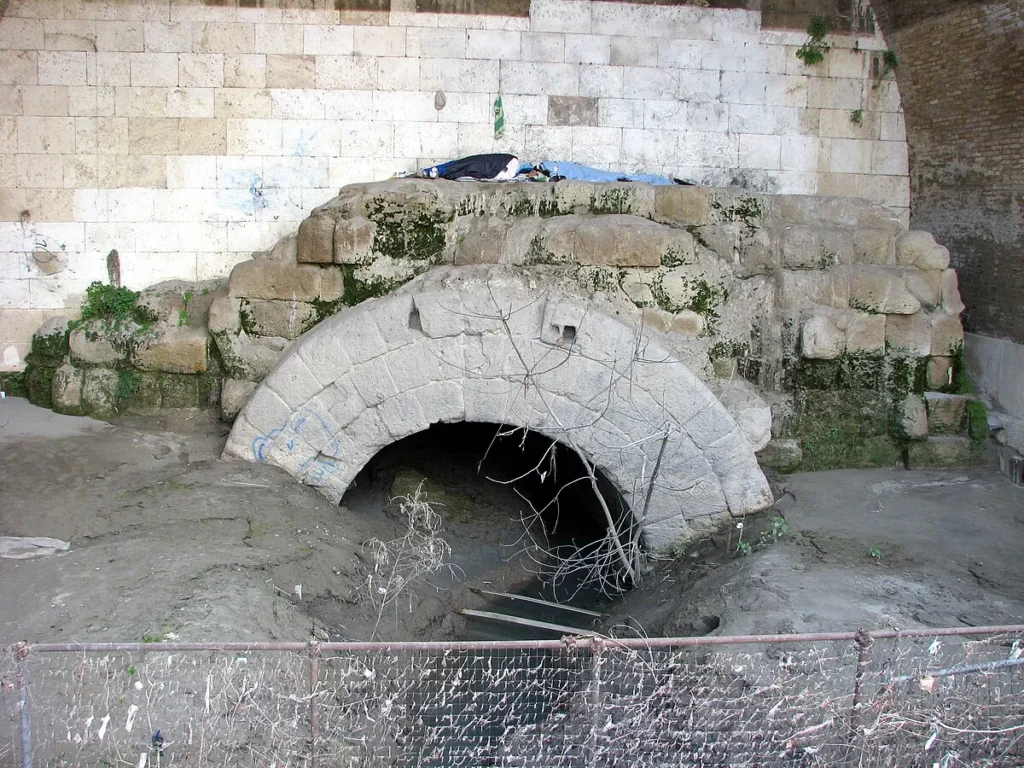
Modern visitors to Rome can still see evidence of the Cloaca Maxima, though much of it lies hidden beneath the city. The most dramatic view is the mouth of the main channel where it empties into the Tiber River. This massive arched opening, rebuilt over the centuries but retaining its monumental character, stands as a visible reminder of ancient Rome’s hydraulic engineering.
In the Forum itself, the travertine pavement of the Imperial period, what visitors walk on today, stands approximately 4 meters or more above the first gravel surface of the Archaic Forum. The layers of Rome’s history, quite literally, are stacked upon one another. Beneath the visible ruins of temples, basilicas, and monuments lies the infrastructure that made it all possible.
Occasionally, during restoration work or new excavations, archaeologists gain access to sections of the ancient drainage system. The interior of some channels reveals the progression of construction techniques across the centuries. Opus reticulatum and Anio Tufo mark Augustan work. Peperino walls capped with opus latericium in bipedales show Domitianic construction. Patches of cappellaccio blocks, their surfaces weathered by 2,600 years of flowing water, connect to walls built under the Republic.
The water table in the central part of the Forum today stands at about 8.5 meters above sea level, roughly the same height as the lower fill levels observed in archaeological soundings. This explains why excavations below this depth require pumps to keep working areas dry, the same challenge that confronted Giacomo Boni more than a century ago.
The Legacy of Ancient Roman Engineering
The Cloaca Maxima represents more than just an impressive feat of ancient engineering. It embodies an approach to problem-solving that would characterize Roman civilization throughout its history. When confronted with a challenge, whether environmental, military, or political, Romans didn’t accept limitations. They found ways to overcome them.
This attitude produced the aqueducts that brought fresh water to Rome from sources dozens of miles away. It built the roads that connected the Mediterranean world. It created the harbors, bridges, amphitheaters, and baths that remain iconic symbols of Roman achievement.
But the Cloaca Maxima came first. It proved that Romans could reshape their world on a monumental scale. It demonstrated that with organization, determination, and engineering skill, seemingly insurmountable obstacles could be conquered. That lesson, learned in the marshy valley between the Capitoline and Palatine hills sometime around 2,600 years ago, would echo through the centuries.
Visiting the Mouth of the Cloaca Maxima
If you want to see the Cloaca Maxima for yourself, head to the Tiber River embankment. The mouth of the great drain emerges from beneath the city on the east bank, between the Ponte Palatino and Ponte Rotto bridges. Look for a large arched opening in the ancient stone river wall, particularly visible when the Tiber’s water level is low.
While you can’t enter the system (it’s still functioning and access is restricted), standing before this opening and contemplating what it represents is a powerful experience. This is where Rome’s oldest infrastructure, built by kings whose names echo in legend, still carries water as it has for more than two millennia.
The Forum Romanum itself is open to visitors year-round. As you walk across the travertine pavement, through the ruins of temples and basilicas from the height of Roman power, remember that beneath your feet lies the foundation that made it all possible: a massive landfill project and drainage system built when Rome was just beginning its journey to greatness.
The Takeaway
The Cloaca Maxima stands as one of history’s most successful infrastructure projects. For more than 2,600 years, it has served its purpose, adapting to changing needs while maintaining its essential function. No modern sewer system can claim such longevity.
But beyond its practical achievement, the Cloaca Maxima reveals something profound about the society that created it. The political organization required to conceive and execute such a project, the engineering knowledge needed to design it, the labor mobilization necessary to build it, all point to a Rome far more sophisticated than simple villages on hills.
The transformation of the Forum basin from marshy waste ground to the center of civic life represents a pivotal moment in the city’s history. Someone had a vision of what Rome could become and the determination to make it real. They didn’t accept the environment they inherited. They reshaped it to serve their purposes.
That ambition, that refusal to accept limits, that confidence in human capacity to overcome challenges through organization and engineering, those qualities defined Rome throughout its history. They all began with a drainage ditch in a swampy valley more than 2,600 years ago.
The Cloaca Maxima isn’t just the world’s oldest working sewer. It’s the foundation upon which the Roman Empire was built. Every road, every aqueduct, every bridge, every monument that followed drew inspiration from this first great project. And unlike so many other ancient wonders, you can still watch it work today.
That’s the real marvel of the Cloaca Maxima. It’s not just history. It’s living history, still flowing, still functioning, still serving the city it helped create. In a world where infrastructure often fails within decades of construction, there’s something profound about standing before an engineering work that has served continuously for 2,600 years.
The ancient Romans built things to last. The Cloaca Maxima proves they succeeded.