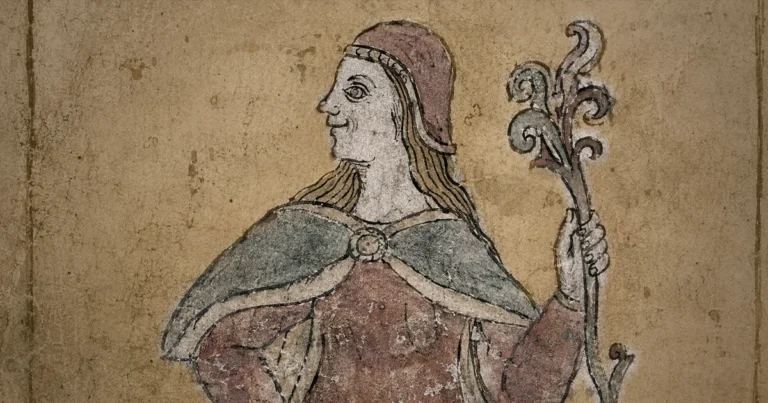

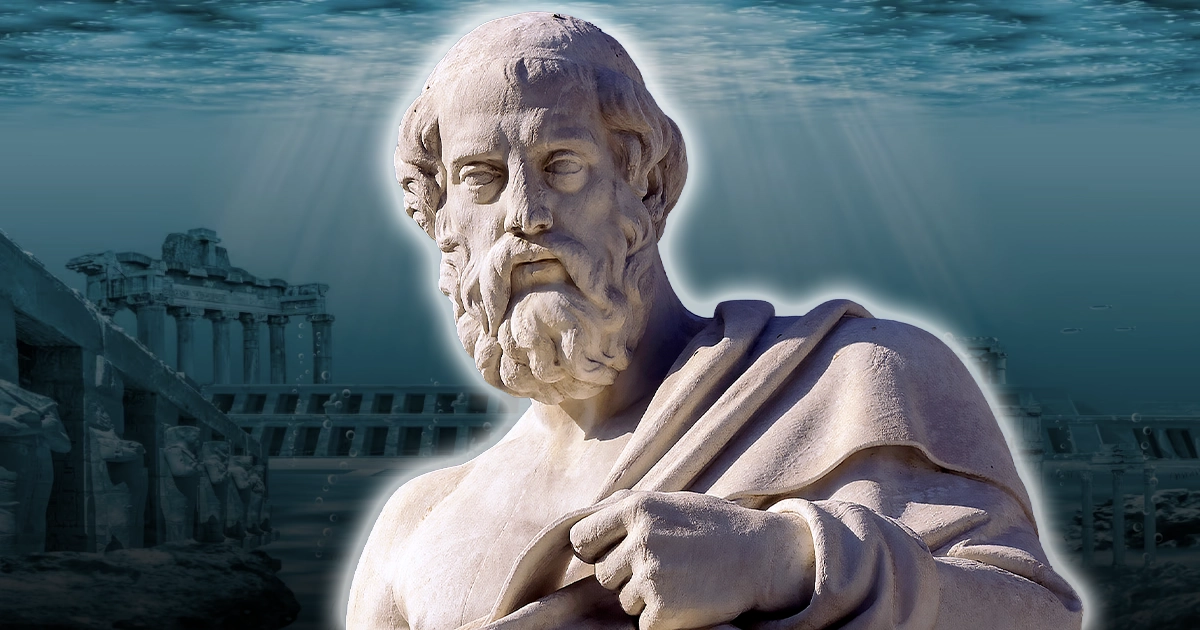
In 360 BCE, a 67-year-old philosopher sat in Athens and wrote a story about a naval empire that sank beneath the ocean nine thousand years earlier. He named his narrator after a real Athenian politician, gave him a chain of sources stretching back to Egyptian priests, and loaded the account with precise measurements, architectural plans, and named metals. The story was an invention. Plato’s Atlantis appears in two late dialogues, the Timaeus and the unfinished Critias, and it has generated more obsessive searching than almost any other text in Western history. Classical scholars, who have read these dialogues carefully for over two thousand years, are largely unsurprised that nothing has been found. The text, read on its own terms, tells you exactly why.
What the Dialogues Actually Say
The Atlantis story does not stand alone. It opens the Timaeus, a dialogue primarily concerned with the structure of the cosmos and the nature of the soul. Atlantis enters as an illustration: Socrates has sketched his ideal city, and he asks his companions to show it in action, fighting a worthy war. Critias, one of the dialogue’s speakers, obliges with a tale he claims to have received orally through four generations of family transmission, ultimately deriving from Solon, who heard it from Egyptian priests at the temple city of Sais during his travels of roughly 590 BCE.
The details are specific and theatrical. Atlantis lay beyond the Pillars of Heracles, what we now call the Strait of Gibraltar, as an island larger than Libya and Asia combined. Poseidon founded it after falling in love with a mortal woman named Cleito. Their ten royal descendants built concentric rings of land and water around the island’s central plain, covered its temples in a gleaming red metal called orichalcum, and assembled a fleet capable of threatening the entire Mediterranean world. Ancient Athens alone resisted them. Then both cities were destroyed in a single catastrophic night: Athens swallowed by earthquakes and floods, Atlantis swallowed by the sea.
The companion dialogue Critias picks up the account with even greater architectural detail, describing canals, racecourses, palace complexes, and elephant herds before breaking off mid-sentence. Plato almost certainly died before completing it. In 2017, classicists Marwan Rashed and Thomas Auffret published a paper in the peer-reviewed journal Phronesis arguing that the Critias may not be Plato’s work at all, raising the possibility that the more elaborate dialogue was a later composition attributed to him. That debate has not been resolved, and it matters: the primary source for Atlantis’s most famous architectural details may not originate with Plato himself.
The Scholarly Consensus on Plato’s Atlantis
Aristotle, who studied under Plato for twenty years, appears to have treated the story as an invention. The geographer Strabo records this view. The Neoplatonist philosopher Proclus, writing his fifth-century CE commentary on the Timaeus, found ancient readers already divided between a literal and an allegorical reading, though he noted that the allegorical interpretation was well established among those who had read the dialogues carefully.
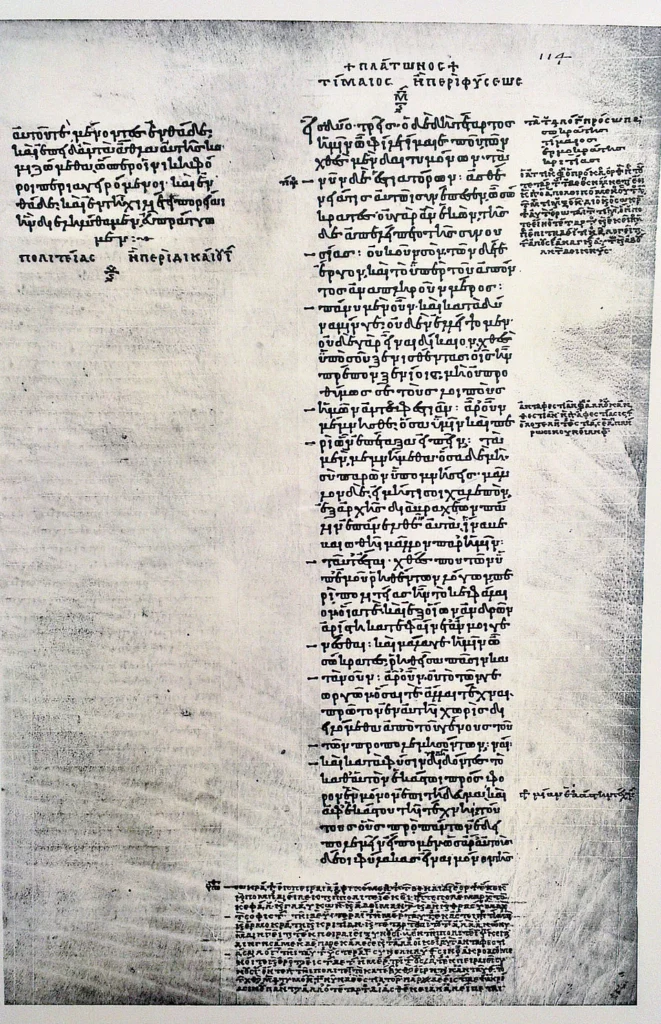
The modern scholarly consensus was developed most precisely by Christopher Gill of the University of Exeter. In his foundational 1977 paper in Classical Philology, Gill argued that the Atlantis story belongs to a literary genre Plato was in the process of inventing: extended fictional narrative presented with the surface apparatus of historical fact. Plato has Critias insist the story is absolutely true, but Gill reads this not as a genuine claim but as part of the fiction’s mechanism. The truth-claim is a literary device, one that makes the philosophical argument more vivid by lending the tale the urgency of eyewitness history. Gill developed this analysis further in his 2017 commentary on the primary texts, published by Liverpool University Press, which remains the authoritative scholarly edition of the Timaeus and Critias in English.
A.E. Taylor, one of the twentieth century’s leading Plato scholars, made the point more directly, writing that the text could not signal more plainly that the Egyptian provenance and the Solon narrative are Plato’s own construction. Reginald Hackforth, in a precise 1944 paper in the Classical Review, identified the moral architecture of the story as Plato’s primary concern. Atlantis is not a geography lesson. It is a philosophical argument wearing the costume of one.
Why the Numbers Cannot Be Taken Literally
The most direct evidence that the Atlantis account is fiction lies in its chronology. Plato sets the war nine thousand years before Solon’s visit to Egypt, placing the events around 9600 BCE. Writing was not invented anywhere in the world until roughly 3200 BCE in Mesopotamia. No complex city-state civilization existed in the Aegean or anywhere near the Atlantic in 9600 BCE. The archaeological record is unambiguous on this point, and Plato, as an educated Athenian philosopher with access to the intellectual resources of the Academy, would have had no basis for believing otherwise. The number nine thousand is not a historical estimate. It is a mythic signal.
Pierre Vidal-Naquet, one of the most important ancient historians of the twentieth century, made this argument in definitive form in his 1992 essay in Critical Inquiry. He observed that nine thousand is a grand, round, deliberately archaic number of the kind that signals to a Greek reader the shift from history into philosophical legend. Vidal-Naquet extended this analysis in his book The Atlantis Story: A Short History of Plato’s Myth, published by the University of Exeter Press, where he traced how the story escaped its philosophical context over two millennia and became the raw material for a tradition of wishful searching that has nothing to do with what Plato actually wrote.
The geography is equally impossible taken at face value. An island larger than Libya and Asia combined would cover most of the known ancient world. Placing it beyond the Pillars of Heracles moved it outside all navigable and verifiable geography, into a space that was, for Greeks of Plato’s era, available for intellectual invention precisely because no one could go there to check. Hackforth argued that this placement was entirely deliberate: Atlantis had to be unreachable because it was not a place. It was a moral position constructed to make the ideal state legible by contrast with its opposite.
The Source Chain That Cannot Hold
One of Plato’s most effective literary moves was giving Atlantis a provenance. The story did not arrive from nowhere. Solon heard it in Egypt, passed it to his kinsman Dropides, Dropides passed it to his son Critias the Elder, who told it to his ten-year-old grandson, the Critias speaking in the dialogue, during a festival recitation. This chain simultaneously gives the story an air of deep antiquity and makes verification impossible. No living person can check it. No written source outside Plato’s own dialogues confirms any part of it.
Classicists have examined this chain and found it chronologically strained. The gap between Solon’s travels of roughly 590 BCE and the dramatic date of the Timaeus of roughly 421 BCE requires a complex narrative, one involving precise measurements, architectural descriptions, and named rulers, to survive at least four oral transmissions across approximately 170 years. There is no mention of Atlantis in any Greek source prior to Plato. Not in Herodotus, who wrote extensively about both Egypt and Solon. Not in Thucydides. Not in Pindar, Aeschylus, Sophocles, Euripides, or any Athenian comic playwright. The silence across the entire fifth-century literary record is total and pointed.
Gill’s Liverpool University Press commentary notes that the Egyptian framing is itself a piece of literary stage-setting with a specific argumentative function. In the competitive intellectual culture of fourth-century Athens, Egypt was regarded as the source of ancient wisdom and the supposed origin of Greek cultural institutions, a view Herodotus had popularized and that Plato’s contemporaries debated. By making Egypt the keeper of a story that ultimately glorifies prehistoric Athens, Plato inverted that relationship. Solon travels to Egypt; Egypt returns an account of Athenian greatness that Egypt alone has preserved. The argument only functions if Plato constructed it himself.

Built out of a love for history, kept free from distractions.
Spoken Past is an independent project shaped by curiosity, care, and long hours of research. Reader support helps keep it maintained, carefully researched, and open to everyone.
Orichalcum and the Logic of a Fictional Metal
The metal orichalcum follows the same interpretive pattern as the chronology and the geography. Plato describes it as second only to gold in value, gleaming red, covering the walls of Atlantis’s temples and the prows of its warships. No ancient source agrees on what it actually was. Some ancient writers identified it as a copper alloy. Others described it as a form of brass. Others treated it as a mythological substance with no real-world referent. Its identity was contested in antiquity and remains unresolved.
The vagueness is a feature of the text, not a gap in the archaeological record. A real and historically significant metal would have a real identity, a known mineralogy, and a documented trade route. A philosophical prop needs only to gleam. Orichalcum functions in the Critias as a marker of excess: it covers everything, it is everywhere, it signals that Atlantis has moved from the virtuous simplicity of its founders into the kind of ostentatious material culture that, in Platonic ethics, reliably precedes moral and political collapse. The metal is doing argumentative work. It was never doing geological work.
The Political Argument Atlantis Was Built to Make
Strip away the ocean, the measurements, and the metals, and the structure of the Atlantis narrative becomes transparent. On one side sits a city that cultivates virtue, practices restraint, and organizes itself around philosophical principles. On the other sits a city that begins virtuous, accumulates wealth and naval power, grows arrogant, and loses the favor of the gods. The second invades the first. The first defeats it. Both are then destroyed by catastrophe, and the story survives only in the written records of a civilization wise enough to preserve what others forgot.
Vidal-Naquet placed this structure in its immediate historical context with precision. Athens in 360 BCE had lost the Peloponnesian War thirty years earlier. It had been occupied briefly by Spartan-backed oligarchs. It was attempting to rebuild a naval empire through the Second Athenian League while simultaneously debating, in the Academy and in the Assembly, what kind of city it actually was and what kind it should become. Plato’s answer, worked out across multiple dialogues including the Republic and the Laws, was that Athens had gone badly wrong by becoming wealthy, naval, and imperialistic, which is exactly what Atlantis represents in the Timaeus. Ancient Athens in the story is what the city could have been. Atlantis is what it had become. The war between them is a philosophical diagnosis wearing the costume of a military epic.
Hackforth’s analysis in the Classical Review identified this moral architecture as the dialogue’s primary purpose, and no subsequent scholarship has seriously challenged it. The catastrophe that ends both cities is not a geological prediction or a folk memory of a real disaster. It is Plato’s conclusion that even the ideal state cannot survive indefinitely in a world governed by hubris, and that the only thing which reliably outlasts great powers is the philosophical record kept by those wise enough to write things down. Egypt, in Plato’s telling, is not the origin of Greek wisdom. It is the archive that proves Greek virtue existed before Greece forgot it.
How Atlantis Escaped Its Philosophical Context
Ancient philosophers were broadly skeptical that Atlantis described anything real. Crantor of Soli, one of the earliest commentators on Plato in the early third century BCE, appears to have taken the story at face value, but he was unusual and his position did not dominate ancient interpretation. The mainstream of Platonic commentary treated Atlantis as allegory or invention. The story remained within its philosophical context for most of antiquity and through the medieval period, surviving primarily as a curiosity attached to the Timaeus rather than as a serious geographical or historical claim.
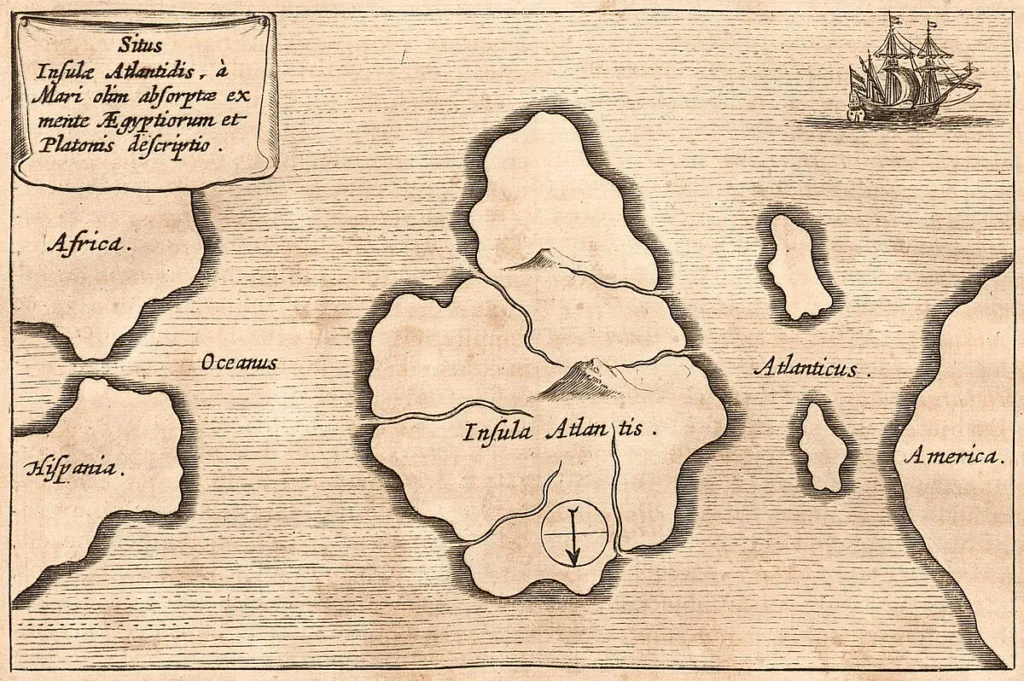
The rupture came during the Renaissance, when humanist scholars began treating Plato’s dialogues as encyclopedic repositories of ancient factual knowledge rather than argumentative philosophical texts. Once the fictional framing was set aside, the vivid details became available for literal interpretation. By the time Ignatius Donnelly published Atlantis: The Antediluvian World in 1882, Plato’s moral fable had been fully detached from Plato. Donnelly drew on the text selectively, ignored its argumentative structure entirely, and launched a tradition of searching that continues in documentaries, bestselling books, and online forums to this day, none of which engages seriously with the classical scholarship that has addressed these questions for centuries.
Vidal-Naquet documented this process of detachment in careful historical detail, tracing how each century found in Atlantis the lost civilization it most needed: the Americas for sixteenth-century Spanish colonialists mapping a new world onto Plato’s ocean, a drowned continent for nineteenth-century catastrophists, a prehistoric super-civilization for early twentieth-century nationalist movements. None of these readings engage with what Plato actually wrote. All of them take the decorative surface of the story and discard the argument it was constructed to carry. The primary texts are freely available through the Perseus Digital Library at Tufts University. They have always been freely available. The searching continues regardless.
What Scholars Still Debate
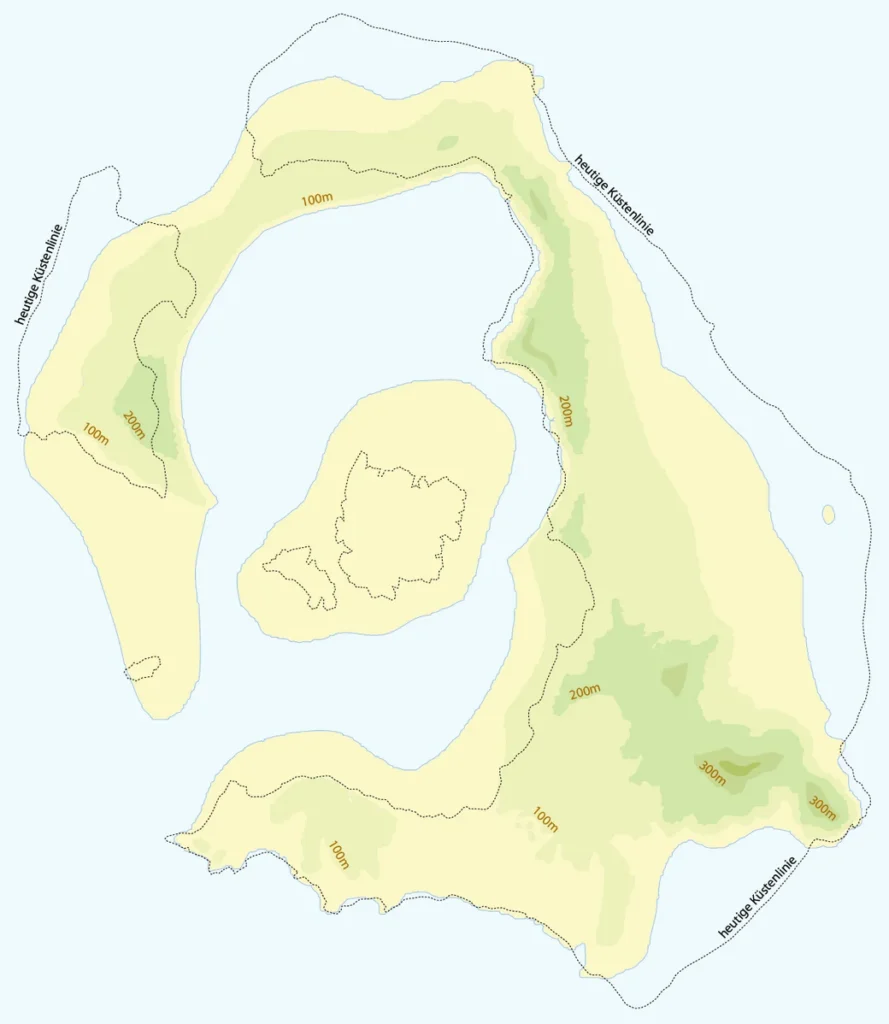
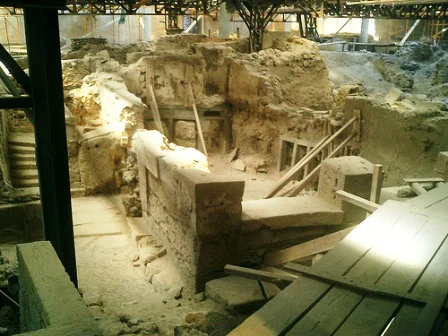
The scholarly consensus that Atlantis is Platonic fiction is firm. What remains genuinely contested among classicists is narrower: whether Plato drew on any real historical material as raw ingredients for the story, and if so, what that material might have been. The late Bronze Age eruption of Thera, which destroyed the Minoan settlement at Akrotiri and distributed ash across the Aegean, has attracted attention as a possible cultural memory that Plato could have drawn on indirectly through oral tradition. This hypothesis, associated with scholars including Spyridon Marinatos and later Angelos Galanopoulos, has never achieved consensus in the field. Gill’s close analysis of the text finds no compelling evidence that Plato had access to any coherent tradition about Thera specifically, and the chronological and geographical mismatches between the Theran eruption and the Atlantis account are substantial and difficult to explain away.
The authorship question raised by Rashed and Auffret in Phronesis remains open and underexplored in popular accounts of the story. If the Critias is not Plato’s own work, then the most architecturally elaborate version of Atlantis, the one with the precisely measured canals, the racing stadiums, and the elephant herds, may be a later elaboration built on top of an earlier and more philosophically controlled original. This would not change the fundamental interpretation of the story. It would, however, complicate the source history further and make the case for treating any detail of the Critias as reliable testimony about anything even weaker than it already is.
What no credible classicist currently argues is that Atlantis was a real place whose physical remains await discovery somewhere on the ocean floor or under a desert. The text does not support it. The silence of every contemporary Greek source does not support it. The chronology, the geography, the metals, and the moral architecture of the narrative all point in the same direction. Plato’s Atlantis was a philosophical instrument, built to make an argument about virtue, empire, and political decay that was urgently relevant to Athens in 360 BCE. It was a brilliant and enduring construction. It was never a place, and it was never lost, because it was never real.