
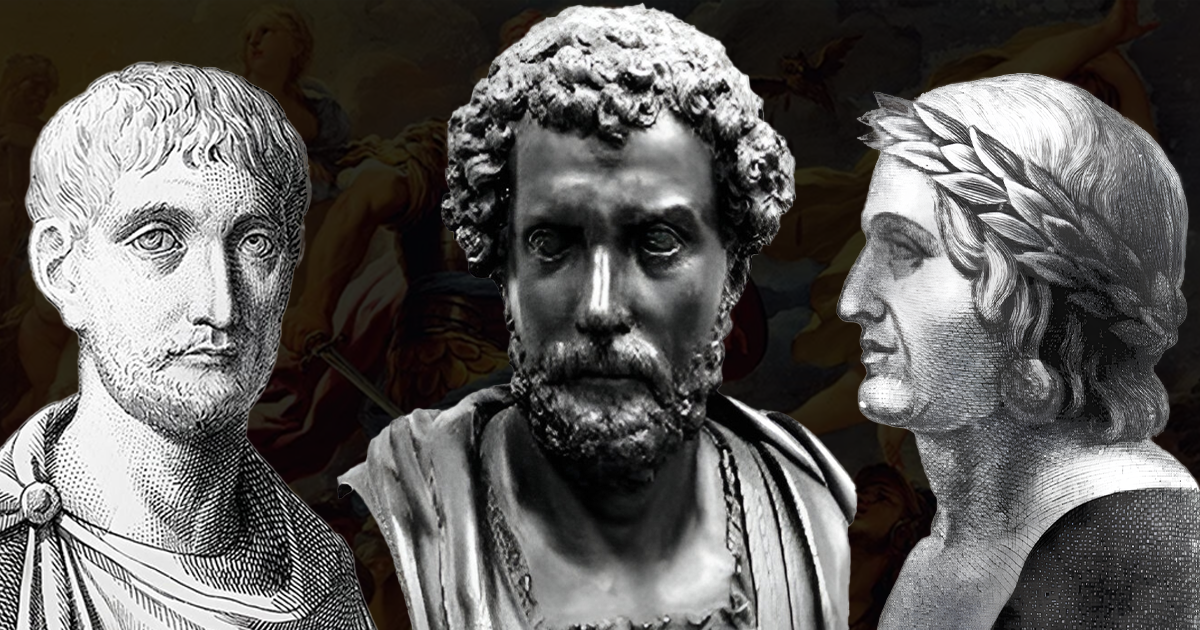
When we think of Roman epic poets, one name dominates the conversation: Virgil. His Aeneid stands as the towering achievement of Latin epic poetry, the work that every Roman schoolboy memorized and every subsequent poet measured himself against. But Virgil’s shadow, however magnificent, has obscured a constellation of brilliant writers who crafted their own epic masterpieces in the decades and centuries after his death. These Roman epic poets deserve far more recognition than they typically receive.
The generation that followed Virgil faced an impossible task: how do you write epic poetry when the greatest epic ever written in Latin already exists? Some poets chose to challenge Virgil directly, others to complement him, and still others to forge entirely new paths through the epic tradition. What emerged was a rich body of Latin epic poetry that grappled with civil war, mythological tragedy, and the very nature of heroism itself. These post-Virgilian poets created works that medieval scholars treasured alongside the Aeneid, that Dante studied with reverence, and that shaped how later generations understood both Roman history and the possibilities of epic verse.
1. Lucan: The Poet Who Made History Epic
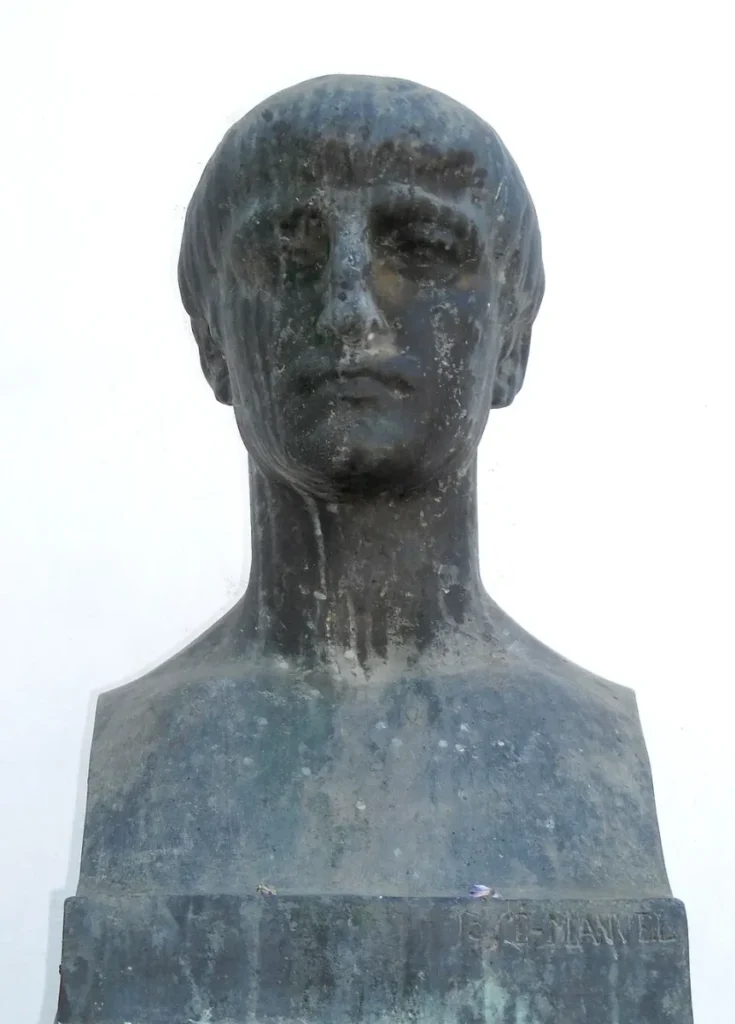
Marcus Annaeus Lucanus, known to us as Lucan, wrote the most politically explosive epic in Roman literature. His Pharsalia (also called Bellum Civile or “The Civil War”) takes as its subject the catastrophic conflict between Julius Caesar and Pompey the Great, the war that destroyed the Roman Republic and paved the way for imperial rule. Written during the reign of Nero, who would eventually force Lucan to commit suicide in 65 CE, this ten-book epic represents something radically different from Virgil’s mythologically infused narrative.
Lucan made a deliberate choice that shocked ancient readers and continues to fascinate modern scholars: he eliminated the gods from his epic. While Virgil’s Aeneid teems with divine intervention, prophecies, and supernatural machinery, Lucan’s universe operates according to fate and human choice alone. The gods make no appearances. There are no helpful visions, no protective deities guiding favored heroes. Instead, Lucan gives us history presented with epic grandeur but stripped of comforting mythology.
The Pharsalia opens with one of the most famous lines in Latin literature: “Of wars across Emathian plains, worse than civil wars, and of legality conferred on crime we sing.” From the first words, Lucan announces his theme is not glorious conquest but fratricidal horror. He describes Romans killing Romans, the republic tearing itself apart, and liberty dying on the battlefield at Pharsalus. Where Virgil celebrated the foundation of Roman greatness, Lucan mourned its self-destruction.
His portrayal of Julius Caesar remains one of the most complex in ancient literature. Caesar appears as a force of nature, brilliant and terrifying, driven by an insatiable hunger for power. Lucan describes him with imagery of lightning, fire, and destructive wind. When Caesar crosses the Rubicon, the moment that made civil war inevitable, Lucan presents it not as a triumph but as a violation of all that made Rome great. The poet’s sympathies clearly lie with Pompey and the republican cause, though he portrays Pompey himself as noble but ineffectual, a man whose virtue cannot match Caesar’s ruthless energy.
The most striking episodes in the Pharsalia demonstrate Lucan’s taste for the grotesque and horrible. In Book Six, the witch Erichtho performs a necromancy so vivid and revolting that it influenced horror literature for centuries. She reanimates a corpse on the eve of the Battle of Pharsalus, forcing the dead soldier to prophesy the republican defeat. The scene drips with decaying flesh, unnatural rituals, and cosmic horror. Dante himself drew on Lucan’s Erichtho when constructing the underworld of his Divine Comedy, testament to the passage’s enduring power.
Lucan died at just 25 years old, leaving his epic unfinished at ten books. His involvement in the Pisonian conspiracy against Nero led to his forced suicide, during which, according to ancient biographers, he recited verses from his own poem about a dying soldier. The Pharsalia thus became both an artistic achievement and a political statement, a work that dared to question the imperial system under which it was written. As the medieval commentaries demonstrate, readers throughout the Middle Ages regarded Lucan not as an anti-Virgilian rebel but as a complementary voice in the epic tradition, a poet who showed that history itself could provide epic subject matter as compelling as any myth.
2. Statius: Master of Mythological Darkness
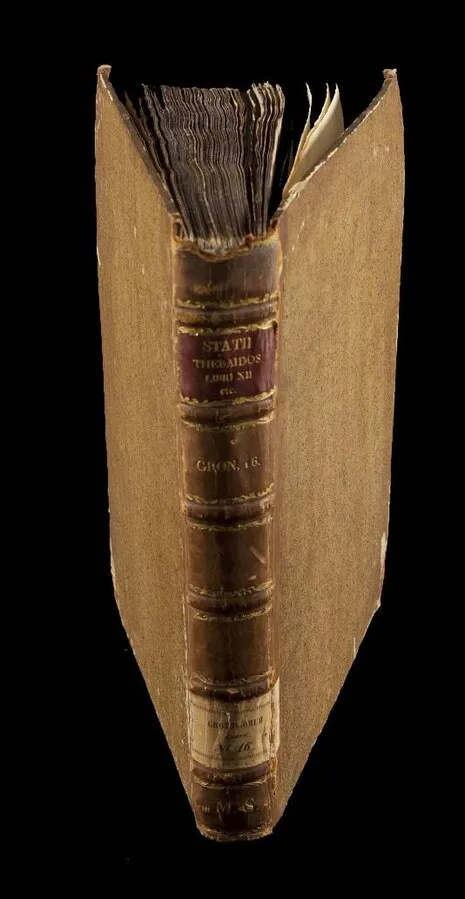
Publius Papinius Statius composed two major epics that showcase the full range of post-Virgilian ambition. His Thebaid, completed around 92 CE, and his unfinished Achilleid demonstrate how Roman epic poets could take Greek mythological material and transform it into something distinctly Roman, even as they acknowledged their debt to both Homer and Virgil.
The Thebaid spans twelve books and tells the story of the war between the sons of Oedipus, Eteocles and Polynices, for control of Thebes. Statius chose one of the darkest stories in Greek mythology: two brothers, both cursed by their father’s crimes, locked in a conflict that can only end in mutual destruction. The epic opens with Oedipus calling down curses on his sons, and everything that follows unfolds with the inexorability of Greek tragedy transplanted into Roman epic verse.
Where Virgil’s epic moves toward the foundation of Rome and the promise of Augustan peace, Statius’s Thebaid spirals deeper into violence and fratricide. The Seven Against Thebes march toward a city that will destroy them. Statius crafts extended battle scenes that rival anything in the Iliad for their brutal intensity, but he frames the violence within a cosmic order where the gods themselves seem implicated in human suffering. Jupiter and the other Olympians manipulate events, but their interventions bring not salvation but further catastrophe.
Statius proves himself a master of the extended set piece. In Book Four, the army of the Seven stops at Nemea, where they encounter Hypsipyle, the former queen of Lemnos now serving as a nursemaid. Her embedded narrative about the women of Lemnos murdering their husbands adds another layer of horror to an already dark epic. When Hypsipyle neglects her charge to tell this story, the infant Opheltes is killed by a serpent, and his funeral games become an elaborate pause before the final assault on Thebes. The episode demonstrates Statius’s sophisticated use of delay and digression, techniques he learned from both Homer and Virgil but deployed with his own artistic purposes.
The climax of the Thebaid delivers on the promise of fratricide. Eteocles and Polynices meet in single combat, and Statius describes their mutual slaughter with horrifying detail. Neither brother can claim victory; both die cursing each other. Even their funeral pyres cannot coexist peacefully. When their bodies are cremated together, the flames split apart, refusing to mingle even in death. This image of the divided flame became one of the most memorable in ancient epic, later inspiring Dante’s treatment of Ulysses and Diomedes in Inferno XXVI.
Statius’s second epic, the Achilleid, breaks off after just one book and part of a second. He planned to tell the complete story of Achilles, from childhood to death at Troy, but managed only to describe the young hero’s early life and his mother Thetis’s attempt to hide him on Scyros disguised as a girl. Even in this fragmentary state, the Achilleid reveals Statius experimenting with epic form. He combines martial epic with elements of romance and comedy as Achilles, disguised among the daughters of King Lycomedes, falls in love with Deidamia and fathers Neoptolemus. The gender-bending episode allowed Statius to explore themes of identity, masculinity, and destiny in ways that pure battlefield epic could not accommodate.
The medieval reception of Statius proves fascinating. Dante places him in Purgatory rather than Limbo, claiming (without any historical basis) that Statius converted to Christianity after reading Virgil’s Fourth Eclogue. In the Divine Comedy, Statius becomes a bridge figure, a pagan poet who found Christian truth through reading Latin epic poetry. This medieval reinvention testifies to how deeply the Thebaid had penetrated European literary culture. Along with Virgil, Ovid, and Lucan, Statius formed part of the standard medieval curriculum, his dark visions of human conflict speaking across the centuries to new audiences facing their own political and moral catastrophes.
Built out of a love for history, kept free from distractions.
Spoken Past is an independent project shaped by curiosity, care, and long hours of research. Reader support helps keep it maintained, carefully researched, and open to everyone.
3. Valerius Flaccus: Reimagining the Argonauts
Gaius Valerius Flaccus undertook one of the most audacious projects in Roman epic poetry: retelling the story of Jason and the Argonauts, a tale already magnificently narrated by the Hellenistic poet Apollonius of Rhodes in his Argonautica. Valerius’s version, also called Argonautica, was probably composed during the Flavian period, roughly contemporary with Statius’s work. Like Lucan’s Pharsalia, it remains incomplete, breaking off in the eighth book during Jason’s adventures in Colchis.
Valerius faced the challenge that confronted all post-Virgilian poets: how to justify writing epic when Virgil had seemingly perfected the form. His solution was to thoroughly Romanize the Greek Argonautic legend while simultaneously engaging with both Apollonius’s Greek original and Virgil’s Latin masterpiece. The result is an epic that constantly speaks to multiple predecessors, creating a dense network of allusions that would have delighted educated Roman readers.
The Argonautica tells the story of Jason’s quest for the Golden Fleece, the ship Argo’s perilous journey to Colchis, and the hero’s ultimately disastrous relationship with the sorceress Medea. But Valerius transforms this Greek tale into something with distinctly Roman resonances. He emphasizes themes of leadership, loyalty, and the costs of ambition in ways that reflect Roman political concerns. His Jason is not merely a Greek hero but a prototype for Roman commanders, facing the challenges of holding together a fractious group of extraordinary individuals for a common purpose.
The voyage of the Argo itself becomes a symbol of civilization’s expansion and the taming of previously unknown regions. Medieval commentators and modern scholars have debated whether Valerius intended his epic as a celebration of Flavian imperial ideology, with the Argonauts’ journey representing Rome’s expansion and pacification of the Mediterranean world. The poem’s dedication to Emperor Vespasian supports this reading, though as with all imperial panegyric, the relationship between surface praise and deeper critique remains complex and contested.
Valerius excels at reimagining famous episodes from the Argonautic tradition. When the Argonauts encounter the Symplegades, the clashing rocks that guard the entrance to the Black Sea, Valerius describes the scene with cosmic scope and terrifying detail. He draws on both Apollonius’s version and the Roman epic tradition to create something that is neither a simple translation nor a complete reinvention, but rather a creative synthesis that demonstrates his sophisticated literary technique.
The characterization of Medea showcases Valerius’s psychological insight. He traces her transformation from innocent princess to passionate lover to dangerous sorceress with remarkable subtlety. Her falling in love with Jason, her internal conflict between loyalty to her father and desire for the stranger, her eventual decision to betray her homeland, all these moments receive careful attention. Valerius clearly studied both Apollonius’s Medea and Virgil’s Dido, using both models to create a character who is recognizably part of the epic tradition while remaining distinctly his own creation.
The incomplete state of the Argonautica tantalizes readers with what might have been. We have the voyage out, the arrival in Colchis, Jason’s trials to win the Golden Fleece, but the poem breaks off before the murder of Apsyrtus, the return voyage, and Jason’s eventual abandonment of Medea. Whether Valerius died before completing his epic or whether the ending was lost, we cannot know. What survives, however, demonstrates that Roman epic poets of the Silver Age could engage creatively with Greek mythological material, neither slavishly imitating their sources nor rejecting them, but transforming them into something new while honoring the tradition from which they emerged.
4. Silius Italicus: Rome’s Longest Epic
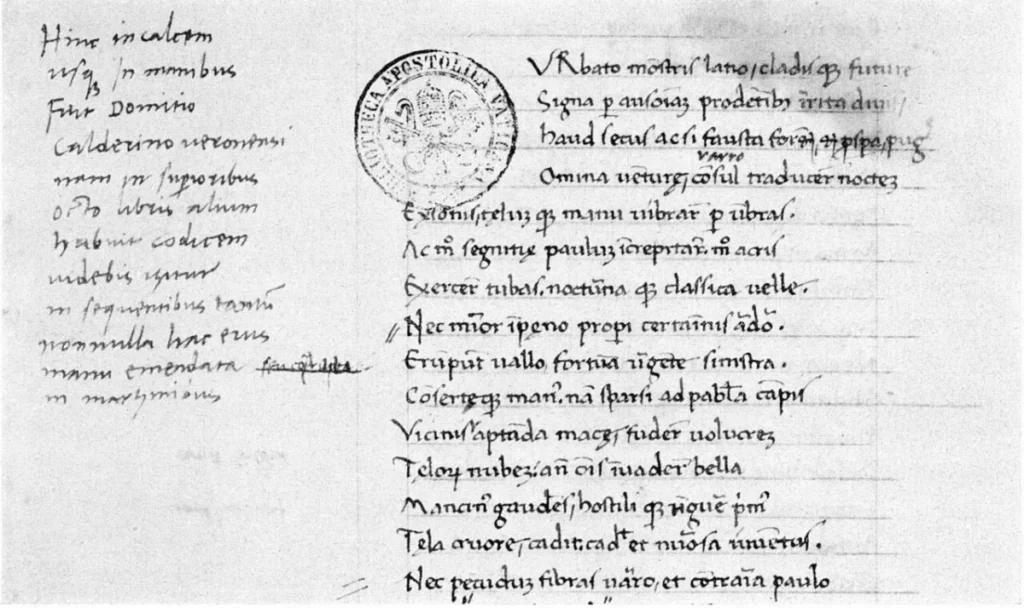
Tiberius Catius Asconius Silius Italicus composed the longest surviving Latin epic: the Punica, seventeen books recounting the Second Punic War between Rome and Carthage. Writing during the Flavian period and into the reign of Trajan, Silius took as his subject Rome’s existential struggle with Hannibal, the Carthaginian general who nearly destroyed the republic in the late third century BCE.
The Punica represents epic poetry as historical pageant. Silius narrates the war from Hannibal’s siege of Saguntum through the climactic Battle of Zama where Scipio Africanus finally defeated the Carthaginian champion. Along the way, Silius includes famous episodes from Rome’s darkest hour: Hannibal’s crossing of the Alps with elephants, the catastrophic Roman defeats at the Trebia River, Lake Trasimene, and especially Cannae where Hannibal annihilated the largest army Rome had ever fielded.
Silius wrote his epic with Virgil’s text open before him. The Punica contains more verbal echoes of the Aeneid than perhaps any other Latin poem, and Silius made no attempt to hide his dependence on his great predecessor. According to Pliny the Younger, Silius actually purchased Virgil’s tomb at Naples and venerated the earlier poet’s birthday with religious devotion. This reverence appears throughout the Punica, where Silius constantly recalls Virgilian phrases, scenes, and themes, using them to structure his own historical narrative.
Yet the relationship between the Punica and the Aeneid is more complex than simple imitation. While Virgil’s epic looks forward to the foundation of Rome and the Augustan settlement, Silius looks back to the moment when Rome’s existence hung in the balance. He presents the Punic War as the crucible in which Roman virtus was tested and proved. His hero, Scipio Africanus, becomes a figure who combines Aeneas’s piety with an almost divine destiny to save Rome from destruction.
Hannibal emerges as one of the most compellingly drawn antagonists in ancient epic. Silius portrays him as a military genius, courageous and resourceful, but ultimately doomed because he fights against fate itself. Where Virgil’s Dido falls victim to the gods’ plan for Rome, Silius’s Hannibal rages against the cosmic order that favors Rome’s eventual victory. The Carthaginian general’s aristeia at Cannae, where he orchestrates the most devastating defeat in Roman military history, demonstrates Silius’s ability to make readers admire an enemy even as they remain confident in Rome’s ultimate triumph.
The poem’s length allows Silius to include an enormous cast of characters and multiple subplots. He traces the career of Fabius Maximus, the “Delayer” whose refusal to engage Hannibal in direct battle saved Rome when aggressive tactics had failed. He depicts the young Scipio Africanus’s education in both warfare and virtue, showing how the general who would ultimately defeat Hannibal grew into his role as Rome’s savior. He includes elaborate descriptions of religious rituals, funeral games, embassies, and debates in the Roman Senate.
Medieval readers embraced the Punica as an authoritative account of the Punic Wars, and Dante draws on Silius when constructing his own Roman exempla. Modern scholars have been less kind, often dismissing Silius as a derivative versifier who lacked real poetic inspiration. This judgment seems unduly harsh. While Silius cannot match Virgil’s artistic perfection or Lucan’s shocking innovations, his achievement in sustaining an epic narrative across seventeen books deserves recognition. The Punica represents Roman epic poetry as a vehicle for exploring national identity, military virtue, and the workings of historical destiny on a truly grand scale.
The poem’s treatment of Roman imperialism raises fascinating questions. Silius celebrates Rome’s victory over Carthage, but he does so by depicting a war of terrifying brutality where tens of thousands die in single battles. His lengthy description of the massacre at Cannae forces readers to confront the human cost of Rome’s rise to Mediterranean dominance. Whether this represents unintended subversion or deliberate complexity remains debated, but it demonstrates that even a seemingly conventional epic could contain multitudes.
5. The Poet We Lost: Cornelius Severus and the Fragmentary Tradition
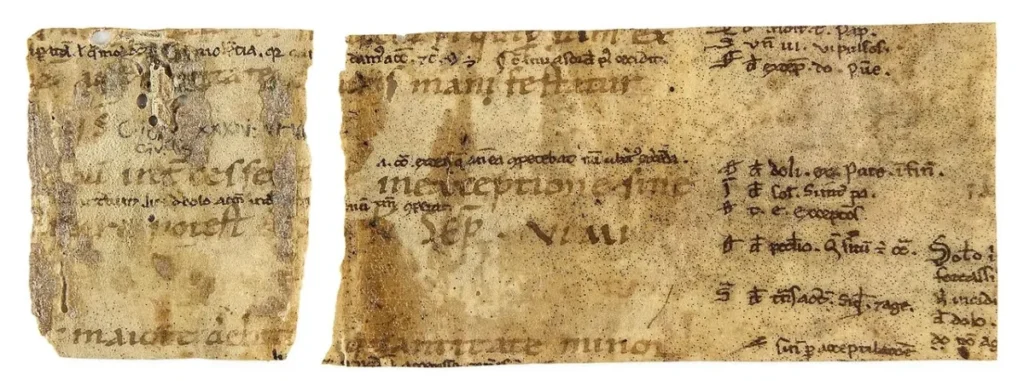
Beyond the four major figures whose works survive in substantial form, the Roman epic tradition included other voices now largely lost to us. Cornelius Severus composed a Bellum Siculum about the civil wars, earning praise from Ovid and Quintilian but surviving only in scattered fragments. His contemporary Albinovanus Pedo wrote an epic about Germanicus’s campaigns that impressed Seneca the Elder enough to quote from it, but again, only fragments remain.
These lost Roman epic poets remind us how contingent literary survival can be. The manuscripts that preserved Virgil, Lucan, Statius, Valerius, and Silius could easily have perished in any of the catastrophes that destroyed so many ancient texts. Medieval scribes chose which works to copy and which to abandon, and their choices determined which voices would reach modernity. The four-poet canon of Virgil, Ovid, Statius, and Lucan became standard in medieval education partly because these were the texts that survived in sufficient numbers to be studied.
But even the fragments of lost epics offer tantalizing glimpses of what Roman epic poetry achieved beyond the works we have. Cornelius Severus apparently pioneered historical epic before Lucan, demonstrating that the turn toward recent history as epic subject matter began earlier than the Pharsalia. Albinovanus Pedo’s description of Germanicus’s fleet sailing into unknown northern waters influenced Seneca’s conception of Roman courage confronting the limits of the known world.
The fragmentary nature of so much Roman epic poetry should make us grateful for what survives while remaining humble about what we claim to know. The epic poets of Rome worked within a tradition that stretched from Homer through Ennius and Virgil to their own contemporary experiments. Each poet engaged with his predecessors, sometimes honoring them, sometimes challenging them, always aware of the weight of the tradition behind him. What we have preserved represents only a fraction of this rich literary culture, but even that fraction reveals the extraordinary creativity of Roman epic poets working in Virgil’s shadow.