
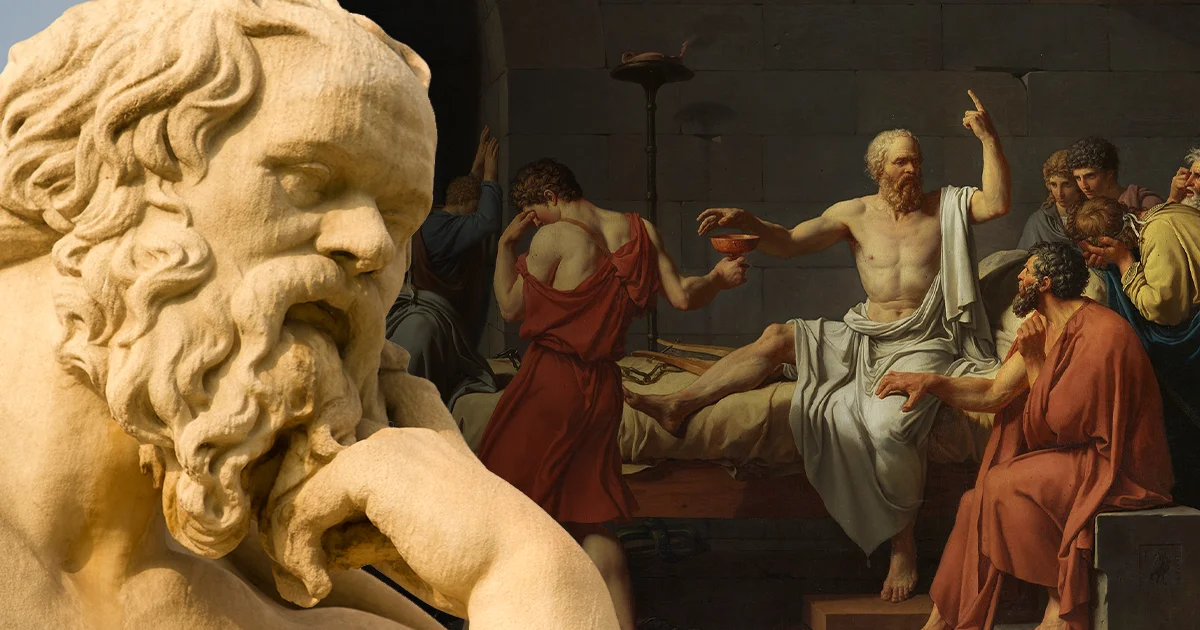
Socrates execution by hemlock in Athens in 399 BCE ended the life of one of history’s most influential philosophers. The 70-year-old man drank poison hemlock in his prison cell, surrounded by friends, after an Athenian jury convicted him of impiety and corrupting the youth. Plato’s Phaedo preserves the only detailed eyewitness account of how the hemlock worked through Socrates’ body, describing numbness rising from his feet until it reached his heart.
The execution method itself was reserved for citizens convicted of certain crimes in Athens. Hemlock offered a cleaner death than other available options like crucifixion or strangulation. The prisoner would drink the poison willingly, making it almost appear as voluntary rather than state-imposed death.
The Prison Scene in the Phaedo
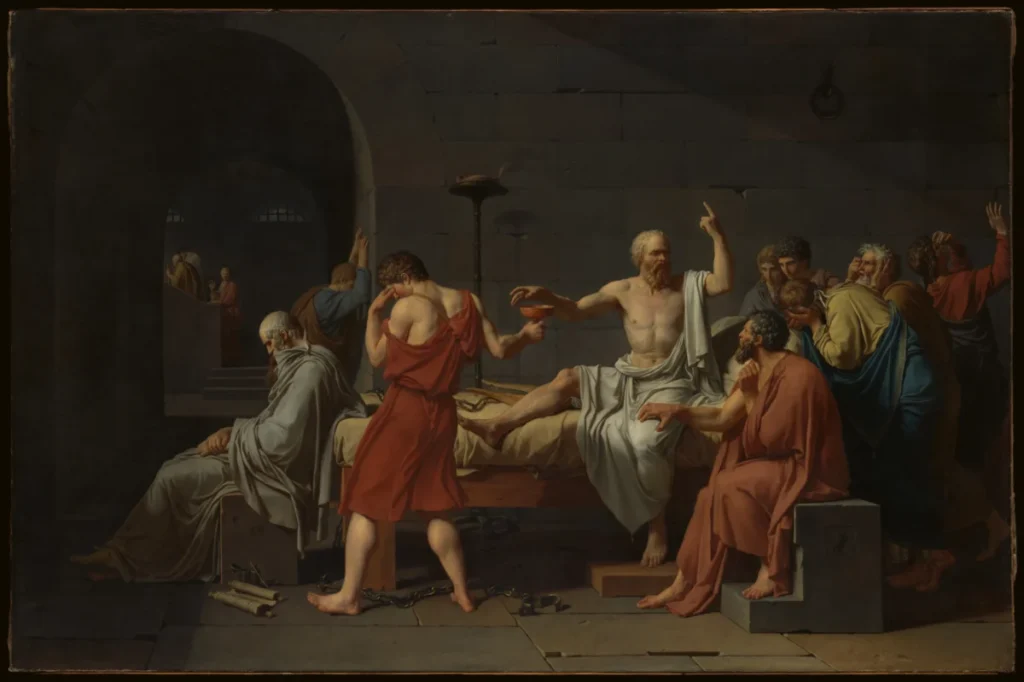
Plato describes Socrates’ final hours in meticulous detail. After bathing and saying goodbye to his wife and sons, Socrates returned to his friends in the prison cell. The sun was setting, and the jailer explained that Socrates must drink the hemlock when ordered. The poison had to be prepared fresh because the plant-based toxin would lose potency if mixed too early.
The jailer brought the cup containing the ground hemlock mixed with liquid. Socrates asked if he could pour a libation to the gods from the cup. The jailer explained that they prepared only enough for the fatal dose, so no liquid could be spared. Socrates understood and simply prayed that his passage from this world to the next would be fortunate.
Then Socrates lifted the cup to his lips. His friends who had maintained their composure throughout the day finally broke down weeping. Socrates rebuked them gently, saying he had sent his wife away precisely to avoid such displays. He reminded them that a man should die in silence. His friends tried to contain their grief.
How Poison Hemlock Kills

The plant Conium maculatum contains alkaloids that attack the peripheral nervous system. Unlike water hemlock, which causes violent convulsions, poison hemlock produces progressive paralysis moving upward through the body. The victim remains conscious and mentally alert even as physical sensation disappears.
Plato’s account matches modern medical understanding of poison hemlock toxicity with remarkable accuracy. After Socrates drank the poison, the attendant instructed him to walk around until his legs felt heavy. Within minutes, Socrates reported that his legs were growing numb and lay down on his back as the attendant had directed.
The prison attendant examined Socrates periodically, pinching his feet and legs to test for sensation. Socrates reported no feeling in the affected areas. The numbness spread gradually upward from the feet through the calves and thighs. The attendant explained that when the coldness reached Socrates’ heart, death would occur.
Modern toxicology confirms this description. Poison hemlock alkaloids block neuromuscular junctions, preventing nerve signals from reaching muscles. The paralysis begins in the extremities and ascends toward the core. Death results from respiratory failure when the diaphragm muscles cease functioning, or from cardiac arrest when the poison affects the heart.
Why Athens Used Hemlock
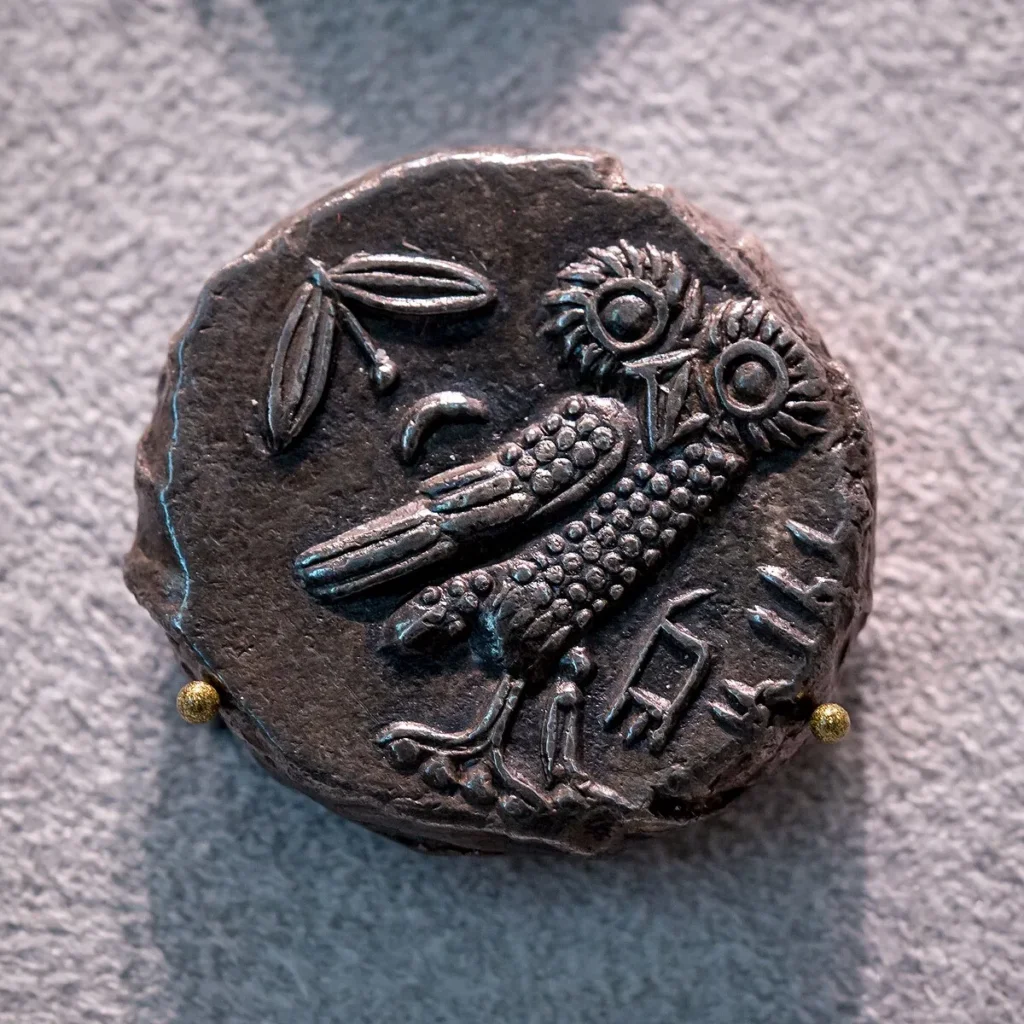
Athens imported hemlock from Crete or Asia Minor specifically for executions. The plant did not grow naturally in Attica. This made hemlock expensive compared to other execution methods available to the Athenian state. Someone had to pay for the poison, likely either the condemned person’s family or wealthy friends.
The expense meant hemlock was not used for common criminals. Those convicted of typical capital crimes faced crucifixion on a wooden board, where iron restraints around the neck would gradually strangle them. This “bloodless crucifixion” avoided blood guilt and used reusable equipment. Hemlock execution was reserved for citizens from prominent families or those convicted of political or religious crimes.
Several advantages made hemlock worth the cost for certain cases. First, the condemned person drank the poison voluntarily, removing the appearance of violence from the execution. Second, hemlock produced a relatively peaceful death without the physical struggle and indignity of other methods. Third, the method allowed the condemned to speak until nearly the final moments, maintaining mental faculties until death.
The Symptoms Plato Describes
Christopher Gill’s 1973 study examined whether Plato’s Phaedo gives an accurate medical account. Ancient writer Nicander described hemlock poisoning as causing eye problems, choking, gasping for breath, and convulsions. Modern medical literature adds nausea, vomiting, excessive salivation, impaired vision and hearing, and tremors to the list of typical symptoms.
Plato mentions only one primary effect in his account. Heaviness and numbness begin in the feet, then proceed gradually upward through the legs to the torso and heart. Socrates experiences a single involuntary movement immediately before death. No mention is made of choking, salivation, vomiting, visual problems, or convulsions.
Some scholars initially suspected Plato sanitized the death scene, omitting ugly symptoms to present Socrates’ death as more noble than it actually was. However, botanists and toxicologists eventually explained the discrepancy. The hemlock family includes several species that look nearly identical but produce different effects. Water hemlock attacks the central nervous system and causes the violent symptoms Nicander described. Poison hemlock works on peripheral nerves and produces the peaceful paralysis Plato recorded.
A nineteenth-century case in Scotland confirmed Plato’s accuracy. Children gathered what they thought was edible parsley for their father’s sandwich but accidentally picked poison hemlock. The man grew progressively numb, losing use of his legs and then other limbs. His mind remained clear until death occurred a few hours after eating the plant. The case matched Plato’s description almost perfectly.
Socrates Remains Conscious
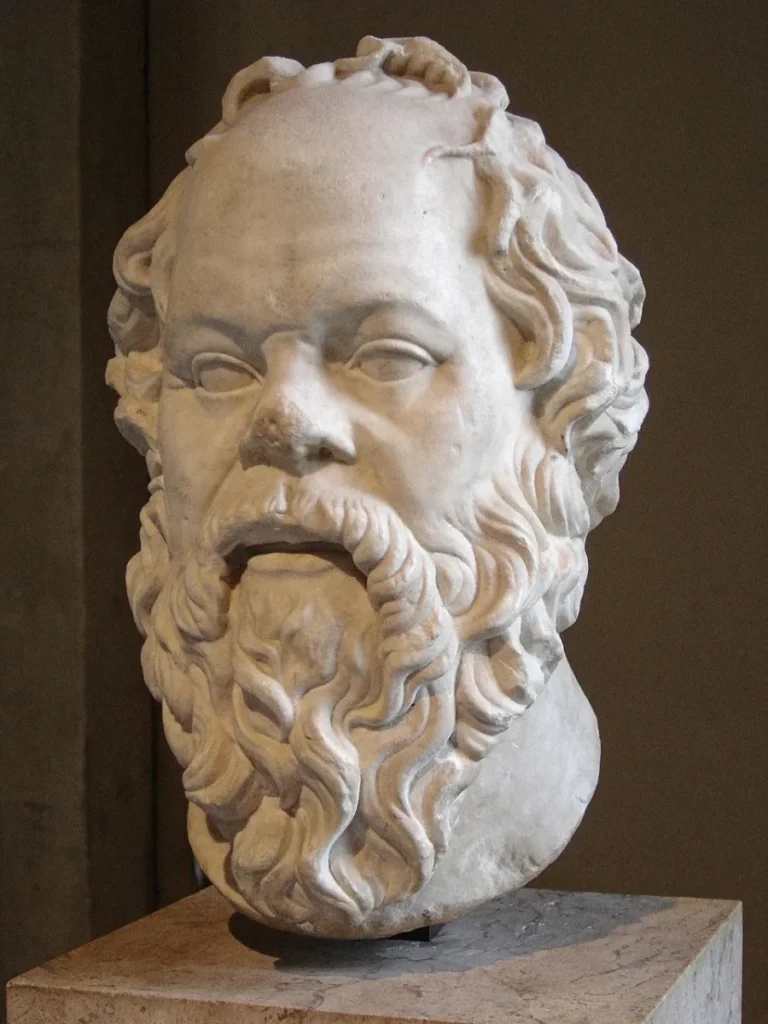
The most striking aspect of Plato’s death scene is that Socrates continues speaking coherently until moments before death. After drinking the hemlock, he walks around conversing with his friends. He lies down and continues the philosophical discussion even as the paralysis creeps upward through his body. His final words concern a small religious debt he owes to the healing god Asclepius.
This preservation of consciousness fits what we know about poison hemlock’s mechanism. The alkaloids prevent muscles from responding to nerve signals but do not impair the brain’s cognitive functions. The victim cannot move but can think, speak, and perceive normally until respiratory muscles fail and oxygen deprivation occurs.
For Plato’s philosophical purposes, this aspect of hemlock poisoning was perfect. Socrates spent his life arguing that the soul is distinct from the body and survives bodily death. In the Phaedo, Socrates uses his final hours to present arguments for the soul’s immortality. The hemlock’s effects illustrate his point dramatically as the body shuts down piece by piece while the soul continues functioning unimpaired.
Built out of a love for history, kept free from distractions.
Spoken Past is an independent project shaped by curiosity, care, and long hours of research. Reader support helps keep it maintained, carefully researched, and open to everyone.
The Final Words
Socrates’ last utterance puzzled readers for centuries. Just before dying, he uncovered his face and said “Crito, we owe a cock to Asclepius. Pay the debt and do not neglect it”. Crito promised to fulfill the obligation, then asked if Socrates had anything else to say. Socrates made no reply, moved slightly, and died when the attendant uncovered his face and found his eyes fixed.
Greeks typically sacrificed a rooster to Asclepius, the god of healing, after recovering from illness. Socrates’ instruction to offer this sacrifice has generated countless interpretations. Some scholars suggest Socrates viewed death as a healing, a release from the sickness of bodily existence. In the Phaedo, Socrates repeatedly describes the body as a prison or burden from which the soul needs liberation.
Another interpretation holds that Socrates expressed gratitude for the peaceful death hemlock provided. Rather than suffering through old age and declining faculties, Socrates dies quickly with his mind intact. The hemlock itself becomes the cure for the human condition.
The Charges Against Socrates
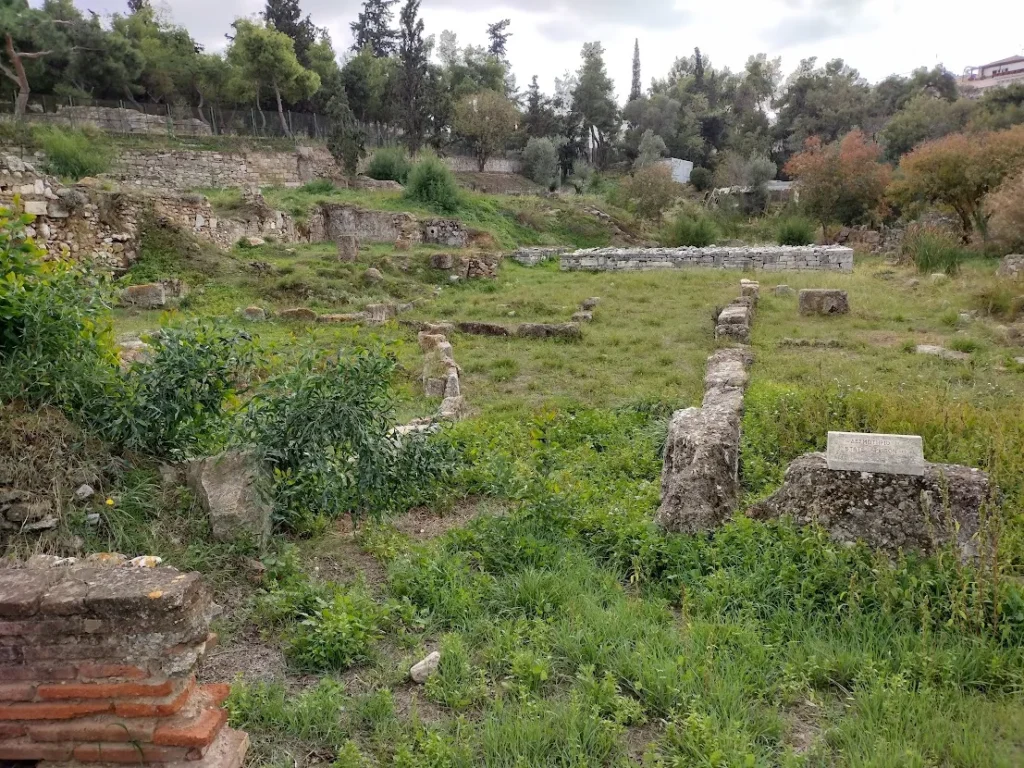
The Athenian jury convicted Socrates of two offenses. First, he failed to recognize the gods the city recognized and introduced new divinities. Second, he corrupted the young men of Athens. Both charges carried the death penalty under Athenian law.
The religious charge stemmed partly from Socrates’ claim that a divine voice or daimonion spoke to him, warning him away from certain actions. This inner voice guided Socrates throughout his life but never told him what to do, only what not to do. Many Athenians viewed this private deity as evidence that Socrates rejected traditional religion.
The corruption charge had more political overtones. Two of Socrates’ closest associates, Alcibiades and Critias, had betrayed Athens in different ways. Alcibiades defected to Sparta during the Peloponnesian War. Critias led the Thirty Tyrants, a brutal oligarchy that ruled Athens briefly after the war. Although Socrates never taught systematic political doctrine, many Athenians blamed him for the anti-democratic views his associates later expressed.
Athens After the War
Understanding Socrates execution requires understanding Athens in 399 BC. The Peloponnesian War against Sparta had ended just four years earlier with Athens’ total defeat. The Spartans imposed the Thirty Tyrants, who executed many democratic leaders and confiscated property. When democrats overthrew the Thirty after eight months, they declared an amnesty for past political offenses.
The amnesty meant prosecutors could not explicitly charge Socrates with supporting the Thirty or influencing Critias. However, many jurors remembered Socrates’ associations and suspected his anti-democratic sympathies. The charges of impiety and corrupting youth provided legally acceptable grounds for a trial that many Athenians wanted for political reasons the amnesty prevented them from stating openly.
The Trial and Verdict
Five hundred jurors heard the case against Socrates. Under Athenian procedure, prosecution and defense each gave a single speech, timed by water clock. No lawyers represented either side, and no judge instructed the jury. The jurors voted immediately after hearing both speeches by placing bronze tokens in urns.
The jury voted 280 to 220 to convict. Under Athenian law, prosecutor and defendant each then proposed a penalty, and the jury chose between the two options. Meletus, the prosecutor, demanded death. Socrates initially proposed a reward rather than punishment, suggesting the city should feed him at public expense like Olympic victors. Eventually he offered to pay a small fine. The jury voted for death by an even larger margin than it had voted for conviction.
The Execution Day
Athenian law required executions to occur promptly after sentencing. However, the day before Socrates’ trial, Athens had sent its annual ritual ship to Delos to honor Apollo. During the ship’s voyage, no executions could take place in the city. The winds were unfavorable that year, and the ship took thirty days to return. Socrates spent this month in prison, visited daily by friends and followers.
At sunset, the jailer came. He praised Socrates as the noblest and gentlest man ever held in that prison. He apologized for having to ask Socrates to drink the poison, explaining that he only followed orders. Socrates comforted the jailer, telling him not to mourn but to prepare the hemlock.
The jailer brought the cup. Socrates asked his questions about the ritual, prayed briefly, and drank without hesitation or apparent fear. Plato says his hand was steady and his expression calm. Within minutes, Socrates grew heavy and lay down. The numbness ascended. His final words concerned the rooster owed to Asclepius. Moments later, the attendant uncovered Socrates’ face and found him dead.
Plato concludes his account by calling Socrates “the best and wisest and most just man” of his time. The hemlock that killed Socrates’ body could not touch the soul that continued to influence philosophy for the next 2,400 years.