
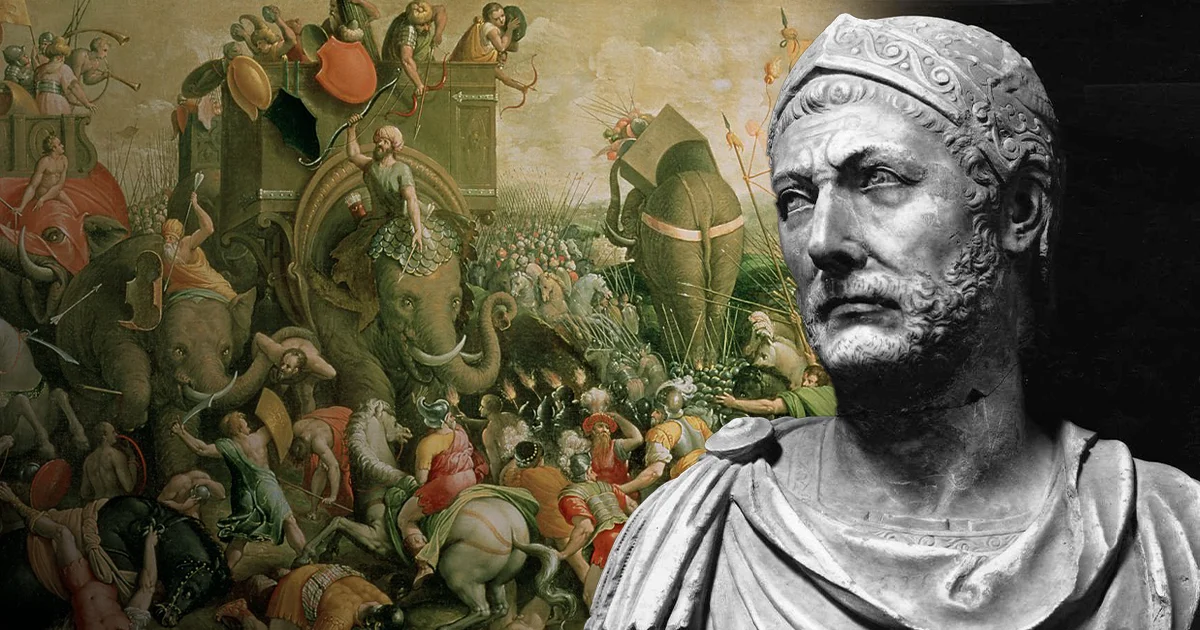
Hannibal Barca, the Carthaginian general who terrorized Rome for over fifteen years, met his end not on the battlefield but in a small fortress in Bithynia. In 183 BC, cornered by Roman demands and betrayed by his host King Prusias, the aging commander chose poison over captivity. The suicide of Hannibal marked the final chapter of a life spent defying Rome, a death that denied his enemies the satisfaction of parading him through their streets in chains.
The circumstances surrounding Hannibal’s suicide reveal the relentless nature of Roman vengeance. Even in exile, thousands of miles from Italy, the man who had brought Rome to its knees at Cannae remained a target. The Romans would not rest until the architect of their greatest humiliation was dead.
Hannibal’s Flight After Zama
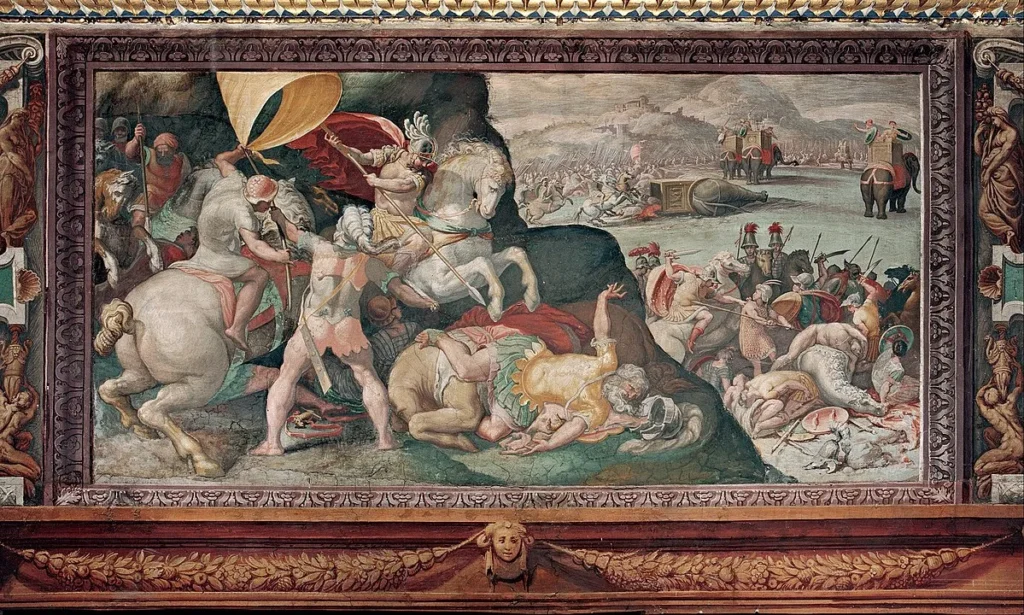
The defeat at Zama in 202 BC ended Hannibal’s military career but not his influence. He returned to Carthage as a defeated general, yet within years the Carthaginian people elected him suffete, their highest civilian magistrate. In this role Hannibal reformed Carthage’s corrupt tax system and stabilized the economy so effectively that Carthage could offer to pay off its massive war indemnity to Rome early.
This success alarmed Rome. A prosperous Carthage under Hannibal’s leadership represented a potential threat, and Hannibal’s political enemies in Carthage exploited Roman fears to engineer his downfall. Around 195 BC, accusations reached Rome that Hannibal was plotting with Antiochus III of Syria to renew the war against Rome. Whether these charges held truth mattered less than their effect. Roman ambassadors arrived in Carthage demanding explanations, and Hannibal, recognizing the danger, fled his native city by night.
He would never see Carthage again. The man who had spent his adult life fighting for his homeland became a permanent exile, moving from court to court across the eastern Mediterranean. First he joined Antiochus III in Syria, offering his military expertise to any king willing to resist Roman expansion. When Antiochus went to war with Rome in 192 BC, Hannibal served as an adviser and naval commander, but the Syrian king ignored most of his strategic counsel. Rome crushed Antiochus at Magnesia in 190 BC, and once again Hannibal fled ahead of Roman demands for his surrender.
His wanderings took him to Crete, then to Armenia, and finally to Bithynia in northwestern Asia Minor. King Prusias of Bithynia welcomed the famous general and employed him in his wars against Rome’s ally Eumenes of Pergamum. But this final refuge would prove a trap.
The Roman Hunt Continues
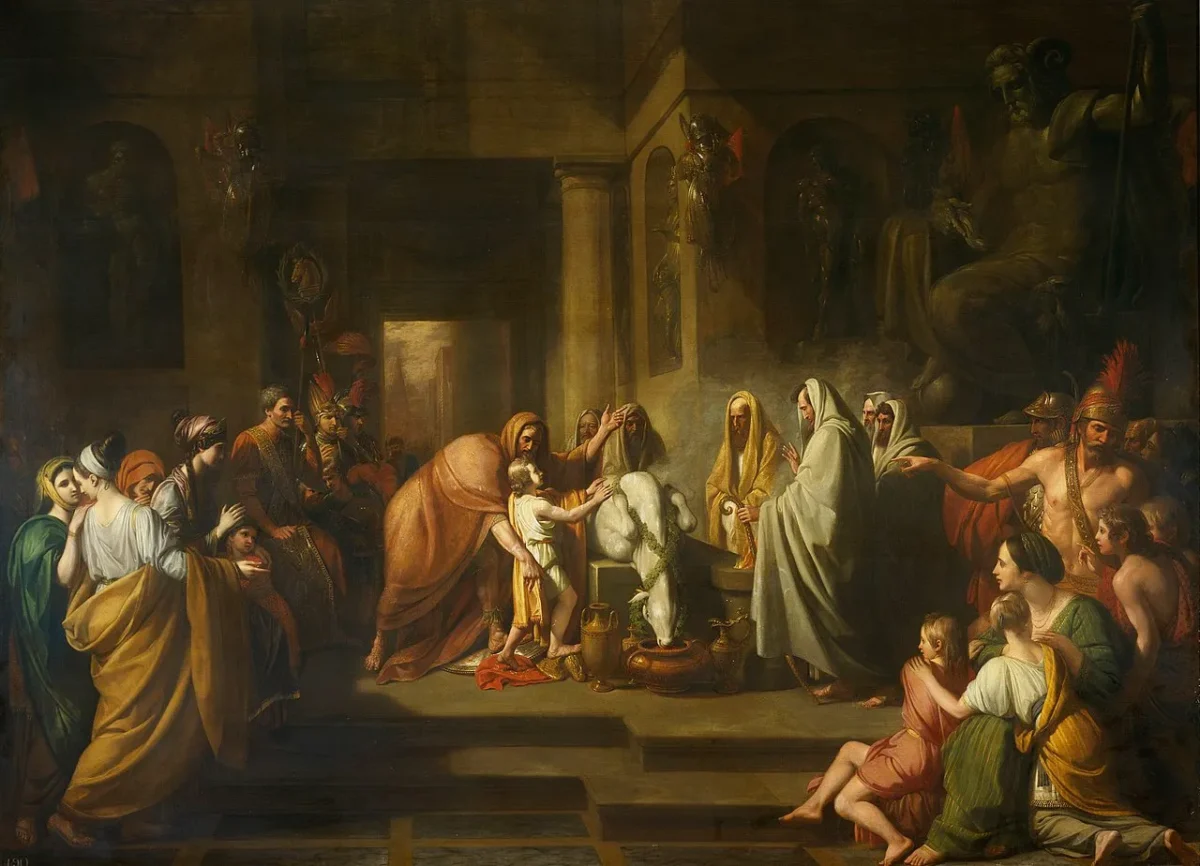
The Romans never forgot Hannibal. More than thirty years after Zama, with Carthage thoroughly humbled and Hannibal in his mid-sixties, Rome still considered him dangerous. The senate dispatched Titus Quinctius Flamininus, the victor over Philip V of Macedon, to Bithynia with a specific mission. Flamininus was to pressure Prusias into either surrendering Hannibal or eliminating him.
The choice of Flamininus revealed the importance Rome placed on this task. He was a man of consular rank, a celebrated general, and Rome’s most experienced diplomat in eastern affairs. That such a distinguished figure should travel to the edge of the Roman world specifically to deal with an aging exile demonstrates the depth of Roman hatred and fear of Hannibal.
Flamininus met with Prusias and presented Rome’s demands. Ancient sources disagree on whether the Roman explicitly ordered Prusias to kill Hannibal or merely implied it, but the message was clear: Bithynia must choose between Rome’s friendship and Hannibal’s life. Prusias, dependent on Roman goodwill for his kingdom’s security, made the calculation that countless client kings before and after him would make. He chose Rome.
The king’s decision may also have reflected personal calculation. Hannibal had recently helped Prusias win victories against Eumenes, including a naval battle where Hannibal employed his characteristic tactical brilliance by catapulting pots filled with venomous snakes onto enemy ships. But an aging general whose presence invited Roman enmity was a liability Prusias could no longer afford.
The House at Libyssa
Hannibal had long anticipated this moment. A lifetime of warfare and politics had taught him that trust was a dangerous luxury, and he trusted kings least of all. At his residence in the village of Libyssa on the Bithynian coast, he had prepared for betrayal by constructing seven separate exits. Some of these passages were hidden, designed to evade the kind of surveillance that would precede an arrest.
The precautions proved insufficient. When Prusias decided to move against Hannibal, the king’s soldiers surrounded the entire compound during the night. They sealed not just the obvious exits but the hidden ones as well. The dragnet was thorough and professional, the work of men who understood they were dealing with one of history’s most cunning minds.
Hannibal awoke to find royal troops in his vestibule. The systematic nature of the operation became clear as he attempted to use his concealed escape routes, only to discover guards posted at each one. Every passage was blocked, every avenue of escape eliminated. The trap was complete.
The ancient sources preserve his reaction with vivid detail. Rather than succumb to panic or attempt futile resistance, Hannibal accepted his situation with the composure of a man who had faced death countless times. He called for the poison he had kept prepared for precisely this contingency, kept in a ring according to some accounts, stored in a container according to others.
Built out of a love for history, kept free from distractions.
Spoken Past is an independent project shaped by curiosity, care, and long hours of research. Reader support helps keep it maintained, carefully researched, and open to everyone.
Hannibal’s Final Words
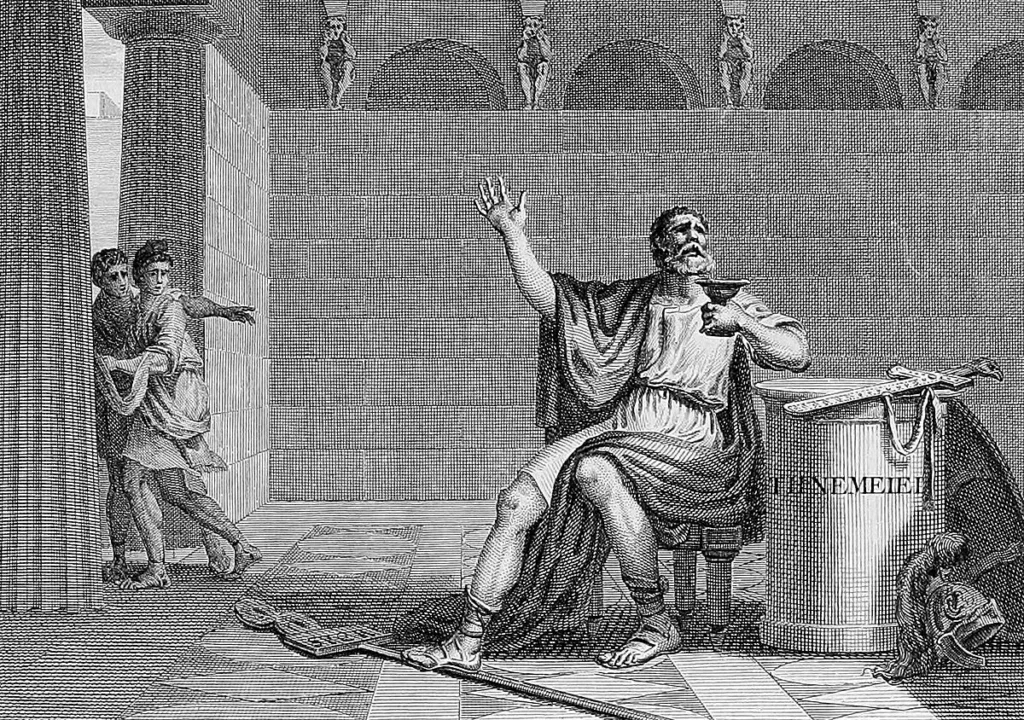
The words Hannibal spoke before drinking the poison have been preserved by multiple ancient historians, though with slight variations. The core of his statement represents both an indictment of Rome’s methods and a final expression of defiance.
According to the accounts, Hannibal said: “Let us free the Roman people from their long anxiety, since they think it tedious to wait for an old man’s death.” The bitterness in these words cuts deep. Here was a man in his late sixties, an exile who had posed no military threat to Rome for years, yet still pursued with relentless determination. The observation that Rome found waiting for natural death too burdensome exposes what Hannibal saw as Roman vindictiveness disguised as policy.
He continued: “The victory which Flamininus will win over an unarmed man who has been betrayed will be neither great nor memorable.” This statement acknowledges the tactical reality while denying Rome the glory of a genuine triumph. There would be no battle, no contest of arms, no test of courage or skill. Rome’s final victory over Hannibal would be the murder of a defenseless exile through the treachery of a client king.
The most devastating portion of his final statement addressed Roman hypocrisy about the rules of war. Hannibal recalled that when King Pyrrhus of Epirus had invaded Italy more than a century earlier, the Romans had sent him a warning that one of his physicians was plotting to poison him. That gesture, celebrated in Roman tradition as an example of their ancestors’ honor, contrasted sharply with the current generation’s willingness to arrange the assassination of a refugee.
“Their ancestors sent warnings to Pyrrhus, an armed enemy with an army in Italy, to beware of poison,” Hannibal observed. “These Romans have sent an ambassador of consular rank to urge Prusias to commit the crime of murdering his guest.” The comparison was designed to shame. Where earlier Romans had rejected assassination even against a dangerous enemy, their descendants embraced it against an old man living quietly in exile.
Finally, Hannibal cursed Prusias, calling upon the gods of hospitality to witness the king’s betrayal. Guest-friendship was among the most sacred bonds in the ancient world, protected by divine sanction. By betraying his guest to death, Prusias violated not just human decency but the fundamental religious obligations that bound host and guest.
After speaking these words, Hannibal drained the cup. The poison acted swiftly, and within a short time the greatest enemy Rome ever faced was dead.
The Aftermath
News of Hannibal’s death reached Rome without causing celebration. There was satisfaction that the threat had been eliminated, but also a recognition of the magnitude of what had been accomplished. Hannibal had survived the Romans for more than forty years after he first took his oath of enmity at age nine. He had won victories that still astonished military students. He had brought Rome closer to destruction than any enemy before or since.
The circumstances of his death became a matter of debate even in antiquity. Some Romans felt shame that their republic had arranged the murder of an elderly exile. Others justified it as necessary security, arguing that Hannibal’s genius made him dangerous regardless of his age or situation. The very fact that Flamininus had been dispatched specifically for this purpose suggests the latter view prevailed in the senate.
Hannibal’s death in 183 BC occurred in the same year as the death of Scipio Africanus, the Roman general who had defeated him at Zama. Ancient historians noted the coincidence, seeing in it a fitting end to the greatest military rivalry of the age. The two men, whose careers had been so intimately connected, departed the world together. Whether Scipio died at Rome or at his villa in Liternum remains uncertain, but the parallel endings seemed to close an era.
The poison that killed Hannibal denied Rome its preferred ending to his story. The Romans celebrated victories through triumphal processions in which captured enemy leaders were paraded through the streets before being strangled in the Tullianum prison. That fate had befallen countless generals who had dared oppose Rome. Hannibal’s suicide robbed them of this symbolic closure. He died on his own terms, free from Roman chains, denying his enemies even the satisfaction of displaying his captivity.
Historical Significance
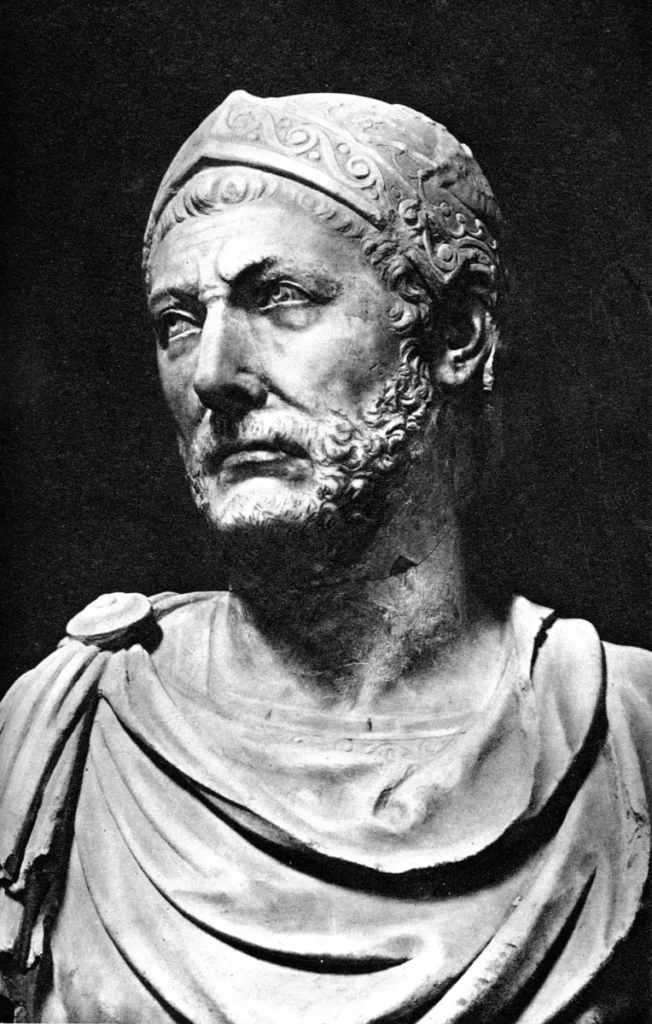
The death of Hannibal at Libyssa represents more than the end of one man’s life. It marks Rome’s transition from a republic that had fought desperately for survival to an imperial power that hunted its enemies across the known world. The pursuit of Hannibal into peaceful retirement in a distant kingdom shows how Rome was beginning to exercise the prerogatives of unquestioned dominance.
The methods employed also reveal something about the nature of Roman vengeance. The same state that prided itself on clemency toward defeated enemies, that had rebuilt Carthage’s economy while accepting surrender, could not forgive the man who had made Romans tremble in their beds. Hannibal’s crime was not merely military defeat but humiliation on a scale that wounded Roman pride beyond healing.
Later generations would romanticize Hannibal as the brilliant underdog, the David who challenged Rome’s Goliath. But to the Romans who lived through his invasion of Italy, who lost fathers and sons and brothers at Trasimene and Cannae, who saw Italy ravaged for fifteen years, Hannibal represented existential terror. The near-destruction he inflicted created a trauma that outlasted the threat itself. Only his death could truly end it.
The manner of his death also illustrated the precarious position of Hellenistic kings in Rome’s shadow. Prusias betrayed his guest to preserve his kingdom, recognizing that no alliance, no military victory, no personal loyalty could outweigh Roman displeasure. Kings throughout the eastern Mediterranean learned the lesson. Rome’s reach was long, its memory longer, and its patience with those who sheltered its enemies nonexistent.
For Hannibal, the choice of suicide over capture was entirely consistent with his life. He had spent his entire adult life at war with Rome, from the oath sworn as a child to the final years of exile. He had endured countless hardships, survived desperate situations, and outwitted enemies who commanded superior resources. To be taken alive and displayed as a trophy would have negated everything he represented. The poison was his final victory, the last assertion of agency in a life defined by struggle against overwhelming odds.
The location of his grave became a matter of uncertainty even in antiquity. Some placed it at Libyssa in Bithynia, others at different sites. No monument marks the spot with certainty. For a man who had been the terror of the ancient world, who had commanded armies and humbled the greatest republic of the age, the obscurity of his final resting place seems a peculiarly appropriate ending. He had lived as an enemy of Rome. He died denying them the triumph they sought. And he vanished into history, leaving only the memory of his deeds and the legend of his defiance.
Primary sources used:
Livy, History of Rome, Books 38-39
Cornelius Nepos, Life of Hannibal (ed. Bret Mulligan)
Plutarch, Lives, Volume III