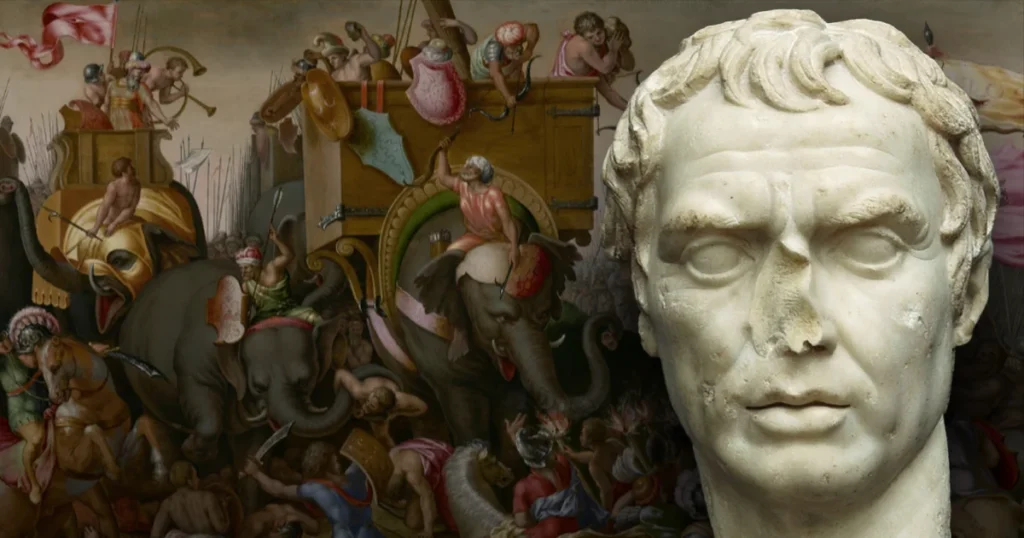
The Battle of Zama was fought on October 19, 202 BCE, between Rome and Carthage near modern Tunisia. It ended the Second Punic War and gave Rome control of the western Mediterranean. The victory belonged to Scipio Africanus, who outmaneuvered Hannibal Barca by neutralizing his war elephants and using superior cavalry to break the Carthaginian lines.
This battle is one of the most studied in ancient military history. It matched two brilliant commanders at the height of their powers and settled nearly two decades of war. The outcome reshaped Europe, North Africa, and the balance of power for centuries.
Scipio won because he studied Hannibal’s tactics, adapted them, and exploited Carthage’s weaknesses. He handled elephants, infantry, and cavalry with precision. This article explains what happened at Zama, how Scipio’s tactics worked, and why the battle mattered between 500 BCE and 500 CE.
Prelude and strategy
After years of fighting in Italy, Scipio forced Carthage to recall Hannibal by invading North Africa in 204 BCE. Hannibal had dominated Italy since his famous Alpine crossing in 218 BCE, but he could not hold territory without support from home. Scipio’s invasion threatened Carthage directly and changed the war’s entire direction.
Scipio moved southwest from Utica, cutting through the Bagradas Valley. This region supplied Carthage with grain, and threatening it forced Hannibal to leave the coast and march inland to meet the Romans. Scipio secured better water sources and positioned his forces on open ground where cavalry could maneuver freely.
Before the battle, Hannibal requested a meeting with Scipio to negotiate peace. The two generals met in person, a rare event in ancient warfare. Hannibal offered to restore the pre-war status quo, but Scipio refused. Peace talks collapsed, and both sides prepared to fight a battle that would decide the war.
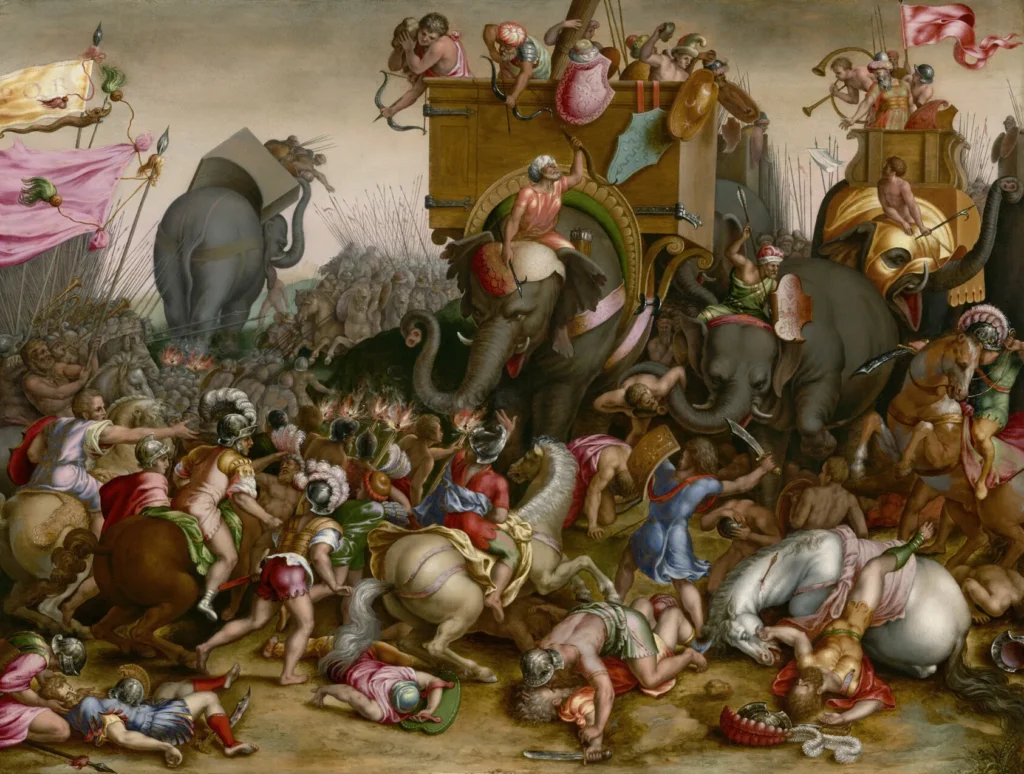
Hannibal assembled an army of raw recruits around his core of Italian veterans. He had 80 war elephants, but many were newly captured and poorly trained. Scipio had fewer men but better cavalry, including Numidian horsemen led by King Masinissa. That cavalry advantage would prove decisive.
Neutralizing the elephants
Elephants terrified ancient armies. They could trample infantry, break formations, and cause panic. Hannibal placed his 80 elephants at the front of his line, intending to use them to smash through Scipio’s center before his infantry engaged.
Scipio had a plan. He arranged his infantry in the traditional Roman triplex acies, three lines of hastati, principes, and triarii. But he did something unusual. He left gaps between the maniples and filled those gaps with velites, light skirmishers armed with javelins.
When the elephants charged, the velites threw javelins and fell back through the gaps. The elephants, preferring clear paths, charged straight through the openings instead of crashing into the dense Roman ranks. Roman trumpeters blew their horns, scaring the elephants and driving some of them back into Hannibal’s own cavalry on the wings.
This tactic neutralized one of Hannibal’s main advantages. Scipio had learned from earlier Roman disasters. At Trebia and Trasimene, elephants had broken Roman formations. At Zama, Scipio turned the elephants into a liability. The charge did minimal damage, and some elephants even disrupted Hannibal’s cavalry before the real fighting began.
Cavalry decides the battle
With the elephants neutralized, the infantry lines collided. Hannibal’s first two ranks were mercenaries and new recruits. They fought hard but could not break the Roman lines. Hannibal kept his Italian veterans in reserve, waiting for the right moment to commit them.
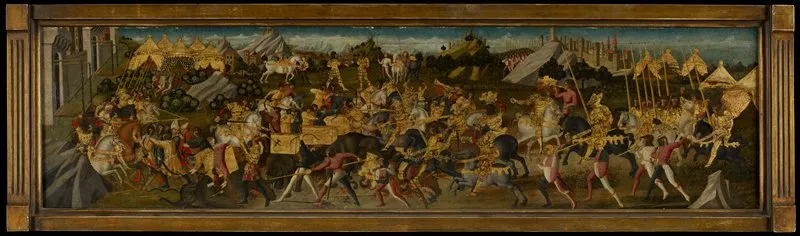
The key to the battle was cavalry. Scipio had 6,000 horsemen, split between Italian cavalry on his left and Masinissa’s Numidians on his right. Hannibal’s cavalry was weaker and outnumbered. When the Roman and Numidian horsemen charged, they drove the Carthaginian cavalry from the field.
This is where Scipio’s plan came together. Instead of pursuing the fleeing enemy cavalry off the battlefield, Scipio’s horsemen regrouped and returned. They circled behind Hannibal’s infantry and attacked from the rear. Hannibal’s army was surrounded.
Even Hannibal’s veterans could not hold against attacks from the front and rear. The Carthaginian lines collapsed. Hannibal escaped, but his army was destroyed. Roman sources claim 20,000 Carthaginians killed and 15,000 captured, though these numbers are uncertain. Roman losses were far lighter.
The battle was over by mid-afternoon. Scipio had won a complete victory. Hannibal withdrew to Carthage and advised the government to accept Roman terms. The Second Punic War was finished.
Enjoying Spoken Past?
I created Spoken Past to share my love of history. I research, write and develop everything myself, and I want my articles and basic guides to remain free for everyone.
If you enjoy my work, please consider supporting Spoken Past with a small donation.
Why Scipio’s tactics worked
Scipio succeeded because he combined innovation with discipline. He studied Hannibal’s earlier victories and adapted those lessons. At Cannae, Hannibal had used cavalry to surround and destroy a larger Roman army. At Zama, Scipio used the same tactic against Hannibal.
The corridor tactic against elephants was brilliant because it required tight coordination. Roman infantry had to hold formation under pressure, leaving gaps without breaking. The velites had to time their retreat perfectly. One mistake and the elephants would have torn through the Roman lines.
Scipio also chose his battlefield carefully. Open ground favored cavalry, and Scipio had more and better horsemen. By securing watering holes and forcing Hannibal to fight where Scipio wanted, he turned the strategic situation in his favor before the battle even began.
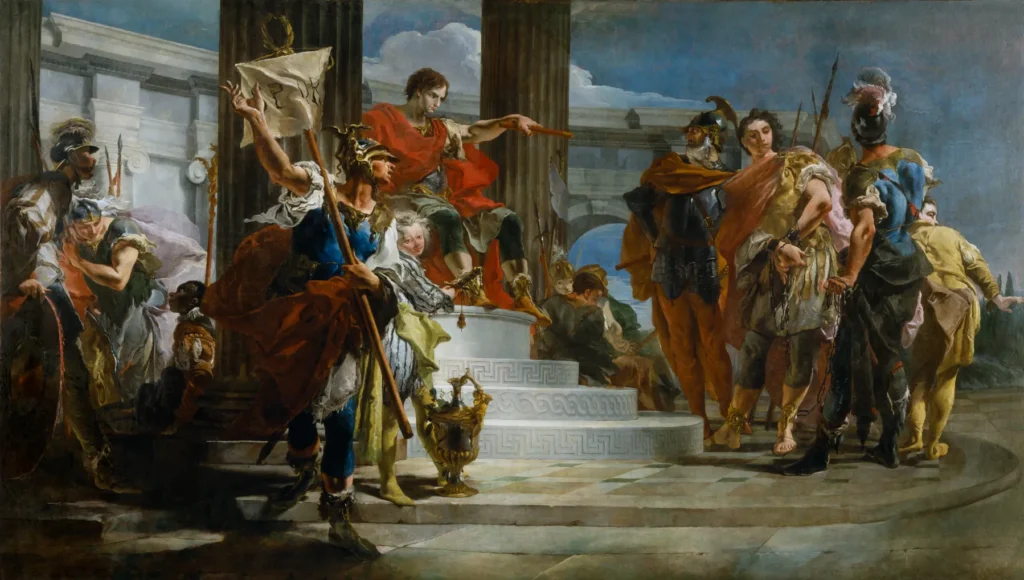
Scipio’s relationship with Masinissa also mattered. The Numidian king brought cavalry that matched or exceeded Carthage’s horsemen in skill. That alliance gave Scipio the edge he needed. Hannibal had relied on Numidian cavalry in his earlier victories. At Zama, those same horsemen fought for Rome.
The ancient historian Polybius believed Zama was the moment when Rome’s path to empire became clear. Scipio’s victory ended Carthage as a rival and opened the Mediterranean to Roman expansion.
Aftermath and consequences
Carthage sued for peace immediately after Zama. The terms were harsh. Carthage lost all territory outside Africa, surrendered its fleet, paid a massive indemnity, and agreed not to wage war without Roman permission. Hannibal survived but was eventually driven into exile.
Scipio returned to Rome as a hero. The Senate awarded him the cognomen Africanus, the first Roman general to receive a name honoring a victory outside Italy. His triumph was one of the grandest Rome had ever seen. He became a model for later commanders, and his tactics were studied for centuries.
The defeat at Zama destroyed Carthage’s power. The city would linger for another 50 years before Rome destroyed it completely in 146 BCE. The victory also secured Roman dominance in the western Mediterranean and set the stage for further conquests in Greece, Asia Minor, and beyond.
For military history, Zama demonstrated that elephants could be countered with discipline and planning. It showed that cavalry remained decisive in open-field battles. And it proved that a commander who learned from his enemy’s strengths could turn them into weaknesses.
The battle’s fame spread through ancient sources like Polybius and Livy, both of whom devoted detailed accounts to the engagement. These narratives shaped how later generations understood military leadership and Roman superiority.
Why Zama still matters
Zama remains one of history’s most analyzed battles. It offers lessons in tactics, strategy, and leadership that military academies still teach. Scipio’s use of terrain, his handling of combined arms, and his ability to adapt to his opponent are textbook examples of generalship.
The battle also marks a turning point in ancient history. After Zama, no power in the Mediterranean could challenge Rome. The city would dominate the region for the next 600 years. The victory set Rome on a path that led from republic to empire.
For students of ancient warfare, Zama shows how battles were won with more than just courage. Intelligence, logistics, alliances, and planning all mattered. Scipio defeated Hannibal not because he was stronger but because he was smarter. He studied his enemy, prepared his troops, and executed a plan that exploited every Carthaginian weakness.
That approach to war influenced commanders from Julius Caesar to Napoleon. The principles Scipio used at Zama, combined arms coordination, battlefield choice, and flexible tactics, remain relevant in modern military doctrine. For those reasons, the battle continues to be studied alongside other decisive ancient engagements nearly 2,200 years after it was fought.