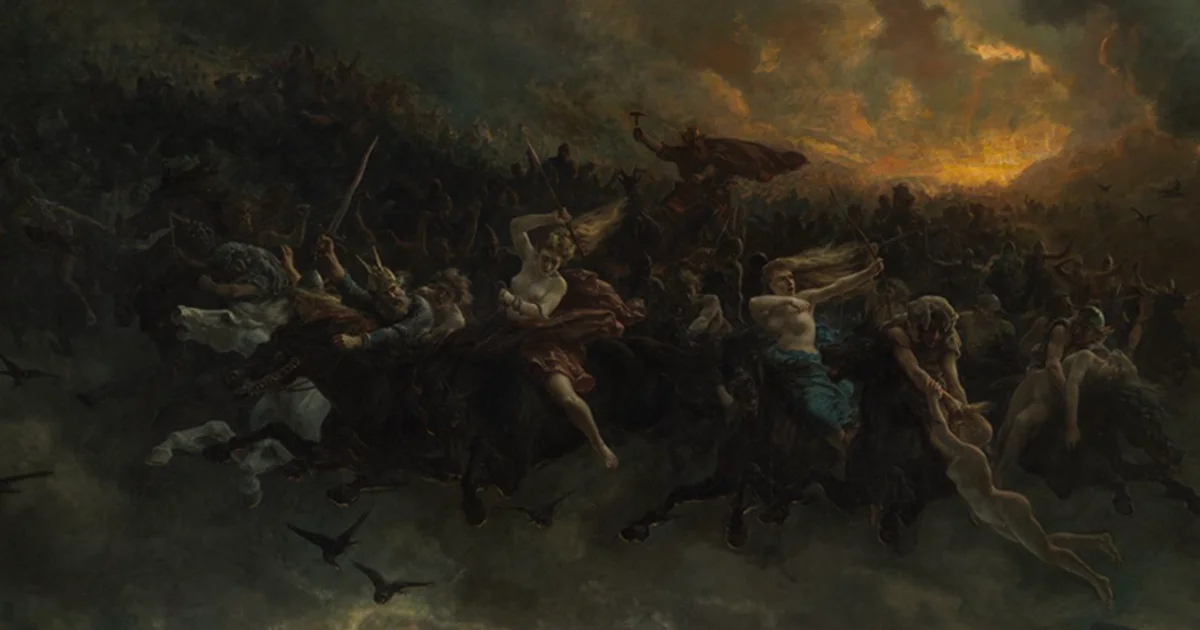
The word mythology comes from the Greek mythos, meaning story, and logos, meaning word or speech. Norse mythology preserves the religious beliefs of Scandinavian peoples who lived in Denmark, Norway, Sweden, and Iceland from roughly 800 BCE to 500 CE. These tales survived through oral tradition and were later written down in medieval Iceland by Christian scholars who documented pagan beliefs. The stories explain creation, divine conflicts, heroic deeds, and the predicted destruction and rebirth of the cosmos at Ragnarok. Understanding Norse mythology requires examining the primary sources, the structure of the mythic cosmos, the major deities and their roles, and the cultural practices tied to these beliefs.
Primary Sources and Preservation
The Prose Edda, compiled around 1220 CE by Icelandic scholar Snorri Sturluson, stands as the most comprehensive source for Norse mythology. Snorri wrote in Old Norse and organized the work into four sections covering cosmology, poetic language, meter, and mythological narratives. The Prose Edda includes stories about Odin’s acquisition of wisdom, Thor’s battles against giants, and Loki’s role as both helper and antagonist to the gods. Snorri’s Christian perspective influenced his presentation, as he rationalized pagan gods as misunderstood historical kings.
The Poetic Edda, a collection of anonymous poems preserved in the Codex Regius manuscript from around 1270 CE, provides earlier material dating to the 9th through 12th centuries. These 31 poems include Völuspá, a prophetess’s account of creation and destruction; Hávamál, wisdom poetry attributed to Odin; and Þrymskviða, a humorous tale of Thor retrieving his stolen hammer. The Poetic Edda uses alliterative verse and kennings, compound metaphors like whale-road for sea or battle-sweat for blood.
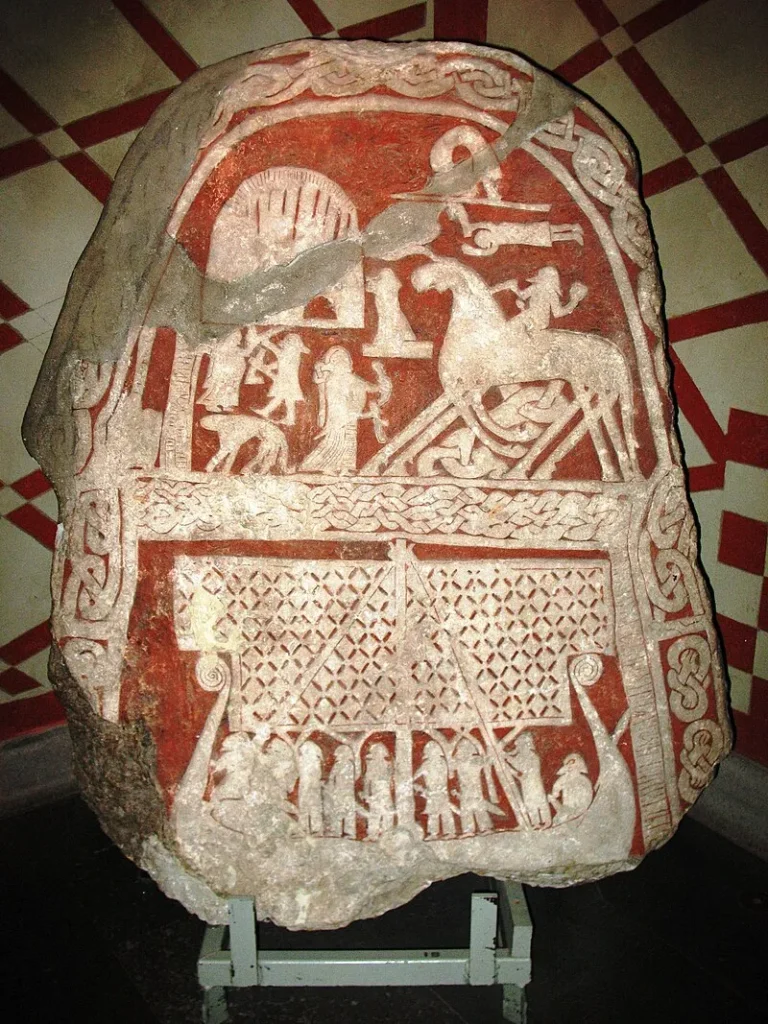
Archaeological evidence supplements textual sources. Runestones from Sweden and Denmark, dating between 400 and 1100 CE, bear inscriptions referencing Thor, Odin, and protective formulas. Picture stones from Gotland, carved between 400 and 1100 CE, depict scenes possibly showing Odin’s eight-legged horse Sleipnir, Valkyries welcoming fallen warriors, and cosmic symbols. The Oseberg ship burial from 834 CE in Norway contained wooden carvings with serpentine and interlaced designs reflecting mythological imagery.
The Nine Worlds and Yggdrasil
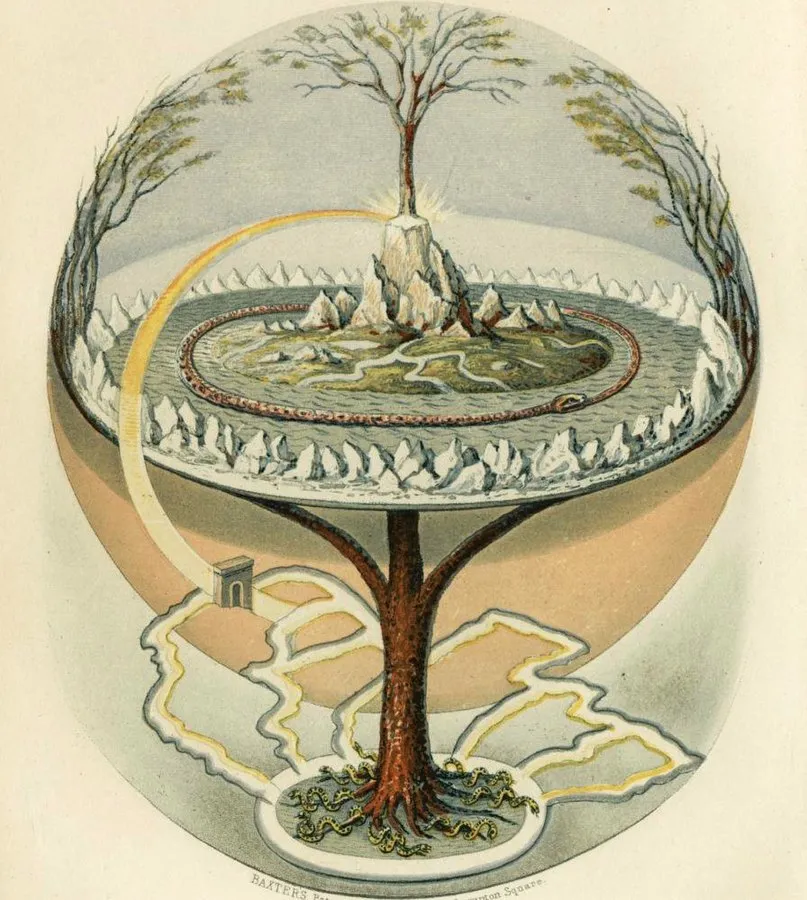
Norse mythology describes nine realms connected by Yggdrasil, the world tree imagined as an immense ash. Asgard, the fortress of the Aesir gods, sits high in Yggdrasil’s branches and connects to Midgard, the realm of humans, via the rainbow bridge Bifrost. Vanaheim houses the Vanir fertility gods including Njord, Freyr, and Freyja. Jotunheim serves as the homeland of the jotnar, often translated as giants but better understood as powerful beings opposing divine order.
Alfheim contains the light elves, radiant beings associated with beauty and magic. Svartalfheim, home of the dwarves, lies underground where skilled smiths forge legendary weapons and treasures. Niflheim, a realm of ice and mist, existed before creation and holds the spring Hvergelmir, source of eleven primordial rivers. Muspelheim, a land of fire guarded by the giant Surtr, opposes Niflheim across the primordial void Ginnungagap. Helheim, ruled by the goddess Hel, receives those who die of sickness or old age rather than in battle.
Three roots anchor Yggdrasil in different realms. One root extends into Asgard near the well of Urd, where the Norns, three female beings named Urd (past), Verdandi (present), and Skuld (future), weave the fates of gods and mortals. A second root reaches Jotunheim and the well of Mimir, whose waters grant wisdom. The third root stretches to Niflheim near the dragon Nidhogg, who gnaws at it perpetually. Four stags nibble Yggdrasil’s branches while the eagle Hraesvelgr perches at the top, and the squirrel Ratatoskr carries insults between eagle and dragon.
The Aesir and Vanir Gods
The Aesir gods rule from Asgard and govern war, sovereignty, and cosmic order. Odin, called Allfather, sacrificed his right eye at Mimir’s well to gain knowledge and hung himself from Yggdrasil for nine days to discover the runes, magical symbols used for divination and protection. Odin’s two ravens, Huginn (thought) and Muninn (memory), fly across the worlds daily bringing him information. He rides the eight-legged horse Sleipnir and wields the spear Gungnir that never misses its target.
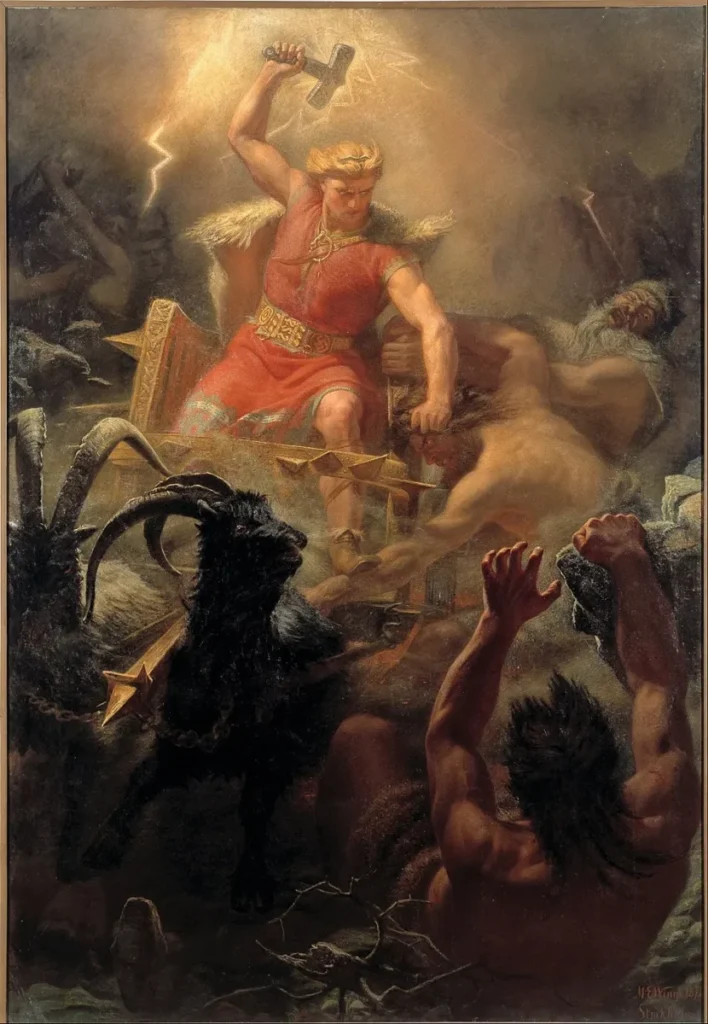
Thor, Odin’s son by the earth giantess Jord, protects gods and humans from hostile jotnar. Standing as the strongest of the Aesir, Thor wields Mjolnir, a hammer forged by dwarven brothers Sindri and Brokkr that returns after being thrown. Thor wears iron gloves to handle Mjolnir and a belt called Megingjord that doubles his strength. His hall Bilskirnir in Asgard contains 540 rooms.
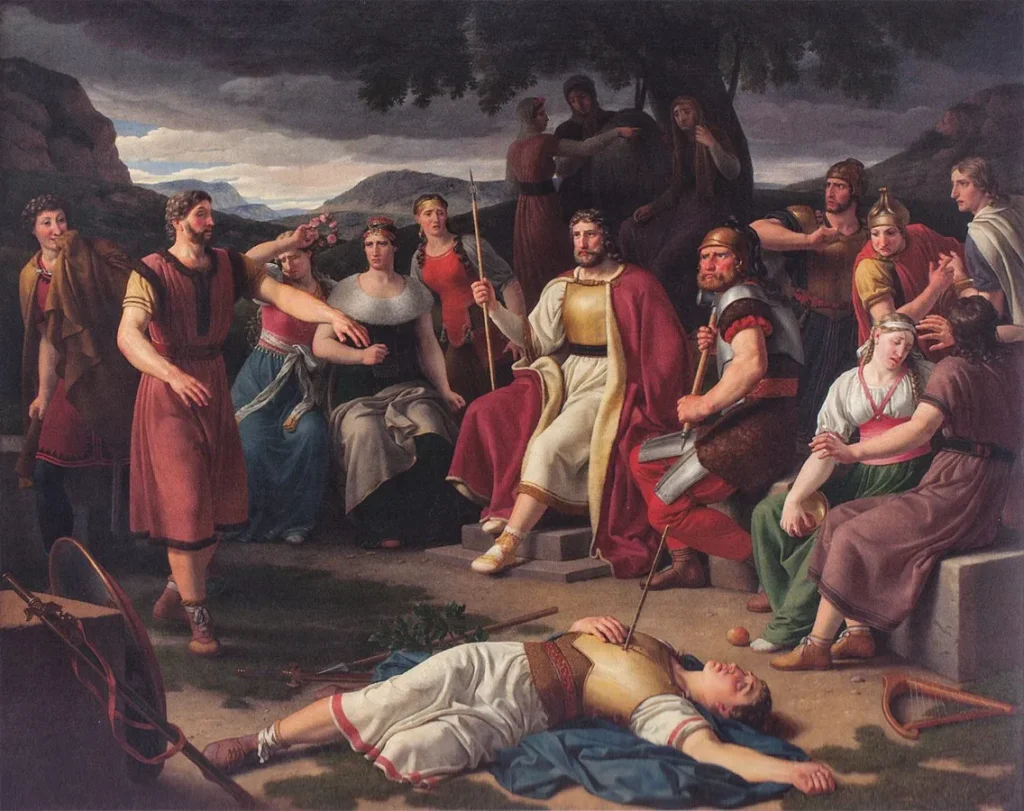
Frigg, Odin’s wife and queen of the Aesir, knows all fates but reveals none. She presides over marriage and motherhood from her hall Fensalir. Her son Baldr, the most beloved god, dies after the blind god Hodr throws mistletoe at him following Loki’s deception. Frigg had extracted oaths from all things not to harm Baldr but overlooked the mistletoe as too young and insignificant.
The Vanir gods represent fertility, prosperity, and natural forces. After a war between Aesir and Vanir ended in stalemate, both sides exchanged hostages. Njord came to Asgard along with his children Freyr and Freyja. Njord controls winds, sea, and fire, and blesses fishing and sailing. Freyr owns the ship Skidbladnir, which folds small enough to fit in a pouch but expands to carry all the gods, and the boar Gullinbursti with golden bristles. Freyja claims half of warriors slain in battle, bringing them to her hall Folkvangr, while Odin receives the other half at Valhalla.
Loki and the Doom of the Gods
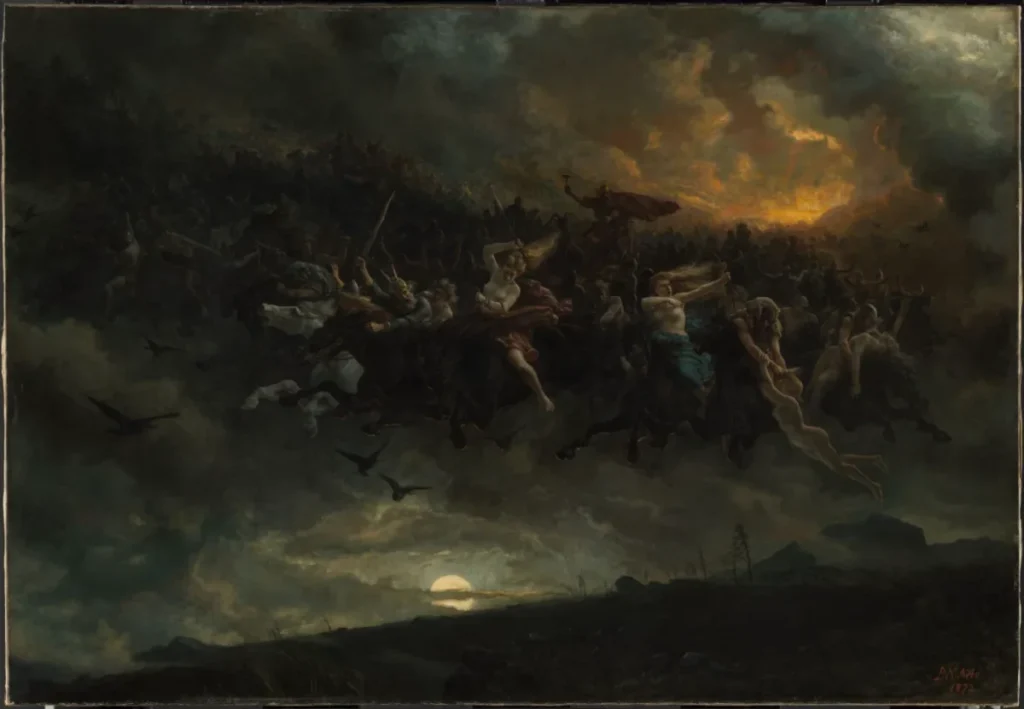
Loki, son of the jotun Farbauti and the goddess Laufey, lives among the Aesir despite his giant ancestry. A shape-shifter able to become animals or change gender, Loki alternately helps and harms the gods. He convinced the dwarven sons of Ivaldi to forge treasures including Odin’s spear Gungnir, Freyr’s ship Skidbladnir, and Sif’s golden hair after Loki maliciously cut off her original hair.
Loki fathered three monstrous children with the giantess Angrboda in Jotunheim. The gods learned these offspring threatened cosmic stability. Hel, half living flesh and half corpse, was cast into Niflheim where Odin appointed her ruler of the realm of the dead. The serpent Jormungandr, called the Midgard serpent, grew so massive that Odin threw him into the ocean encircling Midgard where he bit his own tail. The wolf Fenrir demonstrated such strength that only magical bonds could restrain him.
The gods commissioned dwarves to forge Gleipnir, a silken ribbon made from six impossible things including the sound of a cat’s footfall, the beard of a woman, the roots of mountains, the sinews of bears, the breath of fish, and the spittle of birds. Fenrir agreed to be bound only if one god placed a hand in his mouth as pledge. The god Tyr volunteered and lost his right hand when Fenrir realized he could not break free. This binding delays but does not prevent Ragnarok, when Fenrir will devour Odin.
After arranging Baldr’s death, Loki fled Asgard. The gods captured him and bound him beneath the earth with the entrails of his son Narfi, transformed into iron chains. The giantess Skadi placed a venomous serpent above Loki’s head, dripping poison onto his face. His wife Sigyn holds a bowl to catch the venom, but when she must empty it, drops fall on Loki causing him to writhe in agony, creating earthquakes.
Built out of a love for history, kept free from distractions.
Spoken Past is an independent project shaped by curiosity, care, and long hours of research. Reader support helps keep it maintained, carefully researched, and open to everyone.
Creation and Cosmogony
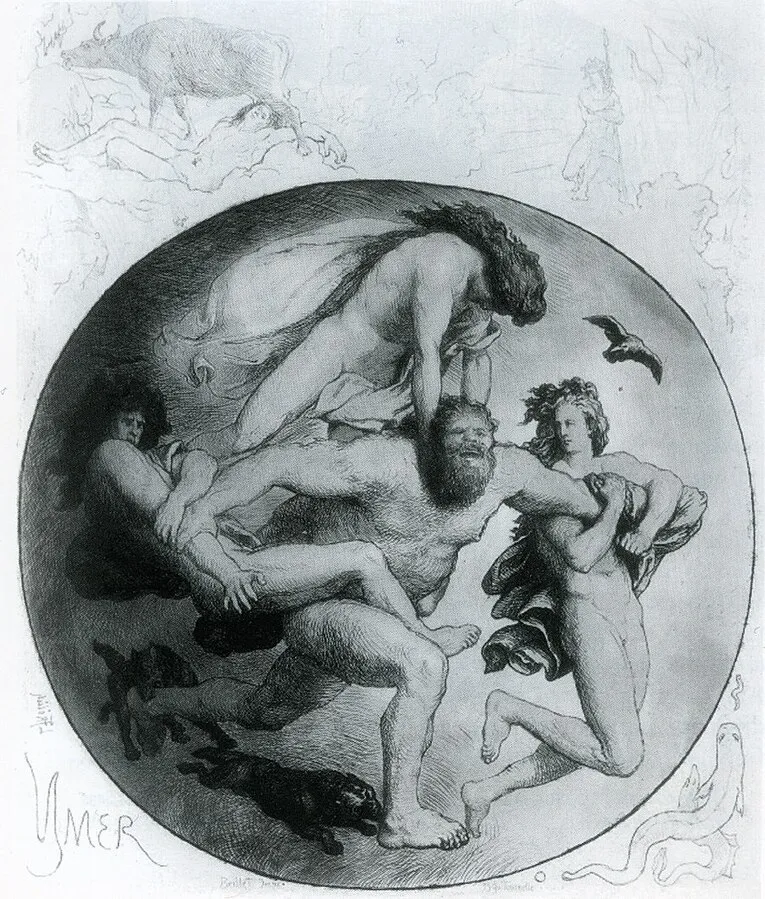
Before the nine worlds existed, only Ginnungagap stretched between fiery Muspelheim in the south and icy Niflheim in the north. Rivers from Niflheim, called Elivagar, froze in the void’s center. Heat from Muspelheim melted the ice, and from the resulting liquid emerged Ymir, the first being and ancestor of all frost giants. Ymir fed on milk from the primordial cow Audhumla, who licked salty ice blocks for sustenance.
Audhumla’s licking freed Buri, the first god, from the ice over three days. Buri’s son Borr married the giantess Bestla, and they produced three sons: Odin, Vili, and Ve. These brothers slew Ymir, and his blood caused a flood that drowned all frost giants except Bergelmir and his wife, who escaped in a boat and repopulated the jotnar race. The brothers fashioned the world from Ymir’s corpse: his flesh became earth, his blood the seas and lakes, his bones the mountains, his teeth and broken bones rocks and stones, his hair trees and vegetation, and his skull the sky held aloft by four dwarves named Nordri, Sudri, Austri, and Vestri at the cardinal points.
The gods threw Ymir’s brain into the air to form clouds. They caught sparks from Muspelheim and set them in the sky as stars, sun, and moon. The sun, personified as the goddess Sol, rides a chariot pulled by horses Arvak and Alsvid, pursued eternally by the wolf Skoll who will devour her at Ragnarok. The moon, personified as the god Mani, follows a similar path chased by the wolf Hati.
One day Odin, Vili, and Ve walked along a beach and found two tree trunks: an ash and an elm. The gods shaped them into Ask (ash), the first man, and Embla (elm), the first woman. Odin breathed life into them, Vili granted reason and movement, and Ve provided senses, speech, and appearance. The gods gave Ask and Embla Midgard as their home, enclosed within a fortification made from Ymir’s eyebrows to protect them from giants.
Religious Practices and Ritual
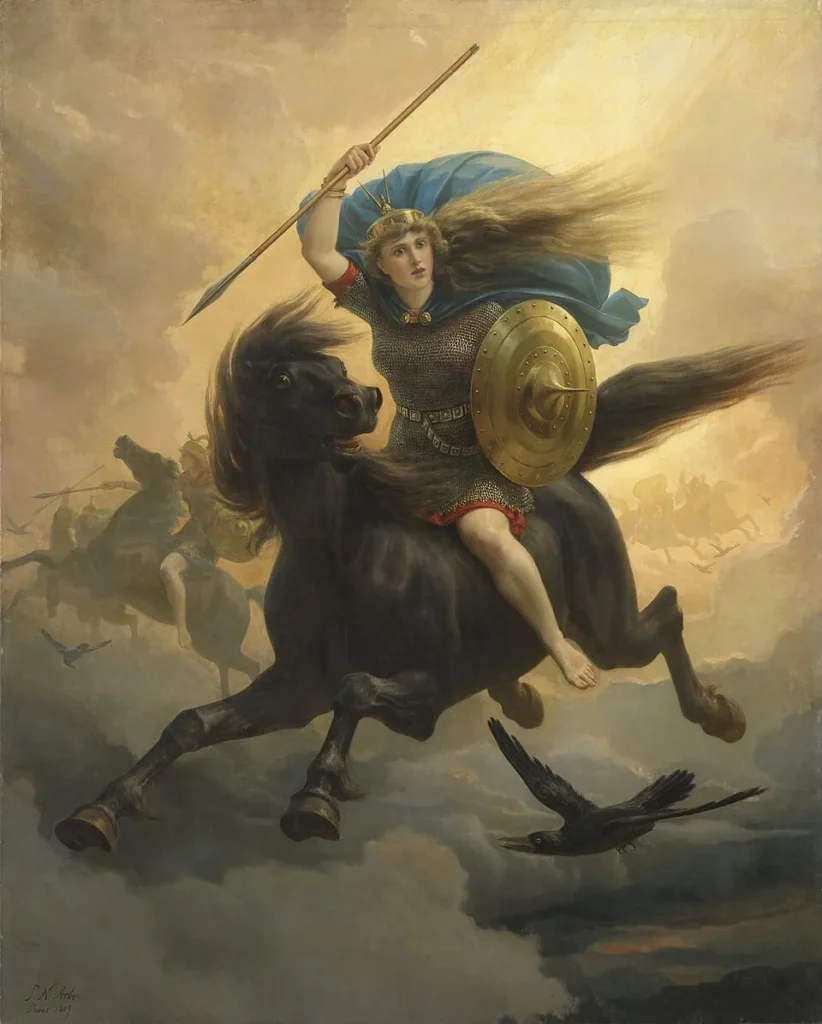
Archaeological and textual evidence reveals Norse religious practices centered on sacrifice, divination, and communal feasting. The Old Norse term blót designated ritual sacrifices, typically livestock offered to gods at seasonal festivals. Adam of Bremen, an 11th-century German chronicler, described a temple at Uppsala in Sweden where every nine years a festival involved sacrificing nine males of every living creature, hanging the bodies in a sacred grove. This account, while possibly exaggerated, indicates large-scale communal rituals.
Chieftains called goði or hofgoði presided over religious ceremonies at buildings called hof, simple structures containing wooden god-pillars or images. The Haukadalr temple in Iceland, excavated in the 1960s, measured 6.5 by 4 meters with postholes suggesting wooden pillars. Ritual feasts called sumbl involved drinking mead from a communal horn while making toasts to gods, ancestors, and personal oaths. The term symbel gave English the word “symbol” through its connection to sacred communal drinking.
Seidr, a form of magic associated with Freyja, involved practitioners entering trances to see hidden knowledge, influence events, or communicate with spirits. Male practitioners faced social stigma as seidr was considered ergi, unmanly, because it involved receptive and passive spiritual states. Odin practiced seidr despite the stigma, emphasizing his pursuit of knowledge above social conventions.
Burial practices varied regionally and temporally. Ship burials, documented from 550 to 1050 CE, placed the deceased in boats ranging from small rowboats to ocean-going vessels buried under earthen mounds. The Gokstad ship, excavated in Norway in 1880, measured 23.3 meters long and contained the body of a man in his 40s or 50s with horses, dogs, and peacocks. Cremation remained common throughout Scandinavia, with ashes placed in urns or scattered. Grave goods included weapons, tools, jewelry, and food, reflecting beliefs about afterlife needs.
Eschatology and Ragnarok
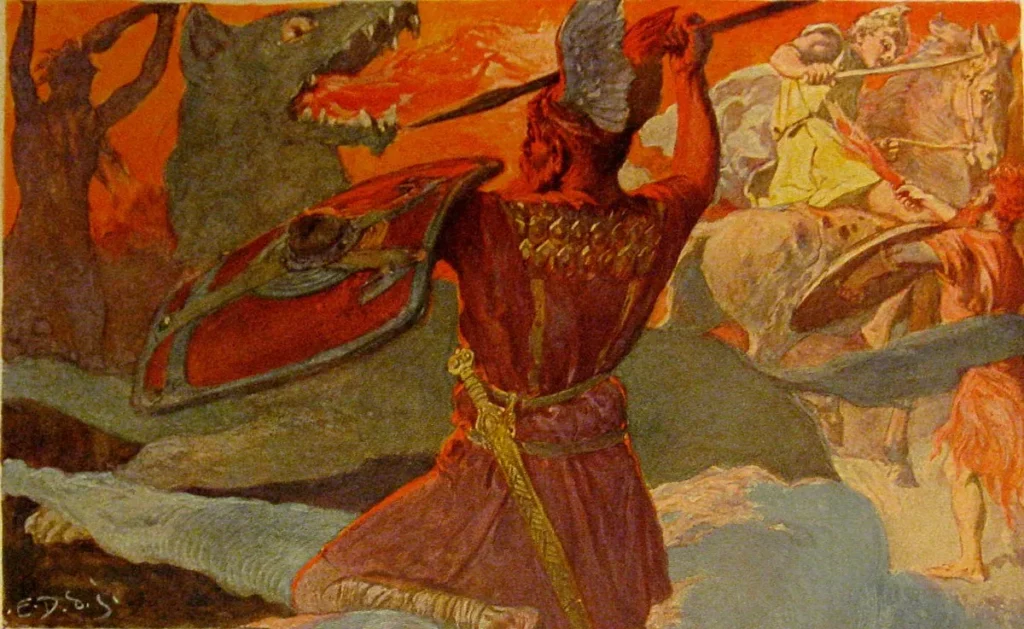
Völuspá, the most detailed source for Norse eschatology, describes Ragnarok as a series of catastrophic events culminating in cosmic destruction and renewal. Signs precede the final battle: three successive winters with no summer between them called Fimbulwinter; brothers will kill brothers; moral order will collapse. The rooster Gullinkambi wakes warriors in Valhalla while the rooster Fjalar wakes giants in Jotunheim.
Heimdall, watchman of the gods stationed at Bifrost bridge, sounds his horn Gjallarhorn when enemies approach Asgard. Fenrir breaks free and devours Odin before Odin’s son Vidar tears the wolf’s jaws apart. Thor faces Jormungandr, crushing the serpent’s skull with Mjolnir, but falls dead after taking nine steps, poisoned by the serpent’s venom. Freyr fights Surtr without his magical sword, which he traded for the giantess Gerd’s love, and dies. Tyr and the monstrous hound Garm kill each other.
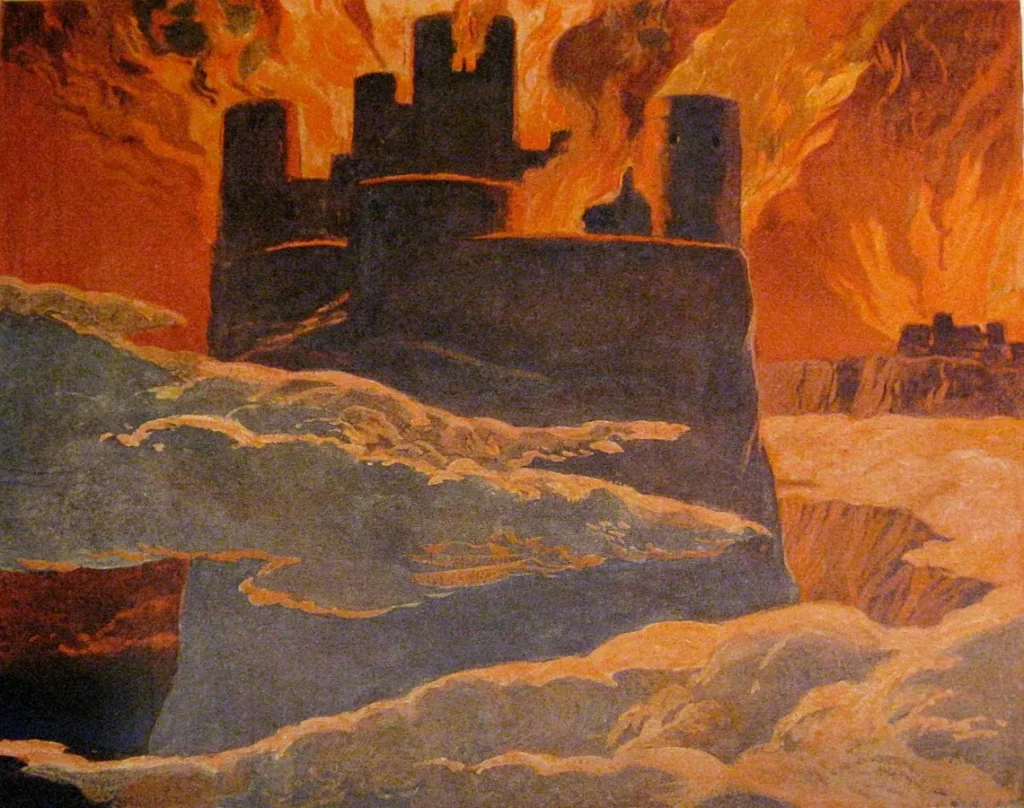
Loki escapes his bonds and commands a ship made from the fingernails and toenails of the dead, sailing from Helheim with an army of dishonored dead. Surtr leads fire giants from Muspelheim across Bifrost, which breaks under their weight. The fire giant engulfs the world in flames, consuming gods, humans, and all nine realms. Earth sinks into the sea.
Völuspá promises rebirth after destruction. Earth rises renewed and green from the waves, and two human survivors, Lif and Lifthrasir, emerge from Hoddmimir’s wood where they hid during the cataclysm. They repopulate the earth. Some gods survive including Vidar, Vali, Modi and Magni, Thor’s sons who inherit Mjolnir, and Baldr returns from Helheim. The gods gather at Idavoll, the field where Asgard once stood, and find golden game pieces used by the earlier gods, symbolizing continuity and cyclical renewal.
Legacy and Cultural Influence
Norse mythology influenced medieval Scandinavian culture through personal names, place names, and art. The god Tyr’s name appears in the place name Tysnes in Norway. Thor gave his name to Thorsberg in Germany and hundreds of personal names like Thorstein and Thorbjorn. The days Tuesday, Wednesday, Thursday, and Friday preserve the names of Tyr, Odin (Woden), Thor, and Frigg in English.
Scandinavian art from 550 to 1100 CE incorporated mythological motifs. The Urnes style, named after wooden carvings at Urnes stave church in Norway from 1130 CE, features interlaced animals and serpents possibly representing Ragnarok imagery. The Gosforth Cross in England, carved around 920 CE, depicts Thor fishing for Jormungandr and Vidar avenging Odin, showing how Norse mythology persisted in areas of Viking settlement.
Medieval Scandinavian law codes preserved pre-Christian concepts. The Icelandic Grágás, codified around 1117 CE, retained the term goði for legal chieftains even after Christianization in 1000 CE. Norwegian provincial laws from the 12th century called Gulathing Law and Frostathing Law preserved terminology and structures from pagan religious assemblies.
Modern scholarship began analyzing Norse mythology systematically in the 17th century. Icelandic manuscripts reached European academies and generated comparative studies. The Romantic movement in 19th-century Germany and Scandinavia revived interest in Norse myths as expressions of national identity. Composers like Richard Wagner based Der Ring des Nibelungen on Norse and Germanic legends, premiered between 1869 and 1876.