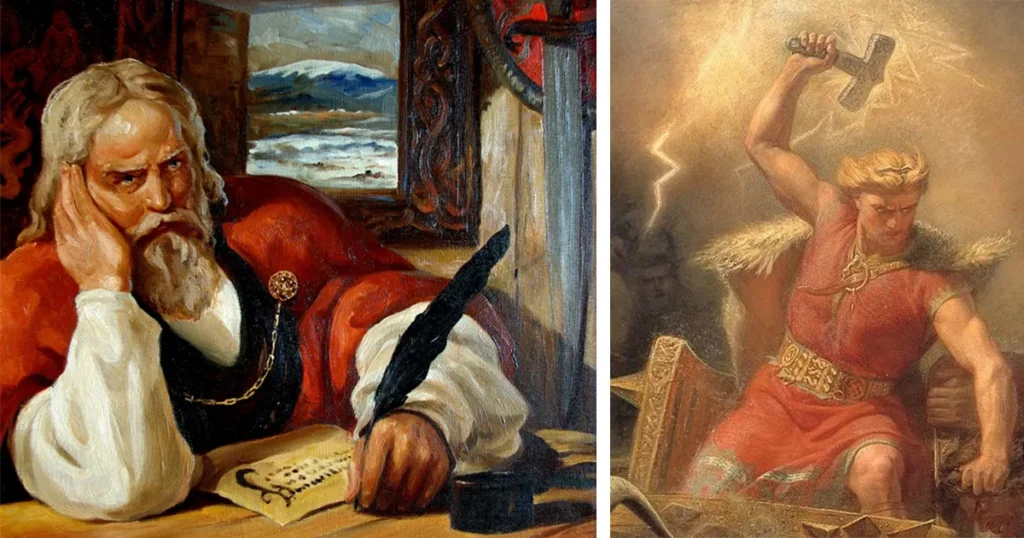
Snorri Sturluson was a wealthy Icelandic politician who lived from 1179 to 1241. He also helped preserve the stories through which much of the modern world knows Odin, Thor, Loki and Ragnarök. His Prose Edda, composed in the first half of the thirteenth century, is a principal surviving account of Norse myth. Yet its author had been raised in Christian Iceland, more than two centuries after the island officially adopted Christianity. He wrote for poets, not for the worshippers who had once told these stories in religious settings.
That difference is crucial. A myth repeated in a medieval handbook is evidence that a story was known to its writer and readers; it is not automatically proof that every Viking Age community believed or practised precisely what the handbook describes. Snorri worked with older poems, inherited narrative traditions and learned explanations that did not always fit together. His prose makes them unusually intelligible, sometimes at the cost of making them appear more consistent than they were.
The best test of Snorri’s reliability is therefore specific. We can compare his accounts with Eddic and skaldic poetry, inspect the manuscripts that transmit his work and examine material evidence made before his lifetime. Some comparisons confirm that he preserved recognisable older traditions. Others show where a Christian writer, a political historian and a skilled literary craftsman may have influenced what survives. The distinction matters most when his text is our only detailed witness to a story.
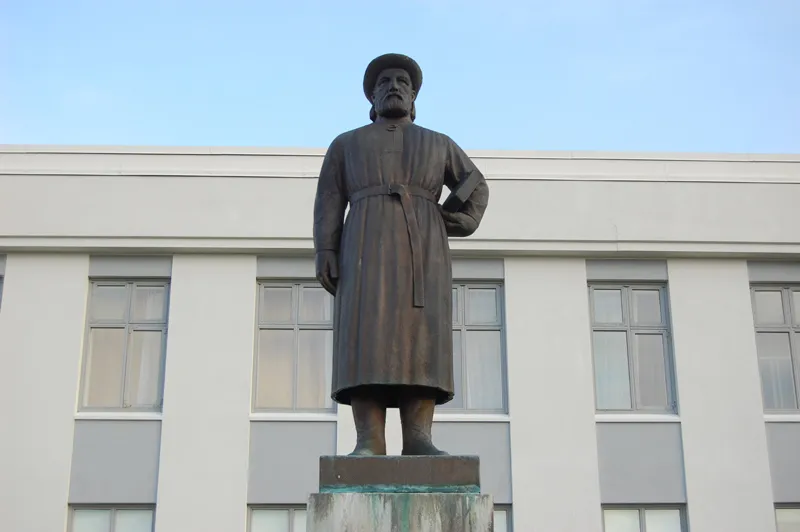
Snorri Sturluson, the chieftain behind the myths
Snorri grew up at Oddi in southern Iceland under the patronage of the influential Jón Loftsson, in a household associated with learning, law and powerful families. He acquired land and political authority, moved to Reykholt in 1206 and twice held the office of lawspeaker at the Alþingi. The lawspeaker was responsible for reciting and explaining the law at Iceland’s assembly, an influential office in a society where legal knowledge and personal alliances mattered enormously. Snorri’s career belonged to the increasingly violent politics of the Sturlung Age, when a handful of families competed for control of the Icelandic Commonwealth. The Snorrastofa research centre at Reykholt sets his literary activity beside this political and ecclesiastical world rather than treating him as an isolated collector of folklore.
Reykholt was both an estate and a centre of literate activity. The medieval site has been excavated, revealing structures and a passage associated with the famous hot-water pool, although the surviving remains cannot all be assigned securely to Snorri’s own building programme. His position gave him access to educated clerics, manuscripts and a network of people who knew genealogies and court poetry. It also gave him a reason to understand the language in which rulers were praised. Skaldic verse was politically useful: poets could commemorate patrons, assert ancestry and celebrate military achievement in highly conventional language.
Snorri’s relationship with Norway became dangerous. He visited the Norwegian court and became entangled in the rivalry between King Hákon Hákonarson and the powerful Skúli Bárðarson. After returning to Iceland against the king’s wishes, he was killed at Reykholt in September 1241 by a party led by Gissur Þorvaldsson. Accounts of his last moments come through later Icelandic historical writing, not an eyewitness record that can be checked independently. His violent death helps explain the political setting of his career; it tells us little directly about whether an individual myth he transmitted was old or newly arranged.
Alongside the Edda, Snorri is strongly associated with Heimskringla, a history of Norwegian kings that begins in a legendary past and proceeds into better-documented history. Other works, notably Egils saga, have been attributed to him with less certainty. Even the Prose Edda must be considered as a text transmitted through later copies rather than a manuscript in Snorri’s own hand. The 2024 Cambridge History chapter on the Prose Edda stresses that its structure, authorship and formation have generated competing scholarly interpretations.

Why a book about poetry preserves so many gods
The Prose Edda is often approached as a mythological encyclopaedia, but that description obscures its practical purpose. Court poetry depended on kennings, elaborate substitutions in which a familiar object or person could be named indirectly. A ship might be described through a sea image; gold could be named through a legendary event; a god’s name might stand inside an expression that made sense only if the listener recognised the story behind it. These conventions demanded a large shared repertoire. By the thirteenth century, the mythology behind many kennings was no longer the religious knowledge of a practising pagan community.
The book’s mythological narrative, Gylfaginning, gives readers the gods’ origins, their relationships, famous exploits and the destruction of the world. The Swedish king Gylfi, disguised as a traveller called Gangleri, questions three enthroned figures called High, Just-as-High and Third. Their answers provide an extended account of the cosmos and its inhabitants. The frame matters: the work presents the information as a dramatic conversation in a deceptive hall, rather than as an author declaring a creed. Snorri could give readers stories without inviting them to worship their gods.
In Skáldskaparmál, the ‘language of poetry’, the mythological stories become resources for explaining kennings and other poetic names. This section contains narratives that are barely preserved elsewhere. The story of how the gods acquired poetic mead, for example, helps explain why poetry can be called Odin’s drink. The account of Loki wagering his head with the dwarf Brokkr helps explain a reference to his lips being sewn shut. The last major section, Háttatal, demonstrates metres through Snorri’s own courtly praise poem for Hákon and Skúli. It makes the connection between poetic craft and political patronage unmistakable.
The customary division into prologue, Gylfaginning, Skáldskaparmál and Háttatal is useful, but the surviving manuscripts do not present every section in precisely the same way. The edition of the Uppsala Edda by Heimir Pálsson, with an English translation by Anthony Faulkes includes extensive discussion of the work’s development. Its editor considers whether parts of the book may have circulated in different forms or been revised. This is a better starting point than assuming that Snorri wrote a single finished volume whose exact wording has survived intact.
What the surviving manuscripts can and cannot tell us
No surviving copy of the Prose Edda was made in Snorri’s lifetime. The principal witnesses include the early-fourteenth-century Uppsala manuscript (DG 11), the Codex Regius of the Prose Edda (GKS 2367 4to), Codex Wormianus and a later paper copy called Codex Trajectinus. They vary in arrangement, length and wording. Uppsala University Library identifies DG 11 as a medieval copy of the Edda, while the Árni Magnússon Institute separately lists the two different Codices Regii. The latter distinction prevents a common mistake: the Codex Regius of the Poetic Edda is GKS 2365 4to, not GKS 2367 4to.
The Uppsala version is particularly important because it preserves an explicit statement associating the compilation with Snorri. Yet the wording of a manuscript heading cannot be treated as a signature written by the author. Heimir Pálsson’s detailed examination notes that a heading calling Skúli a duke must have taken shape after he received that title in 1237, and it may have been written after Snorri’s death. This does not disprove Snorri’s role in the work. It shows why modern editors distinguish the authorship of a composition from the date and history of the copies in which we read it.
The Poetic Edda is a different collection of anonymous mythological and heroic poems. Its best-known manuscript, GKS 2365 4to, was copied in the later thirteenth century, after Snorri had died. Some poems or poetic material are much older than the manuscript; their dates and layers of composition are debated individually. The physical age of a copy is not the age of everything in it. Nor does a later copy make a poem worthless as independent evidence. Where an Eddic stanza also appears in Snorri’s text, however, dependence between textual traditions must be considered before claiming two completely independent attestations.
Skaldic poetry can sometimes offer a different chronological anchor. Verses attributed to poets active before Iceland’s conversion refer to divine names, mythic objects and episodes in compressed language. A poem composed for a ninth- or tenth-century ruler, if its attribution and wording are secure, can attest to a motif earlier than Snorri. That is not the same as reconstructing a full ritual system. It establishes that the imagery was available to a particular poet and audience. This distinction between evidence for a motif and evidence for a universal belief is fundamental to source criticism.
The Christian prologue and the gods who came from Troy
The Prose Edda‘s prologue begins from a Christian account of the world’s creation and describes how human beings lost knowledge of the true creator. It then traces the gods’ supposed human ancestry toward Troy and Asia. This is euhemerism: explaining divine figures as exceptional people later mistaken for gods. The method was familiar to medieval learned writers. It allowed pagan stories to be absorbed into a Christian account of world history, in which the ancient gods were neither creators nor legitimate objects of worship.
The etymological connection between the Æsir and Asia is part of that medieval explanation, not a valid modern derivation of the name. It also was not simply invented by Snorri. In the introduction to his critical edition of the Prologue and Gylfaginning, Anthony Faulkes traces connections with Icelandic genealogical traditions and learned stories that linked Scandinavian dynasties to the classical world. Snorri was participating in a wider culture of medieval historical writing, where biblical chronology, Trojan ancestry and local dynastic claims could be joined into one account.
The prologue is sometimes treated as an apology added to make the mythology acceptable to Christian readers. That is plausible as an account of its function, but its precise relationship to other sections and to the earliest composition is not settled. The manuscript tradition varies, and a text’s Christian framing does not prove that every myth within it was invented by a Christian. In Gylfaginning, Snorri repeatedly quotes verses and tells stories whose older existence can sometimes be tested. The question is how the frame changes their interpretation. The gods are presented as objects of learned narration, not as living powers whom the reader should honour.
Enjoying Spoken Past?
I created Spoken Past to share my love of history. I research, write and develop everything myself, and I want my articles and basic guides to remain free for everyone.
If you enjoy my work, please consider supporting Spoken Past with a small donation.
Nine worlds, light elves and the temptation to draw a perfect map
Modern diagrams of Norse mythology often place nine clearly named realms around the world tree Yggdrasil. The medieval evidence does not supply that exact chart. Völuspá and Vafþrúðnismál refer to nine worlds, and Snorri also uses the number, but no surviving medieval passage gives a definitive list of all nine. Faulkes states this explicitly in the glossary of his 2005 edition. Different modern lists make different decisions about places such as Niflheimr, Niflhel, Svartálfaheimr and Útgarðr. A neat poster may help readers remember names, but it should not be mistaken for a map copied from a Viking Age manuscript.
Yggdrasil itself is deeply rooted in the poetry. The seeress of Völuspá recalls the tree, and Grímnismál gives it multiple roots and associates it with the gods’ assemblies. Snorri arranges this imagery into a connected account of places and beings. He also incorporates the creation from the body of the primordial giant Ymir, the world bounded by sea and the rainbow bridge Bifröst. Much of this has poetic parallels. The danger arises when a reader treats the resulting prose as a fixed religious doctrine shared unchanged across Iceland, Norway, Sweden and the wider Scandinavian world over many centuries.
The elves are a useful case. Gylfaginning distinguishes bright or light elves from dark elves and describes their different dwellings. The poems mention álfar without laying out the same clear classification. Faulkes notes that the light/dark distinction has no securely older source. It might reflect material lost to us, a local tradition or an explanatory distinction created or sharpened by Snorri. A responsible account should state what the thirteenth-century text says, then acknowledge that the older distribution of these categories cannot be reconstructed with confidence.
The same caution applies to the hierarchy of the gods. Odin’s prominent role as a ruler and ancestor in medieval narrative does not automatically tell us how much attention every farming household paid him. Place-names and local finds indicate different emphases, but those sources are difficult to interpret: a divine name in a place-name is not a count of worshippers, and the absence of an object bearing a god’s name is not evidence that the god was unknown. Literary coherence and religious practice answer different historical questions.
Loki, Baldr and the problem of a single moral storyline
In Snorri’s account Loki moves between cooperation with the gods and actions that bring them disaster. He helps secure extraordinary objects, but also becomes involved in Baldr’s death, is bound as punishment and eventually fights against the gods at Ragnarök. Reading these episodes in sequence can make him seem like a steadily developing villain. The Eddic poems do not always produce the same tidy character arc. In Lokasenna, for example, Loki attacks the gods at a feast through insults and accusations. The poem is an aggressive verbal contest, and the narrator does not supply a modern moral biography explaining every stage of his supposed decline.
The death of Baldr illustrates the difficulty. Gylfaginning describes the gods making objects swear not to harm Baldr, Loki discovering that mistletoe has been overlooked, and the blind Höðr throwing the fatal missile under Loki’s direction. Other medieval tellings differ. Saxo Grammaticus’s Latin history, for example, gives a substantially different Balder and Høther narrative. Saxo also wrote as a Christian, so the contrast is not a clean opposition between pagan truth and Christian distortion. It shows that different medieval authors preserved or constructed different versions of a story whose earlier form cannot simply be read off either text.
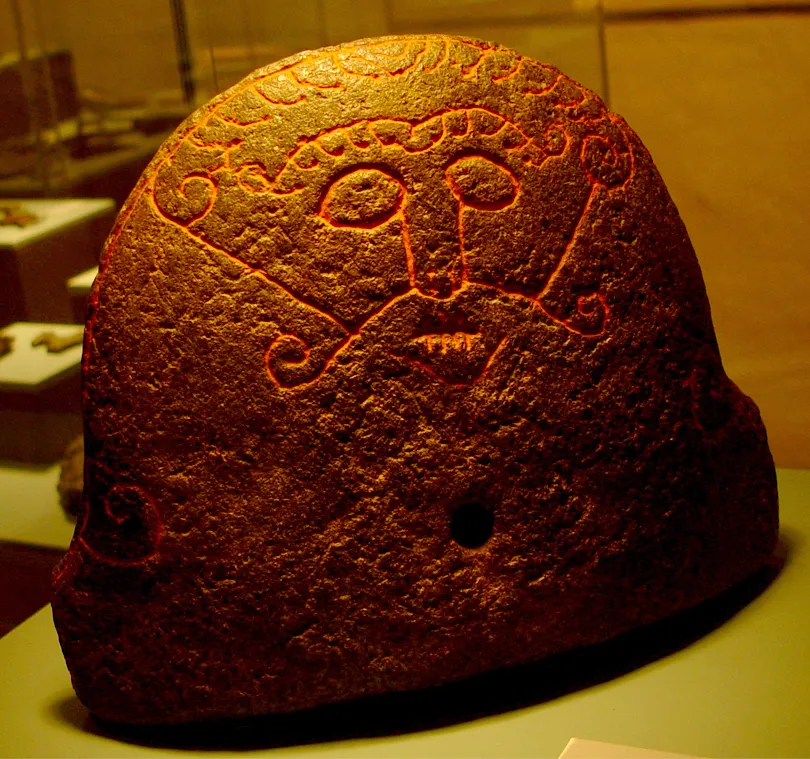
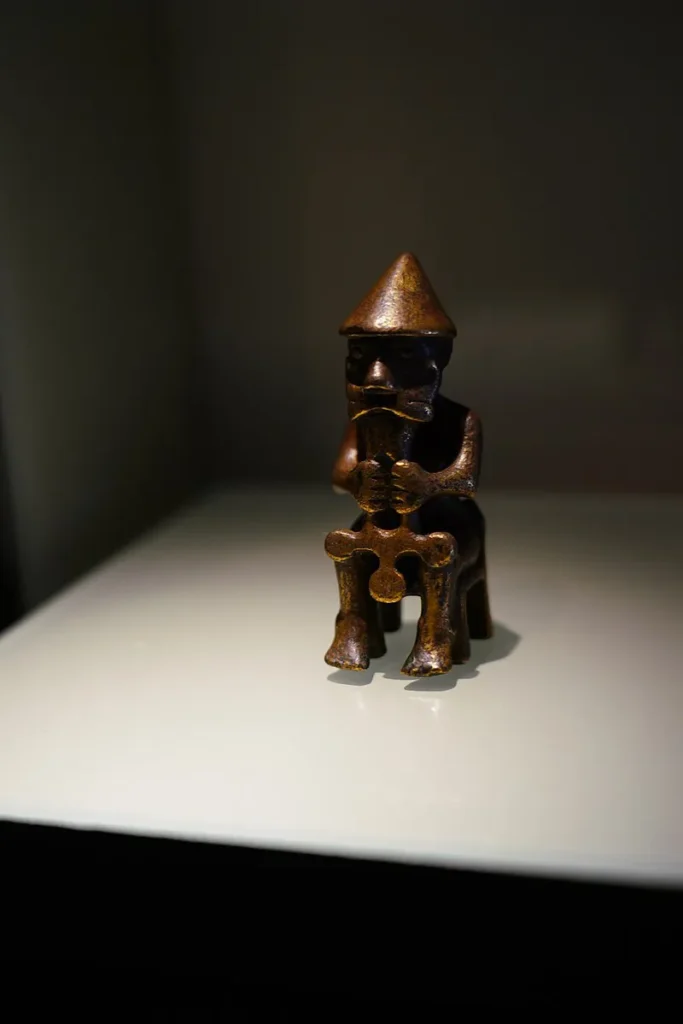
An object from Snaptun in Denmark provides a limited independent comparison. The carved stone, made for a blacksmith’s bellows, depicts a moustached face with lines across the lips. Those lines have been interpreted as the stitching inflicted on Loki in a story recorded in Skáldskaparmál. The World-Tree Project catalogue records both the object and this identification. If the identification is correct, it would show the motif was recognised around the Viking Age. The stone has no inscription naming Loki, however. Its existence cannot establish the entire tale or the religious significance of the image to its maker.
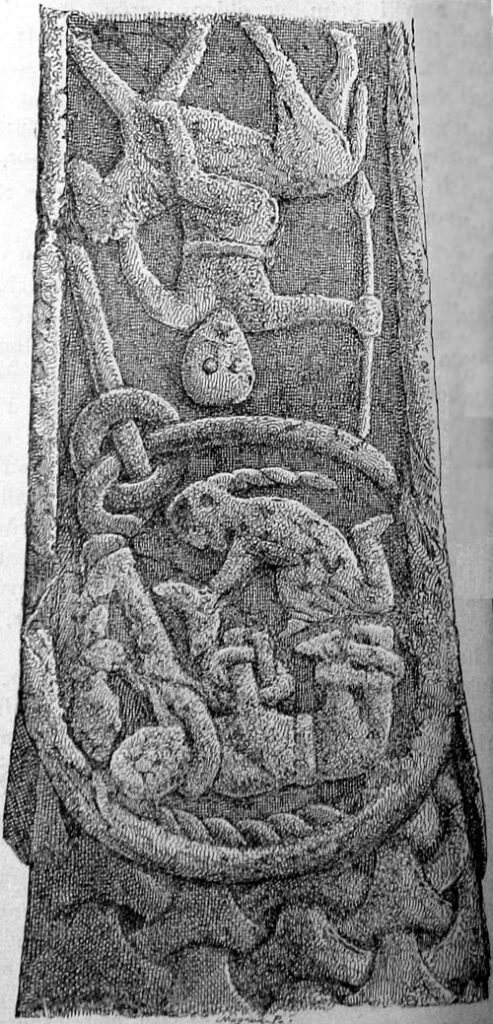
The Gosforth Cross in Cumbria offers another suggestive but complex case. Its carvings have long been read as combining Christian subjects with episodes from Norse myth. A bound figure accompanied by a woman with a vessel is commonly identified as Loki and Sigyn; the Historic England monument record describes that interpretation. Yet Amanda Doviak’s 2021 study of the cross examines the Christian devotional logic of the monument’s imagery and cautions against separating the scenes from their tenth-century Anglo-Scandinavian setting. It is unsafe to infer a straightforward pagan moral system from a Christian stone cross, even when some of its figures recall stories later written down by Snorri.
Ragnarök was known before Snorri, but its sequence is not beyond dispute
The end of the gods is not a story Snorri created out of nothing. Völuspá evokes a collapsing world, the breaking of bonds, the great confrontation of gods and enemies, and a world that rises again. Vafþrúðnismál preserves exchanges about survivors and the fate of cosmic powers. Snorri draws such material into an extended narrative in which individual episodes follow one another: the terrible winter, the release of enemies, the battles involving Odin and Thor, fire, destruction and renewal. His synthesis makes the events easier to follow, but the poetry itself is not a continuous chronicle.
The comparison with Christian apocalypse is worth considering carefully. A thirteenth-century Icelandic writer knew Christian ideas about final judgement, the end of the world and a renewed creation. Some images in Norse prophetic poetry have also been discussed in relation to Christianity, since poems could circulate and be written down in Christian settings. Similarity does not by itself establish borrowing from the Book of Revelation, still less a direct line from a specific biblical passage to a particular stanza. The responsible position is that Christian intellectual culture may have influenced the surviving forms and readings of the apocalypse, while older motifs and non-Christian traditions remain plainly present.
The final scene is particularly revealing. In some versions of Völuspá, the seeress describes a hall associated with the blessed; in others the poem’s ending differs. Snorri’s account of the surviving gods meeting on Iðavöllr and finding golden game pieces is closely tied to poetic imagery, but he makes its narrative setting explicit. Differences among manuscripts, poems and prose should be retained as evidence, not treated as inconvenient mistakes to be smoothed into one authorised account of Ragnarök.
Runestones, charms and pictures outside the Edda
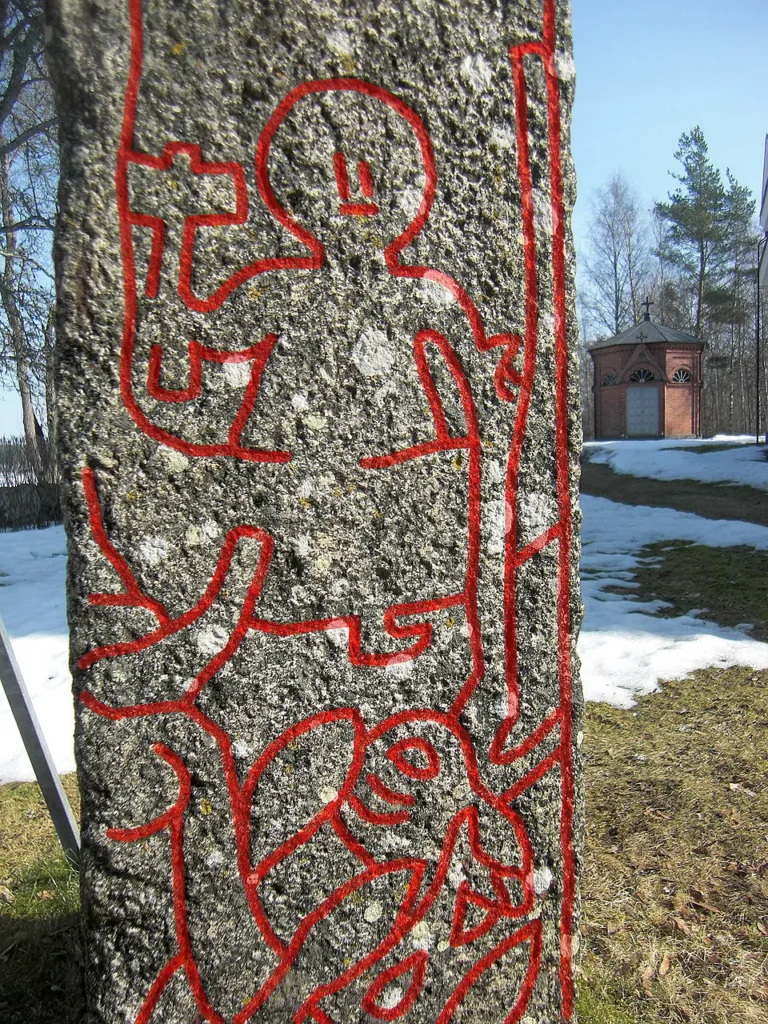
A carved stone at Altuna in Uppland, Sweden, shows a figure in a boat confronting a large serpent. The image is usually read as Thor fishing for Jörmungandr, the Midgard Serpent. The catalogue of runestone U 1161 identifies the motif and records the memorial inscription associated with the stone. The scene can be compared with Hymiskviða and with Snorri’s fuller prose version. Its value is not that it confirms every detail of the latter. It shows that a recognisable episode circulated visually before Snorri’s text was copied, among people who could use it on a memorial monument.
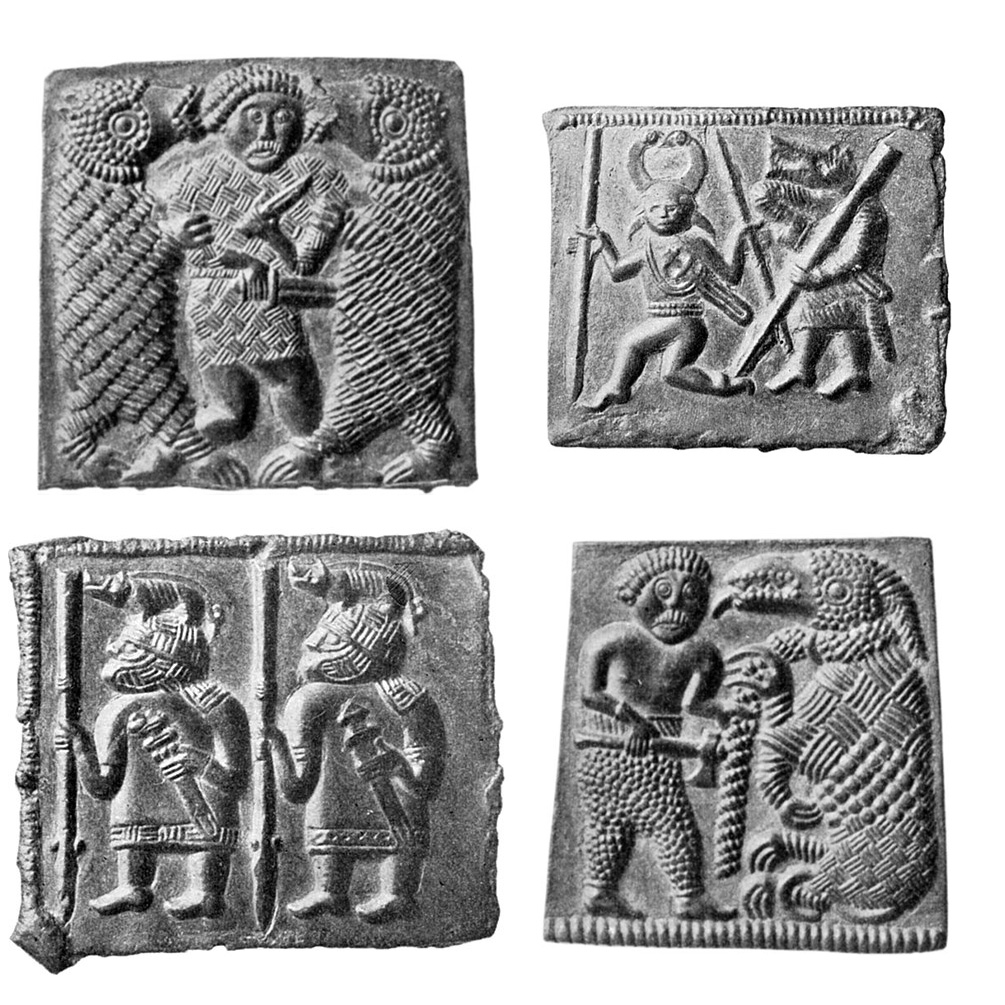
The Torslunda bronze dies from Öland, used to produce decorated metal foils, provide a different kind of evidence. Their masked and armed figures have been connected with Odin and warrior ritual, but individual identifications remain contested. A one-eyed figure in a picture is not an autograph label reading ‘Odin’, and a ceremonial image is not a diagram of an entire pantheon. Such objects widen the range of evidence beyond manuscripts while reminding us that iconography is itself an interpretative discipline. We can compare features, dates and find contexts without pretending every carved or stamped figure has a secure name.
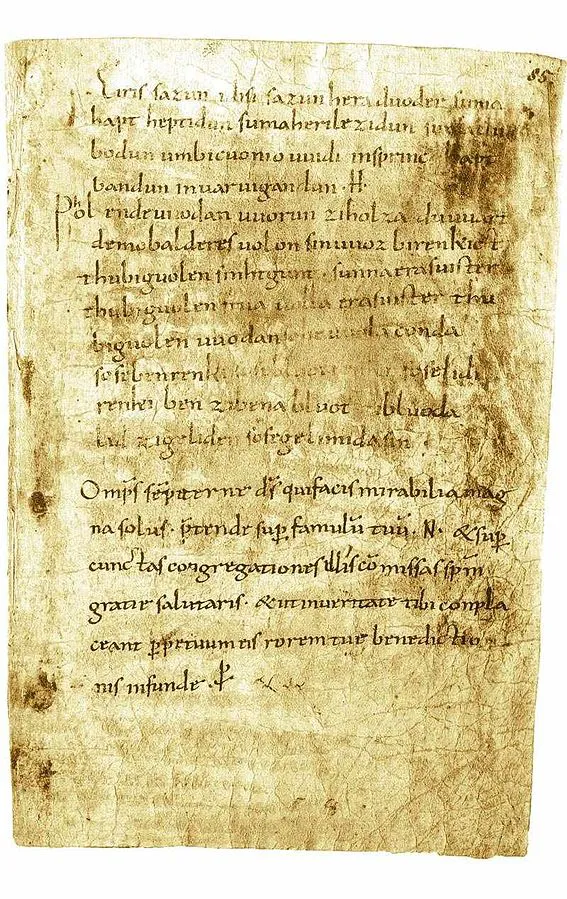
The two Merseburg Charms, written in Old High German, belong to a continental Germanic tradition outside medieval Iceland. The second invokes Wodan, the cognate of Odin, in a healing formula for an injured horse. The University of Halle account of the manuscripts identifies the charms as exceptional witnesses to pre-Christian religious language preserved in a Christian manuscript environment. They do not prove that a thirteenth-century Icelandic account of Odin’s adventures was identical to continental practice. They do show that the god’s name and magical associations belonged to a wider Germanic repertoire.
Together these objects and texts give a more useful picture than either absolute trust or wholesale dismissal of Snorri. The Altuna stone supports the circulation of a Thor story; the Snaptun carving may reflect a Loki episode; the Merseburg text attests Wodan in a practical charm; the Gosforth Cross demonstrates how mythic imagery could be reused in a Christian context. None supplies a complete, independent account of Norse religion. Their strength lies in showing where particular details can be compared across different media, places and dates.
How much of Norse mythology can we safely take from Snorri?
A good reading begins by naming the kind of evidence. If Snorri quotes a verse, check the verse and its manuscript history. If he tells a prose story without a surviving parallel, it may preserve lost material, but its age and precise form are harder to establish. If he gives a system of divine families, worlds or categories, compare that system with the more fragmentary poems and with archaeological evidence. Where a story is preserved in several texts, ask whether the witnesses are genuinely independent or share earlier written material. A single motif can be well attested even when the surrounding narrative remains uncertain.
The work’s greatest value may be the extraordinary amount of poetic knowledge it kept intelligible. Without the Edda, many kennings would be difficult to explain and several myths would survive only as scattered allusions. But a source that preserves information can also organise it. The 2015 study of Snorri as a skilled narrator addresses the relationship between storytelling and scholarship, while the 2024 scholarly overview emphasises the book’s mixed and intertextual character. Neither approach supports treating Snorri as a neutral recorder who merely transcribed the words of pagan worshippers.
Snorri remains central because he wrote down a remarkable body of stories at a moment when older poetic forms were still available but their meanings needed explanation. His Christian faith, education and political career shaped the choices he made; they did not erase his access to older traditions. The most defensible Norse mythology is therefore built from Snorri in conversation with poems, manuscript variants, images, inscriptions and the limits of what each can show. Read that way, the Prose Edda becomes a stronger historical source precisely because its author is no longer mistaken for an invisible one.