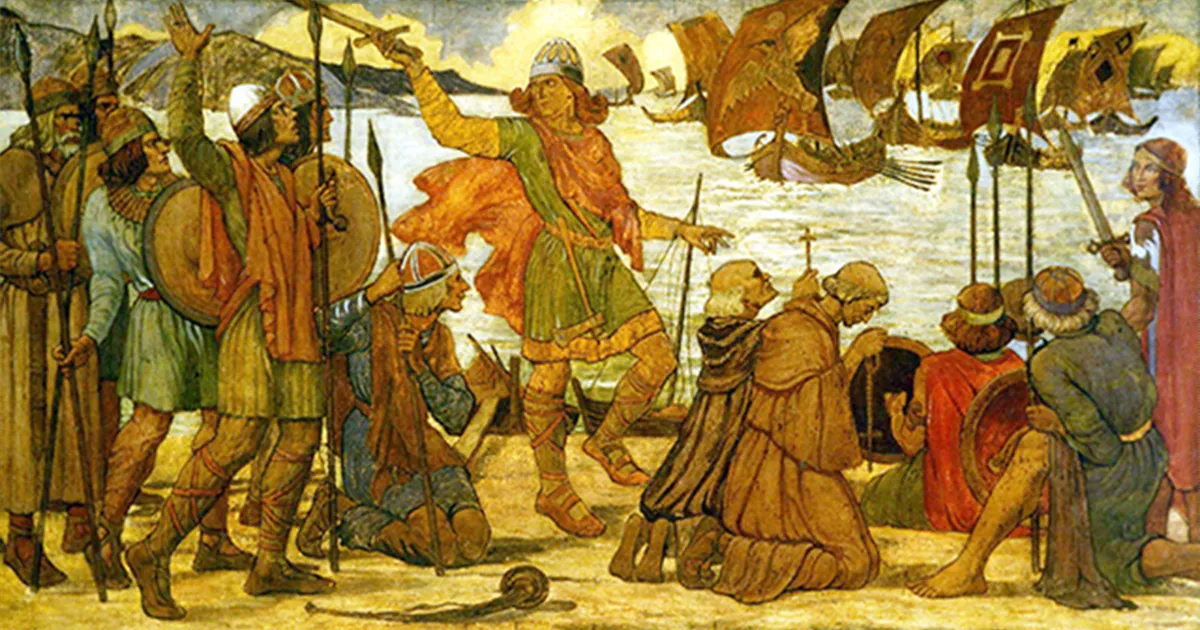
In September 2020, a team led by geneticist Eske Willerslev of the Universities of Cambridge and Copenhagen published what was then the largest ancient genomic study ever conducted on Viking Age populations. The paper, titled “Population genomics of the Viking world” and published in Nature, had been assembled over nearly a decade: 442 sequenced genomes drawn from archaeological sites across Scandinavia, the British Isles, Iceland, Greenland, continental Europe, and further afield, covering the period from roughly 750 to 1050 CE. Its headline finding was unambiguous. Willerslev summarised it simply: the results change the perception of who a Viking actually was. Among the two Orkney skeletons buried with Viking swords in distinctly Norse burial style, the Viking Age DNA showed genetic profiles resembling present-day Irish and Scottish populations rather than Scandinavians. Two people buried as Vikings were not genetically Norse at all. These findings, alongside growing evidence from site-specific studies including the 2017 genomic analysis of the famous Birka warrior grave, have reshaped how historians, archaeologists, and geneticists understand what the word “Viking” actually meant in the societies that used it.
How ancient DNA is extracted and authenticated
Ancient DNA work begins with tissue selection. Teeth and the dense petrous portion of the temporal bone, the hard pyramid of bone immediately behind the ear, are the preferred sample sources because their compact mineral structure inhibits the bacterial infiltration and moisture exposure that degrade DNA in softer tissues. Eske Willerslev pioneered many of the methodological standards for ancient DNA authentication at the GeoGenetics Centre at the University of Copenhagen, and the 2020 Viking study followed those standards in full. The outer surface of each sample is cleaned mechanically and irradiated with ultraviolet light to destroy surface contamination. A small core is then drilled in a positive-pressure cleanroom, where filtered air prevents modern DNA from entering, and the resulting bone powder is processed to extract what fragments remain of the original genome.
Authentication of ancient DNA relies on two specific signatures that distinguish genuinely ancient molecules from modern contamination. The first is fragment length: ancient DNA is chemically broken into short fragments, typically under 100 base pairs, because millennia of hydrolysis and oxidation attack the backbone of the molecule. The second is a characteristic chemical damage pattern called cytosine deamination, in which cytosine bases at the ends of fragments are converted to uracil over time, producing a diagnostic mismatch signal that is absent in modern DNA. Any sample without this signal should be treated with scepticism regardless of its archaeological context. Once authentication is confirmed, the fragments are assembled into genomic libraries and sequenced on high-throughput platforms, typically producing coverage sufficient for population-level analysis even from poorly preserved specimens.
The statistical tools applied to the resulting genomes are well-established in population genetics. Principal component analysis places each individual in a geometric space defined by overall genetic similarity to reference populations, making broad ancestral affiliations visible. Formal admixture tests, particularly the qpAdm framework developed at Harvard by David Reich’s group, allow researchers to test specific models of ancestry, for example whether a given individual’s genome is best explained as a mixture of Scandinavian and Irish ancestral populations, and to estimate the proportions involved. Kinship analysis tools can identify first- and second-degree biological relatives within the same cemetery or burial assemblage, turning isolated graves into family narratives.
What the 2020 Nature study found about Viking Age DNA
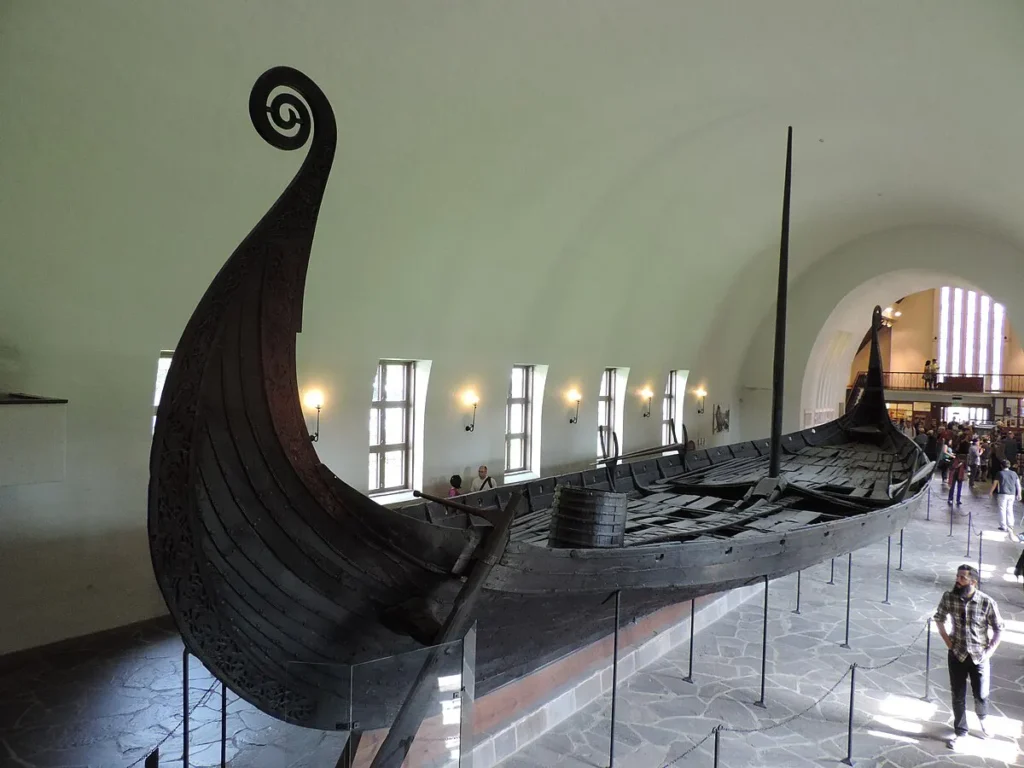
Ashot Margaryan of the GeoGenetics Centre at the University of Copenhagen was the first author of the 2020 Nature paper, leading the analytical work on the 442-genome dataset. The study found structured regional patterns rather than a single undifferentiated Norse population. Genomes from what is now Norway showed the highest rates of admixture with the populations of Ireland, Scotland, Iceland, and Greenland, consistent with the western routes of Norse settlement documented in the saga tradition and in archaeology. Danish-ancestry genomes contributed disproportionately to the English population, particularly in the areas corresponding to the historical Danelaw. Swedish-ancestry profiles appeared most strongly in the Baltic and in Russia, consistent with the eastern trading routes that Scandinavian merchants used to reach Constantinople and the Caspian Sea.
Critically, the study found substantial gene flow running into Scandinavia from the south and east during the Viking Age itself, not only outward from it. This bidirectional movement had been suggested by textual and archaeological evidence for decades but had never been demonstrated genetically at this scale. Co-author Søren Sindbæk, an archaeologist at Moesgaard Museum in Denmark, interpreted the finding as evidence that Viking Age Scandinavia was a continental hub rather than an isolated peninsula: it exported populations along trade and raiding routes while simultaneously attracting merchants, craftspeople, enslaved people, and in-laws from across the North Sea and Baltic world. The homeland was porous, not sealed.
The most quoted finding from the paper was also the most conceptually significant. At the Orkney burial site, two individuals were interred in graves furnished with Viking-style weapons and following Norse burial ritual in every observable archaeological respect. Their genomes resembled those of present-day Irish and Scottish people rather than Scandinavians. The study’s conclusion, stated explicitly by Willerslev, was that Viking identity was not limited to people of Scandinavian genetic ancestry. Being Viking was a cultural, political, and occupational identity that communities recruited into, not a genetic inheritance restricted to people born in Scandinavia. This had been argued by historians on textual grounds for decades. The genomes made it empirically demonstrable for the first time.
Sex-biased admixture and the North Atlantic pattern
One of the most consistent findings across multiple Viking Age genetic studies is a pattern of sex-biased admixture in the North Atlantic island settlements. In Orkney, Iceland, and parts of the Irish Sea world, the Y-chromosome evidence, which tracks the male line, shows a higher proportion of Scandinavian ancestry than the mitochondrial DNA evidence, which tracks the female line. The autosomes, which combine both parental contributions, fall between these two extremes, and the X-chromosome signal, which is inherited twice as often from mothers as from fathers, shows a pattern closer to the maternal line. This combination of signals is the genomic signature of a population in which Norse men contributed disproportionately to the gene pool relative to Norse women.
The pattern does not mean that no women made the Atlantic crossing. Archaeological evidence for female Norse settlers in the North Atlantic is substantial, including burial assemblages with Norse dress pins, weaving equipment, and domestic objects in Orkney, Iceland, and the Faroe Islands. It means that, averaged across the founding and early settlement populations, male Norse ancestry entered these gene pools at a higher rate than female Norse ancestry. The female contribution was partly local, partly Gaelic. The 2018 study of early Icelandic genomes by Ebenesersdóttir et al. in Science found exactly this combination: Norse predominant on the Y-chromosome, Gaelic frequent on the mitochondrial DNA, with the mix producing a founding population that was biologically mixed from the start even as the language, law code, and literature it created were unambiguously Norse in character. The implication is that the communities that became Iceland’s literary culture were already mixed-ancestry communities within one or two generations of the initial settlement in the 870s CE.

Built out of a love for history, kept free from distractions.
Spoken Past is an independent project shaped by curiosity, care, and long hours of research. Reader support helps keep it maintained, carefully researched, and open to everyone.
Birka Bj 581: what genomics did for a misidentified burial
In 1878, the Swedish antiquarian Hjalmar Stolpe excavated a burial on the island of Björkö in Lake Mälaren, at the Viking Age trading town of Birka. The grave, designated Bj 581, was exceptionally well furnished: a sword, an axe, a spear, two shields, armour-piercing arrows, a battle knife, two horses, and a complete gaming set laid out as if in active play. Stolpe identified the occupant as an important male warrior without hesitation, and the grave was published and republished for over a century as a canonical example of a high-status Viking warrior burial. An osteological analysis in the 1970s suggested the skeleton might be female, but the finding was not taken seriously because it conflicted with the assumed identity of a warrior burial of that quality.
In 2017, Charlotte Hedenstierna-Jonson of the Department of Archaeology and Ancient History at Uppsala University led a team that extracted ancient DNA from a tooth and an arm bone of the Bj 581 individual. The genome contained two X chromosomes and no Y chromosome. The individual was biologically female. The paper, published in the American Journal of Physical Anthropology, also carried out strontium isotope analysis of tooth enamel, which records the geological signature of the water consumed during childhood tooth formation. The results suggested she was not local to the Birka region but had lived a mobile life, probably originating from southern Scandinavia, consistent with high-status individuals who moved widely across the Norse world rather than remaining in one community.
The discovery generated immediate controversy. Some scholars argued that the presence of a biological female did not automatically mean the occupant had a warrior identity during life, and that alternative interpretations, including the possibility of a symbolic or inherited burial, deserved consideration. Hedenstierna-Jonson and her collaborators including Neil Price addressed these objections directly in a follow-up paper published in Antiquity in 2019, noting that the grave was spatially adjacent to the Birka hillfort garrison, that the weapons showed use-wear consistent with active deployment, that the gaming set was positioned in direct relation to the body in a manner associated with military command, and that the clothing had eastern parallels consistent with long-distance movement. The debate has not been fully resolved, but the DNA result itself, a biologically female individual in a fully armed burial previously treated as male for 140 years, has proven the methodological point that cultural assumptions about gender can corrupt archaeological interpretation in ways that only ancient DNA can correct.

Kinship in burial: brothers, cousins, and the mechanics of expansion
One of the most striking specific findings in the Margaryan et al. 2020 study came from a Viking Age boat burial in Estonia. The kinship analysis revealed that four of the individuals interred together were biological brothers, all of whom died on the same day. The discovery converted what had previously been an anonymous group burial into a specific family tragedy: four men who shared parents, sailed together, and died together, buried in a single boat. This kind of finding, which is only possible through ancient DNA kinship analysis, shifts the scale of Viking Age history from the political to the personal in a way that no amount of chronicle or saga can replicate.
The study also identified a pair of cousins, one buried in Oxford and the other in Denmark, separated by hundreds of kilometres of open ocean. The finding demonstrates concretely what the textual record implies: Viking Age movement was structured around family ties rather than purely impersonal trade or military networks. If your cousin crossed the North Sea and settled in England, you knew where to go when you needed a contact in an English port. Kin networks made travel safer because they reduced the risk of being cheated or stranded. The DNA is capturing the biological residue of a social strategy, not a random pattern of dispersal.
This matters for how we understand Viking Age towns like Birka, Hedeby, Ribe, and Kaupang, which the Margaryan study found to show broader genetic diversity than the surrounding rural areas. Urban centres attracted specialists whose skills were portable and who had no need to remain in the region of their birth. A comb-maker from the southern Baltic might spend a season at Hedeby, marry a local weaver, and send a nephew to follow the same route two years later because the social capital of a known workshop connection was worth more than starting from scratch in an unfamiliar town. The genetics of Viking Age towns are not random mixing. They are the biological trace of deliberate decisions about where to establish a household.
Christianisation, law, and the politics of who counted as kin
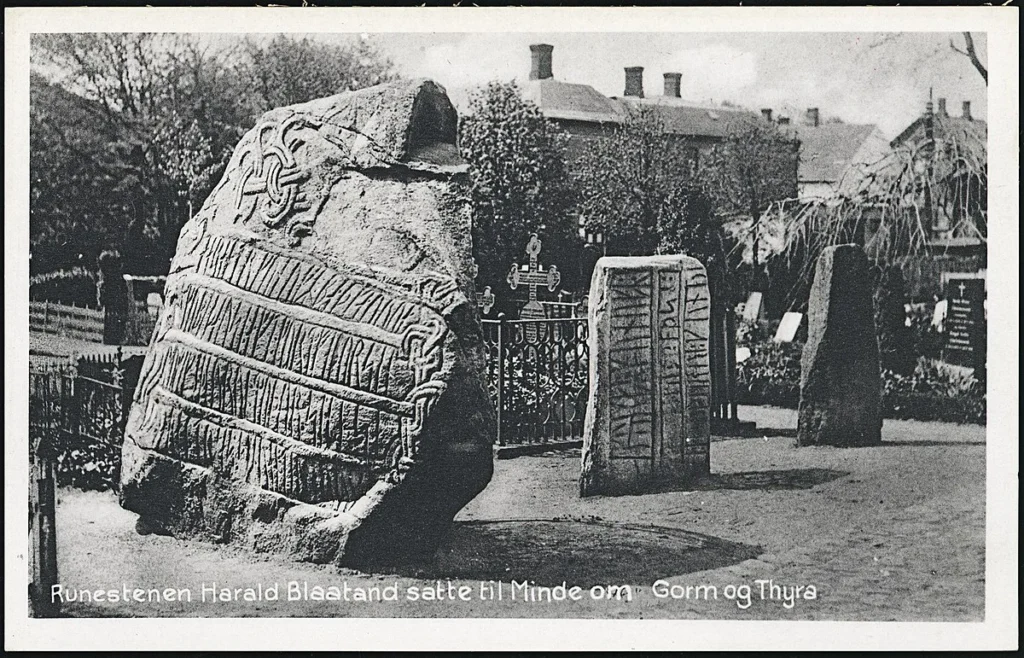
The conversion of Scandinavian societies to Christianity between roughly 960 and 1100 CE was not only a religious transformation. It was a legal and demographic one. Harald Bluetooth’s declaration that he had made the Danes Christian, commemorated on the Jelling runestone erected around 965 CE in Jutland, was the beginning of a process that eventually replaced the flexible inheritance and marriage rules of pre-Christian Norse society with the more prescriptive canon law regulations of the Roman Church. These regulations defined who could marry whom, how property passed between generations, and what obligations existed between relatives, all of which directly controlled the movement of genes across social boundaries.
The genetics of the late Viking Age and early medieval period reflect this transition in ways that can be analysed through the changing patterns of admixture in ecclesiastical cemeteries compared to pre-Christian burial grounds. As Christian norms spread, formal marriage within approved degrees of kinship became the dominant institution for household formation, and the informal unions, concubinage, and enslaved-person relationships that had characterised Norse household demographics under pre-Christian law were progressively regulated out of legitimacy. The Margaryan study’s sample included individuals from the transitional period, and Fernando Racimo of the University of Copenhagen, a co-lead author on the study, specifically noted that the dataset allowed tracking of how selection on traits including immunity and metabolism changed across the pre-Viking, Viking, and post-Viking periods. The social changes of Christianisation left biological fingerprints.
The limits of ancient DNA and where the field is going
The Margaryan study is the current state of the art for Viking Age population genomics, but it has acknowledged limitations that the field is actively working to address. Sampling is uneven: Scandinavia is comparatively well covered, but the Baltic, the Rus’ river network, the Irish Sea coasts, and Normandy are represented by far fewer genomes. The bias toward well-excavated, well-preserved sites means that the Viking Age individuals whose DNA we can read are disproportionately from wealthy burials with good bone preservation, which may not be representative of the whole population. Rural household sites, slave quarters, and the graves of the very poor are undersampled relative to their historical importance.
The Repton site in Derbyshire, where the Great Heathen Army overwintered in 873 to 874 CE, illustrates both what ancient DNA can and cannot resolve in this period. The charnel deposit associated with the army, redated by Catrine L. Jarman, Martin Biddle, Tom Higham, and Christopher Bronk Ramsey in a study published in Antiquity, placed the mass burial firmly in the Viking Age using radiocarbon dates corrected for the marine reservoir effect. The demographic composition of the charnel, heavy in adult males with weapon injuries, is consistent with an army in winter camp. But the genetics of the Repton individuals have not been published in sufficient detail to characterise the army’s ancestry, which would be of considerable historical interest given the army’s role in the subsequent Danelaw settlement.
This is where the field is heading. The next generation of Viking Age ancient DNA studies will likely focus on finer-grained regional analyses, particularly of the areas currently undersampled in the 2020 dataset; on combining genetic evidence with isotopic mobility data and zooarchaeological evidence for diet and farming practice; and on extending the temporal frame to trace the multi-generational consequences of Viking Age migration in the communities that received Norse settlers. The 2020 study demonstrated that Viking was a role rather than a bloodline. The studies that follow it will map, in increasing resolution, how people took on that role, what it cost them, and what it built.
Primary sources: Ashot Margaryan et al., “Population genomics of the Viking world,” Nature, Vol. 585, 2020; Charlotte Hedenstierna-Jonson et al., “A female Viking warrior confirmed by genomics,” American Journal of Physical Anthropology, Vol. 164, 2017; Neil Price et al., “Viking warrior women? Reassessing Birka chamber grave Bj.581,” Antiquity, Vol. 92, 2019; S. S. Ebenesersdóttir et al., “Ancient genomes from Iceland reveal the making of a human population,” Science, Vol. 360, 2018; Mark Horton et al., “Viking Great Army in England: new dates from the Repton charnel,” Antiquity, Vol. 93, 2019; Neil Price, Children of Ash and Elm: A History of the Vikings, Basic Books, 2020.