A single line in Snorri Sturluson’s Gylfaginning carries more weight than it first seems. Loki, the most dangerous and changeable figure among the gods, is introduced through a father, a mother, and two brothers. His father is Fárbauti. His mother is Laufey, also called Nál. His brothers are Býleistr and Helblindi.
For a figure as famous as Loki, that is a hard beginning. The medieval source does not pause to describe his mother’s face, rank, home, deeds, or voice. It gives her name, then moves on. Yet the name does not vanish. In Eddic poetry, Loki is not only tied to his father. He is called the son of his mother.
That is the historical problem at the heart of this story. Loki’s mother is famous, but the surviving Norse sources preserve almost nothing about her as an independent figure. She stands at the edge of myth, named clearly enough to matter, but too briefly to turn into a full biography without invention.
The answer must begin with restraint. Laufey is Loki’s mother in Norse mythology, also called Nál, but the surviving medieval sources preserve little beyond her name and family role.
Loki’s Mother Is Named Clearly, Then Almost Lost
The clearest starting point is Gylfaginning, part of Snorri Sturluson’s Prose Edda. There, Loki’s ancestry is given in compact form. His father is Fárbauti, a jötunn. His mother is Laufey or Nál. His brothers are Býleistr and Helblindi.
That passage does not make her mysterious by language. It names her plainly. The mystery comes from everything the passage does not say.
No surviving scene shows her raising Loki. No myth in the checked sources gives her an argument, a marriage story, a divine office, or a role in the crises Loki later causes. She is not given the kind of narrative presence that Frigg, Freyja, Skaði, or even some far more briefly known beings receive elsewhere in Norse myth.
Her importance comes through Loki. He is the figure who moves through the myths with terrible force. He helps the gods when they need cunning, then wounds them with the same gift. He is useful, intimate, and ruinous. His mother’s name survives because it is attached to him.
This is not a small detail. Genealogy mattered in medieval Norse mythic writing. Kinship could explain status, danger, alliance, shame, and poetic identity. When a source names Loki through his parents and brothers, it places him inside a network of beings rather than treating him as a solitary trickster.
The difficulty is that the network is more visible than the woman herself. Laufey is secure as a name and as a mother. Almost everything beyond that requires care.
Is Laufey Loki’s Mother or Father?
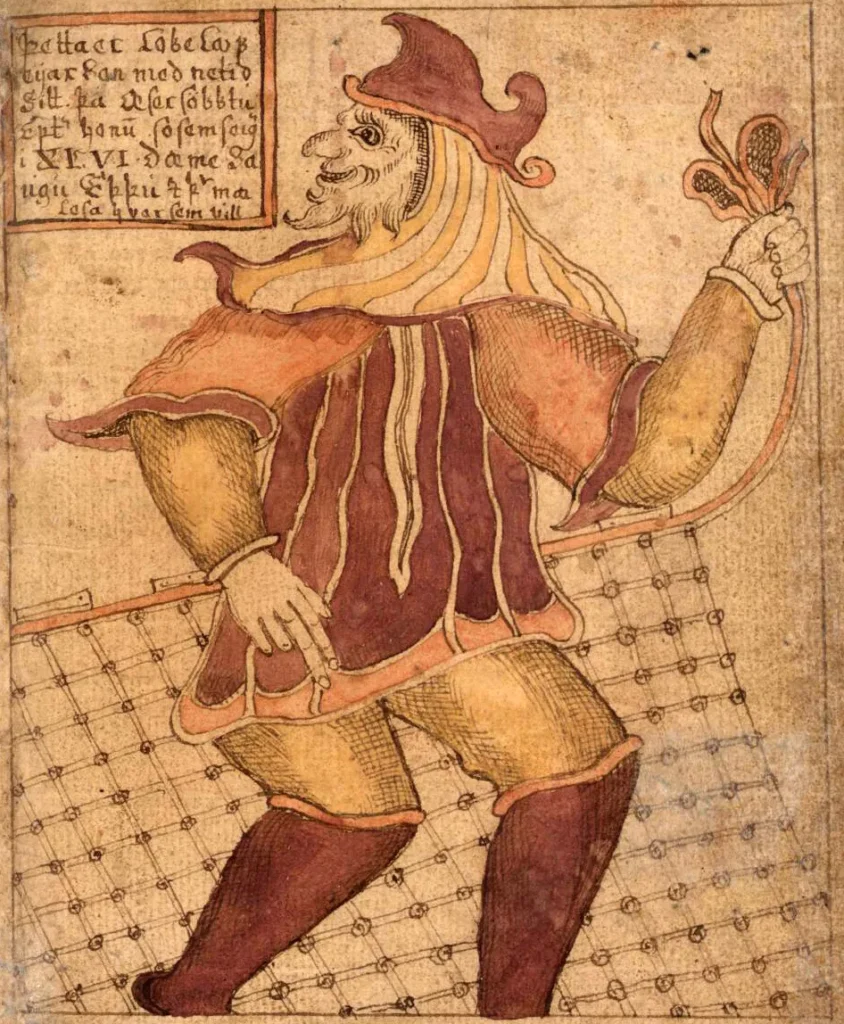
Laufey is Loki’s mother in the medieval Norse sources checked here. She is not Loki’s father in those sources.
The confusion comes from later reception, especially modern popular retellings that reshaped the name and role. Those adaptations can be powerful stories in their own right, but they do not override the medieval evidence.
In Gylfaginning, the roles are explicit. Fárbauti is Loki’s father. Laufey, also called Nál, is his mother. That is the cleanest prose statement.
The poetic evidence agrees. In Þrymskviða, the poem about Thor’s stolen hammer, Loki is called “Laufeyjar sonr.” The phrase means “son of Laufey.” The poem uses the mother’s name as a way to identify Loki inside the action.
Lokasenna preserves the same kind of identification. In that fierce poem of accusation and insult, Loki is again connected to his mother through the form “Laufeyjar son.”
The evidence is therefore not balanced between two medieval options. The Eddic material used here points in one direction. Fárbauti is the father. Laufey is the mother. A male Laufey belongs to later adaptation, not to the checked medieval Norse passages.
That distinction matters because Norse mythology already reaches us through complicated layers. Oral tradition came first. Medieval Icelandic writing preserved part of it. Modern culture then remade many of the old figures again. A careful reading must know which layer it is using.
Why Is Loki Called Laufeyjarson?
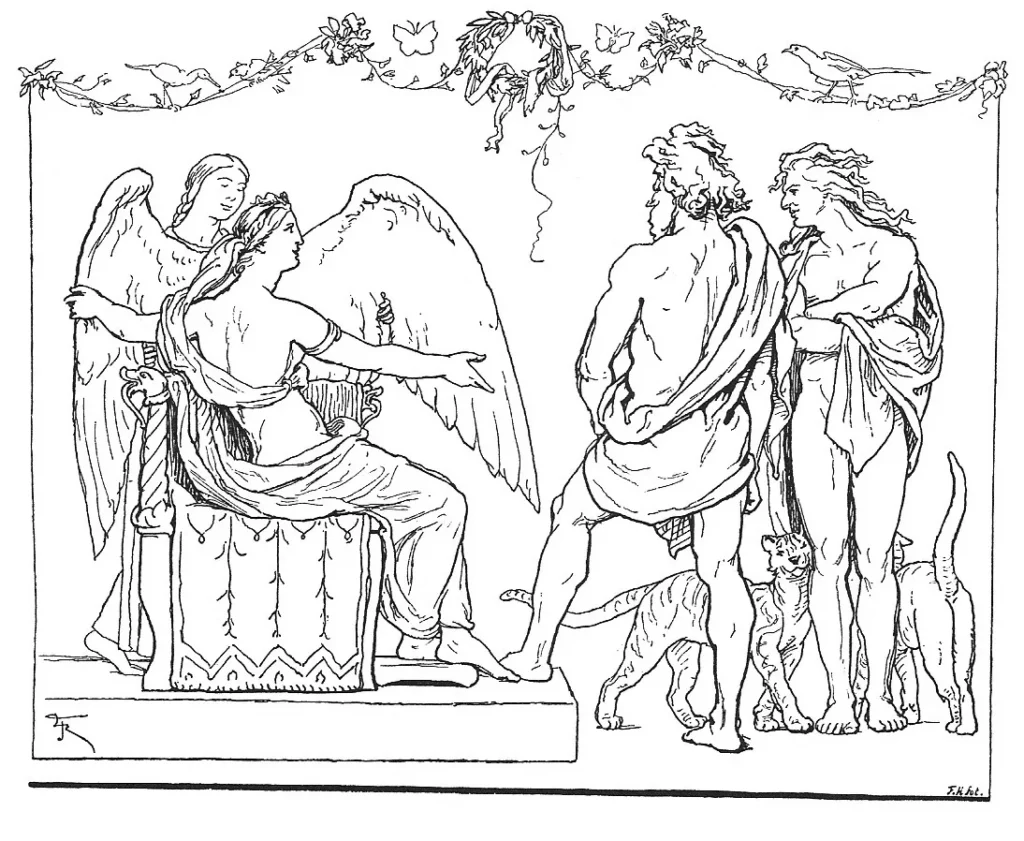
Loki is called Laufeyjarson because he is identified as the son of his mother. The phrase comes from Laufey’s name and the Old Norse word for son.
In ordinary terms, this is a matronymic. A patronymic identifies someone through the father. A matronymic identifies someone through the mother. “Laufeyjarson” means “son of Laufey,” though English often smooths the form into “Laufeyson.”
The striking point is not that the phrase exists once. It appears in more than one Eddic context. Þrymskviða uses “Laufeyjar sonr” when Loki takes part in the recovery of Thor’s hammer, Mjöllnir. Lokasenna uses a similar form in a very different poetic setting, where Loki’s speech attacks the honor of the gods.
The sources do not explain why Loki is named through his mother when his father is also known. No checked passage says that Laufey was nobler, stranger, more divine, more shameful, or more famous than Fárbauti. No checked passage says that Loki rejected his father’s name. No checked passage gives a mythic event that caused the matronymic.
That silence should stop bad certainty. The name may have been inherited from older poetic habit. It may have marked Loki in a way medieval audiences recognized more easily than modern readers can. It may have carried associations that are now lost because the surrounding stories did not survive.
What remains is still powerful. Loki, a figure of unstable belonging, is repeatedly named through a mother whose own story is almost gone. The form preserves her better than narrative does.
Built out of a love for history, kept free from distractions.
Spoken Past is an independent project shaped by curiosity, care, and long hours of research. Reader support helps keep it maintained, carefully researched, and open to everyone.
Nál Gives Loki’s Mother a Second Name
Snorri gives Loki’s mother another name: Nál. That second name appears in Gylfaginning, where Loki’s mother is named as Laufey or Nál.
The accessible primary passage does not explain why she has two names. It does not tell a story about Nál. It does not define the name inside the myth. Any firm explanation of its meaning needs philological support from a reliable scholarly source, not guesswork.
The name matters because it appears again in Skáldskaparmál. That part of Snorri’s Prose Edda teaches poetic language, especially kennings. A kenning is a compressed poetic expression that names something indirectly. In skaldic poetry, a god, object, or event could be identified through a dense phrase that depended on shared mythic knowledge.
In Skáldskaparmál, Loki can be identified by family relationships. He can be called son of Fárbauti and Laufey, son of Nál, brother of Býleistr and Helblindi, and father of several beings. The purpose is not to tell a domestic story. It is to teach the vocabulary by which poets could recognize and name him.
This gives Nál a specific kind of importance. She is not preserved as a speaking figure, but her name belongs to the learned poetic system around Loki. Medieval poets and readers had to know these names because poetry could summon a mythic figure through kinship.
For Loki, that is fitting. His identity is never simple. He is bound to the Æsir, but not comfortably contained by them. He moves among gods and jötnar. His children become central to divine catastrophe. His mother’s second name becomes another small sign of how much of his world survives only in fragments.
Fárbauti, Býleistr, and Helblindi Frame the Family
Loki’s mother cannot be understood apart from the family list around her. The same short passage that names her also names Fárbauti, Býleistr, and Helblindi.
Fárbauti is identified as a jötunn in Gylfaginning. The word jötunn is often translated as “giant,” but that English word can mislead. The jötnar are not merely oversized monsters. In Norse myth, they are a mighty and dangerous order of beings linked to the gods through hostility, marriage, ancestry, and rivalry.
That makes Loki’s paternal side important. He is not introduced as a simple member of the Æsir by birth. His father belongs to the jötnar, while Loki himself moves inside the divine world and acts as companion, problem solver, accuser, and enemy.
The source does not define Laufey’s own category with the same clarity in the checked passage. It does not securely tell us whether she is a goddess, a giantess, or something else. Later lists and scholarly discussions may help, but they should not be folded into the article as fact unless the exact sources are checked.
Býleistr and Helblindi are named as Loki’s brothers, but the checked source evidence gives them little narrative life here. Like their mother, they survive in relation to Loki. Their names help establish that Loki belongs to a family network, even though the myths preserved around him do not open that household to us.
This is where Norse mythology often feels most ancient and most broken. A name remains. A relationship remains. The larger story is gone. The honest historian does not fill the gap with invented certainty. The honest historian marks the edge of the surviving evidence and lets the fragment keep its force.
The Eddas Made a Famous Name From a Thin Trace
The reason Loki’s mother became memorable is not that medieval writers gave her a rich story. They did not, at least not in the checked sources. She became memorable because Loki’s name kept carrying hers.
In Þrymskviða, Thor’s hammer has been stolen, and the gods face a crisis. Mjöllnir is not merely a weapon in that poem. It is the tool of divine protection. Loki enters the action as the sharp mover who can travel, negotiate, and help arrange the plan that returns the hammer. The poem calls him the son of Laufey in the middle of that mythic emergency.
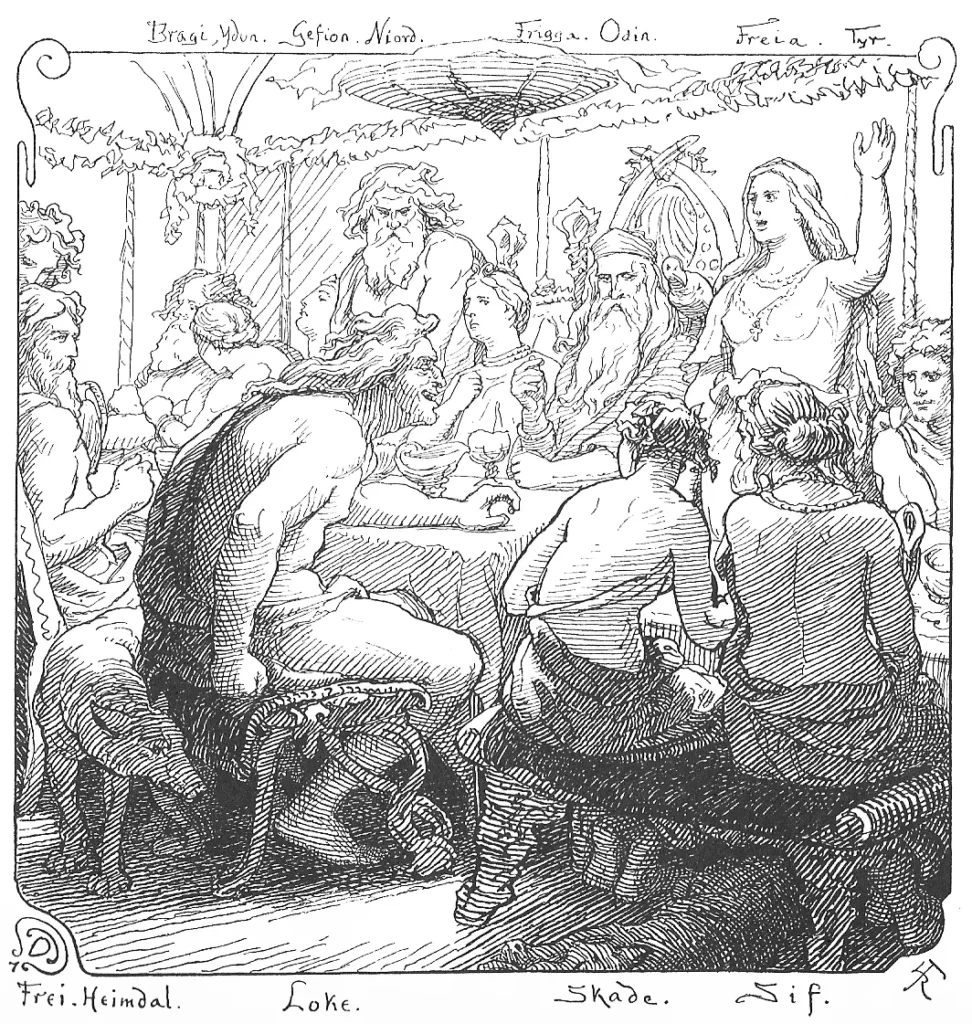
In Lokasenna, the atmosphere is harsher. Loki enters a feast and turns speech into violence. He accuses, mocks, and exposes. The poem is full of rank, memory, sexual accusation, old injuries, and divine anger. Again, the maternal name clings to him.
Those two poetic settings are very different. One is comic and dangerous. The other is bitter and destructive. In both, the name of Loki’s mother survives because it is part of how Loki is recognized.
That is a severe kind of preservation. Laufey does not stride through the surviving myths. She does not command a scene. She does not receive a great speech. Yet her name endures in the mouth of poetry, attached to a figure no listener could ignore.
The safest final answer is also the most revealing one. Laufey was Loki’s mother in the medieval Norse tradition, also known as Nál. She was linked with Fárbauti, Býleistr, and Helblindi, and her name survived most strongly through the matronymic Laufeyjarson. The Eddas do not give her a full myth, but they preserve the one thing that made her impossible to erase from Loki’s story: he was, again and again, the son of Laufey.