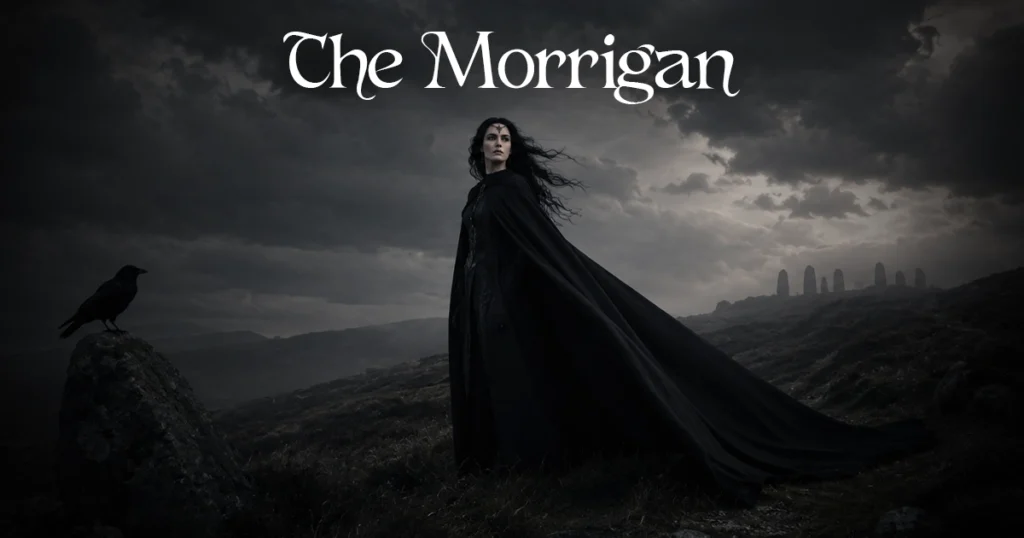
A medieval Irish monk, writing somewhere between the eighth and twelfth century, set down the story of a goddess who approached a warrior on the eve of battle. She offered him love. He refused her. She promised him death. What followed across multiple manuscripts was one of the most complex divine figures in early Irish literature: the Morrígan, an Irish goddess associated with war, fate, and sovereignty, whose identity shifts depending on which text you read, which manuscript you consult, and which scribal tradition preserved her. She is called a single goddess in some passages and a collective title for three in others. She appears as a crow, an eel, a wolf, an old woman, and a beautiful young woman, sometimes within the same story. Modern readers often arrive with a fixed image shaped by neopagan tradition and popular culture. The medieval texts offer something harder to categorize and more interesting for it.
The Morrígan is an Irish goddess associated with war, fate, and sovereignty who appears in medieval texts as both a singular figure and a collective title for a triad including Badb and Macha, though the composition and nature of that triad varies across manuscript sources and no single version is consistent.
What the Medieval Manuscripts Actually Preserve
The first and most important fact about the Morrígan is that no pre-Christian written sources survive. Every text that features her was composed in the Christian period, primarily between the eighth and twelfth centuries, by monastic scribes working in a tradition that had its own reasons to reshape, suppress, or preserve older material. As scholar Máire Herbert has argued, in early Irish narrative we are dealing with mythology refracted through literature rather than direct access to a pre-Christian belief system. The literary texts do not provide a systematic view of the Irish mythic universe but allow glimpses of how the supernatural was represented in story.
The manuscripts that matter most are held in Irish institutional collections. Lebor na hUidre, the Book of the Dun Cow, is the oldest manuscript written almost entirely in Irish and preserves several passages relevant to the Morrígan. The Book of Leinster contains further versions of Ulster Cycle material. These are not theological documents. They are saga literature, poetry, and battle accounts, and the Morrígan appears in them according to the needs of each story.
The electronic Dictionary of the Irish Language (eDIL), maintained by the Royal Irish Academy and the Dublin Institute for Advanced Studies and last revised in 2019, provides direct manuscript attestation for the name and its variants. The entry lists forms including Morrígan, Morrígu, Morrígna, and morrignae, and records the goddess explicitly as a war-goddess. It also documents a passage from the Book of Leinster identifying her as a daughter of Ernmais alongside Badb and Macha, three sisters rather than one goddess appearing in three aspects. That distinction matters for how the triple-goddess question is read.
One Goddess or Three: The Triad Problem
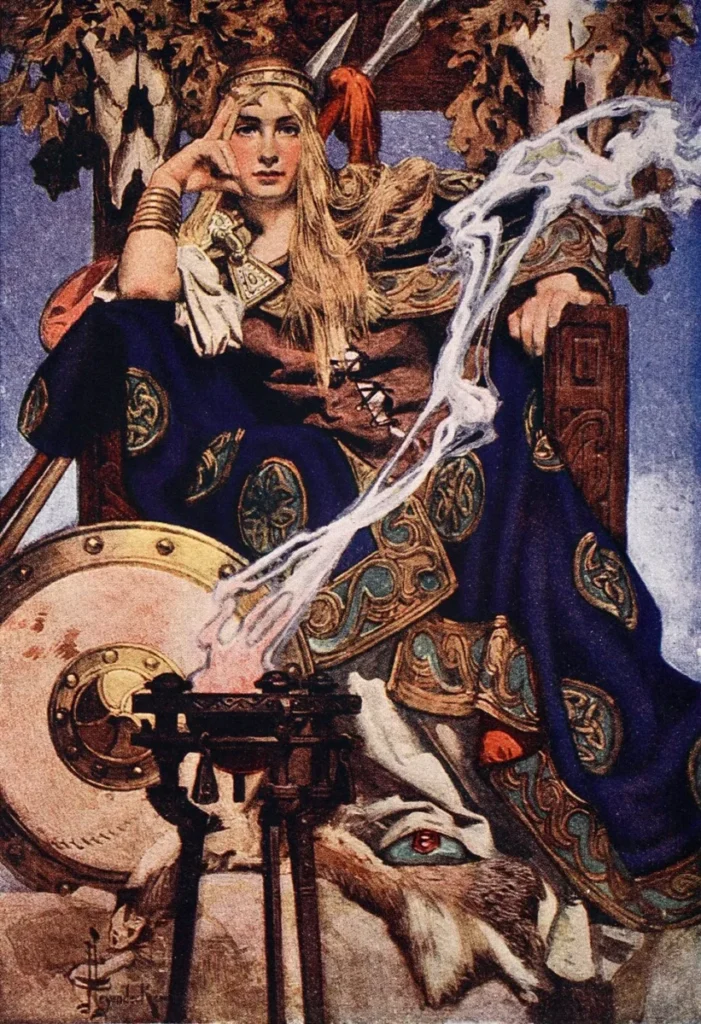
The idea that the Morrígan is a triple goddess is widespread in modern popular accounts, but the medieval sources present a more unstable picture. The problem is partly one of naming. The singular form Morrígan refers to a specific figure. The plural form Morrígna refers to a collective group. In some texts the Morrígan is one of three sisters. In others she appears to encompass or substitute for Badb and Macha. As the eDIL entry documents, the name Badb appears in the Book of Leinster where the Yellow Book of Lecan gives Morrígan for the same figure in the same narrative passage, which means different scribes could use the two names interchangeably for the same role.
The most carefully documented academic analysis of this problem appears in Rosalind Clark’s 1987 article in the Irish University Review, which remains the foundational secondary source on the subject. Clark argued that Morrígan, Badb, and Macha do not function as fixed individuals with clear boundaries but as overlapping aspects within the war-goddess tradition, a view the manuscript variance itself supports. John Carey’s 1983 article in Éigse: A Journal of Irish Studies added further analysis of the naming instability across Ulster Cycle texts, focusing in particular on the three Machas and how their identities interact with the Morrígan figure.
What the sources do not support is the Gravesian triple-goddess schema of maiden, mother, and crone. That framework derives from Robert Graves’s 1948 work The White Goddess and has no basis in the early Irish textual tradition. The Morrígan can appear in groups of three without those three mapping onto a developmental life-cycle archetype. The triad most commonly associated with her includes Badb, whose name means battle crow, and Macha, a figure with deep connections to the land and the kingship of Ulster. Nemain, whose name relates to battle frenzy, appears in some versions in place of Macha. No single combination is consistent across all sources.
The Morrígan in Cath Maige Tuired
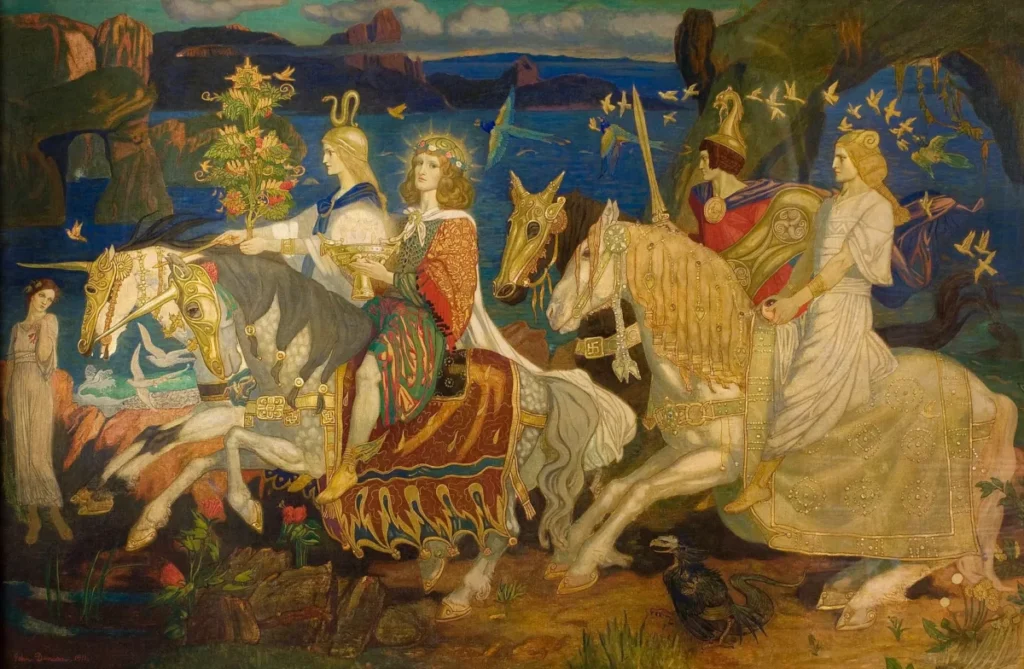
The richest single text for understanding the Morrígan in her Mythological Cycle role is Cath Maige Tuired, the Second Battle of Mag Tuired, available in Irish and English translation through the Corpus of Electronic Texts at University College Cork. The standard scholarly edition with translation is Elizabeth A. Gray’s 1982 Irish Texts Society volume.
In this text the Morrígan appears at Samhain, the threshold festival marking the Irish new year and a moment when the boundary between the world of the living and the otherworld was considered permeable. She meets the Dagda, the great god of the Tuatha Dé Danann, at a river. The encounter is sexual and explicitly tied to the sovereignty of Ireland. She offers him military intelligence and her aid in battle against the Fomorians in exchange for the union. The coupling of a goddess with a god or king at Samhain is a recurring motif in early Irish literature and places the Morrígan within the sovereignty goddess tradition, a pattern in which a female figure’s sexual and territorial power guaranteed the legitimacy and prosperity of rulership.
After the battle she delivers two prophecies. The first announces peace and abundance. The second predicts social collapse and the end of the world. Both are attributed to her in the text. John Carey’s 1989 article in Studia Celtica includes an edition and translation of the second prophecy from the Harley 5280 manuscript, and it is among the most striking passages attributed to her in any surviving source. The pairing of prosperity and doom in the same figure is not inconsistency but characteristic of how the Morrígan functions across the tradition: she encompasses both destruction and order, and her prophecies mark cosmic boundaries rather than serving as simple battlefield omens.
Enjoying Spoken Past?
I created Spoken Past to share my love of history. I research, write and develop everything myself, and I want my articles and basic guides to remain free for everyone.
If you enjoy my work, please consider supporting Spoken Past with a small donation.
The Morrígan and Cú Chulainn in the Ulster Cycle
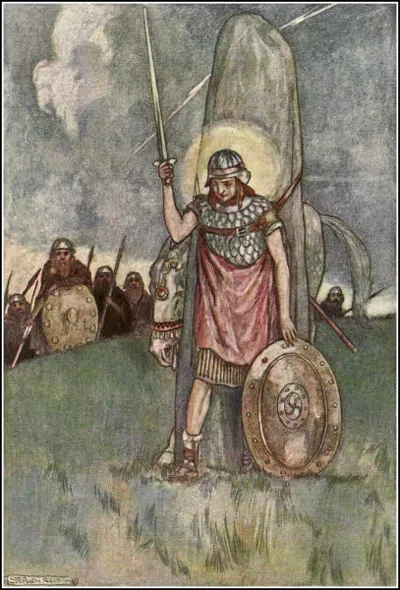
The Morrígan’s most extended narrative role is in the Ulster Cycle, particularly in the Táin Bó Cuailnge and the related pre-tale Táin Bó Regamna, both available through CELT at University College Cork. In Táin Bó Regamna, the Morrígan appears to Cú Chulainn driving stolen cattle. He does not recognize her. She warns him obliquely, and he responds with arrogance. By the end of the encounter she has transformed into a black bird perched on a post beside him. In one manuscript she is called the Morrígan at this point. In another she is called the Badb. The scribal variation illustrates precisely the naming instability that makes the identity question so persistent across the whole tradition.
In the longer Táin Bó Cuailnge, the Morrígan approaches Cú Chulainn during the great cattle raid and offers him her love. He refuses, dismissing her and questioning her usefulness in battle. She retaliates by attacking him in three animal forms during his combats: as an eel that trips him in a ford, as a wolf that stampedes cattle against him, and as a red-eared heifer leading a charge. Cú Chulainn injures each form. Later she appears as an old woman milking a cow with three teats. He accepts milk from her three times, and each time he blesses her, he unknowingly heals the three wounds he inflicted. The scene works as a careful reversal: the warrior who rejected her is restored by her without knowing it.
The encounter does not end in reconciliation. After Cú Chulainn’s death, the Morrígan alights on his shoulder in bird form, and her perching signals to his enemies that the warrior is truly dead. Her role in his death is not straightforwardly vengeful in the texts so much as structural. She is the force that frames a warrior’s fate, and her presence at the moment of death is consistent with her broader function as a figure who marks the boundary between life and death on the battlefield.
Shapeshifting in Early Irish Literature
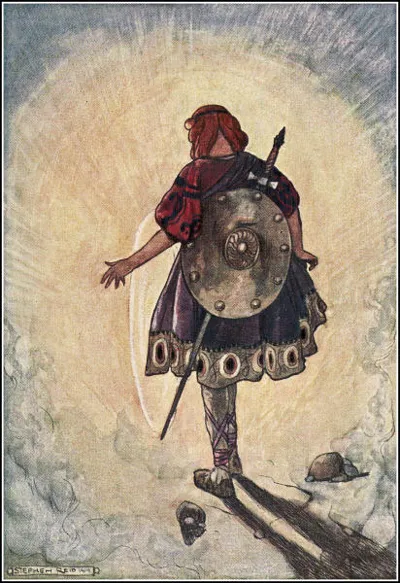
The Morrígan’s shapeshifting is one of her most consistent attributes across all textual traditions, but the transformations are tied to her function rather than being arbitrary. The bird forms, particularly the crow and raven, connect her to the battlefield in a literal as well as symbolic sense. Corvids fed on the dead after battles, and the association between battle-crows and war-goddesses appears to have been culturally embedded in early Irish thought. Her epithet Badb, when applied to her or used as an alternative name, means specifically a battle crow.
The animal forms she takes in the Táin sequence with Cú Chulainn are not random. Eel, wolf, and heifer connect to water, land, and cattle respectively, the three domains that structured early Irish agricultural and legal life. When she appears as an old woman to offer healing, she operates within the sovereignty goddess tradition where the hag and the beautiful woman are two aspects of the same territorial power. Her range of transformations demonstrates the breadth of her domain rather than an instability of character.
Was She Celtic or Specifically Irish?
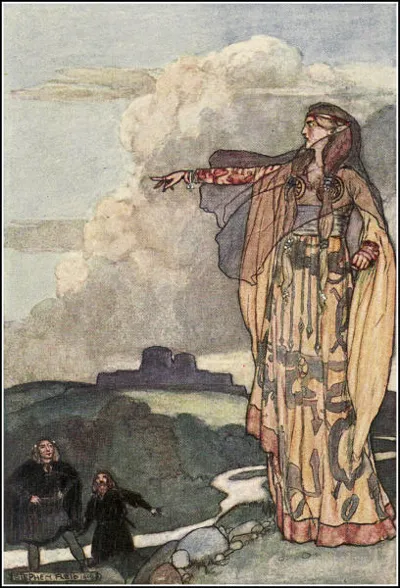
One correction modern scholarship has made to popular accounts is the insistence that the Morrígan is a specifically Irish figure, not a generic Celtic deity. The label Celtic covers an enormous range of cultures across Iron Age and early medieval Europe that shared linguistic and artistic features but did not share a unified mythology or pantheon. There is no evidence of a figure equivalent to the Morrígan in Gaulish or Brittonic material in the way she appears in Irish sources.
The comparison sometimes made between the Morrígan and Morgan le Fay in Arthurian tradition is linguistically tempting but academically contested. The names derive from different etymological roots in Irish and Welsh respectively, and while both figures share shapeshifting and prophetic qualities, the overlap may reflect broad Indo-European patterns around supernatural female figures rather than direct borrowing or shared origin. Parallels with the Norse Valkyries are noted in scholarship, including by Angelique Gulermovich Epstein in her comparative study of the Morrígan and her Germanic counterparts, though these comparisons illuminate shared cultural patterns rather than genealogical connection.
The Morrígan’s place-name associations, documented in the dindshenchas tradition of early Irish geographical literature, root her specifically in the Irish landscape. Several locations associated with the Bruig na Bóinne complex, the Neolithic monument landscape along the River Boyne in County Meath, carry associations with her. The Bed of the Couple references the sexual encounter recorded in Cath Maige Tuired. These connections embed her in a specific Irish territorial and ritual geography that has no counterpart in continental Celtic material.
The etymology of her name remains genuinely unresolved. As the eDIL entry records, scholars including Whitley Stokes and Henri d’Arbois de Jubainville proposed that the first element derives from a root cognate with Old High German mara and Old English maere, the same root that gives English the word nightmare, combined with rígan meaning queen, producing the translation phantom queen. Others, particularly from the Middle Irish period onward, equated the first syllable with mór meaning great, producing great queen. Both interpretations appear in the manuscript tradition itself, which means the ambiguity is not simply a modern problem but one that medieval Irish readers and scribes also navigated.