
On 11 September, sometime between AD 97 and 105, Claudia Severa asked Sulpicia Lepidina to come to her birthday celebration. The invitation was not written on papyrus, parchment, or stone. It was written in ink on a thin wooden sheet at or near Vindolanda, a Roman fort in present day Northumberland. The Vindolanda tablets preserve that kind of evidence at rare scale: not imperial speeches or literary histories, but the written habits of soldiers, officers, wives, slaves, suppliers, and administrators on Rome’s northern frontier.
The stakes are unusually high for such small objects. For Roman Britain between the end of Agricola’s governorship and the building of Hadrian’s Wall, the evidence was long thin. Archaeology gave forts, roads, tools, weapons, shoes, and building phases. Inscriptions gave names and offices. Tacitus gave a literary account of conquest and withdrawal. The tablets added something different. They preserved routine writing from the decades before Hadrian’s Wall, when Roman power in northern Britain was being organized through forts, roads, detachments, households, merchants, and paperwork.
What did Romans write in everyday letters? At Vindolanda, they wrote invitations, greetings, requests for clothing, military reports, accounts, transport problems, orders, favors, complaints, and social obligations. That answer is direct, but it needs caution. These are not private diaries from all of Roman Britain. They are a surviving archive shaped by military life, literacy, damp soil, damaged wood, and chance.
A Frontier Fort With an Accidental Archive
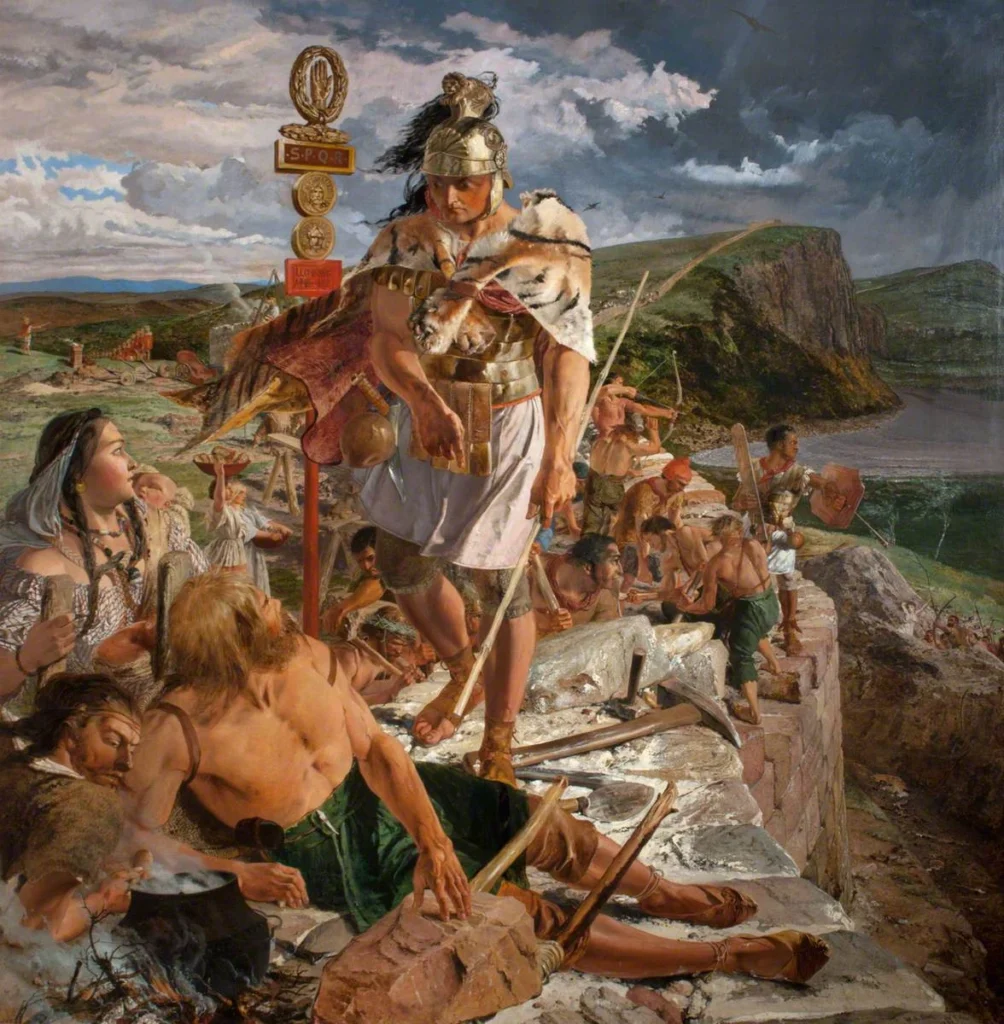
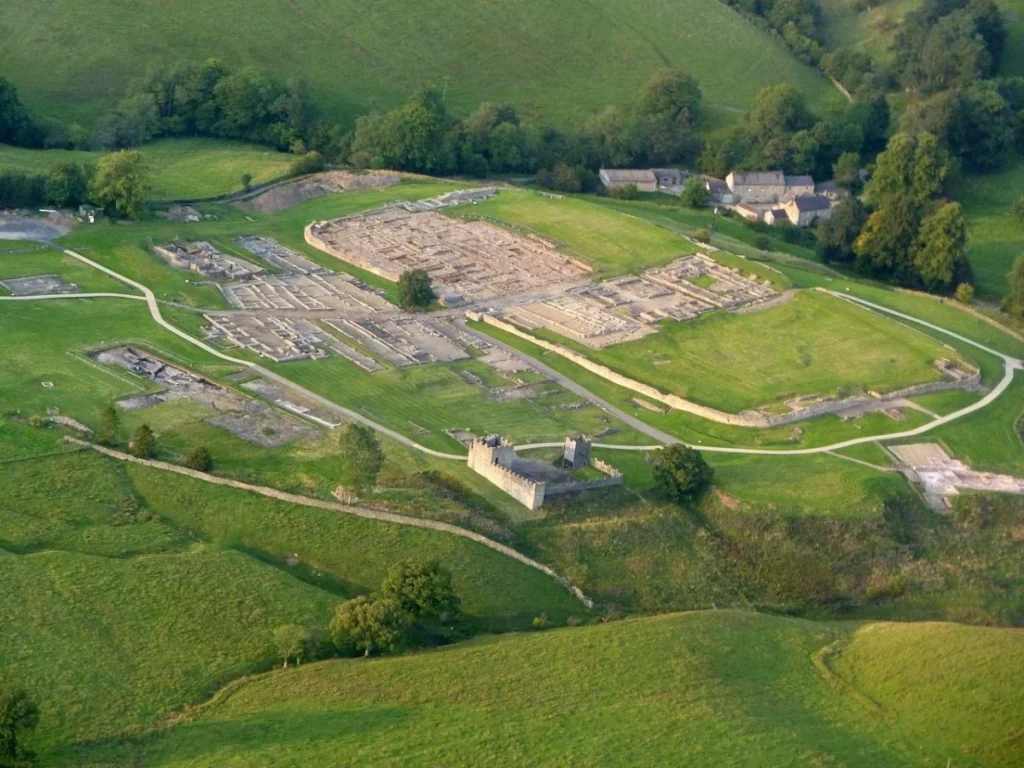
Vindolanda stood south of the later line of Hadrian’s Wall, near the Stanegate road that linked Roman sites across the Tyne Solway frontier. Its early wooden forts belonged to the period roughly between AD 85 and AD 130, with the richest tablet deposits coming from the years around AD 92 to 103. Alan K. Bowman, in Life and Letters on the Roman Frontier, stresses that this was exactly the poorly documented period after Agricola’s northern campaigns and before Hadrian’s Wall, when the army was reorganizing the frontier zone rather than simply fighting set piece battles.
The tablets were first recognized during excavations in 1973. They were not found as a neat ancient library. Many came from rubbish deposits connected with rebuilding, abandonment, and cleaning out structures in the fort. The British Museum notes that when the fort was remodeled or rebuilt, caches of documents were dumped, and that failed attempts to burn them helped preserve some material when wet conditions stopped the fire from taking hold.
The preservation mechanism matters. Ordinary Roman writing materials usually decay. At Vindolanda, damp, oxygen poor deposits helped wooden sheets survive. Bowman explains that early theories focused partly on chemical conditions created by organic waste, but the broader pattern of finds suggests that the damp anaerobic environment itself was sufficient to preserve many tablets.
The Roman Inscriptions of Britain online Vindolanda corpus is now the essential access point. It describes the collection as nearly 780 texts from less than 50 years in the late first and early second centuries, written on thin sheets of wood and preserving military, social, and linguistic evidence from the Roman fort. Oxford’s Centre for the Study of Ancient Documents now directs readers to RIB, noting that its earlier Vindolanda Tablets Online project has been superseded by the fuller RIB edition.
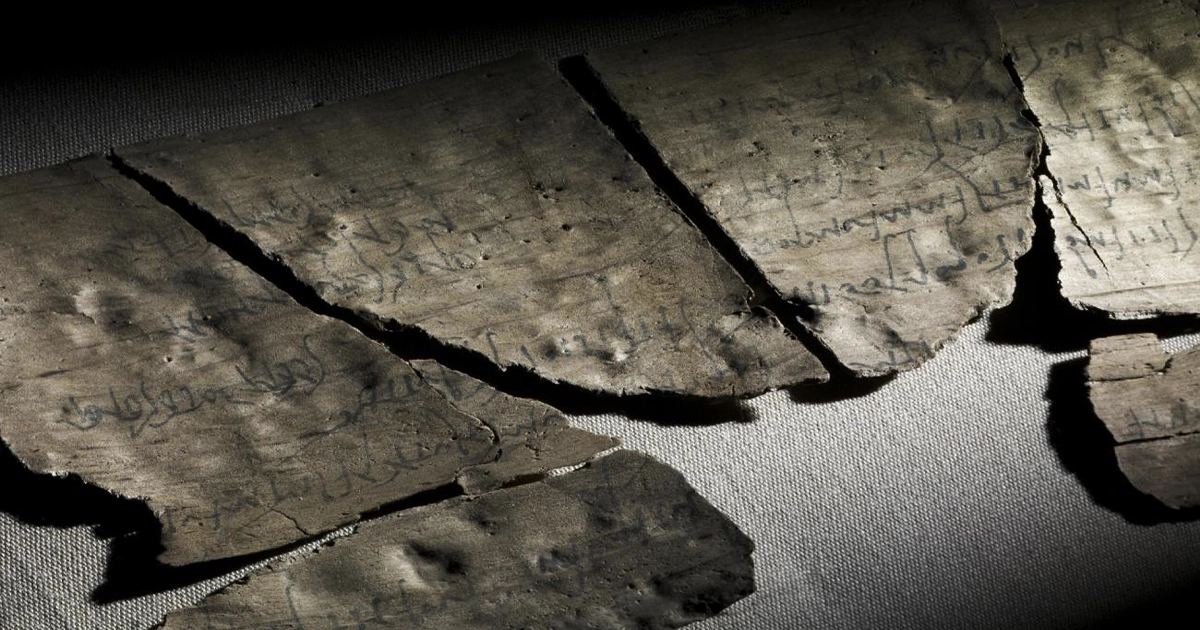
The objects themselves were not always wax tablets. Roman wax tablets were common, and Vindolanda has produced examples. But the famous texts are mostly ink writing tablets: thin leaves of wood, often 1 to 3 millimeters thick, about the size of a modern postcard, written with ink and often folded so that the writing faced inward. Bowman notes that the ink was the usual mixture of carbon, gum arabic, and water, and that some folded tablets preserve offsets where wet ink transferred to the facing surface.
These details explain why the tablets feel so immediate. A fort resident could write a message on a small wooden leaf, fold it, address it, and send it through a military or personal network. The material was cheap, local, and practical. Botanical analysis cited by Bowman identified birch, alder, and oak among the Vindolanda leaf tablets, all available in the region. This was frontier paperwork, built from frontier materials.
Claudia Severa’s Birthday Invitation
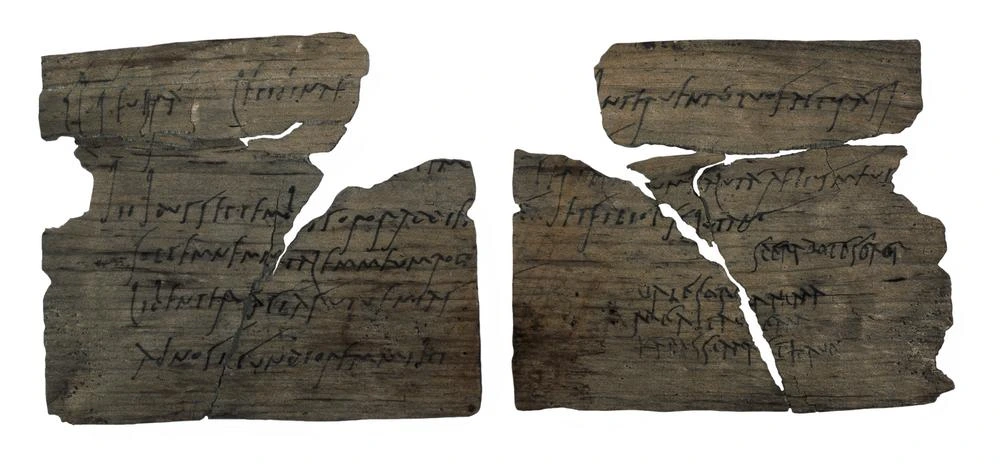
The most famous of the Vindolanda tablets is the birthday invitation from Claudia Severa to Sulpicia Lepidina. RIB identifies Tab. Vindol. 291 as an ink writing tablet made of wood, found at Vindolanda in 1985, now in the British Museum, and dated by context to AD 97 to 105. The text is a private document. Severa, wife of Aelius Brocchus, invites Lepidina, wife of Flavius Cerialis, to her birthday celebration on 11 September.
The letter is famous for two reasons. First, it is socially vivid. Severa calls Lepidina “sister,” sends greetings to Cerialis, mentions her own Aelius and little son, and adds a personal closing. RIB’s translation renders the central request as a warm invitation to come for the celebration of Severa’s birthday and make the day more enjoyable by her arrival.
Second, the tablet preserves handwriting associated with a woman. RIB states that Severa herself almost certainly added a brief message and closing greeting in her own hand, and that these are almost certainly the earliest known examples of writing in Latin by a woman. The British Museum likewise describes the tablet as the earliest example of a woman’s handwriting from anywhere in the Roman Empire.
That does not mean most women in Roman Britain were literate, nor that the letter speaks for ordinary provincial women. Lepidina and Severa belonged to an officer class. Cerialis was prefect of the Ninth Cohort of Batavians. Brocchus was also part of the military elite. Their households sat close to military command, supply, labor, slaves, dependants, and official correspondence.
Still, the letter changes the texture of the evidence. It shows women at the frontier as social actors within military households. Bowman argues that by the period of the Vindolanda texts, it was normal for equestrian officers to maintain family establishments within the praetorium, the commanding officer’s residence. Lepidina is the best known officer’s spouse, and the letters show exchanges of visits between her and Severa.
The birthday invitation also corrects a common modern instinct. Roman frontier forts can seem like male, military, hard edged places. They were that, but not only that. The tablets show children, slaves, wives, friends, social visits, greetings, illness, medicines, and etiquette. Bowman’s discussion of Severa and Lepidina includes a second letter in which Severa says she had asked Brocchus for permission to visit Lepidina, and mentions staying at Briga.
This matters for the question of everyday Roman letters. They did not only carry information. They maintained relationships. A greeting to a husband, a remembered child, a closing phrase in a second hand, or the address on the back could signal intimacy, status, obligation, and trust. The letter was both message and social gesture.
Socks, Sandals, Underpants, and Ordinary Needs
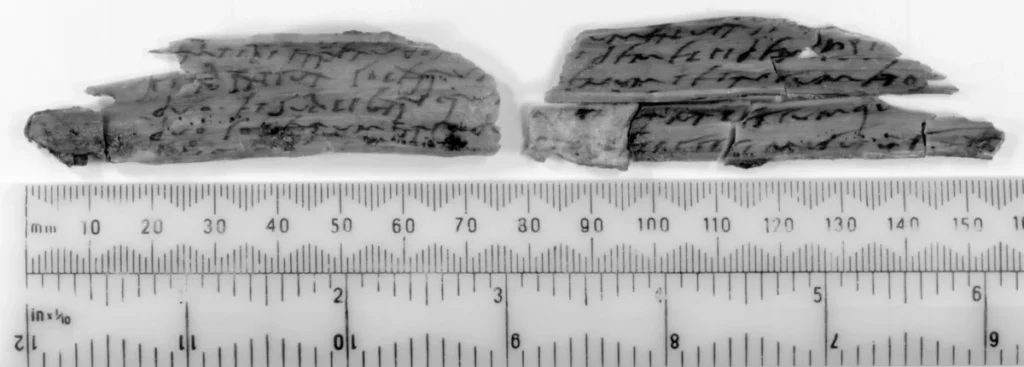
Not every surviving message is emotionally polished. Some tablets are closer to the texture of errands and parcels. Tab. Vindol. 346, dated probably to AD 104 to 120, preserves part of a private document mentioning socks, sandals, underpants, and greetings to messmates. RIB translates the surviving sense as a sender reporting that pairs of socks, two pairs of sandals, and two pairs of underpants had been sent, followed by greetings to named people and “all your messmates.”
That tablet is a useful antidote to any grand narrative of Romanization that forgets feet, weather, and clothing. Northern Britain was not Rome. Soldiers and dependants needed warm clothing, footwear, repairs, transport, food, beer, bedding, leather, and cash. Writing helped move these things.
The request for clothing is also a reminder that “everyday letters” at Vindolanda do not map neatly onto modern categories. A message could be part family note, part supply receipt, part social greeting. The same physical format might carry a birthday invitation, a military report, a shopping list, a delivery record, or a request to a superior.
The British Museum’s summary of what the tablets say emphasizes this range: birthday invitations, shopping lists, requests for leave, military reports, and complaints such as a junior officer asking for beer to be sent. The important point is not quaintness. These documents show how deeply writing entered routine life at a frontier installation.
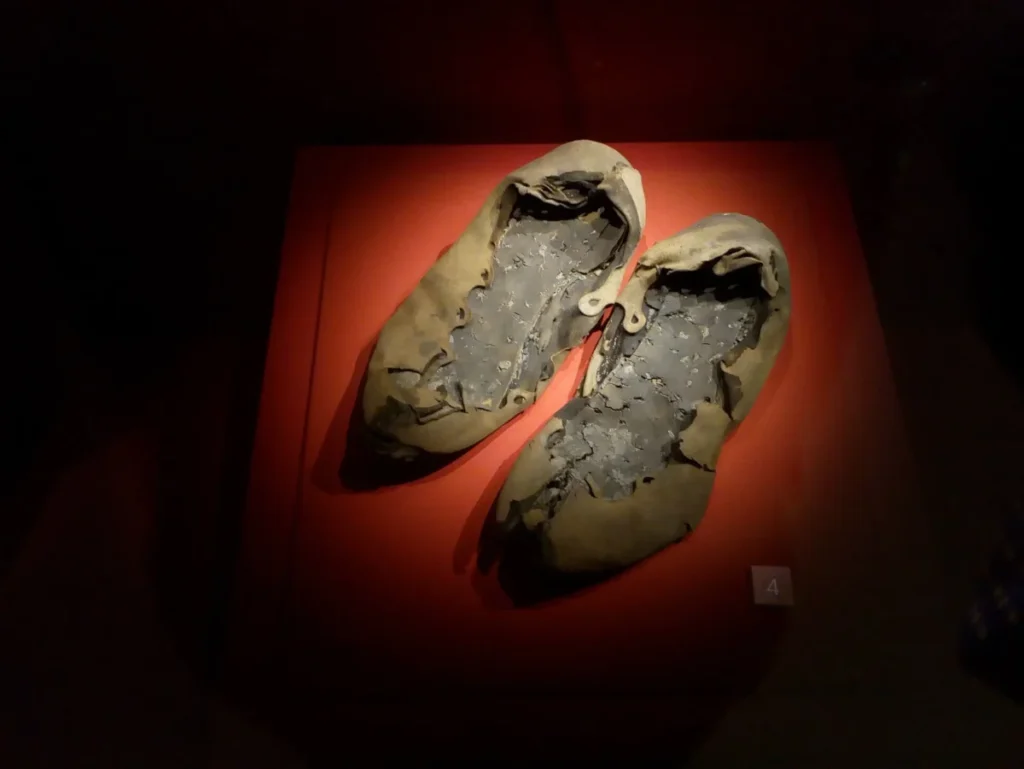
It would be easy to romanticize the socks and underpants as the “real Romans” behind the empire. The better interpretation is more precise. These are traces of a military community whose ordinary needs were handled through literate networks. Even a clothing parcel implies procurement, storage, transport, acknowledgement, and named relationships. The Roman army did not only conquer by arms. It occupied through paperwork, roads, detachments, supply chains, and written accountability.
That pattern appears in the archaeological context too. The tablets were deposited with other organic remains and artefacts in the working spaces of the fort. They came from a world of kitchens, storerooms, streets, barracks, workshops, and the praetorium. The writing does not float above material life. It belongs to rooms, floors, rubbish, fires, shoes, tools, and wet Northumbrian ground.
Built out of a love for history, kept free from distractions.
Spoken Past is an independent project shaped by curiosity, care, and long hours of research. Reader support helps keep it maintained, carefully researched, and open to everyone.
Army Reports in the Roman Frontier Inbox
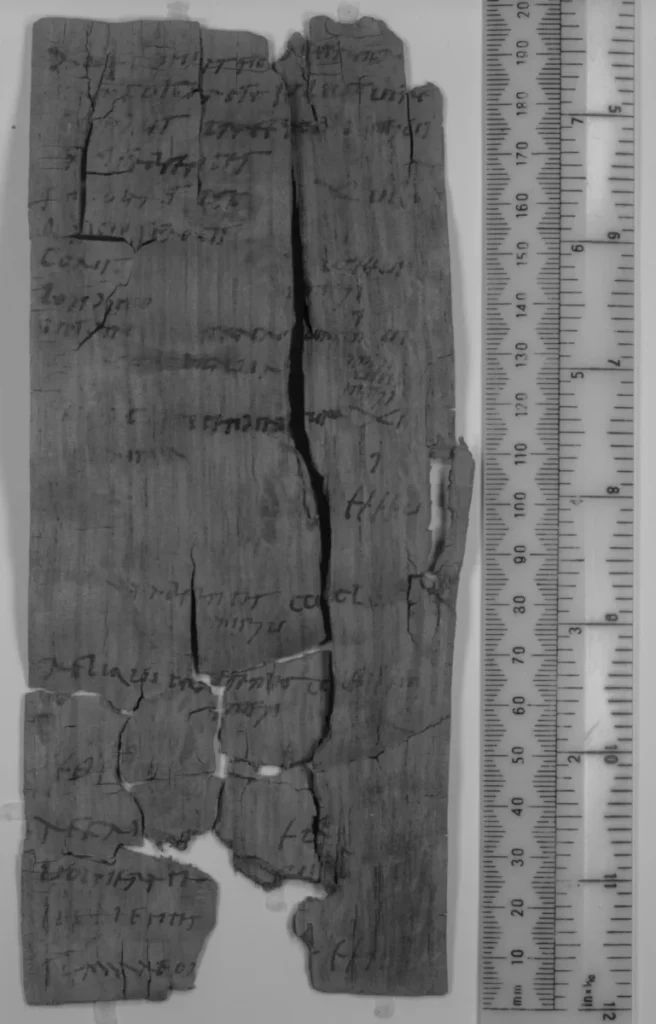
The best known social letter is Severa’s birthday invitation. The most consequential military document may be Tab. Vindol. 154, the strength report of the First Cohort of Tungrians. RIB identifies it as an oak ink writing tablet, found in 1988, from Vindolanda, dated roughly AD 92 to 97, and categorized as a military document.
The contents are unusually specific. The report gives the unit, the commanding officer Julius Verecundus, total strength, absentees on detached duties, those remaining present, and those unfit for active service. RIB states that the report has three main elements: a heading with date, unit, commander, and total strength, then a list of absent men, then a count of those present but unfit for service.
The British Museum summarizes the figures in accessible form: the fort was occupied by 752 men of the First Cohort of Tungrians, from present day Belgium, and only 265 were considered fit for active service. Bowman’s analysis gives the military significance. The report shows a unit split across duties and locations, including large numbers absent from the home base. That forces historians to be careful about imagining Roman forts as static boxes filled by one complete unit.
This is where the phrase “frontier inbox” becomes useful. Roman power on the northern frontier depended on correspondence. Officers needed to know who was present, who was sick, who was wounded, who was detached, where supplies were moving, which roads were difficult, and who had permission to go where. Written messages made scattered soldiers legible to command.
The tablets also reveal the social hierarchy behind that inbox. Some documents belong to named officers such as Flavius Cerialis, Julius Verecundus, Flavius Genialis, and Priscinus. Others involve decurions, centurions, optiones, slaves, and merchants. Bowman notes that more than sixty texts can be assigned to the correspondence of Cerialis, who was prefect of the Ninth Cohort of Batavians and was at Vindolanda around AD 100.
Military writing was not isolated from personal writing. A letter could carry greetings and administrative requests in the same world. A household could receive letters, produce copies, and generate accounts. The praetorium was not simply the commander’s private house. It was a domestic, social, and administrative center.
The evidence also shows the army’s wider geography. The strength report mentions men away from base, including service at Coria, generally identified with Corbridge, and perhaps elsewhere. Bowman argues that the report illustrates movement, splitting of units, brigading of detachments, and close communication between forts and personnel. Everyday writing, in this setting, was a military technology.
Grain, Hides, Cash, and the Business of Survival
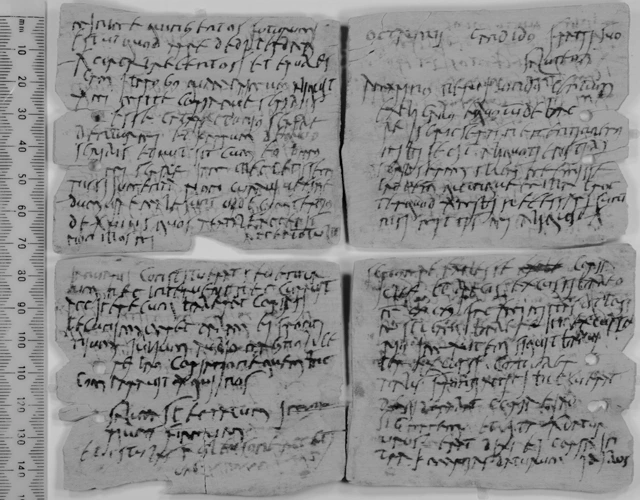
The Vindolanda tablets are also economic evidence. They show a frontier community that needed money, credit, animals, wagons, grain, leather, and long distance connections. Tab. Vindol. 343, a private document dated AD 104 to 120, is particularly important. RIB identifies it as a letter on two wooden diptychs, folded in the usual manner, with wet ink offsets making the surface harder to read.
The letter is from Octavius to Candidus. It is not a polished literary text. It is business correspondence. RIB’s entry discusses grain, hides, transport, prices, and sums of money. The tablet has attracted attention because it opens a view into supply and commerce in the military zone. It shows that frontier life depended not only on official army channels, but on private or semi private transactions around the army.
Bowman’s broader interpretation is important here. The tablets from the fort include accounts that may relate to military administration, but many seem more likely to concern the domestic administration of the praetorium itself. In other words, the paperwork at Vindolanda was not just official paperwork. It belonged to overlapping systems: army, household, trade, friendship, patronage, and local movement.
That overlap complicates easy labels. A supplier dealing in grain might be serving army needs, private consumption, or both. A slave might appear in correspondence around a festival payment. A commander’s household might generate food accounts. A letter about bad roads or draft animals might look trivial until it is placed inside a frontier supply system.
The Roman frontier was expensive to run. Soldiers had to be fed. Animals had to be maintained. Leather and textiles had to circulate. Wagons had to move despite weather and road conditions. Writing made those transactions trackable. A note about beer, clothing, or grain is therefore not just charming detail. It is evidence for how imperial occupation functioned at ground level.
The writing also reminds us that Roman Britain was not culturally uniform. Some units at Vindolanda came from Batavian and Tungrian regions in northern Gaul, roughly the Rhine and Meuse zones. Their officers and men were not simply “Romans from Rome.” Bowman emphasizes that the main instruments of control on Britain’s frontier included units and officers from regions that had themselves only recently been brought firmly into the Roman system. The letters preserve Latin writing in a multilingual, military, provincial environment.
What the Tablets Can and Cannot Tell Us
The most reliable short answer is this: Romans at Vindolanda wrote everyday letters about social invitations, greetings, clothing parcels, supplies, military duties, personnel reports, accounts, recommendations, travel, illness, favors, and household business. They wrote them in ink on thin wooden tablets, mostly around AD 90 to 120, at a fort on the northern frontier of Roman Britain.
But every part of that answer has limits. The tablets are not a complete archive. They are what survived from particular deposits, especially around the praetorium and later military buildings. Bowman states that the deposit contains a mixture of letters and documents, personal and administrative, thrown out when areas of the fort were rebuilt or reoccupied. He also warns that this cannot have been the official record office of the fort.
Many tablets are fragmentary. The British Museum notes that most preserve only a few words. RIB entries often show brackets, damaged letters, uncertain restorations, and editorial notes. Even famous examples contain gaps. Severa’s invitation is unusually evocative, but it is still an edited ancient text, reconstructed through palaeography and context.
Dating is also cautious. RIB dates Tab. Vindol. 291 to AD 97 to 105 by context and site period, not because the tablet gives a modern calendar year. Tab. Vindol. 154 is dated roughly AD 92 to 97 by context and site period. Some dates are narrow enough to be historically useful, but they are not all exact.
There is also a social bias. The surviving letters strongly represent the military and its orbit: officers, soldiers, dependants, slaves, and suppliers. They do not give equal access to the lives of local Britons outside the fort. When Britons appear, they may appear through Roman military eyes, sometimes dismissively. That is evidence, but it is not neutral evidence.
The language itself is filtered. These are Latin documents. That tells us about literacy and administration among those using Roman military systems. It does not prove that everyone at Vindolanda could write, nor that Latin was the only language spoken there. It proves that writing in Latin was routine enough to handle tasks from command reports to birthday invitations.
The most interesting feature of the corpus may be this tension between intimacy and structure. Claudia Severa’s invitation is personal, but it survives because it moved through an officer household and ended up in a military site’s rubbish deposit. Socks and underpants sound ordinary, but they belong to a supply network. A strength report sounds bureaucratic, but it reveals sick bodies, wounded men, absent detachments, and the limits of military readiness.
The tablets do not let us hear Roman Britain unmediated. They let us read fragments of its paperwork. That is enough to change the scale of the question. Instead of asking only what emperors ordered or what armies built, Vindolanda lets us ask what people at the edge of empire needed to say to one another: come to my birthday, send beer, count the men, move the grain, greet your messmates, bring the medicine, note who is absent, and write it down before the ink dries.