
In 1906, Danish scholar Johan Ludvig Heiberg traveled to Constantinople to examine a 13th-century prayer book at the Metochion of the Holy Sepulchre. What he found beneath the visible text changed our understanding of ancient science forever. Using basic photography techniques, Heiberg discovered that medieval monks had scraped away a 10th-century manuscript containing lost works by Archimedes to create their liturgical text. This recycled parchment, called a palimpsest, preserved the only surviving copies of revolutionary mathematical treatises that would have otherwise vanished completely. The Archimedes Palimpsest represents both the greatest tragedy and triumph of medieval manuscript culture. Medieval monks faced an impossible choice between preserving pagan knowledge and meeting their communities’ religious needs, and their decisions shaped which ancient texts survived into the modern world.
The story of palimpsests reveals how economic necessity, religious conviction, and cultural transformation intersected during the crucial centuries when Christianity replaced classical paganism as Europe’s dominant worldview. You’ll learn why parchment became so expensive that destroying ancient texts seemed reasonable, which manuscripts monks chose to erase and why, how modern technology recovered texts thought lost forever, and what this practice reveals about medieval intellectual priorities. The survival of works by Cicero, Archimedes, and countless others depended entirely on whether medieval scribes deemed them worthy of preservation or expendable sources of writing material.
The Economics of Parchment Made Ancient Texts Expendable
Medieval monks didn’t erase ancient manuscripts out of malice or ignorance. They faced a brutal economic reality that made recycling parchment not just practical but necessary for monastic survival. Understanding this requires examining how parchment was produced and why it became the medieval world’s most valuable commodity after gold and silk.
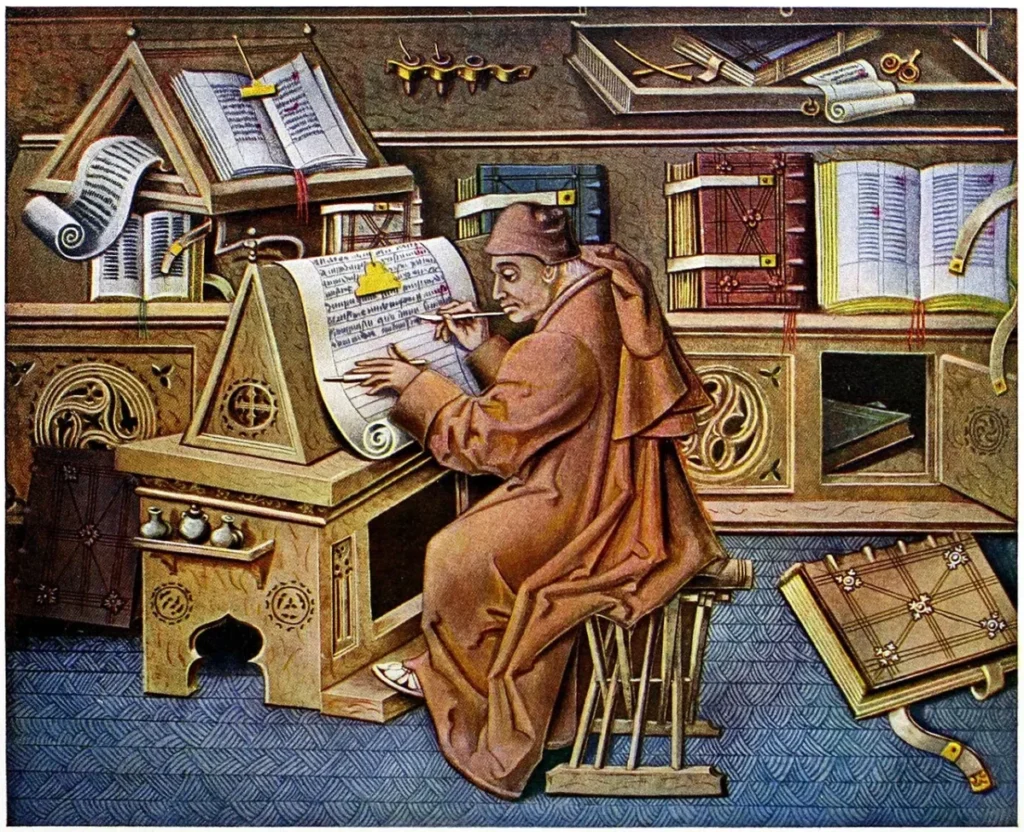
Parchment production demanded extraordinary resources and labor. Creating enough material for a single Bible required the skins of approximately 200 sheep or calves, according to calculations by medieval manuscript specialists L.D. Reynolds and N.G. Wilson in their foundational study Scribes and Scholars. Each animal skin produced only two to four pages of usable writing surface after weeks of intensive processing. Skinners first soaked the hides in lime solution for days to loosen hair and flesh. Workers then scraped both sides with curved knives, stretched the skin on wooden frames using adjustable cords, and treated the surface with pumice powder and chalk to create a smooth writing surface. The entire process took three to six weeks per batch of skins and required specialized knowledge passed down through apprenticeship.
The cost implications were staggering. A monastery producing a complete Bible needed to either maintain enormous flocks specifically for parchment production or purchase prepared vellum at prices that consumed substantial portions of their annual budgets. Smaller monasteries in regions with limited livestock faced even worse constraints. Historian Christopher de Hamel notes that by the 8th century, many monasteries could produce perhaps one or two substantial manuscripts per year using all available resources. When faced with choosing between creating new liturgical texts for daily worship or preserving copies of Cicero’s speeches, the decision seemed obvious.
The 7th and 8th centuries brought additional pressures that made parchment even scarcer. Arab conquests disrupted Mediterranean trade networks that had supplied North African and Middle Eastern parchment to European monasteries. Political fragmentation following Rome’s collapse meant local monasteries could no longer rely on imperial workshops or centralized production facilities. Each community became self-sufficient by necessity, and self-sufficiency meant conservation. Recycling old manuscripts provided immediate access to writing material without the months-long production cycle or substantial cash outlays required for new parchment.
Byzantine scribes faced similar pressures but with different dynamics. The Archimedes Palimpsest, created at Jerusalem around 1229, demonstrates how political upheaval influenced manuscript destruction. The crusader kingdom of Acre had recently seized Jerusalem from divided Ayyubid territories, disrupting established monastery supply chains. A prayer book commissioner needed parchment but lacked access to traditional suppliers or funds to purchase new material. A 10th-century Archimedes manuscript offered the perfect solution: high-quality vellum in a text that few could read and even fewer considered relevant to Christian spiritual life.
The irony cuts deep. The very quality that made ancient manuscripts valuable for reuse ensured they contained works of lasting importance. Classical texts were typically copied onto the finest vellum available because they were considered culturally significant by Roman and early Byzantine scribes. When medieval monks needed the best possible writing surface for important liturgical texts, they naturally turned to these premium parchments. Standard-quality manuscripts containing ordinary business records or ephemeral documents were more likely to deteriorate naturally and be discarded rather than carefully scraped for reuse.
Religious Transformation Dictated Which Texts Were Erased
Economic necessity explains why medieval monks created palimpsests, but religious and cultural factors determined which texts faced erasure and which received new copies on fresh parchment. The shift from classical paganism to Christianity fundamentally reordered intellectual priorities, creating a hierarchy of textual value that condemned many ancient works to destruction.
The Council in Trullo of 691 issued a decree that paradoxically increased pressure on secular classical texts while protecting Christian manuscripts. Reynolds and Wilson document how the council forbade destruction of Scripture or Church Fathers’ writings except for manuscripts so damaged they could not be repaired. This well-intentioned preservation policy had an unintended consequence: it made pagan philosophical, mathematical, and literary texts the primary candidates for conversion into palimpsests. Monks could not legally scrape a damaged Gospel to create a new psalter, but they could completely erase Plato’s dialogues or Roman histories without ecclesiastical censure.
Theological concerns beyond simple pagan-versus-Christian distinctions shaped erasure decisions. Works containing explicit polytheistic religious instruction or mythology faced greater risk than neutral philosophical or scientific texts. Cicero’s speeches on Roman religion were more vulnerable than his ethical treatises. Greek mathematical texts like Archimedes’ work occupied an ambiguous middle ground: not actively objectionable but also not spiritually edifying. When monasteries needed liturgical manuscripts for daily worship, texts that didn’t directly support Christian practice became expendable regardless of their intellectual merit.
The concept of spiritual purification through physical manuscript transformation appears in some monastic writings from the period. A handful of sources suggest monks viewed overwriting pagan texts with sacred Scripture as an act of sanctification, literally covering darkness with light. Physical evidence from the Archimedes Palimpsest and others recovered from Saint Catherine’s Monastery in Sinai shows that scribes sometimes oriented the new text perpendicular to the erased underwriting, creating a visual cross pattern when viewed from certain angles. Whether this represented conscious symbolism or practical writing space optimization remains debated among paleographers.
Language accessibility played a crucial but often overlooked role in determining which manuscripts survived. By the 8th century, most Western European monks could read Latin but not Greek. Greek manuscripts became prime palimpsest candidates simply because their contents were illegible to the scribes who possessed them. Monasteries in formerly Greek-speaking regions of Italy and southern France often held substantial Greek manuscript collections inherited from earlier centuries when bilingual scholarship was common. As Greek literacy declined, these collections transformed from treasured libraries into conveniently available writing material. The vast majority of erased Greek texts contained works we would now consider foundational to Western thought: lost plays by Sophocles, philosophical treatises by pre-Socratics, historical accounts of Alexander’s campaigns.
Changing intellectual fashions within Christianity itself created additional pressures. The 7th through 9th centuries saw declining interest in classical rhetoric, logic, and natural philosophy across Western Europe. Monastic education focused increasingly on biblical exegesis, liturgical practice, and spiritual contemplation rather than the trivium and quadrivium that had dominated late Roman education. Works by Aristotle, Euclid, or Vitruvius seemed irrelevant to monks whose primary concerns were correct psalm recitation and salvation. Only with the 12th-century Renaissance and reintroduction of Aristotelian philosophy through Arabic translations did Western monasteries recognize what had been lost.
The Golden Age of Palimpsest Creation Peaked During Political Collapse
Palimpsest production wasn’t constant across medieval history but instead concentrated in specific periods when political, economic, and cultural factors aligned to make manuscript destruction both necessary and ideologically acceptable. The 7th and 8th centuries represent the peak of classical text erasure, creating what manuscript historians sometimes call the palimpsest crisis.
The collapse of centralized Roman administration in the West removed the institutional structures that had supported manuscript production and preservation. Imperial and municipal libraries that had maintained multiple copies of important works disappeared as cities shrank and administrative functions withered. The great library at Alexandria had already been destroyed by various conflagrations and religious conflicts by the 5th century, but countless smaller libraries attached to civic buildings, temples, and wealthy estates vanished during the 6th and 7th centuries. Their manuscript collections were dispersed, sold, or simply abandoned as buildings fell into ruin.
Monasteries became the default manuscript repositories not through conscious policy but by elimination of alternatives. As the only institutions with literate populations, organized scriptoria, and long-term institutional continuity, monasteries absorbed whatever manuscripts survived the urban collapse. But monastic libraries operated under different priorities than civic or imperial collections. A municipal library might preserve ten copies of Virgil’s Aeneid and five copies of Livy’s history because Roman civic culture valued these texts. A monastery preserved texts that supported its spiritual mission: Bibles, psalters, martyrologies, patristic commentaries, and liturgical calendars.
The Arab conquests of the 7th century disrupted more than trade networks. They severed intellectual connections between Greek-speaking Eastern Christianity and Latin-speaking Western Christianity at precisely the moment when Western monasteries needed expertise to evaluate which classical manuscripts deserved preservation. Byzantine scholars who might have advocated for preserving Archimedes or Euclid no longer had regular contact with Frankish or Italian monasteries. Classical texts lost their advocates, and in their absence, preservation decisions fell to monks whose education increasingly emphasized scriptural knowledge over classical learning.
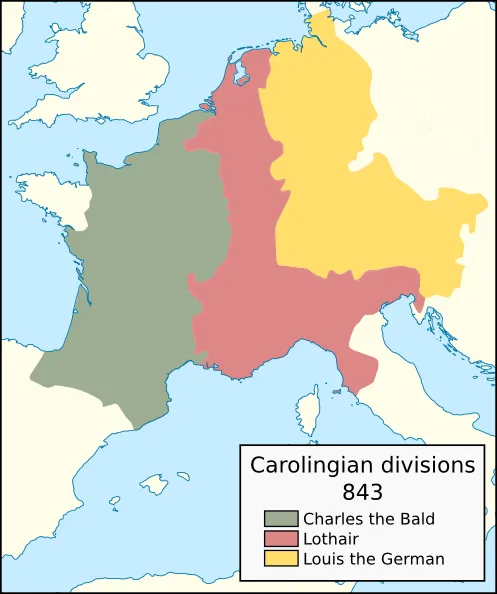
Regional variations in palimpsest production reveal how local conditions influenced manuscript survival. Irish and Anglo-Saxon monasteries, geographically isolated from Mediterranean turmoil, preserved classical texts at higher rates because they maintained more stable economic conditions and retained stronger connections to classical learning traditions through their educational systems. The Carolingian Renaissance of the late 8th and 9th centuries temporarily reversed palimpsest creation in Frankish territories as Charlemagne’s court scholars actively sought out and copied classical texts. But this represented a brief interlude. By the 10th century, many of the Carolingian copies themselves became palimpsest candidates as new waves of Viking, Magyar, and Saracen invasions disrupted monastery stability.
The physical evidence bears this out. Modern analyses using multispectral imaging and X-ray fluorescence have identified approximately 130 palimpsests just from Saint Catherine’s Monastery in Sinai, most created between 650 and 850. Similar patterns appear in manuscript collections from Monte Cassino in Italy, Bobbio in northern Italy, and various French monasteries. The timing correlates precisely with the period historians traditionally call the Dark Ages, when urban culture collapsed, trade networks fragmented, and literacy rates plummeted outside monastic walls.
Built out of a love for history, kept free from distractions.
Spoken Past is an independent project shaped by curiosity, care, and long hours of research. Reader support helps keep it maintained, carefully researched, and open to everyone.
Modern Technology Revealed What Medieval Scrapers Tried to Erase
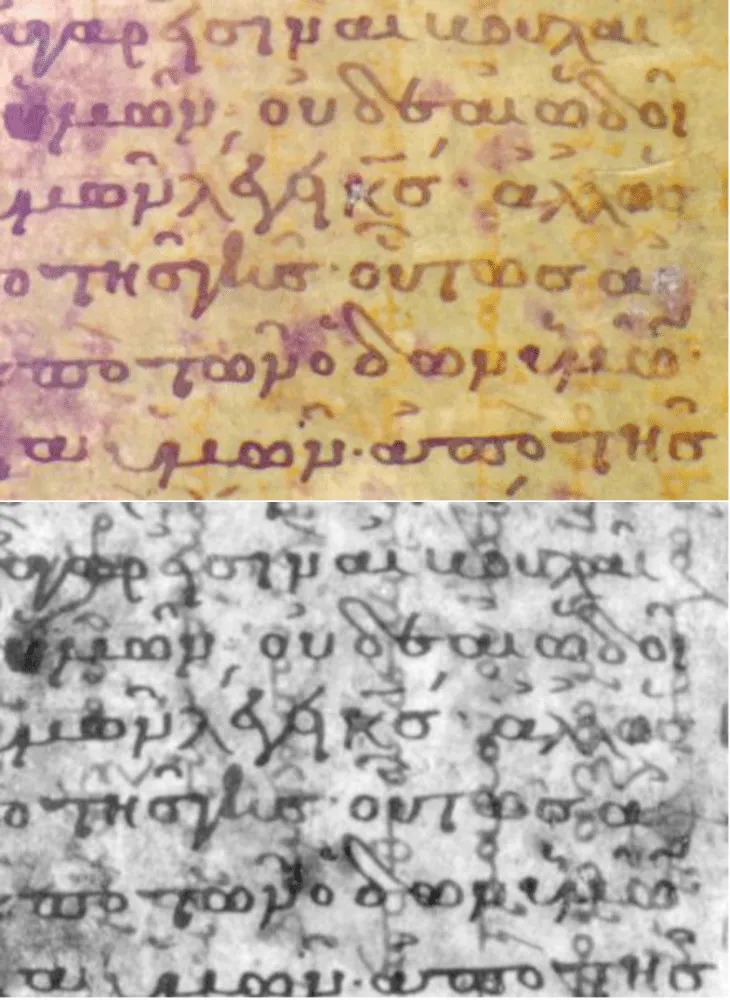
The story of palimpsest recovery demonstrates how scientific advances can resurrect texts that seemed permanently lost. What began with basic photography in the early 20th century has evolved into a sophisticated fusion of physics, chemistry, and computer science that can read manuscripts medieval monks carefully destroyed.
Johan Ludvig Heiberg’s 1906 examination of the Archimedes Palimpsest used the cutting-edge technology of his era: photography with various light filters and exposure times. By photographing the manuscript pages under different lighting conditions, Heiberg captured enough of the underlying Archimedes text to transcribe and publish it between 1910 and 1915. His work revealed two previously unknown Archimedes treatises: The Method of Mechanical Theorems, which explained how Archimedes used physical intuition to discover mathematical proofs, and a more complete version of Stomachion, which demonstrated early combinatorial mathematics. These discoveries revolutionized understanding of ancient Greek mathematical thought and proved that Archimedes had developed concepts not rediscovered until the 17th century.
But Heiberg’s photographs captured only a fraction of the underlying text. The prayer book’s owners in the 1930s inflicted catastrophic damage by commissioning forged Byzantine miniatures painted directly onto four manuscript pages, covering both the upper and lower texts with gold leaf and pigments. The manuscript’s sale in 1998 to an anonymous collector finally enabled proper conservation and advanced imaging that Heiberg could never have imagined.
Modern palimpsest recovery relies on multispectral imaging that photographs manuscripts under precisely controlled wavelengths from infrared through visible light to ultraviolet. Different wavelengths interact differently with the various inks, pigments, and parchment treatments used in manuscript production. Iron-gall ink used in the 10th-century Archimedes manuscript fluoresces under ultraviolet light but appears invisible under normal lighting conditions after centuries of fading and medieval scraping. The 13th-century prayer book text, written with different ink compositions, responds to different wavelengths, allowing computer algorithms to separate the two texts digitally.
X-ray fluorescence imaging added another revolutionary capability to palimpsest studies. This technique bombards manuscript pages with high-energy X-rays that cause different chemical elements to emit characteristic fluorescent X-rays. Iron in the ancient ink produces a distinctive X-ray signature completely independent of visible appearance. The conservation team working on the Archimedes Palimpsest at The Walters Art Museum in Baltimore used X-ray fluorescence to read texts underneath the forged Byzantine miniatures where all other imaging techniques failed. The iron color X-ray images revealed Archimedes’ text even through layers of gold leaf and modern paint that completely obscured visual inspection.
The imaging process generated over 15,000 digital images of the manuscript’s 174 parchment leaves, each photographed under different wavelengths and imaging modalities. Computer scientists then developed algorithms to register these images precisely, compensate for parchment distortion and page curvature, and generate composite images that maximized text readability. The entire digital dataset was released under open-access licenses, allowing researchers worldwide to examine the manuscript without handling the fragile original.
Similar techniques have now been applied to other significant palimpsests. The Sinai Palimpsests Project has examined over 130 palimpsests at Saint Catherine’s Monastery using advanced multispectral imaging, revealing previously unknown early Christian texts in Syriac, Greek, Arabic, and other languages. British Library palimpsest recovery projects have uncovered lost Old English poetry and previously unknown classical fragments. Each new recovery potentially rewrites our understanding of ancient and medieval literature, philosophy, and science.
The technology raises fascinating questions about what else might be recovered. Estimates suggest that between 10 and 20 percent of surviving manuscripts from before 1200 are palimpsests, though many remain unidentified because their underwriting is completely invisible without specialized imaging. Major manuscript collections in Rome, Paris, Oxford, and other European cities likely contain dozens or hundreds of unrecognized palimpsests holding lost classical texts. The challenge lies in systematically imaging these vast collections using techniques that require expensive equipment and substantial expertise.
What Survived and What Was Lost Reveals Medieval Priorities
Examining which ancient texts survived as palimpsests versus which were completely lost or preserved intact reveals the complex calculus medieval monks applied when deciding manuscript fates. The pattern isn’t simply pagan-bad, Christian-good, but reflects more nuanced judgments about utility, comprehensibility, and cultural value.
Mathematical and scientific works faced particularly high erasure rates because they served no obvious purpose in monastic life focused on prayer, biblical study, and agricultural labor. Archimedes’ theoretical geometry and physics had no practical application for monks calculating Easter dates or designing church buildings. Euclid’s Elements survived primarily because a few monasteries recognized its utility for architectural planning and land surveying. The vast majority of ancient Greek mathematical treatises vanished completely, known today only through references in surviving works or through Arabic translations made before the Islamic Golden Age.
Historical works experienced selective survival based on perceived moral and educational value. Roman histories that emphasized military conquest and imperial glory were more vulnerable than works that could be read as moral exemplars or cautionary tales. Livy’s history of Rome survived partially because medieval scholars interpreted it as demonstrating divine providence in Rome’s rise and Christianity’s eventual triumph. In contrast, detailed political histories of Hellenistic kingdoms or republican Rome that lacked obvious Christian relevance faced higher erasure risks.
Literary works present the most complex survival patterns. Complete texts of major authors like Virgil, Ovid, and Cicero generally escaped erasure because they had become so deeply embedded in Latin education that even religiously-focused monasteries needed them for teaching grammar and rhetoric. But rare works, fragments, and texts by minor authors routinely became palimpsests. The only surviving copy of Cicero’s De Republica exists as a palimpsest discovered in 1822 under a manuscript of Augustine’s commentary on Psalms. Countless other works disappeared entirely because all existing copies were erased and no monastery chose to create replacements.
Philosophical texts occupied an especially precarious position. Works compatible with Christian theology like Plato’s dialogues or Stoic ethical treatises received new copies and survived. But pre-Socratic philosophers, Epicurean atomists, and skeptical academics were routinely erased. Medieval monks saw no value in preserving philosophical systems they considered refuted by Christianity. The loss of these texts created enormous gaps in our understanding of ancient philosophy that weren’t filled until the recovery of Arabic translations during the 12th century Renaissance or modern palimpsest recovery efforts.
The pattern of survival also depended heavily on geographic distribution. Texts that existed in multiple copies across many monasteries stood better chances of surviving somewhere even if individual copies became palimpsests. Single-copy texts faced extinction if that one monastery decided to erase them. The centralization of manuscript culture in a few major scriptoria during the Carolingian period temporarily protected texts by creating backup copies, but subsequent political fragmentation in the 10th and 11th centuries again raised vulnerability as monasteries became isolated.
Reynolds and Wilson calculate that perhaps 90 percent of classical Latin literature was lost between 500 and 900 CE, and similar or higher percentages of Greek literature vanished during the same period. Some was destroyed through palimpsest creation, but most simply decayed as monasteries chose not to allocate scarce resources to copying texts they considered irrelevant. Palimpsests actually represent a strange form of preservation: texts important enough to be scraped carefully were texts written on premium parchment, and that premium parchment was more likely to survive physical degradation than cheaper materials.
The Carolingian Renaissance Briefly Reversed Manuscript Destruction
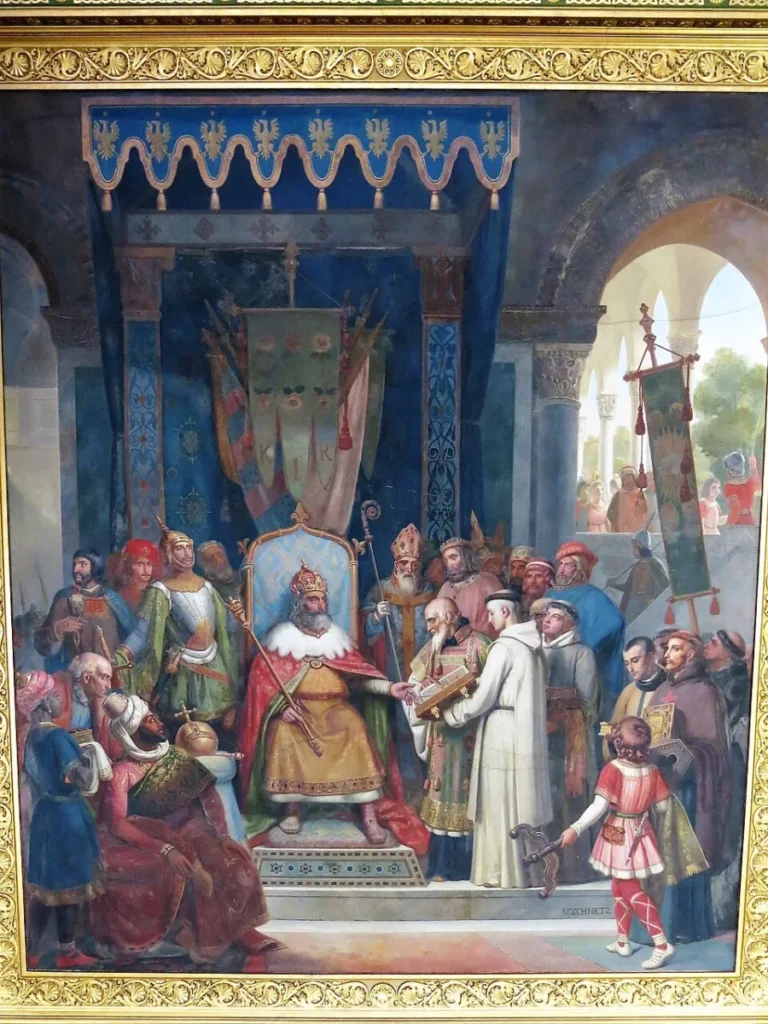
The reign of Charlemagne and his successors from roughly 780 to 900 CE marked a dramatic reversal in attitudes toward classical texts and manuscript preservation. This period, called the Carolingian Renaissance, saw deliberate efforts to locate, copy, and preserve ancient works even as palimpsest creation continued in regions outside Carolingian influence.
Charlemagne’s court at Aachen became a magnet for scholars from across Europe and the Mediterranean world. Alcuin of York, an Anglo-Saxon scholar educated in the rich manuscript traditions of Northumbria, organized a palace school that emphasized classical Latin literature alongside Christian theology. Theodulf of Orleans, a Visigothic scholar fleeing Muslim Spain, brought knowledge of texts preserved in Iberian monasteries. These scholars convinced Charlemagne that reviving classical learning was essential to both religious reform and political legitimacy.
The educational initiative required manuscript production on an unprecedented scale. Charlemagne ordered monasteries throughout his realm to establish scriptoria and copy both liturgical texts and classical works. Major monasteries at Tours, Corbie, St. Gall, and Reichenau became manuscript factories, each developing distinctive script styles that modern paleographers can identify. The Caroline minuscule script developed during this period became the standard for manuscript production and ultimately influenced the development of modern lowercase letters.
Crucially, Carolingian scriptoria actively sought out older manuscripts from monastery libraries that had been neglected for generations. Scribes created fresh copies on new parchment, temporarily reducing pressure to create palimpsests. Many of our surviving manuscripts of classical Latin authors descend from Carolingian copies rather than from continuous transmission through earlier centuries. Without this deliberate Carolingian copying campaign, works by Tacitus, Suetonius, and numerous other Roman historians would exist only as palimpsest fragments or not at all.
But the Carolingian Renaissance was geographically and temporally limited. It primarily affected territories under Frankish control in modern France, western Germany, and northern Italy. Byzantine manuscripts in Greek remained largely inaccessible to Carolingian scholars who were almost exclusively Latin readers. Even within the Carolingian realm, the renewed interest in classical texts competed with ongoing religious priorities, and many monasteries continued creating palimpsests when economic pressures demanded.
The collapse of the Carolingian Empire in the late 9th and early 10th centuries through civil wars, Viking raids, and political fragmentation ended the centralized manuscript production system. Regional monasteries again faced isolation and resource scarcity. The brief window of preservation closed, and palimpsest creation resumed at rates approaching the pre-Carolingian period. Many of the very manuscripts the Carolingians had carefully copied themselves later became palimpsests as 10th and 11th century monks faced the same economic pressures their predecessors had encountered.
The Carolingian period nevertheless established precedents that would influence later medieval scholarship. The concept that classical texts deserved preservation as part of Christian cultural heritage took root in enough monasteries to ensure that at least some texts survived through the turbulent 10th and 11th centuries. When the 12th century Renaissance brought renewed interest in classical philosophy and science, the foundation laid by Carolingian scribes provided crucial source materials for translation and study.
Byzantine Manuscript Culture Followed Different Preservation Patterns
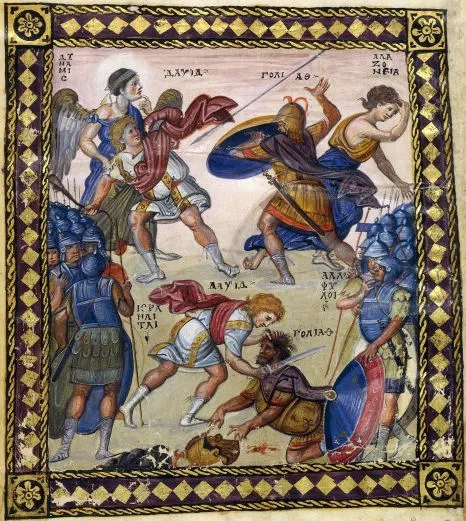
While Western European monasteries were creating palimpsests at peak rates during the 7th through 10th centuries, Byzantine scriptoria in Constantinople and other Eastern cities operated under different economic and cultural conditions that influenced which texts survived. Understanding Byzantine manuscript practices reveals why certain Greek texts vanished while others were preserved through multiple copies.
The Byzantine Empire maintained a more robust urban economy throughout the medieval period compared to Western Europe’s dramatic urban decline. Constantinople supported professional scribes, parchment dealers, and book merchants serving both monastic and secular customers. Wealthy Byzantine aristocrats collected manuscripts as status symbols and maintained private libraries, creating market demand for classical texts beyond purely religious works. This commercial manuscript culture meant that parchment, while expensive, remained more accessible than in the impoverished monasteries of Francia or Italy.
Byzantine educational institutions preserved classical Greek texts as core curriculum materials. The University of Constantinople, founded in the 9th century but drawing on earlier educational traditions, required students to master classical Greek literature, philosophy, and rhetoric. Monasteries producing manuscripts for this educational market created copies of Homer, Plato, Aristotle, and other classical authors alongside liturgical texts. The ongoing educational demand provided economic incentive for preservation that Western monasteries largely lacked.
However, Byzantine manuscript culture still produced substantial numbers of palimpsests during periods of crisis. The iconoclast controversy of the 8th and 9th centuries saw destruction of manuscripts containing religious imagery and texts defending icon veneration. Arab sieges of Constantinople in 674-678 and 717-718 disrupted trade networks and created temporary parchment shortages. The Fourth Crusade’s sack of Constantinople in 1204 scattered manuscript collections and destroyed countless texts as Crusaders looted libraries and burned books they couldn’t sell.
The geographical diversity of Byzantine manuscript production created both vulnerabilities and redundancies. Major scriptoria existed not just in Constantinople but in Thessalonica, Athos, Sinai, Jerusalem, Alexandria, and other centers across the Byzantine world. A text copied in multiple locations had better survival chances, but regional conquests by Arabs, Seljuk Turks, and Crusaders meant that entire regional collections could be lost when cities fell. The progressive territorial contraction of the Byzantine Empire from the 7th century onward gradually reduced the number of manuscript-producing centers, concentrating production in fewer locations.
Byzantine scholars of the 9th and 10th centuries undertook a systematic program to transliterate ancient manuscripts from older script forms into minuscule script, the Byzantine equivalent of Caroline minuscule. This transliteration campaign was double-edged: it made texts more readable and encouraged copying, but it also made older manuscripts in obsolete scripts obsolete themselves. Many ancient manuscripts in majuscule script became palimpsests after their contents had been transliterated, on the assumption that the new copies rendered the originals unnecessary. Lost were textual variants, marginal annotations, and scholarly apparatus that transliterators deemed unimportant.
The final centuries of Byzantine existence saw increasing desperation as the Empire contracted to little more than Constantinople and its immediate environs. Manuscript production declined sharply as economic resources dwindled and patronage networks collapsed. The Ottoman conquest of Constantinople in 1453 marked the end of Byzantine manuscript culture. Many Greek manuscripts were destroyed during the city’s fall, while others were preserved because Ottoman sultans recognized their scholarly value and incorporated captured libraries into imperial collections. Still others were smuggled to Italy by refugee Byzantine scholars, where they sparked the Italian Renaissance’s renewed interest in classical Greek texts.