
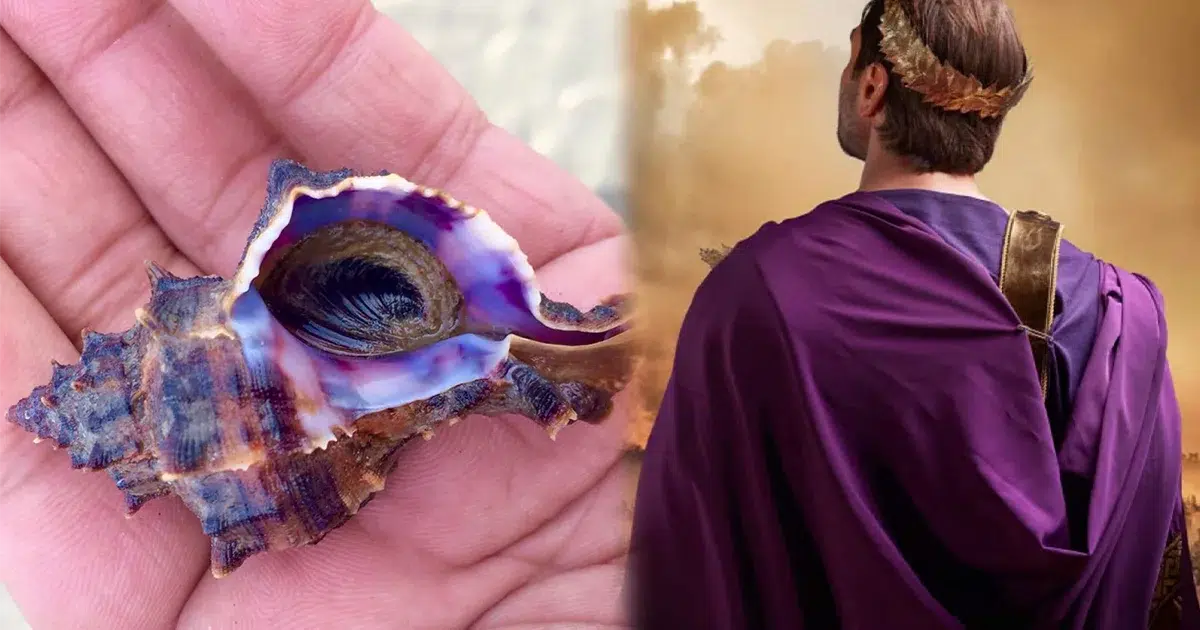
Tyrian Purple ruled the ancient world as the most expensive dye ever produced from nature. The Romans called wool dyed with Tyrian Purple literally worth its weight in gold, according to Diocletian’s Edict on Maximum Prices from 301 AD. This deep crimson color came from the bodies of tiny sea snails, extracted through a process so labor-intensive and foul-smelling that purple dye workshops were banished to the outskirts of cities.
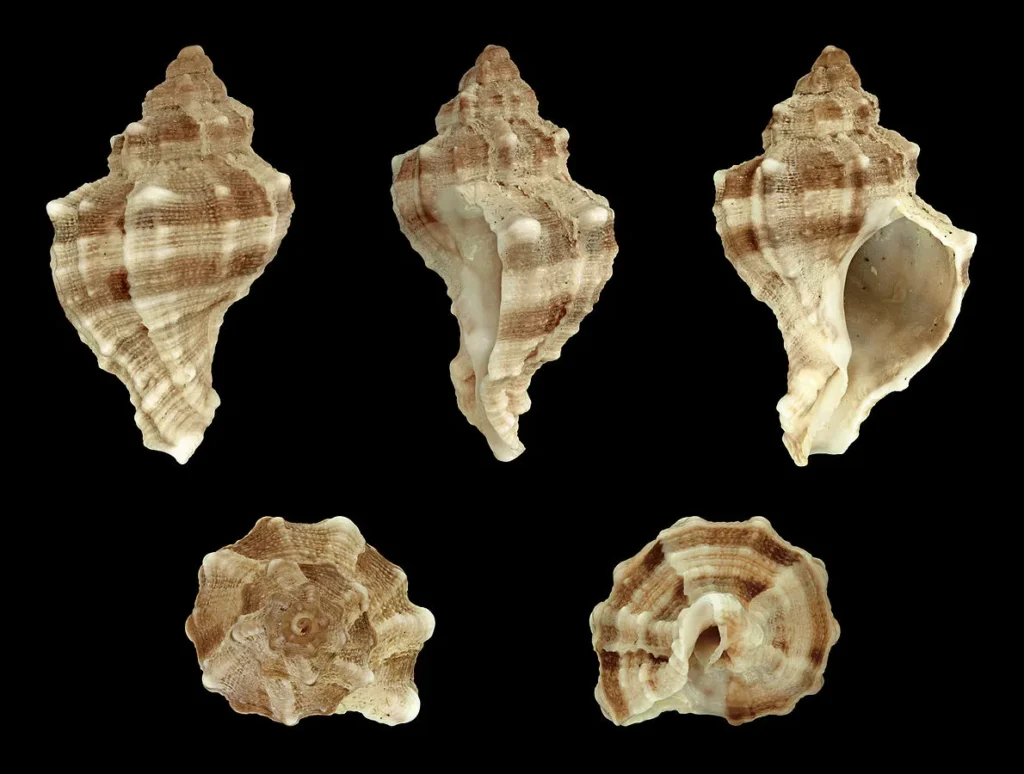
Three Mediterranean mollusk species produced the precious fluid. Murex trunculus and Murex brandaris lived on sandy seabeds, while Purpura haemastoma clung to rocks. Each snail yielded only drops of secretion from its hypobranchial gland. Thousands upon thousands of mollusks died to color a single garment.
The Murex Snails
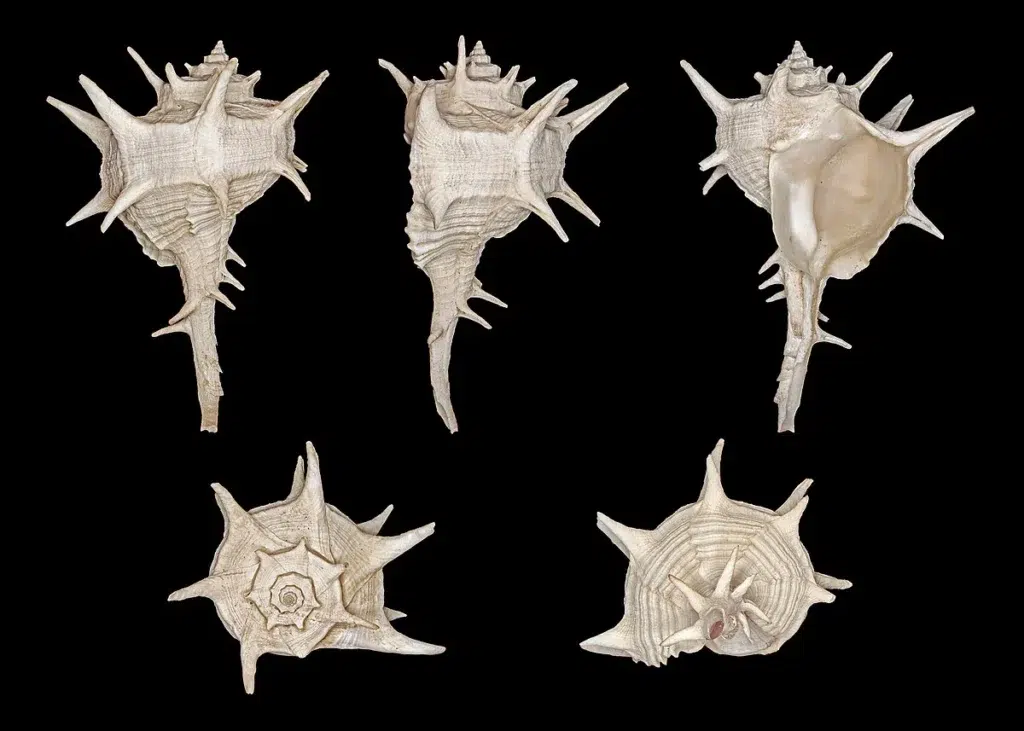
Homer used the special term haliporphyros, meaning ‘sea-purple’, to distinguish genuine mollusk dye from cheaper imitations made from plants. By the 14th century BC, Ugaritic price lists showed that purple-dyed textiles cost far more than undyed wool. The Greeks knew the dye as porphyra, a word they likely borrowed from the Minoans of Crete who first perfected the extraction technique around 1750 BC.
Fishermen caught the snails using several methods. Divers collected Purpura haemastoma by hand from rocky shores. Workers dragged rakes across sandy bottoms to gather Murex trunculus and Murex brandaris. Ancient sources mention fish traps baited with other mollusks to attract the voracious predators, though experiments show this method worked only when divers monitored the traps constantly and grabbed snails congregating nearby.
Extracting the Dye
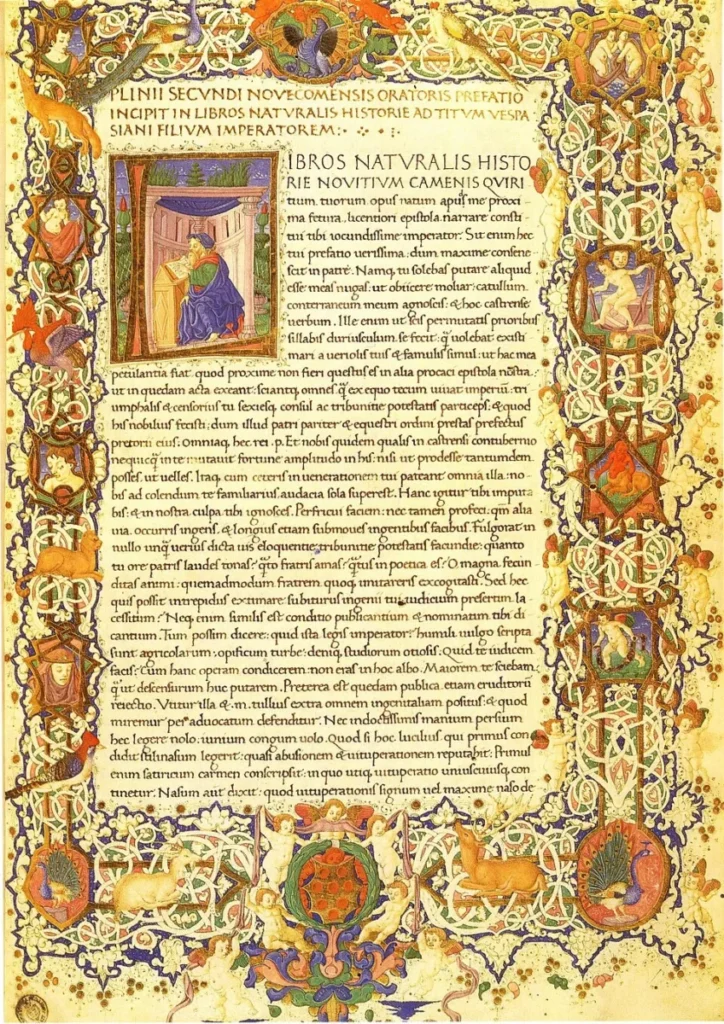
The production process began with crushing the shells to extract the hypobranchial glands. Pliny the Elder, writing in the first century AD, provides the only surviving recipe for preparing the dye solution. Workers first soaked the glands in salt water for three days. This created the bacterial environment needed to reduce the chemical precursors in the glands.
Next came nine days of continuous heating in lead vats. Pliny states that dyeing 1,000 pounds of wool required 200 pounds of Purpura flesh plus 111 pounds of murex. The mixture simmered at constant moderate heat, never actually boiling despite Pliny’s use of the Latin word fervere. Modern experiments prove that temperatures above 50 degrees Celsius ruin the color, producing dull browns instead of brilliant purples.
The prolonged cooking produced the notorious stench associated with purple workshops throughout antiquity. Exposure to light during the heating process triggered chemical changes in the organic compounds. The glands released precursors rather than actual dye. These substances underwent reduction in anaerobic conditions, transforming into a colorless leuco base that would later oxidize into purple when exposed to air and sunlight.
The Chemistry of Purple
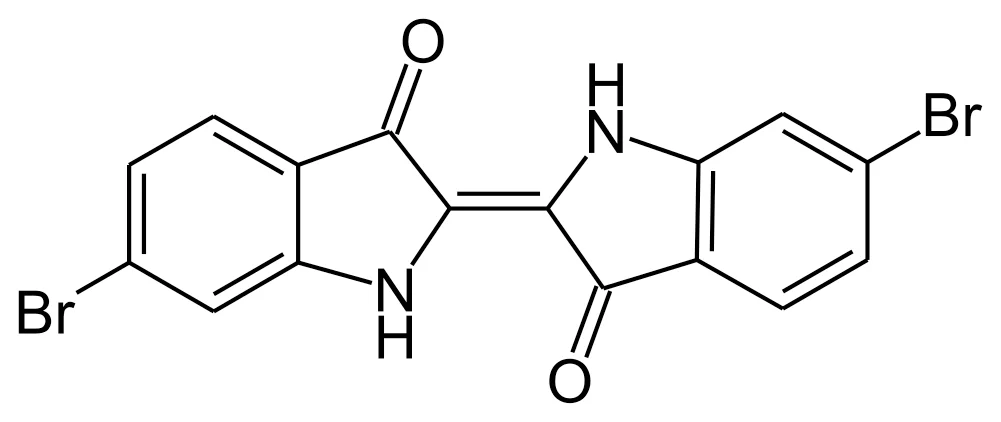
The main component of Tyrian Purple is 6,6′-dibromoindigo, though the dye also contains 6-monobromoindigo and indigotine. Murex trunculus produces higher levels of monobromoindigo and indigotine than Murex brandaris. These chemical variations explain why different snail species and different mixtures yielded different shades.
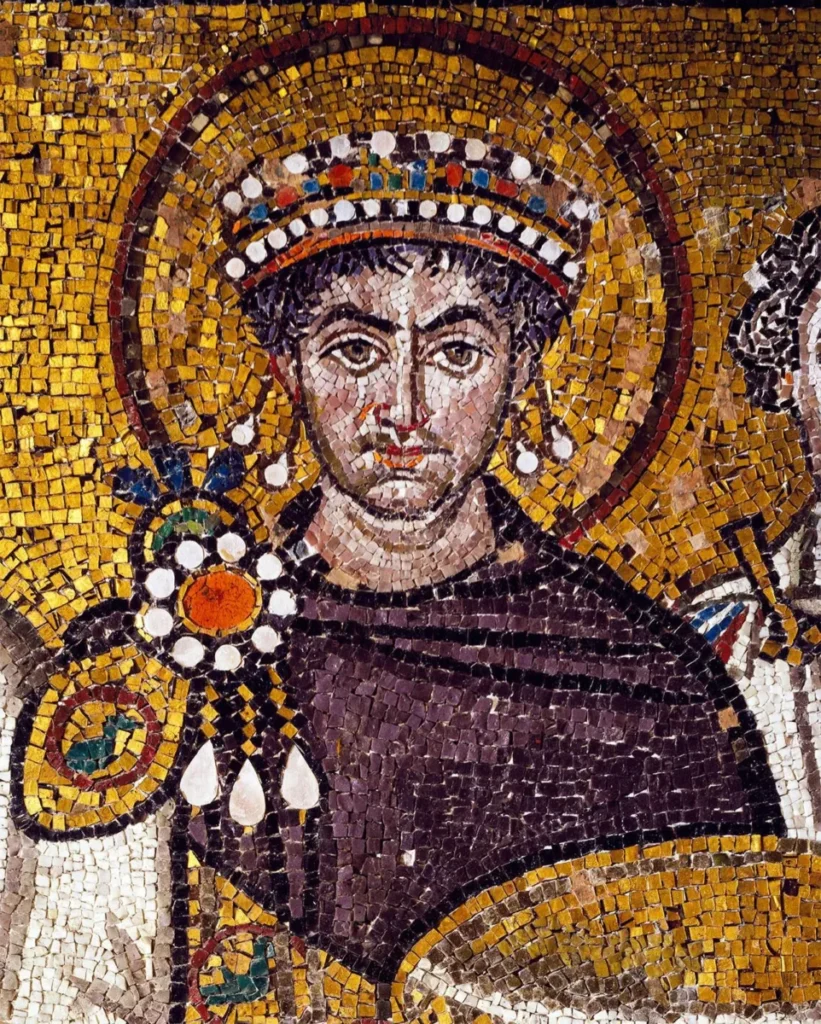
Colors ranged from deep crimson to brilliant blue depending on which mollusks the dyers used. The darkest purple, almost black in shadow but glowing deep red in sunlight, was considered the most noble shade. Romans reserved this color for the emperor alone. Lighter purples and blues appeared on the togas of senators and other high officials.
The dye had to be both permanent and water-soluble to penetrate textile fibers effectively. Achieving this required maintaining an alkaline environment with pH below 9 during the heating process. Ancient dyers may have added urine, natron, wood ash, or lime to create the proper chemical conditions. Each additive produced slightly different color results.
Minoan Origins
Archaeological evidence now places the origins of purple dye production on Crete rather than Phoenicia. British archaeologist R.C. Bosanquet found numerous crushed murex shells at Middle Minoan sites on Kouphonisi and Palaikastro in the early 1900s. These deposits date to 2000-1600 BC, predating the earliest Phoenician evidence by at least 400 years.
The site of Chryssi island off Crete provides the best-preserved early purple workshop. Building B1 contained rooms dedicated exclusively to dye production, dated to the 18th-17th centuries BC. Room 2 held stone slabs, mills, and hammers for crushing shells. Room 3 contained two hearths plus ceramic containers with purple residue still visible inside. Stone hammers, cups for adding liquid, and a triton shell lay scattered across the floor where workers had left them 3,700 years ago.
Linear B tablets from Knossos contain the Mycenaean Greek term po-pu-re-ia, meaning purple. One tablet actually uses the phrase wa-na-ka-te-ro po-pu-re, translating as ‘royal purple’. This represents the first written attestation of a term that would become synonymous with Tyrian Purple in later ages.
Phoenician Mastery
The Phoenicians inherited the purple industry from earlier Aegean producers but transformed it into a Mediterranean-wide commercial enterprise. Shell middens at Minet el-Beida, the harbor of Ugarit in Syria, date to the 15th-14th centuries BC. Similar deposits appear at Sarepta and Tel Akko from the 13th century BC. The cities of Tyre and Sidon became famous throughout the ancient world for their purple production.
Pliny notes that in his time the best European purple came from Laconia in Greece, the best African purple from Meninx, and the best Asian purple from Tyre. The association between Tyre and purple grew so strong that Greeks and Romans used “Tyrian” as the standard term for the highest quality mollusk dye regardless of where it was actually produced.
Phoenician colonists carried purple production technology to the western Mediterranean. Evidence from Teatro Cómico in Cádiz, Spain, shows that workshops operated there by 820-800 BC. A kiln structure 1.6 meters long, outlined with local shellstone and filled with crushed Murex trunculus shells, represents the earliest purple production facility found anywhere on the Atlantic coast of Europe.
Built out of a love for history, kept free from distractions.
Spoken Past is an independent project shaped by curiosity, care, and long hours of research. Reader support helps keep it maintained, carefully researched, and open to everyone.
Roman Sumptuary Laws
Romans transformed purple from a luxury good into a symbol of political authority. The distinctive purple stripes on the toga purpurea marked senators and magistrates. Wider stripes indicated higher rank. Only the emperor could wear garments dyed completely in the darkest shade of purple.
These restrictions emerged from Roman sumptuary laws designed to regulate displays of wealth and maintain social hierarchies. The state enforced strict rules about who could wear purple and how much could appear on their clothing. Citizens caught violating these regulations faced substantial fines or other penalties.
The laws reflected genuine scarcity as much as political symbolism. The immense cost of purple meant that unrestricted use would have bankrupted anyone below senatorial rank who tried to dress in full purple robes. By reserving certain shades and applications for specific offices, Rome created a visible system of status that everyone could immediately recognize.
Purple became so closely associated with imperial power that wearing the forbidden color could constitute treason. Accusations of “putting on the purple” meant claiming imperial authority without authorization. Several would-be emperors and pretenders met their deaths after wrapping themselves in purple cloaks.
The Jewish Tallit
Jewish religious law required that prayer shawls include blue stripes dyed with tekelet, the Hebrew name for a specific shade of blue-purple. The Book of Exodus mentions tekelet multiple times in describing the tabernacle. Rabbinic rulings specified that only genuine mollusk dye qualified for this sacred purpose. Plant-based imitations were explicitly forbidden.
These strict requirements probably emerged as a response to the widespread use of substitute dyes in the Greco-Roman period. Numerous plant and mineral sources could produce purple-like colors, as documented in ancient papyri containing recipes for imitation purple. None of these substitutes matched the color-fastness of true mollusk purple. Fabrics dyed with plant-based purples faded quickly, while Tyrian Purple remained brilliant for generations.
Production Sites
Shell middens mark ancient purple production sites across the Mediterranean. However, archaeologists must examine the shells carefully before concluding that purple extraction occurred nearby. The shells had to be crushed in specific ways to extract the glands. Whole shells or randomly broken ones suggest the mollusks were eaten as food rather than processed for dye.
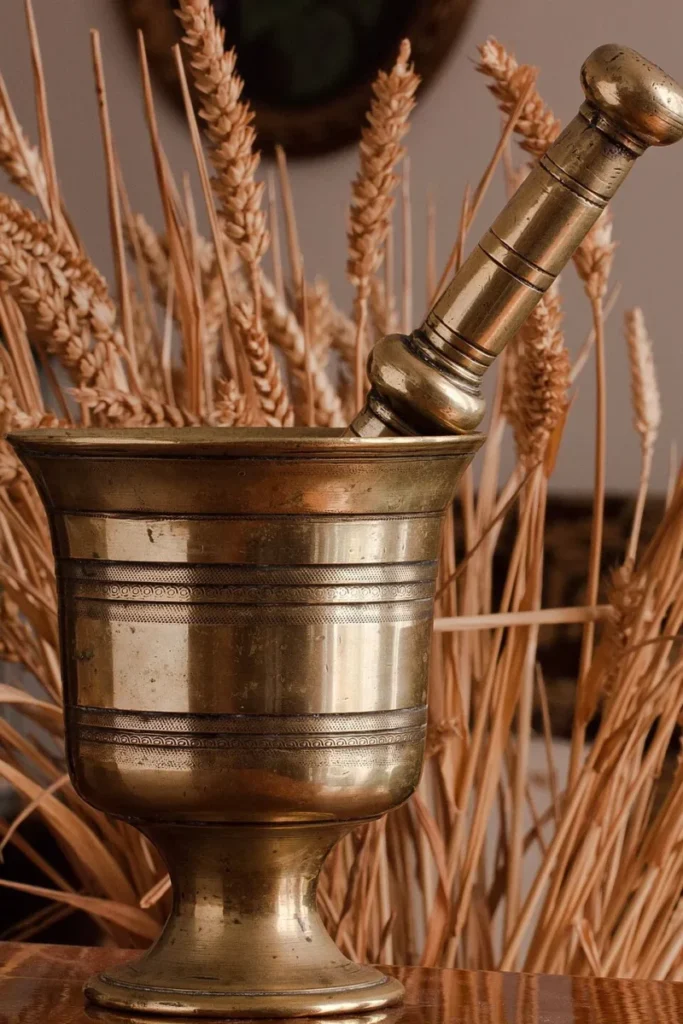
The site of Horbat Shim’on in Israel, dated to the eighth century BC, shows the complete production sequence. Separate rooms held different stages of work. One area contained mortars, pestles, and stone hammers for crushing shells. Another held stone containers for heating the dye. A third room was dedicated to dyeing fabrics.
Tell Dor in Israel presents more complex evidence. Two circular pits approximately 0.9 meters in diameter and one meter deep were connected by a mortar-lined channel. Purple stains marked both the channel and calcite fragments found inside it. The southern pit was filled with Murex trunculus shells and connected to a small clay-lined receptacle that probably served as an anvil base for crushing shells. These structures date to the third century BC.
Ceramic Evidence
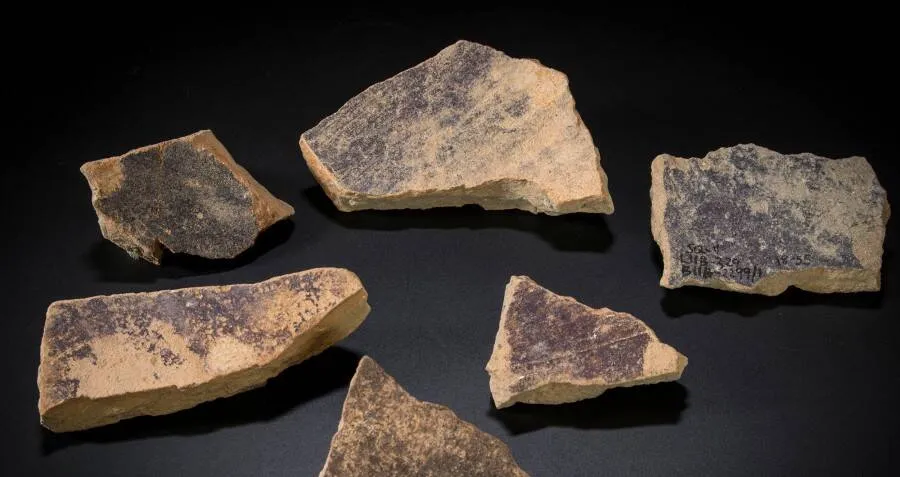
Purple-stained pottery provides crucial evidence for dye production even when shell middens are absent. Tel Shiqmona in Israel yielded rim and neck fragments from ceramic containers with purple residue on the interior surfaces. Gas chromatography identified high concentrations of monobromoindigo and indigotine with low levels of dibromoindigo, matching the chemical signature expected from Murex trunculus.
At Tel Kabri, ceramic containers from the seventh century BC show purple staining only on the upper neck area near the rim. This pattern makes sense because lids would have covered most of the vessel during heating, blocking light from reaching the dye solution below. Workers had to remove the lid periodically to stir the mixture, exposing the neck to sunlight that triggered the purple color change.
The ceramic evidence confirms details in Pliny’s recipe. Lead or tin containers were preferred for heating the dye because these metals did not react chemically with the solution. Pottery could serve the same purpose but required careful monitoring to prevent contamination.
Imperial Monopoly
The immense value of purple attracted government control in most ancient states. Rulers recognized that monopolizing purple production meant controlling access to the most visible symbol of power and prestige. The economic benefits were substantial, but the political advantages mattered even more.
Evidence from Diocletian’s Price Edict of 301 AD demonstrates that purple wool cost the same per pound as gold. This extraordinary price persisted for centuries because no technological improvements could reduce the fundamental requirement for massive quantities of mollusks. Unlike grain or wine, where better farming techniques could increase yields, purple production depended entirely on harvesting wild sea snails one by one.
The industry finally collapsed sometime during late antiquity as the Roman state fragmented. Without strong central authority to enforce monopolies and maintain the complex supply chains required for large-scale production, the craft faded away completely. By the medieval period, Europeans had forgotten how to make true Tyrian Purple, and the technique had to be laboriously reconstructed from ancient texts and archaeological evidence in modern times.