
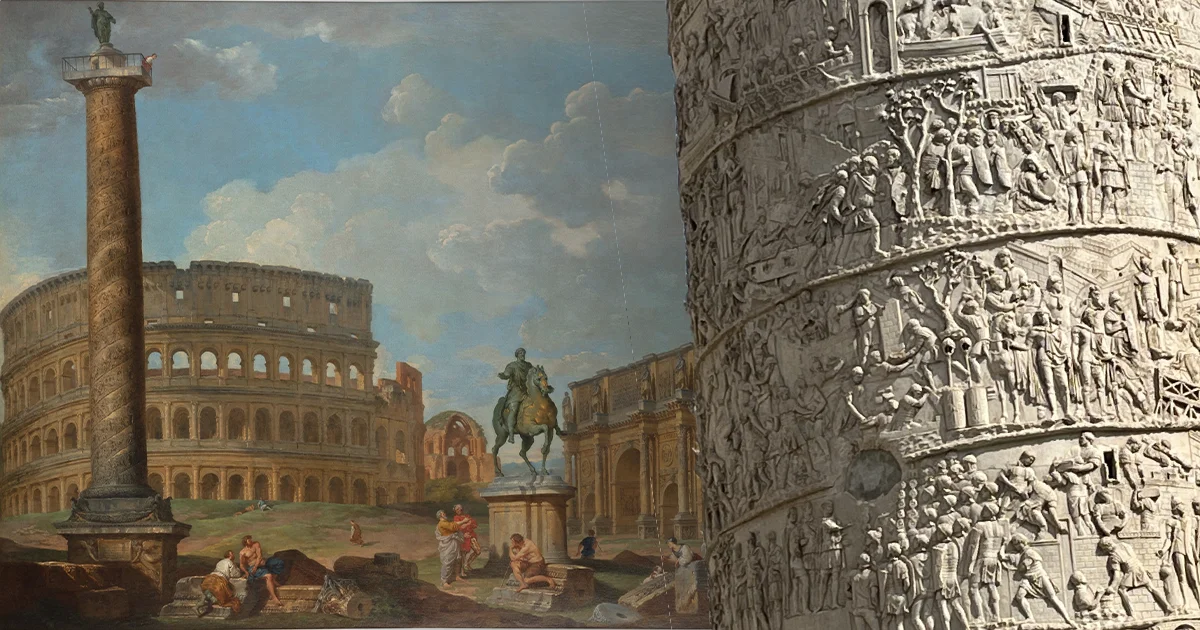
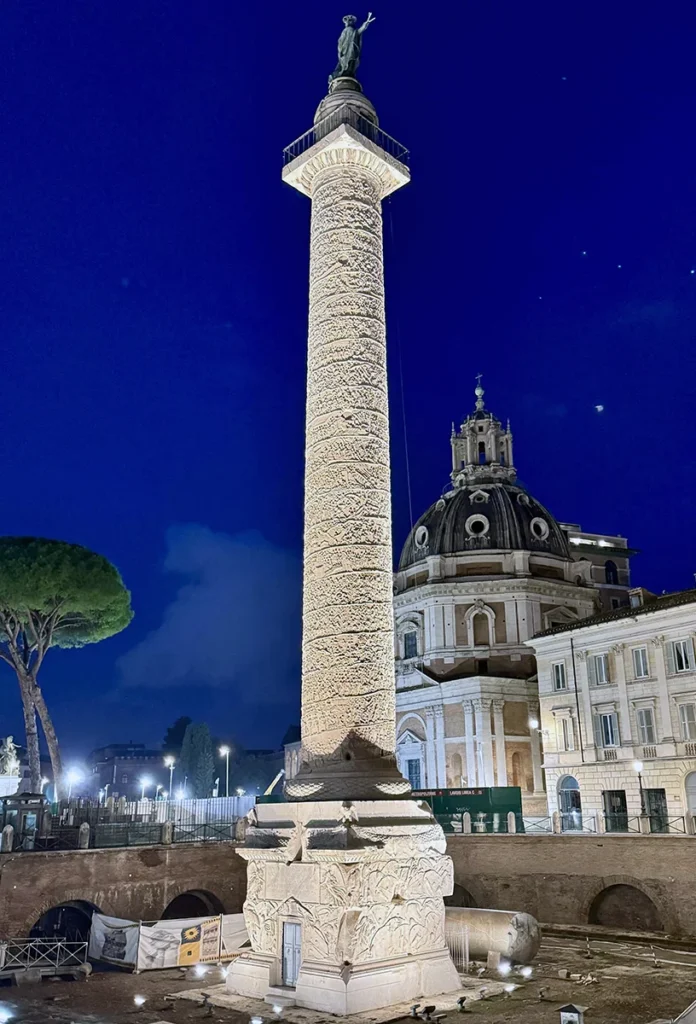
Trajan’s Column is a 98-foot marble monument in Rome completed in 113 CE. It commemorates Emperor Trajan’s military victories over the Dacians in two campaigns fought between 101 and 106 CE. The Column’s spiral relief, wrapping around the shaft 23 times, depicts over 2,600 figures in 155 scenes that narrate the conquest of Dacia with precision and drama.
The Column stands as one of the most ambitious works of imperial propaganda in Roman history. Its reliefs do not just record battles. They construct a narrative about Roman discipline, engineering, and justified conquest. Trajan appears 58 times, always commanding, always central, shown addressing troops, performing sacrifices, and directing campaigns with calm authority.
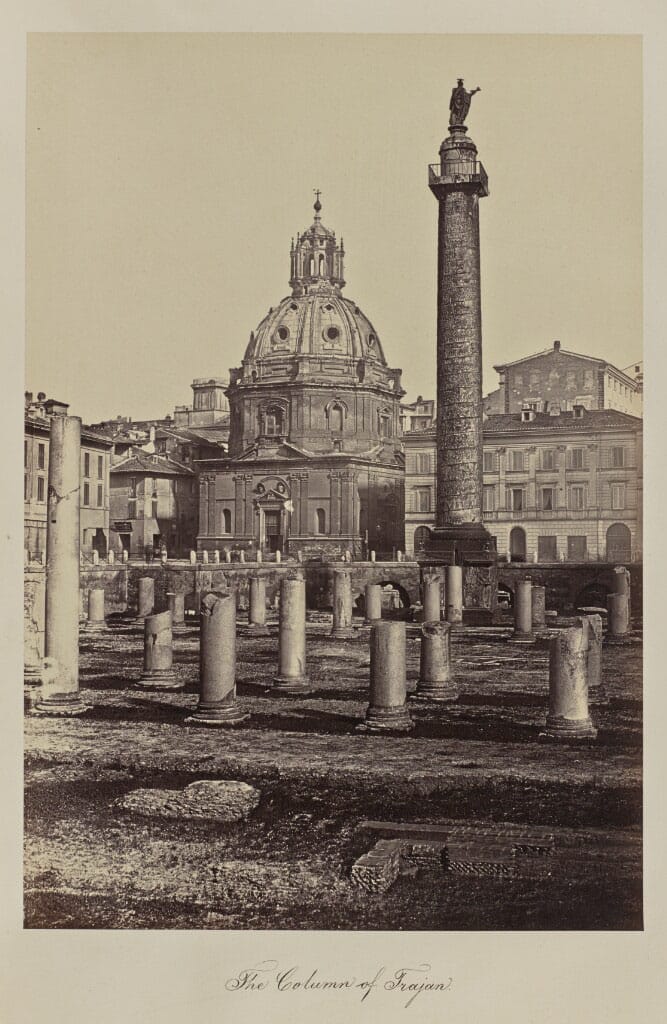
This monument was designed to be seen, studied, and remembered. It stood between two libraries in Trajan’s Forum, where visitors could climb the internal staircase and view the reliefs at close range. The Column also served as Trajan’s tomb, holding his ashes in a chamber at its base, making it both a victory monument and a sacred resting place.
This article explains how Trajan’s Column worked as propaganda, what its reliefs show about the Dacian Wars, and why its survival matters for understanding Roman imperial art between 500 BCE and 500 CE.
Why Trajan built the Column
Rome conquered Dacia to secure the empire’s northern frontier and to seize the region’s rich gold and silver mines. Dacia, located in modern Romania, was ruled by King Decebalus, who had resisted Roman pressure for decades. Trajan launched two full-scale invasions to crush Dacian independence and integrate the territory into the empire.
The Column was part of a larger building program in Rome. Trajan constructed a new forum, a massive basilica, libraries, and markets. These projects showcased the wealth flowing back from Dacia and demonstrated the emperor’s generosity to the Roman people. The Column itself was a technical marvel, built from 20 massive marble drums stacked to form the shaft.
The monument’s location mattered. It stood at the center of Trajan’s Forum, flanked by Greek and Latin libraries. Scholars believe the libraries held copies of Trajan’s own commentary on the Dacian Wars, now lost. Visitors could read the text and then study the visual narrative carved into the Column, linking word and image in one space.
Apollodorus of Damascus, the architect who built the Column, also designed the famous bridge across the Danube that appears in the reliefs. That bridge allowed Roman armies to cross into Dacia and return with supplies and reinforcements. Showing the bridge on the Column reminded viewers of the logistical genius behind the conquest.
What the reliefs depict
The spiral frieze begins at the base with scenes of Roman soldiers preparing for war. The first campaign unfolds in the lower half of the Column, the second campaign in the upper half. A carved figure of Victory separates the two wars, writing on a shield to mark the transition.
The reliefs emphasize order and engineering over chaotic battle. Romans build roads, bridges, and fortifications. They clear forests, ford rivers, and construct camps. Soldiers appear disciplined and organized, working together under Trajan’s watchful command. Battle scenes exist but are outnumbered by images of construction and ceremony.
This was a deliberate choice. The Column’s audience was the urban population of Rome, many of whom feared the army as a source of violence and instability. By showing soldiers as builders and engineers, Trajan presented his legions as civilizing agents who brought order to wild lands. The message was clear: Roman conquest meant progress, not destruction.
Trajan himself appears repeatedly, always shown as calm and authoritative. He addresses his troops in formal speeches known as adlocutio. He performs ritual sacrifices before battle. He accepts the submission of defeated enemies. These scenes reinforced the emperor’s role as a just and pious leader, not a bloodthirsty conqueror.
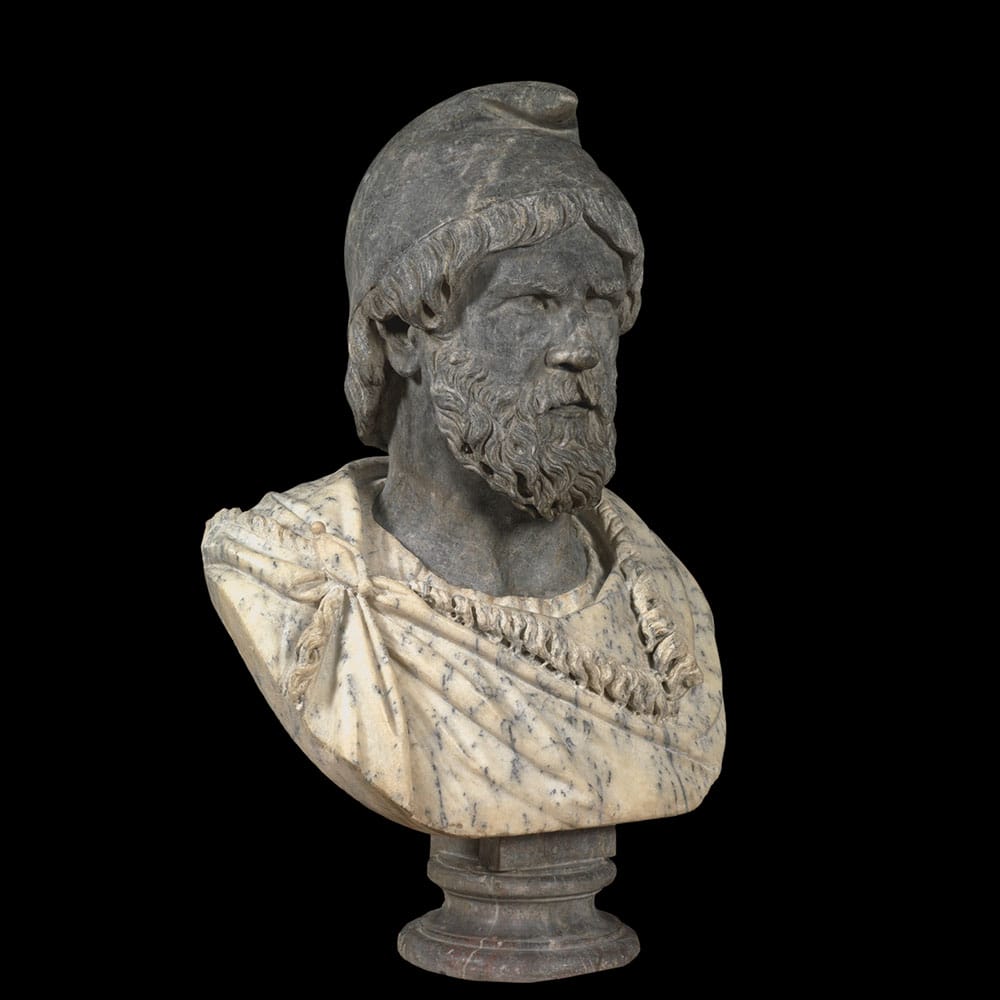
The Column also depicts Dacian fighters and civilians. Dacians are shown defending their fortresses, using siege weapons, and ultimately suffering defeat. In the final scenes, King Decebalus commits suicide to avoid capture, a moment that underscores the completeness of Rome’s victory.
Propaganda and narrative control
Trajan’s Column was propaganda in the fullest sense. It told a story about war that justified Roman expansion and celebrated imperial power. But it also served practical purposes. It educated Romans about a distant conflict most had never witnessed. It legitimized Trajan’s reign by linking him to military success. And it created a visual record that could be referenced for generations.
The reliefs were originally painted, though the colors have since faded. Paint would have made figures easier to distinguish and added emotional impact to key scenes. Scholars debate whether the Column was legible from ground level, given its height. But the internal staircase allowed close viewing, and casts were made in antiquity to spread the images across the empire.
The Column’s narrative was selective. It downplayed Roman casualties and atrocities. It ignored logistical failures and political disputes. It presented the wars as inevitable and just, with Trajan as the wise commander who brought civilization to barbarians. This was not objective history. It was state-sponsored memory crafted to serve imperial goals.
Historians today use the Column carefully. It provides valuable evidence about Roman military equipment, tactics, and engineering. But it must be read as a biased source, designed to glorify Trajan and justify conquest. Ancient written accounts, like those of Pliny the Younger, complement the visual record but also reflect pro-Roman perspectives.
Built out of a love for history, kept free from distractions.
Spoken Past is an independent project shaped by curiosity, care, and long hours of research. Reader support helps keep it maintained, carefully researched, and open to everyone.
The Dacian Wars in context
Dacia’s conquest added significant territory to the Roman Empire. The region’s gold mines enriched the imperial treasury and funded Trajan’s building projects. Dacia became a Roman province, settled by colonists who brought Latin language and culture. Today, Romania’s name and language still reflect this Roman heritage.
The wars were brutal. Decebalus led a fierce resistance, and both sides suffered heavy losses. Roman sources claim the victories were decisive, but the Column’s emphasis on fortifications and sieges suggests prolonged, difficult fighting. The final campaign in 105–106 CE ended with the sack of the Dacian capital and the suicide of Decebalus.
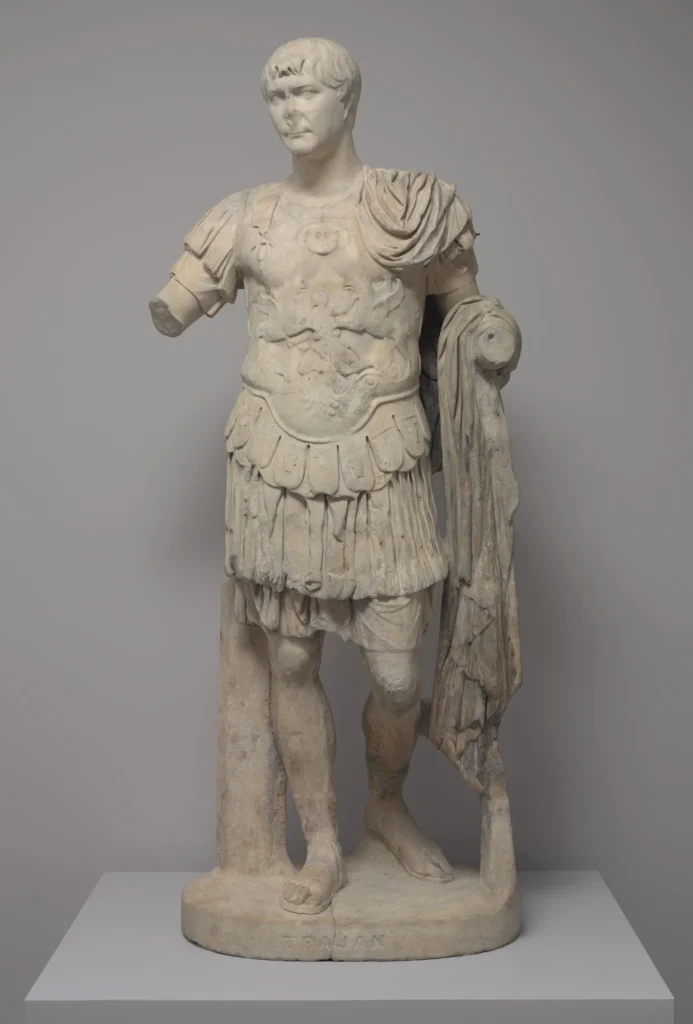
Trajan’s victory secured the Danube frontier and eliminated a persistent threat. But Dacia proved difficult to hold. Just a few decades later, under Emperor Aurelian, Rome abandoned the province as the costs of defense outweighed the benefits. The Column, however, remained, a permanent reminder of Trajan’s achievement.
Why the Column survived
Trajan’s Column survived because it was built to last and because later generations valued it. Medieval Rome treated the Column as a landmark, and in 1587 Pope Sixtus V replaced the lost statue of Trajan at the top with a bronze figure of Saint Peter, which still stands today.
In the 19th century, Napoleon III commissioned molds of the entire Column so copies could be made. The Victoria and Albert Museum acquired a plaster cast in 1864, and the museum built special galleries to house it. These casts allowed scholars and the public to study the reliefs in detail, spreading knowledge of the Column across Europe.
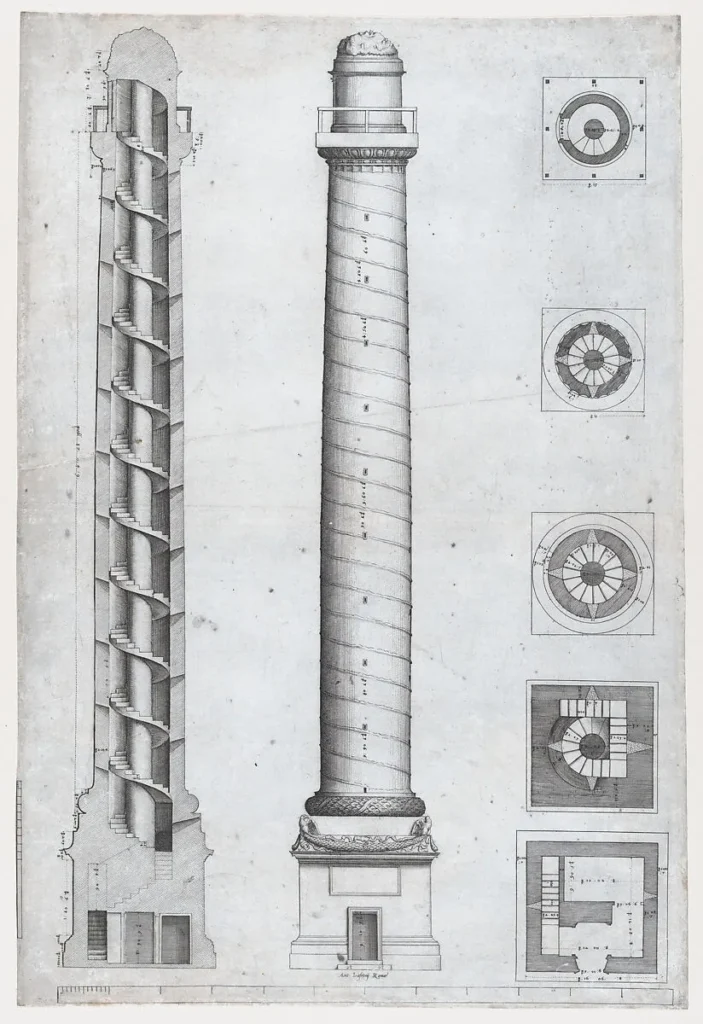
The Column’s influence extended into modern architecture. Victory columns modeled on Trajan’s design were built in cities across Europe, from London to Paris to Berlin. Each borrowed the idea of a tall monument topped with a statue, using vertical space to tell a story and command attention.
What the Column teaches today
Trajan’s Column remains essential for studying Roman art, propaganda, and warfare. Its reliefs provide detailed evidence of military equipment, from helmets and shields to siege engines and ships. They show how Roman armies moved, camped, and fought in terrain far from Italy.
The Column also teaches about power and narrative. It demonstrates how rulers used art to shape public memory and justify their actions. Every choice on the Column, from the scenes depicted to the figures emphasized, was political. Understanding those choices helps us see how propaganda worked in the ancient world and how it still works today.
For art historians, the Column is a technical masterpiece. Its spiraling composition was unprecedented, and later sculptors studied it closely. The way the reliefs balance detail with clarity, even at great height, shows extraordinary skill. The Column set a standard for narrative relief sculpture that influenced art for centuries.
The Column also raises ethical questions about empire and representation. It celebrates conquest while ignoring the suffering of the conquered. Dacians appear as brave but doomed fighters, their defeat inevitable and deserved. That perspective served Trajan’s goals but erased Dacian voices and experiences. Modern viewers must read the Column critically, recognizing both its artistic brilliance and its imperial bias.