The Etruscans painted their burial chambers with scenes of banquets, dancers, musicians, and mythological figures between the 6th and 2nd centuries BCE. These frescoes, preserved in rock-cut chambers across central Italy, reveal a civilization obsessed with celebrating life even in death. Tarquinia alone holds nearly 200 painted etruscan tombs, each a time capsule of pre-Roman Italian culture. The pigments, applied to fresh plaster, survived 2,500 years beneath the earth.
1. Tomb of the Leopards
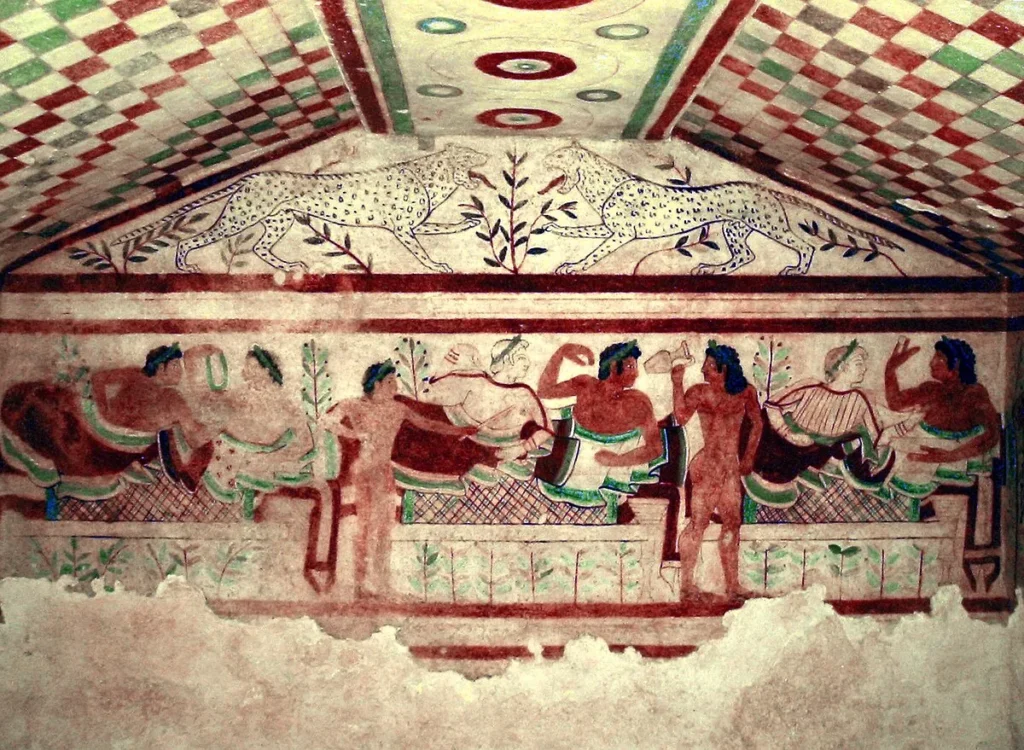
Discovered in 1875 near Tarquinia, this chamber holds the most celebrated fresco cycle in Etruscan art. Two leopards painted on the rear wall pediment gave the tomb its name. The painted symposium shows couples reclining on cushions, attended by nude servants carrying wine vessels.
The left wall depicts three male-female pairs feasting. Each diner holds an egg, symbol of rebirth in Etruscan belief. Musicians play double flutes and lyres while a young man balances a wine cup. The colors remain vivid: ochre skin tones, red-brown couches, blue-green trees painted above the banquet scene.
These frescoes occupied a tomb measuring 3.4 by 4.1 meters, cut directly into the bedrock. The chamber held the remains of an aristocratic family who commissioned the paintings around 480 BCE. Wealth enabled elaborate decoration.
2. Tomb of the Triclinium
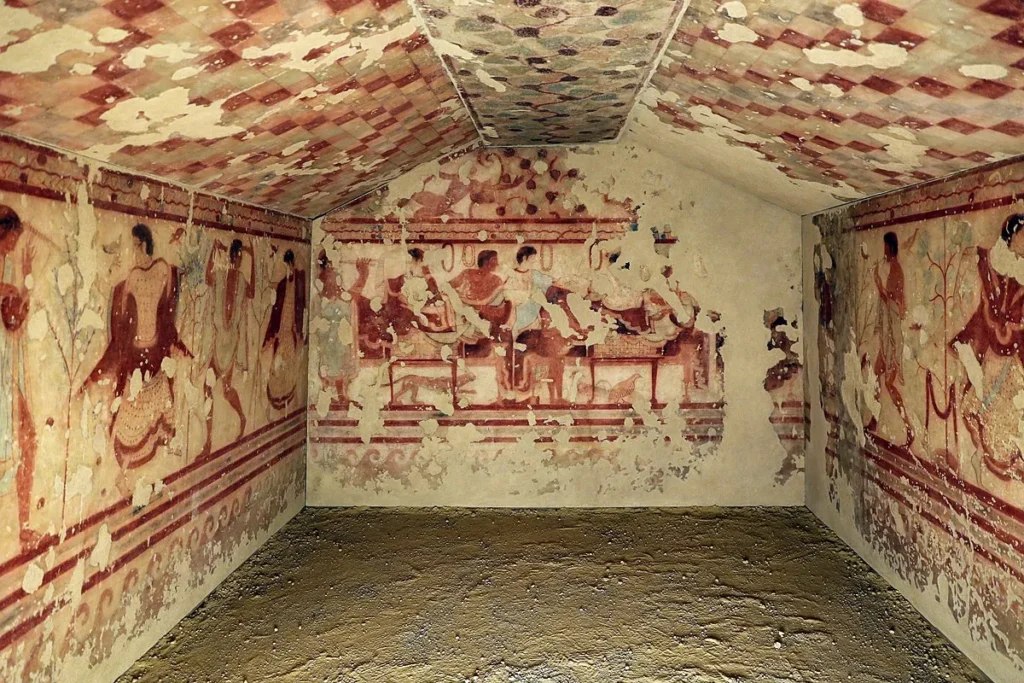
Named for the three-couch dining arrangement painted on its walls, this tomb was excavated in 1830. The frescoes show a symposium in full celebration: dancers leap between trees while musicians play. One wall preserves a flute player, a lyre player, and dancers frozen mid-step. The movement feels electric.
The pigments came from natural sources. Red ochre from iron oxide, yellow from ochre, white from chalk, black from carbon, blue-green from malachite. Artists ground these minerals and mixed them with water, applying the paint to wet plaster. The technique, called buon fresco, locked the colors into the wall as the plaster dried.
3. Tomb of the Augurs
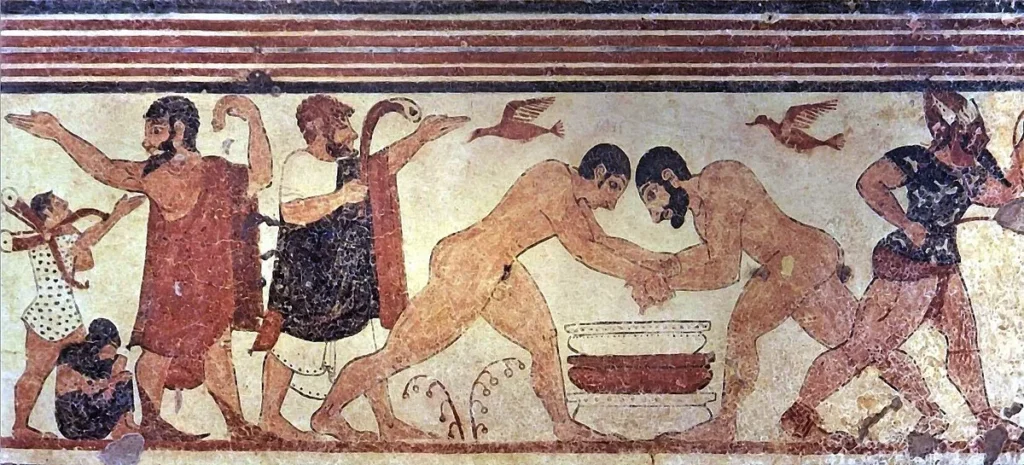
Two mourning figures flanking a doorway gave this tomb its name when discovered in 1878. Archaeologists initially interpreted them as augurs (priests who read omens), though later scholars identified them as professional mourners. The painted door creates an illusion: it appears to open into another world.
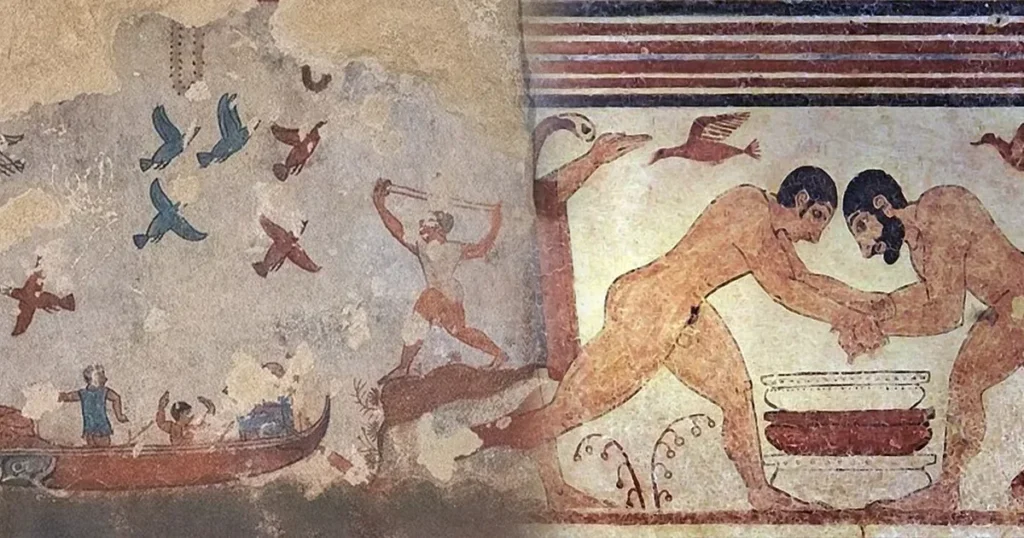
The right wall shows funeral games. Two nude wrestlers grapple while a bearded referee watches. Another scene depicts a masked figure called a Phersu holding a leashed dog that attacks a blindfolded man. This brutal game, possibly a form of ritual combat, appears in multiple etruscan tombs.
Athletic competitions honored the dead across the Mediterranean world. Greeks held games at funerals; Etruscans adopted and adapted the practice. The Tomb of the Augurs proves these games occurred in central Italy by 530 BCE, predating Roman gladiatorial spectacles by centuries.
4. Tomb of Hunting and Fishing
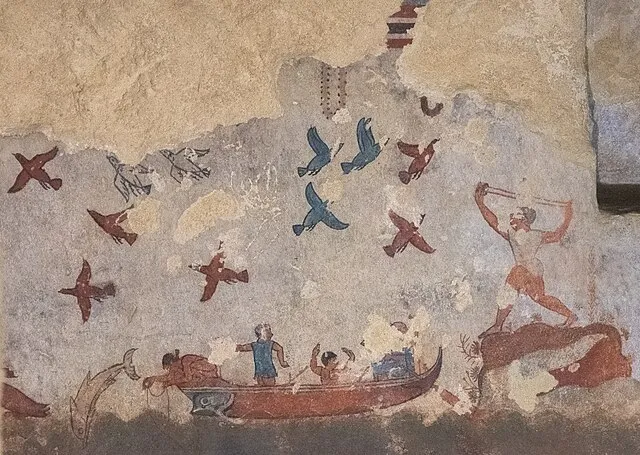
This two-chamber tomb contains the most naturalistic landscape painting in Etruscan art. The first chamber shows a symposium. The second chamber explodes with outdoor scenes: dolphins leap through blue waves, seabirds wheel overhead, and fishermen cast nets from small boats. A hunter in the upper register aims his sling at flying birds.
The marine environment dominates the composition. Waves rendered in overlapping blue-green strokes suggest movement and depth. This attention to natural setting distinguishes the tomb from others at Tarquinia, where architectural frameworks typically contain the painted figures. Here, landscape becomes the subject.
Etruscan cities controlled the Tyrrhenian coast between the 7th and 4th centuries BCE. Maritime trade built their wealth: metals from Elba, grain from Sicily, luxury goods from Greece and Phoenicia. The tomb paintings celebrate this coastal connection through fishing and hunting imagery that would have resonated with the deceased merchant family.
Enjoying Spoken Past?
I created Spoken Past to share my love of history. I research, write and develop everything myself, and I want my articles and basic guides to remain free for everyone.
If you enjoy my work, please consider supporting Spoken Past with a small donation.
5. Tomb of the Bulls
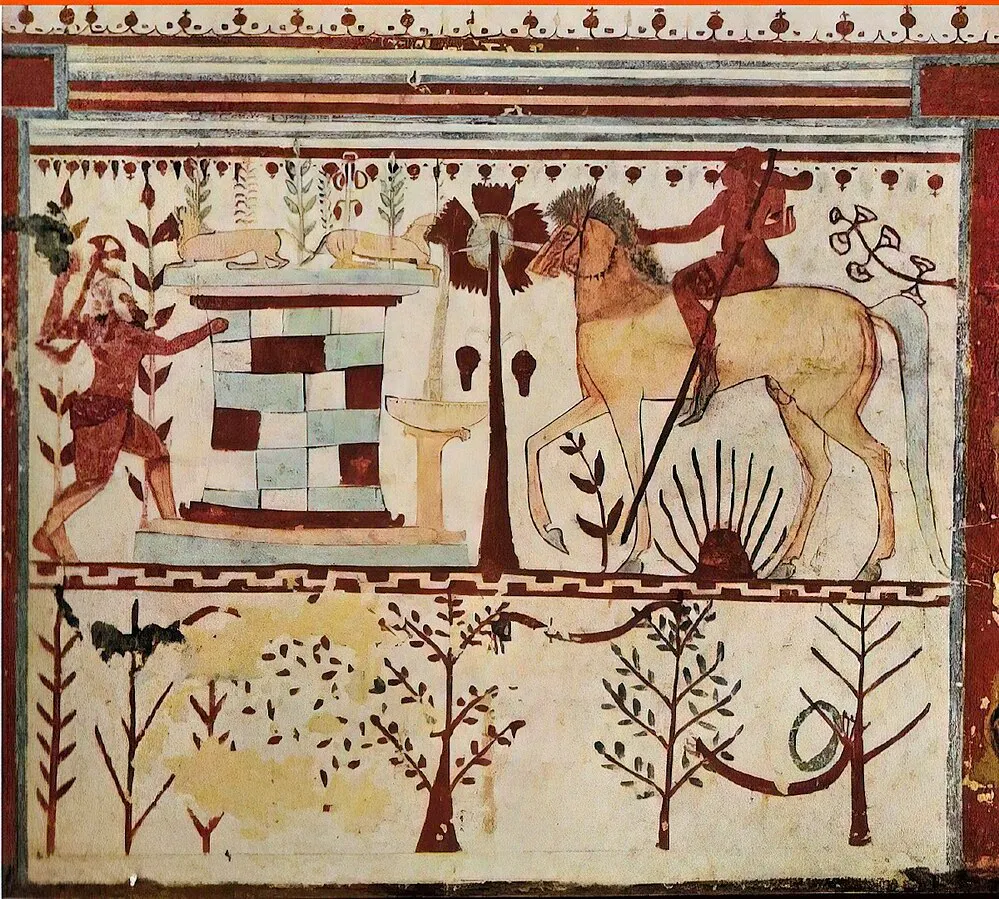
The oldest painted tomb at Tarquinia takes its name from two charging bulls painted on the rear wall. Between them appears an erotic scene: couples engaged in sexual activity. This explicit imagery shocked early excavators but represented Etruscan attitudes toward life force and regeneration.
The main wall shows Achilles waiting to ambush young Troilus, son of King Priam, during the Trojan War. Troilus rides his horse toward a fountain where Achilles hides. Greek mythology entered Etruscan visual culture through trade contact and cultural exchange. Artists adapted Greek stories, painting them in tombs alongside native subjects.
The occupant’s name appears painted on the wall: Aranth Spurianas. This detail confirms the tomb belonged to a specific individual, not a family group. Including the occupant’s name in the painted program personalized the space and ensured his identity survived his death.
6. Tomb of the Lionesses
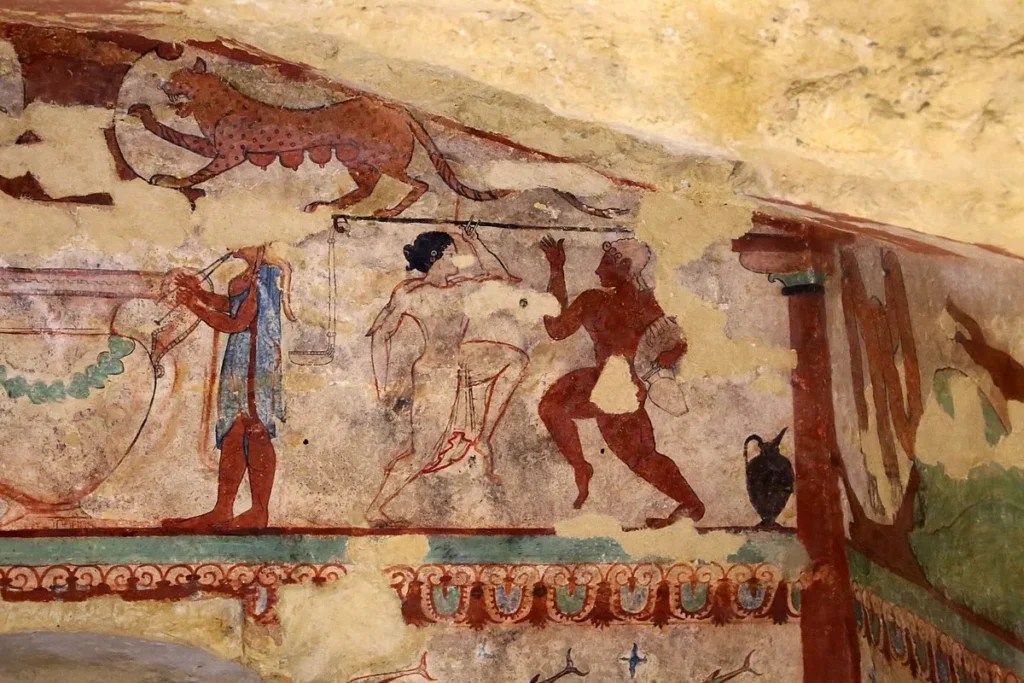
Two lionesses painted in the pediment gave this tomb its name, though panthers would be more accurate. The animals face each other across a central plant motif. Below them, the walls explode with a painted banquet: reclining diners, standing servants, and dancers performing between columns.
A female dancer occupies the left wall, her red dress swirling as she raises her arms. The male dancers on adjacent walls match her energy. Musicians accompany them: one plays double flutes, another holds a lyre. The symposium setting places the celebration in an architectural space defined by painted columns supporting a beamed ceiling.
Women appear frequently in Etruscan tomb paintings, reclining at banquets alongside men. This equal participation in symposia distinguished Etruscans from their Greek contemporaries, where respectable women did not attend male drinking parties. Etruscan gender relations allowed aristocratic women greater public visibility.
7. Tomb of the Baron
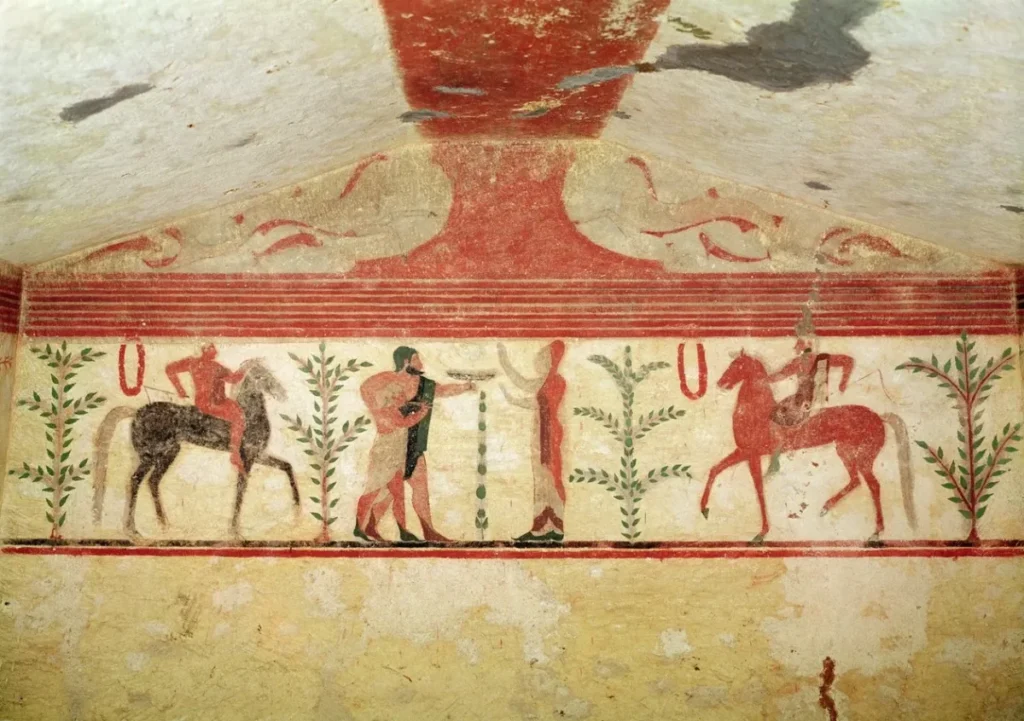
A pair of noble figures dominates the composition. On the left wall, a man and woman face each other across a small plant. The man extends his hand in a gesture of offering or farewell. Their formal poses and elaborate dress identify them as aristocrats. The woman wears a decorated tunic and pointed shoes; the man sports a short cloak.
The painting style shows Archaic Greek influence: profile faces, frontal torsos, feet in profile. The figures stand on a painted ground line against a plain background. This compositional simplicity emphasizes the human interaction rather than environmental context.
Baron Kestner, a 19th-century collector, owned watercolor copies of the frescoes, lending the tomb his name. The original chamber remains at Tarquinia. Its restrained iconography contrasts with the energetic banquet scenes in contemporary tombs, suggesting different social messages about death and memory.
8. Tomb of the Painted Vases
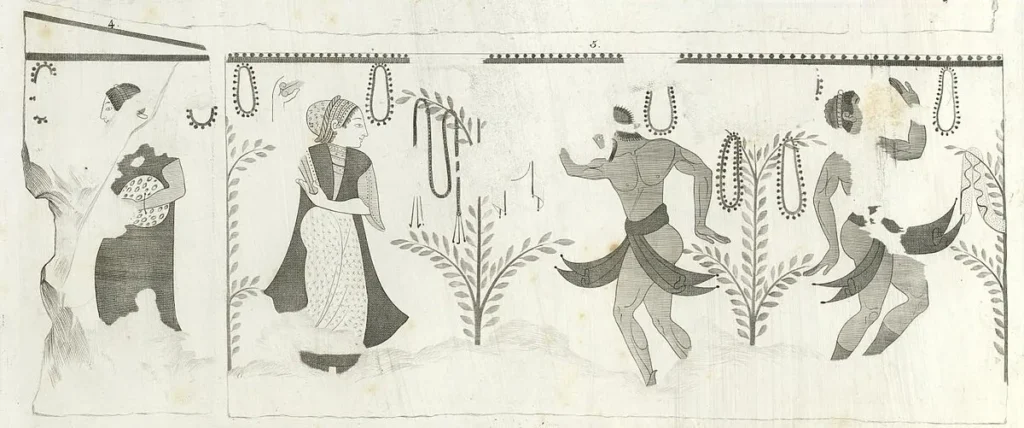
Discovered in 1867, this tomb suffered severe damage from looters in the 1960s. Thieves used chainsaws to cut painted sections from the walls, destroying large portions of the frescoes. Conservation efforts beginning in the 2010s stabilized what remained and removed salt deposits that threatened the pigments.
The ceiling displays small red four-petaled flowers against a light background. The pattern creates a textile-like effect, suggesting the tomb interior replicated a tent or canopy. Below, the walls show a banquet with dancers, musicians, and diners. Sea creatures swim across the pediment: dolphins and seahorses painted in profile.
The tomb held a family group. Multiple generations shared the chamber, their cremated remains placed in urns. The painted program celebrated their collective identity through the banquet scene, which represented social cohesion and shared meals that bound families together in life and death.
9. Tomb of the Jugglers
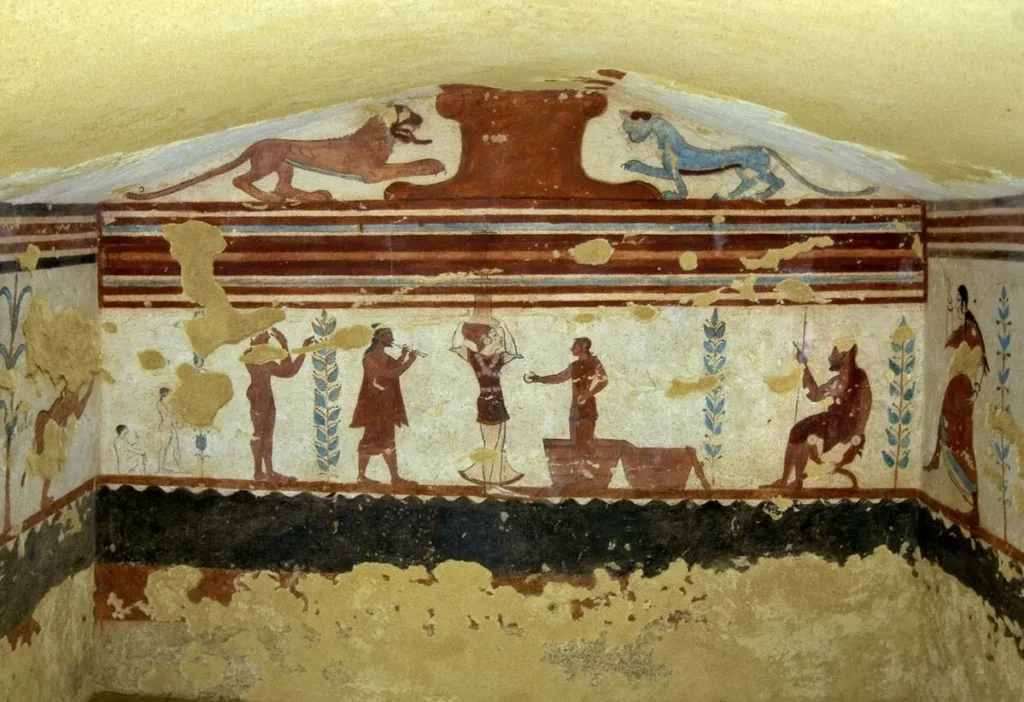
Two acrobats give this tomb its name. One performs a handstand while another juggles objects. These entertainers appear alongside the standard symposium scene: diners, musicians, dancers. The inclusion of professional performers suggests funerary celebrations involved public spectacle, not just family gatherings.
Athletic entertainment honored the dead. Jugglers, acrobats, and musicians performed during the days following death, when the body was prepared and mourners gathered. The tomb paintings froze these performances in time, ensuring the celebration continued eternally.
The chamber measures 3.8 by 4.3 meters. Artists painted the walls in sections, working from scaffolding. They sketched preliminary outlines directly on the wet plaster, then filled in colors. Corrections appear in some tombs where artists changed compositions mid-process.