The ground beside the Salaca River looks at first like a simple rise of earth, but a cut through its side exposes stacked bands of mussel shell, ash, fish bone, and pale yellow excrement compacted into dense layers. In this hillside at Riņņukalns in northern Latvia, a Neolithic community turned one spot into a long lived refuse mound, a place where meals ended, fires were cleaned out, pigments were produced, and bodies and parasites left their traces. In this context, ancient garbage dumps become archives of daily routines, showing how people ate, handled waste, and organised their settlements in ways no monument records.
Shell Middens beside Lake Burtnieks
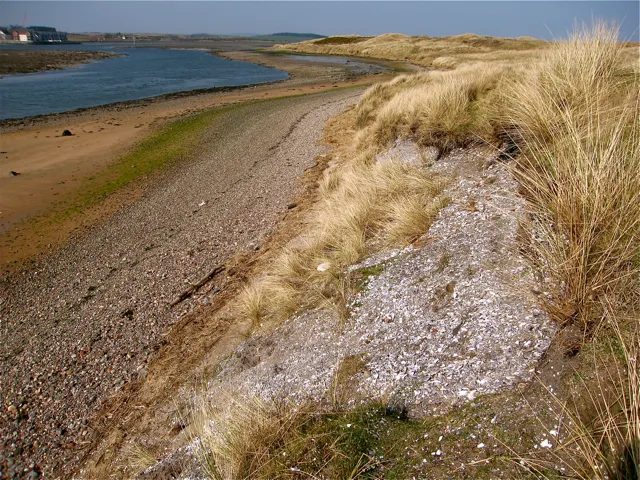
Riņņukalns stands on a narrow stretch of the Salaca River where water drains from Lake Burtnieks, in a landscape shaped by retreating ice and shifting lake levels during the early and middle Holocene. As water levels dropped, a backswamp formed along the river margin, and over time this wet ground became a focus for repeated human visits and dumping.
Initially, people used this damp zone during drier seasons, lighting fires and leaving scattered food waste and excrement in what later hardened into soil rich in bones, charcoal, and coprolites. Radiocarbon dates tie one early phase of dumping to around 5400 BC, before pottery appeared at the site, when hunter fisher groups camped on the backswamp and discarded the remains of hazelnuts, fish, and other foods into low lying ground that sometimes flooded.
Ancient Garbage Dumps at Riņņukalns
Later, during the Middle Neolithic, the same location turned into a large shell midden composed mainly of freshwater mussel shells tossed in after consumption, together with soil, small bones, charcoal, and other debris. Microscopic thin sections show that the shells usually lie in horizontal or gently sloping layers, often still connected or broken with fresh edges, a pattern that fits with heaps of waste thrown on a pile rather than material trampled underfoot.
These layers are not random mixtures. Instead, they form distinct microfacies, such as shell rich bands, ash rich layers, and concentrated deposits of excrement, each with characteristic texture and inclusions. In the area studied, there is little evidence for people living directly on top of the midden, since the shells show few signs of crushing or mixing, which suggests that this was set aside as a structured dumping place outside the main area of dwellings.
Managing Excrement and Sanitation
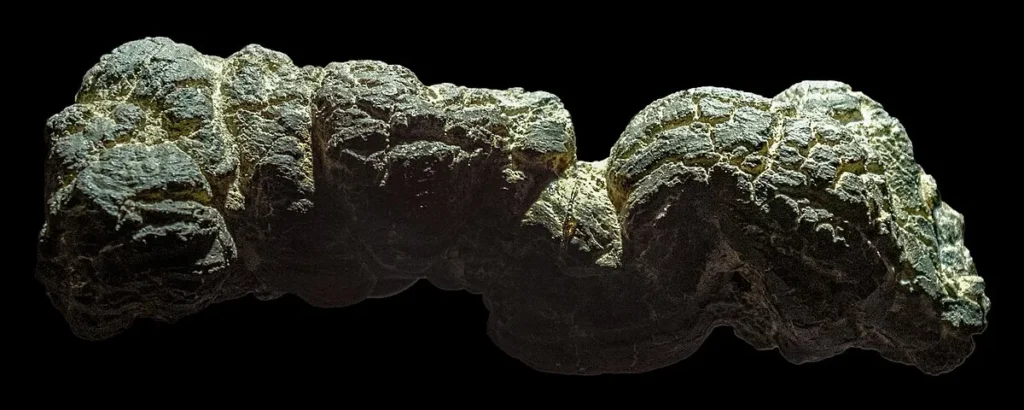
Among the most striking features at Riņņukalns are thick bands composed almost entirely of compacted coprolites, arranged in repeated microlayers of dense phosphatic material with digested bone fragments and parasite eggs. These layers spread for at least several square metres and reach several centimetres in thickness, indicating a volume of fecal waste far beyond what a single household would produce in a short time.
Microscopic study shows that the coprolite layers often alternate with thin lenses of charcoal and ash, which cap each phase of dumping like repeated episodes of cleaning and burning on the surface of the accumulated excrement. The composition of the coprolites, with abundant digested fish bone, some shell fragments, limited plant tissue, and parasite remains, points to a diet that relied heavily on aquatic resources and small seeds, and it suggests that most of the producers were humans, although some dung from dogs cannot be ruled out.
In practical terms, these deposits show deliberate separation of fecal waste from other refuse. Instead of leaving excrement scattered around the settlement, people repeatedly carried it to one area, deposited it in the same broad patch, and then used fire to stabilise or cover the surface, a level of coordinated sanitation rarely documented for such early communities.
In summary, the coprolite dumps reveal several linked aspects of life at Riņņukalns:
- They mark a communal approach to waste, where many individuals contributed to the same latrine zone over an extended period, rather than each dwelling handling waste in isolation.
- They record diet in intimate detail, since digested fish bones, occasional mammal fragments, seeds, and parasite eggs inside the dung reflect what people actually swallowed and how frequently they consumed certain foods.
- They capture routine maintenance, as the alternation of dung layers with burned surfaces shows that groups periodically cleaned or treated the area, perhaps to control smell, insects, or moisture.
Ochre, Fire, and Craft Waste
Not all layers in the midden relate directly to food or excrement. In one part of the profile, a striking band of bright red, iron rich sediment appears, with microscopic evidence that it had been heated and then dumped on top of earlier deposits. Chemical signatures and mineral forms point to local iron bearing clay that was burned to transform its minerals into red ochre, then discarded once the useful pigment had been separated.
Within this ochre rich layer lie fragments of burnt shell, burnt bone, charcoal, and rounded pieces of coprolite, showing that pigment production did not take place in isolation from other activities but intersected with cooking fires and waste handling. The presence of similar red material in nearby burials, although outside the midden itself, suggests that part of the pigment created through such firing episodes later reached graves, tying the practical work of burning clay to ritual uses of colour.
More generally, hearth rake out layers of ash and charcoal appear between shell dumps and coprolite bands, often containing burnt shell, burnt bone, and chunks of charred plant material. These layers capture the moment when a fire and its immediate surroundings were cleaned, scraping fuel remains, food debris, and soil into a heap that then joined the growing mound of refuse.
Built out of a love for history, kept free from distractions.
Spoken Past is an independent project shaped by curiosity, care, and long hours of research. Reader support helps keep it maintained, carefully researched, and open to everyone.
Middens beside Neolithic Houses at Çatalhöyük
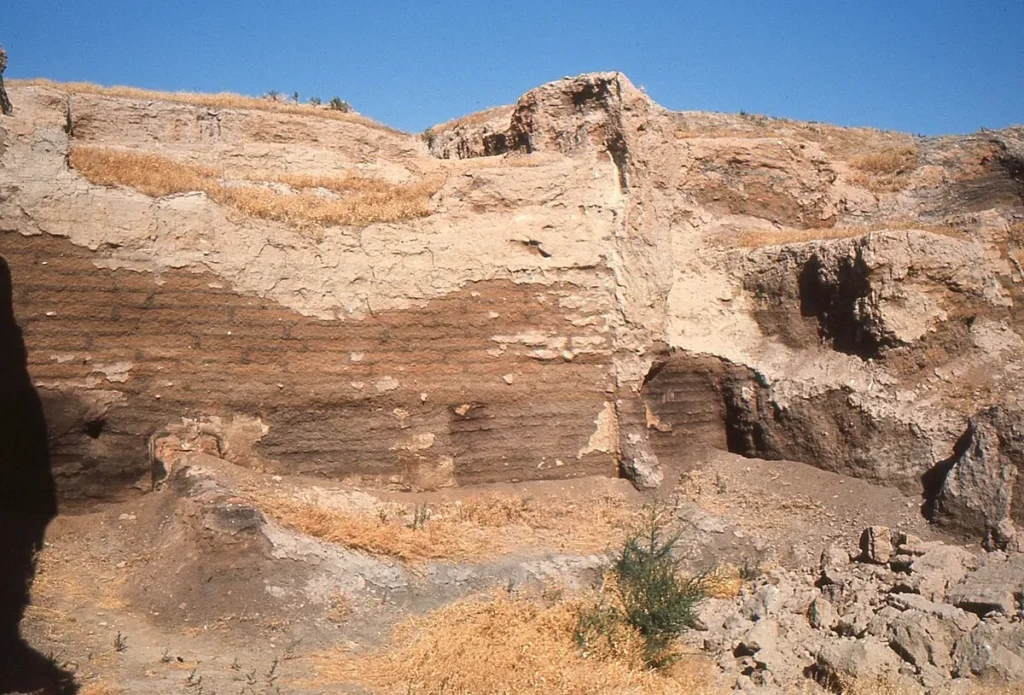
A different type of garbage deposit comes from the large Neolithic settlement known from central Anatolia, where dense clusters of houses grew around open areas filled with complex midden accumulations. These middens contain finely laminated layers of ash, plant remains, coprolites, mineral nodules, and microscopic plant silica bodies, all packed into sequences so thin that they require detailed microanalysis to separate.
Under the microscope, these deposits appear as stacked thin bands, some rich in ash, some darker with organic matter, and others marked by concentrations of particular minerals such as gypsum. Chemical and mineralogical analysis shows that many layers share a similar basic composition of calcite, quartz, and clays, yet small variations in phosphate or sulphate content reveal changes in what was dumped and how the deposits later altered.
Plants, Food, and Seasonality in Trash
One of the most telling finds from these Anatolian middens is the presence of well preserved hackberry pericarps, the hard outer part of small fruits that survived due to their mineral composition. Infrared and X ray studies identify these pericarps as aragonite, a crystalline form of calcium carbonate, confirming that the fruits came from a tree that produces durable, stone like shells around its seeds.
In one example, hackberries lie embedded within a suspected coprolite, and the orange material inside the seeds consists mainly of phosphate, which shows that mineral rich contents infiltrated the fruit interior after deposition. Together, the concentration of hackberries in refuse and their presence in dung indicate that residents ate these small fruits and that the dumps preserve both the remains of the fruits themselves and the by products of digestion.
Phytoliths, the tiny silica casts of plant cells, provide another window into daily practice. Multicell phytoliths from reeds and other plants, analysed by infrared spectroscopy and electron microscopy, show that people burned or discarded plant materials that once served as fuel, construction elements, or matting, leaving microscopic silica signatures in the midden layers.
Lists of individual microlayers from these middens show how often specific combinations recur, for example ash rich bands with plant silica, or layers where phosphate peaks signal organic rich deposits that include dung. Although the layers look quite varied to the naked eye, chemical spectra reveal that many share similar mineral mixes, implying that daily routines of cooking, fuel use, and dumping changed only in small ways over time.
Reading Daily Lives in Ancient Garbage Dumps
Taken together, the shell rich mound at Riņņukalns and the complex middens beside houses in central Anatolia show how much ancient garbage dumps can tell about routine acts that written texts from before 1000 AD never describe. In Latvia, backswamp soil records early seasonal camps, followed by a carefully organised midden where shells, excrement, ash, and craft waste accumulated in ordered sequences, revealing communal sanitation practices, dietary focus on river and lake resources, and pigment production tied to social rituals.
In Anatolia, tightly layered refuse around houses preserves traces of fruit consumption, reed use, dung disposal, and fire maintenance, captured in the chemistry of hackberry pericarps, phytoliths, coprolites, and ash bands. Although many details of social organisation, belief, and individual stories remain uncertain, the structure and contents of these deposits show that people were already coordinating how they placed waste in the landscape, making ancient garbage dumps essential sources for the hidden daily lives behind more formal remains.
Sources and further reading
- Kleijne, J. P., Brzi, V., Huisman, D. J., Meadows, J., and colleagues. “No time to waste. Evidence for communal waste management among hunter gatherer fishers at Riņņukalns, Latvia 5400–3200 BC.” Quaternary Environments and Humans 2 (2024): 100003. View here.
- Shillito, L. M., Almond, M. J., Nicholson, J., Pantos, M., Matthews, W. “Rapid characterisation of archaeological midden components using FT IR spectroscopy, SEM EDX and micro XRD.” Spectrochimica Acta Part A: Molecular and Biomolecular Spectroscopy 73 (2009): 133–139. View here.
- Shillito, L. M., Matthews, W., Almond, M. J., Bull, I. D. “The microstratigraphy of middens: capturing daily routine in rubbish at Neolithic Çatalhöyük, Turkey.” Antiquity 85 (2011): 1024–1038. View here.