
When a young Roman magistrate named Gaius Verres returned from governing Sicily in 71 BCE, he made a critical mistake. He failed to submit his financial accounts to the treasury. For three years, the Senate waited. The quaestors who served under him had already appeared and rendered their books, yet Verres kept stalling. His excuse? He was waiting for the quaestors. But everyone knew the truth: his account books would reveal a trail of embezzlement, bribery, and corruption stretching across three years of provincial administration. The orator Cicero would eventually expose these crimes in court, but the case revealed something equally important about how Rome actually worked. Roman quaestors, despite being the lowest-ranking magistrates, controlled access to provincial treasury funds through a sophisticated system of financial oversight that would make modern auditors nod in recognition.
The Roman treasury wasn’t managed by professional bureaucrats with decades of experience. It was supervised by young aristocrats, typically in their late twenties, serving brief terms as stepping stones to higher office. Yet somehow this system administered an empire’s finances. The answer to this paradox lies in understanding what Roman quaestors actually did, who performed the real accounting work, and how the entire system of Roman financial administration created checks and balances that could catch even a corrupt governor.
What Roman Quaestors Actually Did
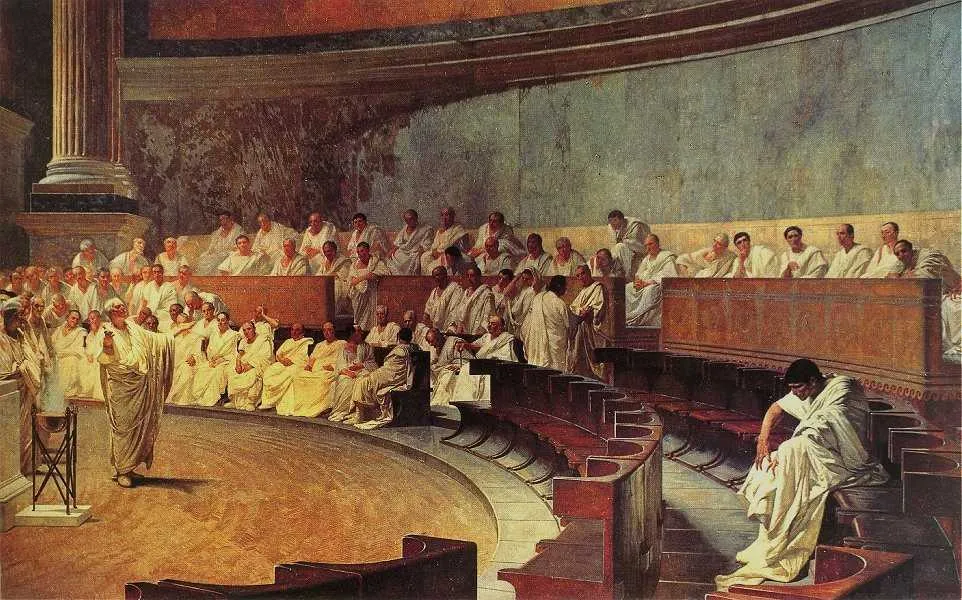
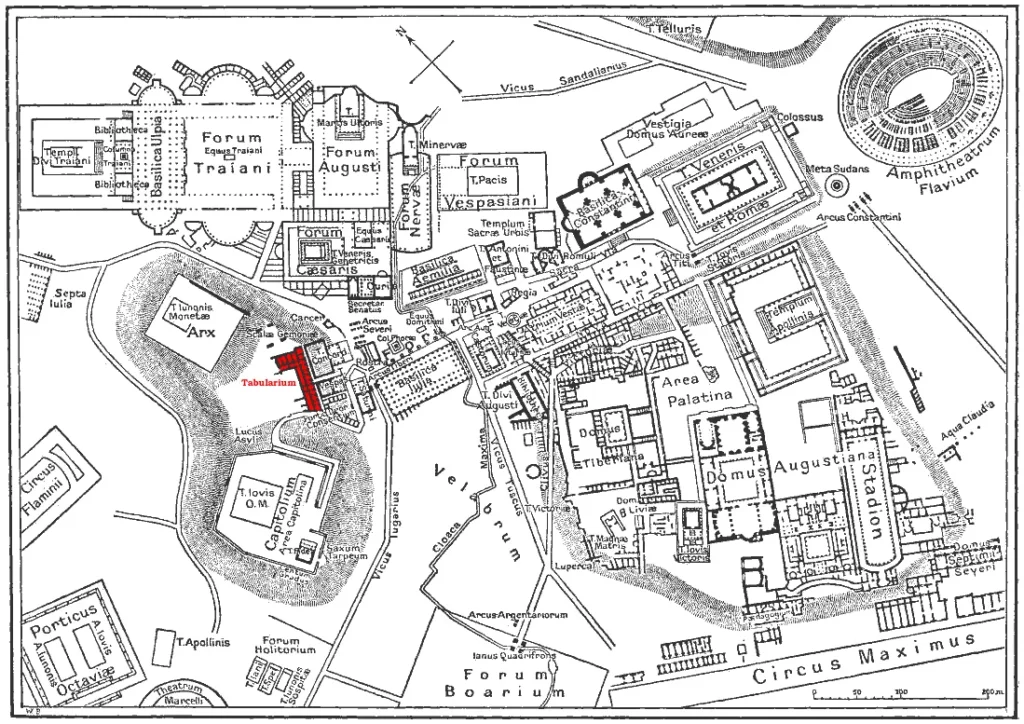
The position of quaestor dates back to the earliest days of the Roman Republic, possibly as far as 508 BCE. Initially, the consuls themselves appointed two quaestores aerarii (treasury quaestors) to supervise the aerarium, the state treasury housed in the Temple of Saturn at the base of the Capitoline Hill. By 447 BCE, Romans were regularly electing quaestors through the Tribal Assembly. As Rome’s territorial ambitions grew, so did the number of quaestors. Four served by 421 BCE, ten by 197 BCE, and twenty under the dictator Sulla in 81 BCE.
These magistrates fell into distinct categories. The quaestores urbani remained in Rome, overseeing the aerarium’s operations, managing state archives, and supervising contracts with private companies for public works construction and tax collection. The consular quaestors (quaestores classici) accompanied army commanders on military campaigns, administering military finances and accounting for captured booty. Some stationed themselves in Italian towns to collect revenues or support the Roman navy. The quaestor at Ostia, Rome’s port city, handled functions related to the vital grain supply that kept the capital fed.
Provincial quaestors (quaestores provinciales) emerged by 197 BCE as Rome’s territorial expansion created permanent provinces requiring ongoing financial supervision. These officials assisted provincial governors and supervised financial administration throughout their assigned territories. In smaller provinces, quaestors sometimes served as governors themselves, wielding both administrative and financial authority.
The scope of quaestor responsibilities touched nearly every aspect of Roman treasury administration. They oversaw revenue collection from various sources including taxes, customs duties, and rents on public lands. They managed disbursements to higher-ranking magistrates, especially consuls and praetors. They supervised agreements with societates (contractor companies) hired for public works and with publicani (tax farmers) who collected provincial taxes. They maintained custody of state funds and archives. When military campaigns produced booty and prisoners, quaestors handled the accounting.
An example from the historian Polybius illustrates this last duty. Following the Roman conquest of a city in Carthaginian Iberia, the commanding general separated the captured craftsmen and told them they were prisoners of Rome for the present. He then ordered them to get their names enrolled in the office of the quaestor. This wasn’t mere record-keeping. It was the foundation of Roman financial audits that would track every prisoner, every item of plunder, every coin collected, ensuring accountability for public resources.
Provincial Roman Quaestors and Financial Control Systems
Provincial financial administration presented unique challenges. Governors wielded enormous power far from Rome’s direct oversight. They commanded armies, dispensed justice, managed tax collection, and controlled significant funds. Without proper checks, the temptation for corruption proved irresistible. The system of provincial quaestors provided one crucial safeguard.
When Rome conquered new territories, it established provinces governed by former consuls or praetors serving as propraetors or proconsuls. Each governor received a quaestor to manage financial matters. This wasn’t a subordinate relationship in the modern sense. Quaestors were independently elected magistrates with their own constitutional authority. They answered to Rome, not to the governor they served alongside.
The financial controls worked through a system of mandatory account rendering. Provincial magistrates, both governors and quaestors, were expected to submit detailed financial accounts to the aerarium upon completing their terms. These accounts had to match. The governor’s records of funds received and expended needed to correspond with the quaestor’s independent accounting. Discrepancies triggered investigations.
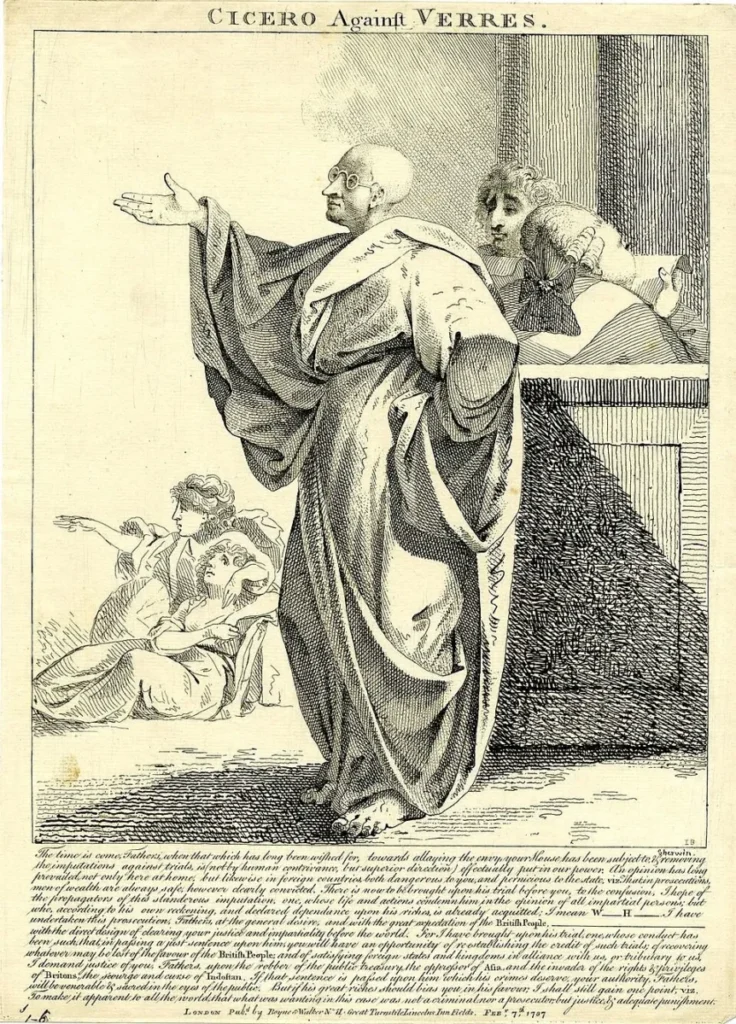
Cicero’s prosecution of Verres in 70 BCE provides the most detailed surviving description of this auditing provincial accounts process. Verres had served as governor of Sicily from 73 to 71 BCE. When he finally appeared before the treasury officials, his accounts showed massive irregularities. Cicero examined the books forensically, comparing entries between different magistrates’ records. He found that “the sum which Dolabella entered to Verres as having been received from him, is less than the sum which Verres has entered as having been paid to him by four hundred and thirty-five thousand sestertii.” The discrepancy was staggering, equivalent to the annual grain tribute from a significant Sicilian community.
The accounting system used a form of double-entry verification where both parties to a transaction recorded it in their books. This practice, called nomina transcriptitia (recording of names), created a paper trail that could expose fraud. Cicero repeatedly challenged Verres by pointing to contradictory entries: “you had quite a different entry in your account-books.” The forensic audit proceeded “article by article” through the accounts, methodically exposing where official records diverged from reality.
This wasn’t accounting for accounting’s sake. It was financial control designed to prevent exactly what Verres had done: systematic theft of public funds, extortion from provincials, embezzlement of tax revenues, and falsification of records. The system worked because it created multiple independent records that auditors could cross-reference.
The Real Accountants: Who Actually Did the Work

Here’s where the Roman system reveals its sophistication. Young aristocrats elected as quaestors typically had zero accounting experience. They were politicians on the cursus honorum, the ladder of offices leading to the consulship and ultimate political power. Most were in their late twenties. Before Sulla’s reforms, the minimum age was twenty-seven after completing ten years of mandatory military service. Sulla raised it to thirty.
These men were honorific office holders (dignitas), not professional administrators (administratio). They served one-year terms, maybe two, then moved on to the next political position. They had neither the expertise nor the incentive to master the technical details of treasury management. One ancient source estimated that returning magistrates often struggled to understand their own accounts, needing orientation and assistance.
So who actually performed the accounting work that controlled Rome’s finances? The scribae quaestori, professional clerks organized into a permanent civil service corps. These were the real accountants of the Roman treasury.
The scribae (singular: scriba) formed an elite professional class within Roman society. They weren’t slaves or low-status functionaries. Entry into the ordo scribarum (order of scribes) was restricted to freeborn citizens. The scribae quaestori, those assigned to the treasury quaestors, occupied the highest tier of this professional bureaucracy. They were organized into three decuriae (divisions) that rotated annually to serve the quaestors, providing continuity as elected magistrates came and went.
Unlike the aristocratic quaestors who served briefly before pursuing higher office, scribae made careers of treasury administration. They possessed institutional memory, technical expertise, and knowledge of laws and procedures accumulated over decades. When a new quaestor took office, he was “expected to receive administrative orientation from treasury staff.” The scribae taught him what he needed to know. In many cases, they effectively ran the aerarium while the quaestor provided political authority and social legitimacy.
The historian Badian observed that the power of the ordo scribarum “was clearly considerable, remarkably so, for a body of small size and consisting of men of humble origin.” This power derived specifically from the scribae quaestori. “It was they who, in fruitful collaboration with the magistrates and promagistrates to whom they were attached, could hope to advance to equestrian dignity, and who, in the absence of such collaboration, might hold their superior’s fate in their hands.”
That last phrase is telling. Scribae could make or break a quaestor’s career. They controlled the accounts, maintained the records, knew where the bodies were buried. A quaestor who antagonized his scribae might find his accounts mysteriously difficult to reconcile, his reports delayed, his requests for information ignored. Cooperation brought rewards. The highest-ranking scribae quaestori could parlay their service into patronage relationships with powerful magistrates, eventually gaining admission to the equestrian order and the gold ring that marked elevated social status.
Plutarch’s biography of Cato the Younger provides a vivid example of quaestor-scriba dynamics. Unlike typical quaestors, Cato actually prepared for the position. He “would not become a candidate until he had read the laws relating to the quaestorship, learned all the details of the office from those who had had experience in it, and formed a general idea of its power and scope.” Most quaestors didn’t bother. They relied entirely on their scribae.
When Cato took office around 65 BCE, he immediately clashed with the treasury staff. The scribae “received as their superior officers young men whose inexperience and ignorance made it really needful that others should teach and tutor them, they would not surrender any power to such superiors, but were superiors themselves.” Cato moved to make “great change to the assistants and clerks” despite the staff being “fully conversant with the public accounts and the laws relative thereto.”
Plutarch portrays Cato as uncovering corruption, removing dishonest scribae, even prosecuting some. Modern scholarship suggests this may also have been political cover for patronage to scribae Cato favored. Either way, the incident reveals the reality of treasury operations. The scribae held the expertise and institutional power. Quaestors who understood this worked with them. Those who fought them, like Cato, created enormous disruption.
After his term ended, Cato continued sending slaves to the aerarium to copy financial documents. This wasn’t casual interest. It was recognition that the real accounting knowledge resided in those archives maintained by the scribae quaestori, and that access to that information meant power.
Built out of a love for history, kept free from distractions.
Spoken Past is an independent project shaped by curiosity, care, and long hours of research. Reader support helps keep it maintained, carefully researched, and open to everyone.
How Account Books and Financial Records Created Control
Roman financial control depended on physical records. Without computers or digital databases, everything had to be written down, preserved, and available for audit. The media Romans used tells us much about both the possibilities and limitations of their system.
Most Roman accounts were kept on wax tablets (tabulae ceratae), thick wooden frames hollowed out to hold wax on which scribes wrote using metal styluses. Multiple tablets could be bound together into a codex, creating a multi-page account book. In provinces with plentiful wood, thinner wooden leaf tablets with ink writing served the same purpose. These materials were inexpensive and reusable, perfect for day-to-day accounting needs.
The problem? They rarely survived. Wax disintegrated over centuries. Wood rotted. Even when archaeological excavations uncover ancient tablets, the wax has usually disappeared, leaving only faint stylus impressions in the wood if we’re lucky. This explains why so few actual Roman accounting records survive despite literary sources confirming accounts were kept for family estates, public offices, banking activities, and commercial ventures throughout Roman history.
For permanent records requiring long-term preservation, Romans used more expensive materials like papyrus, parchment, or even bronze for the most important state documents. But cost limited their use. Most quaestor account books used wax tablets for working accounts, only transferring critical information to permanent media.
The accounting process itself followed recognizable patterns. Sources describe a two-stage system. Daily transactions were recorded in an adversaria (daybook or memorandum book). Periodically, scribes transferred these entries to a more permanent codex accepti et expensi (book of receipts and expenditures). This codex functioned as the official account book.
Cicero’s courtroom oratory provides details about the legal significance of this system. In defending the actor Quintus Roscius in a contract dispute, Cicero addressed the evidentiary value of different types of records. When opposing counsel tried to introduce evidence from adversaria (memoranda) rather than the formal account books, Cicero objected strenuously: “Are you so fond of yourself, have you such a magnificent opinion of yourself, as to ask for money from us on the strength, not of your account books, but of your memoranda?”
He continued: “To read one’s account-books instead of producing witnesses, is a piece of arrogance, but is it not insanity to produce mere notes of writings and scraps of paper? If memoranda have the same force and authority, and are arranged with the same care as accounts, where is the need of making an account-book? of making out careful lists? of keeping a regular order? of making a permanent record of old writings.”
The distinction mattered because Roman law recognized properly maintained account books as legal evidence. The transfer from adversaria to codex wasn’t just bookkeeping; it was the creation of a legal record. Cicero hammered this point: “Every one else who makes up account-books transfers his accounts every month” from memoranda to formal books. Failure to make this transfer within reasonable time suggested fraudulent intent.
For public accounting, the stakes were higher. Magistrates returning from provincial service had to submit accounts that could be audited years later. The senate decree required governors to render accounts “immediately on leaving office.” Verres’s three-year delay was itself evidence of wrongdoing. When he finally submitted accounts, the discrepancies Cicero found weren’t mere clerical errors. They were systematic falsification designed to conceal theft.
The physical aerarium housed both treasury funds and state archives. Though scholars debate whether it truly functioned as an archive in the modern sense, magistrates were required to deposit their accounts there. This created a permanent record accessible to future auditors. The “small, boxy temple” of Saturn couldn’t possibly hold centuries of accumulated records for every magistrate, suggesting accounts were periodically reviewed and less important ones discarded or moved elsewhere, but the principle remained: public accounts were public records, subject to inspection and audit.
The Transformation Under Augustus
Everything changed when Augustus transformed the Republic into the Principate beginning in 27 BCE. The role of quaestors, particularly the urban quaestors managing the aerarium, began to ebb as the emperor centralized financial control.
The transition happened gradually but decisively. In 45 BCE, Julius Caesar had appointed forty quaestors to send to the provinces but assigned two aediles (the next-highest rank of magistrate) responsibility for managing the public treasuries. In 29 BCE, Octavian (not yet called Augustus) replaced the quaestors aerarii with two praefecti of praetorian rank. This arrangement persisted until 44 CE.
More fundamentally, Augustus transformed the entire basis of Roman treasury management. During the Republic, the aerarium had been the state treasury, supervised by quaestors who answered to the Senate. Augustus gradually co-mingled his personal wealth with state funds, creating the fiscus (imperial treasury). The term “fiscus” originally just meant “basket where money was kept,” but under Augustus it evolved to mean the emperor’s treasury, eventually absorbing functions previously belonging to the aerarium.
This required a complete restructuring of the civil service. Augustus couldn’t rely on annually rotating quaestors and politically powerful scribae. He needed permanent, loyal administrators who would serve imperial interests directly. The solution was to staff the new fiscal administration with members of the familia Caesaris (Caesar’s household): the emperor’s freedmen and slaves.
This wasn’t the degradation it might appear to modern eyes. Imperial freedmen could wield enormous power. The a rationabus (the emperor’s personal accountant) became one of the most important figures in the empire, effectively controlling “fiscal administration throughout the whole empire.” Below him, procuratores administered the emperor’s estates, villas, and properties throughout Italy and the provinces, also serving in administrative departments in Rome and provincial centers.
The system became departmentalized and professionalized in ways impossible under the Republic. Specialized officials handled specific functions: aqueducts, libraries, the postal system, roads, public works, imperial mines, marble quarries, the mint. Each department had its own accounting staff. The tabularii (archivists and record-keepers), especially the tabularius a rationabus and tabularius provincia, became senior positions from which officials could be promoted to procurator.
Augustus could now do something inconceivable under the Republic: prepare aggregated accounts for the entire state. When he died in 14 CE, the Senate read several documents he had prepared. One was a breviary (summary) listing imperial revenues, military disposition, money in the treasury, arrears of taxes, and the names of freedmen and slaves responsible for various accounts. The historian Suetonius noted that “Augustus had written all these details with his own hand.”
Whether this represented regular fiscal planning and budgeting or merely a final accounting is debated. The sudden appearance of aggregated state accounts after Augustus’s death suggests these weren’t routine reports but rather extraordinary documents prepared for succession planning. Still, the capability existed in a way it never had when dozens of independently elected quaestors managed separate provincial accounts with minimal coordination.
The Res Gestae Divi Augusti (Deeds of the Divine Augustus), inscribed on columns at Augustus’s mausoleum, provides further evidence of accounting under the early Principate. This autobiographical text detailed military and political achievements but also included precise financial accounting: “I gave to three hundred and twenty thousand of the city plebs sixty denarii apiece. In the colonies of my soldiers, as consul for the fifth time, I gave one thousand sestertii to each man from the spoils of war; about one hundred and twenty thousand men in the colonies received this triumphal largesse.”
These weren’t vague approximations. They were specific figures derived from actual accounting records. The imperial bureaucracy could now track expenditures across the empire with unprecedented precision. The system had evolved from informal coordination among independent magistrates to centralized fiscal administration under imperial control.
Yet this transformation created its own problems. The old Republican system, for all its inefficiencies, included built-in checks against corruption through multiple independent record-keepers and mandatory audits. The imperial system concentrated power in the emperor’s hands. If the emperor himself was corrupt or incompetent, or if his freedmen administrators abused their positions, who would stop them? The answer, increasingly, was no one. This contributed to fiscal crises under later emperors like Nero, whose spending outstripped even Rome’s vast resources, ultimately leading to currency debasement and the economic chaos of the Third Century Crisis.
Why This System Worked (When It Did)
The Roman financial control system succeeded not through sophisticated accounting technology but through multiple layers of independent verification. Provincial quaestors created records separate from governors. Urban quaestors audited accounts returned from the provinces. Scribae maintained institutional knowledge and continuity. Account books served as legal evidence subject to forensic examination in court.
The system’s strength lay in its redundancy. A corrupt governor like Verres couldn’t simply falsify his own accounts. He also needed to falsify the quaestor’s accounts. He had to ensure that both sets of books, maintained by different people with different political loyalties, told the same false story. He had to avoid discrepancies that would trigger audits when the accounts reached Rome. He had to fool the scribae quaestori who had decades of experience spotting suspicious entries.
Verres failed on all these counts. The account books from his governorship and his earlier service as quaestor contained contradictions that Cicero could exploit. The very existence of these contradictory records proved the control system worked. If Verres had complete control over all the accounts, there would have been no contradictions to discover. The fact that independent record-keeping exposed his crimes validated the entire approach.
The system also worked because it aligned incentives. Quaestors aspiring to higher office couldn’t afford scandals. Even though they served short terms, their accounts remained subject to audit for years afterward. A quaestor discovered to have fraudulent accounts faced not just legal penalties but destruction of his political career. For ambitious aristocrats on the cursus honorum, maintaining clean accounts was essential to future advancement.
Scribae had their own incentives for accurate record-keeping. Their professional reputations depended on it. A scriba quaestori who produced sloppy accounts wouldn’t advance to the equestrian order or gain patronage from powerful magistrates. Moreover, the scribae rotated through different quaestors annually but remained part of the permanent ordo. If a particular scriba’s accounts consistently showed problems, his colleagues would notice. Peer pressure within the professional community encouraged accuracy.
The publicity of the audit process created additional accountability. When Cicero prosecuted Verres, he did so in open court with the account books as evidence. Anyone could examine the discrepancies. This wasn’t bureaucratic secrecy but forensic transparency. The threat of public exposure deterred many potential frauds before they started.
Of course, the system had limits. It worked best when the Senate maintained real oversight authority over magistrates. It worked when scribae remained independent professionals rather than political clients. It worked when enough honest magistrates existed to staff audit functions. When these conditions broke down, as they increasingly did in the late Republic’s civil wars and under autocratic emperors, financial controls weakened.
The transformation under Augustus traded republican checks and balances for imperial efficiency. The new system could compile empire-wide financial data in ways impossible under the Republic. It could plan expenditures and allocate resources across vast territories. But it concentrated power in fewer hands, making the entire system vulnerable to corruption or incompetence at the top. The choice between distributed accountability and centralized control is one governments still grapple with today.
Understanding how Roman quaestors controlled provincial treasury access requires looking past the young aristocrats who held the title to the professional scribae who did the actual work, examining the physical account books that created legal evidence, and recognizing that financial control depended less on sophisticated accounting methods than on multiple independent record-keepers whose accounts could be cross-checked against each other. The system worked through redundancy, transparency, and aligned incentives. When Verres tried to steal from the provinces, he left traces in the very accounting systems designed to catch him. That Cicero could prosecute the case using contradictory account books as evidence proves the Roman quaestors, backed by their scribae, could indeed control access to provincial treasury funds. Not perfectly, but effectively enough to sustain an empire.
References
Poitras, G. “More on Public and Private Roman Accounting History.” Accounting History 25, no. 7 (2006). https://www.sfu.ca/~poitras/AH_25-7.pdf