
In 705 AD, the Emperor Justinian II returned to Constantinople after a decade of exile with a prosthetic nose made of gold. His original had been cut off by his enemies a decade earlier, a deliberate act designed to end his political career forever. It failed spectacularly. His comeback so unsettled the political class that within a generation, Byzantine rulers switched their preferred method of neutralizing rivals entirely. Cutting off noses, it turned out, was not reliable enough. Byzantine blinding became the new tool of choice, and it would remain so for the next eight centuries. This article examines why emperors made that switch, how the practice worked in precise medical and legal terms, and what it reveals about the surprisingly sophisticated constitutional logic underpinning one of history’s most durable empires.
The Constitutional Problem Every Byzantine Emperor Faced
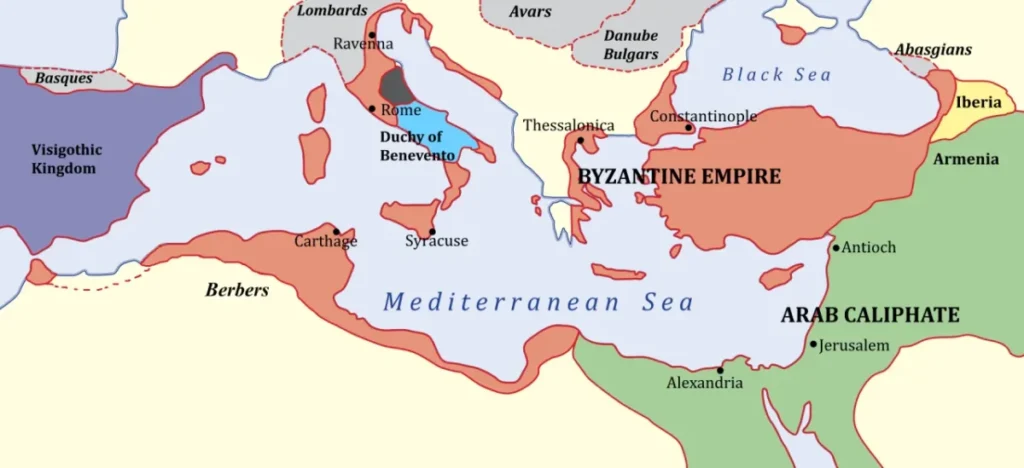
The Byzantine Empire ran on an idea that was both powerful and perpetually destabilizing. The emperor was not merely a king. He was God’s chosen representative on earth, the living embodiment of divine order. Byzantine political theology held that only the most worthy man could occupy the throne, and worthiness was not abstract. It was physical.
Professor Karayiannopoulos, whose scholarship on Byzantine state formation remains foundational, articulated the principle clearly: according to Byzantine imperial reasoning, only the best man might aspire to be emperor. But what constitutes the best? The answer, embedded in centuries of legal custom and theological tradition, was bodily integrity. A man with all his faculties intact was a man capable of embodying divine perfection. A man who was mutilated was not.
This created a constitutional mechanism with no obvious parallel in Western medieval governance. In England or France, a deposed king remained a king in the eyes of many, his blood legitimacy intact regardless of physical condition. In Byzantium, the body itself was a legal document. Damage it severely enough, and you effectively cancelled the document.
The practical consequence was enormous. An emperor who wanted to remove a rival permanently had two options: kill him, or damage him so thoroughly that the law and custom of the empire would never permit him to rule again. The Lascaratos and Marketos study published in Documenta Ophthalmologica puts the constitutional rationale plainly, noting that mutilation was enforced “not as an instance of barbarous ethics and inhumanity, but with a deeper constitutional rationale.” Blinding was, in this framework, a form of legal disqualification expressed through surgery.
Why Killing Was Often the Worse Option
Executing a rival emperor was not without serious risk. It invited accusations of tyranny, alienated the church, and could trigger the very instability it was designed to prevent. A blinded man, by contrast, was visibly, permanently, and publicly disqualified. He could not lead troops who would never follow a blind general. He could not project imperial majesty before a court that believed physical perfection was divinely mandated. He was neutralized without being martyred.
The Byzantine chronicler Zonaras captured the logic in a single sharp observation, writing of two rivals blinded under Constantine VII: they “lost both their happiness and their lust for kingship or imperial authority.” The blinding did not merely incapacitate them physically. It severed their psychological and legal connection to power simultaneously.
From Nose-Cutting to Eye-Gouging: How Byzantine Blinding Became Standard Practice
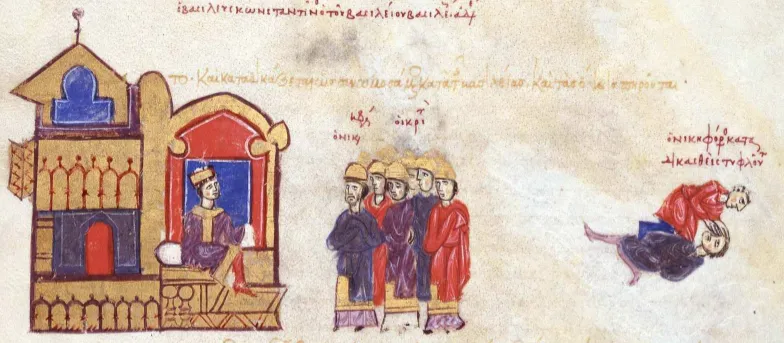
The history of political mutilation in Byzantium begins not with blinding but with rhinotomy, the cutting off of the nose. In 641 AD, when the empress-regent Martina and her son Heraclonas were deposed by the Senate, Heraclonas had his nose slit and his mother had her tongue cut out. Both were exiled to the island of Rhodes. The act, as the historian R.S. Moore noted in his entry for De Imperatoribus Romanis, was the first clearly documented use of political mutilation in the Byzantine tradition, employed specifically to signal that the mutilated person was no longer eligible to hold imperial power.
For the next half-century, rhinotomy remained the preferred tool. Constantine IV had his brothers Heraclius and Tiberius mutilated in 681 to make them ineligible to govern. Justinian II himself had his nose and tongue slit in 695 when the general Leontius led a successful coup in Constantinople.
Then came Justinian’s return.
Justinian II and the Rhinotomy That Failed
Justinian II, known forever after as Rhinotmetos, “the slit-nosed,” refused to accept that his mutilation had ended his political life. After his deposition, he spent years in exile in Cherson on the Black Sea coast, building alliances with the Khazar Khagan and eventually with Tervel, the Bulgarian ruler, whose cavalry helped him retake Constantinople in 705. He ruled for another six years before his final execution in 711.
His comeback shattered confidence in rhinotomy as a disqualification mechanism. If a man could return to the throne with a golden prosthetic nose and sufficient military backing, then cutting off the nose had proven insufficient. The political class drew the obvious conclusion. As Jonathan Alan Stumpf argues in his statistical analysis published in the Journal of Ancient History and Archaeology, rhinotomy “had proven to be ineffective” and was subsequently replaced by blinding. After 705 AD, no Byzantine emperor ever had his nose cut off for political purposes again. Blinding became the standard.
The transition was not arbitrary. The eyes, unlike the nose, cannot be prosthetically replaced. A blind man genuinely cannot command armies in the field, read dispatches, or perform the elaborate ceremonial functions the imperial role demanded. The practical disqualification was total in a way that rhinotomy had not been.
The Medical Reality of Byzantine Blinding
The execution of a blinding sentence was a precise and varied medical procedure, though “medical” is a generous term for what was often a brutal improvisation. Lascaratos and Marketos, drawing on the full range of Byzantine chronicle literature for their peer-reviewed study in Documenta Ophthalmologica, identified three distinct methods employed by executioners.
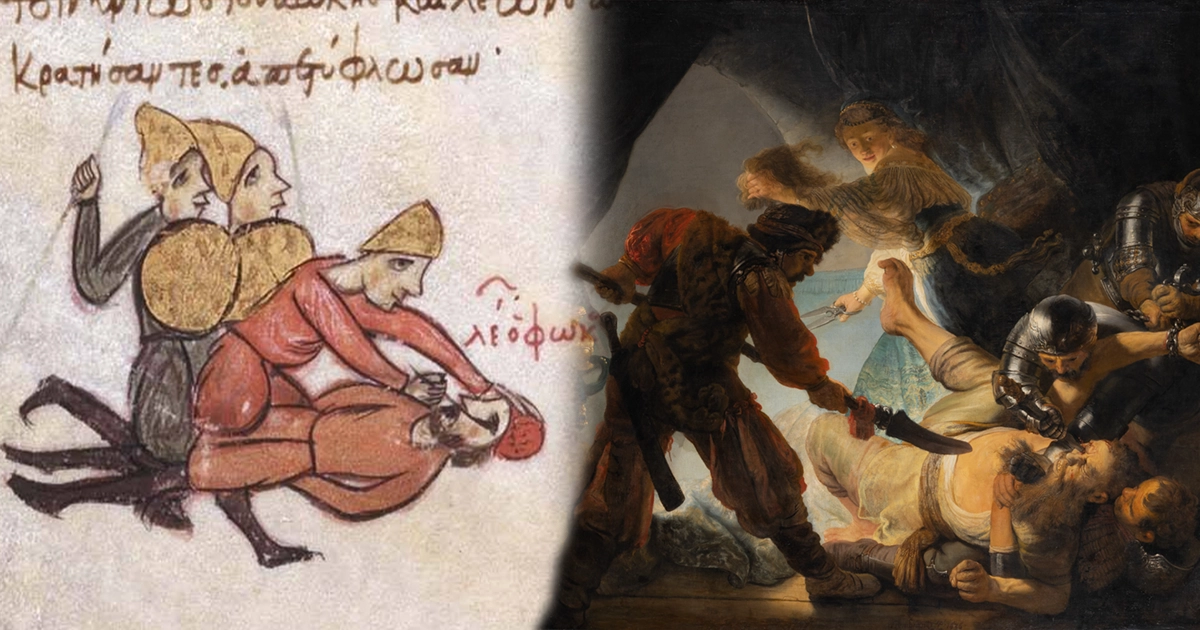
The first and most common was mechanical destruction using a sharp instrument, typically an iron dagger or similar tool. Executioners enucleated the eyes entirely, a method Byzantine chroniclers called “severing” (ekkopto). It produced certain and total blindness but was also the most violent and carried the highest risk of immediate death from shock or rapid infection.
The second method used heat. A red-hot iron tool was held close to or pressed against the eyes, destroying them through burning. This technique, which the sources term “blinding by fire,” allowed for more calibrated results. Executioners could regulate the temperature and distance of the tool, producing either total blindness or partial vision loss depending on the instructions they had received. The method had Persian origins, transmitted to Byzantium through centuries of contact with the Sasanian Empire.
The third method, least frequently used, involved pouring boiling liquid, typically oil or vinegar, directly into the eye orbits. Andronicus Palaeologus and his son John were blinded this way, and the chronicler Ducas’s description of the outcome is clinically precise, noting that one man retained partial vision in a single eye while the other retained only a squinting, oblique form of sight.
When Blinding Became a Death Sentence
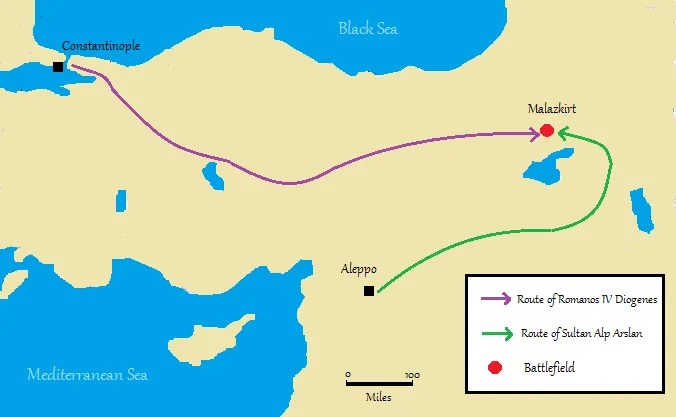
Byzantine emperors and legal authorities understood that they were formally ordering blinding, not execution. In practice, the line was often crossed. Lascaratos and Marketos are emphatic on this point: “the resulting infections were often a common cause of the death of the victim.” The case of Romanos IV Diogenes, blinded on 29 June 1072, is the most documented example of this phenomenon.
Romanos had been captured by the Seljuk Turks at the catastrophic Battle of Manzikert in 1071, released on ransom, and then deposed by his domestic enemies upon his return. He was blinded by an executioner who was, in the memorable phrase of the Byzantine historian Michael Attaliates, “unpractised.” The victim “roared and bellowed like a bull” during the procedure. Afterward, his wound became infected. His head and face swelled grotesquely, worms appeared in the necrotic tissue, and the stench of gangrenous infection became overwhelming. He died within weeks, buried on the island of Proti in the Sea of Marmara.
His death illustrated one of the central ambiguities in Byzantine blinding as punishment. The formal intent was incapacitation, not execution. The practical outcome was frequently death, particularly when the procedure was carried out carelessly or when the victim was already weakened. Basil II the Bulgar-Slayer, who blinded an estimated 15,000 Bulgarian prisoners of war after his victory in 1014, sending them back to their king Samuel led by the few he had spared one eye, was using the technique as a weapon of mass psychological warfare. The Lascaratos and Marketos study, which remains the most thorough medical analysis of the subject, notes that Basil ordered one man in every hundred to be blinded in only one eye so that he could serve as a guide for the rest.
Built out of a love for history, kept free from distractions.
Spoken Past is an independent project shaped by curiosity, care, and long hours of research. Reader support helps keep it maintained, carefully researched, and open to everyone.
The Patterns and Waves of Imperial Blinding
Not all Byzantine reigns were equally violent. Stumpf’s statistical analysis, which examined all 73 emperors from Heraclius I in 610 to the fall of Constantinople in 1453, identified clear chronological clusters of mutilation activity rather than a uniform distribution across eight centuries.
The first wave ran from 641 to 713 AD, encompassing four emperors blinded or mutilated. The chaotic seventh century, when the empire simultaneously faced Arab expansion, Slavic incursions into the Balkans, and internal dynastic instability, produced conditions in which rapid political turnover made blinding a frequent tool. The second cluster appeared from 743 to 797 AD, during the Iconoclast controversy, when religious and political conflicts overlapped dangerously. Constantine VI was blinded in 797 by supporters of his own mother, the empress Irene, who then ruled in her own name. The third wave ran from 1042 to 1071 AD, and the fourth from 1195 to 1261 AD.
What is equally striking is the gap. Between 797 and 1042 AD, a period of nearly two and a half centuries, no Byzantine emperor was blinded or mutilated. The Macedonian dynasty, founded by Basil I in 867 and ruling until 1056, provided a long stretch of relative dynastic stability that made the most extreme forms of political surgery unnecessary.
The Autoregressive Pattern
Stumpf’s study also identified a statistically significant pattern that had not been previously documented. An emperor whose immediate predecessor or pre-predecessor had been blinded or mutilated was significantly more likely to face the same fate himself. Among the 12 emperors who were blinded or mutilated in the entire period, three had a predecessor or pre-predecessor who had also been mutilated. That means the probability of being blinded if your recent predecessors had been blinded was roughly 25 percent, compared to the baseline probability of about 16 percent for any given emperor.
This autoregressive quality suggests that blinding was culturally contagious. When political violence of a particular kind became normalized within a short succession of reigns, it became the expected response to instability, creating a self-reinforcing cycle until a period of stability broke the pattern.
Byzantine Blinding in Legal and Ethical Context
Byzantine legal thought made a genuine attempt to rationalize the practice within a Christian moral framework. The key concept was philanthropia, a Greek term meaning something closer to “humanity” or “benevolence” than its English cognate. Imperial blinding was officially framed not as cruelty but as mercy. It substituted a painful but survivable punishment for the death penalty that the law might otherwise have demanded.
This was not entirely cynical. The historian John Tzimiskes, ruling from 969 to 976 AD, specifically commuted a death sentence to blinding for Leo Curopalates and his son Nicephorus, explicitly citing philanthropia as his reason. In one remarkable episode that Lascaratos and Marketos document in detail, the executioners bribed by the prisoners burned only their eyelashes while leaving their eyes intact, effectively faking the blinding. When the men escaped and attempted another rebellion, the emperor had them genuinely blinded this time. The executioner from the first attempt was never punished, suggesting that the emperor may have privately intended the fake blinding all along.
The ethical framework is further documented in Leo III’s legal code, the Ecloga, probably published in 726 AD, which formally substituted mutilation for the death penalty across a range of offences. In Leo’s code, rhinotomy became the official punishment for adultery, replacing execution. The same legislative logic that made blinding a politically acceptable alternative to killing rivals also made physical mutilation a legally acceptable alternative to capital punishment more broadly.
The Eunuch Parallel
Byzantine political culture employed a closely related mechanism for a different purpose. Eunuchs, men castrated before puberty, were explicitly disqualified from the imperial throne by the same logic of physical imperfection that governed blinding. Yet they could hold enormous administrative power throughout the empire, serving as generals, treasury officials, and chief ministers. The historian Kathryn Ringrose, in The Perfect Servant: Eunuchs and the Social Construction of Gender in Byzantium published by the University of Chicago Press, has shown that eunuchs occupied a genuinely distinct social category in Byzantine thought, neither fully male nor female, which paradoxically made them trusted advisors precisely because they could never threaten the throne.
Blinding and castration served the same constitutional function through different means. Both permanently removed a man from the pool of eligible emperors. Both were framed as acts of mercy compared to execution. Both reflected the same underlying theological principle that the emperor’s body was a political document, and that document could be voided.
The Single Exception That Proves the Rule
Throughout eight centuries of Byzantine history, only one fully blind man ever occupied the throne. Isaac II Angelus was deposed in 1195 by his brother Alexius III, blinded, and imprisoned. In 1203, the Crusaders of the Fourth Crusade arrived outside Constantinople, and Alexius IV, Isaac’s son, negotiated with them to restore his father to power. Isaac II ruled for a second time from 1203 to 1204, led quite literally by the hand, his son serving as the effective sovereign.
The Lascaratos and Marketos study notes that the Byzantine chronicler Nicetas Choniata records a psychologically acute detail: Isaac, despite his total blindness, apparently retained hope that he would recover his sight, believing in oracular prophecies that promised its return. He did not recover it. He died in prison in 1204 following a second deposition.
His brief second reign did not invalidate the general principle. He was restored by external military force, not by the consent of the Byzantine political class, and his son held actual power throughout. The system’s logic remained intact: a blind man could not rule effectively, and the disqualification mechanism continued to function as designed until the empire’s final century.
The durability of Byzantine blinding as a political and constitutional tool speaks to something remarkable about Byzantine governance. In a political system perpetually threatened by usurpation and dynastic instability, the empire developed a method of neutralizing rivals that was simultaneously violent and legalistic, brutal and theologically justified. It was not a product of barbarism. It was a product of sophisticated constitutional thinking applied to the problem of political survival, and it worked with sufficient reliability to remain in use for eight hundred years.
Primary source material drawn from the Corpus Scriptorum Historiae Byzantinae (Bonn, 1828-1897), including the chronicles of Theophanes, Cedrenus, Attaliota, Nicetas Choniata, Zonaras, and Anna Comnena. Key secondary sources include Lascaratos and Marketos (1992) in Documenta Ophthalmologica*; Stumpf (2017) in the* Journal of Ancient History and Archaeology*; Ringrose (2003),* The Perfect Servant (University of Chicago Press); and the online De Imperatoribus Romanis encyclopaedia edited by professional Byzantinists at roman-emperors.org.