The Inca labor tax system, known as mit’a, accomplished something that seems impossible by modern standards: it built and sustained one of history’s largest empires without using money. When Spanish conquistadors arrived in Peru in 1532, they encountered an empire stretching from Ecuador to central Chile, connected by 25,000 miles of paved roads, sustained by massive agricultural terraces, and governed through an intricate bureaucracy. Yet the Incas had no currency, no coins, and no monetary tribute. Instead, they perfected a system of labor taxation that transformed the scattered efforts of millions into coordinated imperial power.
The genius of the Inca mit’a corvée labor system lay in how it adapted traditional Andean practices of reciprocal work obligations to an imperial scale. Every household in the empire owed periodic labor service to the state, but in return, the government provided material support, security through military protection and storage reserves, and religious leadership. This wasn’t slavery. The Inca reciprocity economy operated on principles deeply embedded in Andean culture, where communities had long organized collective work parties to help with harvests, construction, and irrigation maintenance.
What Was the Inca Labor Tax System?
The foundation of the Inca tributary system rested on a revolutionary principle: the state claimed ownership of all productive resources in the empire. Land, water, minerals, and even wild animals belonged to the Sapa Inca, the divine emperor. Local communities held these resources only in usufruct, meaning they could use them but never own them. In exchange for conditional access, every household owed labor.
According to research by scholars Terence D’Altroy and Timothy Earle, published in Current Anthropology, this labor obligation took two primary forms. First, collective agricultural work on lands designated for the state or state religion. When the Incas conquered new territory, they divided arable land into three categories: community lands supporting local populations, state lands funding government activities, and religious lands supporting temples and ceremonies. Communities cultivated all three, though state and religious lands took precedence.
The second form involved personal periodic service for specific activities. Households sent members on rotating assignments to work as weavers, metalworkers, road builders, or soldiers. These assignments lasted weeks or months, and the state fed and housed workers during their service. The chronicler Bernabé Cobo, writing in 1653, documented how this rotation system ensured no single community bore unfair burdens while maintaining constant labor supply for state projects.
The Incas imposed a decimal administrative hierarchy dividing populations into nested units. At the base were households, grouped into units of ten, combined into units of fifty, one hundred, five hundred, one thousand, and finally ten thousand households. Officials at each level, called kuraka, tracked labor obligations and ensured compliance using khipu, intricate systems of knotted strings that recorded who had fulfilled obligations and what resources had been produced.
The scholar John V. Murra, whose groundbreaking research transformed understanding of Inka economics, emphasized that state and local populations conceptualized this relationship quite differently. Local communities believed they were rendering only labor service, continuing traditional patterns of reciprocal work obligations that had existed between community members and local chiefs long before Inka conquest. The state, however, was actually receiving both goods and services.
What made the system particularly effective was its adaptation to existing Andean cultural practices. Throughout the Andes, communities had long organized collective work parties called ayni mutual aid, where neighbors joined together for harvests, house construction, or irrigation maintenance. The person receiving help was obligated to provide food and chicha, a fermented corn beer, during work and to reciprocate labor when others needed assistance. The Inkas simply scaled this practice to imperial level.
How the Mit’a Labor Tax Functioned Across the Empire
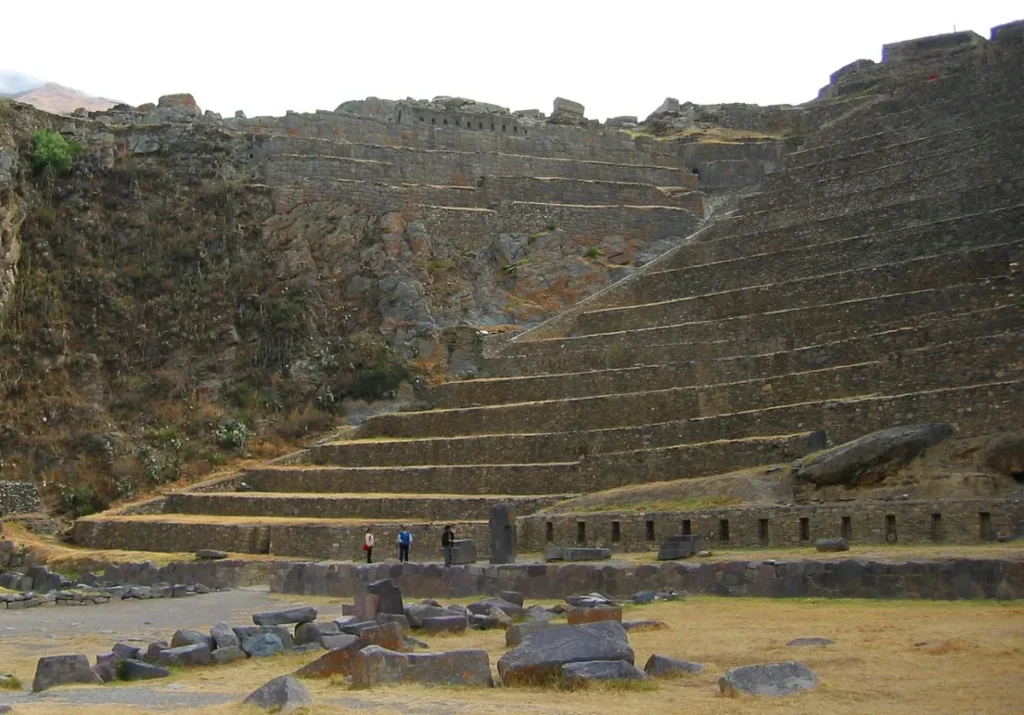
The practical operation of the mit’a reveals how theory became reality across the vast and diverse empire. The system had to account for tremendous geographic variation, from coastal desert kingdoms to high-altitude pastoral communities, from densely populated agricultural valleys to sparsely inhabited frontier regions.
Consider the Upper Mantaro Valley in central Peru, conquered around 1460. This region became one of the empire’s most important agricultural production zones. D’Altroy and Earle’s archaeological research revealed that Incas built between 2,500 and 3,000 storage structures in this valley alone, with total capacity to store approximately 1,500,000 bushels of grain and freeze-dried potatoes. Construction and filling of these warehouses required massive mobilization of mit’a labor.
The Wanka people reported in a 1582 Spanish inspection that under Inka rule, they had been required to tend state fields, produce clothing, and stock warehouses with everything they could produce. From these warehouses, goods were distributed to soldiers, government officials, and workers on state projects. The amount of land to be cultivated or quantity of wool to be woven into cloth was determined annually based on census counts and estimated state needs. Communities then contributed whatever labor was necessary to meet those quotas.
The spatial organization of these warehouses reveals sophisticated logistical planning. Over half the storage capacity in northern Mantaro Valley, approximately 64,600 cubic meters, was concentrated within one kilometer of Hatun Xauxa, the regional administrative capital. Remaining storage was distributed at decreasing intervals as distance from the capital increased. This pattern suggests Incas carefully considered transportation costs. Moving bulk goods like grain or potatoes was labor-intensive, so concentrating storage near major administrative centers minimized inefficiency.
The mit’a system also extended to specialized production through the Inca public works system. The Incas established colonies of relocated populations called mitmaqkuna who served as permanent specialist farmers, artisans, or military garrisons. These colonists were transplanted from home communities to fill economic or security needs elsewhere. A weaver from the Wanka region might be permanently resettled near Cuzco to produce fine textiles for the imperial court.
Women played crucial roles, particularly through textile production. The institution of aqllakuna, sometimes called chosen women, brought together skilled weavers who produced fine cloth serving as both utilitarian goods and symbols of imperial authority. These women lived in special compounds, supported entirely by the state, producing vast quantities of kumpi, fine textiles that the empire distributed to reward loyal officials and cement political alliances.
Built out of a love for history, kept free from distractions.
Spoken Past is an independent project shaped by curiosity, care, and long hours of research. Reader support helps keep it maintained, carefully researched, and open to everyone.
The Economics of Storage and Staple Finance
The Inca commitment to massive centralized storage represents one of their most distinctive features. Storage served multiple critical functions: averaging seasonal fluctuations in food availability, providing insurance against crop failures, and most importantly, guaranteeing independence of state institutions from harvest uncertainties.
At the provincial capital of Huánuco Pampa in north-central Peru, archaeologist Craig Morris documented over 500 storage structures arranged in neat rows on hillsides overlooking the administrative center. These warehouses held food, military equipment, textiles, sandals, ceramics, and other goods needed to support government operations. Careful placement of structures on slopes maximized air circulation and drainage, creating optimal conditions for preserving contents.
The Inca redistribution economy operated on principles distinct from simple redistribution. As D’Altroy and Earle argue, mobilization more accurately describes the system than redistribution. While the state maintained trappings of political and ritual integration through elaborate ceremonies where officials distributed food and gifts, the central authority’s increasing capacity to enforce extractive economic relationships meant the system functioned primarily as centralized finance.
Archaeological analysis of storage contents revealed careful attention to preserving staple crops. Excavations in structures above Hatun Xauxa recovered remains of maize, potatoes, quinoa, and lupine, all major highland crops. The Incas employed sophisticated preservation techniques, including freeze-drying potatoes and other tubers to create chuño, a product that could be stored for years without spoiling.
Distribution of storage throughout the empire followed clear patterns. Major concentrations appeared at provincial capitals, along important roads, and in agriculturally productive regions. Lesser concentrations dotted the imperial road system at intervals corresponding to day-long travel distances, creating a network of way stations called tampu where travelers and troops could be fed and housed.
Building an Empire Through Organized Labor
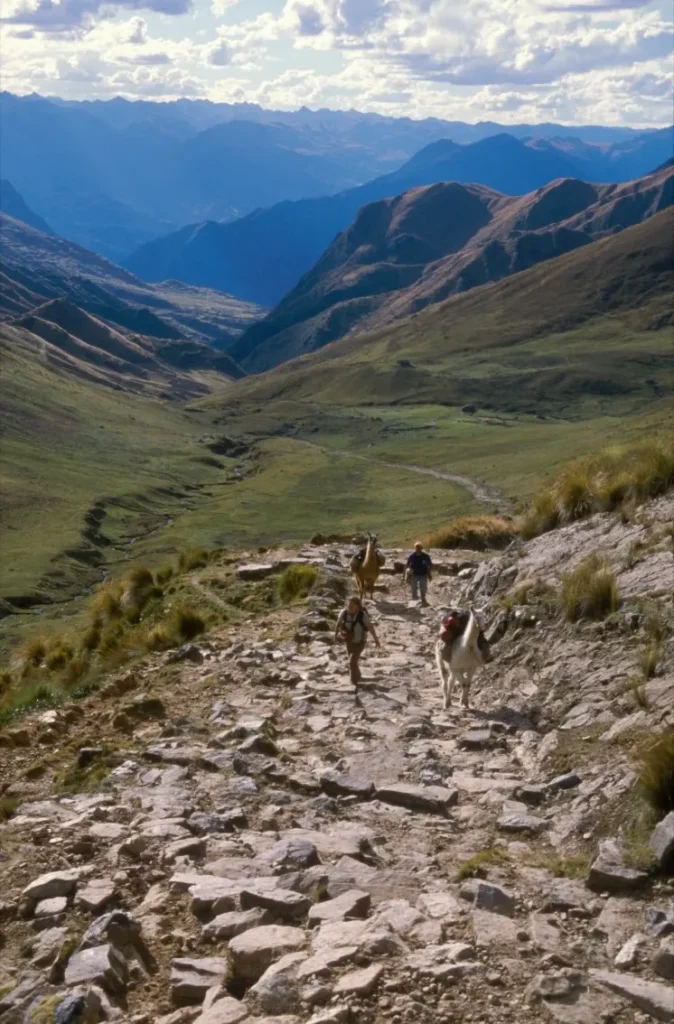
The true measure of pre-Columbian taxation through the mit’a lies in physical monuments it produced. The empire’s construction achievements remain among the most impressive feats of preindustrial engineering, all accomplished through organized rotation of labor without draft animals, wheeled vehicles, or iron tools.
Cuzco exemplified this achievement. The city was essentially rebuilt in the mid-fifteenth century under emperor Pachacuti, who envisioned it as a sacred center worthy of the expanding empire’s greatness. Mit’a workers from throughout controlled territories converged on the city to construct massive stone temples, palaces, and plazas. The Qorikancha, or Temple of the Sun, featured walls covered in gold sheets. The fortress of Sacsayhuamán incorporated stone blocks weighing over one hundred tons, fitted together with such precision that not even a knife blade could slip between them.
The Inka road system represents perhaps the most ambitious infrastructure project in the Americas before modern times. According to John Hyslop’s comprehensive study, the network ultimately extended over 25,000 miles, connecting the empire from north to south and linking coastal, highland, and eastern slope regions. Road crews built stone-paved highways across desert sands, carved paths into cliff faces, constructed suspension bridges across raging rivers, and engineered staircases up nearly vertical mountainsides.
Agricultural works consumed enormous amounts of mit’a labor and produced lasting benefits. In the Sacred Valley near Cuzco, terrace systems climbing thousands of feet up mountainsides created some of the most productive agricultural lands in the highlands. Each terrace required excavation, construction of stone retaining walls, installation of drainage systems, and importation of fertile soil.
The system’s penetration into daily life extended beyond labor obligations. The Inka state promoted Quechua as a lingua franca, making it necessary for local leaders and their families to learn the imperial tongue. Officials conducted periodic censuses, tracking births, deaths, marriages, and the productive capacity of each household. The state religion was imposed alongside local cults, requiring participation in ceremonies venerating imperial deities.
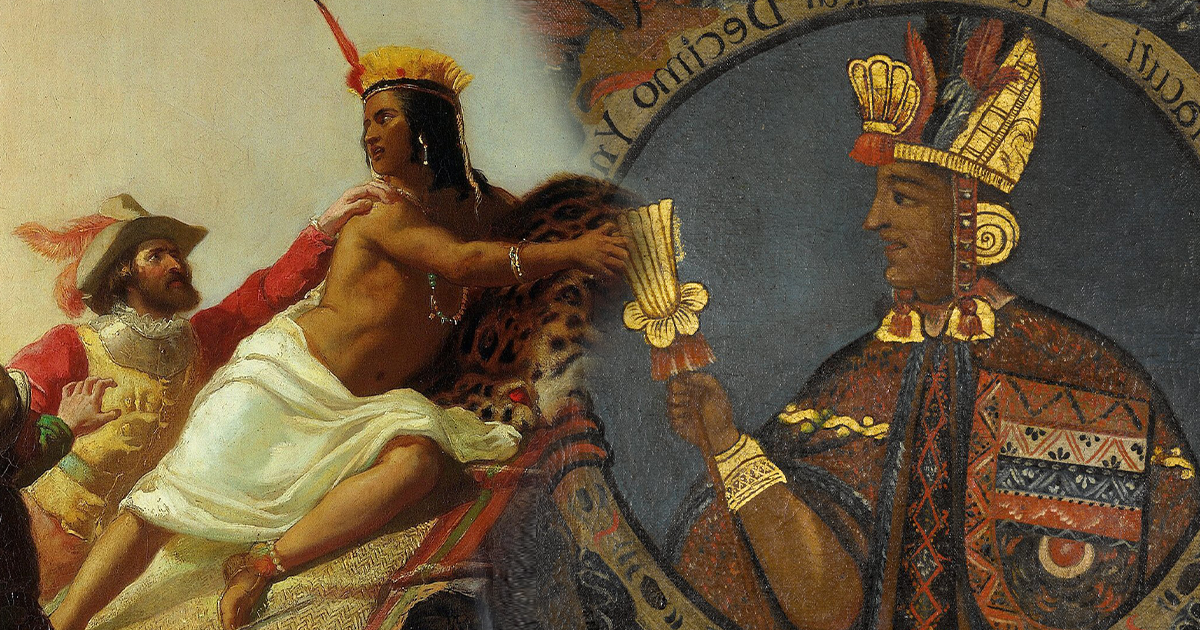
When the Spanish arrived and the empire collapsed with shocking speed in the 1530s, the mit’a system’s deep integration into Andean life became apparent. Spanish colonizers found the system so effective that they appropriated it for their own purposes, transforming the mit’a into a brutal forced labor regime that powered the silver mines of Potosí. The colonial mit’a, stripped of reciprocal obligations and support systems that had made the Inka version more palatable, became one of the most oppressive institutions of Spanish rule.
The Inca labor tax system built an empire without money by recognizing a fundamental truth: human labor, properly organized and directed, could produce wonders. The massive warehouses, endless roads, mountain terraces, and carefully fitted stones of Cuzco all stand as testament to what this system accomplished. The mit’a succeeded by adapting to local conditions, building on existing cultural practices of ayni and reciprocal obligation, and maintaining elaborate systems that made extraction comprehensible within Andean frameworks of understanding. It was simultaneously a remarkable organizational achievement and a profound assertion of state power over millions of lives, a duality that explains both its success and the speed with which subject populations abandoned it when given the opportunity.
References
D’Altroy, Terence N. 1987. Introduction. Ethnohistory 34(1): 1-13.
D’Altroy, Terence N., and Timothy K. Earle. 1985. Staple Finance, Wealth Finance, and Storage in the Inka Political Economy. Current Anthropology 26(2): 187-206. https://doi.org/10.1086/203302