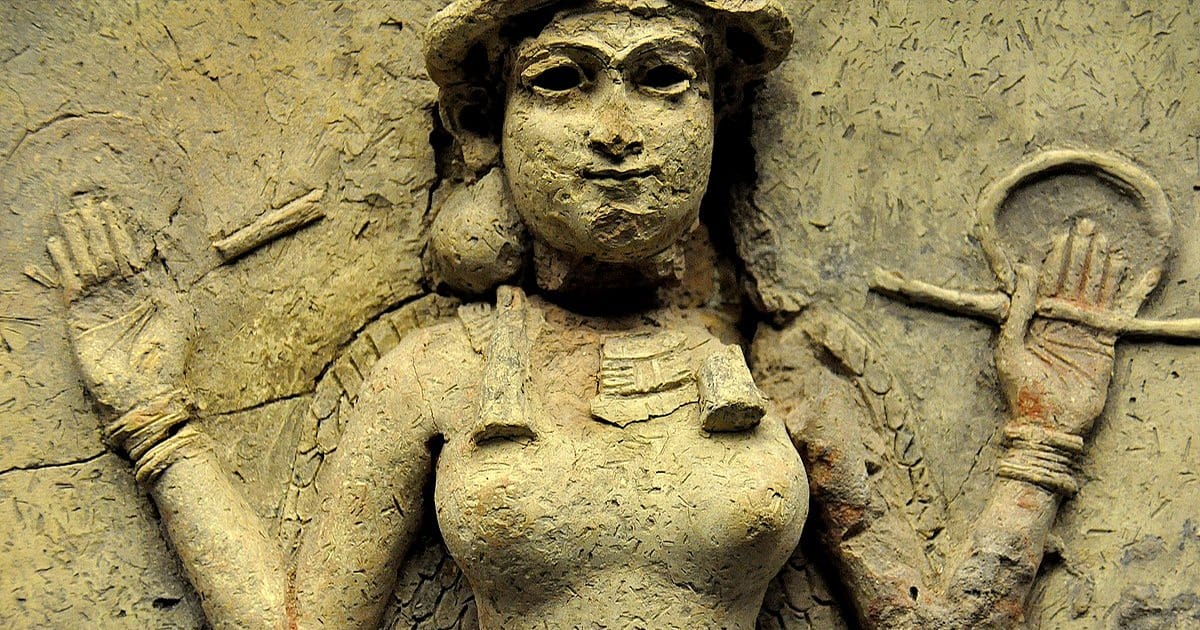
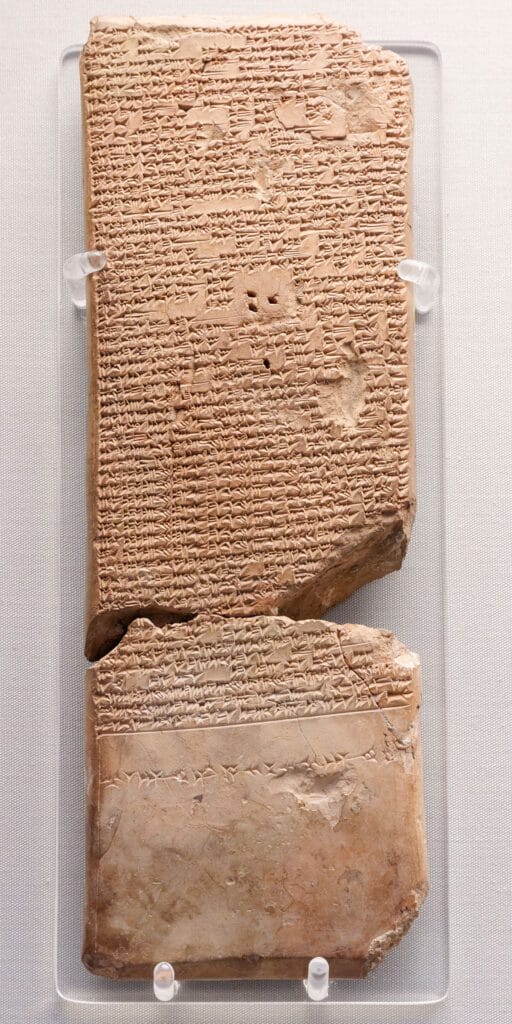
In the diplomatic archive at Tell el-Amarna in Egypt, excavated from 1887 onward, archaeologists found a clay tablet written in Akkadian and dated to the fourteenth or fifteenth century BCE. It was a copy of a Mesopotamian myth, apparently sent to Egypt as a scribal school text, and it told the story of how a god named Nergal descended to the underworld and became the husband of its queen, Ereshkigal. A second, far longer version of the same myth emerged in 1951 when fragments were unearthed at Sultantepe in southeastern Turkey. Oliver Gurney, Emeritus Reader in Assyriology at the University of Oxford, baked and joined the pieces, identified the text in 1953, and published the full edition in 1960 in Anatolian Studies, establishing two versions of the tale with different emphases, different resolutions, and substantial gaps in both. Together, the Amarna version of roughly ninety lines and the Sultantepe version of perhaps seven hundred and fifty lines are the primary sources through which modern scholars understand Nergal and Ereshkigal, their marriage, the nature of the Mesopotamian underworld, and what the myth was designed to explain. This article draws on those tablets and on the broader corpus of Akkadian religious literature to explain who these two deities were, what their union meant in Mesopotamian theology, and how the rituals of the living reflected the logic of the world below.
Nergal: Lord of the Great City
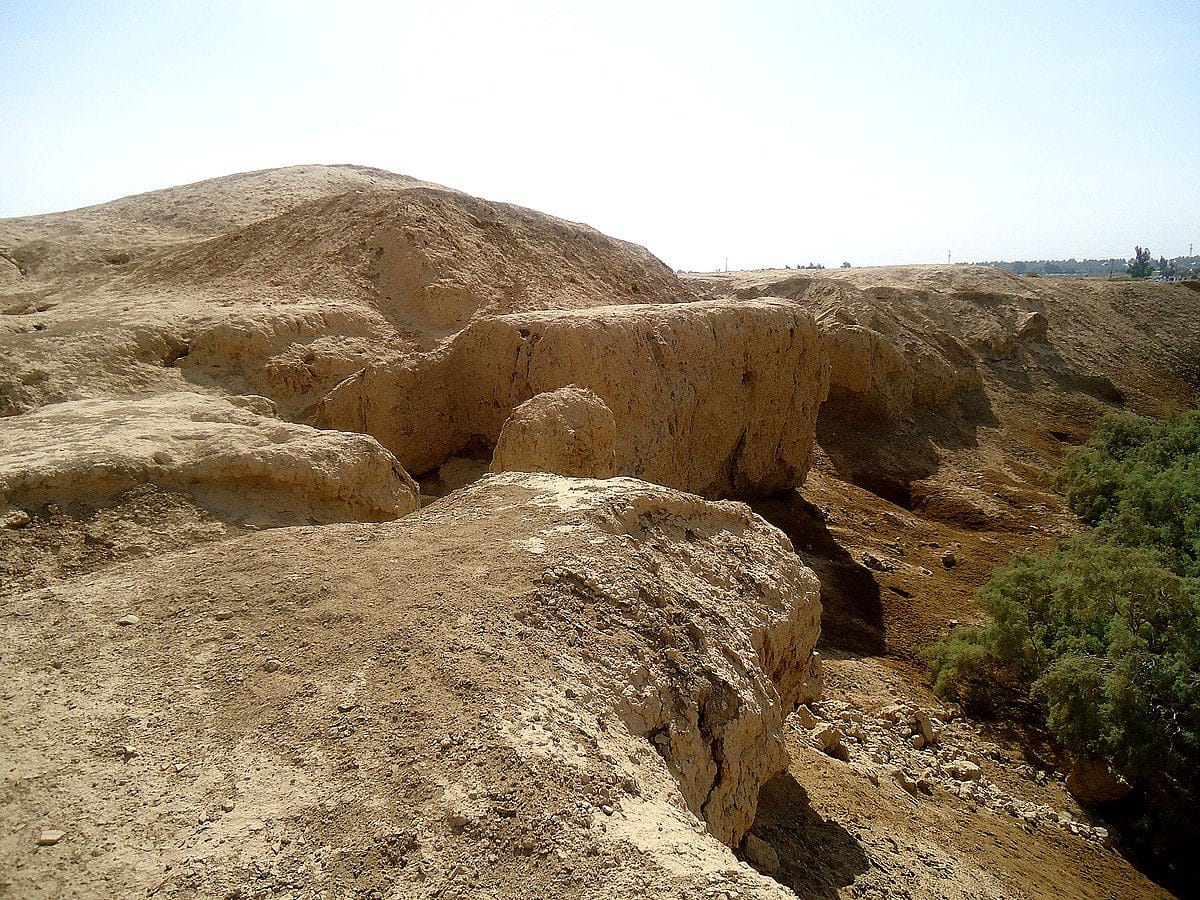
The name Nergal is itself a compressed cosmological statement. It derives from the Sumerian phrase meaning “lord of the great city,” a title that refers to the underworld conceived as an immense subterranean urban space rather than an unstructured void. His primary cult centre was Kutha, known today as Tell Ibrahim, located north of Babylon in central Iraq, where his temple, the E-meslam, was among the most important religious structures in Mesopotamia throughout recorded history. His alternative name, Meslamtaea, meaning “he who has come out of Meslam,” connects him directly to that temple and to the idea of a deity who moves between the realm of the dead and the world above.
Yaghur Heffron, writing for the ORACC Ancient Mesopotamian Gods and Goddesses resource at the University of Pennsylvania Museum, describes Nergal as representing a particular quality of death: inflicted death, meaning death that comes violently through war, epidemic disease, or the scorching heat of high summer. He is distinct from gods of natural mortality. His sphere is the killing glare of noon in July, the outbreak of plague that empties a city quarter within a week, the battlefield where bodies accumulate faster than they can be counted. He was associated with the planet Mars, identified with the Canaanite plague god Resheph in texts from Ebla and Ugarit, and syncretised from an early date with the Akkadian war deity Erra. The identification with Erra is so thorough in literary texts that the two names function as synonyms, though theophoric names (personal names incorporating a deity’s name) suggest that Erra was more prominent in the Old Akkadian and Old Babylonian periods, with Nergal becoming the dominant form later.
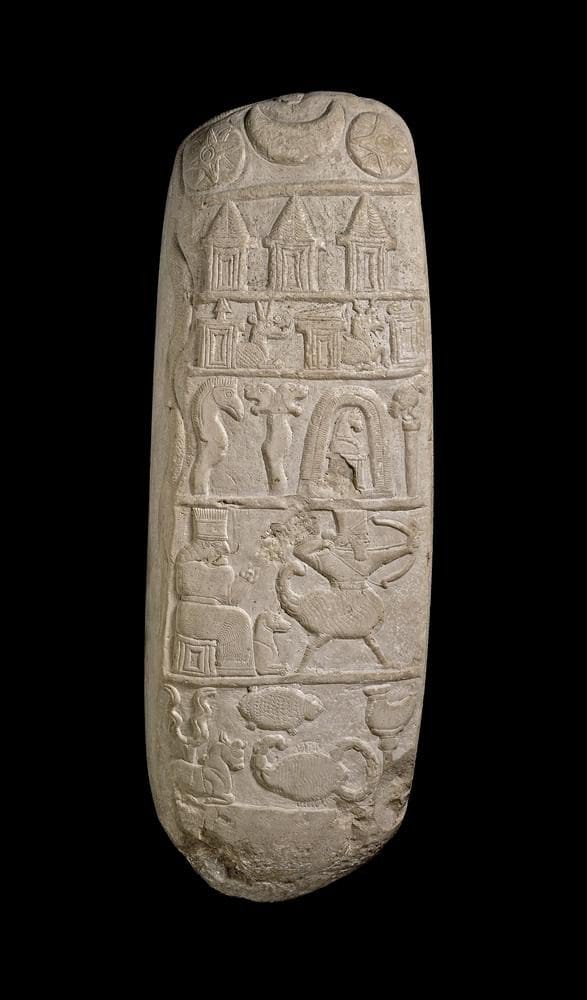
The iconography is consistent with his character. Lion-headed maces appear on Kassite boundary stones called kudurru as Nergal’s symbol, representing the ferocious authority of an entity who delivers force without warning. The lion, the open gate, and the scimitar are all associated with him in temple inventories and divine procession lists. What makes Nergal interesting theologically, and not merely frightening, is that the same hymns that call him the raging king and destroyer also describe him as a divine judge who hears petitions, a benefactor who can restore the sick and protect agriculture when properly propitiated. Destruction and protection in Mesopotamian religion were two aspects of the same divine power, not contradictions.
Ereshkigal: Queen of Irkalla
Ereshkigal presents a different problem for the historian. Where Nergal has a documented cult centre, physical temples, hymns addressed to him by name, and a wide distribution of theophoric names from multiple periods and regions, Ereshkigal’s importance, as Heffron notes, was largely literary rather than cultic. She appears in myths, she is named in incantation texts, and she is addressed in rituals connected with the underworld, but archaeological evidence for organised public worship at a temple dedicated specifically to her is sparse compared with most major Mesopotamian deities. This asymmetry is itself informative. Ereshkigal represents a principle of cosmic necessity rather than a god to whom individuals made regular offerings for personal benefit. No one prayed to Ereshkigal for a good harvest or a healthy child. She was the destination, not the intercessor.
Her domain was Irkalla, also written Kur or Aralu in different periods, a subterranean realm conceived as a vast shadowed city. The Akkadian term erset la tari, the land of no return, appears repeatedly in texts describing it. Entry required passing through seven gates in strict sequence, surrendering at each gate one item of clothing or jewellery, so that the dead arrived in Ereshkigal’s throne room stripped of every marker of earthly identity and status. The motif of the seven gates is not metaphor: it structured actual ritual practice. Incantation texts describe the reversal of the gate sequence as the mechanism by which the dead could be recalled, and Ereshkigal’s permission was required for any such reversal to be valid.
Her court had a formal bureaucratic structure that closely mirrored the administration of Mesopotamian cities above ground. Her vizier was Namtar, whose name means fate or doom. Judges presided over arrivals. Scribes called dubsarru recorded each new resident. Demons designated as galla acted as constables, enforcing order and preventing the dead from leaving. Ereshkigal herself was not cruel in the sense of malicious: she was severe in the way that a judge is severe, because her function required exactness. The texts describe her in postures of grief as well as authority, weeping when her lover abandons her, revealing a deity whose sovereignty coexisted with profound loneliness. She is the only major Mesopotamian deity whose realm excludes her from the social world that sustains other gods.
The Myth of Nergal and Ereshkigal: Two Versions, One Argument
The Amarna version of the myth opens at a heavenly banquet. Cosmic regulations prevent Ereshkigal from ascending to heaven and the celestial gods from descending to the underworld, so she sends her vizier Namtar to receive her share of the feast on her behalf. When Namtar arrives, all the assembled gods rise in deference, except Nergal, who remains seated. The slight is reported to Ereshkigal, who demands that the offending deity be sent to the underworld to apologise. Before descending, Nergal receives detailed instructions from the god Ea: he must carry a throne as an offering and must be careful not to eat, drink, wash his feet, or sleep with the queen of the underworld, all of which would constitute forms of integration with the realm of the dead that he could not reverse.
Nergal passes through the seven gates, surrendering protective charms at each one, and enters Ereshkigal’s court. He ignores Ea’s instructions. He sleeps with Ereshkigal for six days and six nights. On the seventh day, while she sleeps, he escapes back through the gates and returns to the world above. Ereshkigal’s response, when she discovers his absence, is intense: she sends Namtar to the celestial court to demand his return, threatening to open the gates of the underworld and release the dead into the living world if she is refused. The other gods hand Nergal over. In the Amarna version, he returns prepared to kill her, seizes her by the hair and drags her from the throne, but she saves herself by offering him joint kingship over the underworld. He accepts, and they marry.
The Sultantepe version, published by Gurney in Anatolian Studies volume 10, 1960, tells essentially the same story but with a much longer and more emotionally detailed rendering of Ereshkigal’s grief after Nergal’s departure. The French Assyriologist Jean Bottéro, commenting on the two versions, observed that the Amarna story resolves through violence, whereas the Sultantepe version resolves through what reads more like a love affair: in the later text, Ereshkigal’s lament for her absent lover is elaborated at length, and the myth concludes with a line usually translated as the two deities entering the bedchamber together with evident enthusiasm. Assyriologist Stephanie Dalley, whose translation of both versions appears in her 2000 collection Myths from Mesopotamia, argues that the myth should not be read as a simple narrative of male conquest but as an account of two solitary and powerful deities finding in each other an order neither could achieve alone.
Erra, Heat, and the Problem of Destructive Power
Understanding the marriage of Nergal and Ereshkigal requires understanding what Nergal represented to Mesopotamian city-dwellers independent of the underworld myth. The Epic of Erra, composed probably between the eleventh and eighth centuries BCE and surviving in copies from the royal library of Nineveh at Ashurbanipal’s court, addresses this directly. It opens with Erra (Nergal’s alternative identity) restless in his city, his weapons rusting, the seven deadly demons of the ilū sebettu idle and eager for destruction. He persuades Marduk, the chief god of Babylon, to vacate his cult statue temporarily while it is repaired, and in Marduk’s absence Erra is unleashed on the world. Cities fall. Populations are massacred. The land is devastated before Erra is persuaded to relent by his own counsellor, Ishum. The poem is not a simple glorification of destruction: it is an analysis of what happens when the forces of inflicted death are not integrated into the cosmic order through correct divine relationships.
The Epic of Erra was used as an apotropaic text. Late Babylonian inscriptions record copies of it being placed in homes as protective amulets. The logic is precise: a text that demonstrated Erra’s power and described his eventual restraint functioned as a reminder to the deity that restraint was part of his role, and as a petition to Marduk to ensure the cosmic order remained intact. The god of destructive heat needed to be engaged, named, and addressed, not ignored, because ignoring his power only made it more likely to break free. This is exactly the role that the marriage to Ereshkigal solves at the mythological level: it gives the force of inflicted death a seat in the ordered court of the dead, integrating it into a system of cosmic governance rather than leaving it to roam.
The seasonal dimension of this theology is present in the texts without being made explicit. Nergal is associated with the noon sun, the summer solstice, and the dead season of the Mesopotamian agricultural year, when heat killed crops and water was scarce. His return to Ereshkigal’s court, from the perspective of those living through a brutal summer, was the event that allowed the heat to relent. It is not a formal seasonal myth of the kind found in the Descent of Inanna, but the same logic of underworld residence regulating surface conditions applies. The world above and the world below were not separate: they were the same system, with Ereshkigal’s court as its administrative centre and Nergal as the mobile element that kept the connection between plague, war, and death organised under a single authority.
Built out of a love for history, kept free from distractions.
Spoken Past is an independent project shaped by curiosity, care, and long hours of research. Reader support helps keep it maintained, carefully researched, and open to everyone.
The Descent of Inanna and What It Clarifies
The myth of Inanna’s descent to the underworld, known in its Akkadian version as the Descent of Ishtar, provides essential context for understanding what the Nergal and Ereshkigal myth is doing at a structural level. In the Descent, Inanna, goddess of love and war and the most powerful of the celestial deities, announces her intention to enter the Great Below. Her reasons are never made fully explicit, which has generated considerable scholarly debate, but the consequences are completely clear. As she passes each of the seven gates, a guardian strips her of one item of divine regalia: her crown, her earrings, her beads, her breastplate, her bracelet, her measuring rod, and finally her garment. She arrives before Ereshkigal’s judges naked and powerless. Ereshkigal kills her. Inanna’s body hangs on a hook in the underworld for three days before a rescue operation arranged by the god Ea succeeds in reviving her. Even then, she cannot simply leave: the rule of the underworld demands a substitute, and the demon escorts who accompany her back to the surface world eventually claim Dumuzi, Inanna’s lover, to take her place.
Placed beside the Nergal and Ereshkigal myth, the structural argument becomes visible. Neither the greatest of goddesses nor the most violent of gods can simply impose their will on the underworld. Inanna fails entirely. Nergal succeeds only by becoming part of the underworld’s governing structure, accepting a permanent seat beside the queen. The seven-gate sequence is not a dramatic device: it is a cosmological principle. The underworld is defined by the progressive removal of celestial status, and power there belongs only to those who have been integrated into it on Ereshkigal’s terms. The marriage is thus not a conquest. It is the price of admission for a deity whose destructive energy needed to be contained within a structure that the living could address, petition, and ritually engage.
Kispu: How the Living Engaged the Underworld in Practice
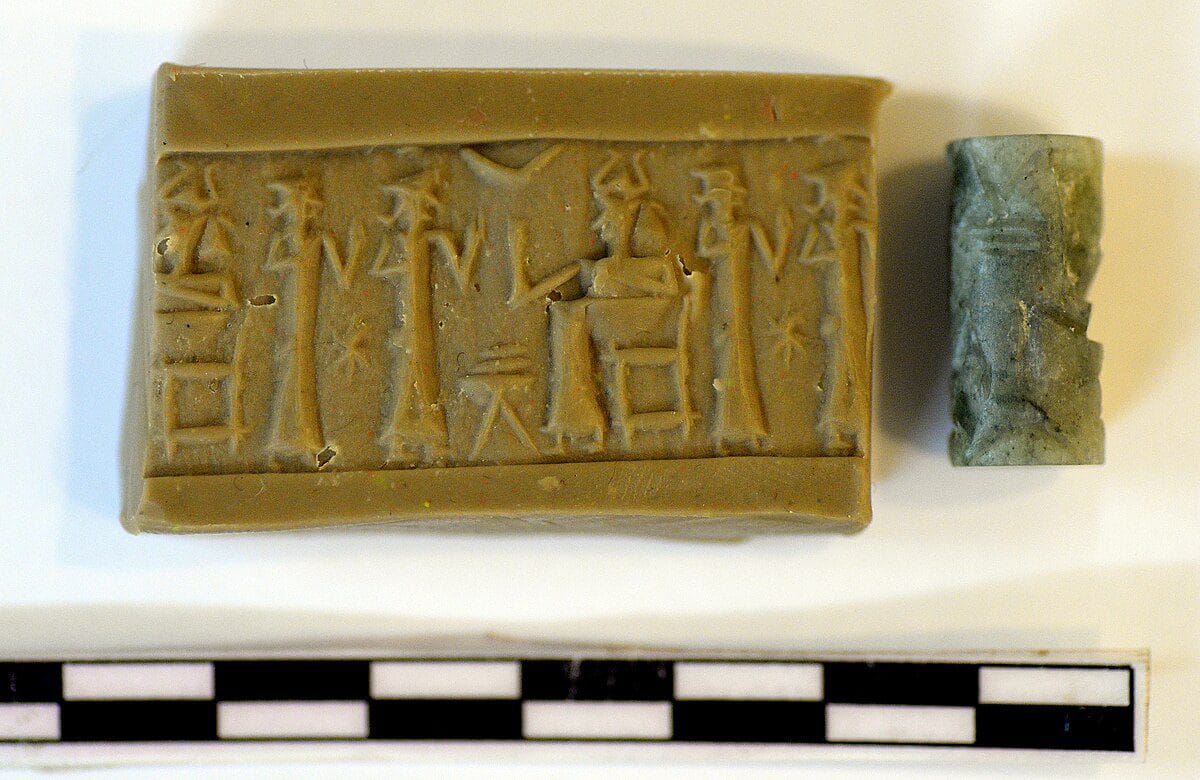
The theology of Nergal and Ereshkigal was not merely an academic matter for scribes and temple theologians. It structured a set of practices, the most important being the kispu ritual, that every Mesopotamian family of any means performed regularly. Textual evidence for kispu extends back to the third millennium BCE, and the ritual continued in recognisable form through the Neo-Babylonian period. As Akio Tsukimoto of Kyoto Sangyo University established in his foundational 1985 study and confirmed in his 2010 reassessment in Orient, the core components were three: performing the care of the dead (reciting specific formulae), pouring water, and invoking the name of the ancestor. The ritual was performed monthly, typically on the moonless night, and annually during the month of Apum. It was a family obligation, not a temple institution.
The dead in Mesopotamian belief possessed a surviving spirit called the etemmu, which continued to exist in the underworld and required regular provisioning by living descendants. Failure to perform kispu was not merely a social failing: it had direct cosmological consequences. Cuneiform curse formulas preserved in Neo-Assyrian tomb inscriptions explicitly state that those who damage a tomb or neglect the rites of the dead will find their own descendants doing the same to them, cutting them off from sustenance in the underworld. This reciprocal logic depended on the stability of Ereshkigal’s court. If the underworld remained orderly, the dead could receive offerings through the ritual mechanisms that the gods had established. If it was disrupted, the mechanisms broke down, and the etemmu wandered without sustenance, which in Mesopotamian belief produced illness and misfortune in the living.
Nergal enters this practical framework as the deity consulted when disease arrived unexpectedly. Divination texts from Mesopotamian temples include series dedicated to determining whether Nergal’s hand had fallen on a sick person, and the prescribed response, when the answer was affirmative, included specific offerings at E-meslam in Kutha and prayers addressed to both Nergal and Ereshkigal together. City officials responding to epidemic outbreaks followed the same logic. The pair were addressed together because the power to inflict death and the authority to govern what happened after it were understood as two aspects of the same cosmic jurisdiction, held jointly, and requiring joint propitiation. The marriage was a practical administrative fact as much as a theological statement.
Scholarly Debate: Who Won and What Does It Mean?
The myth of Nergal and Ereshkigal has generated sustained interpretive debate in Assyriology and in ancient Near Eastern gender studies. The central question is whether the myth represents a narrative of male conquest, in which Nergal forces his way into the underworld and coerces Ereshkigal into accepting joint rule, or whether it represents something more reciprocal. The Amarna version, with its direct physical confrontation and Ereshkigal’s capitulation to save her life, supports the conquest reading on a surface reading. The Sultantepe version, with its extended lament for the absent god and its conclusion emphasising mutual desire, pushes in the other direction.
Rivkah Harris, in her essay on gender and sexuality in the myth published by Gateways to Babylon, examined the specific verbs used in the Amarna text around the confrontation scene and argued that both goddess and god are described as active agents in the encounter. Nergal is violent, but he also listens; he pulls Ereshkigal from her throne, but then wipes away her tears. Ereshkigal offers him kingship not from a position of complete powerlessness but from a position where she retains enough authority to make the offer meaningful. The marriage she proposes is genuine co-rulership, not forced subservience. A majority of Assyriologists, including the contributors to the ORACC project, now follow Gurney’s original 1960 reading: the two deities end the myth ruling jointly, with the line about the bedchamber in the Sultantepe version indicating that the union was willing rather than coerced by the end of the longer narrative.
The interpretation matters for understanding the myth’s function. If Ereshkigal surrendered power, the myth is about the imposition of a male divine authority on a domain that was originally ruled by a single queen. If the marriage is genuine co-rulership, the myth is about the integration of uncontrolled destructive force into a stable cosmic order that requires two complementary authorities: one that receives the dead and governs them with bureaucratic precision, and one that delivers them through violence, disease, and heat and can be addressed and propitiated by the living when those forces exceed tolerable limits. The second reading coheres better with the actual ritual practices of Mesopotamian cities, which treated Nergal and Ereshkigal as a governing pair to be addressed jointly, not as a dominant and a subordinate.
The Transmission of the Myth and What the Scribes Did with It
The survival of this myth in two substantially different versions separated by several centuries raises questions that Gurney addressed directly in his 1960 Anatolian Studies paper and that subsequent scholars have continued to debate. The Amarna tablet appears to have been copied by a scribe whose native language was not Akkadian, suggesting it was transmitted through a non-Mesopotamian context, possibly via Syria, before reaching Egypt. The Sultantepe version was found in what was clearly a scribal school archive, along with numerous other literary and religious texts collected and copied during the seventh century BCE. A later Neo-Babylonian fragment from Uruk provides some additional material not preserved in the Sultantepe copy.
These scribes were not simply copying: they were participating in a living interpretive tradition. The Sultantepe version’s much greater length and its elaboration of Ereshkigal’s emotional state suggest a deliberate decision to develop aspects of the narrative that the shorter Amarna version left underdeveloped. Benjamin Foster’s 2005 Before the Muses: An Anthology of Akkadian Literature, which contains the most widely used modern translations of both versions, situates the Nergal and Ereshkigal myth within a broader tradition of Babylonian literary composition in which emotional interiority, particularly female emotional experience, was a recognised subject of serious literary attention. The myth is not a simple theological diagram. It is a literary work in which the scribes who transmitted and revised it were making interpretive choices about what mattered in the story.
Alhena Gadotti of the Johns Hopkins University, working on the composition Gilgamesh, Enkidu and the Underworld, has noted that the idea of Ereshkigal controlling the underworld as a dowry from her divine family is attested in Old Babylonian sources, meaning the tradition of her original sole authority predates the Nergal myth and was known independently of it. This places the marriage narrative in a context where the audience would have understood that Ereshkigal was not a deity who needed a husband in order to function. She was already governing the underworld efficiently before Nergal arrived. His arrival changed the cosmic order not because she was incomplete without him, but because his particular kind of death, inflicted and violent, needed to be brought inside the governed space of the underworld rather than continuing to exist as an unmanaged force outside it.
Sources: Gurney, O.R., “The Sultantepe Tablets: VII. The Myth of Nergal and Ereshkigal,” Anatolian Studies, 10, 1960, pp. 105–131, JSTOR 3642431; Dalley, Stephanie, Myths from Mesopotamia: Creation, the Flood, Gilgamesh, and Others, Oxford University Press, 2000 (revised edition); Foster, Benjamin R., Before the Muses: An Anthology of Akkadian Literature, CDL Press, 2005, pp. 506–24 and 880–911; Heffron, Yaghur, “Nergal (god),” Ancient Mesopotamian Gods and Goddesses, ORACC, University of Pennsylvania Museum, 2019; Tsukimoto, Akio, “Peace for the Dead, or kispu(m) Again,” Orient, 45, 2010, pp. 101–109; Rasztawicki, Leszek, “The People of Cuth Made Nergal (2 Kings 17:30): The Historicity and Cult of Nergal in the Ancient Middle East,” ResearchGate, 2019; Lindow, John, Norse Mythology: A Guide to the Gods, Heroes, Rituals, and Beliefs, Oxford University Press, 2001; Vitruvius, De Architectura, Book II (cited for comparative Near Eastern temple studies).