
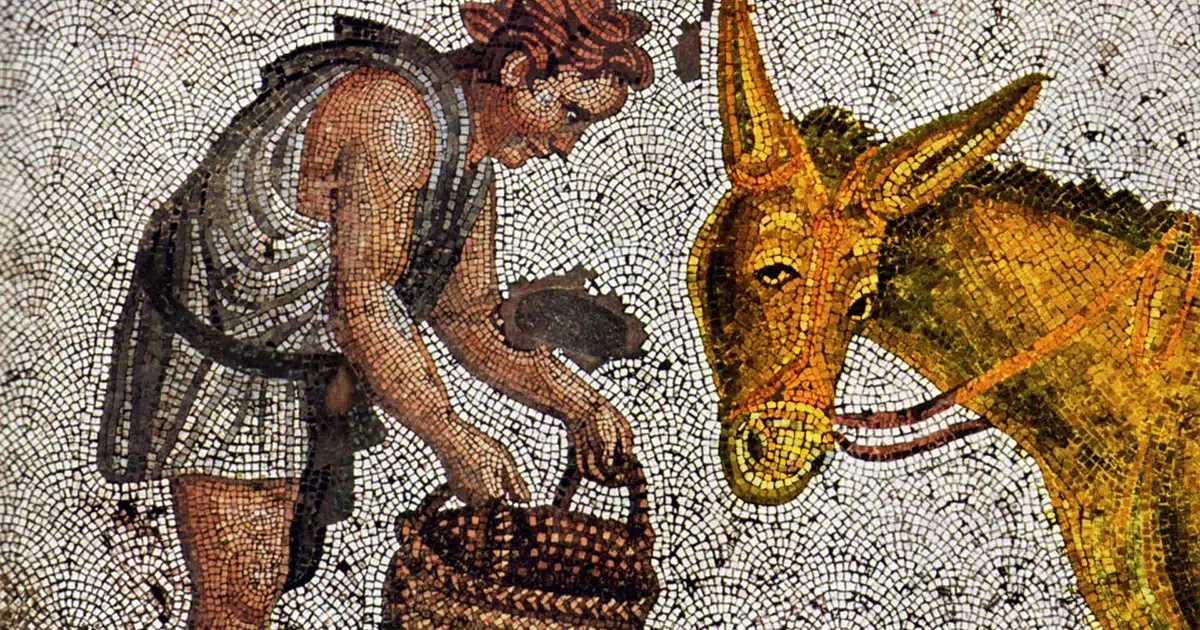
In 158/159 CE, a North African orator named Apuleius stood trial at Sabratha, in Roman Tripolitania, on a charge of using magic to persuade a wealthy widow, Pudentilla, to marry him. He won the case. What he did with the experience afterward was stranger and more lasting than any verdict: in the later second century, he wrote, or at least became associated with, a novel in which a man’s reckless appetite for the occult turns him into a donkey, and the Roman world becomes visible from the ground up. The Golden Ass, also known as the Metamorphoses, is the only ancient Roman novel in Latin to survive complete, and its donkey’s-eye view of Roman life remains one of the sharpest satirical instruments the ancient world produced.
How a Clever Man Became a Beast of Burden
The novel’s premise is deceptively simple. Lucius, a well-born young man with a weakness for magic and gossip, travels to Thessaly, a region Greek and Roman authors consistently associated with witchcraft. He lodges with Milo, whose wife, Pamphile, is a practiced witch. Lucius becomes involved with Pamphile’s maidservant Photis, partly from desire and partly because she can give him access to the household’s magic. He sees Pamphile transform herself into an owl and fly off into the night. Desperate to try the same transformation himself, he uses the wrong ointment and wakes up an ass.
The transformation is the novel’s engine. Before the spell, Lucius moves through the world with the careless confidence of a man who expects it to explain itself to him. Afterward, he can hear and understand everything but cannot speak, cannot identify himself, and cannot escape. He is property. The wit that defined him in society is now useless; what matters is whether he is strong enough to haul a load and manageable enough not to bite. Apuleius keeps the humiliation precise and physical throughout: cold stable floors, mouthfuls of straw where roses had been promised, blows delivered by people who would never have touched him as a citizen.
That gap between what Lucius knows and what he can do gives the whole novel its satirical voltage. He is the ideal witness precisely because no one bothers to perform for him.
The Roman World Seen From the Stable Floor
What Lucius observes from his successive owners’ properties is not the Rome of the forum or the Senate house. It is the Rome of flour mills, back-road taverns, bandits’ caves, traveling religious charlatans, and domestic abuse carried out behind latched doors. Apuleius is meticulous about the textures of that world. The mill episode, one of the novel’s most sustained passages, places Lucius among enslaved workers who circle the grindstone in shifts, their skin scarred, their eyes dulled, their bodies maintained only to keep the grain moving. No philosophical argument is needed. The scene does the work.
The bandits who briefly own him are small-time criminals with grandiose self-images, trading heroic stories about dead colleagues while dividing whatever they can steal. The traveling priests of the Syrian goddess who buy him next are frauds who exploit rural piety for cash, their rituals performed with theatrical precision for audiences who cannot tell devotion from theater. A soldier claims him by fiat, invoking imperial authority for petty personal convenience. Each owner reveals a different mechanism by which Roman society runs on power that mostly goes unnamed.
Scholars have long noted that this social panorama is one of the most detailed literary pictures of non-elite Roman life to survive from antiquity. Where Cicero’s letters and Livy’s histories record decisions made at the top, the Metamorphoses records what domination looks like from below. For readers interested in how Roman social historians use the novel as evidence, Emma M. Greene’s article on social commentary in Apuleius’s Metamorphoses offers a useful scholarly discussion.
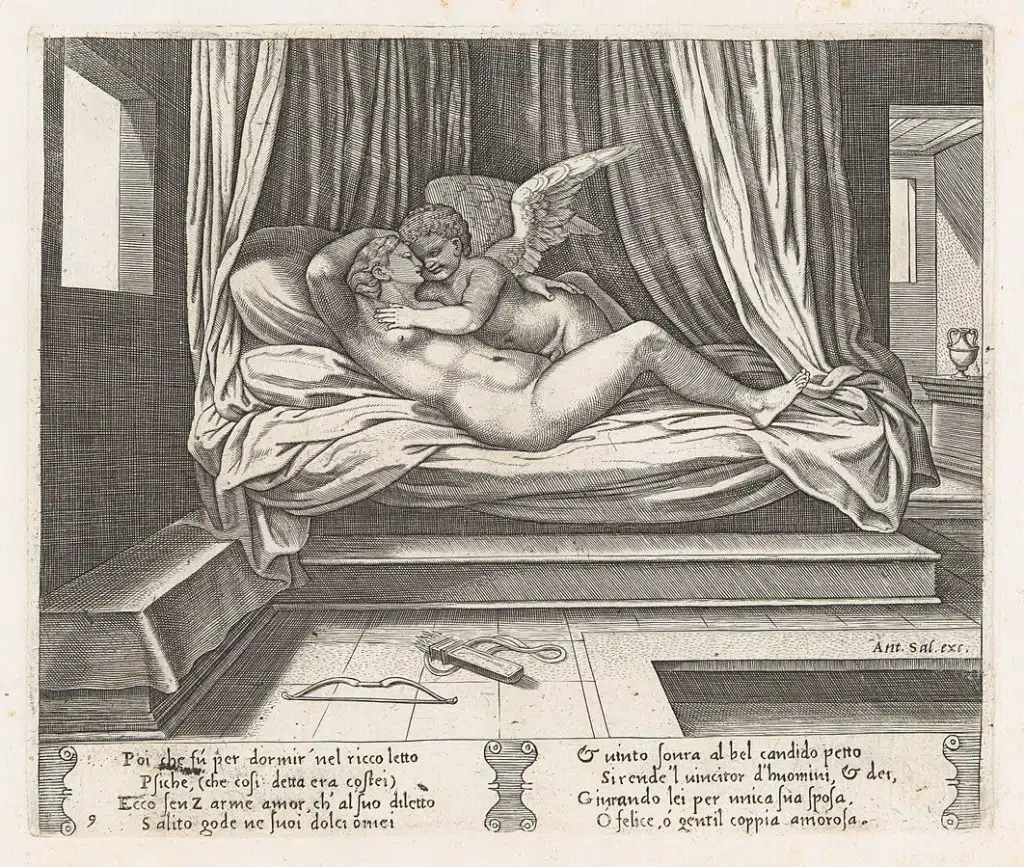
Cupid and Psyche: The Mirror at the Novel’s Center
Lodged at the heart of the novel, told by an old woman to a kidnapped girl in a bandits’ cave, is the story of Cupid and Psyche: the longest embedded tale in ancient prose fiction. A mortal girl of such extraordinary beauty that men neglect Venus’s altars to gaze at her is sentenced by the goddess’s jealousy to marry a monster. Her husband turns out to be the god of love himself, invisible in the dark, tender and present, but bound by a single prohibition: she must never look at him. Her sisters, envious and clever, persuade her that the prohibition hides something monstrous. She lights a lamp. He wakes, wounded by her doubt, and vanishes. What follows is a series of near-impossible labors imposed by Venus before the marriage can be restored.
The tale is Apuleius at his most formally accomplished. The diction shifts, the rhythm slows, and the comic brutalism of the surrounding chapters softens into something closer to myth. Scholars have debated its relationship to actual folklore traditions, to Platonic allegory about the soul’s descent and ascent, and to the main narrative’s themes of curiosity and transformation. The word curiositas, the novel’s central vice, is what breaks Psyche’s marriage just as it breaks Lucius’s human form. Both reach for the lamp or the ointment when they have been told plainly not to. For a careful reading of the tale’s structural and allegorical dimensions, E. J. Kenney’s Cambridge edition of Cupid and Psyche remains a standard scholarly access point.
The placement of the tale matters as much as its content. When Lucius overhears it, he is tethered in the dark, in an underground cave, invisible and voiceless. He is Psyche before the restoration: suffering the consequences of having reached too far. The echo is not accidental. Apuleius builds his novel so that Lucius’s eventual salvation by the goddess Isis answers, structurally and emotionally, Psyche’s eventual redemption by divine grace.
Built out of a love for history, kept free from distractions.
Spoken Past is an independent project shaped by curiosity, care, and long hours of research. Reader support helps keep it maintained, carefully researched, and open to everyone.
Witchcraft, Religion, and What Roman Law Feared
The witches of Thessaly in The Golden Ass are not decorative figures. Apuleius describes their practices with the specificity of someone who had read widely in magical literature and, as his own trial suggests, been accused of practicing it. Pamphile does not wave a wand; she applies ointments, speaks incantations, and works at night with materials that include human body parts taken from corpses. The logic resembles the world of the Greek Magical Papyri, a corpus of ritual handbooks from Greco-Roman Egypt whose recipes for love spells, binding curses, divination, and divine coercion help illuminate the ritual culture that ancient readers associated with magic.
Roman law was inconsistent about magic, tolerating some practices while prosecuting others under the lex Cornelia de sicariis et veneficis, originally a law against assassins and poisoners that courts extended to cover harmful forms of magic. The line between poison and spell was porous in Roman legal thinking: both operated through hidden means to produce harm that could not be explained by visible causation. Apuleius’s own defense against the magic charge, preserved in the surviving text of his Apologia, is one of the best primary sources for how educated Romans argued about the boundaries of legitimate practice. The text is available through the Loeb Classical Library edition of Apuleius’s Apologia.
Within the novel, the energy shifts decisively when Lucius reaches the Isis material in the final book. The same ritual attention, the same precision about gesture, timing, clothing, and words, now operates within a framework the novel treats as genuinely sacred. Apuleius does not draw a clean line between magic and religion. He shows both as practices that require knowledge, preparation, and care, and lets the reader feel the difference in the quality of attention each demands from its practitioner.
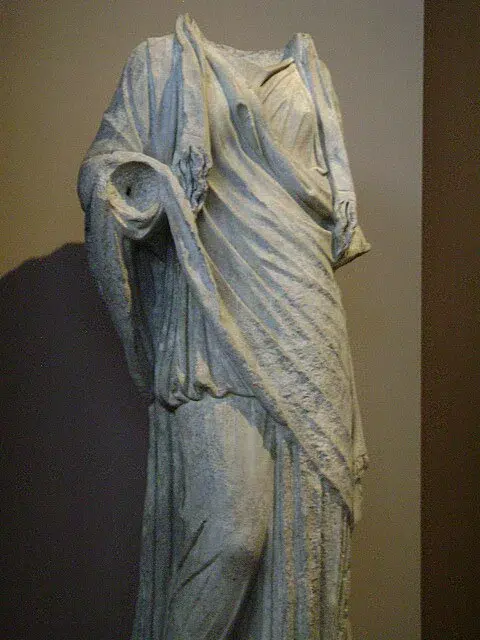
Isis on the Moonlit Beach: What the Goddess Promises
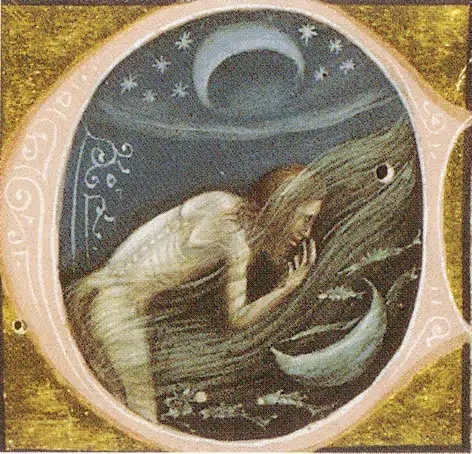
Book eleven of the Metamorphoses begins on a beach at night. Lucius, exhausted, filthy, and alone after escaping a final degrading spectacle, washes himself in the sea and prays to the moon. What comes is not a philosophical abstraction. Isis appears to him, addresses him directly, and lists the names under which she is worshipped across the Mediterranean: Minerva, Venus, Diana, Proserpina, Ceres, Juno, Bellona, Hecate, Rhamnusia, and finally Isis, the name the Egyptians know as true. She tells him that his suffering is over and instructs him exactly what to do at her procession the following morning.
The speech is one of the most significant literary documents for understanding how the Isis cult could present itself to Roman converts. The goddess’s claim to gather multiple divine identities under a single supreme name resembles the logic of Isiac aretalogies, first-person divine self-praise texts associated with Isis worship in the Greek-speaking Mediterranean. The World History Encyclopedia’s overview of Isis provides a clear introduction to the goddess’s cult and its spread beyond Egypt.
The procession Lucius joins the next morning is described with the vividness of an eyewitness: linen-robed priests, the sistrum’s rattling, garlands of fresh flowers, animals led in procession, crowds of initiates in white, and at the center, a decorated ship carried to the shore to mark the season’s opening of navigation. Archaeologists have found sacred equipment and temple complexes devoted to Isis at sites across the Roman world, from the well-preserved Temple of Isis at Pompeii, buried in 79 CE and excavated in the eighteenth century, to sanctuaries in Roman London and Roman Cologne. What Lucius describes is not invented pageantry.
After eating the roses that restore his human form, Lucius does not simply walk away grateful. He seeks initiation into the mysteries, submits to the preparations the priests require, fasts, abstains, and eventually undergoes the ceremony itself. The content of that ceremony Apuleius famously refuses to describe directly, saying only that he approached the boundary of death and returned. Scholars of Roman religion, including Walter Burkert in his comparative study of ancient mystery cults, have analyzed what can be reconstructed from this and other ancient sources about the experiential structure of initiation rites. The pattern Lucius follows, trial, threshold, transformation, return, is consistent with the broader phenomenology of initiation across ancient Mediterranean religions.
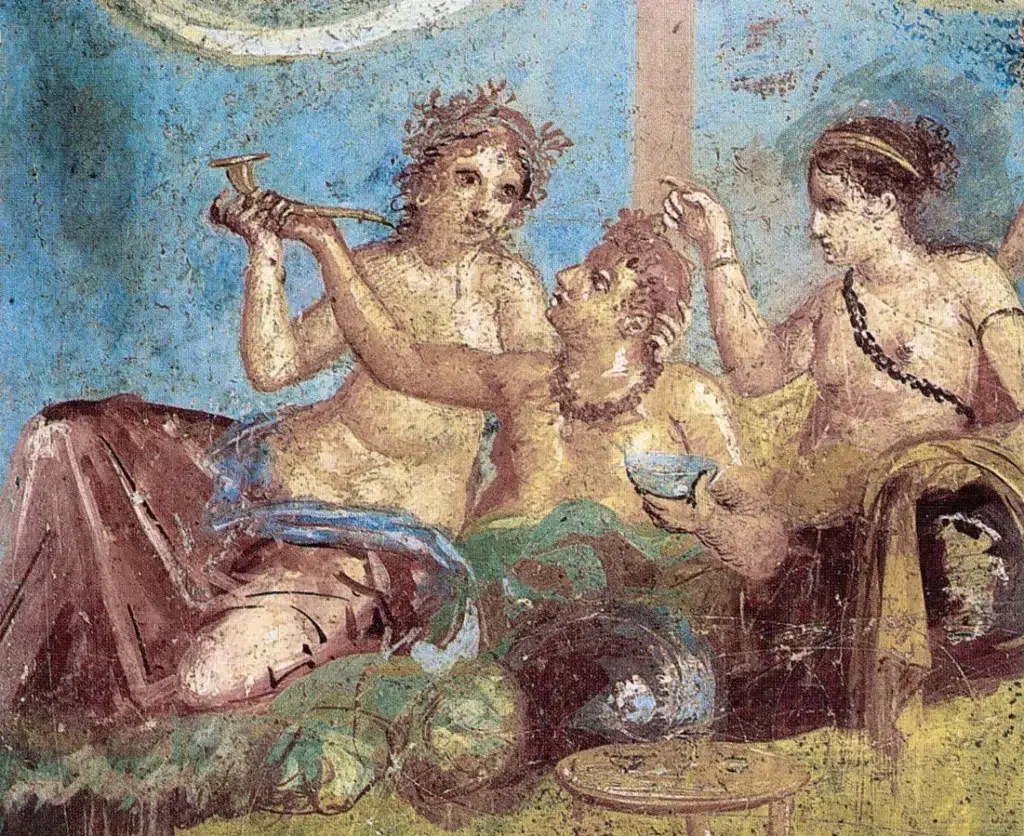
Apuleius of Madauros: The Author Behind the Donkey
Understanding why The Golden Ass reads the way it does requires knowing something about its author’s position in the Roman world. Apuleius was born around 125 CE in Madauros, a Roman colonial city in the province of Africa Proconsularis, in what is now northeastern Algeria. He studied at Carthage, then at Athens, where he immersed himself in Platonic philosophy, and later traveled to Rome. He was a pepaideumenos, a man of elite Greek education in a Latin-speaking milieu, fluent in the performance of Roman literary culture while remaining marked by his provincial North African origin.
That double position shows in the novel’s style. The Latin of the Metamorphoses is deliberately extraordinary: archaic forms, Greek vocabulary naturalized into Latin sentences, obscure technical terms from philosophy, law, and ritual given equal weight with slang and obscenity. Scholars have described it as Asianic, exuberant, theatrical, and sometimes exhausting. It is the Latin of a man who learned literary culture with deliberate ambition and uses it to show every seam of that ambition. For readers who want to engage with the Latin itself, the Loeb edition of Metamorphoses Books 1–6 and the Loeb edition of Books 7–11, with J. Arthur Hanson’s facing translation, remain standard scholarly access points.
The question of whether Lucius is a stand-in for Apuleius himself has occupied scholars for more than a century. The novel’s protagonist is ultimately connected with Madaurus, Apuleius’s own city, and the work repeatedly returns to themes of magic, rhetoric, status, and religious initiation. The identification is not autobiography in any simple sense, but the resonances are too precise to be dismissed. Apuleius is playing with the question of who speaks through a story and from what position, which is fitting for a novel whose entire premise is a narrator who cannot reveal himself.
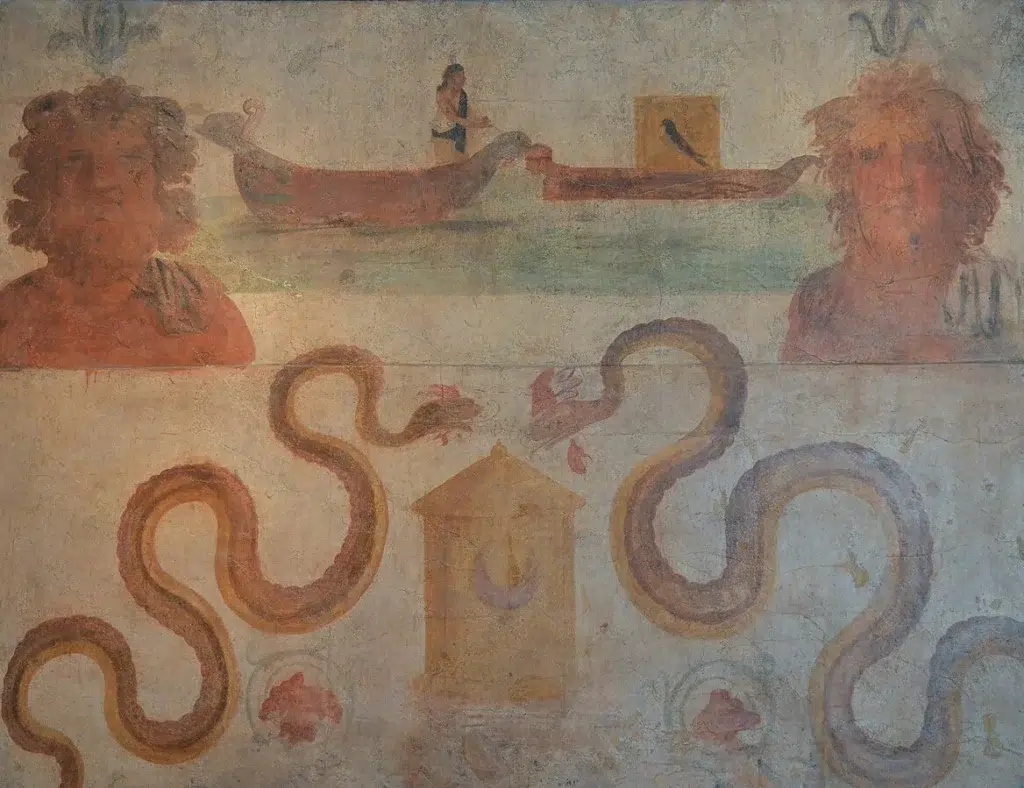
Why the Novel Survived and What It Taught the Middle Ages
The Metamorphoses survived antiquity through a narrow manuscript tradition. The surviving medieval witnesses ultimately depend on a much smaller textual base than most canonical Latin works, with the eleventh-century Monte Cassino manuscript usually known as Laurentianus 68.2 holding special importance for the text’s transmission. That survival is itself remarkable: a comic, obscene, religiously strange North African Latin novel came through medieval manuscript culture when many sober historical works did not.
It was read in late antiquity by Augustine of Hippo, who was himself from North Africa and who knew Apuleius’s work well enough to argue against it in The City of God. Augustine treats stories of transformation not merely as entertainment but as claims that require Christian philosophical correction. His engagement is evidence of Apuleius’s continuing intellectual presence in the fourth and fifth centuries.
Medieval readers often knew the Cupid and Psyche tale through allegorical interpretation, especially through Fulgentius, who read it as a story of the soul purified by suffering, a reading that aligned conveniently with Christian interpretive habits. The story’s influence on later European literature is extensive: it runs through Boccaccio, through the French fairy-tale tradition, and into the literary imagination that eventually produces Beauty and the Beast. The allegorical reading of the whole novel, Lucius as the soul degraded by sensual appetite and redeemed by divine mercy, gave it a respectability that pure entertainment would not easily have sustained through medieval manuscript culture.
Modern classical scholarship has moved decisively away from reading the novel as a Platonic parable with a bawdy wrapper and toward taking its formal complexity, humor, social observation, and religious seriousness together. Recent work on Apuleius treats the final book not as an awkward pious appendix but as part of the novel’s design: the comic humiliations, embedded tales, spectacles, and ritual ending all test what kind of transformation a human being can undergo. That shift in scholarly attitude reflects a broader reappraisal of what ancient prose fiction does and why it deserves the same close reading that epic and lyric have always received.
What has not changed across any of these readings is the novel’s central gambit: that the most reliable narrator of a society’s actual values is the one with no power to participate in its performances. Lucius the donkey cannot lie about what he sees because he has nothing to gain from lying. He has no reputation to protect, no patron to flatter, no case to argue. He is the witness Rome forgot to remove from the room, and two thousand years later the room is still full of things worth seeing.