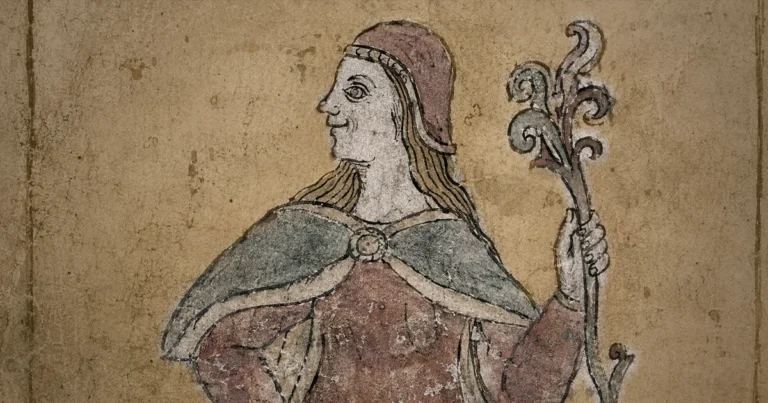

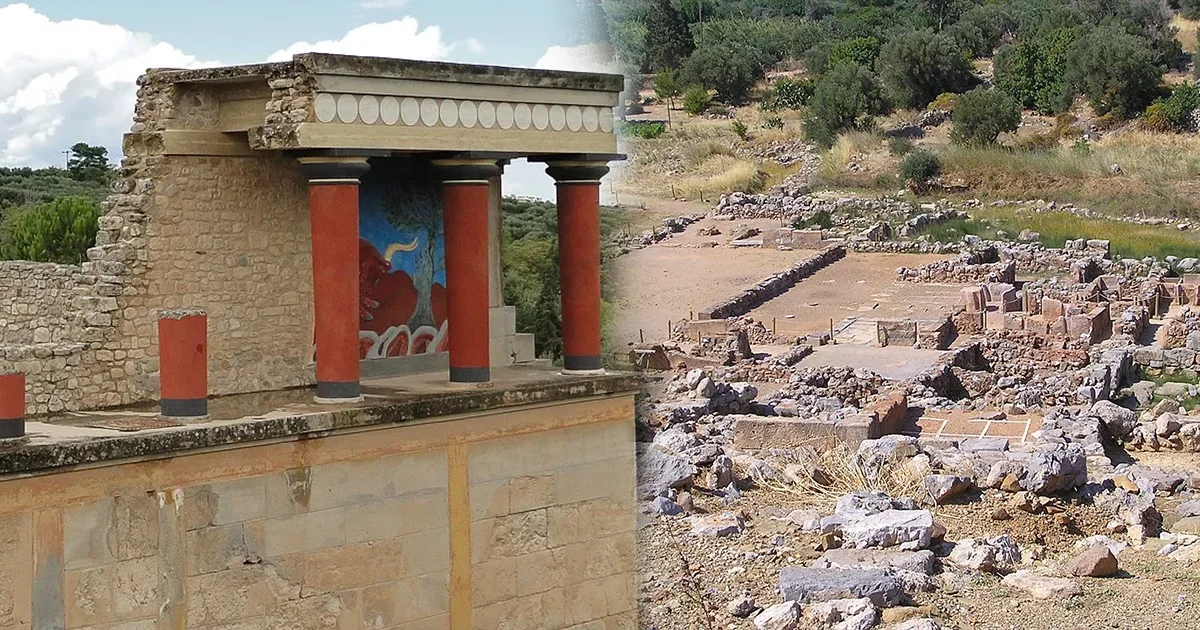
The island of Crete gave rise to Europe’s first advanced civilization between 1900 and 1100 BCE, constructing monumental palace complexes that served as administrative, religious, and economic centers. Minoan palaces featured multistory wings surrounding open rectangular courtyards, distinctive lustral basins, and sophisticated drainage systems that demonstrated remarkable engineering. These structures stored massive agricultural surpluses in magazine rooms while hosting communal festivals and housing shrines where priests and priestesses conducted elaborate rituals. Bronze Age Crete controlled Mediterranean sea routes, traded extensively with Egypt and the Near East, and developed Linear A script to manage palace archives.
1. Knossos
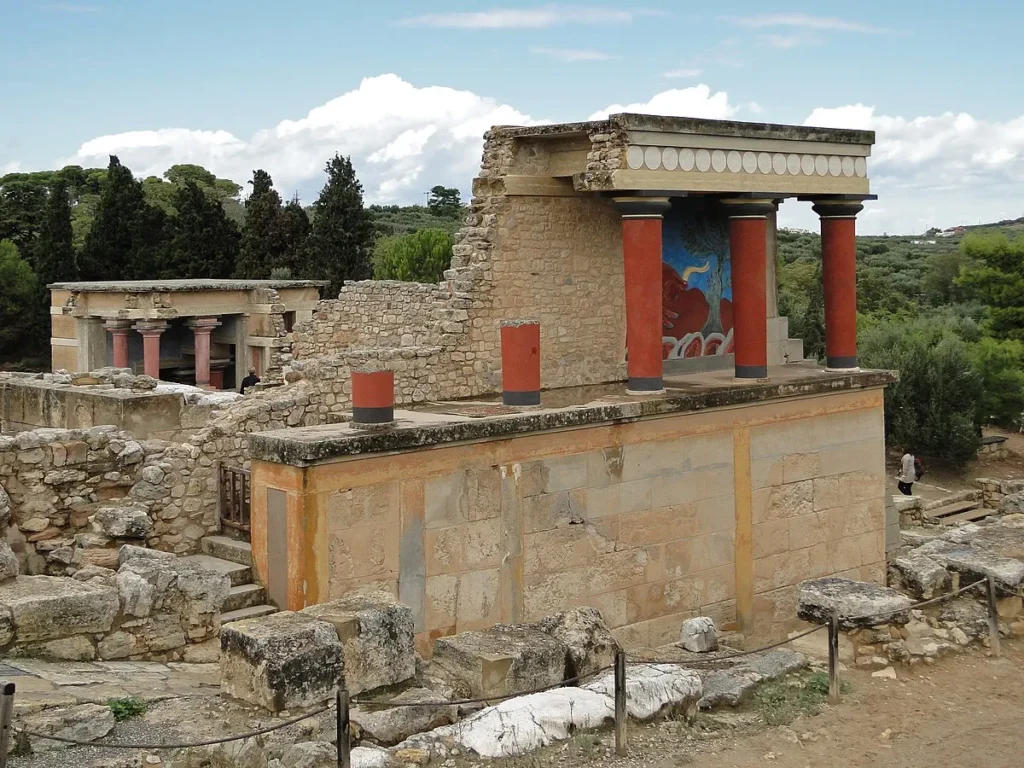
The palace at Knossos sprawled across six acres on a low hill four miles inland from Crete’s northern coast. British archaeologist Arthur Evans excavated the site starting in 1900 CE, uncovering over 1,300 rooms connected by corridors, staircases, and light wells that created a labyrinthine interior. The central court measured 180 feet long by 90 feet wide, providing space for religious ceremonies and bull-leaping performances depicted in numerous frescoes. Evans controversially reconstructed portions of the palace using reinforced concrete, creating the colorful structures visitors see today.
Knossos controlled the richest agricultural land on Crete and maintained workshops producing fine pottery, stone vessels, and bronze tools. The palace stored wine, olive oil, and grain in massive pithoi jars standing six feet tall, with some magazine rooms holding 400 vessels. Linear B tablets found at the site record inventories of sheep, wool, chariots, and offerings to deities, revealing a complex bureaucratic system. The administrative apparatus tracked resources across the surrounding territory, collecting tribute and redistributing goods to palace dependents.
The throne room at Knossos featured a gypsum throne flanked by griffin frescoes and a sunken lustral basin for purification rituals. Palace architects installed advanced plumbing with terracotta pipes carrying water from mountain springs and stone drains removing sewage. The complex reached its greatest extent around 1700 BCE after rebuilding following earthquake destruction. The palace dominated northern Crete for over 600 years until final abandonment around 1350 BCE. Excavations revealed three distinct building phases, each incorporating elements from earlier structures while expanding the palace footprint. The site yielded thousands of artifacts including seal stones, bronze daggers, and ceramic vessels that illuminated daily life in Bronze Age Crete.
2. Phaistos
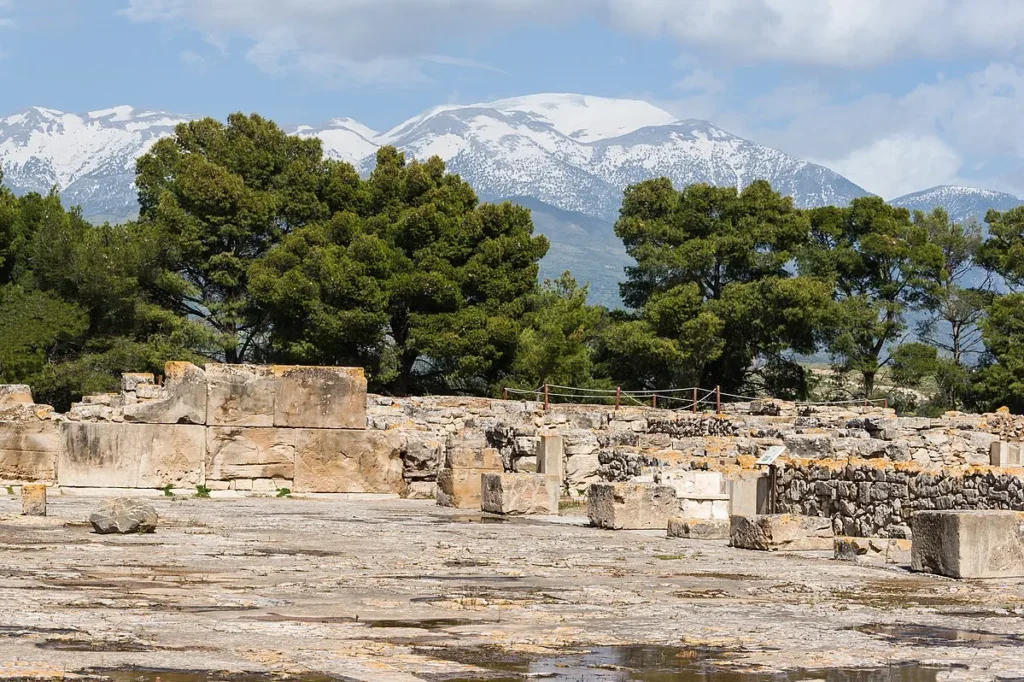
Phaistos occupied a commanding ridge overlooking the Messara Plain in southern Crete, the island’s most fertile agricultural region.
The palace demonstrated exceptional architectural harmony through symmetrical room arrangements and carefully planned sight lines toward Mount Ida. Italian archaeologists began excavations in 1900 CE, the same year Evans started work at Knossos, uncovering a structure second only to Knossos in size and political importance. The palace produced the famous Phaistos Disc, a clay tablet inscribed with 241 stamped symbols arranged in a spiral that remains undeciphered despite a century of scholarly attempts. The disc’s unique pictographic script appears nowhere else in the archaeological record, frustrating linguists who have proposed hundreds of translation theories without consensus.
Storage magazines at Phaistos held agricultural surpluses from the surrounding plain, supporting a population that archaeologists estimate reached 50,000 people in the palace’s sphere of influence. The west court featured raised walkways and circular pits called kouloures, possibly used for grain storage or ritual offerings. Workshops manufactured pottery, textiles, and metal goods for local use and export across Mediterranean trade networks. The palace controlled access to Kommos, an important harbor on the Libyan Sea that connected Crete with North Africa and the eastern Mediterranean. Excavators discovered Kamares Ware pottery at Phaistos, a distinctive polychrome ceramic style produced during the Middle Minoan period and found exclusively at palace sites.
The palace experienced three major construction phases between 1900 and 1400 BCE, with each iteration built slightly east of its predecessor after earthquake destructions. The final palace featured a grand staircase leading from the west court to the propylaea, impressive ceremonial halls on upper floors, and residential quarters for the ruling elite. Italian archaeologist Luigi Pernier discovered the Phaistos Disc in 1908 CE in a basement room, though the find’s archaeological context remains disputed among scholars.
Built out of a love for history, kept free from distractions.
Spoken Past is an independent project shaped by curiosity, care, and long hours of research. Reader support helps keep it maintained, carefully researched, and open to everyone.
3. Malia
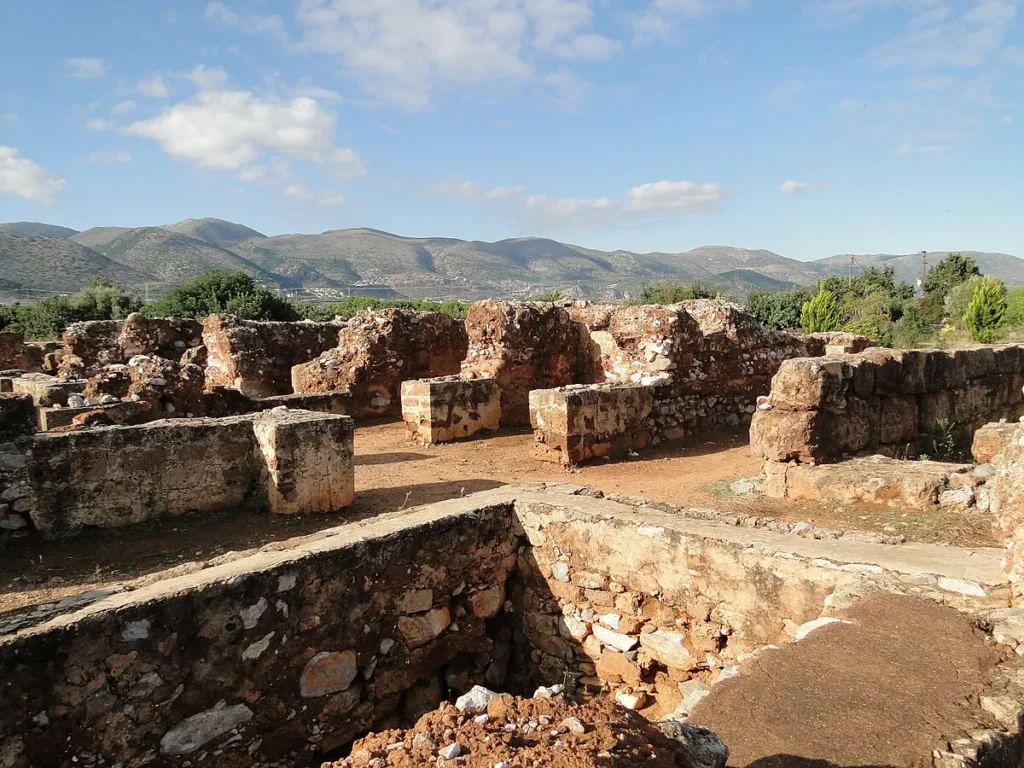
The palace at Malia stretched along the northern coast of Crete near a natural harbor that facilitated maritime trade. French archaeologists excavating since 1915 CE revealed a structure notable for its regular, almost geometric layout that contrasted with the organic growth pattern visible at Knossos and Phaistos. The complex included the Quartier Mu, a separate administrative and workshop district that manufactured pottery and stone vessels for trade, and the Chrysolakkos burial structure where elite families interred their dead with gold jewelry and ceremonial weapons.
Malia controlled surrounding fertile plains that produced grain, olives, and grapes. The palace stored surpluses in magazines with built-in stone platforms supporting rows of pithoi jars. A distinctive round stone table or kernos in the central court featured 34 small depressions around its rim, probably used for pouring liquid offerings to deities during seasonal festivals.
Archaeologists discovered bronze tools, stone lamps, and ceramic vessels throughout the complex, indicating active craft production. The palace covered 7,500 square meters and aligned along a north-south axis like other Minoan palaces. Eight kouloures in the southwest corner provided storage capacity for thousands of bushels of grain. Greek archaeologist Joseph Hadzidakis first uncovered Malia in 1915, but systematic excavation began in 1922 under French scholars Jean Charbonneaux, Fernand Chapouthier, and Pierre Demargne. The site yielded remarkable gold artifacts including the famous bee pendant from Chrysolakkos, crafted with sophisticated granulation techniques around 1700 BCE. Malia maintained importance throughout the palace period until destruction around 1450 BCE coincided with the decline of Minoan civilization across Crete.
4. Zakros
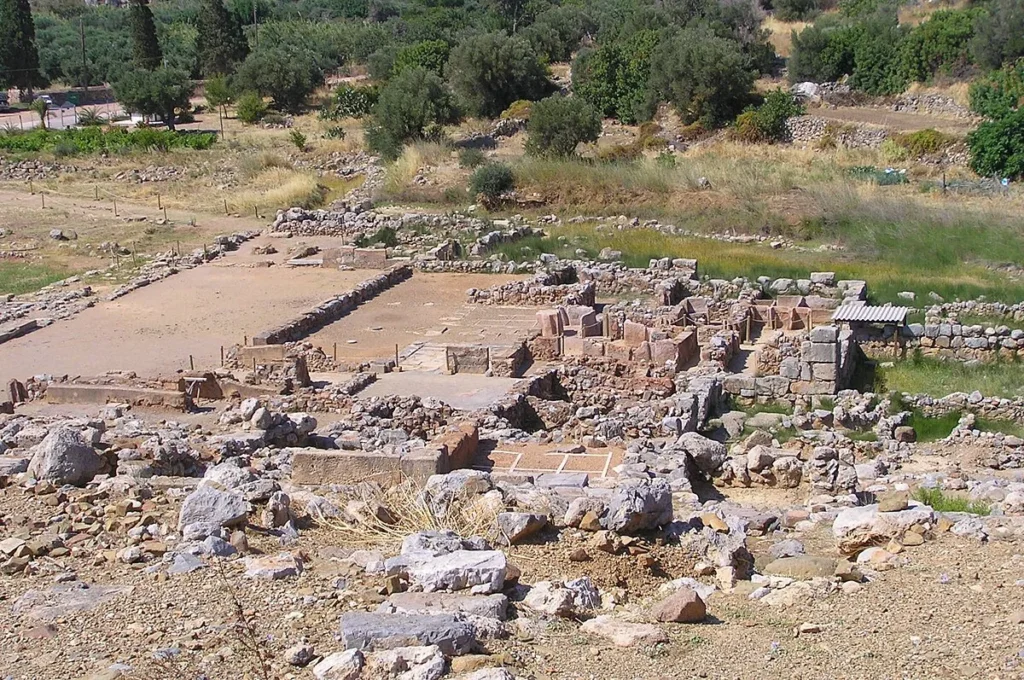
Zakros stood at Crete’s eastern tip, perfectly positioned to control sea routes connecting the Aegean with Cyprus, the Levantine coast, and Egypt. Greek archaeologist Nikolaos Platon excavated the palace between 1961 and 1965 CE, finding it remarkably well-preserved because earthquakes and fires buried the complex quickly without subsequent looting. The treasury room yielded luxury imports including elephant ivory from Syria, copper ingots from Cyprus, and ostrich eggs from North Africa that revealed extensive trade networks. Zakros served as the primary Minoan gateway to eastern Mediterranean markets, importing raw materials and exporting finished goods through its protected harbor.
The palace featured a central court measuring 100 by 40 feet surrounded by workshops, storage magazines, and ceremonial rooms. A sacred spring within the palace complex provided water for lustral basins used in purification ceremonies before religious rituals. Stone vessels, bronze implements, and Linear A tablets documented the palace bureaucracy’s management of agricultural production, craft workshops, and maritime commerce that made Zakros wealthy despite its remote location. The spring still flows today, creating a pool at the palace’s lowest point. Zakros represents one of the most scientifically excavated Minoan sites because Platon employed modern archaeological methods unavailable to earlier excavators at Knossos and Phaistos.
The palace covered approximately 8,000 square meters with 150 rooms arranged on two levels around the central and western courts. Platon’s excavations yielded 591 Linear A documents including 31 tablets and 560 sealed clay nodules, making Zakros the second-largest source of Linear A inscriptions after Hagia Triada. Two Egyptian Early Dynastic stone bowls discovered in the cult repository likely originated from robbed Egyptian tombs, demonstrating the extensive trade networks connecting Minoan Crete with North Africa. The palace operated from approximately 1900 BCE until destruction around 1450 BCE.
5. Zominthos
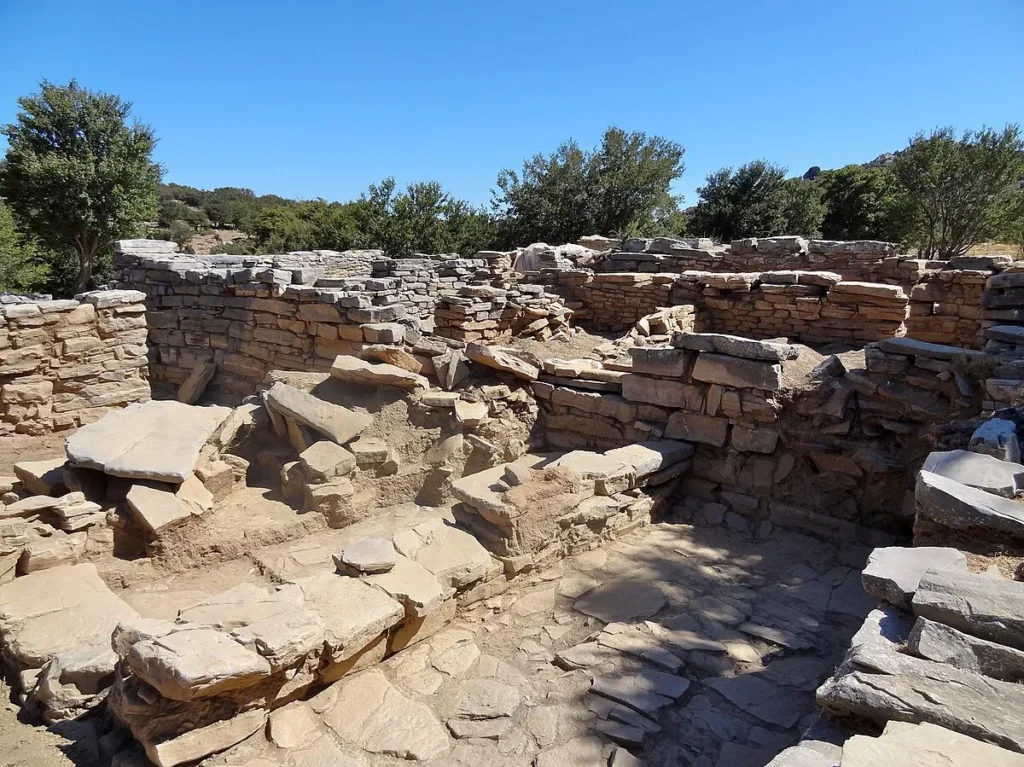
Zominthos perched on the northern slopes of Mount Ida at an elevation of 3,900 feet, making it the highest palace structure in the Minoan world.
Excavations beginning in 1982 CE under Yannis Sakellarakis revealed a three-story building covering nearly 15,000 square feet with massive stone foundations and timber-reinforced walls. The mountain location placed Zominthos along the route connecting Knossos with the Idaean Cave, the most important peak sanctuary in Minoan Crete where Zeus was allegedly born according to later Greek mythology. The palace served religious functions related to mountain worship and controlled the production of wool from highland sheep flocks. The eastern wing spanning over 1,600 square meters appears to have had exclusively religious uses. A 57-foot corridor divided the palace into eastern and western sections. Excavators discovered Linear A tablets, bronze figurines, seals, and jewelry dropped from upper floors during the palace’s destruction. Clay tablets recorded hundreds of three-footed vessels, demonstrating sophisticated accounting practices.
The palace operated workshops for ceramics, metallurgy, and crystal cutting while managing natural resource extraction from the surrounding mountains. Sophisticated drainage systems with terracotta pipes carried water throughout the complex. Geomagnetic surveys revealed extensive settlement buildings surrounding the palace across four acres. The site remained accessible only three months annually due to altitude and weather conditions, suggesting the priestly elite relocated seasonally between Zominthos and lowland centers. Excavations continued after Sakellarakis’s death in 2010 under Efi Sapouna-Sakellaraki, who uncovered evidence of an older palace beneath the neopalatial structure. The palace was destroyed around 1600 BCE during a major earthquake.