
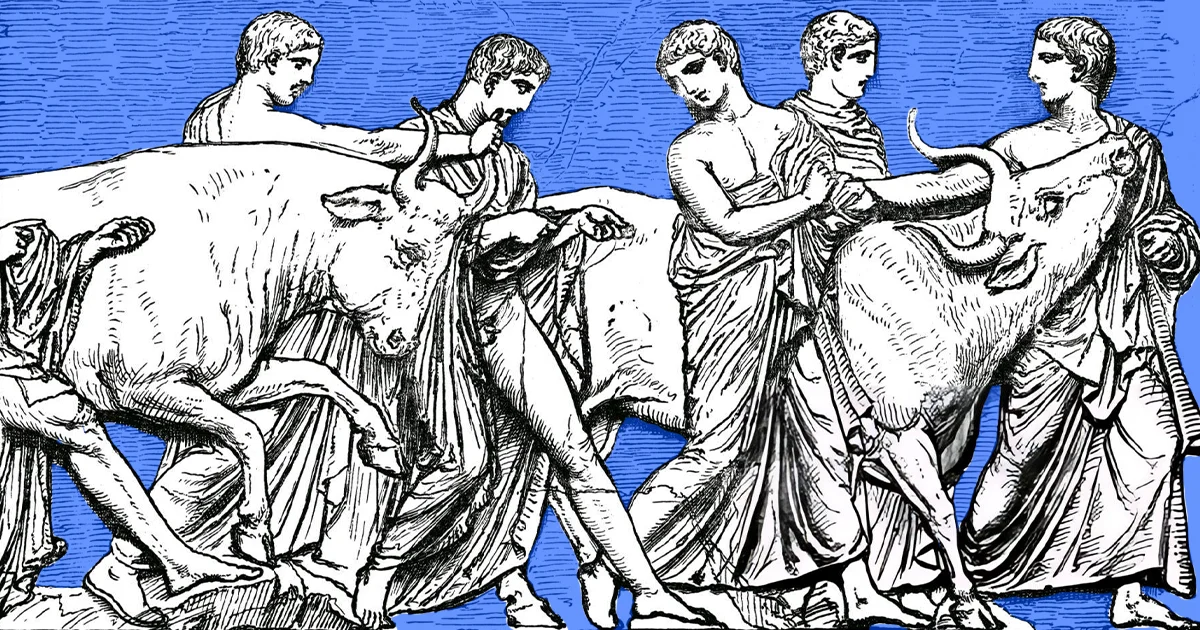
An ancient sacrifice was not a private act of devotion but a public spectacle attended by entire communities. At Athens during the Panathenaia festival in the 5th century BCE, the city slaughtered up to 100 cattle in a single day, with citizens lining up to receive portions of roasted meat. These rituals followed precise procedures recorded in temple regulations, with mistakes in sequence or prayer wording believed to render the entire ceremony invalid.
The physical evidence tells us exactly what happened at these altars. Archaeologists excavating the sanctuary of Sant’Omobono in Rome uncovered bones from the 7th and 6th centuries BCE showing specific butchery patterns: sheep and goat thighbones burned at high temperatures, pig ribs bearing cut marks from bronze knives, and cattle leg bones split lengthwise to extract marrow. Similar deposits at Greek sanctuaries contain charred barley grains mixed with salt, the exact offering Homer describes warriors sprinkling on victims’ heads before the kill.
Ancient sacrifice was fundamentally an act of cooking and eating. Gods received smoke from burning thighbones wrapped in fat, while human participants divided the remaining meat according to strict hierarchies. Priests claimed hindquarters, magistrates received loins, and ordinary citizens got smaller portions weighed out on temple scales. Inscriptions from 4th-century BCE Athens record fines of 50 drachmas imposed on officials who distributed meat portions incorrectly.
These rituals structured political and social life across the Mediterranean for over 1,000 years. Understanding what actually occurred at ancient altars requires looking past modern assumptions about religion to examine the archaeological remains, written regulations, and eyewitness accounts that describe these ceremonies in concrete detail.
The Altar at Nestor’s Palace
Homer’s Odyssey preserves the most detailed literary description of ancient sacrifice in Greek sources. When young Telemachus arrives at Pylos searching for news of his father, he finds King Nestor and his sons conducting offerings to Athena on the beach. The text specifies that 81 men arranged in nine groups of nine each participate, with five bulls slaughtered in sequence during the 5th century BCE setting of the poem.
The ceremony begins with Nestor selecting a cow with gilded horns and leading a procession to the altar. He washes his hands in seawater brought in a bronze basin, then takes roasted barley mixed with salt and scatters it while speaking a prayer formula. After cutting hair from the animal’s forehead and throwing it into the flames, Nestor’s son Thrasymedes strikes the neck with an axe while women present raise the ritual cry called ololuge.
Blood flows into a special bronze vessel, and butchering proceeds in fixed order: thighbones wrapped in a double layer of fat, raw meat pieces laid on top, the whole burnt on split logs of fig wood. While divine portions smoke on the altar, participants roast the remaining meat on five-pronged spits and eat it as a communal meal. The entire sequence from procession to feast consumption takes approximately three hours.
Regulations Carved in Stone
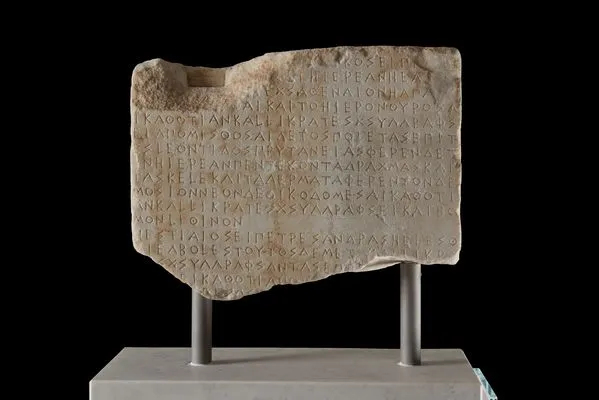
A marble stele erected around 375 BCE at the sanctuary of Athena Nike on the Athenian Acropolis records payment for the priestess: 50 drachmas in cash, the right hindleg of every animal sacrificed, and all hides from public ceremonies. The inscription specifies that these portions belong to the priestess “in perpetuity” and lists penalties for officials who divert temple revenues. Similar regulations survive from over 200 Greek sanctuaries.
The most detailed sacrificial tariff comes from Marseille (ancient Massalia), a Greek colony in southern Gaul. Carved around 300 BCE, this limestone inscription establishes fees that temple priests must charge for different animals: a cow costs 12 obols, a full-grown pig 9 obols, and a young goat 1 obol. It specifies exactly which anatomical portions the priest keeps (the hide, one leg, and certain internal organs) and which parts the dedicator receives.
These regulations reveal economic calculation behind religious practice. At major sanctuaries, priests accumulated enormous quantities of meat and hides that they sold in urban markets. Inscriptions from the Athenian Eleusinion record priests auctioning hides from Mysteries initiations, with proceeds funding temple repairs and staff salaries. The state essentially operated sanctuaries as public butcheries that redistributed animal protein to urban populations.
Archaeological Evidence From Altars
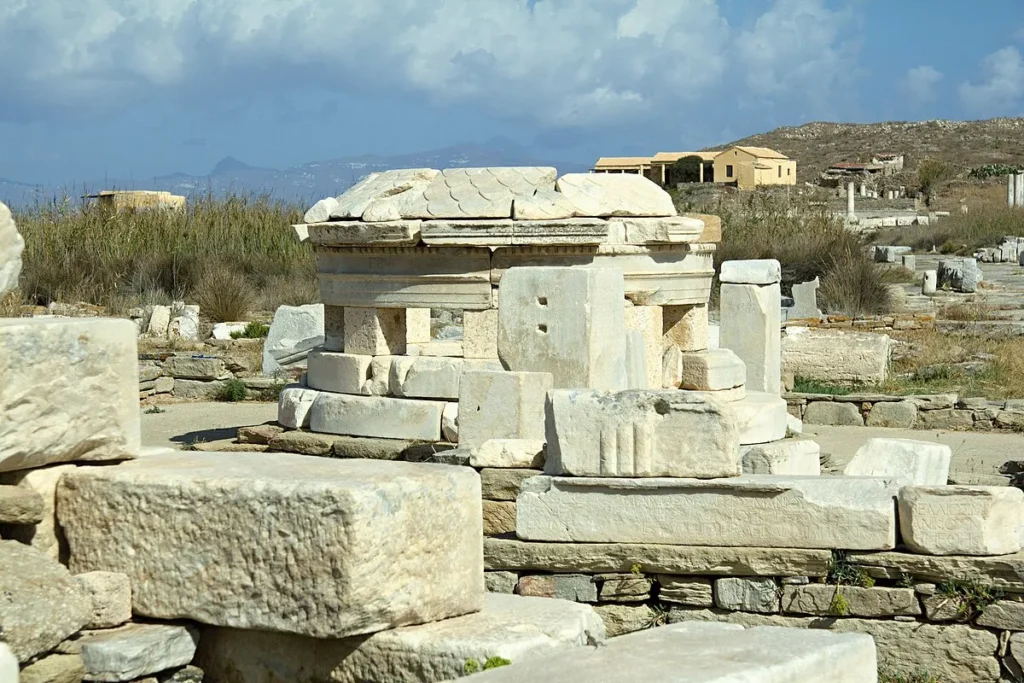
Excavations at the sanctuary of Kommos on Crete’s southern coast uncovered an altar platform used continuously from 1000 to 200 BCE. The stone surface bore chemical traces of animal fats burned repeatedly at temperatures exceeding 800 degrees Celsius. Around the altar base, archaeologists found a deposit layer 30 centimeters thick containing charred bones from an estimated 500 cattle, 2,000 sheep and goats, and 100 pigs sacrificed across eight centuries.
Analysis of these bones revealed patterns invisible in literary sources. More than 90 percent of cattle bones came from animals under two years old, indicating communities sacrificed valuable breeding stock rather than old animals. Sheep remains showed seasonal concentrations suggesting spring lambing festivals. Cut mark patterns on cattle scapulae matched bronze blade widths of 4 to 6 centimeters.
Roman altar deposits show similar patterns. At the Forum Boarium in Rome, excavators recovered bones from the Ara Maxima altar of Hercules spanning 700 BCE to 200 CE. The assemblage contained mostly pig bones (62 percent), followed by sheep and goat (31 percent), and cattle (7 percent). Nearly all pig mandibles came from animals six months old, matching the age when Roman farmers traditionally weaned and sold young swine in autumn markets.
The Kill and Blood Collection
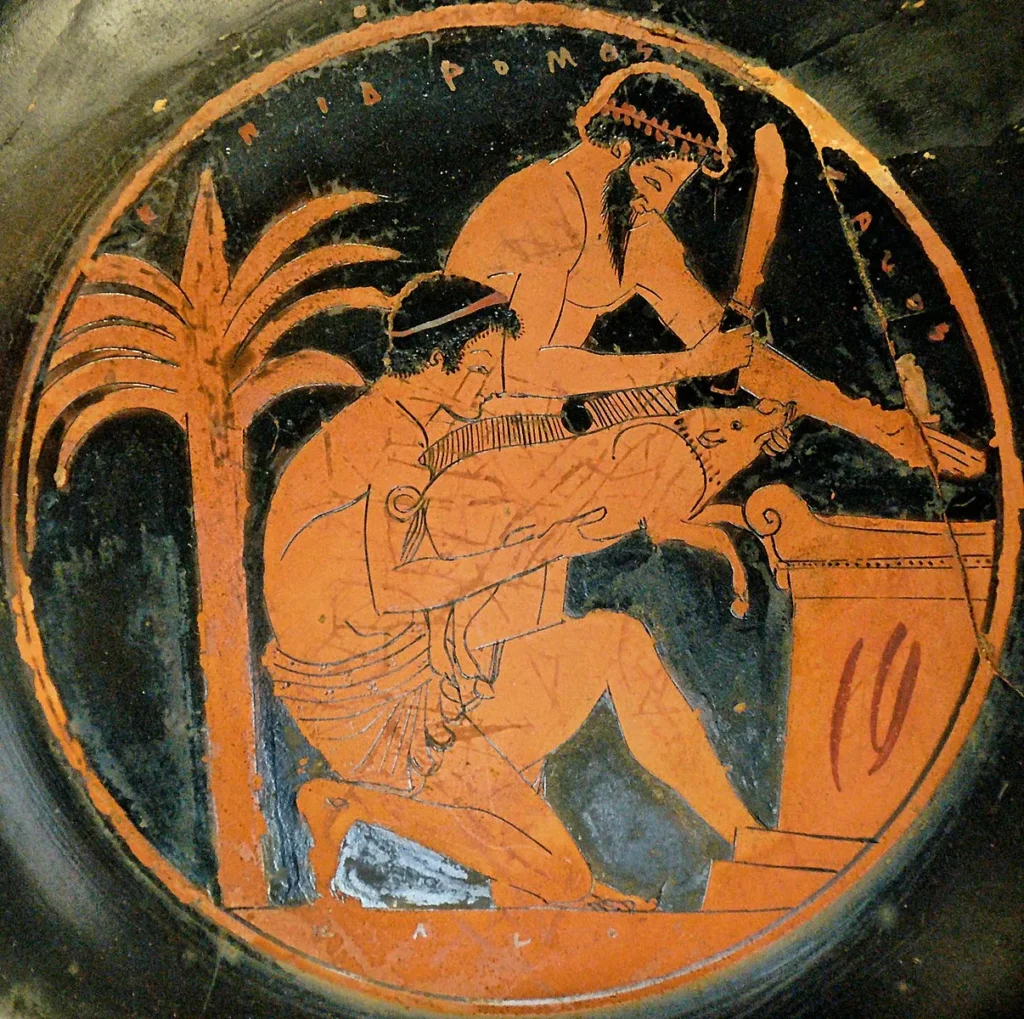
Greek and Roman sources emphasize that sacrificial killing must occur swiftly with minimal suffering. Technical handbooks specify that the person making the cut should sever the carotid arteries and jugular veins with a single stroke, causing the animal to lose consciousness within 10 to 15 seconds from blood pressure drop. Priests used knives with blades 20 to 30 centimeters long made of bronze or iron, kept sharp specifically for this purpose.
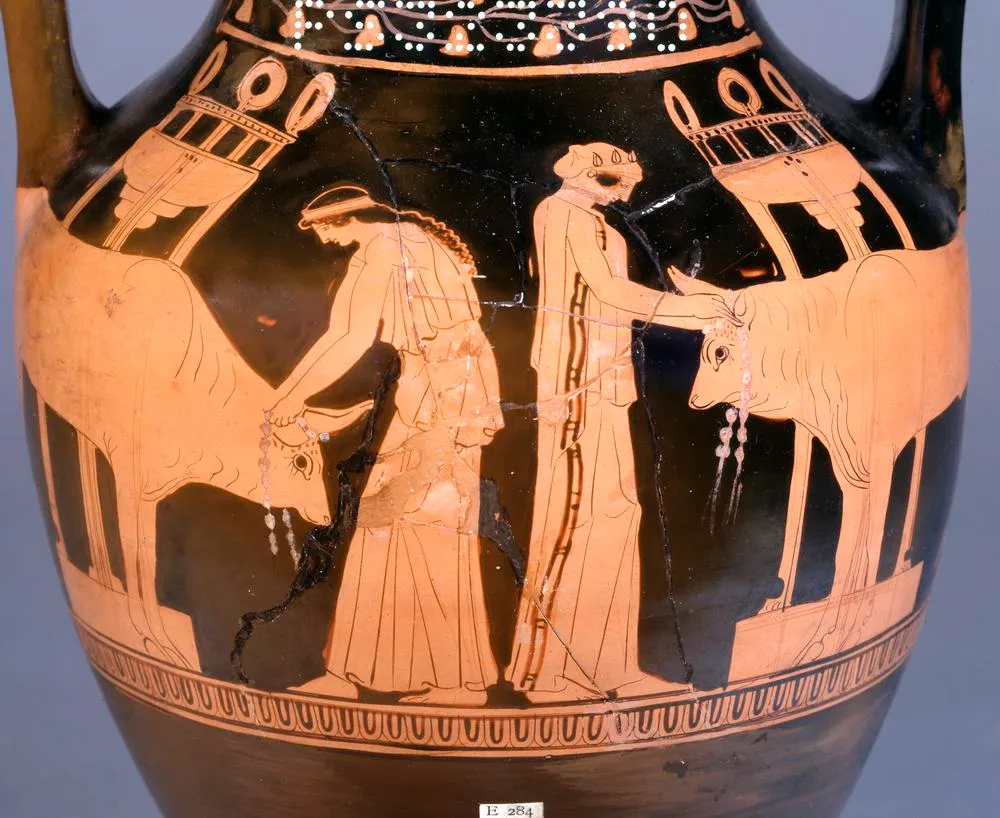
Multiple attendants held the animal during the kill. For cattle, four men typically grasped the legs while a fifth controlled the head, pulling it back to expose the throat. Vase paintings from 5th-century Athens show this five-person arrangement repeatedly. Smaller animals like sheep required only two handlers. The moment of cutting was marked by the female ritual cry and sometimes flute music to honor the god receiving the offering.
Collecting blood was essential. A bronze bowl called a sphageion caught the flow, which was then poured around the altar base or onto the burning divine portions. Some sanctuaries had stone channels cut into altar platforms to direct blood flow. At the sanctuary of Artemis Orthia in Sparta, excavators found a semicircular channel 8 meters long carved into bedrock around an altar platform, with runnels directing blood to collection basins where it could be gathered for pouring.
Built out of a love for history, kept free from distractions.
Spoken Past is an independent project shaped by curiosity, care, and long hours of research. Reader support helps keep it maintained, carefully researched, and open to everyone.
Dividing the Meat
After the kill, systematic butchering converted the carcass into hierarchically ranked portions. Literary sources and inscriptions distinguish at least six categories. The god’s portion consisted of thighbones (Greek meria, Latin femora) with fat and tail wrapped around them, burned on the altar. Priests received a hindleg (usually the right) plus often the hide, tongue, and sometimes internal organs. Magistrates or special honorees got the loin (Greek osphys) and portions of the back.
The remaining meat went to ordinary participants, but not equally. A 4th-century BCE inscription from Athens specifying distribution at the Panathenaia festival notes that meat was allocated by deme (citizen neighborhood), with each deme receiving an amount proportional to its population. Within each deme, further division occurred by household, age group, or lottery. Some participants received as little as 200 grams, barely enough for a single meal.
Distribution took hours and required staff. Inscriptions mention officials called hieropoioi (sacred-makers) who supervised butchering and weighing. They used standardized bronze or stone weights to ensure portions matched specifications. At large festivals, priests set up multiple distribution tables, with separate lines for different citizen categories. Vase paintings show men carrying hindquarters on their shoulders through crowds of waiting recipients.
Timing and Preparation
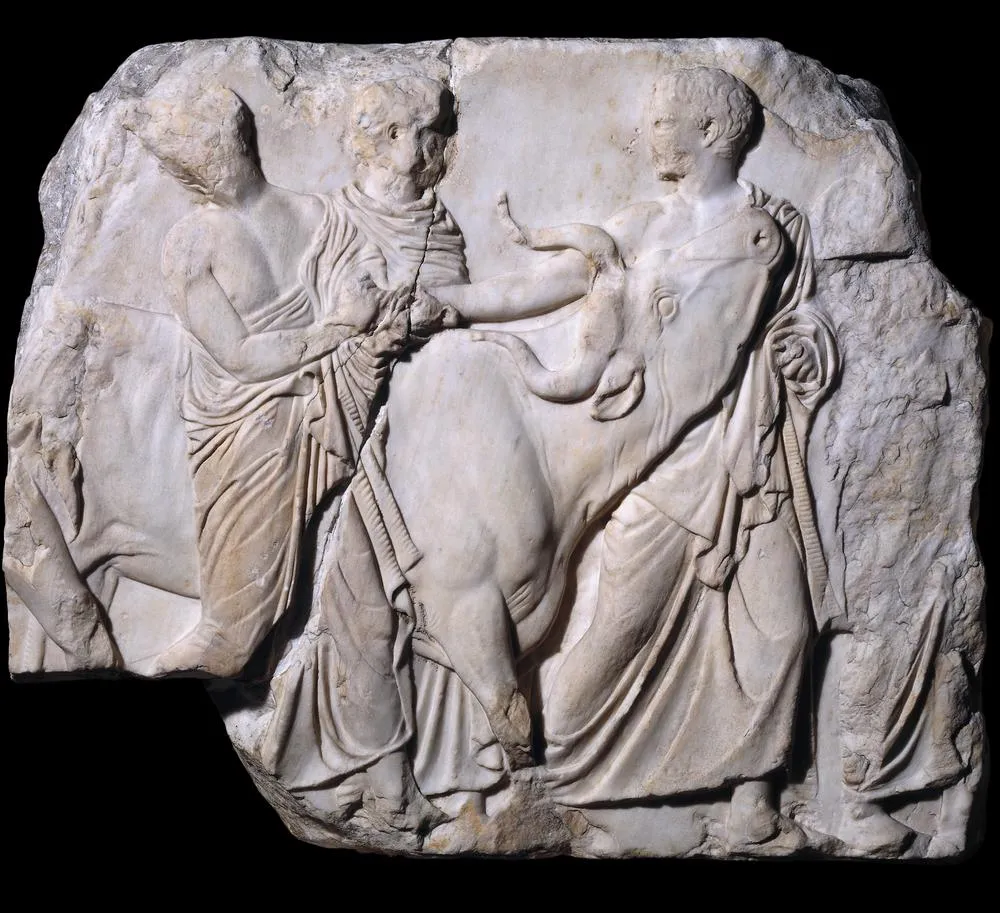
Sacrificial animals underwent preparation beginning days before the ceremony. Purchasers selected livestock matching specifications in ritual calendars: female animals for goddesses, males for gods, animals of particular colors for specific deities. At Athens, the city maintained herds near Marathon to supply the Panathenaia, with shepherds delivering animals to the city three days before the festival opened.
Handlers adorned animals with woolen fillets, garlands of vegetation, and sometimes gilded horns. Literary sources claim this decoration indicated the animal’s consent, though the practical function was marking it as sacred property. Attendants washed animals and checked for physical defects that would invalidate offerings. A 5th-century inscription from the island of Kos specifies that pigs offered to Demeter must be free from blemishes, with violators fined 100 drachmas.
Roman practice added layers of complexity. Before any sacrifice, an official called a popa stunned the animal with a mallet or axe blow to the forehead. Only after this stunning did the victimarius cut the throat. Literary sources specify different prayer formulas for different gods, with priests reading from linen books called libri lintei. Some ceremonies required musicians, special bread offerings, or preliminary libations of wine poured according to fixed measurements.
The Roasting and Feast
After divine portions burned on the altar, participants roasted the remaining meat and ate it communally. Greek practice involved skewering meat pieces on iron spits (obeloi) approximately 1 meter long. Homer mentions five-pronged spits, and excavations at Greek sanctuaries have recovered bronze and iron examples matching literary descriptions. Roasting occurred over separate fires from the altar, using wood specified in some regulations (oak for Zeus, fig for Dionysus).
Timing was critical. Meat had to be consumed while fresh in Mediterranean heat, typically within four hours of slaughter. Large festivals with hundreds of animals sacrificed presented logistics challenges. The Greater Panathenaia at Athens involved sacrificing 100 cattle and providing meat portions to perhaps 20,000 participants. This required dozens of butchers working simultaneously, multiple cooking fires, and distribution lines operating from dawn to evening.
At Rome, sacrificial feasts (epulae) followed somewhat different patterns. Rather than everyone roasting their own portions, professional cooks (coqui) prepared meat in sanctuary kitchens. The cooked food was served on tables in courtyards adjoining temples. A 2nd-century inscription from Ostia mentions reclining couches provided for banqueters at a temple of Hercules, with slaves serving roasted pork and wine in specified quantities per person.
Costs and Economics
Ancient sacrifice was expensive. A cow suitable for offering to Zeus cost 50 to 70 drachmas in 4th-century Athens, when a skilled laborer earned 1 drachma daily. Sheep cost 10 to 15 drachmas, goats 5 to 8 drachmas. These prices meant private individuals rarely sacrificed large animals, instead pooling resources through religious associations or relying on state-sponsored ceremonies that provided public meat distributions.
Cities spent enormous sums on sacrificial programs. Athens allocated 10,000 drachmas annually for cattle at the Panathenaia festival alone. The imperial Roman government under Augustus sponsored 100 days yearly of public sacrifices at major temples, consuming thousands of animals. Priests at the Temple of Jupiter Capitolinus in Rome sacrificed a white bull daily, requiring the city to maintain dedicated herds that cost hundreds of thousands of sesterces in yearly upkeep.
The economic impact extended beyond direct costs. Sanctuaries employed shepherds, stable workers, butchers, hide tanners, and meat vendors. At Delos in the 2nd century BCE, temple records list 47 different job categories related to sacrifice logistics. The hide trade was particularly lucrative. A single bull hide sold for 3 to 5 drachmas in Athens, and major sanctuaries accumulated thousands yearly. Some temples operated their own tanneries, converting religious ritual into profitable industrial enterprise.
Private Versus Public Rituals
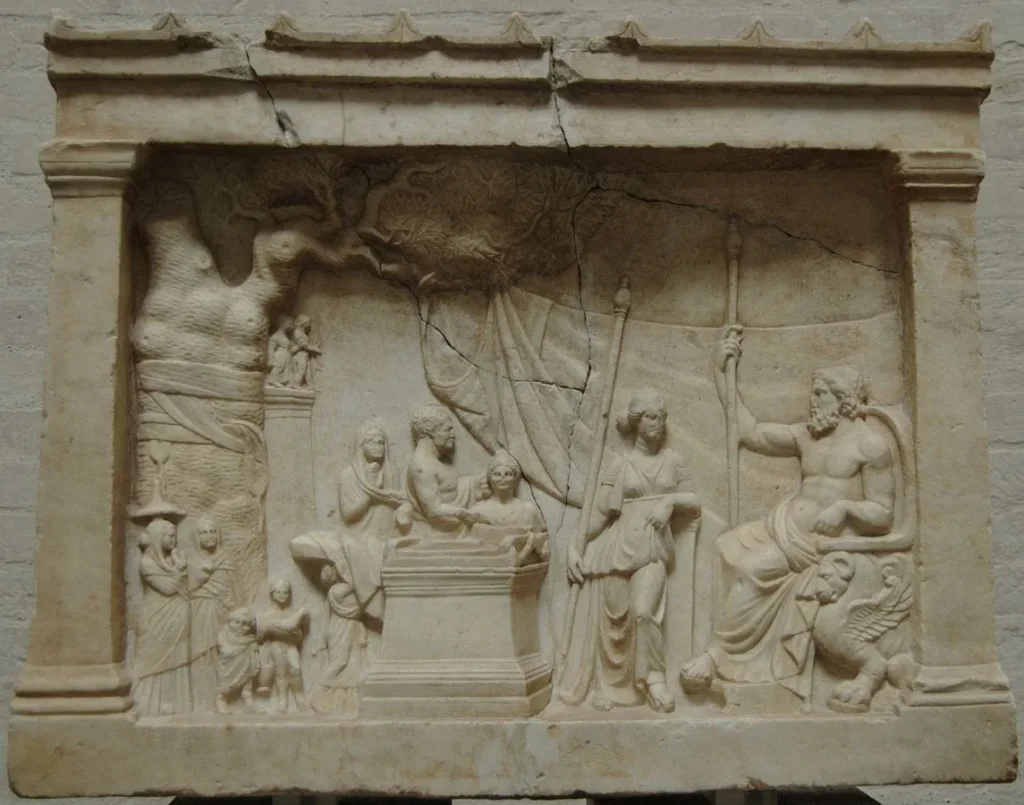
While state sacrifices followed elaborate protocols, private household rituals operated differently. Families conducting offerings at home altars used simpler procedures with smaller animals. A typical household might sacrifice a piglet for a birthday or purification, following abbreviated versions of temple ceremonial. Literary sources describe householders themselves performing kills without priests present, though still following basic ritual sequence: washing, barley sprinkling, prayer, bloodletting, burning select portions, and communal consumption.
Cost pressures drove variation in private practice. Instead of whole animals, families sometimes offered cakes shaped like animals, ceramic figurines, or bloodless offerings of grain and wine. Inscriptions record that these substitutions were acceptable to gods under certain circumstances, particularly for the poor. A 3rd-century BCE text from Cyrene specifies that bloodless offerings suffice for monthly household ceremonies, with animal victims required only at annual festivals.
Geographic differences also mattered. Greek colonists in southern Italy and Sicily adapted sacrifice traditions to local conditions. At Selinunte in Sicily, a bronze tablet from 450 BCE describes purification sacrifices using terminologies unknown in mainland Greece, suggesting regional variants developed as settlers interacted with indigenous populations. Similarly, Roman sacrifices in provinces incorporated local ritual elements while maintaining core procedures.