
In the year 664 CE, a showdown between two competing versions of Christianity took place in a monastery perched on England’s windswept northeastern coast. The Synod of Whitby wasn’t just a religious debate. It was a battle for the soul of English Christianity, and the decision made that day would echo through the next fourteen centuries.
This wasn’t a war fought with swords. It was fought with arguments about the calendar.
The Stakes Were Higher Than They Seemed

Picture this: King Oswiu of Northumbria celebrating Easter and ending his Lenten fast while his queen, Eanflæd, was still fasting and observing Palm Sunday. Same palace, same day, two different Easters.
This actually happened. Repeatedly.
The reason wasn’t that one of them had the date wrong. They were following two completely different Christian traditions, each with its own method of calculating when Easter should fall. Oswiu had been educated by Irish monks at Iona. His queen came from Kent and followed Roman customs. In 664, this private royal awkwardness exploded into a full-blown ecclesiastical crisis.
The Irish monks who had evangelized much of northern England calculated Easter differently than Rome did. They also cut their hair differently. These might seem like minor details, but in the seventh century, they symbolized something much bigger: whose authority would shape English Christianity?
Two Christianities Colliding
Christianity had reached England through two separate missionary efforts, and they brought different traditions with them.
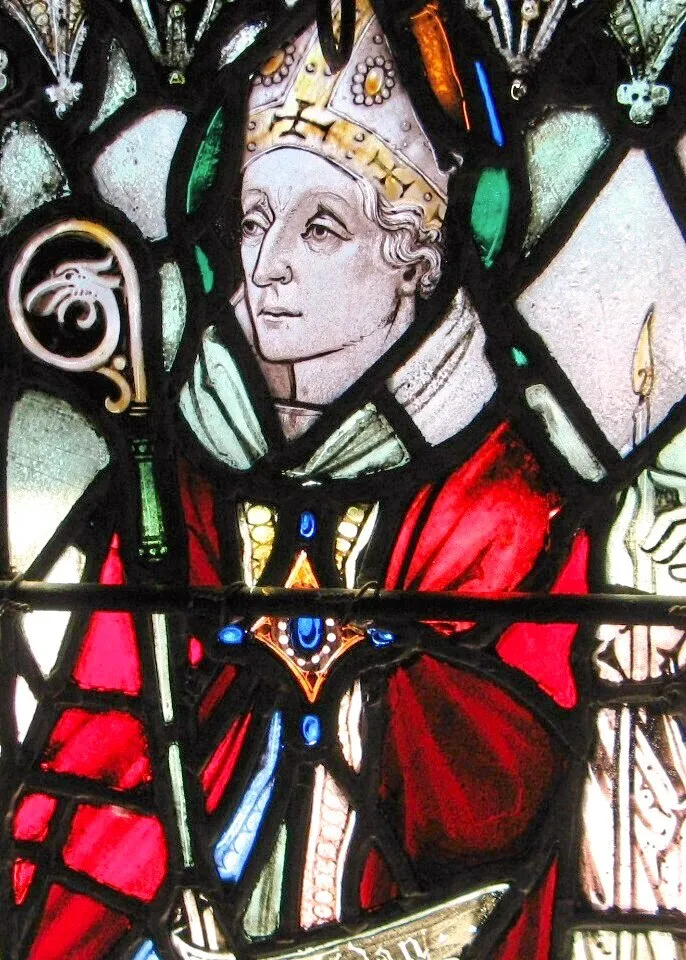
From the south came Augustine of Canterbury in 597, sent by Pope Gregory the Great. Augustine established his base at Canterbury and brought Roman customs and Roman authority. He baptized King Æthelberht of Kent and thousands of his subjects, establishing Christianity according to Roman practice throughout Kent and the surrounding kingdoms.
From the north and west came Irish missionaries, most famously Aidan, who arrived at Lindisfarne in 635 at the invitation of King Oswald of Northumbria. These monks came from Iona, the great island monastery founded by Columba, and they brought Celtic Christian practices that had developed during centuries of relative isolation from Continental Christianity. They were ascetic, devoted, and remarkably successful at converting the pagan Anglo-Saxons.
For decades, these two traditions coexisted uneasily. The Irish monks commanded deep respect. Bishop Aidan was so beloved that even those who disagreed with his Easter calculation tolerated the difference out of love for him. Bede, writing decades later, described Aidan as a man who “laboured diligently to practise the works of faith, piety, and love, which is the mark of all the saints.”
But when Aidan died in 651, followed by his successor Finan in 661, the tensions could no longer be suppressed.
The Technical Problem: Easter Calculation
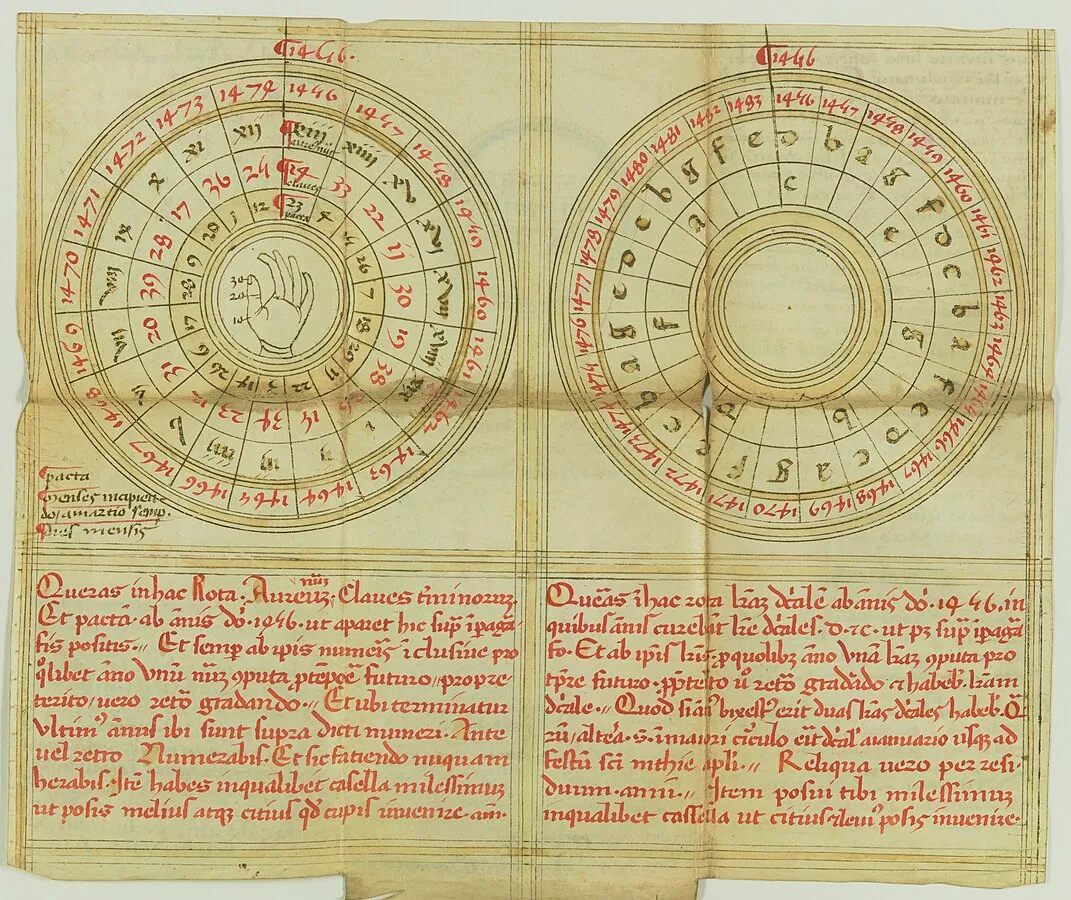
The disagreement centered on computus, the mathematical method for determining Easter’s date. This mattered immensely because Easter is Christianity’s most important feast.
Both sides agreed Easter should fall on a Sunday. Both agreed it should follow the spring equinox and occur during the same lunar month as the Jewish Passover. But they disagreed on the details of calculating exactly when those conditions were met.
The Roman method, based on a 19-year lunar cycle refined by Alexandrian mathematicians, placed Easter between the 15th and 21st days of the lunar month. It ensured Easter always fell after the spring equinox.
The Irish method, based on an older 84-year cycle, allowed Easter to fall as early as the 14th day of the lunar month and as late as the 20th. This occasionally put Easter before the equinox or caused it to coincide with the Jewish Passover, both considered problematic by Roman authorities.
The result? In some years, Irish Christians and Roman Christians celebrated Easter on different Sundays, sometimes a week apart. In a kingdom where the king followed one tradition and the queen another, this created impossible situations. When should the court fast? When should they feast? Which bishops’ authority should prevail?
The Tonsure Controversy
The debate wasn’t limited to Easter. Another visible difference divided the two camps: how monks cut their hair.
Roman monks wore the corona, a tonsure that shaved the crown of the head while leaving a ring of hair, symbolizing Christ’s crown of thorns.
Irish monks wore what their opponents derisively called “the tonsure of Simon Magus,” shaving the front of the head from ear to ear while leaving the hair long in back.
This might seem trivial, but in medieval Christianity, outward signs mattered. The tonsure publicly identified a man as a monk and indicated which ecclesiastical authority he recognized. When Irish and Roman monks stood side by side, their very hairstyles announced competing allegiances.
The Setting: Whitby Abbey

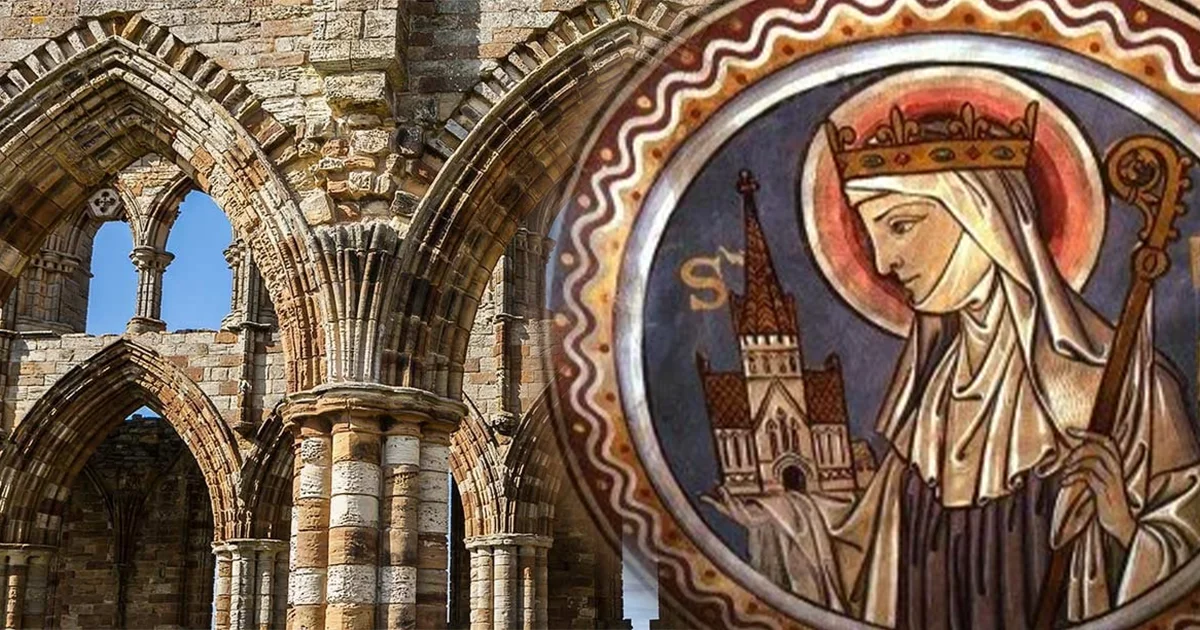
In 664, King Oswiu called a council to settle these questions once and for all. The location was Streanceshalh, known today as Whitby, a monastery ruled by Abbess Hild.
Hild was herself a fascinating figure. Of royal Northumbrian blood, she had initially prepared to become a nun in Gaul before Bishop Aidan called her back to England. She founded monasteries, educated future bishops, and commanded such respect that kings and nobles sought her counsel. Her monastery at Whitby was the perfect neutral ground for this contentious debate.
The attendees read like a who’s who of seventh-century English Christianity. King Oswiu presided, with his son Alhfrith in attendance. Bishop Colman of Lindisfarne led the Irish party, supported by Abbess Hild and many of the northern clergy. Bishop Agilbert of the West Saxons, who had studied in Gaul, represented the Roman position, along with a young and ambitious priest named Wilfrid and a priest named Agatho. James the Deacon, who had served under Paulinus decades earlier and never wavered from Roman practice, stood with them. Queen Eanflæd and her Kentish priest Romanus supported the Roman side.
Bishop Cedd, who had been consecrated by Irish bishops but was willing to consider both positions, served as interpreter.
The Debate Begins
King Oswiu opened the proceedings with a statement that everyone could agree on: “It is fitting that those who serve one God should observe one rule of life and not differ in the celebration of the heavenly sacraments, seeing that they all hoped for one kingdom in heaven.”
He asked Bishop Colman to speak first.
Colman’s defense of Irish practice rested on two pillars: tradition and apostolic authority. The Irish method, he explained, came from his predecessors on Iona, holy men beloved of God. More importantly, he claimed it followed the example of John, the beloved disciple, who had celebrated Easter according to the method Colman’s tradition preserved.
“The Easter which I observe, I received from my superiors who sent me here as bishop,” Colman declared. “It was in this way that all our fathers, men beloved of God, are known to have celebrated it. This method should not seem contemptible and blameworthy seeing that the blessed evangelist John, the disciple whom the Lord specially loved, is said to have celebrated it thus.”
King Oswiu turned to Agilbert for the Roman response. But Agilbert, whose English was imperfect, asked permission for his student Wilfrid to speak on his behalf. Wilfrid would prove to be a formidable debater.
Wilfrid’s Masterful Argument
Wilfrid began by establishing the universality of Roman practice. The Easter he kept, he explained, was celebrated in Rome where Peter and Paul had lived and died, throughout Italy and Gaul, in Africa, Asia, Egypt, Greece, and “throughout the whole world, wherever the Church of Christ is scattered.”
“The only exceptions,” Wilfrid added pointedly, “are these men and their accomplices in obstinacy, I mean the Picts and the Britons, who in these, the two remotest islands of the Ocean, and only in some parts of them, foolishly attempt to fight against the whole world.”
When Colman protested that he followed John’s example, Wilfrid didn’t deny it. Instead, he reframed John’s practice in historical context. Yes, John had celebrated Easter according to Jewish law, keeping it on the 14th day of the lunar month regardless of what day of the week that fell on. But John had done so when the church was still finding its way, when many Christians were Jewish converts, when the apostles made compromises to avoid scandalizing Jewish believers.
Peter, Wilfrid argued, had refined the practice. Peter kept the spirit of the Jewish Passover timing but always waited for Sunday, the day of Christ’s resurrection. The Roman method combined the best of both traditions: respecting the lunar calendar but always celebrating on the Lord’s Day, between the 15th and 21st of the month.
“This evangelical and apostolic tradition does not abolish the law but rather fulfils it,” Wilfrid declared.
Then Wilfrid turned the knife. He pointed out that Colman’s method didn’t actually follow John’s practice anyway. John kept Easter on the 14th regardless of the day of the week. Colman insisted on Sunday but sometimes celebrated it as early as the 14th. So Colman was following neither John nor Peter consistently, neither the law nor the gospel faithfully.
The Appeal to Columba
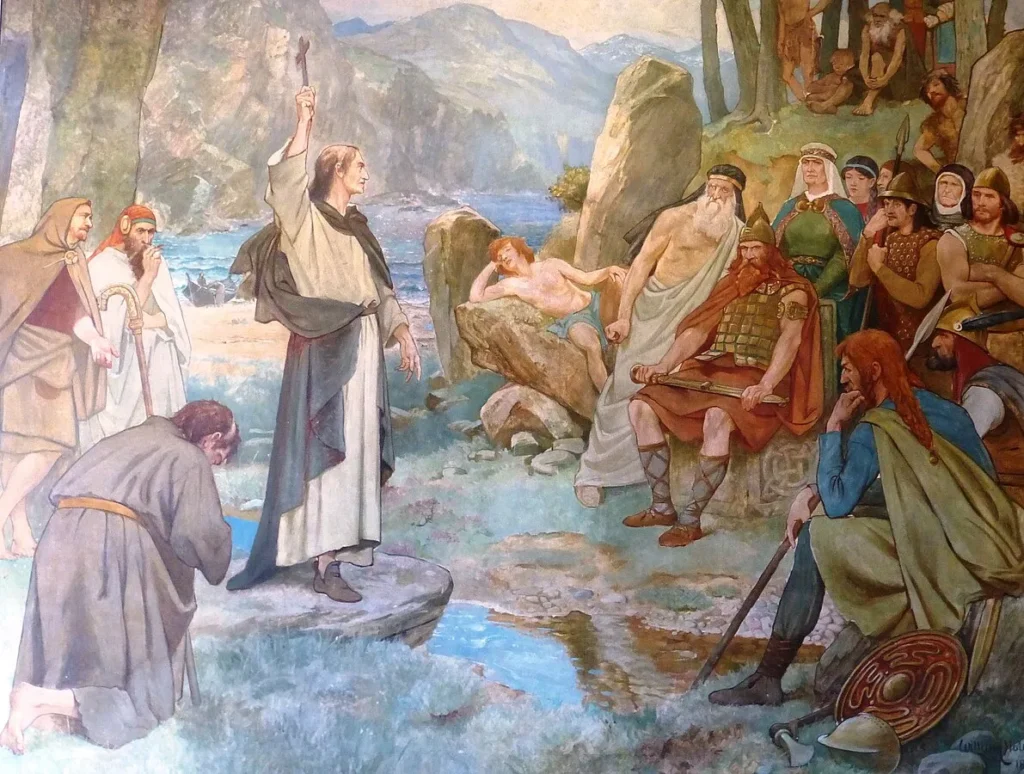
Colman tried to recover ground by invoking Columba, the great Irish saint who had founded Iona and whose spiritual descendants had converted Northumbria. Columba and his successors, Colman insisted, were “men beloved of God, to whose holiness the heavenly signs and the miracles they performed bore witness.” Their sanctity validated their practice.
Wilfrid’s response was devastating in its apparent generosity. He didn’t deny Columba’s holiness. Instead, he drew a distinction between simple ignorance and willful disobedience. If Columba and his followers had never encountered Roman practice, their sincere but imperfect observance caused no harm. They had followed God’s laws as soon as they learned them.
“I will not deny that those who in their rude simplicity loved God with pious intent, were indeed servants of God and beloved by Him,” Wilfrid conceded. “Nor do I think that this observance of Easter did much harm to them while no one had come to show them a more perfect rule to follow.”
But now, Wilfrid insisted, they knew better. The Roman practice had been explained. The Council of Nicaea in 325 had established it. The universal church followed it. To reject it now, with full knowledge, was sin.
“Do you think that a handful of people in one corner of the remotest of islands is to be preferred to the universal Church of Christ which is spread throughout the world?”
Then came Wilfrid’s coup de grâce. Even if Columba was holy, even if he worked miracles, was he greater than Peter? And hadn’t Christ himself given Peter supreme authority?
The Keys to the Kingdom
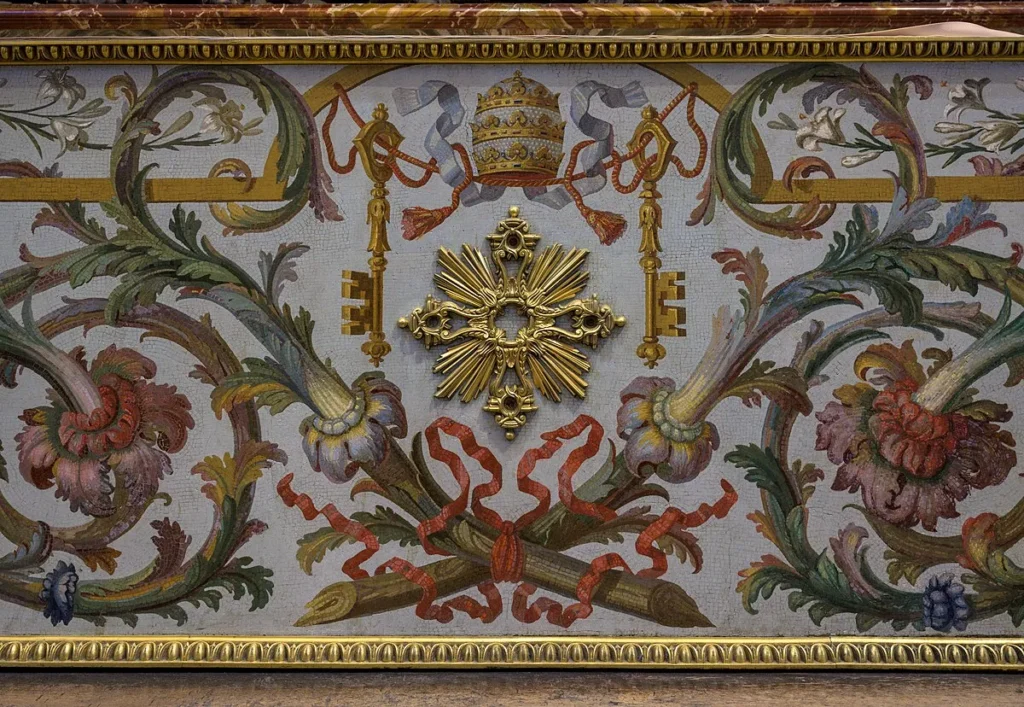
Wilfrid quoted Jesus directly: “Thou art Peter and upon this rock I will build my Church and the gates of hell shall not prevail against it, and I will give unto thee the keys of the kingdom of heaven.”
King Oswiu seized on this. He asked Colman directly: “Is it true that the Lord said these words to Peter?”
“It is true, O King,” Colman admitted.
“Have you anything to show that an equal authority was given to your Columba?”
“Nothing,” Colman replied.
“Do you both agree, without any dispute, that these words were addressed primarily to Peter and that the Lord gave him the keys of the kingdom of heaven?”
Both men agreed.
Oswiu delivered his verdict with a touch of humor that barely masked its significance: “Then, I tell you, since he is the doorkeeper I will not contradict him. I intend to obey his commands in everything to the best of my knowledge and ability, otherwise when I come to the gates of the kingdom of heaven, there may be no one to open them because the one who on your own showing holds the keys has turned his back on me.”
The assembled clergy and nobles signified their agreement. The Roman Easter won. The Irish calculation was rejected.
Built out of a love for history, kept free from distractions.
Spoken Past is an independent project shaped by curiosity, care, and long hours of research. Reader support helps keep it maintained, carefully researched, and open to everyone.
The Aftermath: Winners and Losers
Bishop Colman refused to accept the decision. He gathered those who wished to follow him, those who would not accept the Roman Easter or tonsure, and returned to Ireland. He later founded a monastery on Iona where Irish and English monks could practice according to the old ways, though even there tensions arose between the two groups.
Others adapted more readily. Bishop Cedd, who had been consecrated by Irish bishops but served among the East Saxons, accepted the Roman method immediately. James the Deacon, who had quietly maintained Roman practice through decades of Irish dominance, was vindicated.
Most significant was the position that opened at Lindisfarne. With Colman’s departure, a new bishop was needed. The monastery that Aidan had founded, that bastion of Irish Christianity, would now be led by someone following Roman customs.
King Oswiu placed Eata, an English monk trained by Aidan, as abbot of Lindisfarne. For bishop, the choice was more complicated. Wilfrid, the young priest who had argued so brilliantly at Whitby, was sent to Gaul for consecration as bishop. But the Northumbrian kings grew impatient with his absence and consecrated Chad, Eata’s colleague and Cedd’s brother, as bishop instead. When Wilfrid finally returned, Theodore of Canterbury, the new archbishop, had to sort out this canonical mess, ultimately confirming Wilfrid at Hexham and Chad at Lichfield.
How Frugal Were the Irish Monks?
Bede, writing decades later, painted a picture of the Irish monks’ simplicity that bordered on the hagiographic. When Colman left Lindisfarne, Bede wrote, “there were very few buildings there except for the church, in fact only those without which the life of a community was impossible. They had no money but only cattle.”
The Irish monks gave any money they received to the poor. They welcomed visiting kings with simple fare. They walked everywhere on foot rather than riding horses. They built monasteries only when land was offered to them by secular authorities, never seeking wealth or property for themselves.
“The sole concern of these teachers was to serve God and not the world, to satisfy the soul and not the belly,” Bede explained. The result was that religious authority commanded genuine respect. When a monk appeared, people ran to receive his blessing. When a priest visited a village, everyone gathered to hear him preach.
Bede’s account contains more than a little nostalgia. He was comparing the austere Irish missionaries to what he saw as the decadence of his own day, when bishops held vast estates and monks lived comfortable lives. But the Irish monks clearly did live with remarkable simplicity, and that simplicity was part of their appeal.
What the Synod Really Decided
On the surface, Whitby was about calculating Easter and cutting hair. But beneath those technical questions lay fundamental issues about church authority and English identity.
The Irish Easter calculation wasn’t objectively wrong. Modern scholars recognize that both methods had mathematical bases and theological justifications. The Roman 19-year cycle was more accurate, but the Irish 84-year cycle wasn’t heretical. Columba wasn’t leading people astray. Aidan wasn’t teaching error.
What mattered was uniformity and authority. Could each regional church develop its own practices, or did the church need universal consistency? Who had the authority to determine correct practice: ancient local tradition or the centralized hierarchy claiming descent from Peter?
Oswiu’s decision aligned Northumbria with Continental Christianity. It meant English churches would follow the same calendar as Rome, Gaul, and Italy. It positioned England within the broader European Christian world rather than as part of a distinct Celtic Christian sphere.
This had political implications. An England aligned with Rome was an England connected to Continental power structures, Continental learning, Continental culture. Within a few years, Theodore of Canterbury would arrive from Rome and reorganize the English church along Roman lines, creating an ecclesiastical structure that would last for centuries.
The Slow Conversion of the Celtic Church
Whitby didn’t instantly transform all of British Christianity. The Irish themselves didn’t adopt the Roman Easter until much later. Iona, Columba’s monastery and the mother house of Irish Christianity in Britain, held out until 716, when the monk Egbert finally convinced them to change.
The Britons, the native Celtic Christians of Wales and Cornwall who had refused to help convert the Anglo-Saxons, remained even more resistant. Some British churches kept the old calculation into the eighth century. Their resistance wasn’t just about the calendar. It was about refusing to submit to the authority of the church that had blessed the Anglo-Saxon conquest of their land.
The Picts accepted the Roman Easter in 710 after King Nechtan consulted Abbot Ceolfrith of Wearmouth-Jarrow and received a detailed letter explaining the Roman position. Ceolfrith’s letter, which Bede included in full in his Ecclesiastical History, shows that the intellectual arguments continued long after Whitby’s political decision.
Why Oswiu’s Decision Mattered
King Oswiu could have decided differently. He had been educated by Irish monks. He spoke Irish fluently. He deeply respected Aidan and the tradition Aidan represented. The Irish monks had converted his kingdom when Roman missionaries had given up on Northumbria decades earlier.
But Oswiu was also a pragmatist. He had recently conquered much of Mercia and the southern kingdoms. Those areas followed Roman practice. Unity required common customs. And Wilfrid’s argument about Peter’s keys gave Oswiu theological cover for what was also a politically sensible decision.
Some historians argue Oswiu was influenced by his son Alhfrith, who had already embraced Roman customs and sponsored Wilfrid. Others suggest Queen Eanflæd’s quiet but persistent Roman observance created domestic pressure. Still others point to the broader trend of European Christianity consolidating under Roman leadership.
Whatever Oswiu’s personal motivations, his decision integrated England into mainstream European Christianity. It ensured that English monasteries would preserve Roman learning through the dark ages. It meant English missionaries like Boniface could convert the Germans in the eighth century with full Roman backing. It positioned England to become, briefly, the intellectual center of medieval European Christianity.
Bede’s Perspective
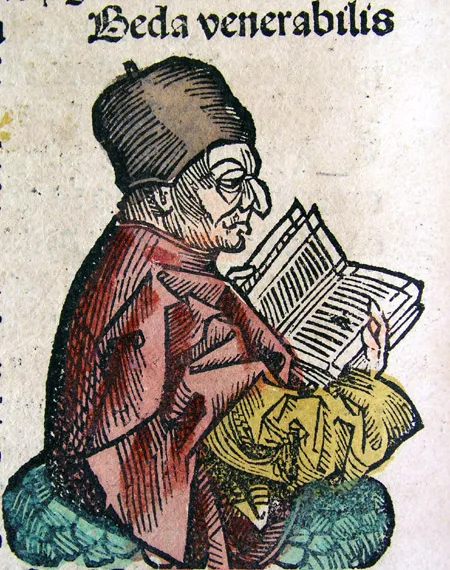
We know as much as we do about the Synod of Whitby because Bede described it in detail in his Ecclesiastical History of the English People, completed in 731. But Bede wasn’t a neutral observer. He was a Northumbrian monk writing decades after the event, and he had strong opinions.
Bede admired the Irish monks’ piety and dedication. He praised Aidan effusively. He acknowledged their role in converting Northumbria. But he also believed Roman practice was correct and Irish practice was wrong. His account of the synod is structured to make Wilfrid’s victory seem inevitable and right.
Bede’s biases show in subtle ways. He presented Wilfrid as learned and articulate, Colman as stubborn and outmaneuvered. He emphasized the universal acceptance of Roman practice while downplaying the fact that much of the Celtic Christian world still followed the Irish method. He framed the debate as progressive Roman Christianity versus backward Celtic Christianity, when the reality was more complicated.
But Bede also preserved details that might not support his viewpoint. He recorded Colman’s arguments. He acknowledged the love people felt for Aidan despite his incorrect Easter. He noted the tensions that persisted after Whitby. His account, biased as it is, remains our best source for understanding what happened.
The Monastery That Hosted History
Whitby Abbey, where the synod took place, would itself become one of England’s most important monasteries. Under Abbess Hild and her successors, it trained numerous bishops and scholars. It became a center of learning where Cædmon, an illiterate cowherd, received miraculous gift of poetry and composed the first vernacular Christian poetry in English.
The monastery was destroyed by Danish Vikings in the ninth century. It was refounded in the eleventh century and flourished until Henry VIII dissolved it in 1537. Today its dramatic ruins stand on the cliffs above Whitby harbor, a reminder of the monastery’s pivotal place in English Christian history.
The Calendar Wars Continue
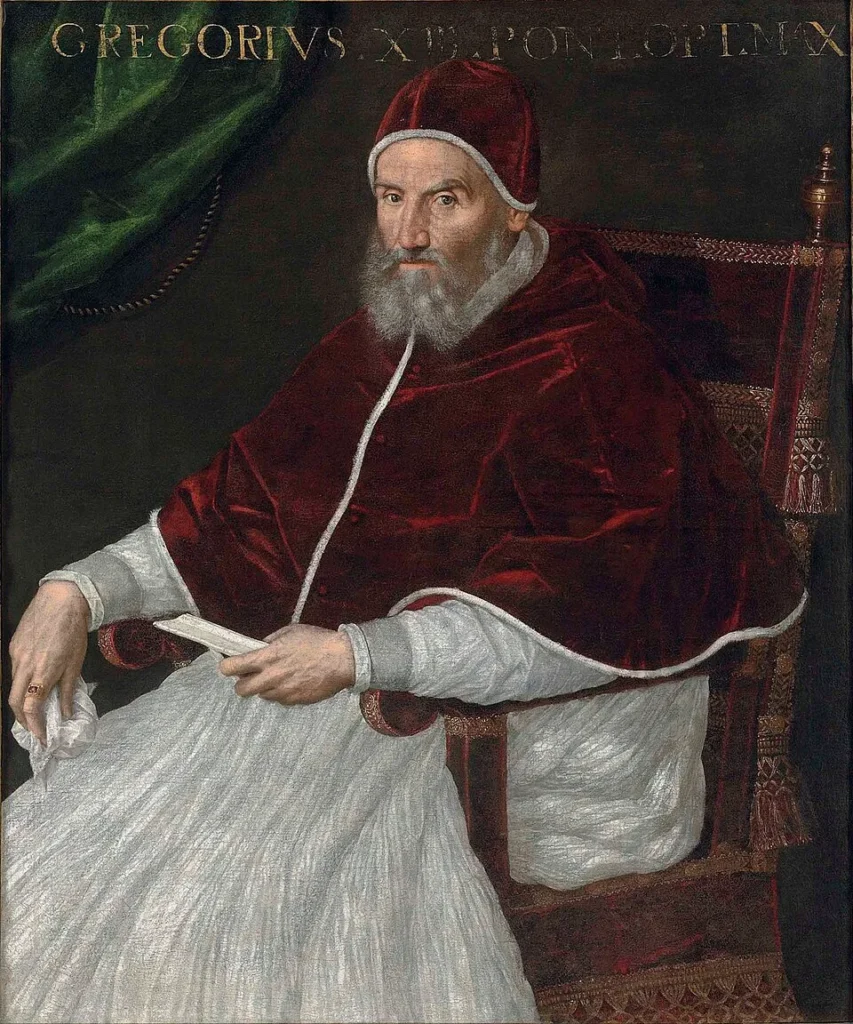
The irony is that medieval Christians never fully solved the Easter problem. The Julian calendar used in Bede’s time gradually drifted out of sync with the solar year. By the sixteenth century, the spring equinox fell on March 11 instead of March 21.
Pope Gregory XIII reformed the calendar in 1582, creating the Gregorian calendar we use today. But Protestant countries, viewing this as papal overreach, refused to adopt it for decades or even centuries. Britain didn’t accept the Gregorian calendar until 1752. Russia held out until 1918.
Even today, Eastern Orthodox churches use a different Easter calculation than Western churches. Occasionally their Easters coincide, but more often they fall weeks apart. The debate that roiled seventh-century England still divides Christians in the twenty-first century.
What Whitby Teaches Us
The Synod of Whitby reminds us that seemingly technical religious disputes often involve fundamental questions of power, authority, and identity. The bishops arguing about Easter calendars were really arguing about who controlled English Christianity and how England would relate to Continental Europe.
It also shows how personalities shape history. If Wilfrid had been less eloquent, if Colman had been more flexible, if Oswiu had felt stronger loyalty to his Irish teachers, the decision might have gone differently. And that would have changed the trajectory of English history.
Most importantly, Whitby demonstrates that religious authority isn’t self-evident. Colman had tradition, sanctity, and recent missionary success on his side. Wilfrid had universality, scriptural interpretation, and political momentum. Neither position was obviously correct. Oswiu had to choose, and his choice shaped a nation.
The monks who gathered at that windswept monastery in 664 couldn’t have known they were creating one of the pivotal moments in English history. They thought they were settling a calendar dispute. They were actually deciding whether England would look to Rome or Iona, whether English Christianity would develop in isolation or in communion with Continental Christianity, whether English culture would be insular or cosmopolitan.
Oswiu chose Rome. And England, for better and worse, became part of Europe’s story.