
The Bible was written over more than a thousand years by scribes who memorized texts before writing them down. How was the Bible written starts with young boys in ancient Israel spending years memorizing sacred stories, then carefully copying them onto leather scrolls. The process combined oral tradition with written preservation in ways modern readers rarely understand.
Ancient scribes didn’t write like we do today. They operated in cultures where texts lived both in human memory and on physical scrolls. A trained scribe could write out entire biblical books from memory after years of training.
The education systems that trained these scribes shaped how the Bible was written. In ancient Mesopotamia, Egypt, and Israel, young boys entered rigorous programs centered on memorizing texts. Teachers recited passages and students repeated them back exactly.
Who Actually Wrote the Torah
The Torah consists of the first five books: Genesis, Exodus, Leviticus, Numbers, and Deuteronomy. These books emerged through complex processes where oral traditions became written texts around 1000 BC.
Stories about Abraham, Isaac, and Jacob circulated orally for generations first. Scribes during King David and King Solomon’s reigns first committed them to writing. They created texts designed for oral performance, not silent reading.
The written Torah served as a reference for recitation and memorization. Young scribes learned by hearing it recited, memorizing it, and only then copying it in writing. The transmission happened primarily through oral teaching backed by written scrolls.
The Torah shows clear evidence of multiple authors and editors. Priestly writers produced some material. Other sections came from different scribal circles. The Deuteronomistic history underwent heavy editing during the Babylonian exile in the sixth century BC.
Training Scribes Through Memorization
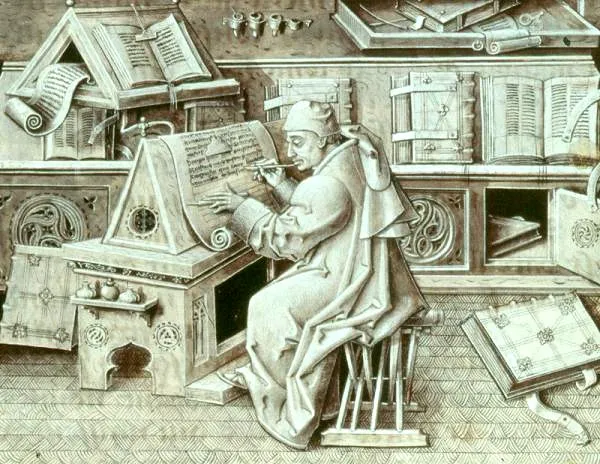
Ancient Near Eastern education worked fundamentally differently from modern schooling. Mesopotamian scribal students spent years memorizing texts before learning to write them. Teachers recited material and told students to repeat it back exactly, word for word.
One Mesopotamian educational dialogue records a teacher instructing: “repeat it to me, say everything to me exactly.” The goal was verbatim recall of thousands of lines of text. Students accomplished this through oral-musical performance featuring rhythmic parallelism and mnemonic patterns.
This memorization-first approach created a specific type of person marked off from ordinary society. Students absorbed impractical knowledge like the dead Sumerian language and ancient texts whose historical references had long vanished. They internalized traditions so thoroughly that they could recall texts verbatim and write them accurately.
The successful scribe emerged with texts inscribed on mind and heart, not just recorded on scrolls. Ancient texts describe education as opening students’ eyes and forming humanity within them. A scribe with opened eyes had internalized the tradition completely.
Israelite scribes underwent similar training. They memorized stories of the patriarchs, the laws of Moses, prophetic oracles, and wisdom sayings before ever putting stylus to scroll. When these scribes later wrote biblical books, they worked from deeply internalized knowledge of their textual tradition.
How Prophets Recorded Their Messages
The prophetic books underwent particularly complex development. Prophets delivered oral messages, often in memorable poetic forms that aided recall. Disciples or later scribes wrote down these prophecies and then organized them over time.
The book of Jeremiah provides a concrete example. Jeremiah 36 describes how King Jehoiakim burned the first scroll of Jeremiah’s prophecies. The prophet then dictated the contents to his scribe Baruch for a second scroll, with additional material added.
This account shows prophetic books developing through multiple written editions. Each built on previous versions while adding new material. Books like Isaiah contain material from different historical periods.
Later editors added sections that applied earlier prophecies to new circumstances. The process involved scribes who had memorized substantial portions of prophetic tradition. They could reproduce it accurately while supplementing it with new oracles.
Prophetic traditions began as oral performance, moved to written form, but continued to circulate orally even after being written. The dual transmission meant prophetic books existed simultaneously as physical scrolls stored in temples and as memorized texts carried in the minds of prophets’ disciples.
Leather Scrolls and Papyrus Production
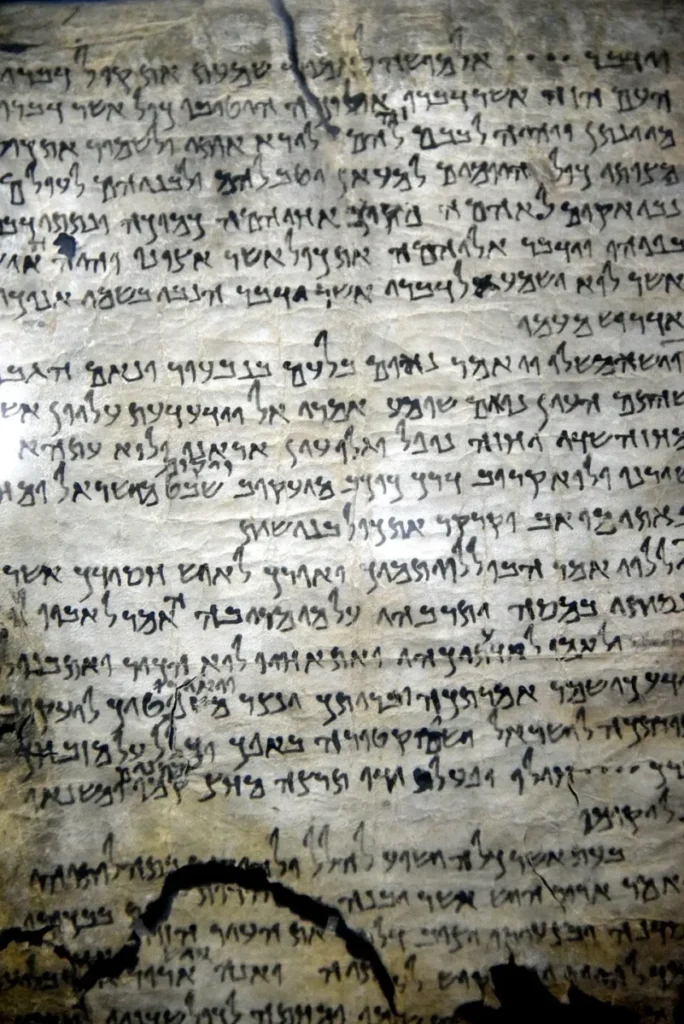
Biblical texts were written on materials that required extensive preparation. The earliest biblical scrolls used leather prepared from animal skins. Each leather sheet was carefully processed and then multiple sheets were sewn together with thread made from animal sinews.
The stitching visible in scrolls from the Judean Desert shows precisely how ancient scribes joined sections. Scrolls consisted of multiple sheets joined together with handle sheets at each end. These uninscribed sections protected the written portions and allowed rolling without handling the text itself.
Papyrus provided an alternative writing material made from the papyrus plant abundant in Egypt. Strips cut from papyrus stalks were laid in perpendicular layers, pressed together, and dried to form sheets. These sheets were glued together in segments to create scrolls.
Scribes wrote in carefully measured columns. They used horizontal lines scratched or drawn lightly to keep text straight. Letters were suspended from these lines, creating the distinctive appearance of ancient Hebrew manuscripts.
The Dead Sea Scrolls provide extensive evidence of these writing practices. Scrolls like 1QIsaiah show the careful column layout, the stitching between leather sheets, and the various scribal markings used to organize text. Writing the Bible involved sophisticated technical skills in preparing materials, planning layout, and executing the actual copying.
Surviving the Babylonian Exile
The Babylonian exile of 586 BC created a catastrophic crisis for biblical texts. The temple in Jerusalem was destroyed and the palace burned. The literate elite were deported to Babylon and virtually all major structures in the land were demolished.
Stored manuscripts were likely lost in the destruction. How did biblical traditions survive this catastrophe? The oral-written model explains the continuity perfectly.
Scribes who had memorized substantial portions of Israel’s sacred texts could reproduce them even without access to written copies. Israelite scribes produced new reference copies of older traditions in the wake of Jerusalem’s destruction.
Working from memory rather than written exemplars, exilic scribes sometimes produced new versions quite close to preexilic forms. In other cases they radically reused parts of older texts and recombined them in ways that addressed the trauma of exile.
The process was not mechanical copying but creative preservation. Scribes drew on deeply internalized textual traditions to reconstitute their community’s sacred literature under catastrophically changed circumstances.
This explains how biblical books show both remarkable continuity with earlier forms and clear signs of exilic editing. Scribes preserved the ancient traditions faithfully because those traditions were inscribed in their memories. But they also shaped those traditions to address why the exile happened and how Israel should respond.
Built out of a love for history, kept free from distractions.
Spoken Past is an independent project shaped by curiosity, care, and long hours of research. Reader support helps keep it maintained, carefully researched, and open to everyone.
The Dead Sea Scrolls Discovery
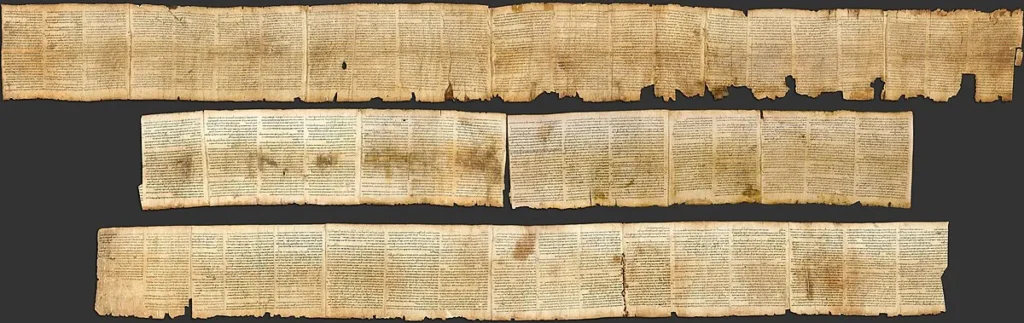
The Dead Sea Scrolls revolutionized understanding of how the Bible was written. These manuscripts from the third century BC through the first century AD show that multiple textual traditions existed simultaneously before any single authoritative text was established.
Some Dead Sea Scrolls are nearly identical to the Masoretic Text preserved in medieval Jewish manuscripts. Others show significant differences in wording, spelling, and even content. The Septuagint Greek translation made in Alexandria was based on Hebrew manuscripts that sometimes differed from the tradition that became standard.
This textual fluidity was not unlimited. Scribes aimed to copy accurately and most variants are minor spelling differences or word order variations. Major differences are relatively rare. But the evidence shows the biblical text was not completely fixed until late, probably not until the first or second century AD.
The Dead Sea Scrolls also reveal distinctive scribal practices of the Qumran community. Texts written in the Qumran scribal practice show idiosyncratic spelling and special forms. These included very full spelling with many vowel letters added to facilitate reading.
The community also wrote the divine name in paleo-Hebrew characters, ancient letters that had gone out of use elsewhere. Virtually all the sectarian compositions written by the Qumran covenanters reflect this distinctive scribal practice.
Masoretic Standardization
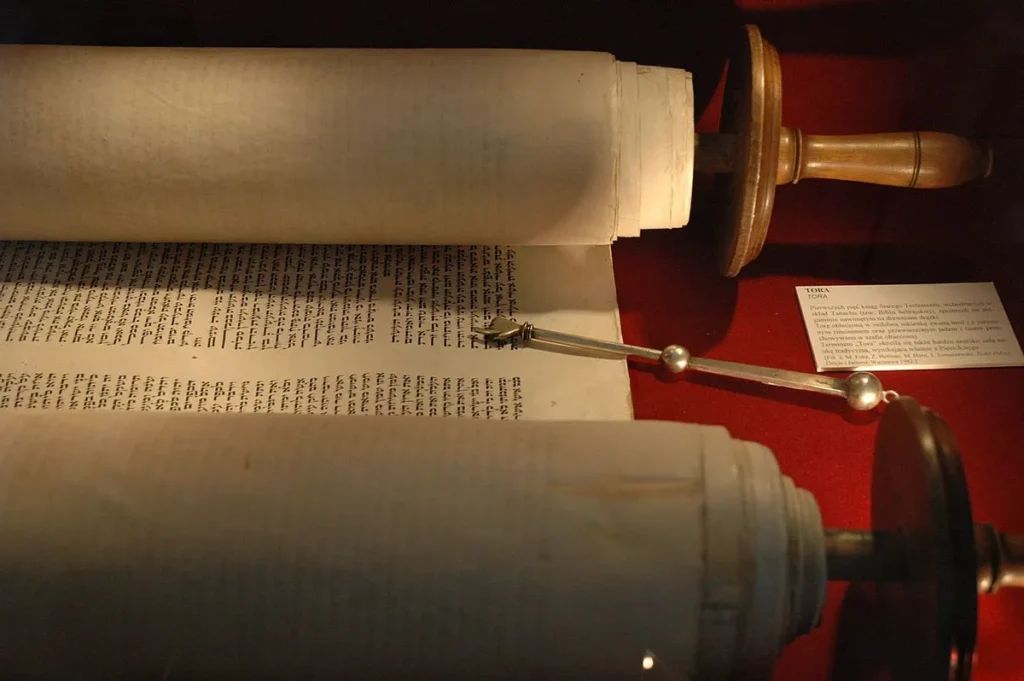
Between the sixth and tenth centuries AD, Jewish scribes called Masoretes established the textual tradition that became standard. The Masoretes added vowel points to the consonantal Hebrew text since Hebrew was originally written with consonants only.
They created a system of accent marks indicating how the text should be chanted in synagogue worship. The Masoretes developed an elaborate apparatus of notes called the Masorah. These notes recorded how many times particular words occurred, noted unusual spellings, and preserved traditional readings.
The care the Masoretes took appears in their preservation of curious features they found in older manuscripts. They noted letters suspended above the line, dots placed above or below certain words, and sections where the written text differed from the traditional oral reading.
Rather than correcting these anomalies, they preserved them meticulously. They documented exactly what earlier scribes had transmitted. The Masoretic Text became authoritative in Jewish tradition and serves as the basis for most modern Bible translations.
Major Masoretic manuscripts include the Aleppo Codex from the early tenth century and the Leningrad Codex from 1008 AD. These manuscripts represent the culmination of centuries of careful scribal work preserving not just the text but also elaborate systems for ensuring its accurate transmission.
Christians Adopt the Codex Format
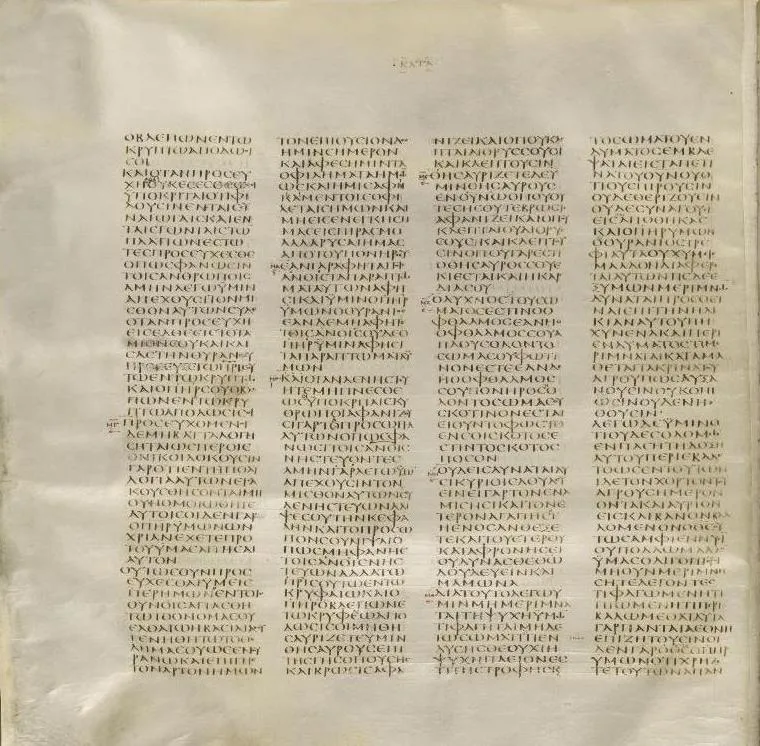
The New Testament was written in Greek during the first century AD by early Christian writers. Paul’s letters written between approximately 50 and 65 AD are the earliest datable Christian texts. The Gospels were written between roughly 65 and 100 AD.
Early Christian scribes adopted the codex for copying New Testament writings almost immediately. The earliest Christian papyri fragments dated to the second century are overwhelmingly codices rather than scrolls. This represents a dramatic break from contemporary Jewish practice.
The codex consisted of folded sheets sewn together at the spine, allowing readers to flip pages and access any part quickly. This format was cheaper to produce using both sides of the papyrus or parchment. It was more portable and easier to reference.
Codices also allowed multiple texts to be bound together in a single volume. By the late second century the codex was nearly universal among Christians for their scriptures. This practical innovation changed how Christians interacted with biblical texts.
Early Christian manuscripts also developed a distinctive practice called the nomina sacra. Sacred names were written in abbreviated forms with a horizontal line over them. The words for God, Lord, Jesus, Christ, and Spirit appear consistently in these abbreviated forms in Christian manuscripts from the second century onward.
This practice expressed reverence for these names and visually distinguished key religious vocabulary. It also marked Christian manuscripts as distinct from Jewish scrolls and pagan literary texts.
Gospel Writing and Copying
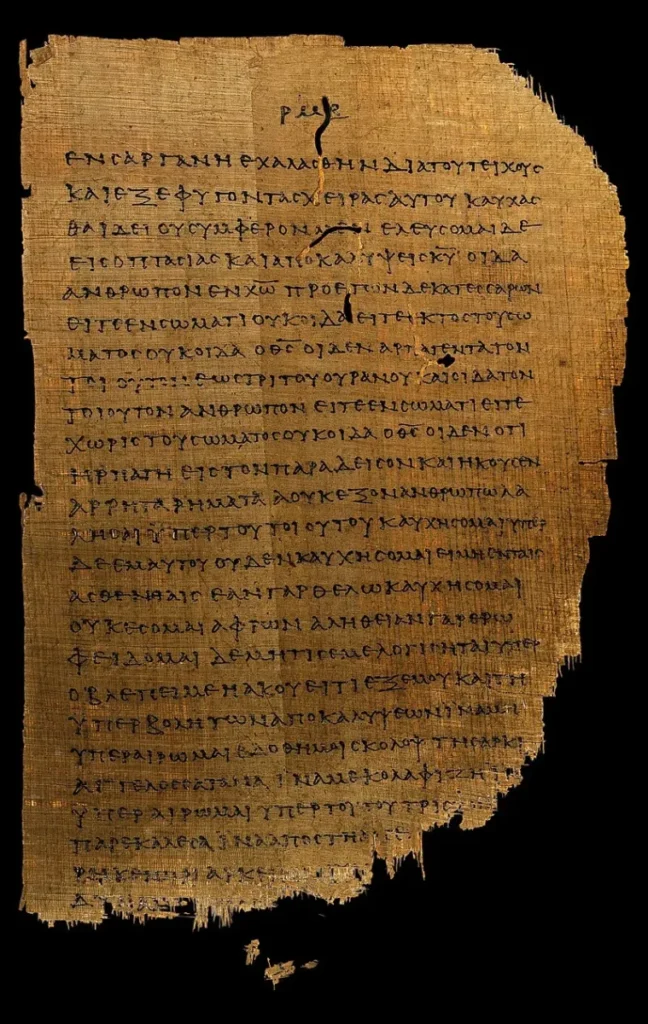
The Gospels were composed in Greek by writers drawing on oral traditions about Jesus and possibly earlier written sources now lost. The earliest surviving Gospel manuscript, P52 containing portions of John’s Gospel, dates to approximately 125 AD.
Early Christian manuscripts show both careful copying and variations in the text. Scribes made mistakes, corrected them, and occasionally introduced intentional changes. Most variants are insignificant differences in spelling or word order that don’t affect meaning.
Scribes made various types of errors. They skipped lines when two lines ended with the same word. They wrote the same word twice by accident. They misread similar-looking letters. They heard dictation incorrectly when copying from someone reading aloud.
Some changes were intentional. Scribes harmonized parallel passages in the Gospels, making Mark’s wording match Matthew’s or vice versa. They clarified ambiguous phrases. They added explanatory notes that later scribes incorporated into the text.
The variants between versions of sayings in Matthew and Luke often show dynamics of material transmitted through memorization. Though there is significant verbatim overlap, there is also semantic overlap amid verbal variation. This suggests these sayings traditions were transmitted through memorization and recitation, not purely through visual copying of written texts.
Memory and Writing Working Together
Throughout the process of biblical composition and transmission, memory played a central role alongside writing. Scribes did not merely copy letters mechanically. They had internalized vast portions of text through their education.
This meant they could write with attention to meaning and context, not just individual words. Memory allowed texts to be transmitted even when written copies were unavailable. During the Babylonian exile, when the temple was destroyed and access to stored manuscripts lost, the traditions preserved in memory allowed texts to be reconstructed.
Priests and scribes who had memorized substantial portions of Scripture could write them out again. The phenomenon of oral-written textuality meant texts existed both on scrolls and in the minds of educated persons.
Writing gave texts stability and authority. Memory gave them life and accessibility. The two modes of transmission reinforced each other. Written copies checked memory. Memorization made texts portable and available for constant reference.
This oral-written dynamic explains how texts could be reproduced accurately without modern printing technology. Scribes who had memorized texts could detect errors by recognizing when copied text departed from their memorized version. The combination of careful visual copying and memory-based checking created remarkably stable transmission across centuries.