
Early Christian writers used the phrase “Gnostic Gospels” for a cluster of alternative Christian writings that circulated alongside the New Testament but never entered the official canon. These texts survive today mainly in Coptic codices from late antique Egypt, translated from earlier Greek originals and copied shortly before the middle of the fourth century.
What the Gnostic Gospels Are
In modern usage, the Gnostic Gospels are Christian writings that present Jesus, salvation, and God through the lens of a religious outlook that centers on inner knowledge, often called gnosis. They include works that actually carry the title “gospel” in surviving manuscripts, such as the Gospel of Thomas, the Gospel of Philip, the Gospel of Truth, and the Gospel of the Egyptians, as well as related narrative and revelatory texts like the Secret Book of John and the Gospel of Mary.
These writings belong to a wider “Coptic Gnostic Library,” a group of codices preserving around seventy unorthodox scriptures in Coptic translation, most of them connected with Christian groups that understood themselves as possessors of a deeper insight into the divine. The label “gnostic” comes from their own stress on saving acquaintance with God and the self rather than from any single ancient self-designation.
Buried Codices at Nag Hammadi
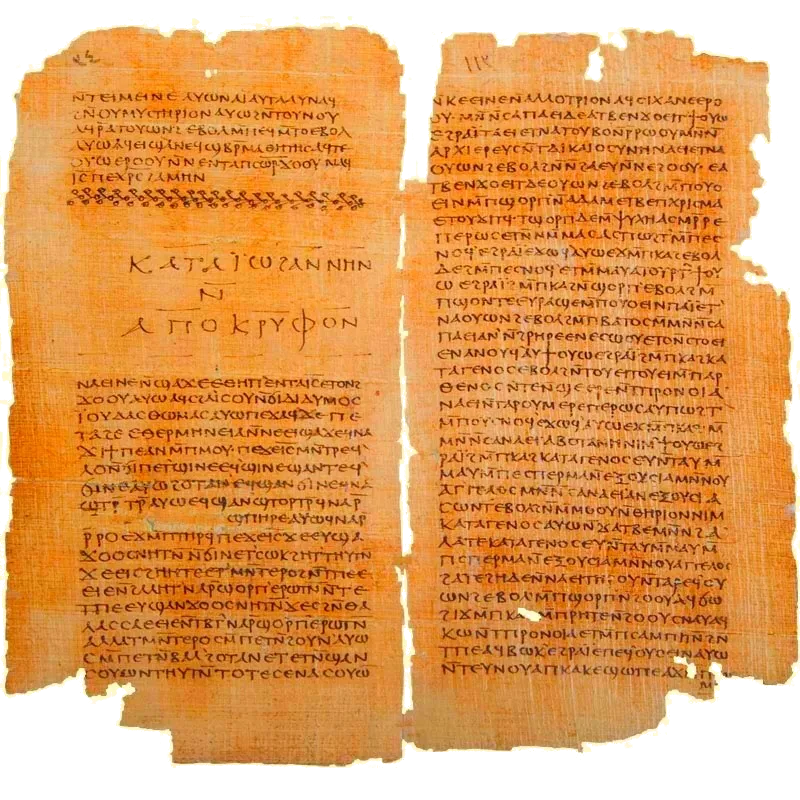
Most of what are now called the Gnostic Gospels survive in a hoard of twelve complete codices plus part of a thirteenth, copied in Coptic and buried together near the Nile in Upper Egypt. These books, often leather bound and carefully produced, contain roughly fifty-two tractates, about thirty of which are fairly complete and another ten significantly fragmentary.
Study of the bindings and reused papyrus stuffed inside their covers suggests they were manufactured just before 350 AD, drawing on earlier Greek works that had already circulated for generations. The variety of handwriting, dialects, and codex formats indicates that the texts originally came from several places along the Nile valley, then were gathered into a single library by owners who valued them enough to preserve them in a sealed jar at the edge of the cultivated land.
Gnostic Gospels and Early Christian Diversity
The Gnostic Gospels show that, within the first few centuries, followers of Jesus held far more varied views than the later “one church, one creed” picture suggests. Some groups that read these texts saw themselves as the spiritual elite within the wider Christian world, convinced that they held a more advanced understanding of the same figure that other believers worshiped.
Many of these writings mirror themes and names from the New Testament but shift their emphasis. Jesus is often portrayed not primarily as a sacrifice that removes sin but as a revealer who awakens people to their forgotten origin and destiny, addressing a small circle of disciples with sayings, dialogues, and secret teachings that go beyond public proclamation.
Key Gnostic Gospels and Their Portraits of Jesus
Several individual Gnostic Gospels became especially influential within these circles and in modern study.
- Gospel of Thomas presents 114 sayings of “the living Jesus” introduced without narrative, framed as speech to a disciple called “the twin.” Salvation is linked to grasping the interpretation of these sayings so that the hearer recognizes his or her true origin beyond the visible world.
- Gospel of Philip mixes brief sayings with sacramental reflections, giving special attention to baptism, anointing, the Eucharist, and something called the “bridal chamber.” Jesus is portrayed as the heavenly bridegroom whose union with the soul restores a lost wholeness symbolized by the joining of male and female.
- Gospel of Mary survives only in later copies but is closely related to Nag Hammadi materials and appears again in the wider Coptic Gnostic Library. It shows a female disciple receiving visions and interpretive teaching from the risen Christ, leading to tension with other followers who question her authority.
- Gospel of Truth reads more like a homily than a narrative gospel, interpreting the Christian message as the ending of ignorance and forgetfulness through the appearance of the Son from the realm of fullness. Here the “good news” is that error dissolves when the Father is made known and scattered members of the divine family are gathered back.
Together, these texts treat Jesus as a revealer from a higher realm whose words and rites awaken what is already latent in those who belong to his “race” of the saved.
Jesus and Salvation in Gnostic Writings
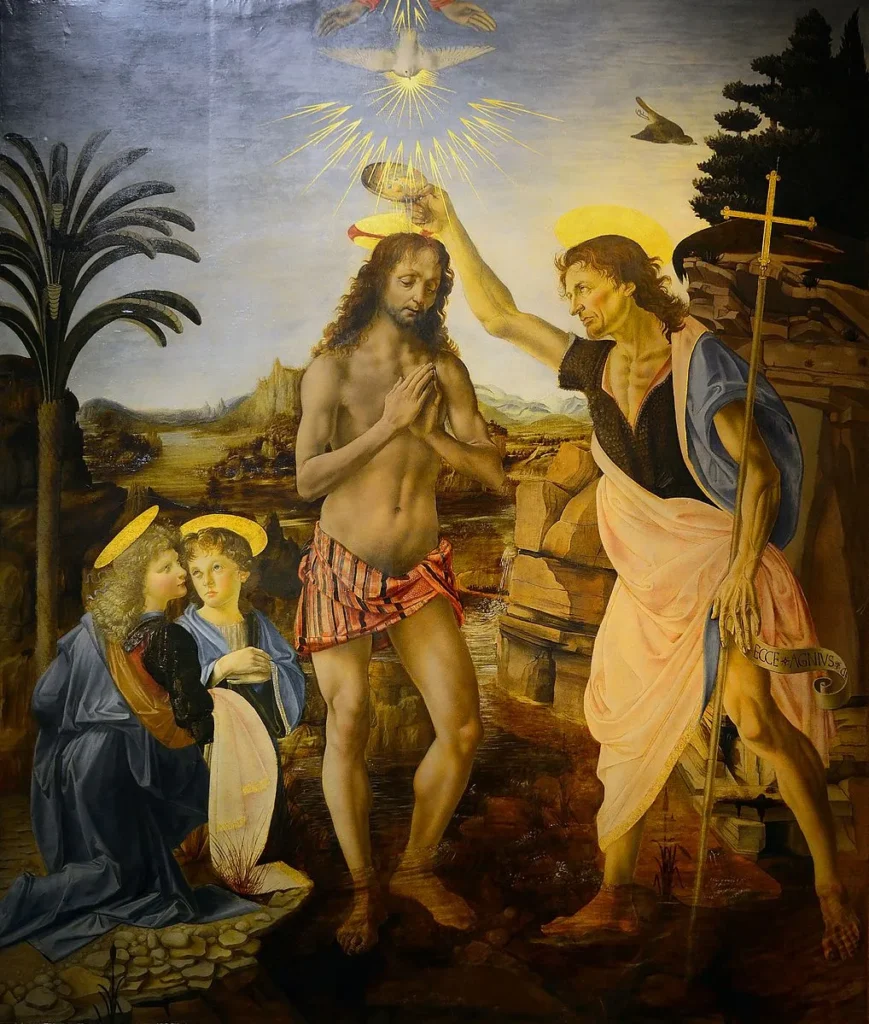
In the Gnostic Gospels, salvation usually involves waking up rather than being legally acquitted. Human beings are often portrayed as having a divine element, sometimes called a seed or spark, that has fallen into forgetfulness through involvement with a lower cosmic order.
The savior’s role is to remind such people of their origin in the realm of light, to strip away the hold of fear, and to guide them past hostile powers back to the source. This is why many of these texts highlight secret instruction after the resurrection, private dialogues, or symbolic sacraments, since these are the means by which insight and new identity are conferred.
At the same time, these writings often maintain strong ethical demands. Several tractates speak about renouncing destructive passions, loosening the bond of greed and lust, and living in accordance with the “inner human” rather than external pressure from rulers seen as hostile to the divine life.
Built out of a love for history, kept free from distractions.
Spoken Past is an independent project shaped by curiosity, care, and long hours of research. Reader support helps keep it maintained, carefully researched, and open to everyone.
The Problem of Creation and the Rulers
A central feature of many Gnostic Gospels is their reinterpretation of creation and of the god portrayed in Genesis. Instead of a single, directly acting creator identical with the highest Father, they describe a layered universe where an ignorant or arrogant craftsman, often called a ruler or archon, shapes the visible world while claiming divine status.
Narratives like the Secret Book of John and the Reality of the Rulers tell how a lower power comes into being from a disturbance in the lowest region of the spiritual realm, then fashions heaven and earth after a distorted image of the higher order. This figure often proclaims himself the only god, but his boasts are corrected by a voice from the realm above, and by the activity of a higher wisdom that works through history to free those kin to the light.
In these accounts, Adam and Eve are not merely disobedient creatures but figures caught in a conflict between the craftsman and the higher God. The serpent is sometimes recast as a bringer of insight, while the expulsion from paradise becomes the beginning of a longer story in which a special lineage preserves the divine element through generations until the coming of the savior.
Gnostic Gospels and Sacraments
Many of the Nag Hammadi writings show great interest in ritual, but they interpret it in ways that stress inner transformation. Baptism, for example, is not only washing away sin but also receiving a robe of light, a seal, or a set of “five seals” that marks the soul as belonging to the higher realm and equips it to pass hostile powers.
The Gospel of Philip speaks at length about anointing with oil, the Eucharist, and a “bridal chamber,” treating these not only as church practices but as signs of union between the soul and the heavenly counterpart. Other texts portray ritual as a participation in the pattern of death and resurrection, or as an enactment of the passage out of this world’s bondage into the sphere of rest.
Because of this, some early observers accused such groups either of neglecting straightforward moral obedience in favor of esoteric rites, or of practicing sacraments so symbolically that their connection to ordinary congregational life seemed doubtful. The surviving texts, however, often present sacraments and ethical seriousness as two sides of the same calling.
Conflict with Emerging Church Leaders
From an early point, influential bishops and teachers reacted strongly against the communities that cherished these Gnostic Gospels. They complained that such Christians claimed access to additional gospels, secret books, and higher interpretations that eclipsed the public preaching of the churches.
By the late second and third centuries, leading figures were writing long refutations of these teachings, depicting them as distortions of the faith and warning ordinary believers not to be drawn away by elaborate myths and claims of superior knowledge. One recurring charge was that such groups split the church into a simple majority and a spiritual elite, undermining the unity that bishops wanted to assert for their own flocks.
Official pressure increased in the fourth century, when Christian leaders, now backed by imperial authority, issued letters condemning apocryphal writings and ordering that only an approved list of scriptures be read in churches. In this climate, owners of codices that contained works like the Gnostic Gospels had strong reasons to hide them, while scribes devoted their labor mainly to copying texts that matched the emerging canon.
How Scholars Read the Gnostic Gospels Today
Taken together, the Gnostic Gospels allow a view into Christian movements that understood the gospel as a path of inner awakening, a critique of oppressive cosmic powers, and a sacramental path back to a forgotten home. They treat Jesus as revealer, bridegroom, and heavenly guide, and imagine the Christian life as participation in the divine fullness rather than simple obedience to an external law.
At the same time, these texts do not speak with one voice. Some are highly mythological, others almost philosophical, some focus on ascetic renunciation, others stress knowledge and sacrament more than outward rule keeping. What ties them together is less a single organization than a shared conviction that there is more to the Christian message than what appears in the standard gospels and creeds.
For someone asking what the Gnostic Gospels are and why they were buried, the surviving codices show that they were alternative Christian scriptures, copied in Coptic Egypt, treasured by groups who prized inner acquaintance with God, and hidden when those writings and communities came under mounting condemnation. The evidence lets us say that they preserve powerful early attempts to rethink creation, salvation, and the figure of Jesus, while still leaving open questions about how widespread such movements were and how ordinary believers related to these demanding texts.
Sources and further reading
- Bentley Layton, The Gnostic Scriptures A New Translation with Annotations Cambridge and New Haven, modern edition cited in the attached PDF.
- The Nag Hammadi Library in English, translated by members of the Coptic Gnostic Library Project, 4th revised edition.
- Willis Barnstone and Marvin Meyer eds., The Gnostic Bible, New Seeds Books, 2006.
- Elaine Pagels, The Gnostic Gospels, Vintage Books edition, 1989.
- Principal ancient sources as used and discussed in these volumes include the Gospel of Thomas, Gospel of Philip, Gospel of Truth, Gospel of the Egyptians, Secret Book of John, Reality of the Rulers, Treatise on Resurrection, and related Nag Hammadi tractates in Coptic translation of earlier Greek compositions.