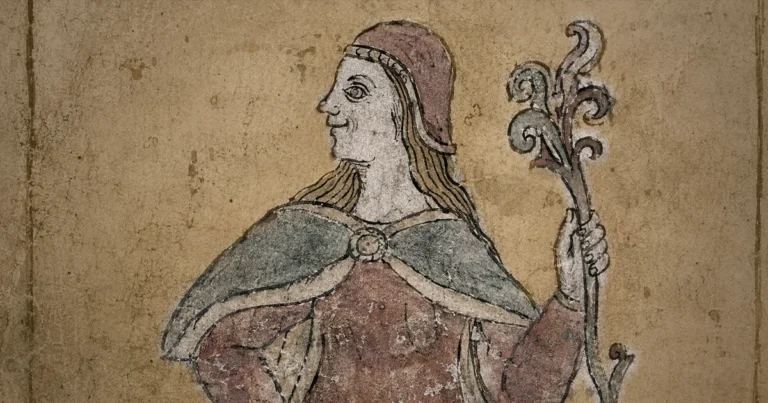

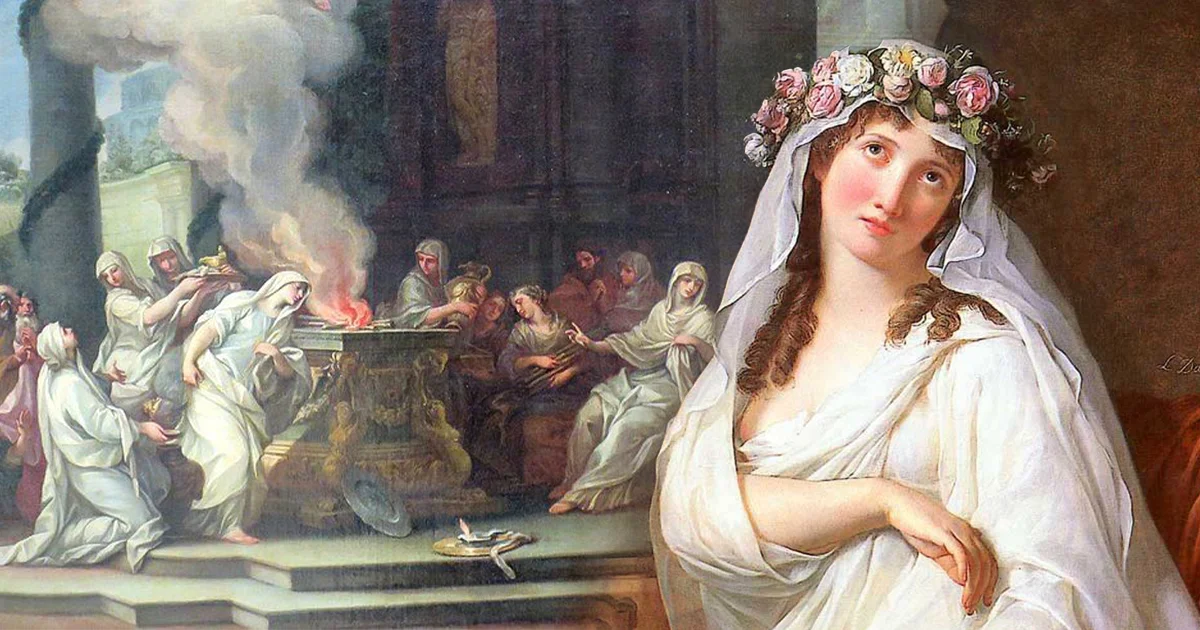
In the Roman Forum, beside the circular Temple of Vesta, six women guarded a flame that Romans treated as more than fire. It was the public hearth of Rome, a sign that the city still stood under divine protection. The Vestal Virgins were not queens, senators, or magistrates, yet their ritual labor touched the survival of the state, the validity of public sacrifice, and the religious identity of Rome itself.
Their power came from a contradiction. A Vestal was removed from ordinary family life as a child, placed under the authority of the pontifex maximus, and required to remain sexually untouched for thirty years. In return, she received privileges most Roman women never held. She could manage property, make a will, appear in public with official honors, and in some circumstances save a condemned prisoner from execution. The same priesthood that offered rare independence also threatened its members with terrifying punishment if they failed.
To understand the Vestal Virgins, their sacred duties cannot be treated as quaint temple chores. They were state functions. When a Vestal fed the flame, prepared salted flour, or entered a festival procession, she was helping Rome imagine itself as one protected household.
How Rome Chose Girls for Vesta’s Priesthood
Roman tradition traced the foundation of the Vestal priesthood to Numa Pompilius, Rome’s legendary second king. Ancient authors disagreed over some early details, but they consistently treated the priesthood as one of Rome’s oldest religious institutions. Plutarch, writing in Greek under the Roman Empire, says that Numa assigned the Vestals a thirty-year term divided into three decades: ten years learning the rites, ten years performing them, and ten years teaching the next generation. That structure gave the college continuity across generations.
Selection was not a normal career choice. A girl was taken into the order before puberty, usually between six and ten years old. Later antiquarian evidence, summarized in William Smith’s Dictionary of Greek and Roman Antiquities, describes qualifications that included freeborn parents, physical soundness, and an acceptable family background. The pontifex maximus, Rome’s chief priest, presided over the process. In the Republic, this office was held by a leading male aristocrat. Under the emperors, the emperor himself could hold it.
Once chosen, the girl’s legal position changed sharply. She was removed from her father’s power, known as patria potestas, without passing into marriage or another household. That made her unusual at the most basic level of Roman law. Most elite Roman women moved from one male authority to another, even when the practical realities of family life were more flexible than legal formulas suggest. The Vestal instead became attached to a public priesthood and to Vesta’s cult.
This separation was part of the office’s force. A Vestal belonged to Rome before she belonged to any private family. Her body, schedule, public presence, and ritual training were placed in service to the state. That did not make her free in the modern sense. It made her legally exceptional.
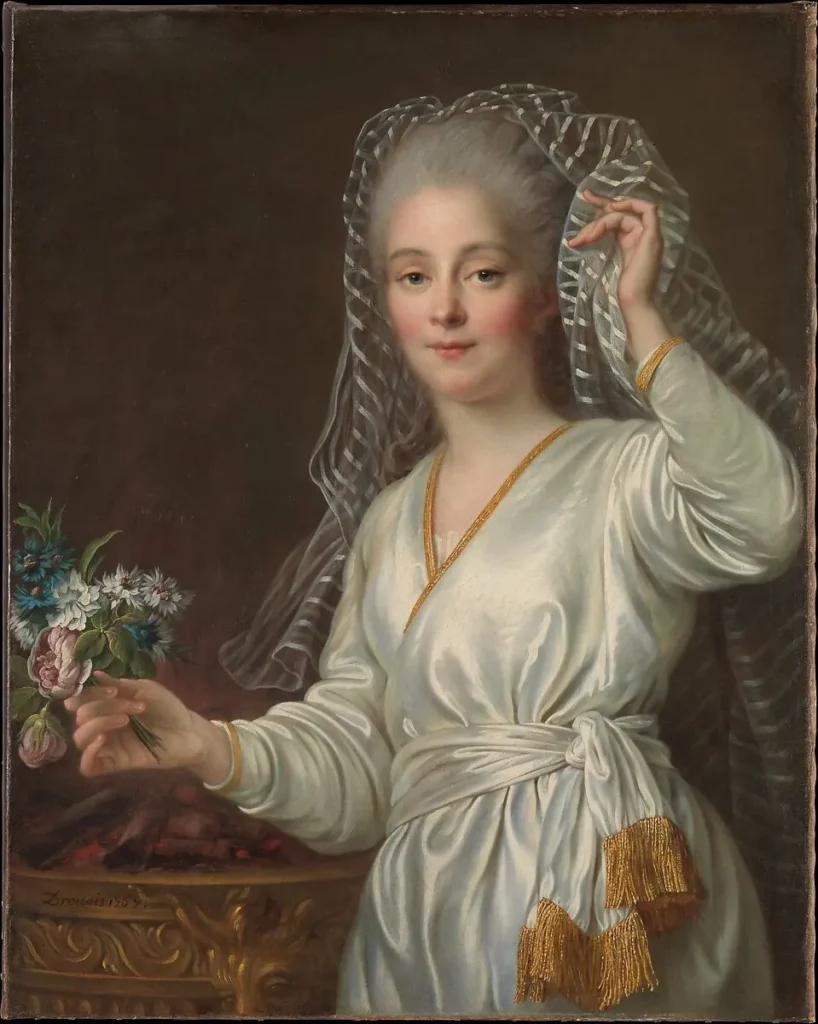
The order normally numbered six. The Vestals lived in the Atrium Vestae, the House of the Vestals, beside Vesta’s temple in the Forum. The official Parco archeologico del Colosseo describes the complex as a residence arranged around a courtyard, with statues of senior Vestals and rooms on several levels. Archaeological work has shown that the building changed repeatedly, especially after the fire of 64 CE and in later imperial phases. The surviving remains are therefore not a simple snapshot of early Rome. They are the material result of centuries of rebuilding around one of the city’s most sensitive sacred spaces.
The Fire That Made Vesta’s Temple Rome’s Hearth
The best-known duty of the Vestal Virgins was tending the sacred fire of Vesta. The flame burned inside the circular Temple of Vesta, not as a decorative lamp but as the public hearth of Rome. Vesta was goddess of the hearth, and in Roman religion the hearth was not merely domestic. It marked continuity, family, food, sacrifice, and protection. Rome projected that household image onto the state itself.
The Parco archeologico del Colosseo describes the temple’s brazier as holding the sacred fire that was never to be extinguished, a symbol of Rome’s eternity and imperial destiny. It also notes that the temple preserved the Palladium, a small image of Athena-Minerva said in legend to have been brought from Troy by Aeneas. That story linked Vesta’s shrine to Rome’s Trojan ancestry and to the city’s claim to sacred antiquity.
Letting the flame die was treated as a religious crisis. Ancient sources describe punishment for negligence, usually scourging or beating by the pontifex maximus. The offense mattered because Romans read the flame as a sign of divine favor. An extinguished fire suggested that something had broken between the gods and the community. In Roman terms, it threatened the pax deorum, the proper relationship between divine and human worlds.
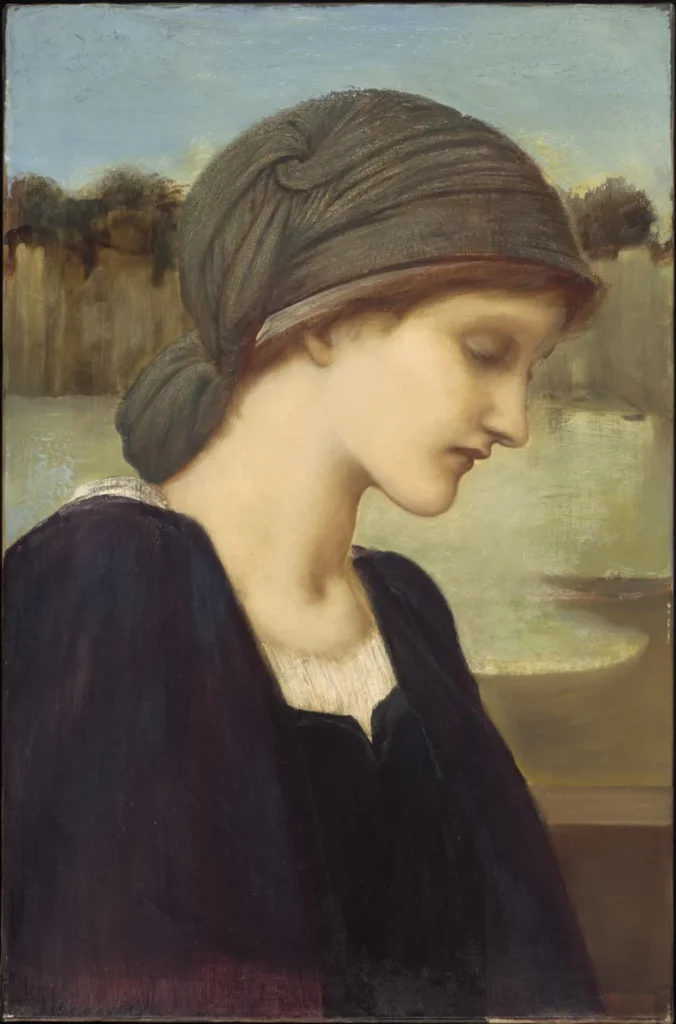
The fire was ritually renewed each year on the first day of March, the old Roman New Year. Plutarch’s Life of Numa says that if the flame went out, it could not simply be borrowed from another fire. A new flame had to be drawn from the sun, using concave bronze instruments that concentrated sunlight onto dry material. The detail may reflect both ritual purity and technical knowledge, but the point was religious before it was scientific. The fire had to begin again from a pure source.
The Vestals’ work at the temple was therefore continuous and public, even when most of it happened away from spectacle. Their labor was not dramatic most days. It meant watching, feeding, cleaning, preparing, and maintaining. Rome’s sacred center depended on repetition.
Mola Salsa and the Hidden Labor Behind Sacrifice
The Vestals also prepared mola salsa, the salted flour used in public sacrifice. This duty is easy to understate because the substance sounds simple. It was not. Roman animal sacrifice required correct words, correct gestures, correct participants, and correct materials. Mola salsa was one of those materials. Without it, official sacrifice could not be ritually complete.
The House of the Vestals still preserves evidence that scholars have connected with food preparation, milling, and ritual production, although archaeologists are careful about certainty. The Parco archeologico del Colosseo notes that one room was long interpreted as a mill because fragments of lava-stone millstones were found there, but technical considerations complicate that identification. This is a useful reminder that ritual objects and rooms do not always explain themselves neatly.
The textual tradition is clearer about the substance. According to the same archaeological park summary, the three Vestals involved gathered ears of spelt, known in Latin as far, during the period from 7 to 14 May. They toasted, crushed, and ground the grain. Salt was added at specific ritual moments, including the Lupercalia on 15 February, the Vestalia on 9 June, and the Ides of September on 13 September. The resulting mola salsa was spread on sacrificial animals and offerings.
This is where the Vestals’ authority reached far beyond their own temple. Mola salsa was not used only in rites for Vesta. It entered the wider sacrificial system of Rome. The Latin verb immolare originally meant to sprinkle with mola. The later English word “immolate” preserves the trace of that ritual action, even though its meaning shifted toward sacrifice by destruction or death.
Preparing salted flour may appear less impressive than guarding a sacred flame, but it made the Vestals indispensable. They supplied a ritually necessary ingredient for public religion. Rome’s male priests, magistrates, and generals depended on material produced by women who had been removed from ordinary female roles. That arrangement gave the Vestals a quiet but structural power within Roman ritual life.
Built out of a love for history, kept free from distractions.
Spoken Past is an independent project shaped by curiosity, care, and long hours of research. Reader support helps keep it maintained, carefully researched, and open to everyone.
Chastity, Fear, and the Politics of Punishment
The vow of chastity is the most famous and most sensational part of Vestal history. It is also one of the easiest to mishandle. Roman sources did not treat a Vestal’s virginity as private morality alone. They treated it as a religious condition tied to the security of the state. The Vestal’s intact body and Rome’s intact boundaries were symbolically linked.
Breaking the vow was called incestum, a word that in this context meant a religious violation as well as a sexual offense. A Vestal accused of unchastity faced investigation by priestly authorities. If condemned, she could be buried alive near the Colline Gate at a place later associated with the Campus Sceleratus, the “wicked field.” Plutarch gives one of the most detailed ancient descriptions: the condemned woman was placed in an underground chamber with a small amount of food, water, milk, and oil, then sealed inside. The ritual avoided the direct spilling of a consecrated woman’s blood while ensuring her death.
The punishment was rare, but it was real enough to haunt Roman memory. Livy, Plutarch, Dionysius of Halicarnassus, and later writers preserve stories of condemned Vestals. Some cases may reflect genuine prosecutions. Others may have been shaped by political anxiety, moral panic, or the need to explain disaster. A defeat, plague, prodigy, or civic crisis could make Romans search for hidden religious pollution. A Vestal’s body then became a place where public fear could be investigated and punished.
Modern scholarship has stressed this point. The Cambridge chapter “On the Burial of Unchaste Vestal Virgins” treats the punishment within Roman ideas of pollution, propriety, and ritual danger. The page is only partially accessible without full institutional access, so it should not be used for detailed claims beyond its topic and framing. Still, its subject points to the central issue: live burial was not only a criminal penalty. It was a ritual solution to a religious problem Romans believed could threaten the community.
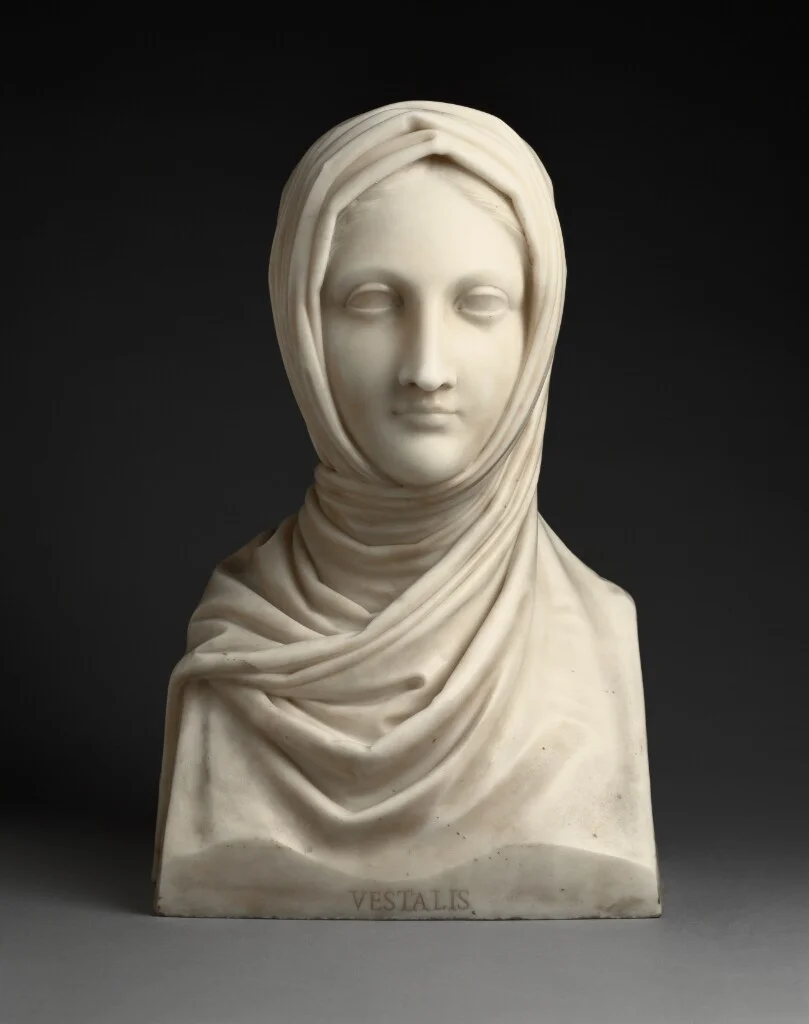
There is also a problem of source perspective. Most surviving accounts were written by elite men. They describe Vestals as symbols, legal exceptions, ritual agents, scandals, and omens. They rarely preserve what a Vestal herself thought about service, fear, privilege, or accusation. Any modern account has to work through that imbalance. The priestesses were powerful, but the archive does not let them speak often in their own voices.
Privileges That Made the Vestals Public Figures
The same office that imposed extreme control also granted remarkable status. The Vestals could own and manage property. They could make wills. They were released from ordinary male guardianship. Plutarch says they could transact business without a guardian and that fasces were carried before them in public. He also reports that if a Vestal accidentally met a condemned criminal on the way to execution, the person’s life was spared, provided she swore the meeting was not planned.
That last detail is often overstated. It was not a general power to pardon anyone at will. The ancient account makes it conditional on an accidental meeting. Even so, the rule shows how charged a Vestal’s presence was. Her body carried religious authority into public space. To meet her at the edge of death could transform the fate of a condemned person.
Other honors placed Vestals near the center of civic life. They had reserved seats at public games and spectacles. They could travel in a carriage. Magistrates showed them deference. According to Britannica, they were freed from their fathers’ rule and could handle their own property, privileges not normally open to Roman women of comparable status. These rights did not make them politically equal to senators or magistrates, but they gave them visibility and legal capacity that stood out sharply in Roman society.
Their residence also mattered. The Atrium Vestae stood in the Forum, beside temples, basilicas, triumphal routes, law courts, and political memory. A Vestal did not live hidden in a remote sanctuary. She lived at Rome’s ceremonial center. Her daily movement through the city could be read as a public event.
Vestals were also trusted with important objects and documents. Ancient sources connect Vesta’s temple with the Palladium and with sacred stores that ordinary people could not see. In some periods, important wills and state documents were deposited under Vestal protection. Their trustworthiness was therefore not only sexual or ritual. It extended into Roman political life.
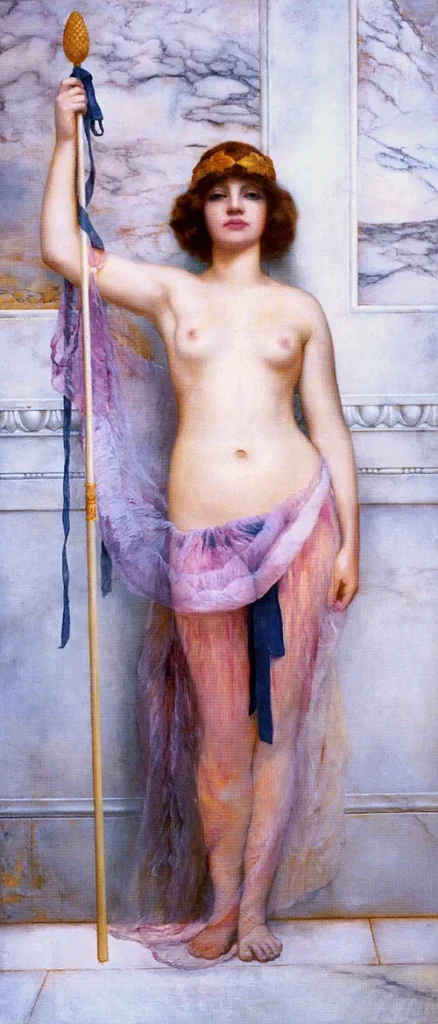
This is why the phrase “Vestal Virgin” can mislead if it reduces the office to sexual abstinence. Virginity was central, but it was not the whole institution. The Vestals were priestesses, property holders, ritual specialists, public symbols, and guardians of materials Rome considered too important for ordinary custody.
What Thirty Years of Service Gave and Took Away
The Vestal term lasted thirty years. Ancient tradition divided it into learning, service, and teaching, but the lived experience must have varied depending on age, family, politics, health, and the temper of the times. A girl entered before adolescence and could leave as a mature adult. By then, most Roman women of her class would have married, borne children, managed households, and negotiated family alliances. A Vestal’s life followed another path.
After completing her service, a Vestal could leave the order and marry. Plutarch says few did so, and his explanation is colored by ancient moral and religious assumptions. Marriage to a former Vestal may have felt unsettling because she had belonged for decades to Vesta and to Rome. It may also have been socially awkward because she had lived outside the normal marriage market. The evidence does not allow a single explanation for every retired priestess.
Some Vestals became especially prominent while still in office. Inscriptions and statues from the House of the Vestals honor senior priestesses, especially the Vestalis Maxima, the chief Vestal. The official archaeological park notes that statues of chief Vestals stood around the courtyard of the Atrium Vestae, although those now displayed there are copies. These monuments show that the office had internal hierarchy, memory, and public commemoration.
The institution lasted far longer than most Roman political arrangements. Kings, Republic, civil wars, emperors, dynasties, and religious changes passed while the Vestals remained part of Rome’s sacred landscape. Their position shifted under imperial power. Augustus, after becoming pontifex maximus in 12 BCE, incorporated the Vestals into his religious program and linked his household more closely with Rome’s sacred center. Later emperors continued to use traditional priesthoods as symbols of continuity, even as the empire changed around them.
The old order weakened in the fourth century CE as Christian emperors withdrew support from traditional cults. In 382 CE, Emperor Gratian removed public funding from several pagan institutions, including the cult of Vesta. The sacred fire was likely extinguished soon afterward, and the Vestals disappear from the historical record as a functioning priesthood. The date was not simply the end of one ritual. It marked the collapse of a system in which Rome had imagined itself as a household guarded by consecrated women.
Their sacred duties made the Vestal Virgins powerful because those duties belonged to Rome itself. They watched the fire, made sacrificial materials, guarded sacred objects, embodied public purity, and moved through the city with privileges other women could rarely claim. Their authority was real, but it came at the cost of surveillance, danger, and a life removed from ordinary family structures. The Vestals stood at Rome’s hearth, but they also stood inside one of its most demanding religious bargains.