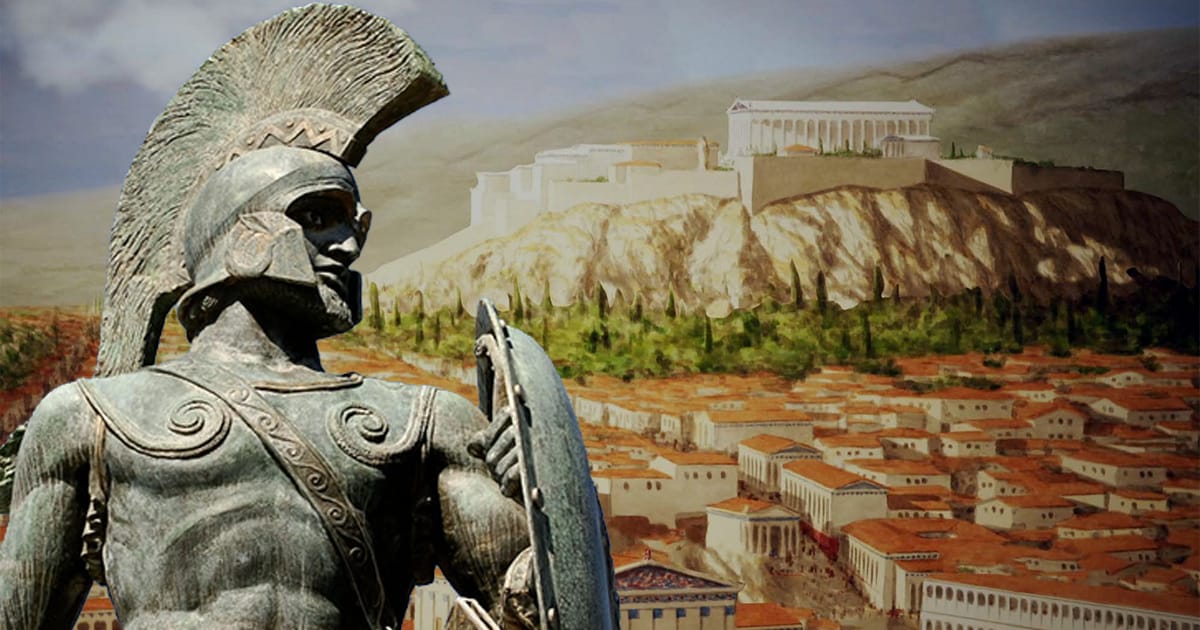
After the Battle of Plataea in 479 BCE, Spartan and Athenian soldiers stood on the same plain and watched the Persian army dissolve. They had just saved Greece together. They spent the next fifty years building toward a war that would exhaust them both for a generation, and the next fifty years after that learning to live with what that war had cost. The collapse of their relationship was not primarily about territory, trade routes, or treaty violations, though it involved all three. It was about the fact that Sparta and Athens had answered the most basic question any society has to answer, what is a human being for, in ways so different that the same Aegean Sea felt too small to hold them both. This article examines how each model actually worked in practice, what the evidence from excavation and primary sources tells us about the real mechanisms of each city’s power, why the Peloponnesian War was structurally inevitable once Athens became an empire, and what the collapse of both cities into Macedonian subordination reveals about the limits of each approach.
Geography Made Both Cities Before Their Politicians Did
The Eurotas River runs through a flat valley floor hemmed by the Taygetos mountain range to the west and the Parnon range to the east. Sparta sat in that basin and by the early sixth century BCE had conquered the fertile plain of Messenia to the west, reducing its population to helots, state-owned agricultural workers tied to the land and forbidden to carry arms. The helots farmed. The Spartan citizen class, the Spartiates, trained and fought. The arrangement produced the ancient world’s most consistently effective heavy infantry and a state of permanent low-level terror, because the helots significantly outnumbered the citizens and the Spartiates knew it. Herodotus records a ratio of seven helots to one Spartan soldier at the Battle of Plataea in 479 BCE. Modern demographic modelling by Walter Scheidel at the Center for Hellenic Studies has approached this question through agricultural output estimates rather than ancient literary testimony, and while the exact ratio remains uncertain, the basic picture of a citizen class vastly outnumbered by a coerced labour force is not in serious scholarly dispute. Paul Cartledge, whose work on Spartan society spans four decades, has argued that the history of Sparta is fundamentally the history of the class struggle between Spartiates and helots, and the physical geography of the Eurotas valley gave that struggle its permanent shape.
Athens sat on a rocky peninsula with thin soil and forty kilometres of coastline. It could not feed itself reliably from its own land. The Saronic Gulf opened routes to the Cyclades, to the Aegean coast of Asia Minor, through the Hellespont to the Black Sea grain coast, and south toward Egypt and the Levant. Trade brought timber, grain, metal, and ideas in roughly equal measure. The city’s dependence on imports meant it needed ports, and ports meant ships, and ships meant a relationship with the poorest citizens, the rowers who crewed them, that was fundamentally different from anything Sparta could or would manage. Around 483 BCE, prospectors at the Laurion silver mines in southeastern Attica struck a major new lode. The politician Themistocles persuaded the assembly to spend the windfall not on cash distributions to citizens but on building two hundred triremes. That decision, taken by direct democratic vote, transformed Athens from a regional land power into the dominant naval force in the Aegean within a decade.
What the Spartan Agoge Actually Built Inside a Human Being
At age seven every Spartan boy left his family and entered the agoge, the state education programme that ran until age thirty. The word translates roughly as the leading, in the sense of conducting someone through a structured formation. Boys slept on rushes they cut themselves from the Eurotas riverbank. They received deliberately insufficient food rations and were expected to supplement them by theft as a lesson in ingenuity. Being caught stealing brought punishment, not for the act itself but for the lack of skill in performing it. Physical endurance ordeals at the sanctuary of Artemis Orthia, described in detail by Plutarch in the Life of Lycurgus, included whipping contests where competitors were judged on their ability to absorb punishment without visible distress. The goal of the entire system was a specific human product: a man comfortable with cold, hunger, pain, and the physical proximity of other men in exactly those conditions, permanently.
The political structure the agoge was designed to serve was a deliberately balanced mixture of monarchy, oligarchy, and popular participation. Two hereditary kings commanded armies and presided over religious functions but could be called to account by the five ephors, magistrates elected annually from the citizen body, who possessed the authority to arrest or even remove kings who overstepped. A council of elders, the gerousia, consisted of twenty-eight men over sixty years of age plus the two kings, and it proposed legislation and judged capital cases. The apella, the citizen assembly, voted by acclamation on measures the gerousia had prepared, meaning that shouting, not counting, determined outcomes, which made the system resistant to careful measurement of dissent. The five ephors could initiate proceedings against kings, which happened in practice at least twice during the classical period.
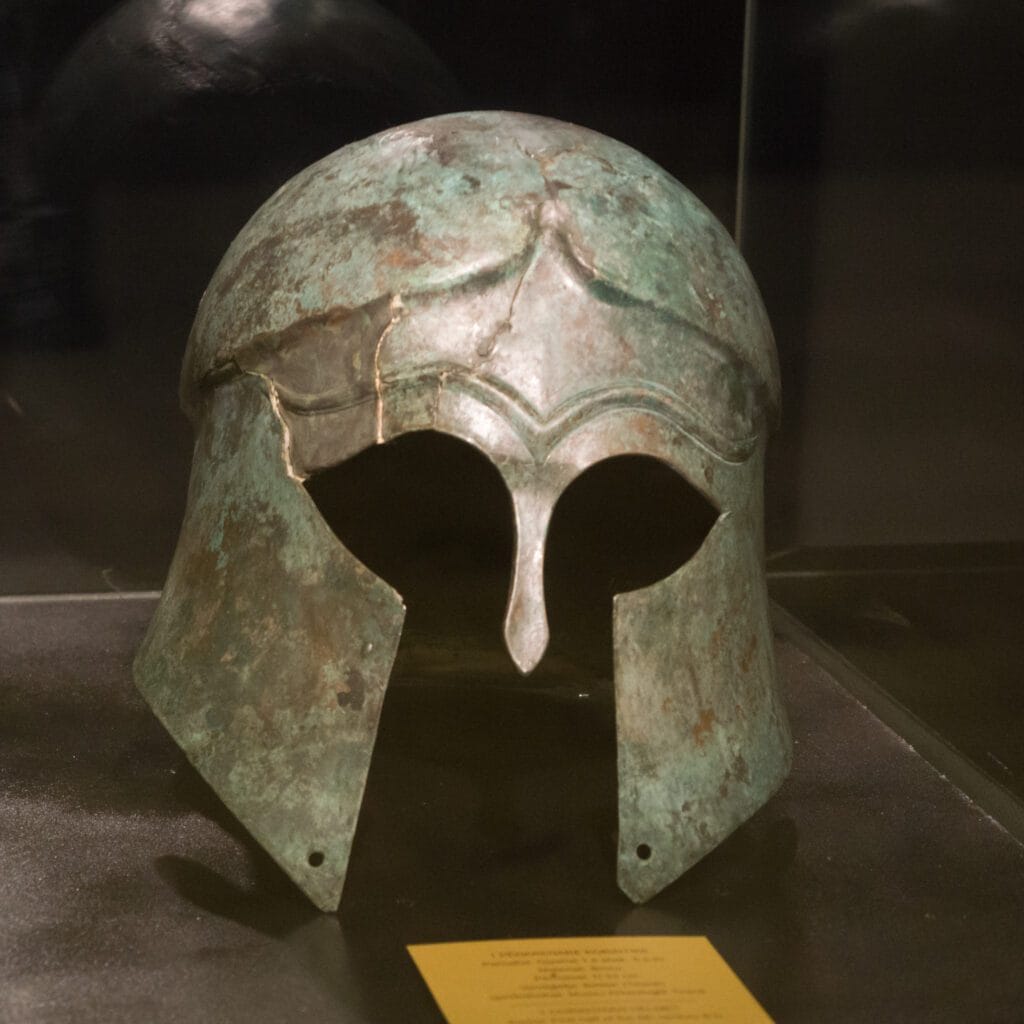
The krypteia, described by Plutarch and referenced in Thucydides’ account of the disappearance of two thousand helots at Book 4.80 of the History of the Peloponnesian War, was the institutionalized mechanism of helot control. Selected young men at the completion of the agoge went out into the countryside with only daggers and field rations, moved by night, and targeted helots who appeared, in Plutarch’s phrasing, too large and well-built. The ephors formally declared war on the helots at the opening of each year, giving legal sanction for killings that would otherwise constitute ritual murder requiring religious purification. The precise nature of the krypteia is debated in modern scholarship: Paul Cartledge and Jean Ducat have each discussed it as both an initiation rite and a suppression mechanism, and the earliest source to use the specific term is fourth-century rather than contemporary. What is not debated is the general structure of systematic psychological and physical terror toward the helot population that the institution represents, or the fact that Aristotle in the Politics describes the Spartan state as having the helots permanently sitting in ambush waiting for disaster to strike their masters.
Spartan women inhabited a notably unusual position by the standards of the classical Greek world. Girls trained physically in public, competed at religious festivals, and managed substantial estates during their husbands’ extended military absences. The property arrangements that resulted were striking. Stephen Hodkinson’s landmark study Property and Wealth in Classical Sparta documents that by the fourth century BCE, Spartan women may have controlled as much as two-fifths of the land in Laconia through inheritance and dowry accumulation. Aristotle criticised this arrangement in the Politics on the grounds that excessive female property ownership had destabilised the state. He was wrong about the causal direction, but right that concentrated land ownership had progressively reduced the number of male citizens able to maintain their standing in the syssitia mess system, with cascading consequences for military manpower that became catastrophic after Leuctra.
How Athens Turned Its Poorest Citizens into Its Greatest Strategic Asset
A trireme was thirty-seven metres long and powered by one hundred and seventy oarsmen arranged in three stacked banks of rowers. Its tactical weapon was a forward bronze ram that required sustained coordinated stroke timing across all three banks before the helmsman could execute a ramming approach at full speed. The skill was built through constant practice, and it was the thetes, Athens’ landless poor, who filled those rowing benches. At Salamis in 480 BCE, Themistocles positioned approximately three hundred Greek triremes, led by Athens, in the narrow strait between the island of Salamis and the mainland at a point where the Persian fleet’s numerical advantage was nullified by the confined water. The Persian ships, longer and less manoeuvrable than Greek triremes, were unable to form battle lines and were struck repeatedly on the beam in conditions that favoured the shorter, quicker Athenian vessels. The victory was decisive. The Persian fleet lost over two hundred ships and withdrew. Athens had just demonstrated that the poorest citizens rowing state ships could determine the survival of the city more directly than any cavalry charge or hoplite line.
The political consequence was structurally unavoidable. A city whose security depended on two hundred ships crewed by its most economically marginal citizens could not treat those citizens as politically marginal without courting the kind of internal rupture that would have destroyed the navy. Jury pay, sortition for public offices, and the assembly attendance fees introduced in the fourth century were all institutional acknowledgements of that bargain. The Athenian Agora, the commercial, legal, and civic heart of the city, made this system visible every day. The American School of Classical Studies excavations at the Agora, which have continued since 1931, have recovered the physical evidence of this administrative machinery: kleroterion fragments for jury selection, bronze juror identification tokens called pinakia, water clock timing devices used in courts to limit speech to equal measured intervals for both sides, and the jury ballot boxes with hollow and solid axle designs that allowed voters to conceal their verdict from observers while casting it.
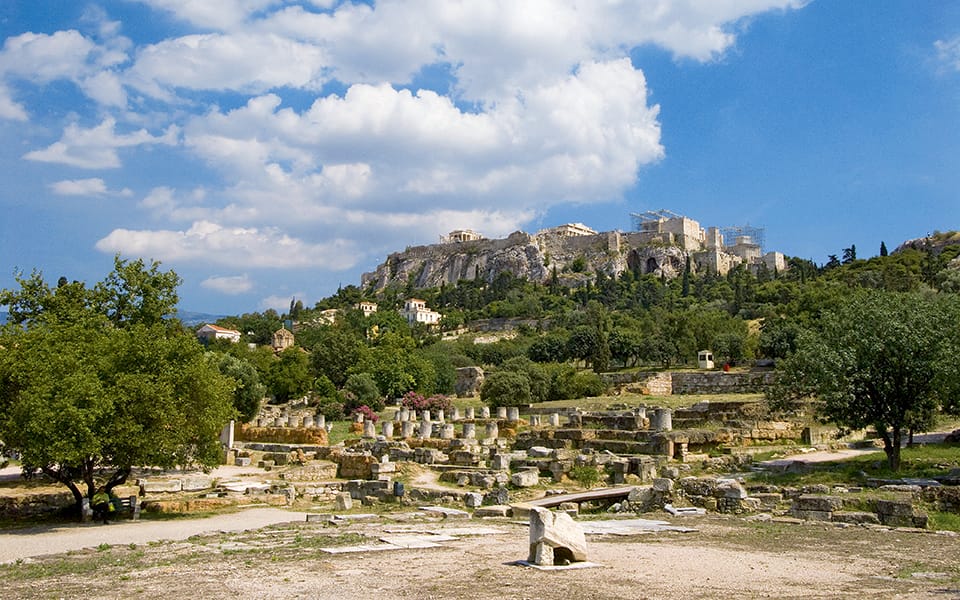
The Athenian cultural output of the fifth century was not separate from the political arrangements but directly produced by them. Playwrights competed at the City Dionysia before audiences of thousands where admission was subsidised by the city so that attendance was not restricted by income. Herodotus read portions of his histories publicly in Athens and received civic honours for doing so. Thucydides, who was exiled from Athens in 424 BCE after failing to hold Amphipolis as a general, wrote his account of the Peloponnesian War in exile with the analytical detachment of a man with no political career left to protect. Sophists charged fees for teaching rhetoric in the gymnasia and were widely regarded as dangerous by those who had not employed them. Socrates asked men to define their terms in the agora and gymnasium until they admitted they did not know what they thought they knew, and in 399 BCE the city executed him for it, in a public trial before a jury of five hundred citizens with timed speeches. Even that act of intolerance happened through the legal machinery of the democracy, which says something about a city that treated ideas as matters too serious for anywhere but the open court.
Built out of a love for history, kept free from distractions.
Spoken Past is an independent project shaped by curiosity, care, and long hours of research. Reader support helps keep it maintained, carefully researched, and open to everyone.
The War That Neither City Could Afford and Neither City Could Stop
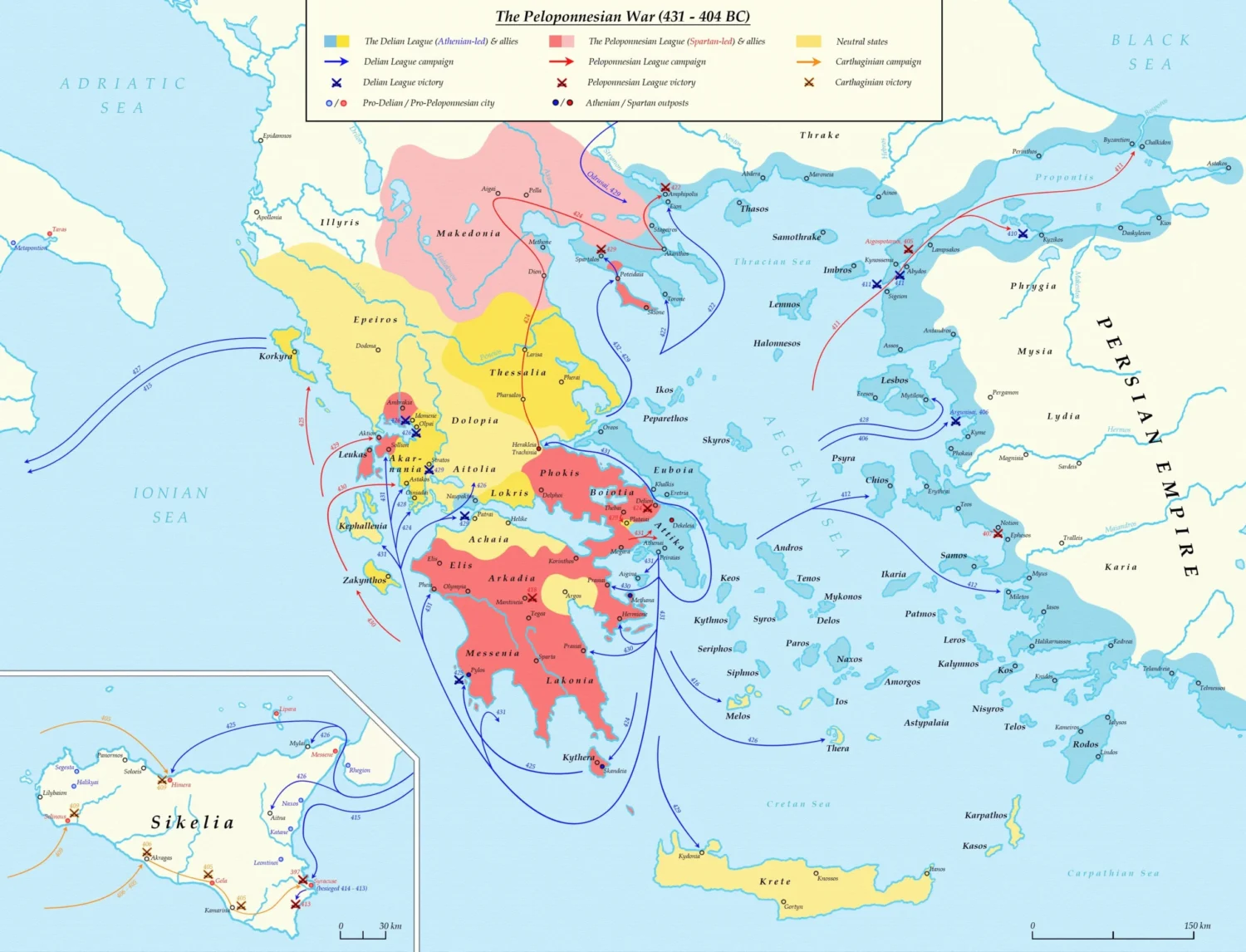
Thucydides opens his account of the Peloponnesian War with what remains one of the most compressed and accurate causal analyses in all of ancient historiography: the growth of Athenian power frightened Sparta, and fear made war inevitable. The Delian League had transformed from a voluntary defensive alliance into an Athenian revenue machine. The tribute records inscribed on stone stelae showed Athenian officials collecting allied contributions that were then used to fund marble construction on the Acropolis and jury pay in Athenian courts. When league members tried to exit, the league sent ships. The treasury on Delos, which had sat under Apollo’s eye as a symbol of shared purpose, moved to Athens in 454 BCE and became Athenian property in practice if not in name.
When war came in 431 BCE, the two cities fought in ways that were direct expressions of their different institutions. Sparta sent its hoplite army into Attica each summer to burn grain fields and olive orchards, camping within sight of Athens’ walls and waiting for the city to send its infantry out to fight on land where Spartan training gave a decisive advantage. Athens refused. Pericles pulled the rural population inside the Long Walls, let the Spartans burn empty fields, and used the fleet to raid Peloponnesian coastal settlements. The strategy required patience and a clean water supply. The plague that entered the city in 430 BCE killed the patience and a significant fraction of the population. After Pericles died in 429 the assembly began producing leaders whose gifts were oratorical rather than strategic, and oratory alone cannot hold a defensive perimeter.
The turning points came in sequence. In 425 BCE Athenian marines trapped a Spartan force on the island of Sphacteria and captured one hundred and twenty Spartiates alive, proof that the supposedly invincible Spartan infantry could surrender when cut off from supply and support. The Peace of Nicias in 421 was never fully observed on either side. The Sicilian Expedition of 415 to 413 destroyed one hundred and thirty-four Athenian triremes and at least forty thousand men in two years at Syracuse, a loss from which the city’s naval dominance never fully recovered. Sparta, funded by Persian silver channelled through the Persian prince Cyrus the Younger, built a fleet capable of contesting Athenian sea lanes and fortified Decelea in northern Attica in 413 BCE to permanently disrupt the flow of silver from the Laurion mines. Lysander’s destruction of the Athenian fleet at Aegospotami in 405 BCE cut the grain route through the Hellespont. Athens surrendered the following year.
How Epaminondas Ended Sparta in a Single Afternoon at Leuctra
Sparta won the Peloponnesian War and inherited a Greece it could not govern. Its citizen population had been declining steadily throughout the war and continued to fall afterward, from an estimated eight thousand Spartiates at the start of the fifth century to fewer than one thousand by the mid-fourth, according to demographic analysis published by Timothy Doran at the University of California, Berkeley. The cause was structural. Spartan citizenship passed by blood and was maintained by the ability to contribute one’s food share to the syssitia communal mess. As land concentrated through female inheritance and dowry accumulation into fewer families, more men fell below the threshold of contribution and lost their citizenship. The army shrank. The mythology of invincibility, which had functioned as a strategic asset for over a century, rested on fewer and fewer men each decade.
On July 6, 371 BCE, the Theban general Epaminondas met a Spartan army on the plain of Leuctra in Boeotia and broke that mythology in a single afternoon. Conventional Greek hoplite tactics placed the strongest troops on the right wing of the battle line and advanced in a block twelve men deep across the front. Epaminondas rejected this convention entirely. He massed his elite troops, including the Sacred Band of Thebes, a unit of three hundred soldiers selected in pairs by Pelopidas on the premise that men fighting beside their closest companions would hold the line where strangers might not, on the left wing of his line in a column fifty shields deep. He held his weaker centre and right back at an oblique angle to slow their engagement with the Spartan line. The result was that his concentrated left struck the Spartan right, where King Cleombrotus and his personal guard were stationed, before the rest of the Spartan line could engage and reinforce the threatened flank.
The battle began with a cavalry skirmish in front of the lines. Sparta had historically neglected cavalry in favour of heavy infantry, and the Spartan horsemen were driven back through their own infantry formation, disrupting the Spartan front before the main clash. Epaminondas then advanced his deep left column directly into the point of greatest Spartan strength. Cleombrotus was killed in the fighting. Of the seven hundred full Spartan citizens present, four hundred died. The World History Encyclopedia notes that Spartan losses across the allied army approached four thousand in total, while Theban losses were comparatively light. Historians Victor Davis Hanson and Donald Kagan have debated in their respective scholarship whether the oblique formation was a premeditated innovation or a pragmatic response to Epaminondas being outnumbered, but both agree that the tactic represented a genuine and immediately decisive break from Greek military convention. Xenophon, who could draw on eyewitness accounts, describes the Spartan dead being carried off the field and the allies refusing Spartan requests to retrieve their bodies under truce, which was the ancient Greek equivalent of public humiliation.
Epaminondas followed the victory by leading Theban armies into the Peloponnese twice more. In the winter of 370 to 369 BCE he freed Messenia from Spartan control and founded the city of Megalopolis in Arcadia as a permanent counterweight to Spartan regional power. The helots who had sustained the Spartan citizen class for three centuries were liberated. Without the Messenian agricultural surplus, Sparta could not sustain its citizen lifestyle. Without the citizen lifestyle, it could not produce Spartiates. Without Spartiates, it had no army. The system was revealed to have been entirely dependent on a single vulnerable foundation, and Epaminondas had pulled it out.
What Each City Left Behind When the Macedonians Arrived
Philip II of Macedon defeated Athens and Thebes at Chaeronea in 338 BCE and imposed settlement terms on the Greek world. A Macedonian garrison occupied Munychia at the Piraeus. Athens still held its festivals, ran its courts, operated its council, and maintained its philosophical schools. The assembly’s decisions no longer determined Greek foreign policy, but the institutions functioned. Aristotle, who had come from Macedon to study at Plato’s Academy and who later ran his own school, the Lyceum, could describe the Athenian democratic system in analytical detail in the Athenian Constitution precisely because that system was still operating around him and its records were publicly maintained. Sparta sat in its valley, its citizen body reduced to a fraction of its classical peak, its regional military role marginal since Leuctra.
What Athens exported was vocabulary, method, and institutional form. Jury trials, the audit of officials, public archives, written law superior to any individual decree, the principle that those who govern must answer to those they govern. These forms moved through the Hellenistic kingdoms that succeeded Alexander across territory from Egypt to Bactria, embedded in the administrative languages of cities that had absorbed Greek models through trade and conquest. The Roman legal and republican tradition, which eventually produced the institutional framework for the largest empire the western world had seen, was developed by men who read Greek, corresponded with Greek intellectuals, and consciously engaged with Athenian legal philosophy. The vocabulary of citizenship and accountability that Athens seeded survived the walls, the fleet, the empire, the democracy itself, and the physical city in the form that built them.
What Sparta exported was a mirror and a warning. Roman moralists quarried it for lessons about discipline and the virtue of collective sacrifice over private luxury. European military reformers from the Renaissance onward treated the agoge as a template for professional soldier formation. Modern scholars, including Paul Cartledge in The Spartans: The World of the Warrior-Heroes of Ancient Greece, have emphasised that what Sparta actually demonstrates is the structural fragility of any economy built on coerced labour, the demographic catastrophe that follows when a ruling class cannot replenish itself, and the military brittleness of a tactical tradition that cannot adapt when a Theban general decides to stack his formation fifty shields deep on the wrong flank. Both cities left patterns that later ages simplified to fit their own needs. Sparta became a symbol of martial virtue stripped of its helots. Athens became a symbol of free deliberation stripped of its enslaved workers and excluded women. The simplifications are understandable and misleading in equal measure, which is why the actual evidence from excavation, inscription, and contemporary historical writing remains the only reliable guide to what either city was.