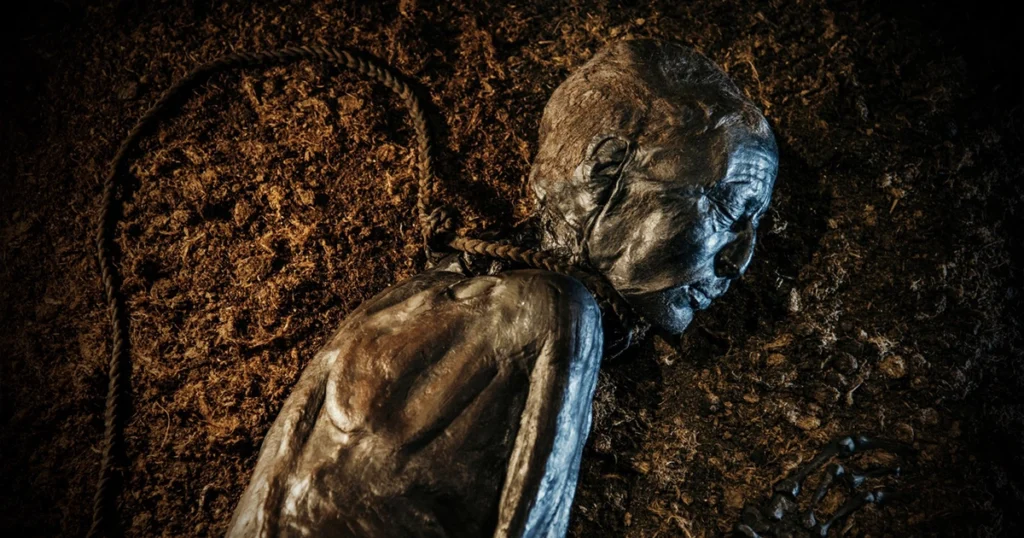
In May 1950, two peat-cutting brothers near Silkeborg, Denmark, unearthed a face staring back at them from the dark earth. The face was so fresh, so startlingly human, that they immediately called the police. The man they had found had been dead for roughly 2,300 years. He was Tollund Man, one of the most famous bog bodies ever recovered, and his preserved skin, closed eyes, and stubbled chin remain among the most astonishing objects in all of archaeology. Bog bodies like Tollund Man, Grauballe Man, Lindow Man, and Yde Girl have fascinated scientists and historians for generations precisely because they seem to defy everything we know about death and decomposition. Skin that should have rotted within weeks survives for millennia. Hair that ought to have disintegrated clings to scalps with its original texture. Understanding why this happens requires a close look at the extraordinary chemistry of Northern European peatlands, the biology of a remarkable moss, and the precise conditions that had to align for preservation to occur at all.
Why Peat Bogs Are Natural Preservation Machines
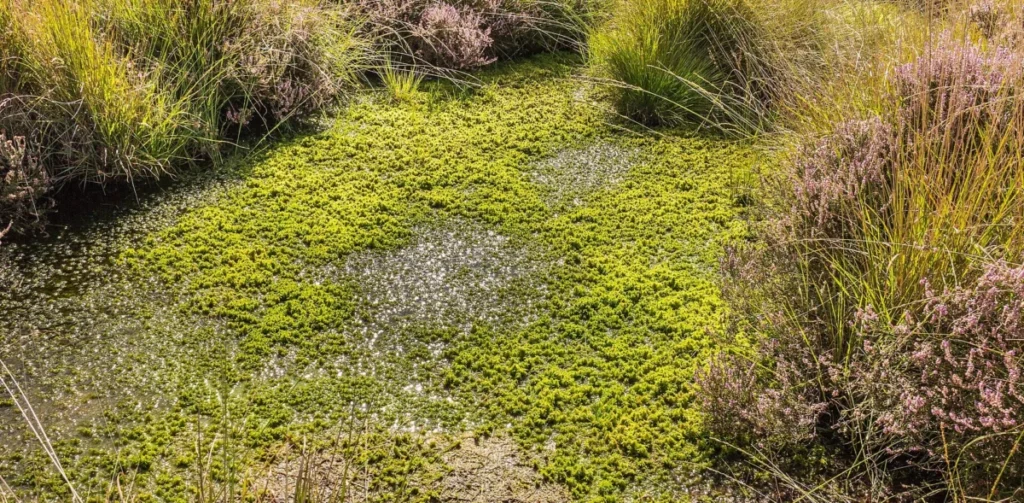
A peat bog is not simply a wet field. It is an ecosystem so chemically hostile to biological decay that it functions, in effect, as a slow-motion natural embalmer. The key to understanding this lies in the ecology of one plant: Sphagnum moss.
Sphagnum grows in dense, overlapping carpets across the raised bogs of Denmark, the Netherlands, Germany, Ireland, and Britain. As it grows, it acidifies everything around it. The moss actively exchanges hydrogen ions for the calcium and other mineral cations dissolved in rainwater, progressively stripping the surrounding water of the nutrients that bacteria and fungi need to survive. The result is a highly acidic environment, typically with a pH of 3.2 to 4.5 in the deeper layers of a raised bog, according to measurements compiled by Lynnerup (2015) in The Anatomical Record. That acidic range is comparable to vinegar, and it creates conditions that severely restrict the scope of microbial activity.
Why Anaerobic Conditions Matter, But Are Not Enough Alone
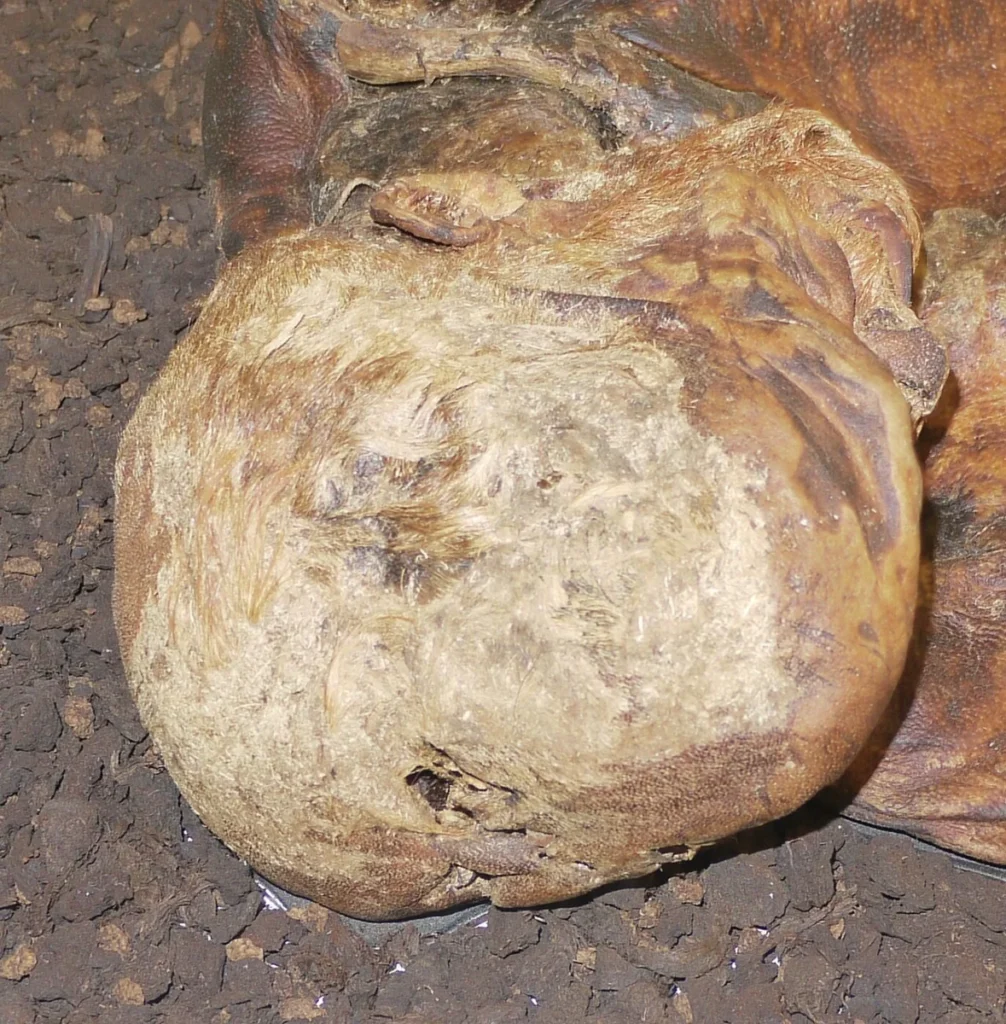
Below approximately 40 centimeters from the bog surface, oxygen disappears almost entirely. Aerobic bacteria, which drive most soft-tissue decomposition in buried remains, cannot function in this oxygen-free zone. Early researchers in the nineteenth and early twentieth centuries assumed this anaerobic condition, combined with the acidity, explained everything. The British Museum team studying Lindow Man in 1986 summarized this consensus neatly: preservation depended on the near-complete absence of oxygen, the absence of putrefactive microorganisms, and a complex mixture of organic acids in the water.
That consensus turned out to be only partially correct. Crucially, as the Norwegian biochemist Terence Painter demonstrated in his foundational 1991 review in Carbohydrate Polymers, the anoxic region of peat is not actually sterile. Waksman and Stevens had already demonstrated in 1929 that the anaerobic layers of peat contained between ten thousand and one million bacterial cells per gram of wet peat. These bacteria are acidophilic anaerobes, organisms perfectly capable of functioning in acid, oxygen-free conditions. Low pH and anaerobic conditions alone therefore cannot explain why skin and hair survive at all. Something else was doing the preserving.
The Molecule That Actually Tans Bog Body Skin
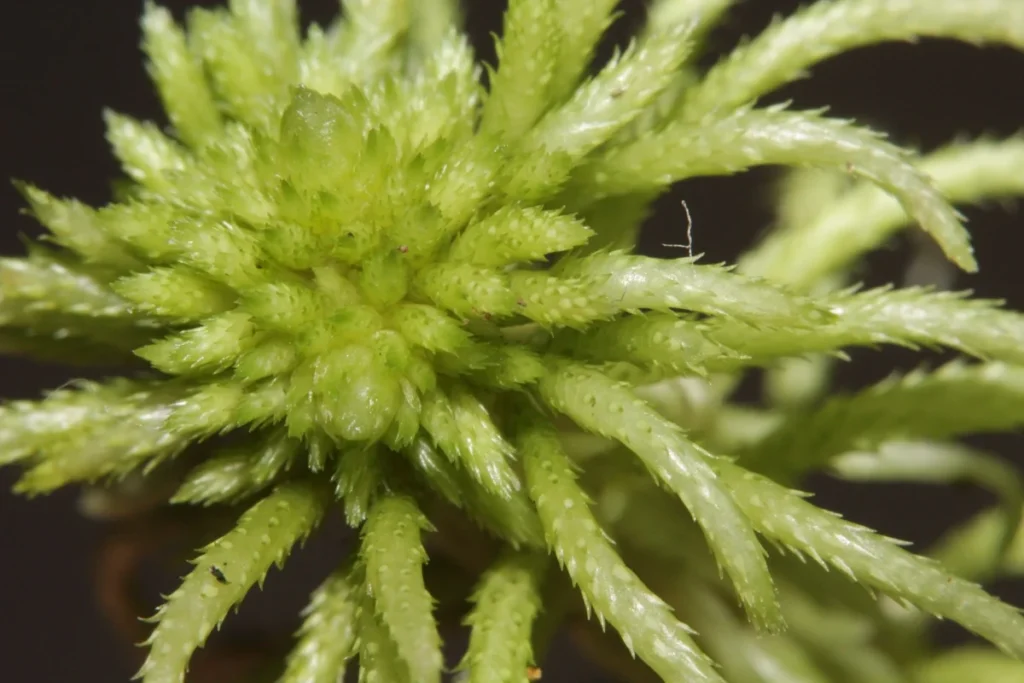
The real preserving agent is a polysaccharide called sphagnan, and its discovery fundamentally changed how scientists understand bog body preservation. Painter identified sphagnan as a complex, pectin-like carbohydrate polymer embedded in the cell walls of Sphagnum moss leaves. It is structurally unique because its chains contain numerous reactive carbonyl groups located in residues of D-lyxo-5-hexosulopyranuronic acid, a compound comprising roughly 25 percent of the polymer. This high concentration of carbonyl groups makes sphagnan chemically reactive in ways that ordinary polysaccharides are not.
How Sphagnan Is Released Into Bog Water
While the moss is alive, sphagnan is locked tightly into the cell wall matrix, covalently cross-linked to cellulose and other structural polymers. It cannot tan anything in this bound state. However, as the dead moss is slowly converted into peat over hundreds and thousands of years, sphagnan is continuously liberated into the surrounding bog water through a spontaneous process called autohydrolysis, catalyzed by the bog’s native acidity. Painter calculated that this release occurs over a period of roughly 2,000 to 3,000 years, meaning that a body deposited into an active raised bog is perpetually bathed in a dilute solution of sphagnan leaching from progressively older peat layers.
The Maillard Reaction and Skin Tanning
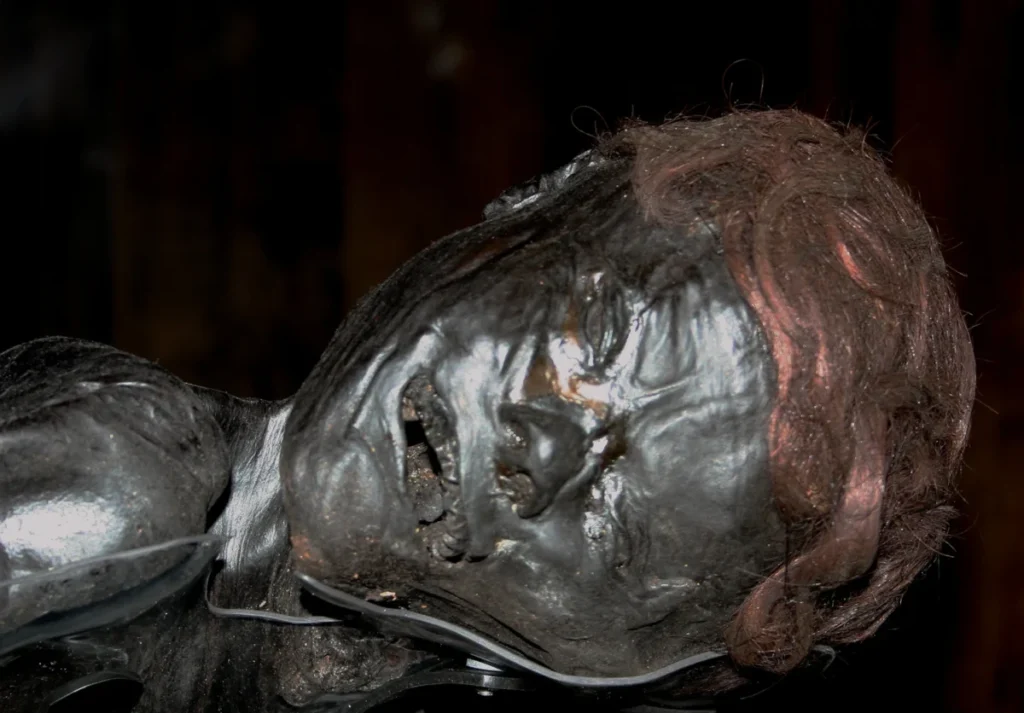
Once sphagnan is dissolved in the bog water, it reacts directly with the collagen in skin and other connective tissues. The mechanism is a Maillard reaction, the same class of chemical transformation responsible for the browning of bread during baking. The reactive carbonyl groups in sphagnan condense with the free amino groups of collagen’s lysine and arginine residues to form glycosylamine complexes, which then undergo a complex cascade of rearrangements that ultimately produce irreversible covalent cross-links between collagen fibers. The practical result is that the collagen is tanned, in precisely the same chemical sense as leather is tanned, becoming hardened, darkened, and resistant to both microbial attack and enzymatic digestion.
This is why bog body skin typically turns a deep coffee-brown or chestnut color. It is not simply staining. It is genuine chemical modification of the tissue’s protein structure. Differential thermal analysis of sphagnan-treated mackerel skin conducted by Børsheim, Christensen, and Painter (2001) in Innovative Food Science and Emerging Technologies confirmed that sphagnan produces a measurable increase in the denaturation temperature of collagen, consistent with covalent cross-linking rather than the weaker hydrogen bonding produced by conventional polyphenolic tanning agents like tannic acid. This distinction matters enormously for long-term preservation. Covalent bonds resist hydrolysis far better than secondary valence forces, which is precisely why sphagnan-tanned skin can endure for two millennia while vegetable-tanned leather from the same period typically does not.
Why Hair, Nails, and Wool Survive Intact
The preservation of hair on bog bodies is explained by a different biochemical reality. Hair, nails, wool, and leather are all composed primarily of keratin, a fibrous structural protein whose molecular architecture is fundamentally different from collagen’s. Keratin is naturally resistant to the acidic conditions of raised bogs, a fact that Lynnerup (2015) notes explicitly in his synthesis of taphonomic processes for the University of Copenhagen’s Laboratory of Biological Anthropology. The tight coiling of keratin’s polypeptide chains and the extensive disulfide cross-linking between them make the protein far less accessible to microbial exoenzymes than the open triple-helix structure of collagen.
Why Bone Dissolves While Soft Tissue Survives
This is the most counterintuitive aspect of bog body preservation, and it follows directly from sphagnan’s chemical properties. Sphagnan is a powerful chelating agent. Its polyanionic character allows it to bind calcium ions and other essential multivalent metal cations with an affinity comparable to EDTA, the synthetic chelating agent used routinely in chemistry laboratories. Painter demonstrated this by testing sphagnan against Azotobacter vinelandii, a bacterial strain with an absolute requirement for calcium, and showing that sphagnan suppressed its growth as effectively as EDTA did.
Because bog water is perpetually saturated with sphagnan, the calcium phosphate mineral that gives bone its structural rigidity is progressively dissolved and carried away. The bones of bog bodies become completely decalcified, turning soft and rubbery, while the surrounding skin remains intact. This is why Tollund Man’s skeleton, when examined after his 1950 discovery, was found in far poorer condition than his magnificently preserved face, and why the bones of Grauballe Man had warped and compressed under the weight of the peat above him. Grauballe Man’s skull, initially interpreted in 1952 as showing signs of perimortem blows, was re-examined by CT scanning in 2001 and found instead to have been deformed entirely by post-mortem bog pressure, according to Lynnerup’s reassessment published via the Jutland Archaeological Society Press.
Enjoying Spoken Past?
I created Spoken Past to share my love of history. I research, write and develop everything myself, and I want my articles and basic guides to remain free for everyone.
If you enjoy my work, please consider supporting Spoken Past with a small donation.
Temperature, Timing, and the Window for Successful Preservation
Sphagnan chemistry alone does not explain why some bog bodies are exquisitely preserved while others found in apparently similar bogs are mere skeletons. Two additional factors determine whether soft-tissue preservation actually occurs: the temperature of the water at the time of deposition, and the speed with which sphagnan penetrates the tissues before decomposition begins.
Lynnerup (2015) notes that the first scientific experiments specifically focused on bog body preservation were conducted by a Danish forensic pathologist examining the “Vester Torsted” skeleton in 1913. The pathologist, Ellermann, showed that peat could tan skin and that sphagnum acid was central to the tanning process. Later researchers established that bodies deposited in cold bog water, below approximately 4 degrees Celsius, are preserved far more effectively than those deposited in warmer conditions. Cold water suppresses microbial metabolism in the hours and days immediately following death, buying time for sphagnan to begin its tanning action before putrefactive bacteria can establish a foothold in the tissues.
Why the Window Is So Narrow
Børsheim and colleagues demonstrated this timing constraint experimentally using salmon skin and whole zebrafish, showing that preservation was highly reproducible when embedment in Sphagnum moss occurred within 48 hours of death, but produced ambiguous results with material that had already been refrigerated for more than 48 hours. Twelve stillborn piglets submerged in a peat bog near Letterkenny, Ireland, in 1996 also showed remarkable anatomical preservation at gross level after six weeks, three months, six months, and one year, with controls placed in ordinary water decomposing completely in the same period. The practical implication for ancient depositions is stark. A body placed in a cold, active raised bog in January or February had a dramatically higher chance of surviving into the archaeological record than one deposited in midsummer, when bog water temperatures would have allowed bacterial colonization to outpace sphagnan tanning.
The Difference Between Raised Bogs and Fens
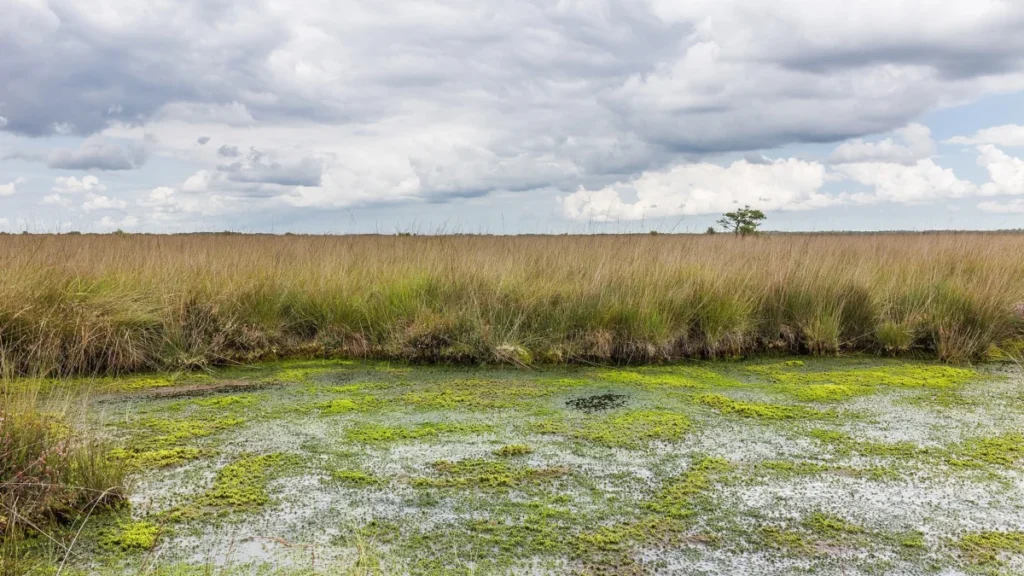
Not all wetlands preserve equally, and this distinction is critical for understanding the geographic distribution of well-preserved bog bodies. Raised bogs, sometimes called ombrotrophic bogs because they are fed exclusively by rainfall rather than groundwater, develop the most extreme chemical conditions. They are mineral-poor, have the lowest pH values, and generate the highest concentrations of sphagnan. These are the bogs of Jutland in Denmark, the Dutch province of Drenthe, the lowlands of northwestern Germany, and the midlands of Ireland, exactly the regions that have yielded the most complete and best-preserved bodies.
Fens, by contrast, are fed partly by groundwater that carries dissolved minerals, including the calcium ions that partially neutralise sphagnan’s chelating action and raise the pH above the critical range for tanning. Experimental research modelling diagenesis at two wetland sites, Rørmyra in mid-Norway and Lejre in Denmark, found rapid bone demineralization and spectacular skin preservation in the Norwegian raised sphagnum bog, and no detectable demineralization alongside poor skin preservation in the Danish fenland site, according to results summarized in Palaeogeography, Palaeoclimatology, Palaeoecology (2008). Norway, despite its extensive wetlands, has yielded fifteen bog finds, all completely skeletonised, almost certainly because its wetlands tend toward the fen type rather than raised Sphagnum bog.
Why Britain’s Bog Bodies Are Rarer Than Denmark’s
Britain has produced notable examples, including Lindow Man, found in 1984 at Lindow Moss in Cheshire and now held at the British Museum, but the overall number of well-preserved British bog bodies is smaller than the Danish record. The acidity and hydrology of individual bog systems varies considerably even within Britain, and many British lowland bogs have been drained for agriculture over the past three centuries, eliminating the anaerobic conditions necessary for preservation. The Drents Museum in Assen, which houses Yde Girl and other Dutch specimens, curates one of the richest collections of bog body material in Europe precisely because Drenthe’s raised bogs maintained near-ideal conditions through the Iron Age.
What Modern Science Has Learned From These Preserved Bodies
The remarkable state of bog body skin has allowed scientists to extract information from ancient remains that would be entirely inaccessible from conventional skeletal burials. Because the integument survives, trauma in the form of cut marks, rope impressions, and blunt force wounds can be assessed directly on the preserved tissue. The preserved gut contents of Tollund Man revealed a carefully composed last meal of barley, linseed, and various weed seeds, consumed some 12 to 24 hours before his death, according to analyses summarized by Lynnerup (2015). The preserved gut contents of Grauballe Man, re-analysed in 2007 by Harild, Robinson, and Hudlebusch using modern archaeobotanical methods, showed a similar composition of mixed grain and weed seeds.
The Limits of What Survives
Even the best bog conditions impose severe limits on what can be recovered. DNA preservation is poor in bog environments because the same acidic, waterlogged conditions that tan collagen are highly destructive to nucleic acids. Attempts to recover ancient DNA from the dentine of Grauballe Man failed entirely. Lynnerup noted in 2015 that the advent of techniques capable of detecting very short DNA chains might eventually change this, but as of the mid-2010s, no reliable aDNA results had been obtained from a bog body. Stable isotope analysis of preserved hair has proven more productive. Isotope ratios in hair reflect diet over the final months of an individual’s life, and analyses of Iron Age bog bodies have consistently shown diets weighted toward plant foods with modest animal protein contribution.
The waterlogged state of freshly-excavated bog bodies also creates severe conservation challenges that persist long after discovery. When a bog body is removed from its anaerobic environment, the tissues that have been maintained by waterlogging begin to collapse and shrink as water evaporates. Pre-twentieth-century finds were typically simply dried in place, producing the cardboard-hard, distorted specimens now held in some Scandinavian museum collections. Tollund Man’s head, the best-preserved part of his remains, was conserved in the 1950s by gradually substituting water in the tissues with tannic oils, oak bark extracts, and wax, a process that took over a year. Grauballe Man’s entire body underwent a similar treatment documented by the Moesgaard Museum. Today, freeze-drying has become the preferred conservation method, allowing water to be removed from tissues in a vacuum without the tissue collapse associated with evaporative drying.
The story that these bodies tell about ancient Northern European life, ritual, and death is inseparable from the chemistry that preserved them. Every detail visible on Tollund Man’s face, from the furrows of his brow to the leather thong still tightened around his neck, survived because a dead Sphagnum moss released the right molecule, in the right concentration, into cold Danish bog water more than two thousand years ago.