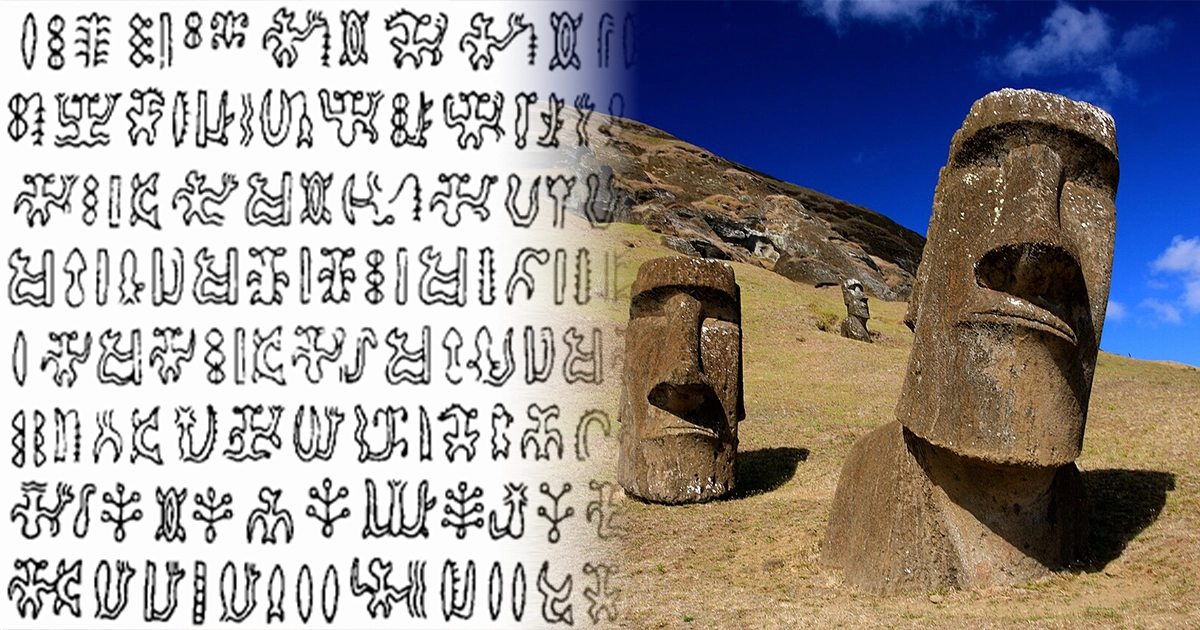
In January 1864, a Breton lay missionary named Eugène Eyraud arrived on Rapa Nui and noted something no European had formally recorded before: wooden tablets and staffs covered in rows of miniature carved figures, human shapes, animals, plants, and abstract marks, running in neat lines across carefully prepared surfaces. He did not know what to make of them. Neither, 160 years later, does anyone else. Those objects bear rongorongo, the only known pre-twentieth-century script from Oceania, and it remains completely undeciphered. This is not a story of neglect. Linguists, epigraphers, cryptographers, and statisticians have worked on these tablets for well over a century. The failure belongs not to them but to the catastrophic conditions under which the tablets reached the outside world. This post explains what rongorongo actually is, what the tablets contain, why every serious decipherment attempt has collapsed so far, and what a landmark radiocarbon study published in 2024 changes about the timeline.
What the tablets are and how many survive
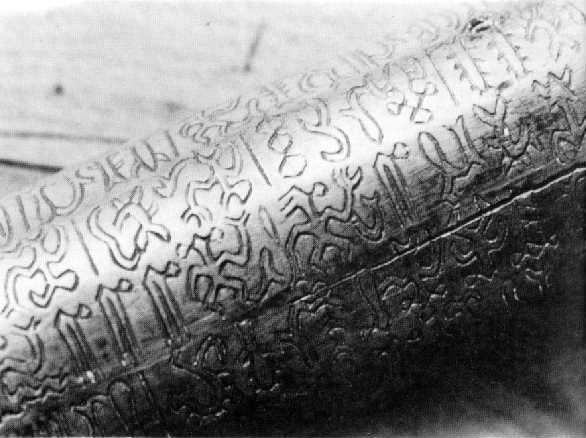
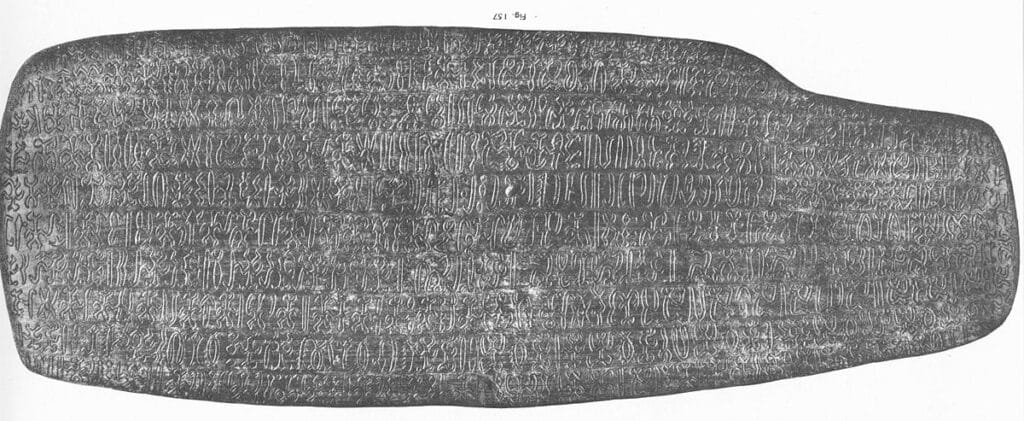
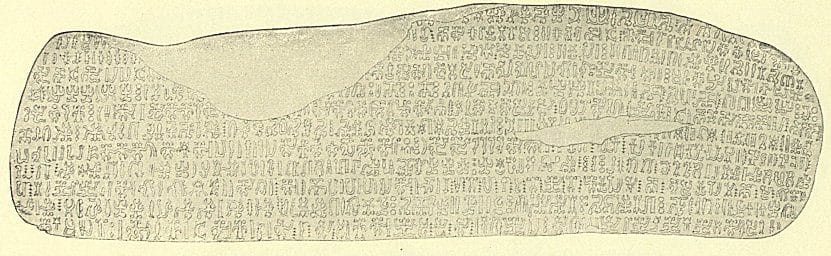
The corpus of rongorongo inscriptions consists of twenty-seven authenticated wooden objects. Not one remains on Rapa Nui. They are scattered across institutions on four continents: the Congregazione dei Sacri Cuori di Gesù e di Maria in Rome holds four, the Ethnologisches Museum in Berlin holds one, the Musée de l’Homme in Paris holds several, and further pieces reside in Santiago, St. Petersburg, Washington, and Honolulu. Most are flat wooden tablets, planed smooth on both faces. Others include the Santiago Staff, a chieftain’s rod nearly 130 centimetres long, two reimiro chest ornaments, and a figure associated with the birdman ceremony. Several objects in older catalogues are now judged inauthentic on grounds of poor craftsmanship, steel-blade tool marks inconsistent with pre-contact manufacture, or non-boustrophedon layout. Researcher Paul Horley’s 2021 corpus edition, the current scholarly reference, restricts serious analysis to around twenty of the cleaner pieces.
The carving is technically accomplished. Scribes incised glyphs using obsidian flakes, with oral tradition recording that apprentices practised on banana leaves first. Thomas Barthel of the University of Tübingen, who compiled the first complete corpus in his 1958 work Grundlagen zur Entzifferung der Osterinselschrift, catalogued 632 distinct sign shapes. Later statistical work by Igor Pozdniakov and Konstantin Pozdniakov reduced that substantially. Accounting for allographs (variant forms of the same sign) and ligatures (fused compound signs), the underlying inventory is likely around 130 basic glyph shapes, a number consistent with a logo-syllabic system mixing logograms with syllabic signs, though scholars disagree sharply on which the script actually is.
Each line of text follows a pattern called reverse boustrophedon. The reader works left to right along the first line, then physically rotates the tablet 180 degrees to read the next line, again left to right, alternating with every row. The carved figures therefore appear upside-down on alternating rows until the tablet is turned. This layout is confirmed by the carving itself and is one of the very few things in rongorongo studies that commands full scholarly agreement.
How the reading tradition was lost
By the time missionary reports prompted Bishop Florentin-Étienne Jaussen of Tahiti to begin collecting tablets in the late 1860s, the community of people who had used them was already in catastrophe. Between 1862 and 1863, Peruvian slave ships raided Rapa Nui repeatedly, carrying off somewhere between 1,400 and 2,000 people. The victims included the island’s paramount chief Kaimokoi and virtually the entire class of tangata rongorongo, the trained scribes and chanters for whom these objects functioned. Introduced disease then killed most of those who remained or who were repatriated after international pressure forced Peru to release survivors. The population of Rapa Nui fell from perhaps 4,000 in the early 1860s to around 110 by 1877. An entire knowledge tradition, passed by memory and performance across generations, collapsed in a single decade.
When Jaussen found a Rapa Nui worker named Metoro Taua Ure in Tahiti around 1869 and asked him to read the tablets, Metoro chanted at length. But his chants shifted between Rapanui and Tahitian, described what glyphs depicted rather than reading them phonetically, and were demonstrably inconsistent. When the French epigraphist Jacques Guy later analysed Metoro’s session with the Mamari tablet, he found Metoro had read the lunar calendar section backwards without recognising what it was. Metoro was almost certainly improvising ritual glosses around objects he could no longer genuinely read.
This is the first and most damaging obstacle to decipherment: the oral key was gone before any trained observer could record it. Every successful decipherment in history has depended on at least one of three conditions, namely a bilingual text, a living reading tradition, or a closely related deciphered script. Linear B yielded in 1952 because Michael Ventris could compare it structurally to Greek, a known language. The Mayan script gave way because Yuri Knorozov could draw on surviving colonial vocabularies and because enough text survived across a variety of contexts. Rongorongo offered neither foothold.
The one passage everyone agrees on
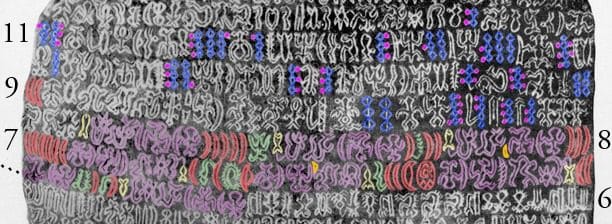
Tablet C, universally called the Mamari tablet, is housed at the Congregazione dei Sacri Cuori di Gesù e di Maria in Rome. It is a planed piece of Pacific rosewood measuring 29 by 19 centimetres, inscribed on both faces. On the recto, lines Ca6 through Ca8 contain a sequence that Thomas Barthel first identified in 1958 as calendrical. The sequence consists of a repeating series of crescent-shaped glyphs, each slightly different, flanking a distinctive full-disc pictogram. When matched against ethnographically recorded Rapanui lists of the nights of the lunar month, collected separately by William Thomson in 1886, Alfred Métraux in 1940, and Sebastian Englert in 1974, the glyph sequence aligns strikingly well with a thirty-night lunar month. The structure tracks the moon’s nightly progression, with the full-disc sign marking the full moon and variants representing waxing and waning crescents at specific positions in the cycle.
This identification holds because it can be independently verified against two external sources simultaneously: astronomical reality and ethnographic tradition. That double convergence makes it the only secure functional identification in the entire corpus. Yet even here, the text cannot actually be read. Scholars can say what the Mamari calendar is doing structurally. They cannot say what words it uses to do it. The rest of the corpus has yielded no comparably anchored passage, and without anchors, sound values have nowhere to settle.
The failed decipherments and the pattern behind them
The history of claimed rongorongo breakthroughs is a melancholy one. In the 1990s, Steven Roger Fischer of the Institute of Polynesian Languages and Literatures proposed a reading of Tablet B, the Aruku Kurenga, as a creation chant involving sexual pairing. His method matched repeated glyph sequences to repeated phrases in an oral cosmogonic text. The proposal attracted brief acceptance before Jacques Guy and Igor Pozdniakov demolished it systematically, demonstrating that the statistical patterns Fischer identified were not specific to his proposed source but arose from the structure of the script itself. Any sufficiently long Polynesian chant with repeated formulae would produce apparent matches. The proposal could not be falsified, and an unfalsifiable decipherment is not a decipherment at all.
The broader pattern of failure is consistent across proposals. A researcher identifies a satisfying match between a short glyph sequence and a known Rapanui text. They assign phonetic or logographic values to the signs involved. When those values are then tested against other tablets, the correspondences break down. A sign that functions as a phonetic element in one passage behaves as a logogram in another, or disappears entirely from positions where it should appear if the proposed value holds. The researcher then invokes polysemy, free alternation between signs, or scribal idiosyncrasy to rescue the proposal. At that point the theory has become self-immunising and can no longer be tested.
Built out of a love for history, kept free from distractions.
Spoken Past is an independent project shaped by curiosity, care, and long hours of research. Reader support helps keep it maintained, carefully researched, and open to everyone.
Six structural reasons the script stays silent
The corpus is too small. Around fifteen thousand glyph tokens from roughly twenty usable tablets is a library so thin that even robust statistical methods struggle. By comparison, the Linear B corpus Michael Ventris worked with contained several hundred tablets from multiple sites, covering administrative records on grain, livestock, land tenure, and personnel, a range of secular topics that provided the variety of context a decipherer needs. The rongorongo tablets may all record similar kinds of content, ritual formulae, cosmogonic recitations, or genealogical lists, and if so, the vocabulary is narrow and formulaic. That is precisely the worst case for decipherment, because multiple readings become equally plausible and no distributional test can rule them out.
There is no bilingual text and no closely related deciphered script. Champollion had the Rosetta Stone. Ventris had the structural clues of a metrically patterned undeciphered script and a known language family. Old Rapanui, the language presumably encoded in the tablets, was already deeply contaminated by Tahitian influence by the time any substantial vocabulary was recorded in the 1880s. The language available to scholars today is not the language of the tablets. Provenance is almost entirely lost as well. Most tablets arrived at museums in the 1870s through missionary networks, with no record of which community owned them, what ceremonial function they served, or whether individual tablets formed part of a matched set.
The graphemic inventory is unresolved. Barthel’s list tallied 632 signs, but many are variants. Narrower counts around 130 core types are more widely accepted, yet how many of those 130 are genuinely independent graphemes remains contested. Until the inventory is settled, any phonetic assignment rests on shifting foundations. The subject matter is almost certainly narrow and specialised. And the timeline of the script itself may be internally inconsistent, with tablets from different centuries and possibly different scribal traditions mixed into the same small corpus, a problem the 2024 radiocarbon study made considerably more acute.
What the 2024 radiocarbon study found
In February 2024, a study published in Scientific Reports by Silvia Ferrara of the University of Bologna and colleagues reported radiocarbon dates for four tablets held in Rome, Tablets A through D in the standard catalogue. Three of them, A Tahua, B Aruku Kurenga, and C Mamari, dated to the nineteenth century, consistent with previous results for the tablets in St. Petersburg and Berlin. The fourth, Tablet D Échancrée, yielded a calibrated date of 1493 to 1509 CE, placing the wood’s felling more than two centuries before European contact with Rapa Nui in the 1720s. That result attracted global headlines and strengthened the case that rongorongo developed independently of any European stimulus.
But the conclusion requires careful handling, and Ferrara’s team was precise about its limits. Radiocarbon dates the wood, not the inscription carved into it. The Échancrée tablet is made of Podocarpus wood, a species not native to Rapa Nui, which almost certainly arrived as driftwood or salvage from a European ship. There is a well-documented Rapanui practice of reusing scarce timber on a heavily deforested island. The inscription could therefore be considerably younger than the wood. The result establishes what scholars call a terminus post quem, meaning the carving cannot predate 1493, but it cannot establish when carving actually happened. The glyph forms themselves share no resemblance whatsoever to any known European script, which independently supports an indigenous origin regardless of the wood’s age.
What modern documentation adds and where hope lies
The INSCRIBE project, funded by the European Research Council and led by Ferrara at Bologna, has produced photogrammetric three-dimensional models of the four Rome tablets at sub-millimetre geometric precision. This matters for two concrete reasons. First, 3D surface data allows researchers to distinguish deliberate incisions from post-depositional scratches with a precision that pencil rubbings and even high-resolution photography cannot match. Barthel’s 1958 rubbings, the foundation of the field for sixty years, contain transcription errors that Horley’s 2021 corpus edition corrected by direct examination of the originals. The 3D models will correct more. Second, accurate orthomosaics allow consistent, scalable measurement of glyph proportions, enabling more rigorous comparison of scribal hands across tablets, which is a prerequisite for determining whether the corpus represents one tradition or several.
Three things would move the field most significantly. First, exhaustive 3D documentation of every authentic object, with data made publicly available for independent analysis. Second, more radiocarbon dating across the corpus, using the BABAB cellulose-extraction protocol that Ferrara’s team employed rather than earlier, less rigorous methods. Third, deeper integration of Old Rapanui linguistic reconstruction with structural analysis of the tablets, including careful comparison with fossilised archaic forms preserved in kaikai string-figure recitations, which Barthel and others believed share genre with some tablet texts. The most productive path is not a dramatic single breakthrough but a slower, methodical narrowing of the problem.
Why these objects still matter without a reading
A community on one of the most isolated landmasses on earth developed a formal, standardised system of incised signs, taught it to a specialist class, applied it to prestigious objects with evident care, and sustained it long enough for the signs to become conventionalised and for shared formulaic sequences to spread across dozens of tablets. That is an extraordinary cognitive and institutional achievement regardless of whether the system encoded full phonetic language or served as a structured mnemonic for oral performance. The tablets are also physical evidence of a cultural programme that was deliberately destroyed. The Peruvian slave raids of 1862 and 1863 were not incidental to the collapse of the rongorongo tradition. They removed the specific human chain that carried the knowledge.
Collaboration with contemporary Rapanui knowledge holders is not a supplementary courtesy; it is a methodological necessity. The Rapanui community maintains oral traditions, genealogical memory, and knowledge of ritual practice that no European archive preserves. Any future decipherment or even partial functional identification that does not proceed in genuine partnership with Rapanui scholars will almost certainly miss crucial contextual constraints. The tablets belong to Rapa Nui’s intellectual history. Their study belongs to a relationship, not a puzzle competition.
Sources: Silvia Ferrara et al., “The invention of writing on Rapa Nui (Easter Island). New radiocarbon dates on the Rongorongo script,” Scientific Reports 14, 2794 (2024), https://www.nature.com/articles/s41598-024-53063-7; Steven Roger Fischer, Rongorongo: The Easter Island Script: History, Traditions, Texts (Clarendon Press / Oxford University Press, 1997), https://academic.oup.com/book/48586; Jacques Guy, “Lunar calendar in rongorongo texts and rock art of Easter Island,” Journal de la Société des Océanistes 133 (2011), https://journals.openedition.org/jso/6314; Paul Horley, “Rongorongo script: Carving techniques and scribal corrections,” Journal de la Société des Océanistes 129 (2009): 249-261, https://journals.openedition.org/jso/5813; Lorenzo Lastilla, Roberta Ravanelli, Miguel Valério, and Silvia Ferrara, “Modelling the Rongorongo tablets: A new transcription of the Échancrée tablet and the foundation for decipherment attempts,” Digital Scholarship in the Humanities 37 (2022): 497-516, https://academic.oup.com/dsh/article/37/2/497/6387816.