
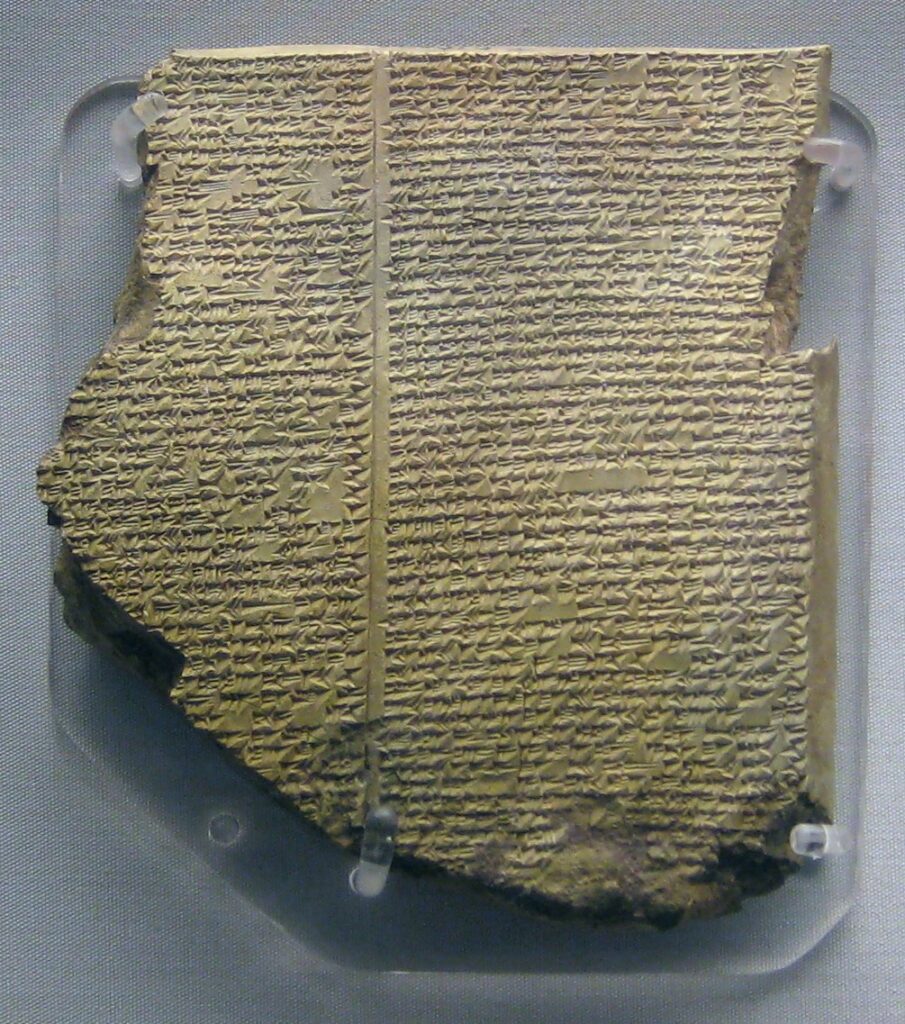
In November 1872, a self-taught Assyriologist named George Smith was working through cuneiform tablets in London when he recognized words on a fragment of Neo-Assyrian clay that described a survivor of a catastrophic flood, a divine warning, a boat built to survive the deluge, and birds released to test whether dry land had emerged. The story matched the Book of Genesis closely enough that Smith reportedly stood up and began pacing the room in a state of agitation. The tablet was Tablet XI of the Epic of Gilgamesh, excavated from the library of Ashurbanipal at Nineveh, and it predated the biblical account by centuries. That moment captures what the journey from myth to history actually looks like in practice: not the destruction of an old story, but the discovery of a physical object that forces a new set of questions about where the story came from, what it remembered, and what material world it was rooted in. This article explains the methods historians and archaeologists use to move from myth to history responsibly, using specific excavations, deciphered texts, and real case studies to show where the method works, where it honestly fails, and why understanding both sides makes ancient evidence far more interesting than treating myth and history as enemies.
Why myth is not the opposite of truth
The word “myth” in everyday English has come to mean something false, a story believed by people who did not know better. In scholarly usage it means almost the opposite: a narrative that a community treats as foundationally true, often in ways that resist the testing procedures historians normally apply. Cosmogonies explain why the world has the structure it has. Foundation myths explain why a particular people belongs in a particular landscape. Heroic cycles encode the values a society wants to transmit across generations without losing them to time. None of these functions requires literal factual accuracy. Demanding it misses what these stories were built to do.
What the transition from myth to history involves is not replacing stories with facts but identifying which parts of a story can be tested against evidence that exists independently of the story itself. A foundation myth may preserve accurate memories of a real city’s location, a real catastrophe’s timing, or a real political transition’s logic, all embedded inside narrative frameworks that are not trying to be journalism. The historian’s job is to disentangle those layers carefully: neither accepting the whole story at face value nor dismissing it entirely because it contains dragons and divine interventions. The first step is always asking what kind of text you are reading and what work it was doing in the world where it was produced.
The five tools historians use to move from myth to history
Good historical argument is cumulative. No single object or text settles a major claim on its own. The discipline looks for convergence: independent lines of evidence pointing in the same direction, each modest on its own, building a case together that none of them could make alone. Five main tools generate that convergence.
Source criticism
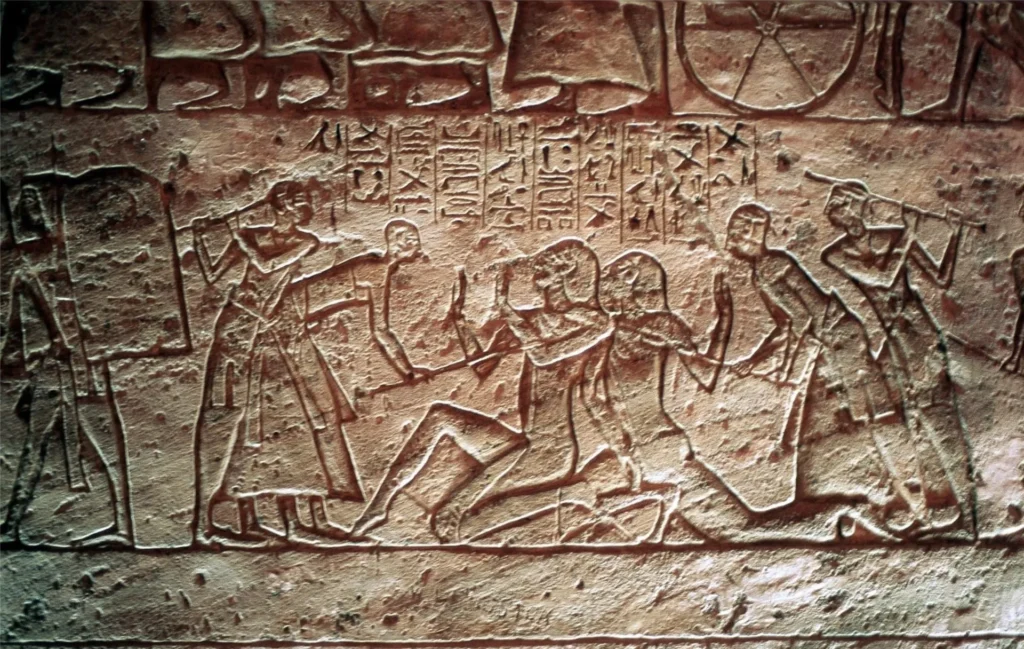
The first question any historian asks of a text is not “is this true?” but “what is this for, and who produced it?” Genre controls what can be trusted and how. Herodotus in his Histories mixed travel report, oral tradition, moralizing digression, and occasional fiction within a single work, and reading him without understanding that produces wildly distorted conclusions. Egyptian battle reliefs always depicted the pharaoh winning, because their purpose was not reportage but cosmological argument: the king upheld Ma’at, the principle of cosmic order, and therefore could not be defeated without implying that the universe itself was failing. Hittite diplomatic treaties, by contrast, were instruments in which both parties had powerful reasons to record terms accurately, since violations were witnessed and documented by both sides and by their gods simultaneously.
These two genres, the Egyptian battle relief and the Hittite treaty, can describe the same event very differently. That does not mean one is lying and one is telling the truth. It means they are making different kinds of claims from inside different social and ideological frameworks. Source criticism asks you to understand the machinery before you trust the output.
Archaeology and stratigraphy
An artifact without a context is an aesthetic curiosity. The same artifact inside a sealed destruction layer associated with weapons, fire debris, and collapsed architecture becomes evidence of an event at a datable moment in time. Stratigraphy, the reading of archaeological deposits as a sequence of layers formed over time, is what converts objects into chronologies. When excavators identify a destruction horizon that pottery sequence and radiocarbon samples place in a particular century, and when that horizon corresponds to what a literary tradition says happened to that site in roughly that period, the convergence becomes meaningful. The convergence does not prove the literary account. It demonstrates that the account and the archaeology are describing a world that actually existed, and that their relationship is worth investigating carefully rather than dismissing in either direction.
Epigraphy and documentary evidence
Inscriptions are where institutions meet stone. Decrees, boundary markers, tax records, treaty clauses, military campaign annals, and dedications all write datable information into physical objects that survive independent of the literary tradition. Papyri add a finer grain: private letters, receipts, petitions, and legal proceedings that official histories ignored entirely but which reveal how ordinary administrative and commercial life actually worked. Coins record whose face claimed legitimacy on which territory at which moment, and whose portrait was subsequently defaced or overstruck when power changed. Together this documentary layer can test or correct what literary sources claim. When it agrees with a literary account, confidence rises. When it contradicts one, you have a genuinely interesting historical problem to solve.
Scientific dating and its limits
Radiocarbon dating provides probability ranges for organic material. Dendrochronology reads annual growth rings in preserved timber and can reach calendar-year precision where wood survives in sufficient condition. Stable isotope analysis of tooth enamel reveals where individuals grew up and what they ate, allowing researchers to identify migrants in burial populations. Ancient DNA from skeletal remains is now revealing population movements and kinship patterns that no text records. These methods have genuinely transformed debates about the timing of the Bronze Age Collapse, the spread of Indo-European languages, and the demographic composition of specific ancient communities. But their limits are real and must be stated honestly. Radiocarbon dates are probability ranges, not fixed points. A date of 1250 to 1180 BCE means the material could have been deposited anywhere in that seventy-year window. Ancient DNA answers population-level questions, not individual ones. Treating a statistical range as a precise date, or a population signal as a named individual’s travel itinerary, produces claims that the methods genuinely cannot support.
Linguistics and place-name evidence
Languages leave tracks that survive long after the people who spoke them are gone. Loanwords, sound shifts, and place-names that persist attached to rivers, hills, and settlements across thousands of years can indicate deep cultural continuity beneath layers of later narrative. A heroic legend set at a site with an ancient non-Greek toponym suggests the story has roots older than the Greek-speaking world that transmitted it. Linguistic analysis rarely proves a legend in any strong sense, but it can establish that certain elements of a story are genuinely archaic, predating the culture that later claimed them, and that relationship between a story and its geographical substrate is not arbitrary.
Troy: what the excavations actually found
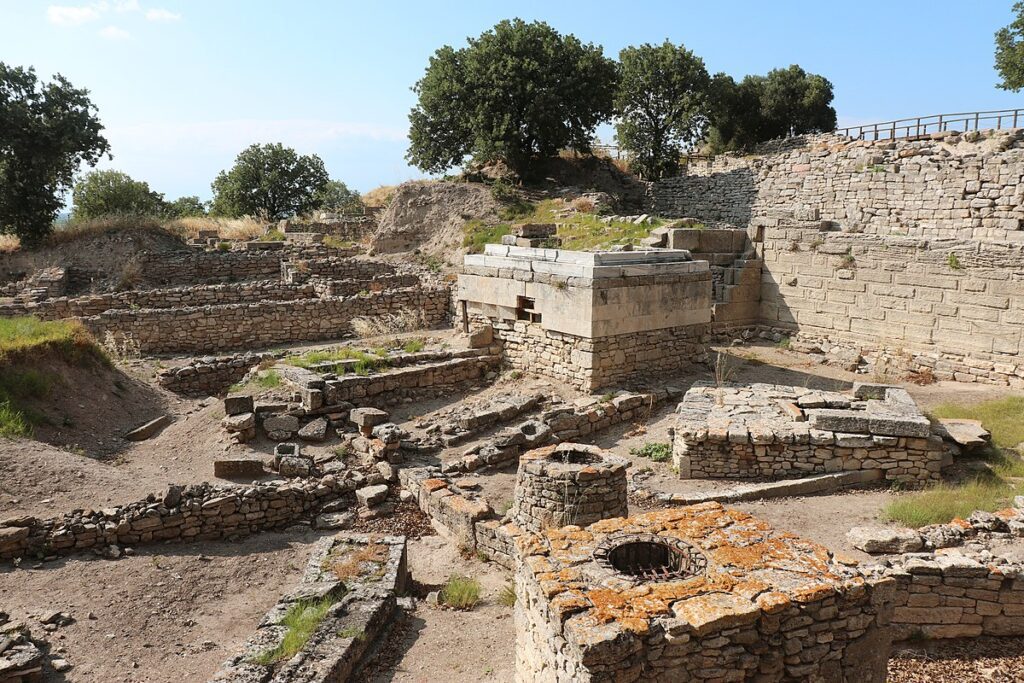
Heinrich Schliemann began excavating at Hisarlik in northwestern Turkey in 1870, convinced that the site was Homer’s Troy. He was right about the location and chaotic about the method, digging through the layers he wanted to understand in his rush to find the treasure he expected. Later excavations, particularly the University of Cincinnati campaigns led by Carl Blegen in the 1930s and the more recent University of Tubingen excavations directed by Manfred Korfmann from 1988 until his death in 2005, revealed a site of genuine complexity: a citadel with multiple successive building phases, a lower city far larger than Schliemann imagined, and destruction horizons in the levels known as Troy VI and Troy VIIa that radiocarbon dating and ceramic analysis place in the late thirteenth and early twelfth centuries BCE.
Hittite texts from the same period refer to a place called Wilusa in the region of western Anatolia that many scholars identify with the Greek Ilios, another name for Troy. The texts describe political disputes over Wilusa involving both Hittite kings and western Aegean powers in terms that are consistent with the kind of conflict the Iliad describes in legendary form. This convergence, a real city of the right size in the right location with violent destruction events in the right period, does not prove Homer. Homer was composing oral heroic poetry in a tradition that took shape over centuries and was not written down until the eighth or seventh century BCE at the earliest, long after the events it claimed to describe. What the archaeology and the Hittite texts together establish is that the Iliad was set in a world that actually existed, and that its geographical and political framework has real substance behind it. The poetry survives as poetry. The history behind it gets sharper.
Built out of a love for history, kept free from distractions.
Spoken Past is an independent project shaped by curiosity, care, and long hours of research. Reader support helps keep it maintained, carefully researched, and open to everyone.
Gilgamesh, Kadesh, and Rome: three more case studies
The city behind the epic
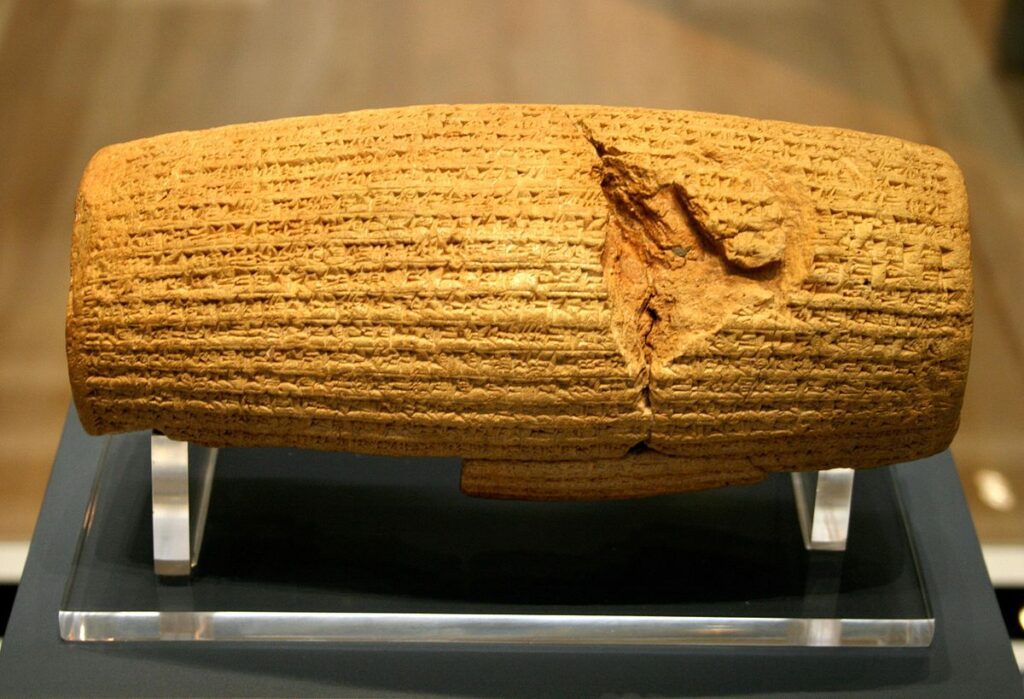
The Sumerian King List, preserved in multiple Old Babylonian copies from around 1800 BCE, includes a figure named Gilgamesh as an early ruler of Uruk and assigns him an impossibly long reign of 126 years, placing him in a section where the figures are clearly legendary rather than administrative. Excavations at Uruk in southern Iraq, one of the largest and most intensively studied sites in Mesopotamian archaeology, have confirmed a city of extraordinary scale and ambition in the fourth and third millennia BCE: monumental temple architecture, a sophisticated administrative apparatus that produced some of the earliest writing in human history, and long-distance trade connections reaching across Anatolia and Iran. That city is real, dateable, and excavatable. The historical Gilgamesh, if he existed, was a ruler of that city at some point in the early third millennium BCE. The Epic that bears his name, compiled and revised over more than a millennium and surviving most completely in the twelve-tablet Standard Babylonian Version from Ashurbanipal’s library at Nineveh, wraps that possible historical kernel in cosmic quests, a search for immortality, and a flood narrative that matches the Genesis account closely enough to have caused George Smith’s famous outburst in 1872. The quests are literary elaboration. The city behind them was real.
When a battle relief meets its own treaty
The Battle of Kadesh in 1274 BCE is the earliest battle in recorded history for which detailed accounts survive from both sides. The Egyptian version covers the walls of Abu Simbel, the Ramesseum, and temples at Karnak, Luxor, and Abydos, showing Ramesses II towering alone in his chariot over masses of fallen Hittites, the visual conventions of Egyptian royal warfare making the cosmic argument that divine kingship cannot be defeated. Read those reliefs alone and you have a decisive Egyptian victory. Then read the peace treaty, the Egyptian-Hittite Treaty of Kadesh of around 1259 BCE, which survives in both Egyptian hieroglyphic copies at the Ramesseum and in cuneiform copies excavated at Boghazköy in Turkey. The treaty records a negotiated mutual non-aggression pact, extradition clauses, and a defensive alliance: the legal structure of two peer powers agreeing that neither could eliminate the other and that coexistence was more practical than continued war. These two documents are not contradicting each other in the simple sense. They are operating in different genres making different kinds of claims. The relief is cosmological argument. The treaty is diplomatic instrument. The historian who reads both understands Kadesh far better than the historian who trusts only one.
Huts on the Palatine and a she-wolf in bronze
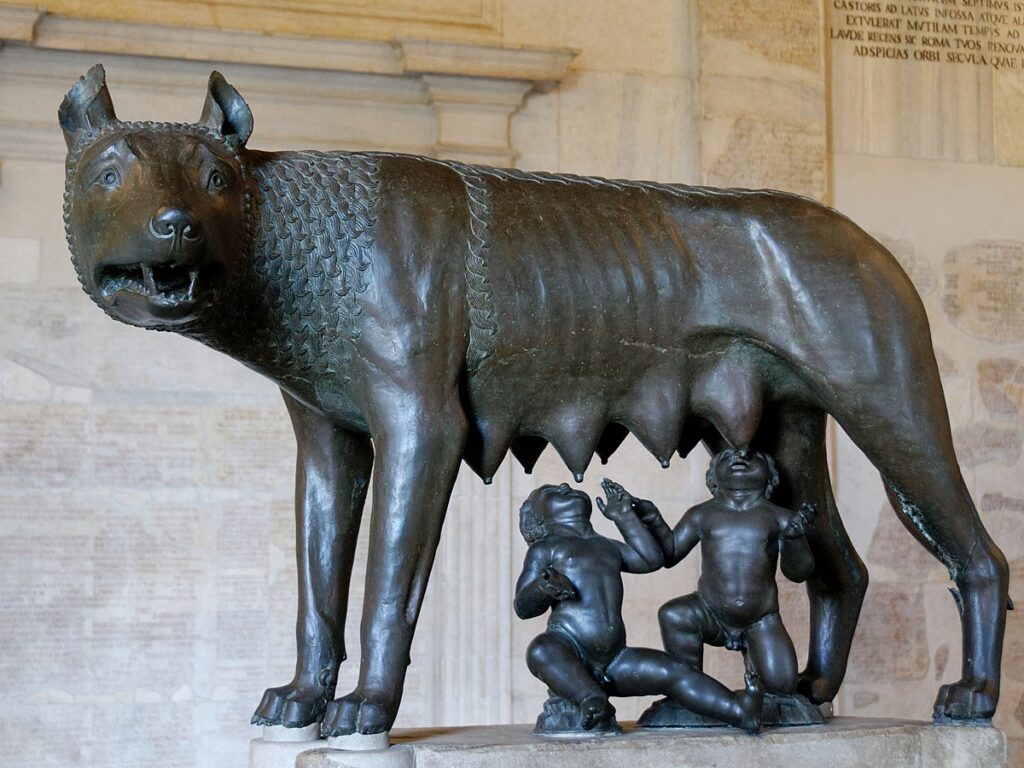
Livy opened his Ab Urbe Condita in the late first century BCE with a careful disclaimer: he was not confident that the earliest material was strictly factual, and he did not intend to argue about it. The Romulus and Remus story he then narrated was foundation mythology in the precise sense: it explained why Rome deserved to rule, why its very origins were marked by fratricide, and why the Palatine Hill was the right place for civilization to begin. Excavations on the Palatine, particularly work conducted by Italian archaeological authorities from the 1980s onward and continuing investigations at the Casa Romuli site, have uncovered post-hole patterns consistent with rectangular iron-age huts dateable to the tenth and ninth centuries BCE alongside evidence of a gradual nucleation of scattered hilltop settlements into a larger coherent community in the eighth century. Those huts do not prove a man named Romulus built them. No eighth-century Latin inscription names Romulus. What they confirm is that the Palatine was occupied during precisely the period Romans identified as their city’s founding era, and that the archaeological process of urbanization visible in the ground is consistent with the general trajectory the myths describe. Myth articulates what the process meant. Archaeology confirms that a process occurred.
Decipherment and what happens when scripts fall open
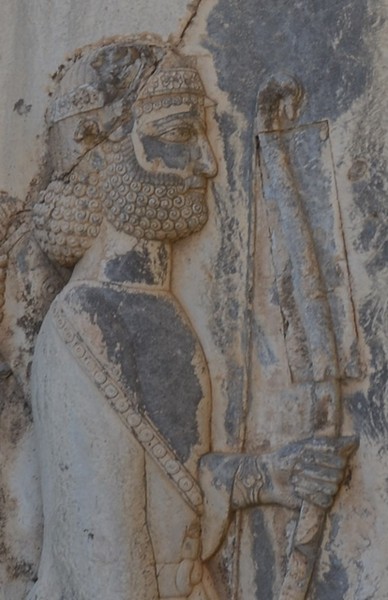
The Behistun Inscription, carved into a cliff face at Bisotun in western Iran on the orders of Darius I around 520 BCE, is a royal propaganda text in three scripts: Old Persian cuneiform, Elamite cuneiform, and Babylonian cuneiform. It describes Darius’s suppression of multiple rebellions following the death of Cambyses and frames his victories as divinely sanctioned restoration of legitimate Achaemenid order. Its significance for the journey from myth to history has nothing to do with whether its political claims are trustworthy, they are not, straightforwardly. Its significance is that Henry Rawlinson’s painstaking copying and decipherment of the text between 1835 and 1851, using the trilingual structure as a key, opened Mesopotamian cuneiform to systematic reading for the first time in millennia.
Once cuneiform was legible, an enormous archive became available for historical analysis: Sumerian and Akkadian king lists that could be cross-checked against each other and against stratigraphy, administrative records revealing the internal economies of real cities, and royal annals naming campaigns and tributaries in terms specific enough to be tested against the material record. Decipherment is not the end of uncertainty. It is the beginning of genuinely productive questions. A text you can read is a source. A text you cannot read is decoration.
Three mistakes that keep legend and history tangled
Presentism is perhaps the most seductive. It means reading ancient stories as if they were written to address contemporary political debates, treating the Trojan War as a story about colonialism or the Exodus narrative as a direct commentary on modern geopolitics. Ancient texts were written to address ancient problems for ancient audiences. Reading them through the questions we currently find interesting rather than the questions their original contexts posed erases the historical distance that makes them genuinely informative. Using ancient material to think about the present is valid and often illuminating, but it requires understanding the ancient context first, on its own terms, before reaching for analogies.
The argument from silence is the opposite error. It assumes that if a text or object does not survive, the event it would have recorded did not occur. Organic materials rot. Stone inscriptions break. Administrative archives kept on clay tablets survived only when the buildings containing them burned, which baked the clay accidentally into a durable form. A vast amount of ancient record-keeping was done on materials that left nothing. The absence of a named Romulus in eighth-century epigraphy does not prove Romulus did not exist. It proves that eighth-century BCE Latin literacy was not producing the kind of monumental inscription that survives to be excavated. Silence constrains claims significantly. It does not settle them unilaterally. Single-source triumphalism is the third error: the excitement of a dramatic single discovery leading scholars to build large arguments on one object before independent corroboration exists. Archaeological history is full of cases where an initially celebrated find was subsequently qualified or recontextualized when the broader picture became clearer.
Why what remains after the audit is still worth having
When source criticism, stratigraphy, epigraphy, and radiocarbon analysis have done their work and honestly marked what cannot be verified, what remains of an ancient legend is not a failed attempt at journalism. It is a record of what a society found important enough to transmit, embellish, and argue about across generations. The Gilgamesh Epic’s flood narrative tells us that Mesopotamian civilization experienced catastrophic inundation as an existential threat, that the relationship between divine favor and human survival was a live theological question, and that individual mortality was a problem worth building an entire literary tradition around. These are real insights into a real world. They survive scrutiny.
The journey from myth to history, properly understood, is not a demolition project. It is a double reading that allows both registers to operate simultaneously without collapsing one into the other. The Trojan War as Homer tells it is a story about kleos, the kind of glory that outlasts death. The Hisarlik destruction layers are evidence of violence in the late Bronze Age Aegean. Both are true in their own registers. Holding them together without forcing them to be the same thing is harder and more honest than choosing between them, and it produces a richer picture of the ancient world than either could generate alone.
Sources: Andrew George (SOAS, University of London), The Babylonian Gilgamesh Epic (Oxford University Press, 2003); Trevor Bryce (University of Queensland), The Kingdom of the Hittites (Oxford University Press, 2005); Eric Cline (George Washington University), 1177 BC: The Year Civilization Collapsed (Princeton University Press, 2014); Manfred Korfmann, “Was there a Trojan War?” Archaeology, 57:3 (2004); Cuneiform Digital Library Initiative, cdli.mpiwg-berlin.mpg.de; Livy, Ab Urbe Condita, Book 1, trans. R.M. Ogilvie (Penguin, 1960); K.A. Kitchen, Pharaoh Triumphant: The Life and Times of Ramesses II (Aris and Phillips, 1982); James Henry Breasted, Ancient Records of Egypt, Vol. III (University of Chicago Press, 1906); Herodotus, Histories, trans. Robin Waterfield (Oxford University Press, 1998).