
Roman emperors were, by almost every formal measure, the most protected men in the ancient world. They commanded armies, controlled the treasury, and surrounded themselves with armed guards whose entire purpose was keeping them alive. And yet, across the first three centuries of the empire, murder was one of the most common ways an emperor’s reign ended.
The emperor ruled through laws, ceremonies, and armies, but his survival depended on a much smaller circle: the officers who knew his daily route, the freedmen who served his meals, the prefects who could read his mood and had already begun calculating what came next. Proximity to the throne meant influence, but it also meant exposure. The men closest to an emperor were often the men with the most reason to fear him.
1. Caligula: Killed by the Men Paid to Protect Him
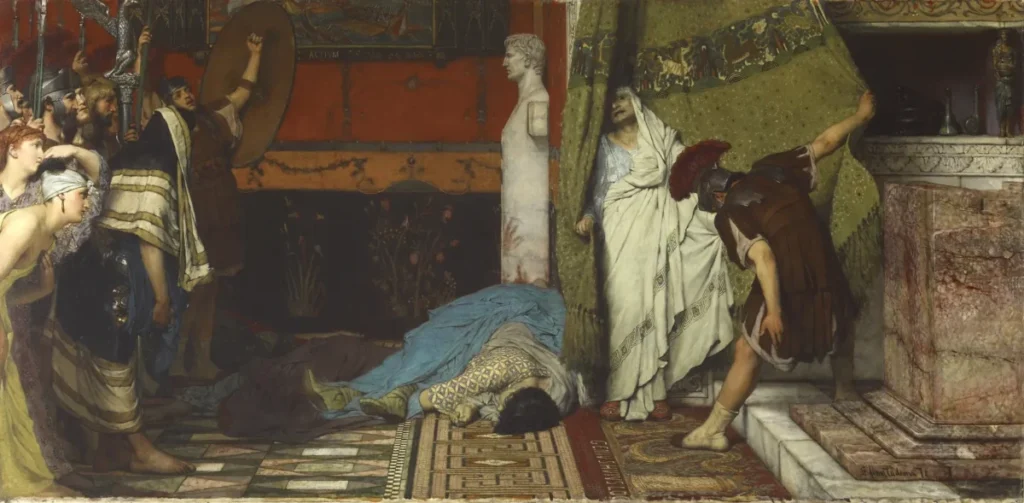
The assassination of Caligula began with something the ancient sources record almost as a footnote: a password. Each day, the Praetorian tribune Cassius Chaerea was required to receive a watchword from the emperor. Caligula, apparently finding this amusing, repeatedly gave him obscene ones, words chosen to humiliate, to reduce a decorated officer to a figure of ridicule in front of his men.
In the honor culture of the Roman military, that kind of sustained mockery was not trivial. Chaerea, along with the tribune Cornelius Sabinus, led the attack in a covered passage beneath the Palatine complex on January 24, 41 CE, after public games. Caligula was stabbed repeatedly. His wife Caesonia and their young daughter were killed the same day.
That last detail matters. This was not simply a personal vendetta. The conspirators understood that leaving any member of the immediate household alive gave loyalists a rallying point. They were not just removing an emperor. They were trying to close off the future.
They failed at that part. The Praetorian Guard found Caligula’s uncle Claudius hiding behind a curtain and made him emperor before the Senate had finished debating whether to restore the republic. Personal grievance had put the blade in Chaerea’s hand, but who came next was decided entirely by the men with the weapons.
2. Galba: He Chose Soldiers. He Did Not Buy Them.
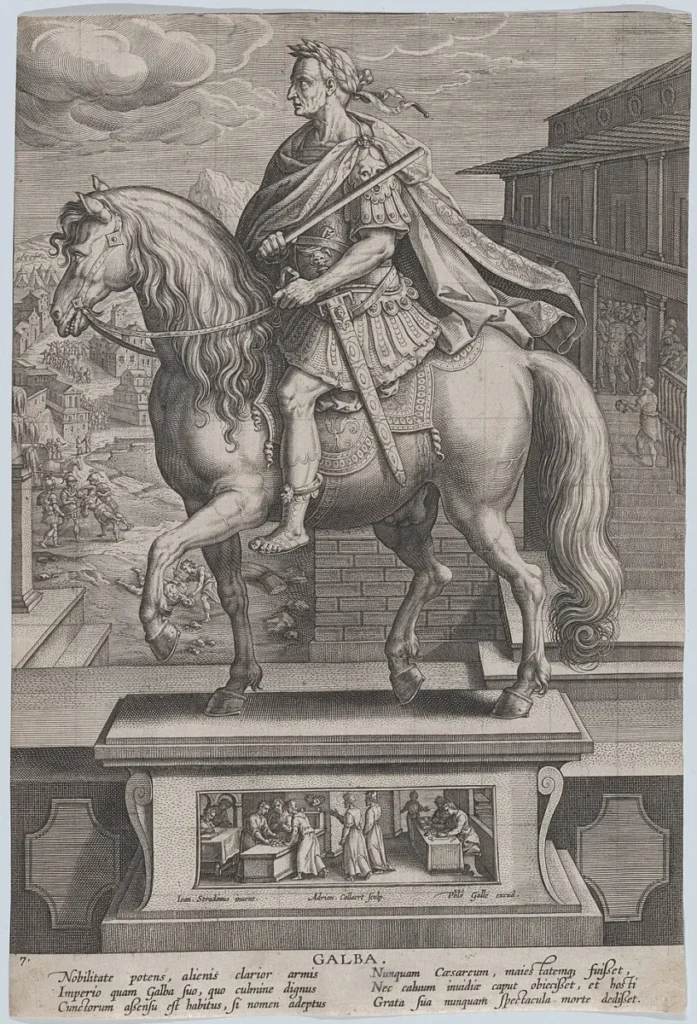
Galba was killed in broad daylight in the Roman Forum, which is worth pausing on. Not in a corridor, not in a bedchamber, but in the civic heart of Rome, the space that embodied everything the old republic had meant. The symbolism was either lost on the soldiers who did it, or it was not.
He had been emperor for less than seven months. He arrived after Nero’s fall with a reputation for austerity and old-fashioned severity, qualities that read well in the Senate and catastrophically in the barracks. When an emperor took power, the soldiers expected a donative, a formal cash payment that converted political change into military loyalty. Galba refused, or paid far less than expected, reportedly saying that he chose soldiers rather than bought them. The sentiment may have been principled. It was also suicidal.
Then he adopted the wrong heir. Otho had supported Galba and expected reward. When Galba chose Piso instead, Otho went straight to the Praetorian Guard and offered them what Galba had withheld. They accepted. Galba’s authority collapsed within days. When he went into the Forum amid confusion and rumor, he was already finished. The soldiers simply made it official.
Piso was killed alongside him. Two heads became trophies in a city that had just watched imperial legitimacy dissolve into street violence. Galba’s murder opened what historians call the Year of the Four Emperors, a demonstration that the throne could be taken by whoever moved fastest and paid most.
3. Domitian: The Emperor Who Fought Back
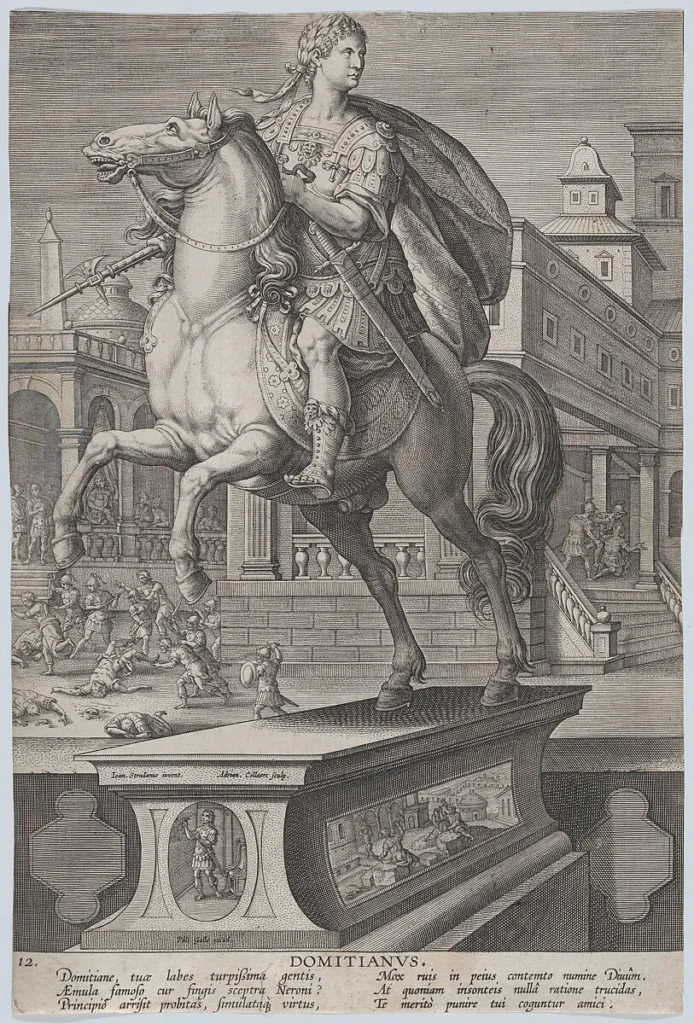
Domitian ruled for fifteen years, long enough to build real administrative competence, to win campaigns on the Rhine and Danube, and to fill the palace with a fear so constant and specific that the people around him eventually concluded that killing him was safer than waiting to see what he would do next.
The conspirators were not senators or rival generals. They were palace insiders: a steward named Stephanus, the chamberlain Parthenius, and others from the imperial household. Stephanus concealed a dagger under bandages wrapped around his arm, feigning an injury, then approached the emperor with information about a supposed conspiracy. He used the access it gave him.
Domitian fought back. Ancient accounts note this with something like surprise. He struggled, tried to reach for a weapon, and wounded Stephanus before other conspirators overwhelmed him. It is an ugly scene, and an important one. He was not deposed by decree or outmaneuvered in the Senate. He was stabbed to death in his private rooms by his own household staff, and he went down fighting.
The motive was not ambition. It was fear. The conspirators believed that if Domitian had begun to suspect them, and a suspicious emperor, once he started, rarely stopped, their torture or execution was only a matter of time. Acting first was the only way out they could see.
Nerva succeeded him to the Senate’s relief and the army’s indifference. That gap mattered immediately. Nerva had to adopt Trajan, a military commander with real standing among the soldiers, before his own reign was even secure. Replacing a feared emperor was one thing. Keeping the army on board while you did it was another problem entirely.
4. Commodus: Hercules, Strangled in His Bath
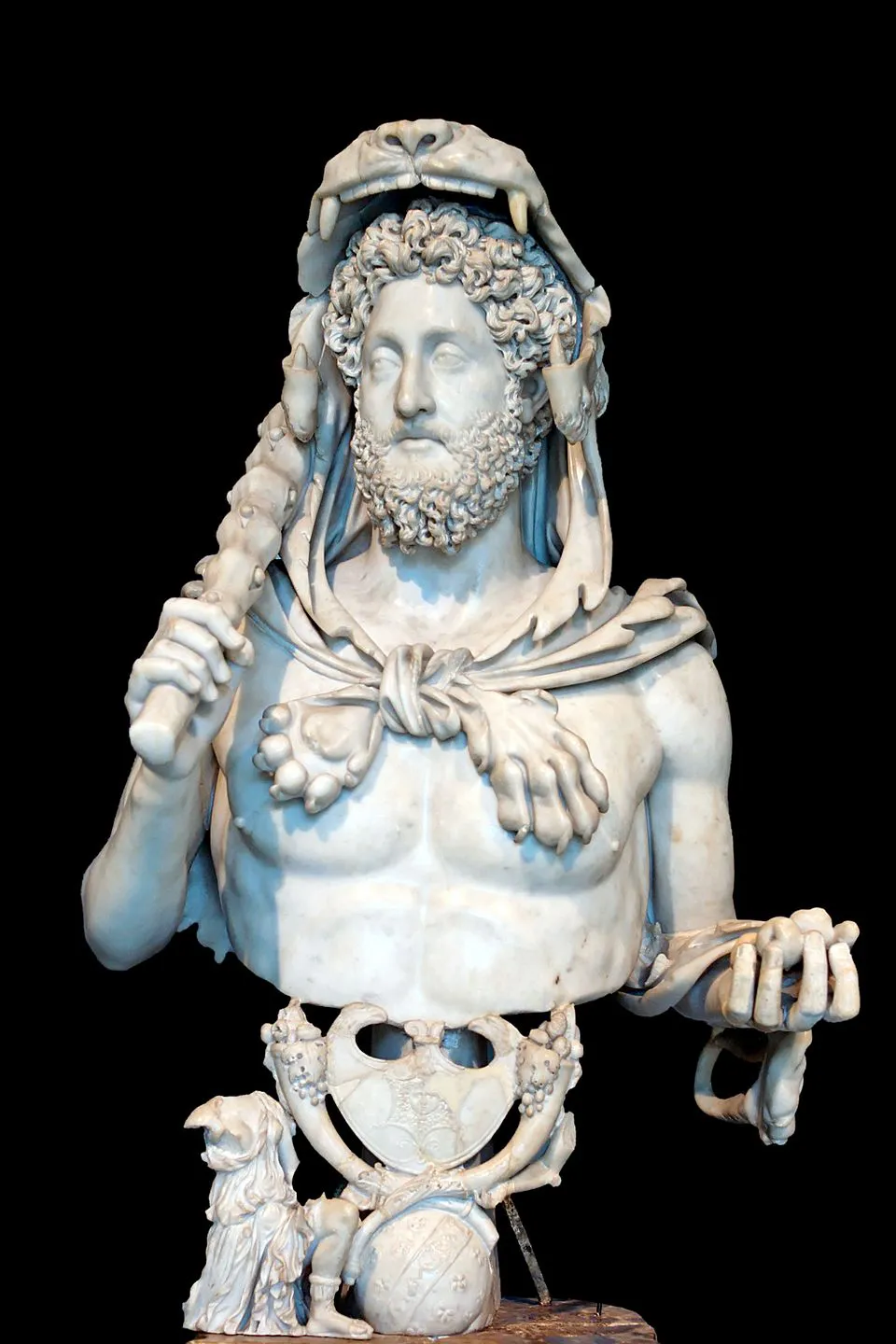
Commodus died on the last day of the year, killed by the people who served his food, shared his bed, and ran his palace. The son of Marcus Aurelius had ruled alone since 180 CE, and by the end he had frightened everyone around him.
The conspiracy centered on Marcia, his mistress; Laetus, the Praetorian prefect; and Eclectus, his chamberlain. According to Cassius Dio, Marcia found her own name on a list of people Commodus intended to have killed. Whether that specific detail is literally true matters less than its political logic. It is exactly the kind of fear that turned proximity to a paranoid emperor into a death sentence.
They poisoned his wine at dinner. He vomited. With the poison failed and their involvement now exposed, there was no way back. They brought in Narcissus, a professional wrestler from the imperial household, and he strangled Commodus in the bath.
Consider what kind of death this was. Commodus had spent years performing invincibility in public, staging himself as a new Hercules, fighting in the arena, cultivating an image of physical supremacy. He was killed alone, by one man’s hands, in his own bathroom. The distance between the imperial persona and the reality of how power actually held together could not have been made more plain.
Pertinax replaced him. The year 193 that followed, the Year of the Five Emperors, showed how much structural damage the Commodus years had already done.
5. Pertinax: 87 Days
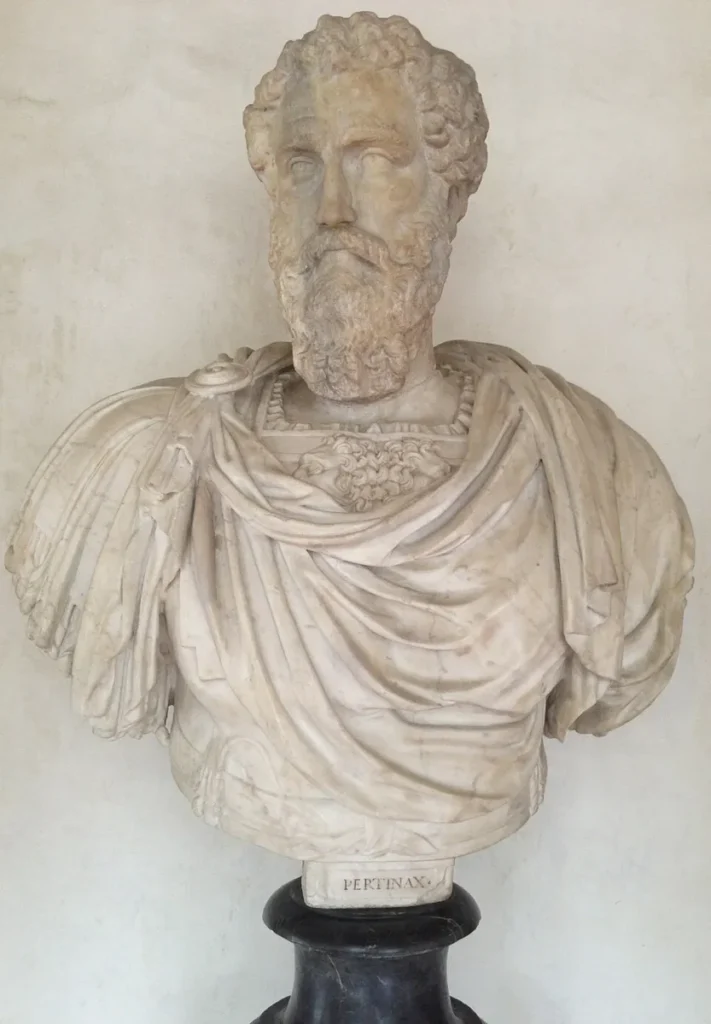
Pertinax lasted 87 days.
He was experienced, serious, and genuinely capable, a former soldier who had risen through decades of service to become governor, commander, and prefect of Rome. After Commodus, he was supposed to represent a return to competent government. He did. That was the problem.
The Praetorians had grown accustomed under Commodus to being indulged. They expected a large donative when the new emperor took power. Pertinax offered less than they wanted and, worse, tried to reimpose discipline. He was telling armed men in the capital that the easy days were over. Reform sounds admirable from a distance. Inside a barracks full of soldiers who had just helped bring down a regime, it sounds like a threat.
A group of them stormed the palace in late March. Pertinax did not flee. Cassius Dio’s account says he went out to meet them and tried to speak to them, trusting, perhaps, that reason and rank still carried weight.
They killed him.
His death turned a political crisis into a public humiliation. The Praetorians backed Didius Julianus, who had promised them money. Ancient writers describe this as the auctioning of the empire, and the damage was real regardless of how you frame it. Julianus had no genuine base of power and was finished within months when Septimius Severus marched on Rome from the Danube. Pertinax had tried to make the Praetorians answer to someone. They answered by showing what happened to emperors who tried.
Built out of a love for history, kept free from distractions.
Spoken Past is an independent project shaped by curiosity, care, and long hours of research. Reader support helps keep it maintained, carefully researched, and open to everyone.
6. Geta: His Brother’s Orders, His Mother’s Arms
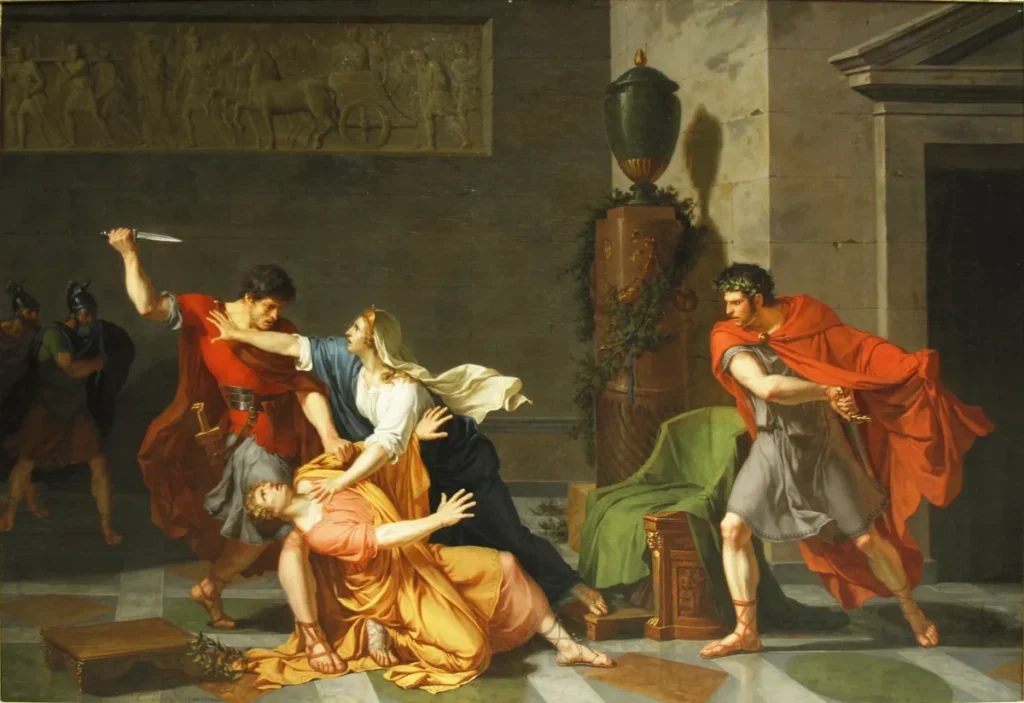
The murder of Geta happened in the apartment of his mother, Julia Domna. He died in her arms. His brother Caracalla had arranged it.
Septimius Severus died at York in February 211, leaving behind two adult sons as joint emperors. It was an arrangement that satisfied dynastic theory and violated political reality. Caracalla and Geta had separate entourages, separate loyalties, and the shared knowledge that the empire had one throne and two people who claimed it. The reconciliation meeting their mother arranged was a trap. Armed men rushed in before Geta could protect himself.
Cassius Dio says Geta died clinging to his mother, who was wounded in the hand trying to shield him. Dio is hostile to Caracalla throughout, and his dramatic details carry moral weight that sometimes outpaces precision. But the core of it is not in dispute.
Caracalla went immediately to the soldiers afterward. He presented himself as the survivor, the brother who had narrowly lived through a plot against him. He promised them money. A purge of Geta’s supporters followed. The scale reported by ancient sources may be exaggerated. The direction is not.
Septimius Severus had built his regime on military force and dynastic ambition. He left behind sons who embodied both without his ability to keep them in balance. One of them was always going to die. Caracalla made sure it was the other one.
7. Caracalla: His Own Prefect Had Him Killed
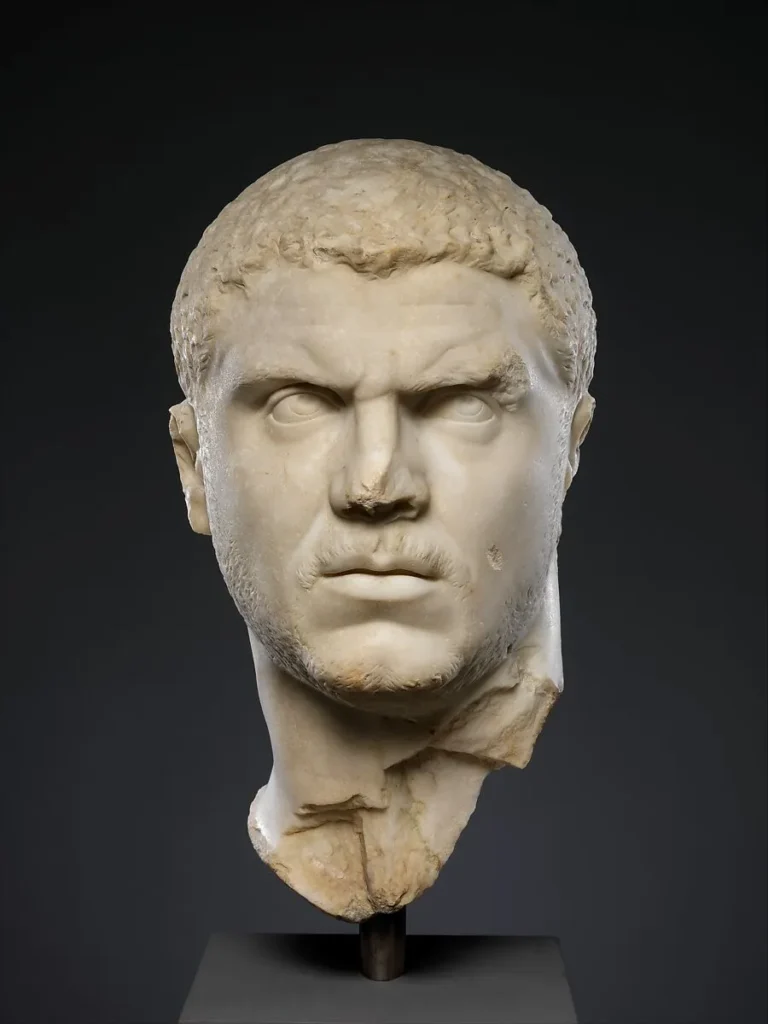
Caracalla was killed while relieving himself by the roadside near Carrhae, in modern Turkey. The man who stabbed him was a soldier named Martialis. The man who arranged it was Macrinus, his own Praetorian prefect.
Macrinus believed, or had come to believe, that Caracalla intended to have him killed. In the logic of the Roman imperial court, a rumor like that was enough. A powerful official who waited to find out whether it was true might not live long enough to find out. Martialis brought his own reason to act, something personal involving an insult or the death of a relative. Macrinus gave that grievance an opportunity and a moment.
The setting tells you something about how emperors died on campaign. Retinues were large, but movement created gaps, moments when ceremony thinned and the physical protection of court life could not be fully maintained. A routine stop on the road was one of those moments. Caracalla stepped away from his escort, and Martialis was there.
Caracalla had spent his reign cultivating soldiers and frightening everyone else. He gave the army pay raises, adopted military dress, and ate the same food as the legions. None of it protected him from the man whose entire job was protecting him. The access that made Macrinus valuable was the same access that made him dangerous.
Macrinus became emperor, the first from the equestrian order rather than the senatorial elite. Within a year, the Severan women had raised a rival in the East, and he was finished. As Cassius Dio makes plain, killing an emperor bought time. It did not buy legitimacy.
8. Elagabalus: The Guards Chose Someone Else
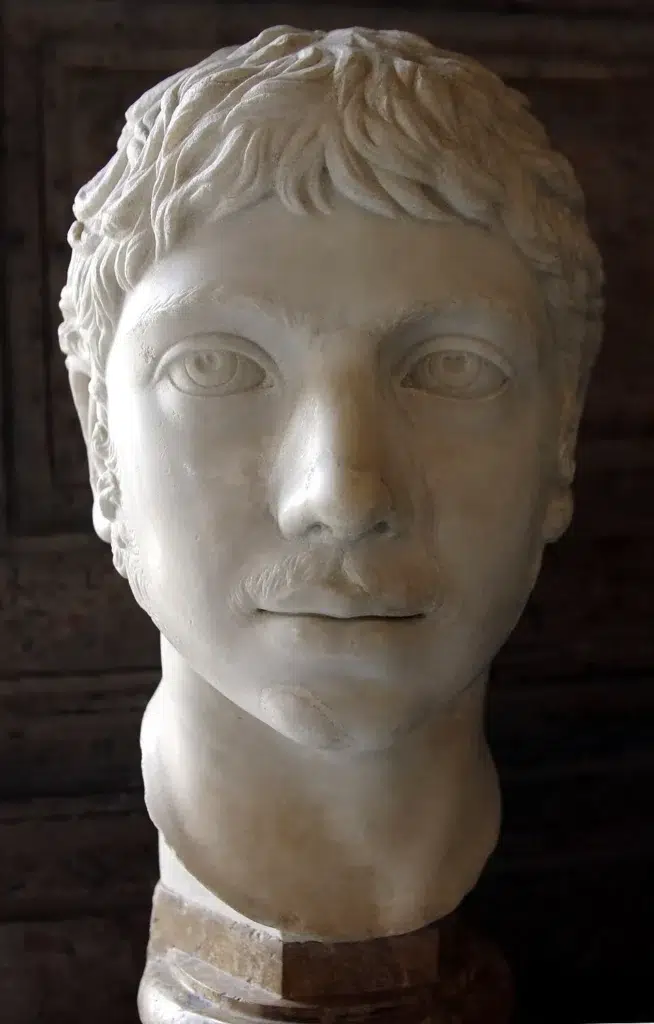
Elagabalus was about eighteen years old when the Praetorian Guard killed him. His mother, Julia Soaemias, died alongside him. Their bodies were dragged through the streets and thrown in the Tiber.
He had reached the throne in 218 CE through the political skill of the Severan women, primarily his grandmother Julia Maesa, who convinced soldiers in the East that Elagabalus was an illegitimate son of Caracalla. The soldiers accepted the story. Four years later, a different set of soldiers decided they had made a mistake.
Ancient sources about Elagabalus are among the most hostile in the entire tradition, saturated with accusations about his religious practices, sexuality, dress, and conduct. Much of it is moralized and sensational, shaped as much by senatorial contempt as by anything he actually did. The political trajectory is clearer. Julia Maesa recognized that her grandson was losing support and arranged for his younger cousin Alexander to be adopted as Caesar. It was meant to stabilize the dynasty. Instead, it placed a rival inside the palace.
Elagabalus tried to push Alexander aside. The Praetorians refused to accept it. When he tested whether the soldiers would tolerate the removal of the heir they preferred, he got his answer. Dio’s account presents what followed as a collapse of military patience. The guards turned on Elagabalus and his mother, killed them, and raised Alexander in their place.
He had not lost a war or a Senate vote. He had lost the soldiers. In the world of Roman imperial politics, that was the only loss that could not be recovered from.
9. Severus Alexander: His Soldiers Thought He Was a Coward
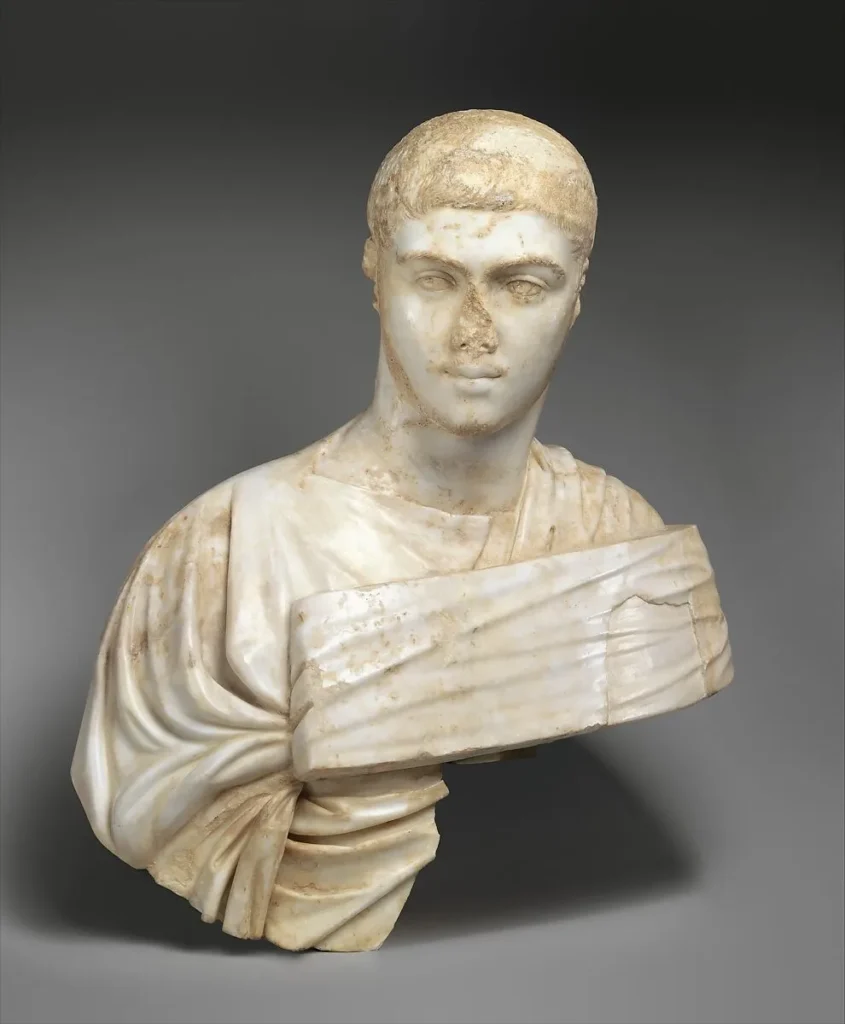
Severus Alexander ruled for thirteen years, which makes him an outlier in the third century. His death in 235 CE, near the Rhine frontier, is often treated as a watershed, not because the crisis began there, but because what came after it made the previous two centuries look stable by comparison.
He had become emperor at thirteen, after Elagabalus’ murder, and governed under the strong influence of his mother Julia Mamaea and a council of advisers. The arrangement worked well enough in peacetime. On campaign it struggled badly. When pressure mounted on the Rhine frontier in the mid-230s, Alexander tried negotiation and payments rather than military engagement. His advisers may have calculated correctly that a costly battle served no strategic purpose. His soldiers had a different view: their emperor would not fight.
Maximinus was everything Alexander appeared not to be: physically imposing, aggressive, popular with the troops. Once soldiers began acclaiming him, Alexander’s authority did not erode. It vanished. He and his mother were killed in their tent by the men who had escorted them from Rome.
Herodian makes the dynamic plain. The troops believed Alexander could not give them what they wanted: victory, confidence, money, and pride. Maximinus seemed to offer all of it. In a frontier camp, that belief was enough to end an emperor’s life.
After 235 CE, the pattern shifted. The men who became emperor in the decades that followed were mostly capable soldiers, and most of them were killed by their own troops when a campaign stalled or a rival made a better offer. The killing moved out of palace corridors and into marching camps, because that was where power now lived.
10. Maximinus Thrax: Killed Outside a City He Could Not Take
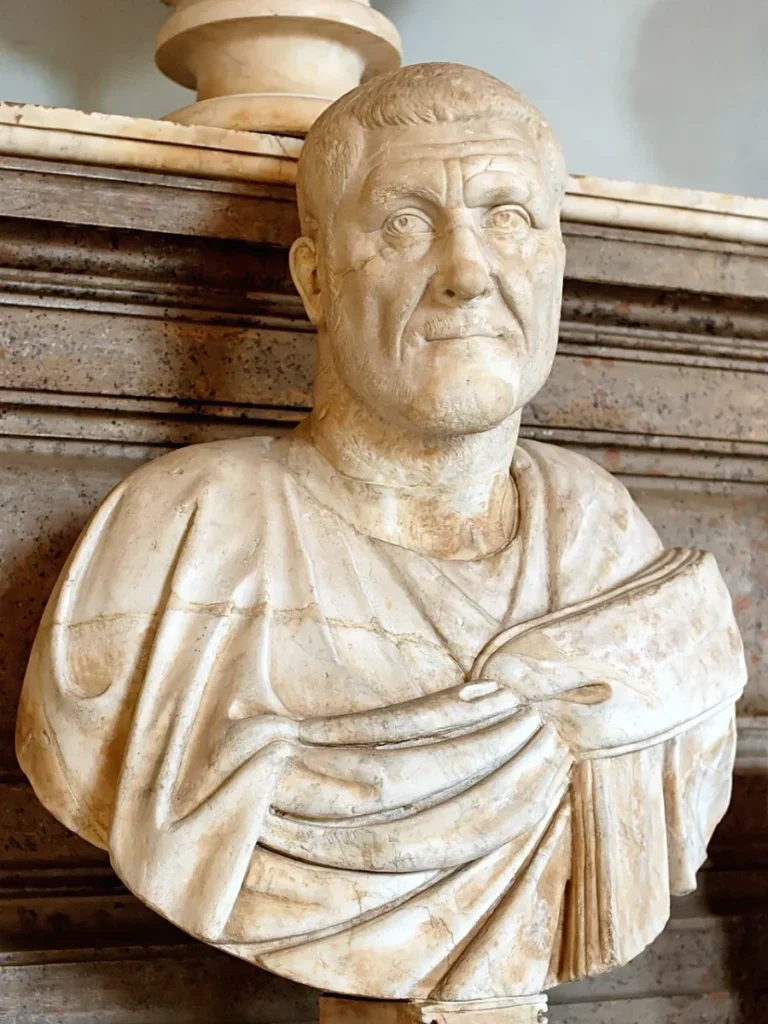
Maximinus came to power by killing Alexander Severus and died when his own soldiers killed him in turn, camped outside Aquileia in northern Italy, a city he had been besieging for weeks while the Italian countryside starved and the empire turned against him.
He had never been to Rome. He came from the Balkans, rose through the military ranks entirely, and had no connection to the senatorial elite that still shaped how emperors were understood and judged. Ancient writers used his origins against him relentlessly, describing him in terms that slide between biography and legend. The political facts are simpler. He ruled by force, demanded vast resources for his campaigns, and never built any civilian base of support that could survive military failure.
In 238 CE, rebellion broke out in North Africa, where Gordian I and Gordian II were proclaimed emperors. Their revolt collapsed almost immediately, but the Senate had already declared against Maximinus and appointed Pupienus and Balbinus in Rome. Maximinus marched into Italy to crush the opposition. Aquileia shut its gates and held. The siege dragged on.
In a siege camp running short of food and momentum, the calculation became simple. The empire was abandoning Maximinus. Staying loyal meant sharing in a defeat that was starting to look inevitable. Herodian’s Book 8 describes soldiers trapped before a city they could not take, short of supplies, with nowhere to go and no reason left to stay faithful to the man who had brought them there.
They killed Maximinus and his son. Their heads were sent to Rome as proof.
The year 238, sometimes called the Year of the Six Emperors, shows how completely the terms of assassination had changed since Caligula’s time. Maximinus had not frightened palace servants or insulted a tribune’s honor. He had failed to take a city, run out of supplies, and lost the confidence of the men around him. They were not acting out of fear or personal grievance. They were making a practical choice about which side of a losing campaign they wanted to be on.