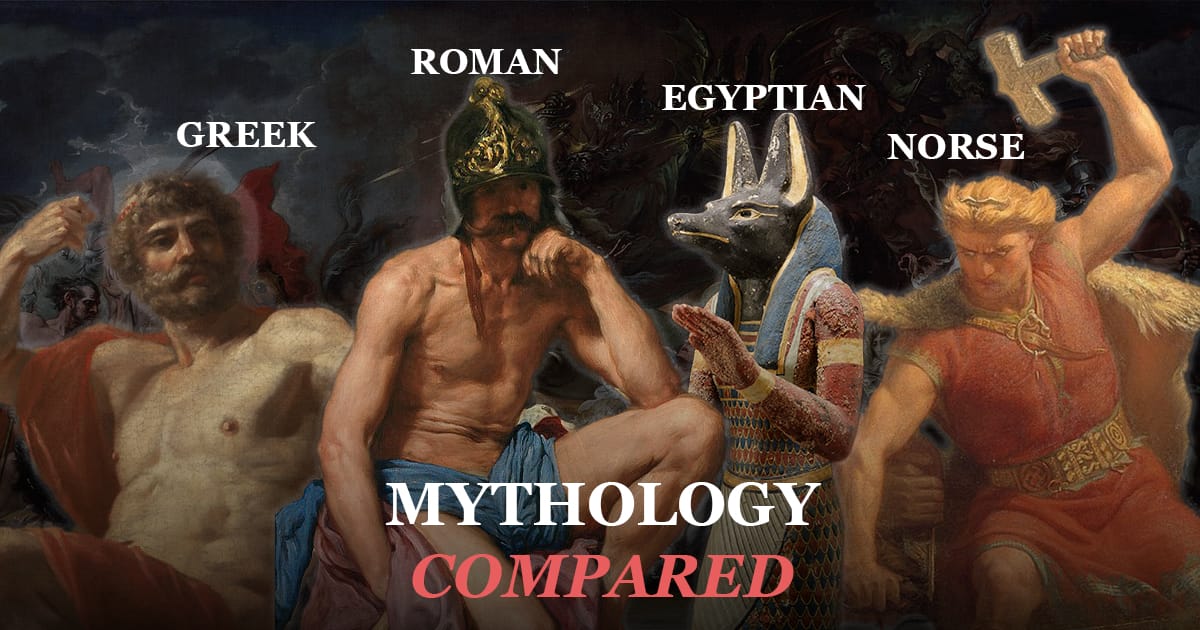
In 1977, the classicist Walter Burkert of the University of Zurich published what remains the foundational modern study of Greek religion, arguing that Greek myth cannot be understood apart from ritual practice. That warning applies to comparative mythology just as sharply. When we place Greek, Roman, Norse, and Egyptian traditions side by side, the temptation is to reach for the nearest parallel and declare a match. Zeus equals Jupiter equals Odin equals Ra. The equation is tidy, memorable, and largely wrong. Each of these traditions is shaped by different landscapes, different political arrangements, and different sources with different dates. Real comparative mythology keeps those differences in view while still asking the questions worth asking: why do creation stories so often begin with chaos or water, why is fate consistently placed beyond even divine reach, and why do cultures across thousands of miles agree that heroic power is only legitimate when it protects a community. This post sets those traditions side by side in detail, notes where the parallels genuinely hold, and explains why they often do not.
The Evidence Problem: Why Sources Matter Before Stories Do
Before comparing anything, you need to know what you are actually comparing. The four traditions covered here differ enormously in the age and type of their surviving evidence, and those differences affect every conclusion. Greek myth coalesces in written form across the first millennium BCE, beginning with Hesiod’s Theogony (c. 700 BCE), which gives the most systematic account of Greek cosmology, and Homer’s epics, which reveal the gods through human behavior under stress. Tragedians, lyric poets, historians, and inscriptions add enormous texture. Egypt presents the opposite challenge: abundance rather than clarity. Egyptian religious texts span roughly three thousand years, from the Pyramid Texts of the Old Kingdom (c. 2400 BCE) through the Coffin Texts, the Book of the Dead, and temple inscriptions running into the Roman period. Three millennia of regional variation, political upheaval, and theological reform separate the earliest material from the latest.
Roman evidence is deceptive in a different way. Latin poets like Ovid and Virgil are fluent, appealing, and widely read, but they are literary artists working centuries after the Greek originals they adapted. Roman state religion was also a rigorously public institution, structured through priestly colleges, the augural calendar, and civic obligation in ways that Greek polis religion, with its local cults and mystery rites, was not. Norse evidence presents the sharpest problem of all. The Poetic Edda and Snorri Sturluson’s Prose Edda, our two richest sources, were committed to writing in Iceland in the 13th century CE, roughly two centuries after the conversion of Scandinavia to Christianity. John Lindow, Professor Emeritus of Old Norse and Folklore at the University of California, Berkeley, has emphasized that these texts reflect an already Christianized scholarly context that inevitably colors how the older material was arranged and interpreted. None of this makes the Norse sources worthless. It does mean that every apparent parallel with other traditions must be tested against the specific form of the evidence, not just its surface content.
Cosmology: How Each Tradition Makes the World
Creation myths are the hardest texts to interpret and the easiest to misread as parallels. Every tradition begins from something rather than nothing, and that starting point is never random. It tells you what a culture fears losing most. Hesiod’s Theogony opens with Chaos, an undifferentiated gaping void, and then Gaia, Tartarus, and Eros. Form emerges through succession: Titans are born, overthrown, and replaced. The cosmos is a family drama that ends in Zeus establishing order by treaty, not by single-handed creation. That model of negotiated stability suits a Greek world of competing city-states where authority was always contested and always required justification through persuasion and precedent.
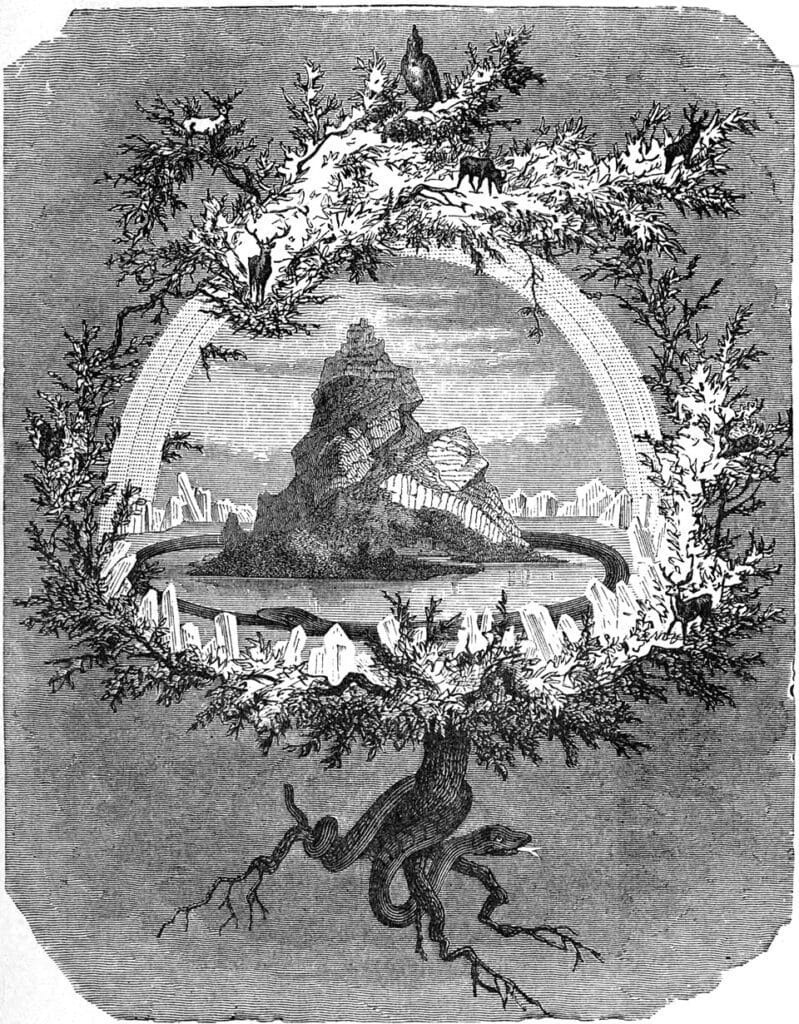
Norse cosmology in the Völuspá begins with Ginnungagap, a charged emptiness between the fire realm of Muspelheim and the ice realm of Niflheim. The first being, Ymir, emerges from their meeting, and the gods create the world from his body after killing him. There is no pretense of stable order here. The world is made from violence, held together by effort, and destined to end at Ragnarök. That matches what we know of the material conditions of Viking Age Scandinavia: a world of marginal agriculture, unpredictable weather, and social structures built on the loyalty of warriors who understood that even the gods were mortal. Egyptian cosmology works on an entirely different logic. The Pyramid Texts and Coffin Texts describe the primordial mound rising from the waters of Nun, followed by the solar deity emerging to begin creation as a daily event. The key insight is that Egyptian creation is not a one-time event but a cycle renewed every sunrise, tied explicitly to the flooding of the Nile and the growth of crops. Jan Assmann, Professor Emeritus of Egyptology at Heidelberg University, has shown in his foundational study Death and Salvation in Ancient Egypt (Cornell University Press, 2005) that Egyptian cosmological thinking is inseparable from the maintenance of Ma’at, the principle of truth, balance, and right order, which was not merely a moral value but an actively maintained cosmic condition requiring daily ritual action.
Who Rules and Why: The Politics of Divine Authority
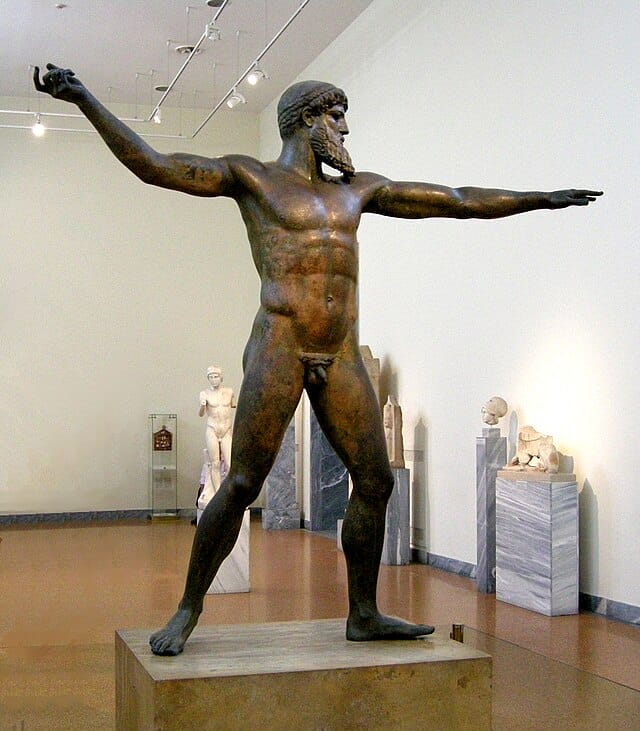
Pantheons are always arguments about power. The question is not just who rules but on what grounds, and what happens when that authority fails. Greek myth centers on Zeus, who holds the sky and thunder, but his authority rests on a specific historical claim: he led the Olympians to victory over the Titans in a generational war. His rule is therefore legitimate but not absolute. He cannot override Moira, the portion assigned to each mortal and even to each god. Hera challenges him, Athena advises him, Poseidon operates semi-independently, and the Fates sit above the whole system. The Roman Jupiter inherits Zeus’s iconography and his association with sky and storm, but the feel of his authority is markedly different. Roman religious practice surrounded Jupiter with a bureaucratic apparatus: the flamen Dialis, the sacred priest of Jupiter, operated under dozens of taboos, and Jupiter’s role in state oaths, military standards, and public law made him feel more like the divine guarantor of an institutional system than the personal patriarch he appears in Greek epic.
Odin’s authority in Norse mythology is unlike either. He rules through knowledge purchased at extreme personal cost: he hanged himself on Yggdrasil for nine days to gain the runes, sacrificed an eye to drink from Mimir’s well of wisdom, and strikes bargains with seeresses and giantesses whose power is older than his own. Lindow points out that Odin’s power is fundamentally precarious, always requiring new intelligence, new alliances, and new sacrifices to hold the cosmos together until Ragnarök. Thor’s role in this system is complementary rather than subordinate: he protects the inhabited world against the giants through raw force, a function the myths frame as necessary service rather than simple dominance. Egyptian divine authority distributes power through a network of functionally distinct deities. Ra sails the solar barque and must defeat Apep, the serpent of chaos, each night to ensure sunrise. Osiris judges the dead. Horus rules as king through lawful succession validated by the Ennead, the council of nine gods. Isis holds magical power sufficient to resurrect the dead and protect the heir. The pharaoh is not merely the servant of this system but its embodiment: Assmann argues that the pharaoh’s coronation rituals simultaneously installed a human king and replicated the divine transfer of kingship from Osiris to Horus, making statecraft and theology structurally identical.
Fate and Its Limits: The Boundary Every Tradition Draws
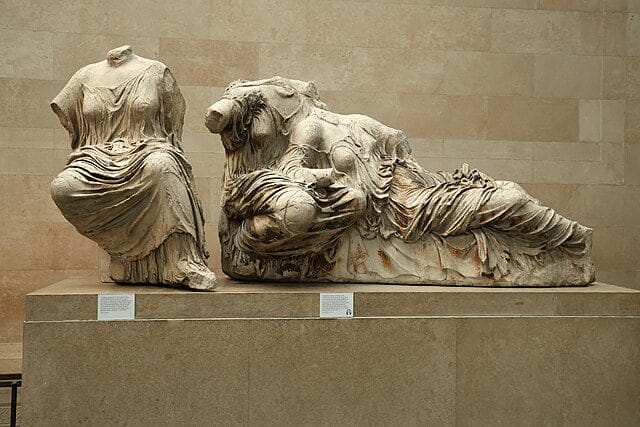
One of the strongest genuine parallels across all four traditions is the existence of a cosmic limit that cannot be overridden, not even by the highest gods. The Greek term is Moira, literally “portion” or “share,” which represents the fixed allotment of each being’s fate. Even Zeus cannot override Moira without destabilizing the cosmos. In Burkert’s reading, this is not a theological failure but a structural necessity: the cosmos requires that limits exist and be respected, and the greatest sin in Greek ethics, hubris, is precisely the violation of one’s proper portion. Roman Fatum inherits this structure and adds Stoic coloring through writers like Seneca and Marcus Aurelius, who argued that virtue consisted in accepting one’s fate while fulfilling one’s civic duty. The Roman hero Aeneas in Virgil’s Aeneid is explicitly the man who subsumes personal desire to the demands of destiny and his obligations to family and gods, a figure impossible to imagine in Homer, where Achilles chooses glory over a long life and the poem validates that choice without moralizing.
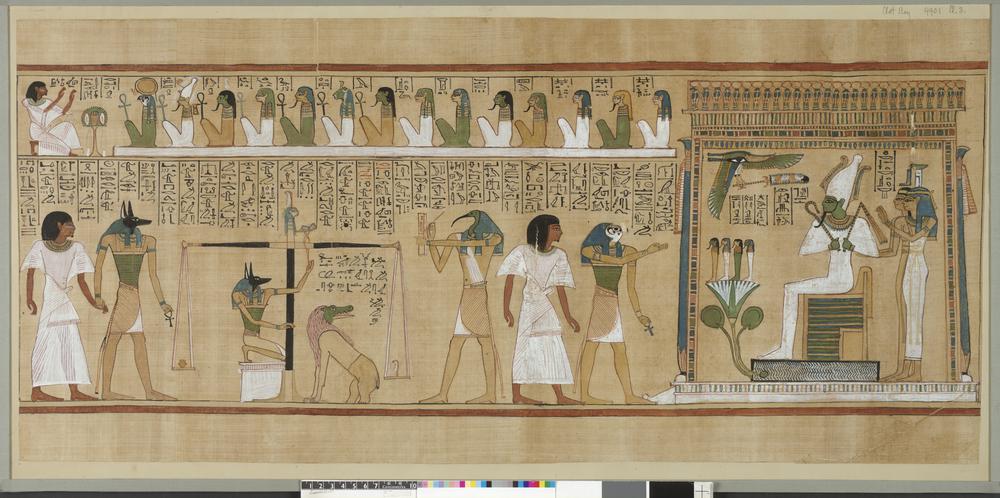
The Norse Norns weave the threads of fate at the well of Urðarbrunnr beneath Yggdrasil, and their work is irreversible. Ragnarök is foreseen, described in detail, and accepted by the gods who know they will fall. The Norse response to unavoidable fate is not resignation but courage: dying well in a lost cause is the highest expression of heroic identity. Egyptian fate operates through a different mechanism but enforces comparable finality. The weighing of the heart in the Hall of Two Truths is not a negotiation but a judgment. The deceased’s heart is placed against the feather of Ma’at, the principle of right order, and if it is heavier with wrongdoing, Ammit the devourer consumes it. That second death, as Assmann terms it, is total and irreversible. The difference from Greek, Roman, and Norse fate is that Egyptian fate is substantially a moral accounting. You arrive at the judgment carrying the weight of your own actions, and no divine patron can lift that weight for you.
Built out of a love for history, kept free from distractions.
Spoken Past is an independent project shaped by curiosity, care, and long hours of research. Reader support helps keep it maintained, carefully researched, and open to everyone.
The Underworld: How Each Tradition Maps What Comes After
Afterlife beliefs are the clearest window into what any given culture fears and what it hopes. The Greek underworld, Hades, is not primarily a place of punishment. Most shades exist in a dim, undifferentiated condition, neither happy nor tormented, simply present. Tartarus, the place of punishment, is reserved for specific mythological offenders: Tantalus, Sisyphus, Ixion. Elysium exists for a very small number of heroes who have been granted a special status by the gods. The democratic ordinariness of most of Hades reflects a Greek culture where the polis, the city, was the supreme unit of identity, and death placed most people beyond that community entirely. The Roman literary afterlife, particularly in Virgil’s Aeneid Book VI and Cicero’s Dream of Scipio, sharpens the moral geography considerably: heroes of Roman history inhabit Elysium, and the wicked suffer specifically for violations of Roman social duty. Mystery cults, including those of Dionysus and Demeter at Eleusis, promised initiates a more favorable outcome through ritual transformation, suggesting that many Greeks found the standard civic afterlife insufficient.
Norse afterlife is not a single destination but a distribution system. Warriors chosen by Odin’s valkyries go to Valhalla to feast and fight until Ragnarök, when they will fight alongside the gods. Freyja takes half of those fallen warriors to Fólkvangr. Those who die of illness or old age go to Hel, a cold, grey place that is not a punishment but simply a destination. The Norse afterlife sorts the dead by the manner of their death and by their role in the cosmic economy, not primarily by moral behavior. Egyptian afterlife is the most elaborately developed of the four. The deceased must navigate the Duat, the underworld, through a series of gates guarded by beings who demand that the deceased know their names and recite protective spells from the Book of the Dead. Those who pass the weighing of the heart join the justified dead, living in the Field of Reeds in a condition that Egyptian texts consistently describe not as a ghost existence but as a continuation of proper life, complete with agricultural labor and family reunions. The emphasis on preparation for this journey, through tomb texts, shabti figurines, and funerary goods, reflects a culture that viewed the afterlife not as an uncertain hope but as a destination that could be secured through correct ritual preparation.
Heroes and What They Reveal About Cultural Values
Hero stories are the most accessible part of any mythology but also the most dangerous for comparative purposes, because the surface similarities can mask radically different ethical frameworks. Heracles performs twelve labors that subdue the wild world and make it safer for human civilization, but he also kills his own children in a fit of divine madness. Odysseus survives by intelligence, lies, and endurance in conditions that would destroy anyone less resourceful, and Homer’s audience admired all of it. The Greek hero is someone whose excellence is real and whose flaws are equally real, and the myth does not pretend otherwise. Virgil’s Aeneas was explicitly constructed as a counter-model. Where Odysseus is cunning and self-serving, Aeneas is pius, dutiful, subordinating his grief for Dido and his warrior instincts to his obligation to found Rome. Aeneas’ heroism is institutional rather than personal.
Sigurd in the Norse Völsunga saga kills a dragon, wins cursed treasure, and dies through betrayal. The saga makes clear that both his glory and his destruction are inseparable: you cannot have one without the other. The Norse hero’s excellence is proven precisely through the willingness to accept catastrophic cost. Horus in Egyptian myth wins kingship through a legal process before the Ennead, supported by his mother Isis, after a long dispute with Seth. His claim rests on hereditary right and divine validation, not on personal glory. The message is institutional: right order is restored when the legitimate heir receives his throne through proper process, not through superior force alone. These four hero models represent four distinct answers to the question of what makes power legitimate: Greek excellence and measure, Roman duty and founding, Norse courage in accepted loss, and Egyptian lawful succession confirmed by divine council.
When Traditions Touched: Borrowing, Blending, and Resistance
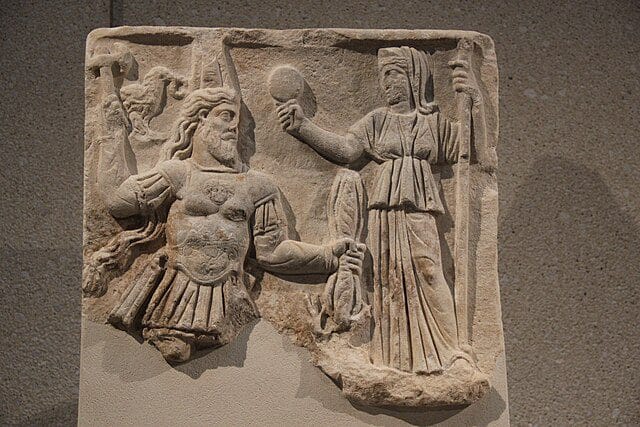
These traditions did not develop in isolation. Greek and Roman religious exchange is the best-documented case. Romans used what scholars call interpretatio romana, the practice of identifying foreign deities with Roman ones on the basis of functional similarity. Mercury receives Hermes’ domain, Venus receives Aphrodite’s, Mars is identified with Ares despite significant differences in their mythological character. Mary Beard, Professor of Classics at the University of Cambridge, has argued in her work on Roman religion that this identification was never a simple equation: Roman cult practice, with its emphasis on pietas, correct procedure, and civic obligation, transformed what it absorbed. Greek mystery cults entering Rome were regulated, sometimes suppressed, and then regulated again. The result is a shared Mediterranean theological vocabulary built on Greek structures but spoken with a distinctively Roman accent.
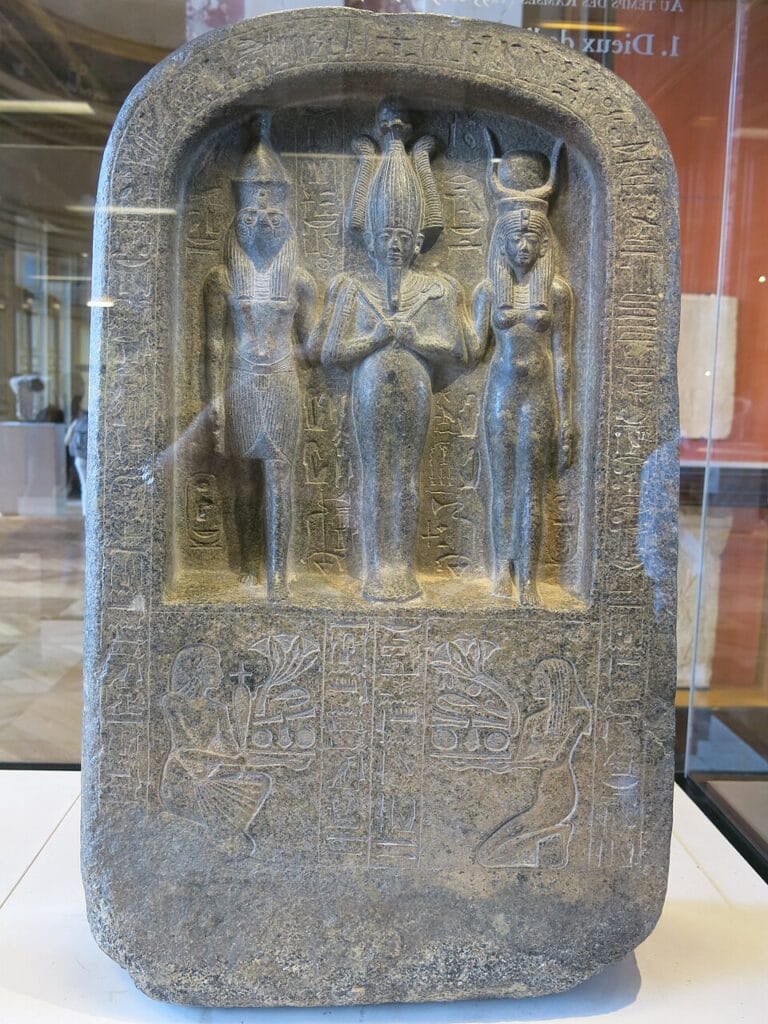
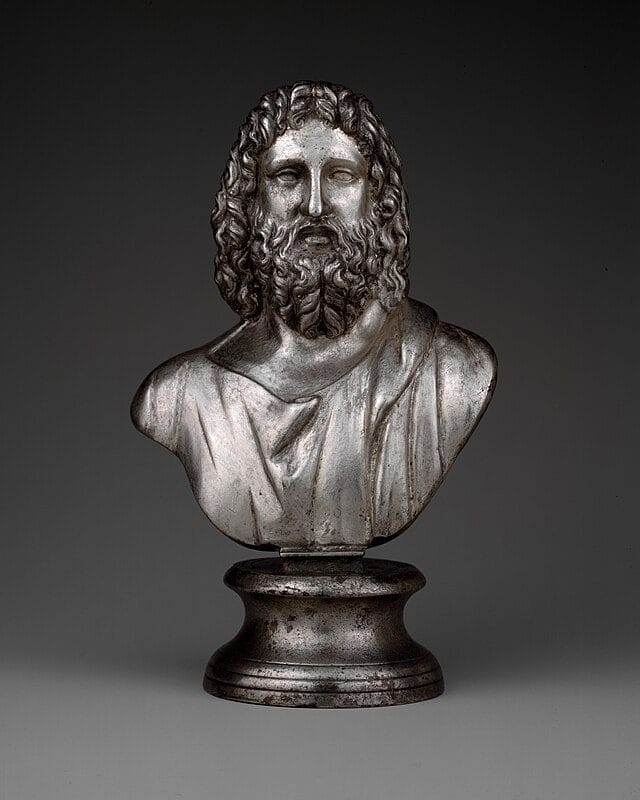
The Ptolemaic creation of Serapis in the 3rd century BCE represents perhaps the most deliberate case of mythological engineering in antiquity. After Alexander’s conquest of Egypt, the Ptolemaic kings needed a deity who could unite Greek and Egyptian subjects. Serapis combined aspects of Osiris and the Apis bull with the iconography of Greek Zeus and the healing functions of Asclepius. Isis cults spread across the Roman world as far as Britain and the Rhine frontier, where inscriptions to Isis Regina have been found, demonstrating that Egyptian theological concepts could travel thousands of miles from the Nile and still attract genuine devotion. The Norse encounter with Christianity is different in kind because it was not an exchange between equals but a conversion that happened to preserve older material in manuscript form. Snorri Sturluson, the Icelandic scholar who compiled the Prose Edda c. 1220 CE, was himself a Christian writing about pagan gods he regarded as historical figures who had been mistakenly worshipped. That framing inevitably shapes what he preserved and how he presented it.
Ritual Practice: Where Myth Becomes Habit
Myth without ritual is an incomplete picture of any ancient religious system. The stories tell you what a culture believed; the rituals tell you how those beliefs were maintained, communicated, and reproduced from generation to generation. Greek religious practice was decentralized and varied enormously by location. The sanctuary of Apollo at Delphi hosted panhellenic consultation across the Greek world, while local cults, such as the Thesmophoria celebrated by women in honor of Demeter, were embedded in the agricultural and civic calendar of individual city-states. Mystery rites at Eleusis, initiating participants into knowledge concerning death and renewal, attracted devotees from across the Greek world for nearly a thousand years, from approximately the 6th century BCE through the late 4th century CE. Burkert argued that these mysteries transmitted experience rather than doctrine: you underwent a ritual journey in darkness and emerged with a changed relationship to death, without necessarily being given a theological explanation of what had happened to you.
Roman ritual was more legalistic than any of the other traditions. The priestly colleges, including the Pontiffs, Augurs, Flamines, and Arval Brothers, maintained an institutional memory of correct procedure reaching back centuries. An augur who misread an omen could halt a military campaign; a vestal virgin who broke her vow of chastity could be buried alive. Norse blót feasts, conducted at key points in the agricultural year including the beginning of winter, midwinter, and the beginning of summer, combined sacrifice, communal eating, and oath-taking around sacred oath rings. The seiðr performed by women called vöLur (seeresses) involved a trance state and prophetic utterance that placed the practitioner in communication with fate itself. Egyptian temple ritual was the most elaborate and the most explicitly cosmological of the four. Priests who had undergone ritual purification re-enacted the daily solar journey each morning, awakening, washing, and clothing cult statues of the gods in a liturgy that maintained the boundary between order and chaos. If the rituals were correctly performed, the sun would rise. That was not metaphor but operational theology.
What Comparative Mythology Actually Teaches Us
The genuine parallels across these four traditions are real but narrow. All four accept that fate or cosmic order places limits beyond which even gods cannot go. All four produce hero narratives in which power is legitimate only when it protects a community. All four use myth as an argument for social structure, whether that structure is the Athenian polis, the Roman state, the Norse chieftain’s hall, or the pharaonic institution. Those parallels exist because they address problems that every human community faces: how to justify authority, how to face death, how to distribute power so that civilization does not destroy itself. The differences, however, are equally instructive. The Greek cosmos is negotiated and contested. The Roman cosmos is institutional and legalistic. The Norse cosmos is temporary and doomed. The Egyptian cosmos is rhythmic, maintained, and renewable. Each answer reflects a specific landscape, political history, and set of social relationships.
Good comparative mythology, as the best scholars in the field practice it, does not collapse these differences into a single universal story. It uses the comparison to make each tradition’s specific choices visible. You understand Greek hubris better when you see how Egyptian Ma’at distributes moral weight across an entire lifetime rather than concentrating it in a single act of overreach. You understand Norse courage better when you set it against Greek Moira and see how two cultures can accept fate and produce completely different ethical responses to that acceptance. The map that comparison produces is not a unity but a difference engine, and the differences are where the most interesting history lives.
Sources: Walter Burkert, Greek Religion (Harvard University Press, 1985); Jan Assmann, Death and Salvation in Ancient Egypt (Cornell University Press, 2005), doi:10.7591/9780801464805; John Lindow, Norse Mythology: A Guide to Gods, Heroes, Rituals, and Beliefs (Oxford University Press, 2001); Hesiod, Theogony, trans. M.L. West (Oxford University Press, 1988); Mary Beard, John North, and Simon Price, Religions of Rome, Volume 1: A History (Cambridge University Press, 1998); Richard H. Wilkinson, The Complete Gods and Goddesses of Ancient Egypt (Thames and Hudson, 2003); John Scheid, An Introduction to Roman Religion (Princeton University Press, 2003).