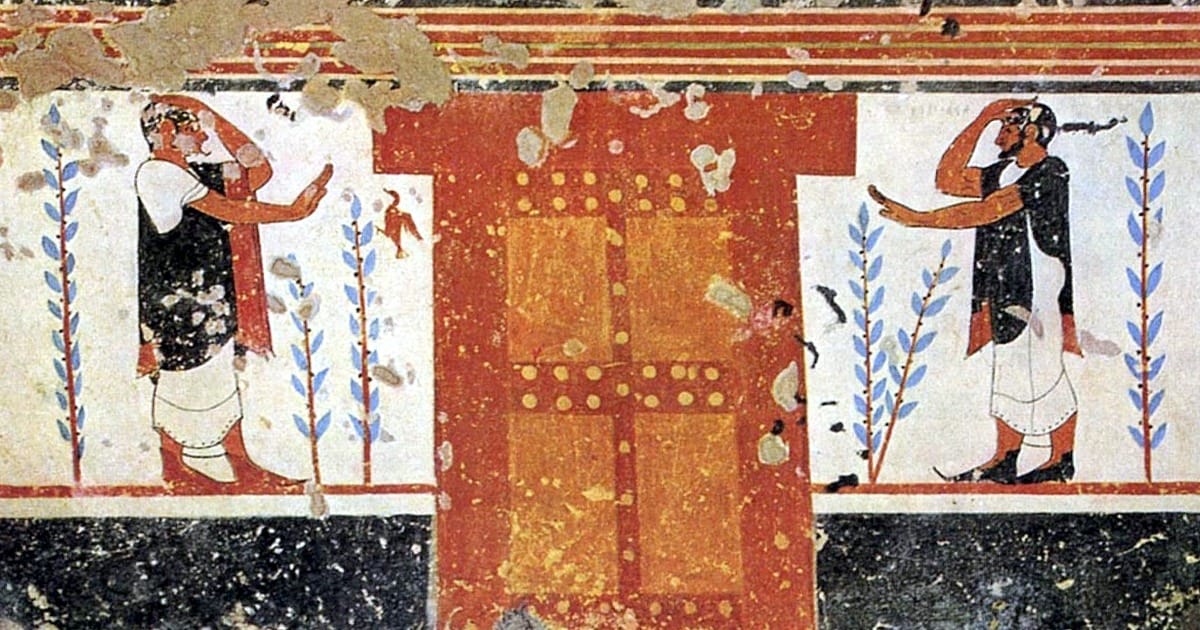
When a Baylor University team led by archaeologists Davide and Colleen Zori entered an intact rock-cut chamber in the San Giuliano necropolis near Barbarano Romano, in the province of Viterbo, central Italy, they found a space that had been sealed since the end of the seventh century BCE. The sealing stone was still in position. The ceramic vessels were still arranged around a funerary bed. Bronze ornaments were still resting against the body of the deceased. Nothing had been moved, nothing taken, across two and a half millennia. This Etruscan tomb, announced in June 2025 after excavation was completed, is exceptional not simply for its age but for its completeness: of the more than five hundred tombs documented in the San Giuliano necropolis, the majority were looted either in antiquity or during the nineteenth century. An untouched example from the Orientalizing period, the final phase of early Etruscan cultural development running from roughly 730 to 580 BCE, is genuinely rare. This article explains what was found, what it tells us about Etruscan burial practice, and what it means for our understanding of Etruscan women and their place in Mediterranean trade networks.
The Etruscans and Their Approach to Death
The Etruscan civilisation occupied central Italy, broadly the territory between the Arno and Tiber rivers, from roughly the ninth century BCE through the gradual Roman assimilation of the third and second centuries BCE. Their cities, among them Tarquinia, Vulci, Cerveteri, and Chiusi, were independent political units loosely linked by shared culture, religion, and language. That language remains only partially deciphered: the Etruscans wrote in an alphabet adapted from Greek, and thousands of short inscriptions survive, but no substantial literary text does. What we know about Etruscan society comes overwhelmingly from the material record of their dead.
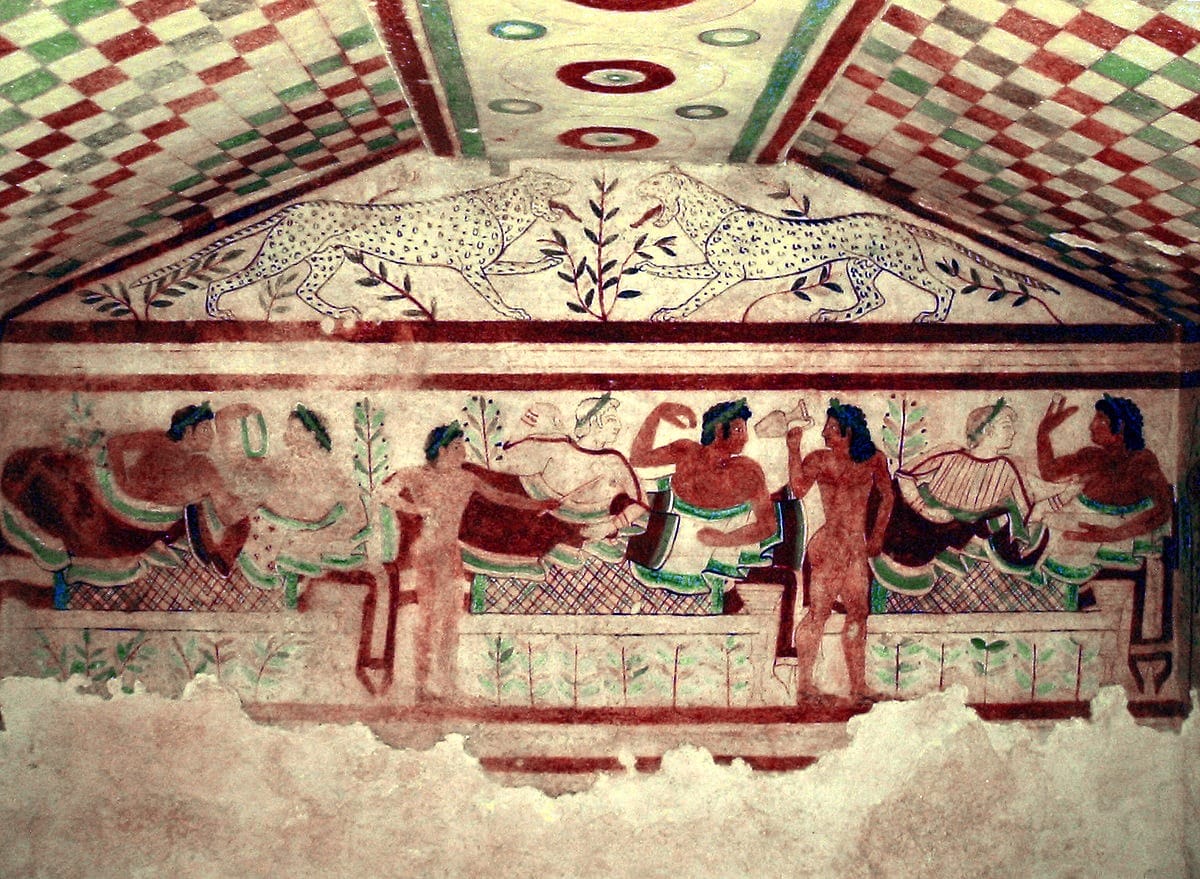
The Etruscans invested heavily in funerary architecture. Chamber tombs carved directly into tufa bedrock, or built as corbelled stone chambers beneath earthen mounds called tumuli, were equipped with grave goods intended to accompany the deceased into an afterlife conceived as a continuation of aristocratic life on earth. Tomb paintings at Tarquinia show banquets, music, athletic games, and marine scenes in vivid colour. Sarcophagi, especially from the Classical and Hellenistic periods, depict the deceased reclining on a couch as if at dinner. The grave goods placed inside these tombs were not symbolic substitutes: they were the actual objects the individual had used in life.
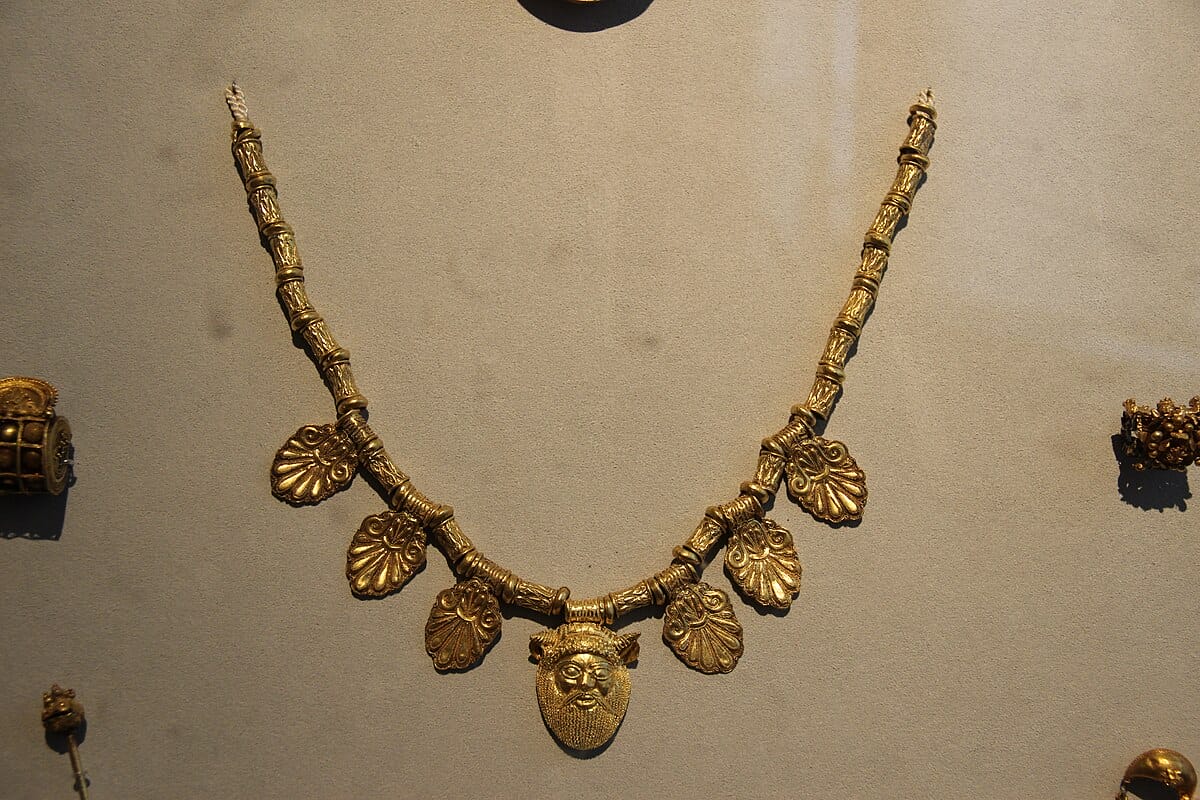
The Orientalizing period, which takes its name from the strong influence of Near Eastern and Greek artistic styles imported through trade, produced some of the most lavish Etruscan burials known. Elite families at sites like Praeneste and Cerveteri were buried with extraordinary quantities of gold jewellery, ivory objects, ostrich eggs, and imported pottery in the eighth and seventh centuries BCE. The San Giuliano tomb fits this pattern. Its contents reflect a world in which the Etruscans were not provincial Italians receiving goods passively, but active nodes in a Mediterranean trading network that reached from the Baltic coast to the Levant.
Inside the San Giuliano Etruscan Tomb
The San Giuliano Archaeological Research Project, known as SGARP, has been active in the Marturanum Regional Park area since 2005 under the direction of Davide and Colleen Zori, working under permit from Italy’s Ministry of Culture and in close collaboration with the Soprintendenza Archeologia, Belle Arti e Paesaggio per la provincia di Viterbo e per l’Etruria Meridionale. The project’s principal focus has been the necropolises surrounding the ancient Etruscan settlement of San Giuliano. Most of the area’s five hundred-plus tombs were penetrated by Roman-era looters who targeted gold and silver, and by nineteenth-century amateur archaeologists who prioritised decorated pottery. The 2024 to 2025 season produced the find the team had been working toward for years.
The tomb belongs to the final phase of the Orientalizing period, meaning a date toward the end of the seventh century BCE, and is rock-cut in the local tufa, the soft volcanic rock that underlies much of Lazio. Dr. Barbara Barbaro, director of archaeology for the Soprintendenza, noted in the announcement that intact chamber tombs of this age have never before been excavated with modern scientific techniques in the internal hilly region of central Italy. That distinction matters: modern stratigraphic excavation, detailed photographic documentation, soil sampling, and environmental analysis produce a far richer dataset than nineteenth-century removals. Every object in the San Giuliano tomb was photographed in situ before it was touched.
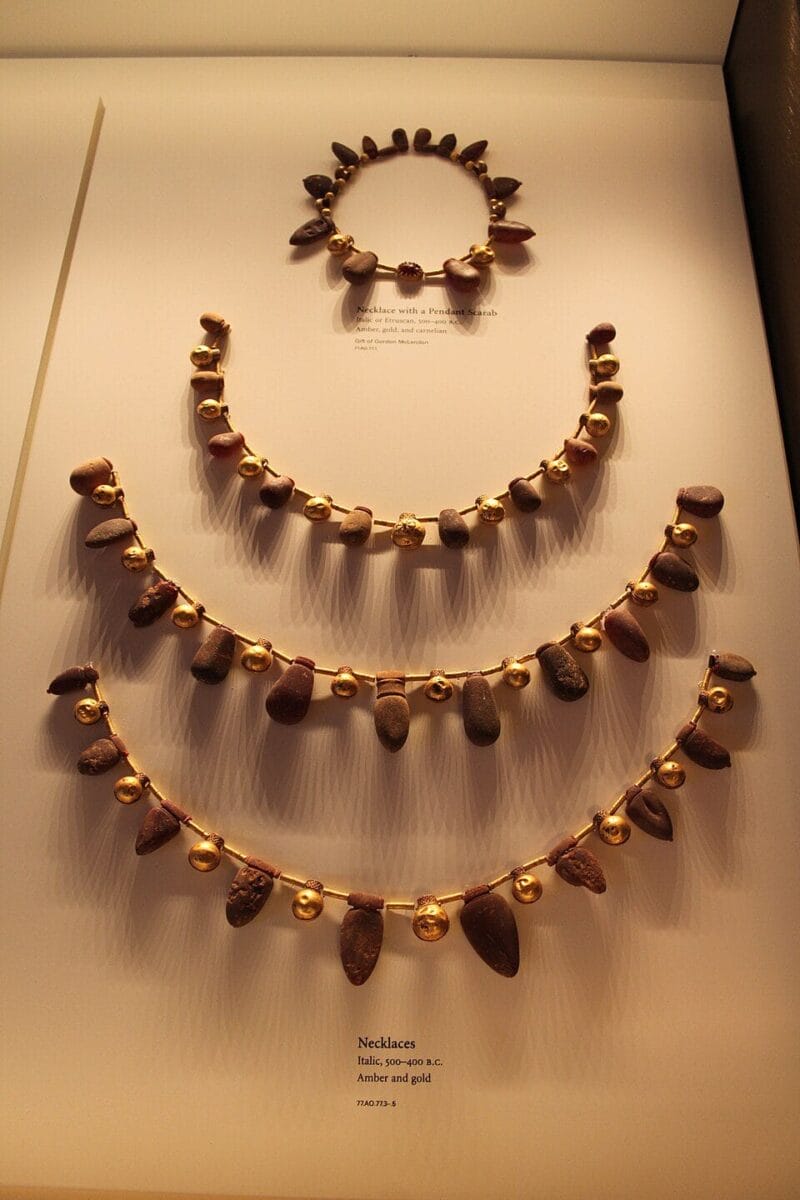
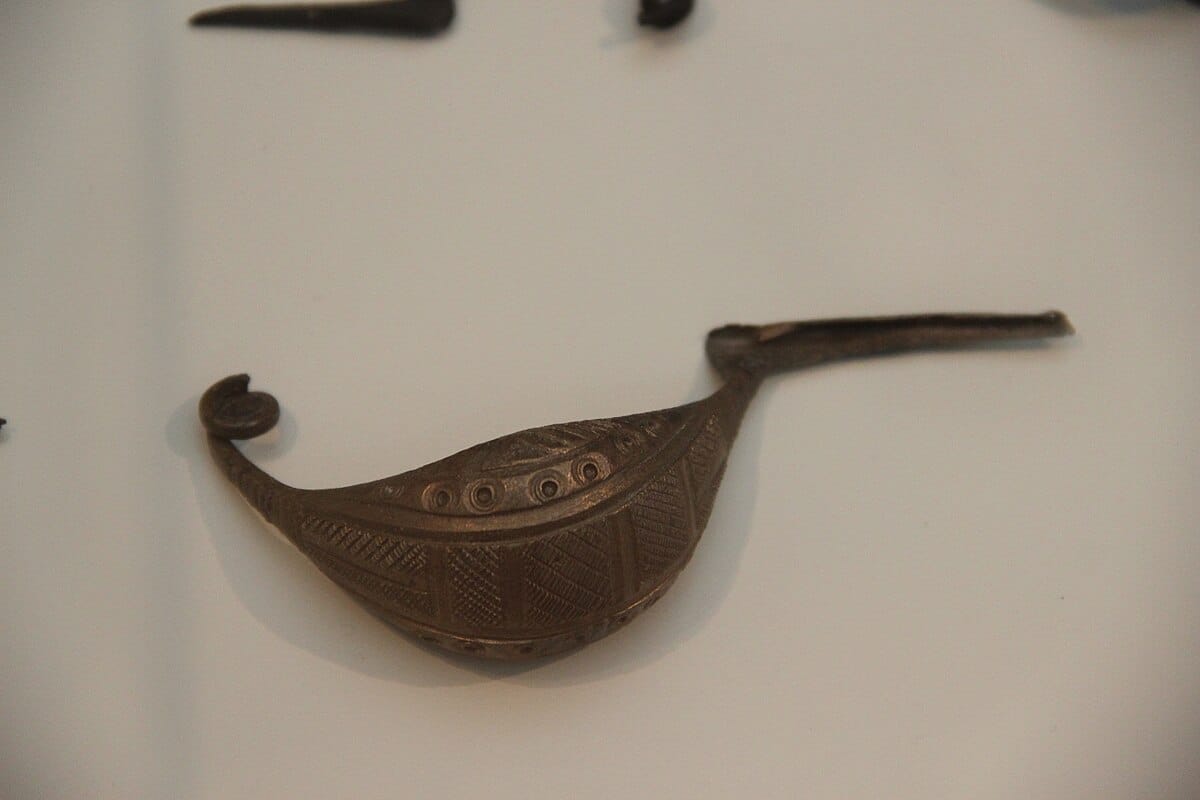
The burial itself contained one primary individual, lying on a stone funerary bed, surrounded by thirteen complete ceramic vessels including bowls, cups, and a trilobed jar of refined clay typical of Orientalizing period production in central Italy. Bronze fibulae, the safety-pin-like fasteners used to secure clothing and cloaks, rested near the body. Most significantly, amber beads appeared in direct association with the remains. Davide Zori confirmed publicly that isotopic and chemical analysis of the amber indicates Baltic origin, meaning the material had travelled over a thousand miles from the shores of the Baltic Sea to reach this hilltop chamber in northern Lazio. Preliminary osteological analysis identifies the deceased as a woman, likely of high social status based on the quality and quantity of the assemblage.
Etruscan Bronze Mirrors and What They Reveal
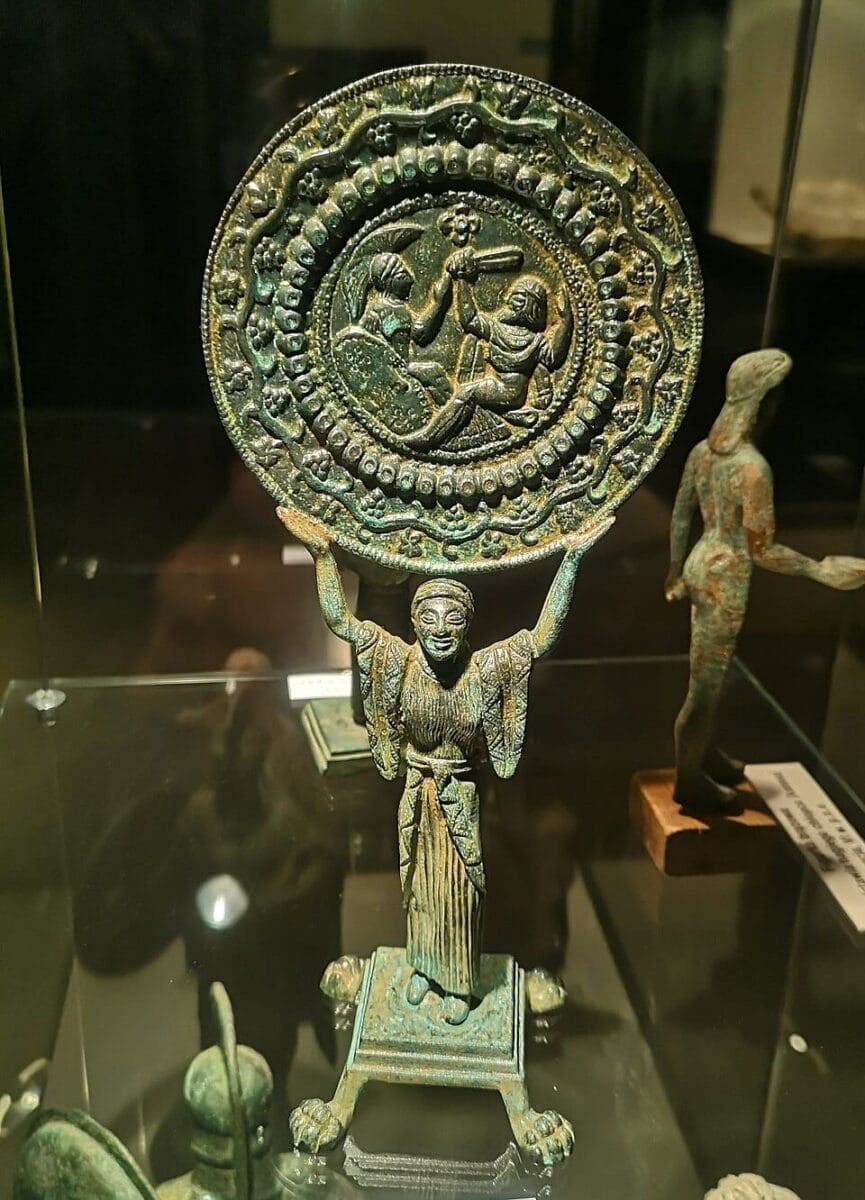
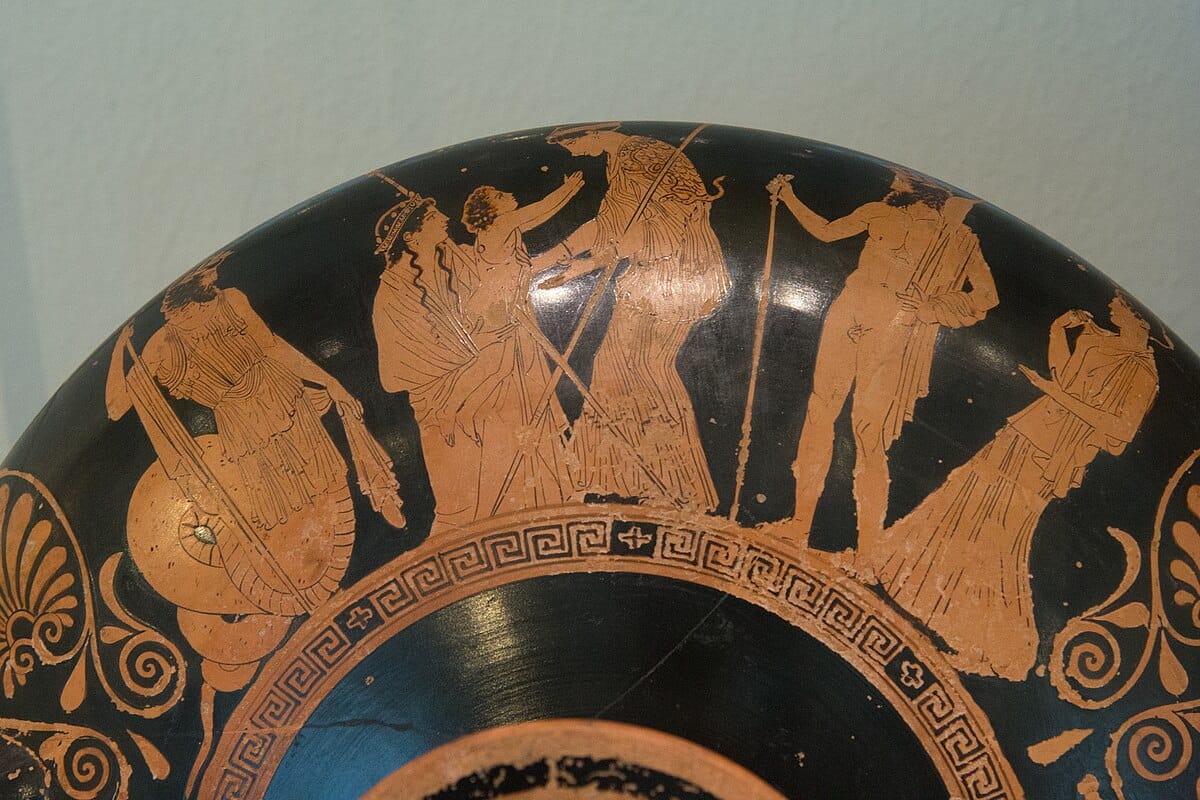
Bronze mirrors, which the Etruscans called malena or malstria, are among the most information-rich objects the civilisation produced. Their reflective side was polished bronze, which the Etruscans achieved by adding carefully controlled proportions of tin to the copper alloy. From the late sixth century BCE through the second century BCE, the reverse sides of these mirrors were engraved with figural scenes of extraordinary quality: mythological narratives, wedding rituals, divine encounters, and scenes of women at their toilette. More than three thousand Etruscan bronze mirrors survive, currently being catalogued in the international Corpus of Etruscan Mirrors (CSE), but the great majority came from uncontrolled excavations and lack any documented archaeological context. A mirror found in an intact tomb, with its associated objects, skeletal remains, and stratigraphic position all recorded, is far more informative than the same object in a museum without a provenance.
The mirrors from recently documented Etruscan contexts, including examples comparable in date and type to those from San Giuliano, carry engravings that scholars have used to reconstruct Etruscan mythological traditions, identify named individuals inscribed around the rim, and track the literacy of their owners. Approximately three hundred of the surviving mirrors have inscriptions, most recording female names, making them important evidence for women’s literacy in the Etruscan world. The inscription formula varies from simple ownership statements to gift dedications: one example reads “Tite Cale to his mother gave this mirror as a gift,” in the Etruscan language. Mirrors were given at weddings as part of the bride’s dowry, and were buried with their owners at death, sometimes with their reflective surface intentionally scored and inscribed with the word suthina, meaning “for the grave,” consecrating the object to the realm of the dead rather than the living.
In funerary contexts, the mirrors served multiple roles simultaneously. They were luxury goods demonstrating wealth. They were personal possessions carrying the identity of their owner. They may have functioned apotropaically, with some scholars arguing that the reflective surface was intended to ward off malevolent spirits, though this remains debated. What is consistent across dozens of well-documented female burials at Tarquinia, Vulci, and Cerveteri is that the mirror was associated specifically with aristocratic femininity: not as a marker of vanity, as later Roman caricaturists would claim, but as an emblem of the social and economic standing of a woman who could commission fine metalwork, maintain trade connections, and direct her household’s ceremonial life.
Built out of a love for history, kept free from distractions.
Spoken Past is an independent project shaped by curiosity, care, and long hours of research. Reader support helps keep it maintained, carefully researched, and open to everyone.
Baltic Amber and the Scale of Etruscan Trade
The presence of Baltic amber in a seventh-century BCE Etruscan tomb in northern Lazio is not surprising to specialists, but it remains striking when considered geographically. Baltic amber, technically called succinite, is fossilised resin from conifer forests that grew around the Baltic Sea basin approximately thirty-five to fifty million years ago. Its chemical signature, detectable through Fourier transform infrared spectroscopy, is distinct from amber produced by other sources, including the Sicilian simetite used in earlier Italian contexts. By the early Iron Age, Baltic amber was flowing southward through central Europe along what historians call the Amber Road, a network of overland and river routes running from the Lithuanian and Polish coastline through the Czech lands and Austria to Aquileia on the Adriatic, and from there into Etruscan territory.
The Etruscans were particularly enthusiastic consumers of amber. The necropolis at Verucchio, in Emilia-Romagna, has produced extraordinary quantities of amber objects from elite female burials of the eighth and seventh centuries BCE, including intricately carved pendants and beads inlaid into bronze fibulae. Mark Cartwright, writing for World History Encyclopedia, notes that the Etruscans received amber from the Baltic in exchange for iron, the single commodity they controlled in the greatest quantity. Etruscan iron, smelted from the rich ore deposits of the island of Elba and the Colline Metallifere, was traded north, south, and east in exchange for luxury materials that elite women then wore as markers of their family’s reach.
In practical terms, the Baltic amber in the San Giuliano tomb represents at least one thousand miles of overland transport, managed by multiple intermediaries across several cultural groups, all before the object reached Etruria. That an Etruscan woman in a rural hilltop settlement was buried wearing material from the Baltic shore tells us something concrete about the connectivity of Iron Age Europe. It was not occasional or accidental. It was systematic, and it was sustained across generations. Davide Zori put it directly in an interview with Baylor’s student newspaper: the amber shows that Europe was already highly interconnected three thousand years ago, and that this particular woman was part of that connection.
Etruscan Women and the Question of Status
The San Giuliano burial fits into a broader pattern of recent scholarship revisiting the social position of Etruscan women. Ancient Greek and later Roman writers described Etruscan women as scandalously free: they attended banquets reclining alongside men, appeared in public without veils, and exercised a degree of economic and political independence that struck Greek observers as inappropriate. These characterisations were partly the product of Greek cultural bias, but the archaeological record confirms that the underlying observation was accurate. Etruscan women of the aristocratic class owned property, appeared in tomb paintings as equal participants in feasts and games, and were buried with assemblages that rival those of elite men in both quantity and quality.
The grave goods in Orientalizing period female burials in particular are remarkable for their variety. A woman of the period might be buried with bronze fibulae, amber jewellery, gold earrings, engraved bronze mirrors, ceramic vessels associated with the preparation and serving of food and drink, and objects connected with textile production such as spindle whorls and bronze distaffs. The textile implements have sometimes been misread as evidence of a purely domestic role, but archaeologist Glenys Davies and others have noted that weaving was a high-status activity in the ancient Mediterranean, associated with divine female figures and with the management of a substantial household. A woman buried with a bronze distaff was not being reduced to her domestic labour; she was being recognised as the person who organised and directed that labour in a household of significance.
The matronymic naming system in Etruscan inscriptions provides additional evidence. Unlike Greek and Roman inscriptions, which nearly always identified individuals through their fathers, Etruscan texts frequently name individuals through their mothers, suggesting that matrilineal identity carried real social weight. Around three hundred Etruscan bronze mirrors carry inscriptions with female names, a body of evidence for women’s literacy that has no parallel in the contemporary Greek world. The San Giuliano woman, buried with amber from a thousand miles away and ceramics from local workshops of high quality, was not an anomaly. She was a representative of a class of women whose power was real and whose memory their communities invested in preserving.
What Modern Archaeology Can Now Extract from an Intact Context
The scientific value of the San Giuliano tomb lies not only in what objects it contained but in the fact that those objects were found in their original positions. In a looted or disturbed tomb, an amber bead is just an amber bead. In an intact context, the same bead, found in a specific spatial relationship to specific body elements, with associated ceramics whose forms and fabric can be dated and sourced, within a chamber whose sealing can be radiocarbon dated, becomes part of a coherent argument about the identity, status, wealth, and trade connections of a specific individual at a specific moment in time.
Modern scientific techniques extend that argument further than the objects themselves can reach. Strontium and oxygen isotope analysis of the skeletal remains can determine whether the woman buried at San Giuliano was born locally or moved to the area from elsewhere. DNA analysis can potentially identify biological relationships with individuals in other tombs in the same necropolis, or with individuals from entirely different regions. The chemical characterisation of the ceramic fabrics can identify their production sites. Residue analysis of the vessel interiors can determine what foods and liquids they originally contained. None of this was possible for the nineteenth-century excavators who emptied most of the other five hundred tombs at San Giuliano in the search for saleable objects.
The SGARP team has indicated that ground-penetrating radar surveys of the surrounding area have identified additional anomalies that may represent further intact tombs. If those anomalies prove to be what radar suggests, the project could produce a cluster of scientifically excavated Orientalizing period burials from a single necropolis, each one providing comparative data for the others. That would be an exceptionally rare dataset. It would allow scholars to ask whether the pattern seen in the first tomb, a woman buried with imported materials, textile tools, and local ceramics of quality, is typical for this community, or distinctive to one individual family. The answer to that question matters for understanding how widely wealth and international connectivity were distributed in early Etruscan society.
Sources: San Giuliano Archaeological Research Project (SGARP), Baylor University, Archaeology News Online, June 2025; Live Science, “A rare find for Etruscan archaeology: Archaeologists discover sealed, untouched tomb in central Italy,” July 2025; Cartwright, Mark, “Etruscan Bronze Mirrors,” World History Encyclopedia, 2017; Cartwright, Mark, “Etruscan Trade,” World History Encyclopedia, 2017; de Puma, R.D., “Etruscan Bronze Mirrors: Objects of Renewal and Protection,” Mediterranean Archaeology Australasian Research Community Meeting (MAARC), 2022; Izzet, Vedia, The Archaeology of Etruscan Society, Cambridge University Press, 2007; Naso, Alessandro, “Amber for Artemis: Preliminary Report from the Sanctuary of Artemis at Ephesos,” Österreichische Akademie der Wissenschaften; Baylor Lariat, “Baylor team finds ancient Italian woman in archaeology mission,” 2018; Finestre sull’Arte, “Tuscia: archaeologists discover untouched Etruscan tomb in Barbarano Romano,” June 2025.